Belgian cuisine is one of Europe’s most underrated. The classics — moules-frites, carbonnade flamande, waterzooi, vol-au-vent, stoofvlees — are deeply comforting, beer-friendly, and almost entirely absent from international menus. Brussels is the easiest place to try them all in one trip. This guide covers the 15 essential traditional Belgian dishes Brussels visitors should try in 2026, with what’s in each, where to order it, and which ones to start with.
Why Brussels Is the Best City to Try Traditional Belgian Dishes
Brussels sits at the linguistic crossroads of French-speaking Wallonia and Dutch-speaking Flanders, and its restaurant scene reflects both heritages. The traditional Belgian dishes Brussels is famous for include classics from both regions — Flemish-leaning carbonnade and stoofvlees, Walloon-leaning game and trout dishes, and Brussels-specific creations like vol-au-vent and the famous moules-frites pairing. Add to that the Belgian beer culture (UNESCO Intangible Heritage 2016), and Brussels gives you the deepest exposure to Belgian gastronomy in a single city.
The 15 Essential Traditional Belgian Dishes Brussels Visitors Must Try
1. Moules-Frites (Mussels and Fries)
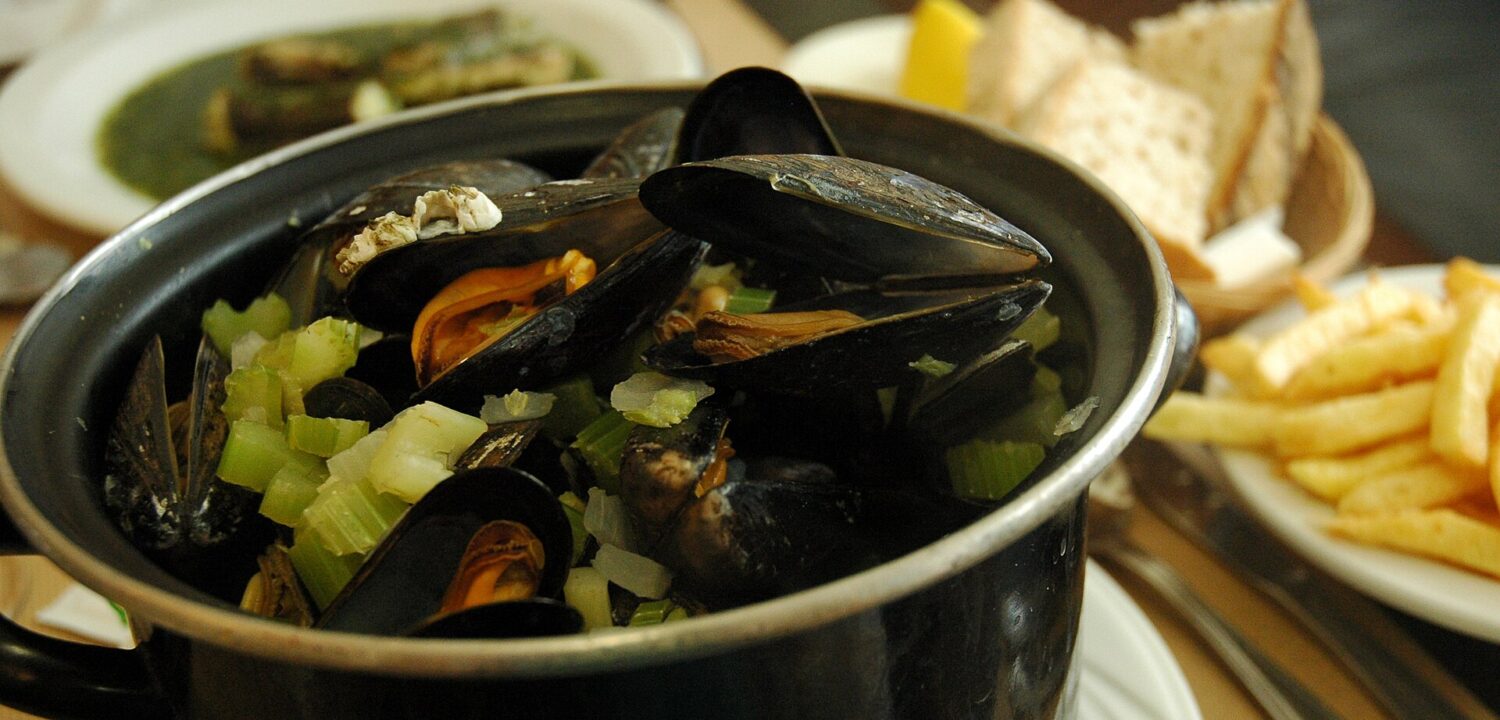
Belgium’s de facto national dish — and arguably Brussels’ most iconic. Mussels steamed in a rich sauce of butter, garlic, shallots, white wine, parsley (and sometimes cream), served with a portion of double-fried Belgian frites. Best from September to April when North Sea mussels are in season.
Where to try: Chez Léon (Rue des Bouchers, since 1893), Aux Armes de Bruxelles (since 1921).
What to order with it: A glass of dry Belgian witbier or Riesling.
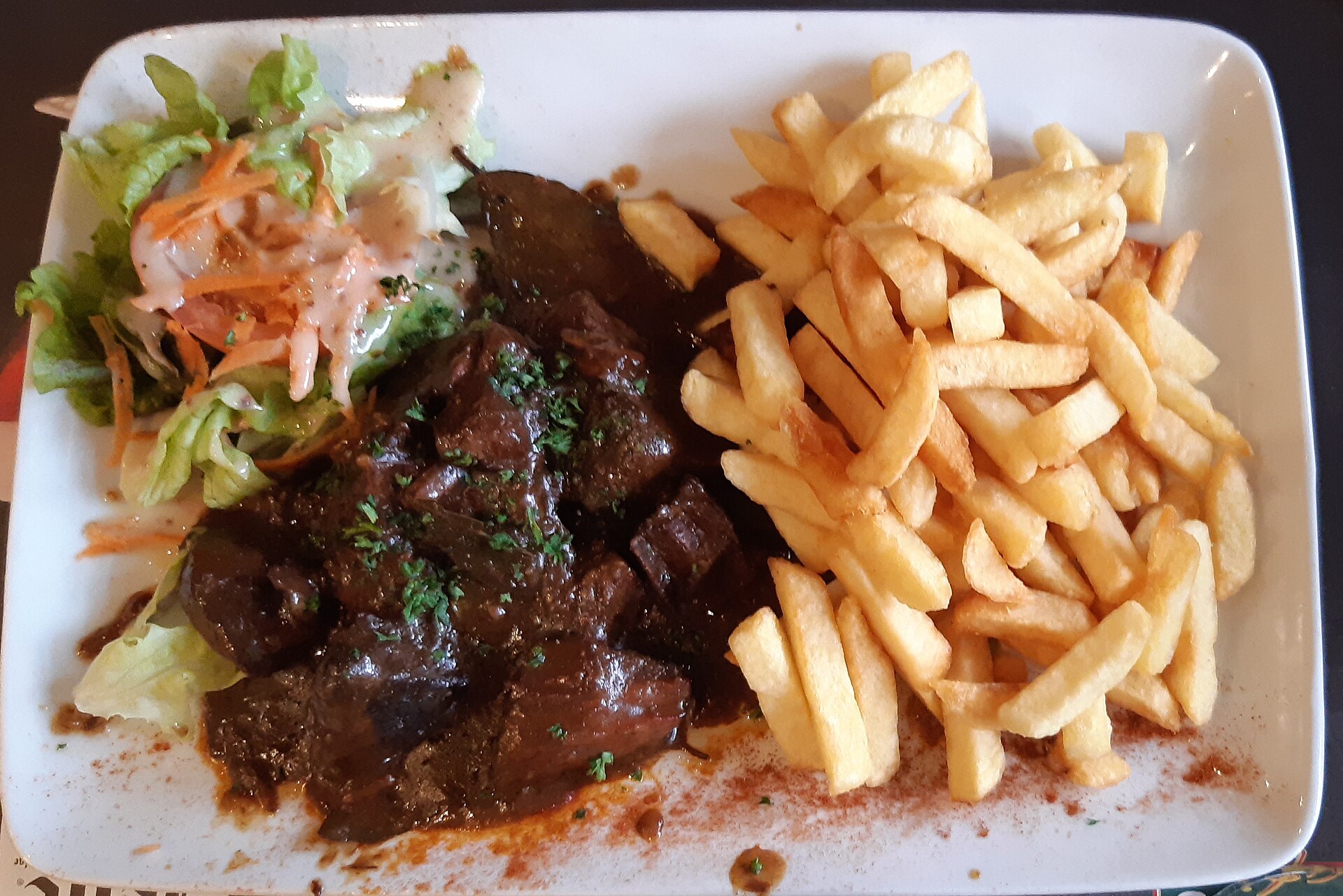
2. Carbonnade Flamande (Flemish Beef and Beer Stew)
A slow-cooked one-pot stew of beef braised in dark Belgian beer (typically a brown abbey ale), with onions, brown sugar, mustard, and a slice of bread. Sweet, malty, deeply rich. Among the most quintessential traditional Belgian dishes Brussels offers.
Where to try: Nüetnigenough.
What to order with it: Whatever beer the restaurant used in the cooking, or any Trappist dubbel.
3. Waterzooi (Ghent-Style Cream Stew)
Originally from Ghent, waterzooi is a delicate cream stew of chicken (or freshwater fish), leeks, carrots, and potatoes, finished with egg yolk and cream. Lighter and more elegant than carbonnade. The “winter version” of Belgian comfort food.
Where to try: Brasserie Bozar, Aux Armes de Bruxelles.
4. Vol-au-Vent
A flaky puff pastry case filled with a creamy ragout of chicken, mushrooms, and small meatballs. Looks elegant; eats like pure comfort. The Sunday lunch staple of Belgian families.
Where to try: Brasserie Bozar, Le Cirio.
5. Stoofvlees / Stoemp / Stoofkarbonaden
The Flemish cousin of carbonnade — beef braised in dark beer, served typically with frites. Often used interchangeably with carbonnade in Brussels, with subtle regional differences in the beer used and the sweetness profile.
Where to try: Bier Circus.
6. Steak Tartare
Belgium’s version of beef tartare — chopped raw beef seasoned with capers, onions, parsley, mustard, and Worcestershire — is regarded as a foundational Brussels brasserie dish. Often served with frites.
Where to try: Le Cirio, Aux Armes de Bruxelles.
7. Mitraillette
A half-baguette filled with frites, meat (steak haché, sausage, or kebab), salad, and sauce. The Belgian student-and-late-night classic. Cheap, generous, deeply satisfying.
Where to try: Fritland (open daily until 1 AM), most friteries.
8. Filet Américain (Belgian Steak Tartare Sandwich)
Often confused with steak tartare, filet américain is a Belgian-specific preparation: raw chopped beef seasoned and spread on toast or in a baguette. A classic Belgian breakfast or lunch item.
Where to try: Most traditional brasseries.
9. Anguilles au Vert (Eel in Green Sauce)
Eel in a sauce of fresh herbs (sorrel, parsley, chervil, spinach). A defining traditional Belgian dish from Brussels’ historic culinary repertoire. Not for everyone, but worth trying once.
Where to try: Aux Armes de Bruxelles, La Roue d’Or.
10. Endives au Gratin / Chicons au Gratin
Belgian endives wrapped in ham, baked in béchamel sauce, topped with cheese. Pure winter comfort food and a Belgian-school-cafeteria classic that deserves better than its reputation suggests.
Where to try: Most traditional brasseries during winter season.
11. Boudin (Belgian Sausage)
Belgian black pudding (boudin noir) and white pudding (boudin blanc), both with distinct local recipes. Often served with apple compote and mashed potatoes. The white pudding (Brussels speciality) is particularly mild and creamy.
Where to try: Le Cirio.
12. Croquettes aux Crevettes (Shrimp Croquettes)
Deep-fried croquettes filled with creamy bisque-bound North Sea grey shrimp. The Belgian seaside speciality, equally at home in Brussels brasseries.
Where to try: Aux Armes de Bruxelles, Brasserie Bozar.
13. Tomates Crevettes (Shrimp-Stuffed Tomatoes)
Hollowed-out tomatoes filled with North Sea grey shrimp in mayonnaise. A Belgian summer classic and one of the more refined traditional Belgian dishes Brussels brasseries serve.
14. Lapin à la Bruxelloise (Brussels-Style Rabbit)
Rabbit braised in Geuze (a Brussels lambic beer) with prunes. Specifically Brussels — Walloons cook rabbit differently. A serious traditional dish to try at brasseries with strong beer pairings.
Where to try: Le Cirio.
15. Belgian Frites
Double-fried, traditionally in beef tallow, served in paper cones with mayonnaise. Belgian frites belong on this list as the omnipresent companion to almost every traditional Belgian dish Brussels serves.
Where to try: Maison Antoine (Place Jourdan), Friterie Tabora.
Where to Eat Traditional Belgian Dishes Brussels Style
Aux Armes de Bruxelles (since 1921): The Rue des Bouchers institution. Tourist-leaning location but the food is genuinely traditional. Try the eel in green sauce or the moules-frites.
Chez Léon (since 1893): The Brussels mussels-and-frites restaurant of choice. Crowded, fast, fun, and reliably good.
Le Cirio (since 1886): The Belle Epoque tavern across from the Bourse. Classic Belgian dishes in an architectural showpiece interior.
Nüetnigenough: A Saint-Géry beer-pairing restaurant with modern Belgian classics. The carbonnade is among the city’s best.
Grand Lounge (at The Dominican): Modern Belgian seasonal cooking with traditional dish references. Three-course lunch around €38.
Brasserie Bozar: Sister to the Michelin-starred Bozar Restaurant. Excellent vol-au-vent, waterzooi, and shrimp croquettes at accessible prices.
For a deeper restaurant guide, see our best restaurants in Brussels.
How to Order Traditional Belgian Dishes Brussels Style
Beer pairing matters. Most traditional Belgian dishes Brussels brasseries serve are designed for beer pairings. Carbonnade with abbey dubbel; waterzooi with witbier; moules with witbier or dry Riesling; vol-au-vent with Belgian saison or pinot blanc.
Portion sizes are generous. Belgian portions tend to be 25-50% larger than French equivalents. A starter + main + dessert (the classic three courses) is plenty; lunch menus often offer two-course “menu du jour” specials at much better value than dinner.
Lunch menus save 30-40%. Most Brussels brasseries offer “menu du jour” or “dagschotel” lunches at €15-€22 — the same dishes you’d pay €35-€55 for at dinner.
Frites come on the side, almost always. Belgian frites accompany most traditional Belgian dishes. Don’t be surprised if your “moules” comes with a separate plate of frites.
Tipping is included. Belgian restaurant bills include service. A 5-10% top-up for excellent service is appreciated but not required.
Reservations help. Friday-Saturday evenings and Sunday lunches book up. Reserve 3-7 days ahead for popular brasseries.
Traditional Belgian Dishes Brussels: Quick Comparison
| Dish | Type | Where to Try | Pair With |
|---|---|---|---|
| Moules-frites | Mussels + fries | Chez Léon, Aux Armes | Witbier |
| Carbonnade flamande | Beef + beer stew | Nüetnigenough | Dubbel |
| Waterzooi | Cream stew | Brasserie Bozar | Saison |
| Vol-au-vent | Pastry + ragout | Brasserie Bozar | White wine |
| Stoofvlees | Flemish stew | Bier Circus | Brown ale |
| Steak tartare | Raw beef | Le Cirio | Belgian gin |
| Mitraillette | Filled baguette | Fritland | Lager |
| Filet américain | Tartare on toast | Most brasseries | Coffee/wine |
| Anguilles au vert | Eel in herbs | Aux Armes | Witbier |
| Endives au gratin | Endive + ham gratin | Most brasseries | Belgian abbey ale |
| Boudin | Belgian sausage | Le Cirio | Trappist tripel |
| Croquettes crevettes | Shrimp croquettes | Aux Armes | Witbier |
| Tomates crevettes | Shrimp-stuffed tomato | Most brasseries | Pinot blanc |
| Lapin à la Bruxelloise | Rabbit in lambic | Traditional brasseries | Geuze |
| Belgian frites | Double-fried fries | Maison Antoine | Mayonnaise |
Related Brussels Guides
Keep planning with these companion guides:
- Best Chocolate Shops in Brussels — 14 Top Belgian Chocolatiers
Useful Resources for Belgian Food Travellers
- visit.brussels — official tourism office with Belgian gastronomy guides.
- UNESCO Belgian Beer Culture — context on Belgian beer pairing tradition.
- Belgian Brewers Federation — directory of Belgian breweries for beer pairings.
Frequently Asked Questions
What is Belgium’s national dish?
There’s no single official national dish, but moules-frites is widely regarded as the most iconic. Carbonnade flamande (Flemish beef and beer stew) is a strong Flemish contender. Frites have informal national-dish status across Belgium.
Are traditional Belgian dishes Brussels heavy?
Yes. Most traditional Belgian dishes are rich, slow-cooked, and built around butter, cream, dark beer, or fried potato. Travellers used to lighter cuisines should pace themselves. Lunchtime menus tend to offer lighter portion sizes than dinner.
Can vegetarians eat traditional Belgian food?
Some traditional Belgian dishes adapt — vol-au-vent végétarien (with mushrooms), endives au gratin, and stoemp (mashed potato with vegetables) are all plant-friendly. Many modern Brussels restaurants offer vegan versions of classics like carbonnade. See our vegan restaurants in Brussels guide.
What’s the best traditional Belgian restaurant in Brussels?
For traditional dishes with beer pairings, Nüetnigenough leads. For historical atmosphere, Le Cirio and Aux Armes de Bruxelles. For modern interpretations, Bozar Restaurant.
How much does a traditional Belgian meal cost in Brussels?
Lunch menu du jour: €15-€22. Casual brasserie dinner: €30-€45 per person with beer. Higher-end traditional restaurants: €50-€80. Include 5-10% extra for service tip if it was excellent.
Is Belgian food spicy?
No. Traditional Belgian cuisine is generally mild — focused on butter, cream, beer, and herb flavours. Spicy elements (mustard, horseradish) appear in sauces but never dominate.
Final Thoughts
Trying traditional Belgian dishes Brussels brasseries serve is one of the great rewards of any trip to the Belgian capital. Whether you start with the iconic moules-frites at Chez Léon, work through a stew cooked in dark beer, or splurge on a vol-au-vent at Brasserie Bozar, you’ll discover that Belgian cuisine deserves more international recognition than it gets. For more on Brussels’ food scene, see our complete Brussels food guide, best restaurants in Brussels, and Belgian beer guide Brussels.
Photo Credits
-
Moules-frites at Au Pre Sale in Brussels: AuPreSale Moules by (WT-shared) Jpatokal at wts wikivoyage, CC BY-SA 4.0, via Wikimedia Commons.
-
Carbonnade flamande with fries: Carbonade flamande 2023 by René Hourdry, CC0, via Wikimedia Commons.