Brussels is one of Europe’s most underrated food capitals. While Paris hogs the spotlight and Italian cities dominate the bucket lists, the Belgian capital quietly serves some of the finest cuisine on the continent — from hearty Flemish stews and the world’s best frites to Michelin-starred tasting menus, artisan chocolate that puts Switzerland to shame, and a beer culture so rich it’s been recognised by UNESCO. This Brussels food guide covers everything you need to eat, drink, and taste during your visit.
What makes Brussels special is the depth and accessibility of its food scene. This isn’t a city where great food is hidden behind velvet ropes and eye-watering prix fixe menus. Here, a €3 cone of double-fried frites from a street vendor can satisfy as much as a €150 tasting menu. The city’s multicultural makeup adds another layer: Congolese, Moroccan, Portuguese, Italian, and Turkish influences weave through the dining landscape, making Brussels’ food scene far more diverse than most visitors expect.
Whether you’re a first-time visitor wondering what to eat or a returning food lover searching for the next hidden gem, this Brussels food guide will steer you to the dishes, restaurants, markets, and experiences that define this remarkable city’s culinary identity.
1. Moules-Frites — Belgium’s Iconic National Dish
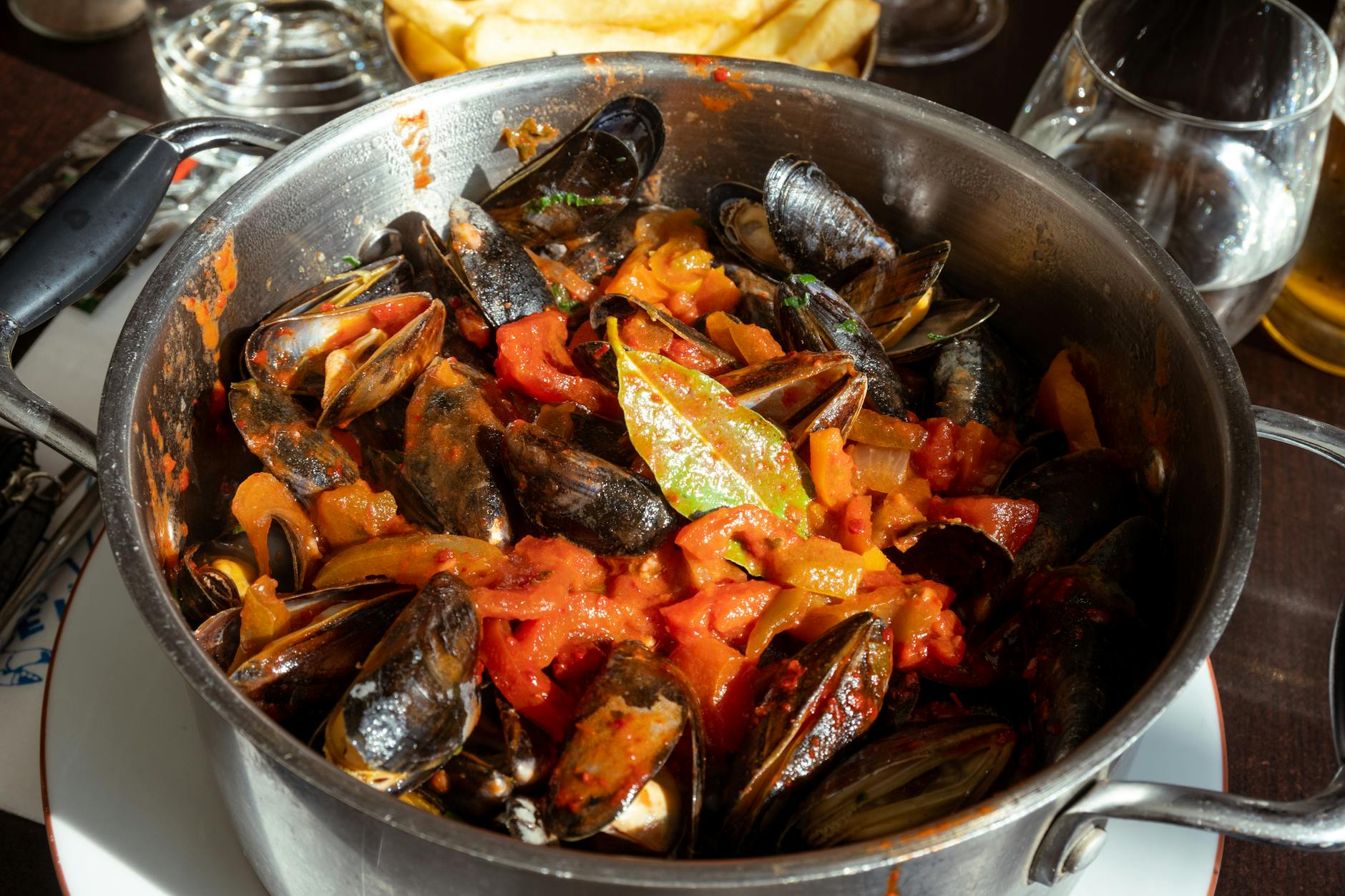
No Brussels food guide is complete without starting at the undisputed national dish: moules-frites (mussels and chips). From September through April — mussel season — you’ll see the iconic steaming black pots on tables across the city, each one overflowing with plump, briny mussels alongside a generous portion of golden frites.
The classic preparation is moules marinière — mussels steamed in white wine, butter, celery, onion, and parsley. But Brussels’ restaurants have elevated the humble mussel into an art form. You’ll find them prepared à la crème (in a rich cream sauce), à la bière (cooked in Belgian beer), à la provençale (with tomato and garlic), and even with blue cheese, Thai curry, or truffle.
Where to Eat Moules-Frites in Brussels
The Sainte-Catherine neighbourhood is Brussels’ undisputed seafood district, built around the old fish market quays. For moules-frites specifically, Chez Léon (founded 1893) on Rue des Bouchers is the most famous address — touristy but historically significant. For a more authentic experience, head to Bij den Boansen on Quai aux Briques or La Marée on Rue de Flandre. Noordzee/Mer du Nord, on Place Sainte-Catherine, is the place for seafood tapas in a uniquely Brussels atmosphere.
Price guide: A pot of moules-frites at a mid-range restaurant costs €18–25. At tourist-oriented spots on Rue des Bouchers, expect €22–30.
Insider tip: Avoid Rue des Bouchers for mussels — the restaurants here are notorious for aggressive touts and mediocre quality at inflated prices. Walk five minutes to Sainte-Catherine for dramatically better food at lower prices.
2. Belgian Frites — The World’s Best Chips
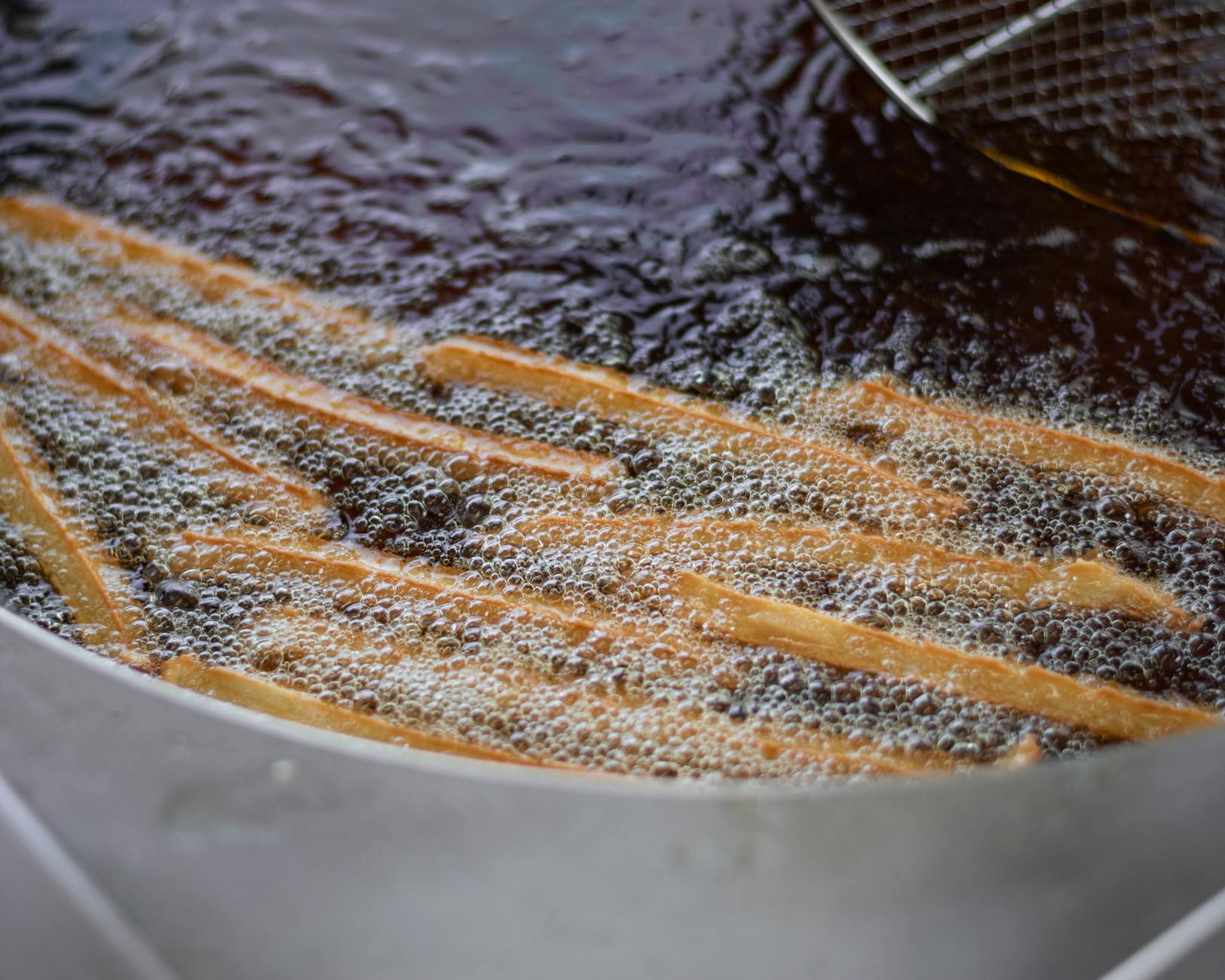
If there’s one food that Brussels does better than anywhere else on Earth, it’s frites. Belgian chips bear almost no resemblance to what the rest of the world calls “French fries.” They’re thicker, crunchier on the outside, fluffy within, and carry a depth of flavour that comes from the traditional method: cut from fresh Bintje potatoes, fried twice in beef tallow (not vegetable oil), rested between fryings, and served piping hot in a paper cone.
The first fry, at a lower heat, cooks the potato through. The second, at a higher heat, creates the signature golden crust. This double-frying technique is what separates Belgian frites from every imitator, and traditionalists insist that beef tallow — not vegetable oil — is essential for authentic flavour.
Sauces: The Crucial Decision
In Belgium, frites come with sauce — and the choice matters. Mayonnaise is the default (not ketchup, which is considered mildly barbaric). Beyond that, you’ll find andalouse (mayo with tomato and pepper), samouraï (spicy mayo with harissa), tartare (mayo with capers and herbs), américaine (a cocktail-sauce style mix), and a dozen more. Most friteries charge a small extra fee (€0.50–1) per sauce.
Where to Eat Frites in Brussels
Maison Antoine on Place Jourdan (near the European Quarter) is legendary — it’s been serving frites since 1948. Fritland on Rue Henri Maus near Grand Place is the most convenient option for visitors. Frit’Flagey on Place Flagey in Ixelles is a local favourite. For a more upscale frites experience, Fernand Obb Delicatessen serves gourmet frites with premium toppings.
Price guide: A large cone of frites costs €3.50–5 at a friterie. It’s one of the best-value meals in Europe.
3. Belgian Waffles — Two Styles, One Obsession
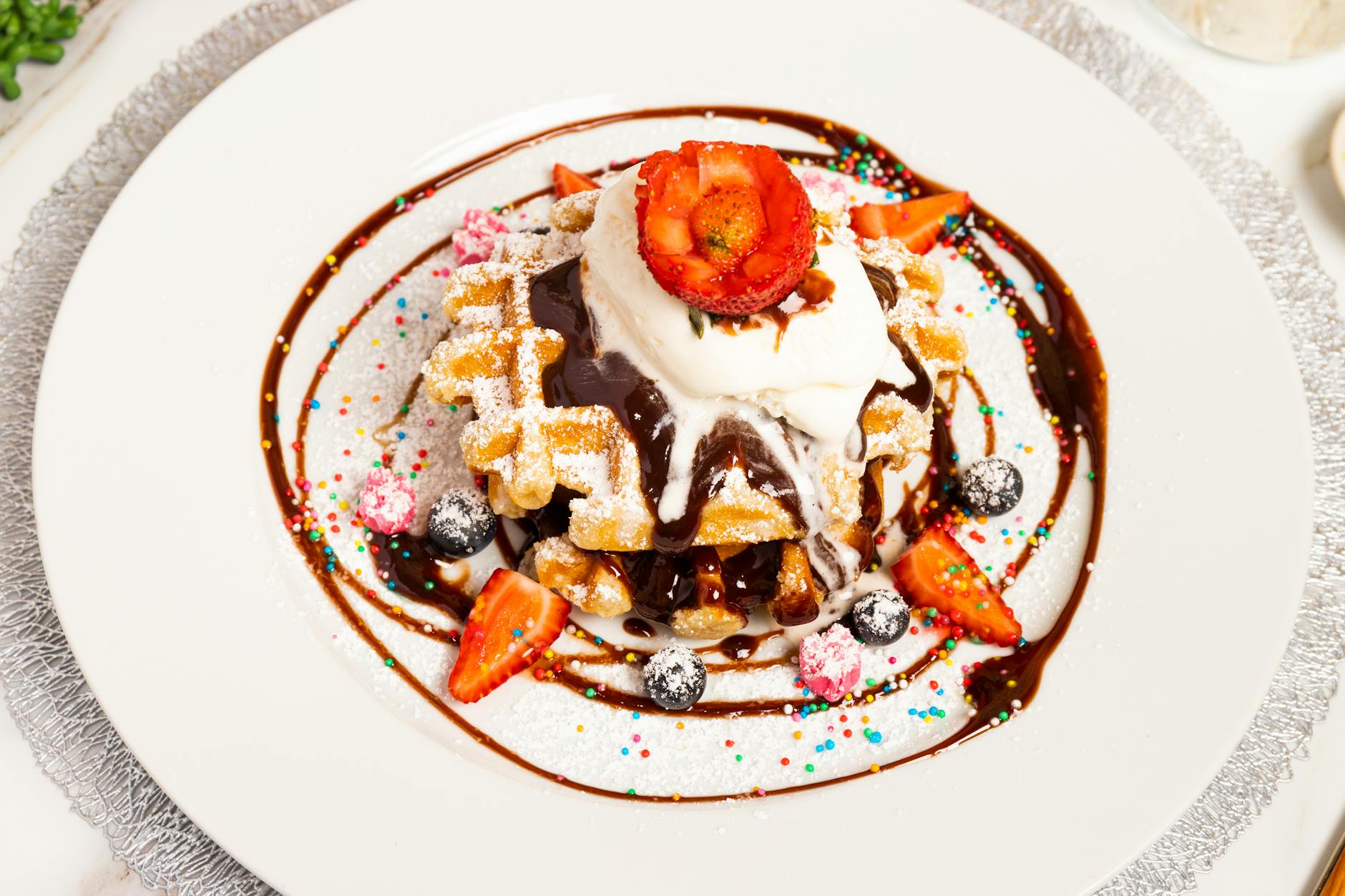
Belgium’s most famous export after beer and chocolate: the waffle. But before you order, you need to know there are two completely different types, and choosing between them is a defining moment in any Brussels food guide.
The Brussels Waffle (Gaufre de Bruxelles)
The Brussels waffle is rectangular, light, and crispy, made from a yeast-risen batter with whipped egg whites that create deep pockets and an airy texture. Traditionally, it’s served plain or dusted lightly with powdered sugar — no toppings. The Brussels waffle is all about the waffle itself: a delicate, almost crepe-like crunch that dissolves on your tongue. Most tourist-oriented waffle shops pile them with Nutella, whipped cream, and fruit, which overwhelms the subtle flavour.
The Liège Waffle (Gaufre de Liège)
The Liège waffle is denser, chewier, and sweeter — made from a brioche-like dough studded with chunks of pearl sugar (sucre perlé) that caramelise during cooking, creating a sticky, toffee-like crust. Liège waffles are round, irregular in shape, and eaten as a handheld snack. They’re the more common street food variety and genuinely delicious — just different from the Brussels version.
Where to Eat Waffles in Brussels
For an authentic Brussels waffle, look to Maison Dandoy (established 1829), whose shop at Rue au Beurre 31 is steps from Grand Place; check the boutique list on maisondandoy.com for a tea room that serves the traditional rectangular waffle. For Liège waffles, the street vendors near Grand Place are perfectly fine, though the very best are often found at neighbourhood bakeries rather than tourist stands. Zinneke on Place Agora offers creative toppings if that’s your style.
Price guide: A plain Brussels waffle costs €3–5 at a quality establishment. Liège waffles from street vendors run €2–4. Tourist-oriented loaded waffles cost €6–10.
4. Belgian Chocolate — The World Capital of Pralines
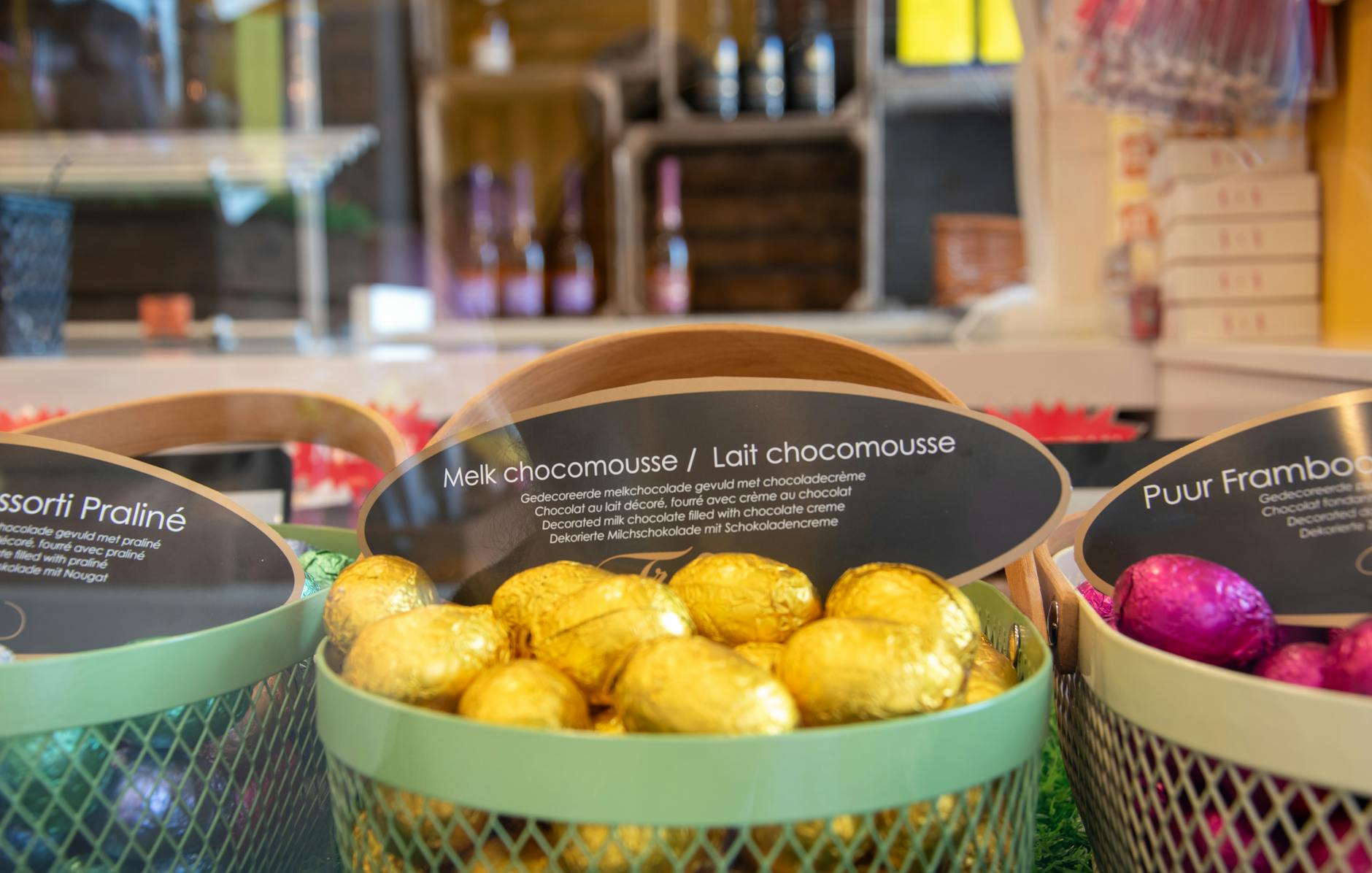
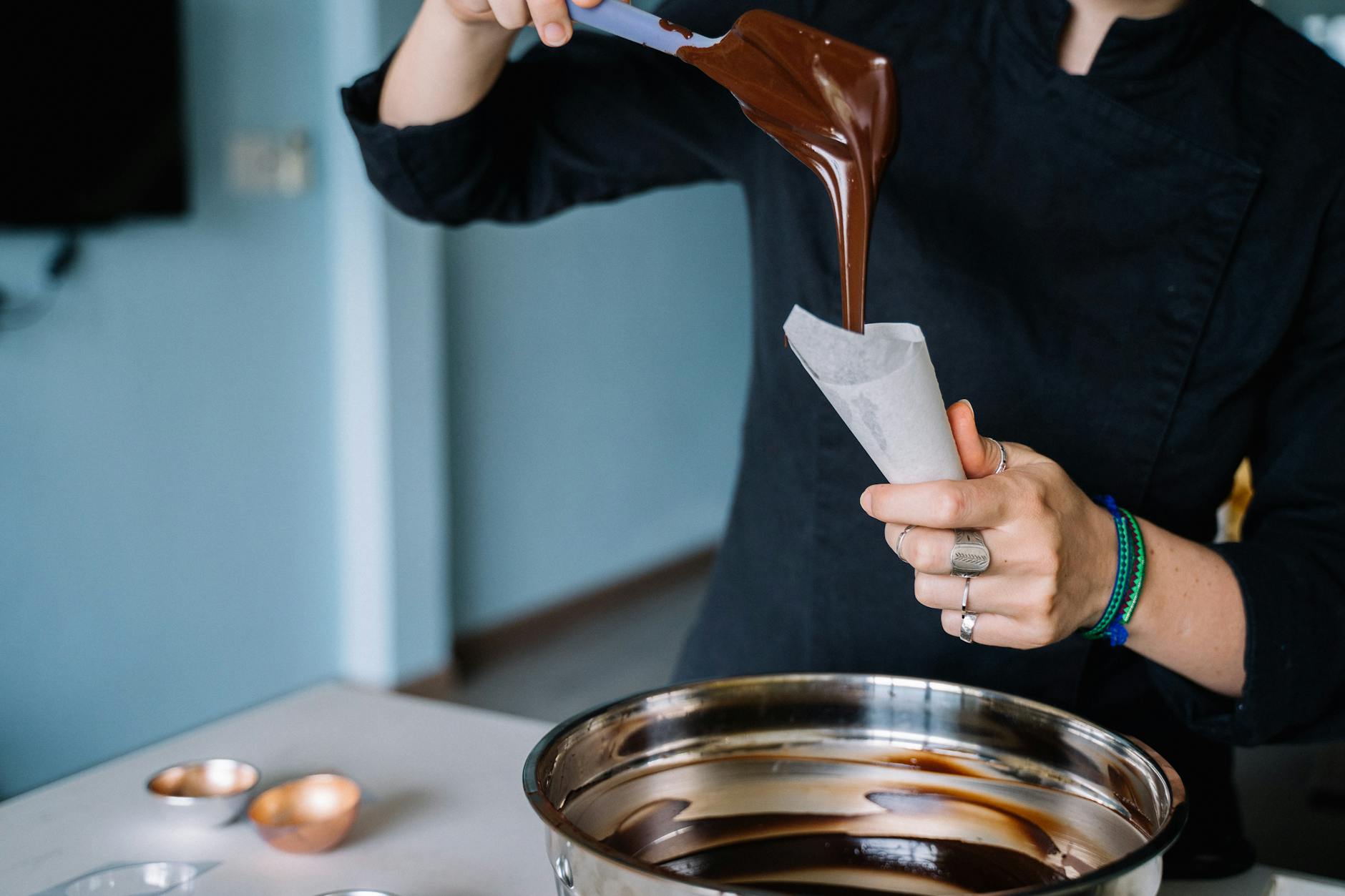
Brussels is arguably the chocolate capital of the world, and the numbers back it up: Belgium produces over 220,000 tonnes of chocolate annually, the country has more than 2,000 chocolate shops, and the Belgian praline — a filled chocolate shell — was invented here in 1912 by Jean Neuhaus in the Galeries Royales Saint-Hubert. A dedicated section in any Brussels food guide is essential.
What distinguishes Belgian chocolate is tradition more than law. The legal floor of 35% total dry cocoa solids comes from an EU directive that applies across the Union, so the difference lies in the craft of Belgium’s chocolatiers and their choice of ingredients such as cocoa butter. The result is a smoother, more intensely flavoured chocolate with a satisfying snap and melt.
Top Chocolatiers in Brussels
Pierre Marcolini — Widely regarded as Belgium’s greatest living chocolatier. His Grand Sablon flagship is a must-visit. Expect to pay €70–90 per kilogram, but the quality is extraordinary.
Mary — Holder of the Royal Warrant since 1942, Mary’s is the quintessential old-school Brussels chocolatier. The Sablon shop is like stepping into a time capsule, with hand-rolled truffles displayed in art deco cases. Their pralines are classic and refined.
Wittamer — Another Sablon institution (since 1910), Wittamer is a combined chocolatier, pâtissier, and tea room. Their macarons are arguably the best in Brussels, and the chocolate selection is outstanding.
Laurent Gerbaud — A more modern, innovative chocolatier who avoids cream and butter, instead combining chocolate with dried fruits, nuts, and spices. His small shop near the Sablon is a hidden gem beloved by locals.
Neuhaus — The inventor of the praline. Their Galeries Royales Saint-Hubert boutique (the original location) is worth visiting for the history alone. The Caprice — a crunchy praline with hazelnut cream — is an icon.
Insider tip: Skip the mass-market brands (Godiva, Leonidas) that dominate Grand Place — they’re fine, but the artisan chocolatiers listed above offer a dramatically different experience. The Sablon neighbourhood is the epicentre of Brussels’ chocolate scene.
5. Belgian Beer — A UNESCO-Recognised Culture
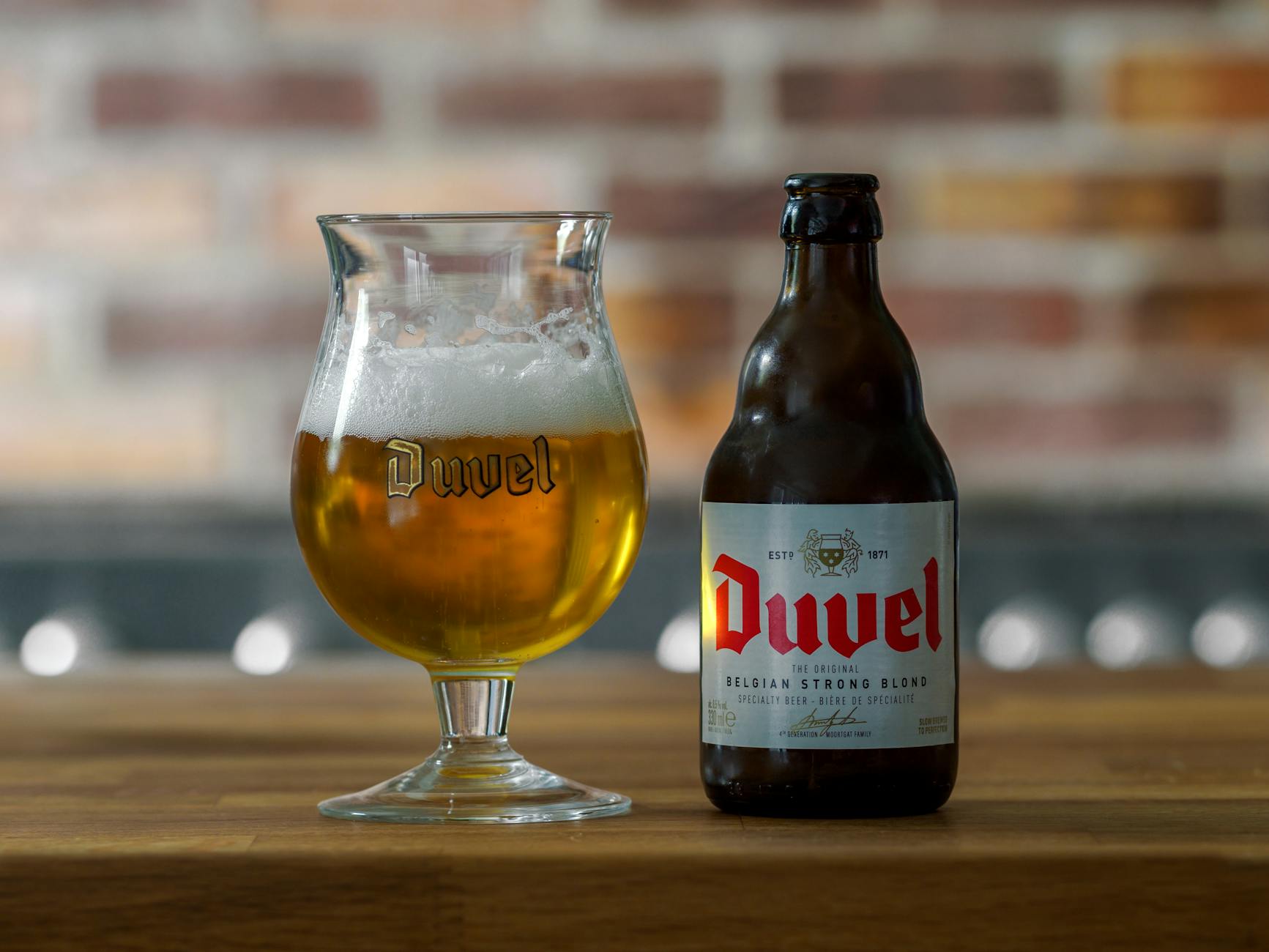
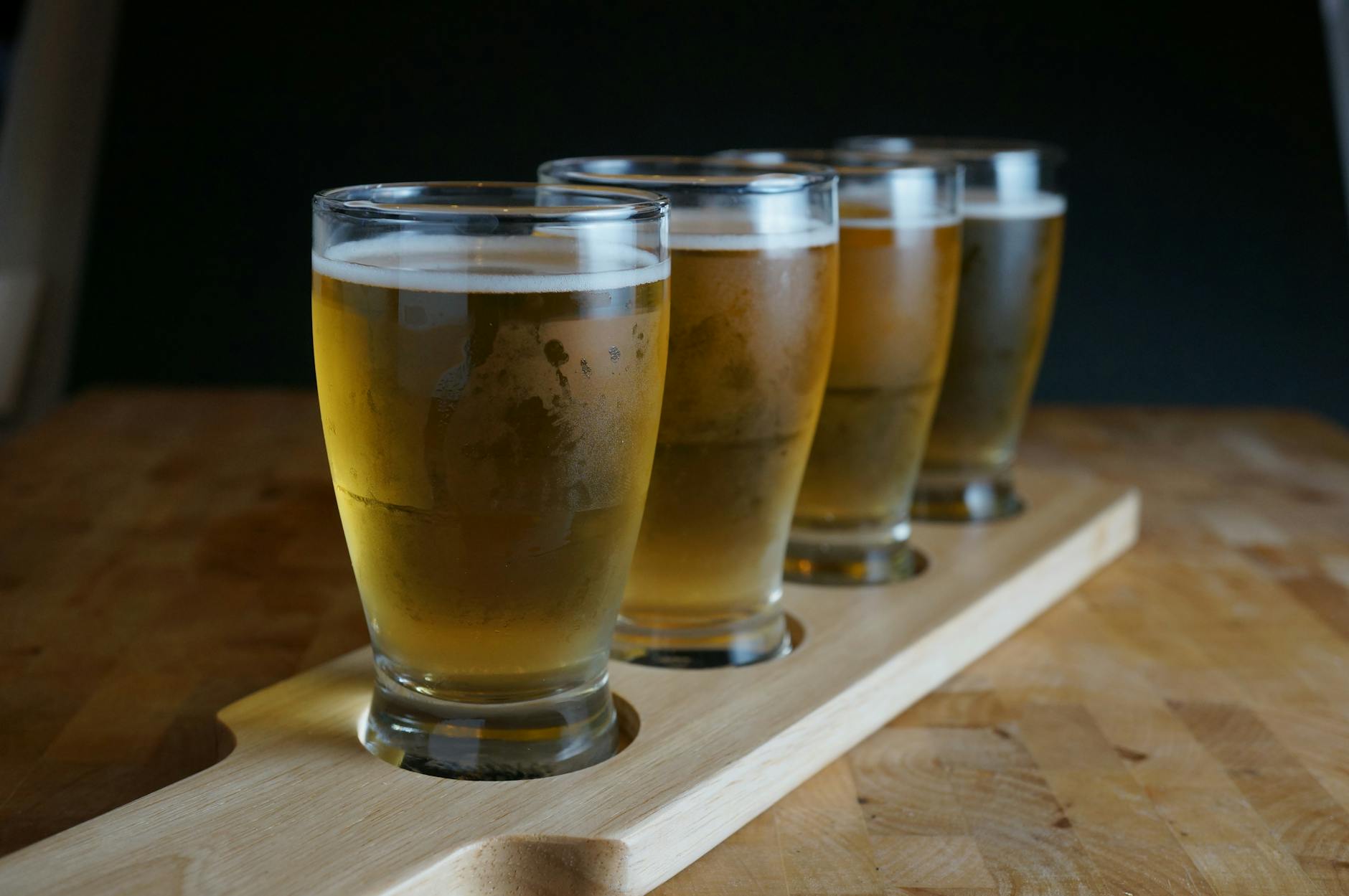
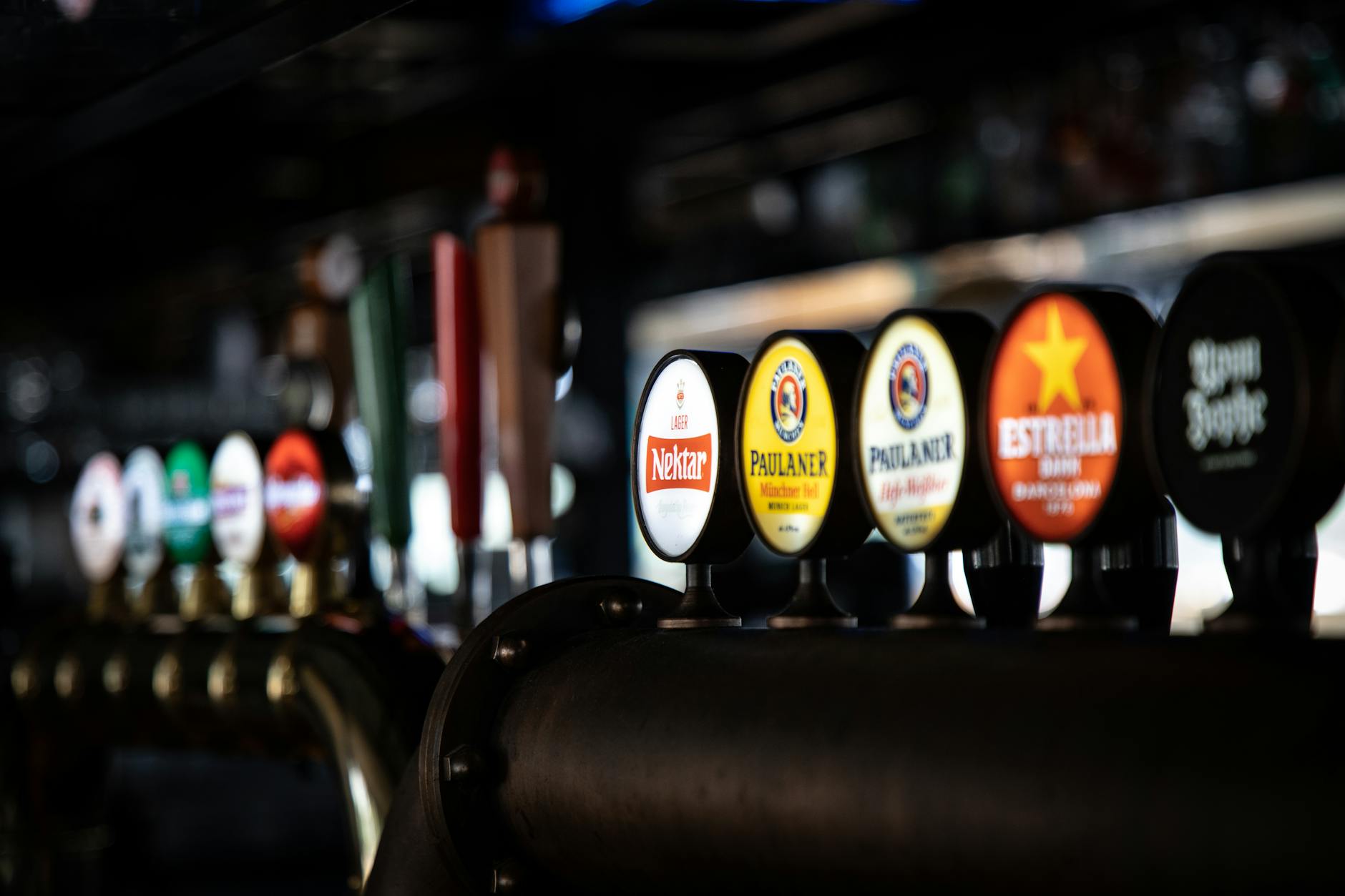
Belgium’s beer culture was inscribed on the UNESCO Intangible Cultural Heritage list in 2016, and Brussels is the best place on Earth to experience it. From ancient lambics fermented by wild yeast to powerful Trappist ales brewed by monks, this is a city where beer is treated with the same reverence that wine receives in Bordeaux.
Beer Styles to Know
Lambic — Brussels’ own signature style. Lambic is spontaneously fermented by wild airborne yeast and bacteria, a style traditionally tied to Brussels, the Senne Valley and the nearby Pajottenland. It’s aged in oak barrels for one to three years, producing a sour, complex, funky beer unlike anything else. Gueuze is a blend of young and old lambics, bottle-refermented to create a sparkling, champagne-like sour beer. Kriek is lambic steeped with sour cherries. Faro is lambic sweetened with candy sugar — historically the everyday beer of Brussels.
Trappist — Belgium’s Trappist beers come from Chimay, Orval, Rochefort, Westmalle, and Westvleteren. Each produces strong, complex ales of exceptional quality, brewed within monastery walls under strict rules.
Abbey, Dubbel, Tripel, Quad — Belgian abbey-style beers range from malty, dark dubbels (around 6–8% ABV) to stronger golden, spicy tripels (typically around 8–10%) to powerful, complex quadrupels (roughly 9–14%). Brands like Leffe, Grimbergen, and Maredsous are widely available.
Saison — Originally farmhouse ales from Wallonia, saisons are dry, effervescent, and peppery. Saison Dupont is the benchmark.
Where to Drink Beer in Brussels
Cantillon Brewery — Perhaps the world’s most famous lambic brewery, located in the Anderlecht commune. Their self-guided tours (€9 or €8 depending on age, with three tasting samples) are unmissable for any beer lover. Self-guided visits run on Monday, Tuesday, Thursday and Friday.
Delirium Café — Near Grand Place in the Impasse de la Fidélité, this sprawling multi-floor bar holds the Guinness World Record for most beers available: over 2,000. It’s touristy but genuinely impressive, and the ground floor Delirium Taphouse serves excellent craft beers.
Moeder Lambic Fontainas — On Place Fontainas, this is serious beer lovers’ territory: dozens of taps in a buzzing atmosphere. The staff are knowledgeable and happy to guide you.
À la Mort Subite — A gorgeously preserved 1920s café on Rue Montagne aux Herbes Potagères. It takes its name from the final round of a dice game played at its predecessor, La Cour Royale, and has kept its protected original interior since moving here in late 1928: the atmospheric place to try gueuze and kriek.
Belgian Beer World — The new beer experience centre at Boulevard Anspach 80 (opened 2023 in the former Brussels Stock Exchange building) offers interactive exhibits on Belgian beer culture and a rooftop tasting bar with panoramic views.
Price guide: A beer at a café costs €3.50–6 for standard Belgian ales, €5–8 for specialty and Trappist beers. At Cantillon, expect €5–8 per glass for lambics.
6. Classic Belgian Stews — Carbonnade, Waterzooi, and Stoofvlees
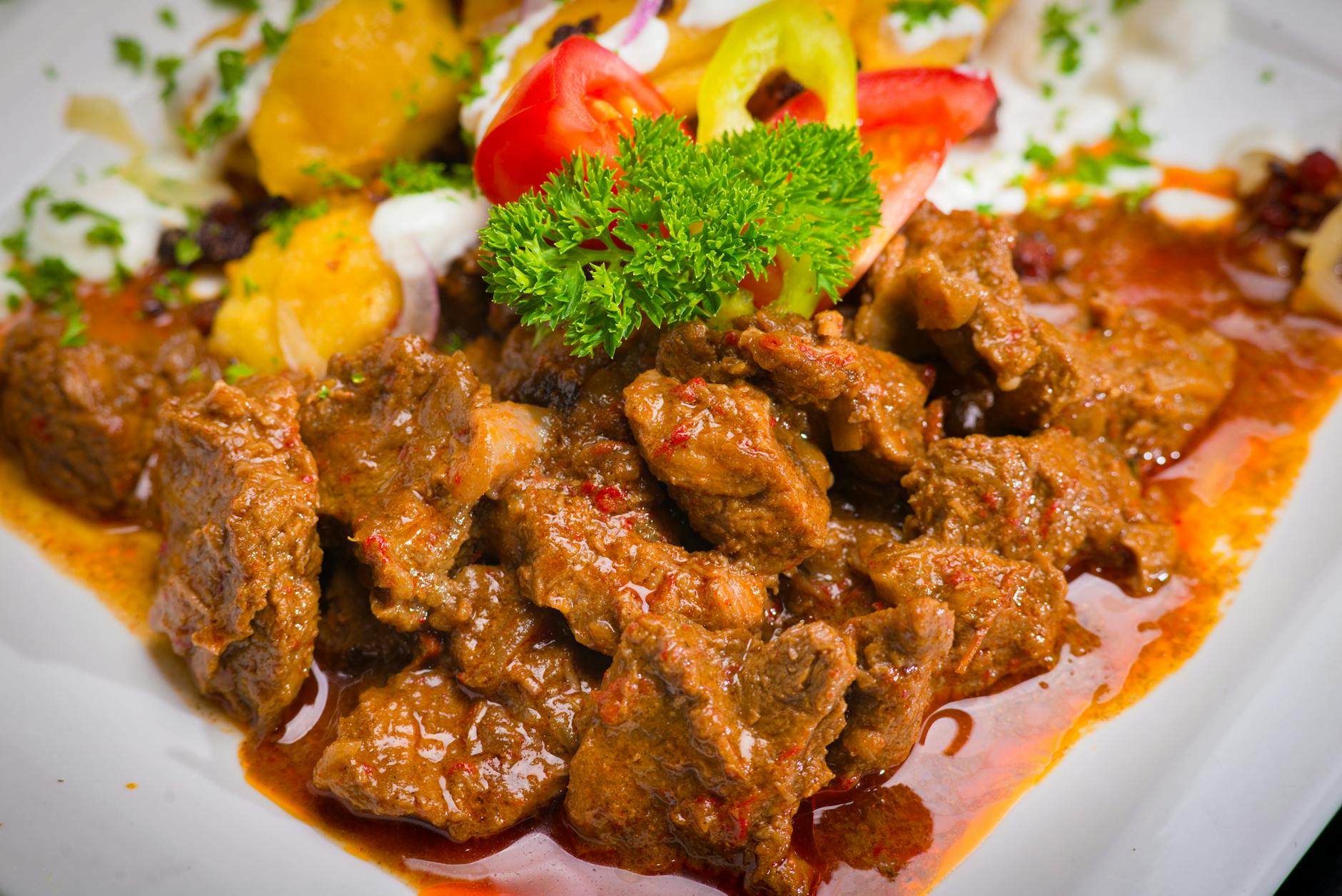
Belgian comfort food revolves around rich, slow-cooked stews that are perfect for the country’s often grey and rainy climate. Any serious Brussels food guide must cover these staples.
Carbonnade Flamande (Flemish Beef Stew)
Carbonnade flamande (stoofvlees in Dutch) is Belgium’s answer to French boeuf bourguignon — except instead of red wine, the beef is braised for hours in Belgian dark beer with onions, mustard, and a slice of pain d’épices (spiced bread) that thickens and sweetens the sauce. The result is a deep, mahogany-hued stew with tender, falling-apart beef and a complex sweet-savoury flavour. Served with frites (naturally) or mashed potatoes.
Waterzooi
Waterzooi originated in Ghent but is beloved across Brussels. It’s a creamy, velvety stew made with chicken (or traditionally fish), vegetables (carrots, leeks, celery, potatoes), cream, and egg yolks. Think of it as Belgium’s answer to a rich, comforting chowder — bright, herby, and soul-warming. The fish version (waterzooi de poisson) is harder to find but worth seeking out at Sainte-Catherine’s seafood restaurants.
Stoemp
Stoemp is a Brussels speciality: a rustic mash of potatoes with one or more vegetables — carrots, leeks, spinach, or cabbage — served alongside a hearty sausage, braised meat, or bacon. It’s unpretentious, filling, and exactly the kind of food that sustains you through a Belgian winter.
Where to Eat Belgian Stews
Fin de Siècle at 9 Rue des Chartreux is the quintessential Brussels bistro, serving generous portions of carbonnade and stoemp, with mains from €17.85 (stoemp saucisses) to €36.25 (entrecôte). Le Zinneke in Schaerbeek is a slow-food Belgian bistro beloved for its stoemp and meatballs. In ‘t Spinnekopke on Place du Jardin aux Fleurs is another good address for traditional Belgian cooking.
7. More Must-Try Brussels Dishes
Beyond the headline dishes, Brussels’ food scene is packed with specialities that reward the curious eater:
Croquettes aux Crevettes Grises (Grey Shrimp Croquettes)
Crispy, golden croquettes filled with a creamy béchamel loaded with tiny grey shrimp (Crangon crangon) from the North Sea. They’re a beloved appetiser across Belgium and one of the most satisfying things you’ll eat in Brussels. Best at Noordzee/Mer du Nord or any quality brasserie.
Vol-au-Vent
A large puff pastry shell filled with a rich cream sauce containing chicken, mushrooms, and small meatballs. It’s old-fashioned Belgian home cooking elevated to restaurant quality — hearty, comforting, and deeply satisfying.
Américain (Filet Américain)
Belgium’s version of steak tartare — raw minced beef seasoned with capers, onions, Worcestershire sauce, and mustard, spread on toast or served as a main dish. It’s available at virtually every café and brasserie and is a quintessential Belgian lunch.
Witloof Gratin (Belgian Endive with Ham)
Belgian endive (witloof in Dutch, chicon in French) wrapped in ham, covered in béchamel sauce, topped with Gruyère, and baked until golden and bubbling. A classic cold-weather dish found on menus from October through March.
Boulets à la Liégeoise (Liège Meatballs)
Enormous meatballs (beef and pork) served in a distinctive sweet-and-sour sauce made from sirop de Liège (an apple-pear molasses), vinegar, and onions. Originally from Liège but widely available in Brussels.
8. Best Restaurants in Brussels by Category
Traditional Belgian
Fin de Siècle — The go-to for hearty Belgian classics at honest prices. In ‘t Spinnekopke — Traditional Belgian cooking. Try the carbonnade or the rabbit braised in gueuze. Le Pré Salé — A handsome brasserie in Ixelles known for exceptional steak tartare and vol-au-vent.
Seafood
Noordzee/Mer du Nord — Standing-only seafood bar on Place Sainte-Catherine. The shrimp croquettes, fish soup, and raw oysters are legendary. Queue, order, eat standing in the square with a glass of white wine. La Belle Maraîchère — An elegant Sainte-Catherine institution for refined seafood. Bij den Boansen — The local’s choice for moules-frites on Quai aux Briques.
Fine Dining
Brussels has 14 Michelin-starred restaurants, three of them with two stars: Bozar Restaurant, Le Chalet de la Forêt in Uccle, and La Paix, now at the Corinthia Grand Hotel Astoria, which serves vegetable-forward modern cuisine. Comme Chez Soi (1 Michelin star, city centre) has been an Art Nouveau dining landmark since 1926.
International and Contemporary
Humus x Hortense (Ixelles) — Award-winning plant-based fine dining. Nona — Wood-fired pizza with Belgian ingredients at multiple locations. Le Clan des Belges — Modern Belgian brasserie near the Bourse. The Matongé neighbourhood in Ixelles is Brussels’ African quarter, with outstanding Congolese restaurants serving madesu (beans), grilled fish, and pondu (cassava leaves).
Budget-Friendly Eating
Look for plat du jour (dish of the day) offerings at lunchtime — many restaurants serve a quality main for €12–16 at midday. Wolf food market (near Bourse) offers 16 different food stalls in a stunning historic building — perfect for groups with different tastes. Street food (frites, waffles, pistolets — filled bread rolls) provides excellent meals for under €5.
9. Best Food Neighbourhoods
Different areas of Brussels specialise in different cuisines — here’s where to head based on what you’re craving:
Sainte-Catherine — The seafood district. Built around the old fish market quays, this neighbourhood is known for its many seafood restaurants in Brussels. From standing seafood bars to white-tablecloth fish restaurants, it’s the place for moules, oysters, and shrimp croquettes.
Saint-Géry / Dansaert — The trendy food and drink scene. Craft cocktails, natural wines, contemporary bistros, and Brussels’ best nightlife dining. The Wolf food market is here.
Sablon — The chocolate and fine dining district. Pierre Marcolini, Wittamer, Mary, and numerous upscale restaurants cluster around the Grand Sablon square.
Ixelles — The multicultural food scene. From Congolese restaurants in Matongé to brunch cafés around Flagey, Asian street food on Chaussée d’Ixelles, and some of the city’s most innovative contemporary restaurants.
Marolles — Budget-friendly, authentic eating. Portuguese tavernas, Moroccan restaurants, classic Brussels brown cafés, and an increasingly trendy dining scene around the flea market.
10. Food Markets Worth Visiting
Brussels’ markets are a window into the city’s food culture and an excellent way to taste local products:
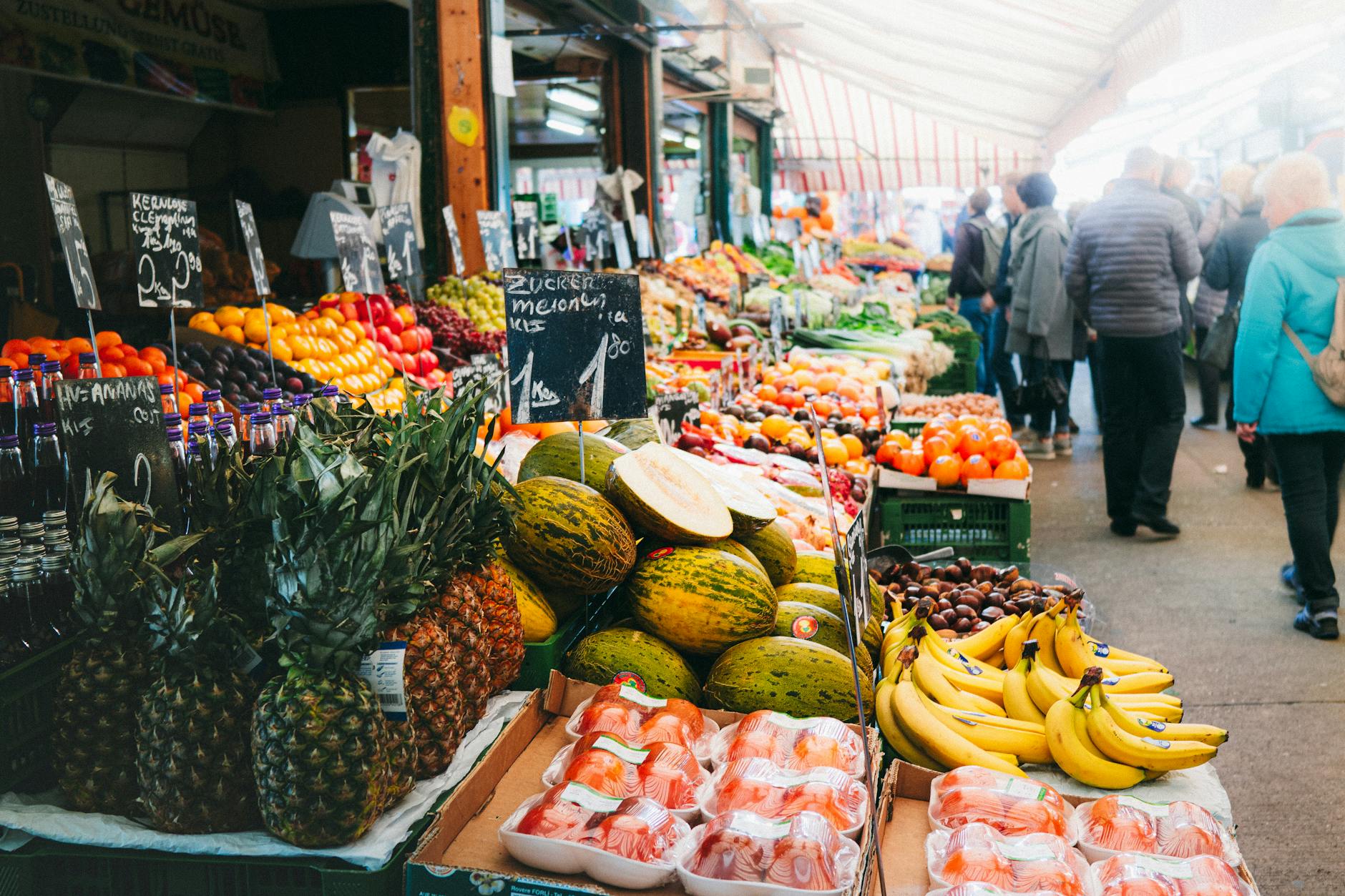
Marché du Midi — Every Sunday morning this big market fills the streets around Brussels-Midi station with fresh produce, cheese, charcuterie, olives, spices, and prepared food. Arrive before 11am for the best selection.
Marché du Châtelain — Wednesday afternoons in Ixelles, this is Brussels’ most upscale food market. Local farmers, artisan cheese makers, organic producers, and prepared food stalls draw an after-work crowd of food-loving locals.
Marché des Tanneurs — Sunday morning in the Marolles. A smaller, more local market with excellent fresh produce and the atmosphere of old Brussels.
Marché Sainte-Catherine — On Saturdays, Place Sainte-Catherine hosts the Objectif Zéro Déchet market.
11. Food Experiences and Tours
For a deeper dive into Brussels’ food culture, consider these experiences:
Chocolate walking tours — Several operators run guided tours of Brussels’ best chocolatiers with tastings along the way. It’s an excellent way to understand the difference between industrial and artisan Belgian chocolate. Visit Brussels maintains a list of accredited tour operators.
Cantillon Brewery tour — A self-guided tour of the Anderlecht lambic brewery, available on Monday, Tuesday, Thursday and Friday. You’ll see the entire traditional brewing process, including the open-air coolship where wild yeast inoculates the wort. Three tastings included.
Belgian Beer World — The interactive beer museum on Grand Place, housed in the restored former Brussels Stock Exchange building. The rooftop bar offers beer tastings with panoramic views.
Cooking classes — Several Brussels cooking schools offer classes in Belgian cuisine. Learn to make your own pralines, master the carbonnade, or bake authentic waffles.
12. Seasonal Food Calendar
Brussels’ food scene shifts with the seasons, and timing your visit right means catching some truly special ingredients:
Spring (March–May): White asparagus season — the prized asperges blanches à la flamande (white asparagus with hard-boiled egg, melted butter, and parsley) appears on every restaurant menu. Strawberries from Wépion arrive in late May.
Summer (June–August): Terrace season. Outdoor dining reaches its peak, and the city’s numerous squares fill with tables. Fresh tomato salads, lighter fish dishes, and cold shrimp croquettes dominate menus.
Autumn (September–November): Mussel season opens in September — the best months for moules-frites are September through December. Game meats (venison, wild boar, partridge) appear on fine-dining menus. Wild mushroom dishes are everywhere.
Winter (December–February): The Christmas markets bring vin chaud (mulled wine), smoutebollen (doughnut balls), roasted chestnuts, and raclette. Heavy stews and witloof gratin are at their best. This is also peak chocolate season.
13. Practical Eating Tips for Brussels
Some essential knowledge to help you eat well in Brussels:
Lunch is the best value meal: Many restaurants offer a plat du jour at lunch for €12–18 — the same kitchen, same quality, fraction of the dinner price. If your budget is limited, make lunch your main meal and graze on frites and waffles at other times.
Avoid Rue des Bouchers: This famous “restaurant street” near Grand Place is a tourist trap. The restaurants employ aggressive touts, menus are overpriced, and quality is mediocre. Walk five minutes in any direction for dramatically better food.
Tipping culture: Service is included in restaurant bills by law in Belgium. Tipping is not expected but rounding up the bill or leaving €1–2 for good service at a café is appreciated.
Meal times: Service hours vary from one restaurant to the next, and some kitchens close between lunch and dinner, so check your chosen restaurant’s hours before you go. Arrive early for popular no-reservation spots.
Reservations: Essential for fine dining and popular bistros on Friday and Saturday evenings. For casual restaurants, walk-ins are usually fine, especially at lunch or early evening.
Water: Tap water is safe to drink in Brussels but most restaurants will try to sell you bottled water. You can ask for “une carafe d’eau” (a jug of tap water), though not all restaurants honour this request.
Vegetarian and vegan options: Brussels’ food scene has expanded significantly for plant-based eaters in recent years. Humus x Hortense (Ixelles) is an award-winning vegan fine-dining restaurant. Many traditional Belgian dishes are meat-heavy, but contemporary restaurants increasingly offer creative vegetarian options.
Explore Food & Drink in Depth
This guide is the overview. Each link below goes deeper on one part of it:
- Best Waffles in Brussels — 12 Top Belgian Waffle Spots
- Brussels Food Tours — 10 Tasting & Walking Tours
Frequently Asked Questions About Brussels Food
What is Brussels most famous for food?
Brussels is most famous for moules-frites (mussels and chips), Belgian waffles (both Brussels and Liège styles), Belgian chocolate pralines, Belgian beer (especially lambic), and frites (chips). The city also has a strong tradition of hearty stews like carbonnade flamande and waterzooi, plus a thriving contemporary dining scene with 14 Michelin-starred restaurants.
What food is unique to Brussels?
Stoemp (mashed potatoes with vegetables) and bloedpens (black pudding) are considered specifically Brussels dishes. The Brussels waffle style originated here, as did the Belgian praline. Lambic beer, spontaneously fermented by wild yeasts, is traditionally associated with Brussels, the Pajottenland and the Senne Valley.
Is Brussels expensive to eat out?
Brussels is moderately priced for a major European capital — significantly cheaper than Paris or London. A mid-range restaurant meal costs €18–30 per person. Street food (frites, waffles) runs €3–5. A coffee costs €2.50–3.50. A beer at a café costs €3.50–6. Budget-conscious eaters can dine well for €30–40 per day; mid-range eaters should budget €50–80.
Where do locals eat in Brussels?
Locals tend to eat in Ixelles (around Flagey and Chaussée d’Ixelles), Saint-Gilles (Parvis and Chaussée de Charleroi), Sainte-Catherine, and Saint-Géry. They generally avoid the Grand Place area and Rue des Bouchers. For the most authentic experience, follow the Belgians to neighbourhood bistros and cafés away from the tourist core.
What should I avoid eating in Brussels?
Avoid restaurants with picture menus and touts on Rue des Bouchers. Be wary of waffle shops near Grand Place selling pre-made waffles reheated in plastic wrap — authentic waffles are made fresh. Skip generic chocolate shops selling cheap, mass-produced pralines and instead invest in quality artisan chocolate from the chocolatiers mentioned in this guide.
Brussels rewards the hungry traveller like few other cities. From a €3 cone of frites eaten standing on a busy street corner to a €150 tasting menu at one of the city’s two-Michelin-star restaurants, the range and quality of this city’s food scene is extraordinary. Eat adventurously, venture beyond the tourist centre, and you’ll discover why Belgians consider their food culture second to none.
Planning your Brussels trip? Read our guides to things to do in Brussels, where to stay in Brussels, and day trips from Brussels.