Brussels is one of Europe’s most underrated capitals — a city where medieval grandeur meets modern multiculturalism, where every cobblestoned street leads to a world-class museum, a hidden chocolate shop, or a centuries-old café pouring one of Belgium’s 1,500+ beers. Whether you’re planning a weekend escape or an extended stay, Brussels delivers far more than most visitors expect.
As someone who has explored every corner of this fascinating city, I can tell you that Brussels rewards the curious traveller. Beyond the famous Grand Place and Manneken Pis, you’ll find Art Nouveau masterpieces by Victor Horta, a thriving comic strip culture that gave the world Tintin and the Smurfs, a culinary scene that rivals Paris at half the price, and the beating heart of European democracy at the EU Parliament.
This guide covers the 25 best things to do in Brussels in 2026 — from iconic landmarks and world-class museums to local food experiences, hidden gems, and practical insider tips. Whether you’re a first-time visitor or returning for another taste of Belgian excellence, use this as your roadmap to experiencing everything Brussels has to offer.
1. Marvel at the Grand Place — Brussels’ Magnificent Medieval Square
No visit to Brussels begins anywhere other than the Grand Place (Grote Markt), the city’s beating heart and a UNESCO World Heritage Site since 1998. This isn’t just any town square — it’s regularly ranked among the most beautiful squares in the entire world, and once you step into it, you’ll understand why.
The square is enclosed by nearly 40 ornate guildhalls, each adorned with gilded facades, baroque sculptures, and intricate carvings that date back to the late 17th century. The centrepiece is the Brussels Town Hall (Hôtel de Ville), the only medieval building remaining on the square, topped by a 96-metre tower crowned with a statue of Saint Michael slaying a dragon. Opposite stands the Maison du Roi (King’s House), now home to the Brussels City Museum where you can see the famous wardrobe collection of Manneken Pis — over 1,000 costumes and counting.
The guildhalls themselves tell the story of Brussels’ prosperous trading past. Look for the houses of the Bakers (La Maison du Roi d’Espagne), the Brewers (Le Cornet), the Archers, and the Boatmen — each one a masterpiece of baroque architecture rebuilt after the devastating French bombardment of 1695.
When to Visit the Grand Place
The Grand Place is open 24/7 and completely free to visit. For the best experience, visit at three different times: early morning (before 9am) when the square is nearly empty and bathed in soft light; midday when the flower market fills the cobblestones with colour; and after dark when the gilded facades are illuminated and the Town Hall hosts the “Echoes of Colors” sound and light show — a five-minute video mapping projection on the tower that runs nightly year-round.
If your timing is right, you might catch one of the square’s spectacular events: the Flower Carpet (Tapis de Fleurs), a massive carpet of begonias covering the entire square every two years in August; the Ommegang, a UNESCO-recognised historical procession in July; or Winter Wonders, Brussels’ beloved Christmas market with over 200 chalets, an ice rink, and a towering Christmas tree from late November through early January.
Insider tip: The best photograph of the Grand Place is taken from the corner of Rue de la Colline, where you can capture the Town Hall tower framed by the guildhalls. At night, position yourself at the southeast corner for the most dramatic illumination angle.
2. Visit the Atomium — Brussels’ Iconic Space-Age Landmark
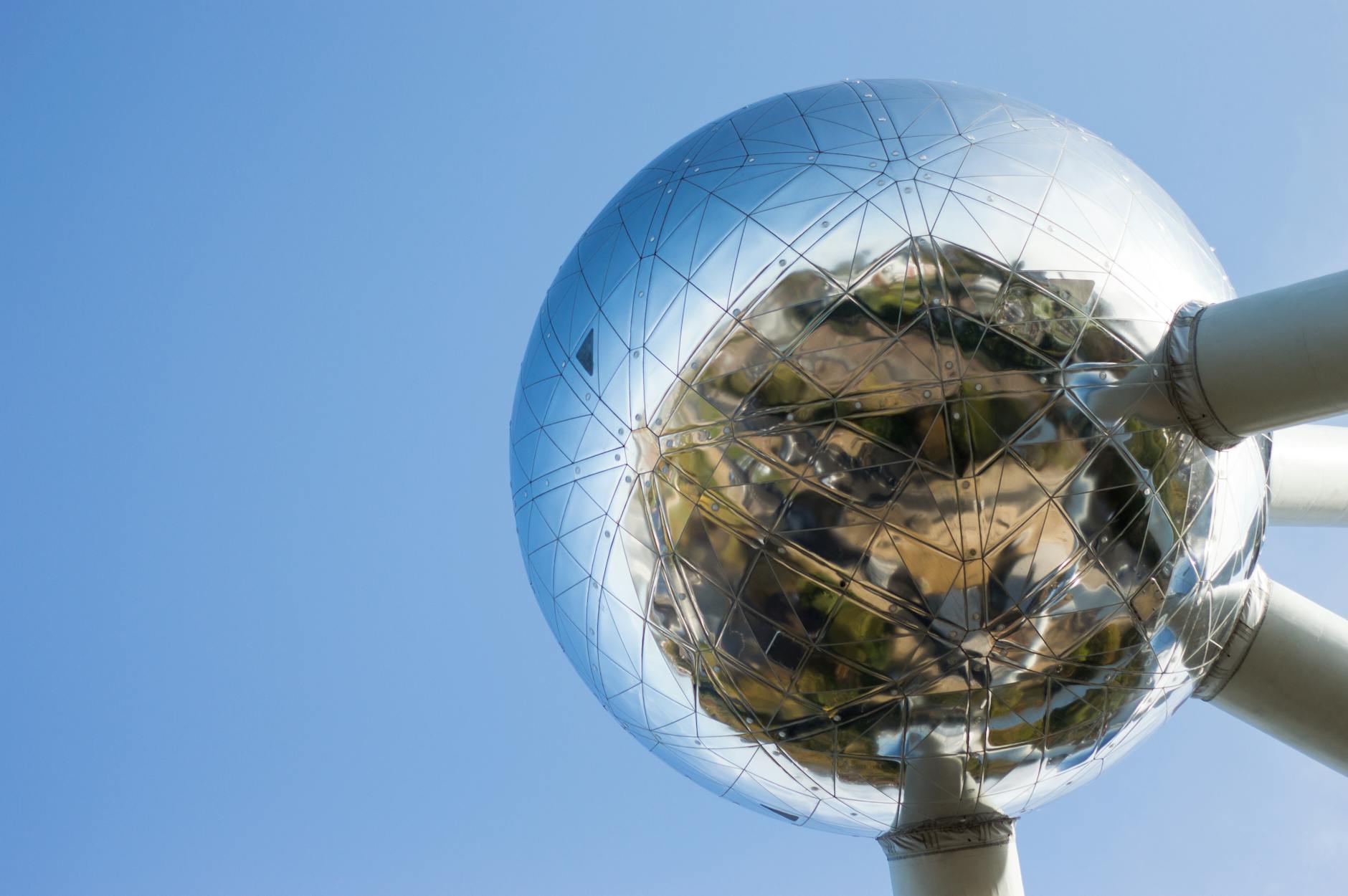
Rising 102 metres above the Heysel Plateau in northern Brussels, the Atomium is one of the most striking buildings in Europe. Designed by André Waterkeyn for the 1958 World Expo, it represents an iron crystal magnified 165 billion times, and its nine interconnected spheres have become the most recognisable symbol of Brussels and Belgium.
Five of the nine spheres are open to visitors, connected by escalators and a central elevator that whisks you to the top in just 23 seconds. Inside, you’ll find permanent and temporary exhibitions exploring the history of the 1958 World’s Fair, mid-century design, and contemporary art. The top sphere offers panoramic 360-degree views over Brussels and, on clear days, as far as Antwerp.
The Atomium Restaurant, located in the highest accessible sphere at 95 metres, serves Belgian cuisine with arguably the best view in the city. You don’t need an exhibition ticket to dine — just a reservation. For a more casual experience, the ground-floor café is perfect for a coffee or Belgian beer.
Practical Information
Tickets: Adults €17, children (taller than 115cm, up to 17) €9, children 115cm or shorter free; concession rates are listed on atomium.be. Your ticket also includes entry to the Design Museum Brussels, located 150 metres away. Hours: Daily 10am-6pm (last entry 5:30pm). Closed annually for maintenance in late January/early February. Getting there: Metro line 6 to Heysel station, then a 5-minute walk.
Insider tip: Visit on a weekday morning to avoid queues. Combine your visit with Mini-Europe next door — a miniature park featuring 350 reproductions of famous European monuments — especially if you’re travelling with children.
3. Say Hello to Manneken Pis — The World’s Most Famous Small Statue
Brussels’ most famous resident stands just 61 centimetres tall and has been urinating into a fountain since 1619. Manneken Pis is quirky, irreverent, and perfectly captures the Brussels sense of humour — locals call him the city’s “oldest citizen.”
The bronze statue, created by sculptor Jérôme Duquesnoy the Elder, replaced an even older stone version that had been dispensing drinking water at this crossroads since the 15th century. Today, he stands at the intersection of Rue de l’Étuve and Rue du Chêne, a short walk from the Grand Place.
What makes Manneken Pis truly special is his wardrobe. He’s dressed in costume roughly half the year, with over 1,000 outfits in his collection — from an Elvis suit to a samurai outfit to the uniform of every visiting head of state. You can see the full collection at the GardeRobe MannekenPis Museum at 19 Rue du Chêne (opened 2017).
Don’t miss his lesser-known counterparts: Jeanneke Pis, a 50cm bronze sculpture of a squatting girl located in the Impasse de la Fidélité near Delirium Café, and Zinneke Pis, a bronze dog on Rue des Chartreux. Together, they form Brussels’ irreverent “peeing trinity.”
Insider tip: Manneken Pis is small and always surrounded by crowds. Visit early morning or check the costume calendar online at mannekenpis.brussels to time your visit with a special dressing event.
4. Explore the Royal Museums of Fine Arts — Six Museums in One
The Royal Museums of Fine Arts of Belgium is not one museum but a complex of six, housing over 20,000 artworks spanning from the 15th century to the present day. Located in the Royal Quarter on the Place Royale, it’s the most visited museum complex in Belgium and one of the finest art collections in Europe.
The Oldmasters Museum is the crown jewel, featuring masterpieces by Pieter Bruegel the Elder, Peter Paul Rubens, Anthony van Dyck, and Rogier van der Weyden. The Fin-de-Siècle Museum covers the revolutionary period from 1868 to 1914, when Brussels was at the epicentre of Art Nouveau. The smaller Wiertz Museum and Meunier Museum are free and offer intimate encounters with these Belgian artists’ works.
Allow at least 2-3 hours for the main buildings. If you only have time for one section, make it the Oldmasters Museum — the Bruegel room alone is worth the visit.
5. Enter the Surreal World of the Magritte Museum
Adjacent to the Royal Museums, the Magritte Museum deserves its own entry because it’s that good. Dedicated entirely to Belgium’s most famous surrealist, René Magritte, the museum houses the world’s largest collection of his works: 230 paintings, gouaches, drawings, sculptures, and films spread across three floors of a neoclassical building.
The chronological journey takes you from Magritte’s early experiments through his iconic bowler-hatted men, floating rocks, and impossible perspectives. Even if you’re not an art connoisseur, the imaginative, dreamlike quality of his work is genuinely captivating.
Insider tip: Buy a combined ticket for the Magritte Museum and the Oldmasters Museum to save money. Visit on the first Wednesday afternoon of each month when admission is reduced.
6. Indulge in World-Class Belgian Chocolate
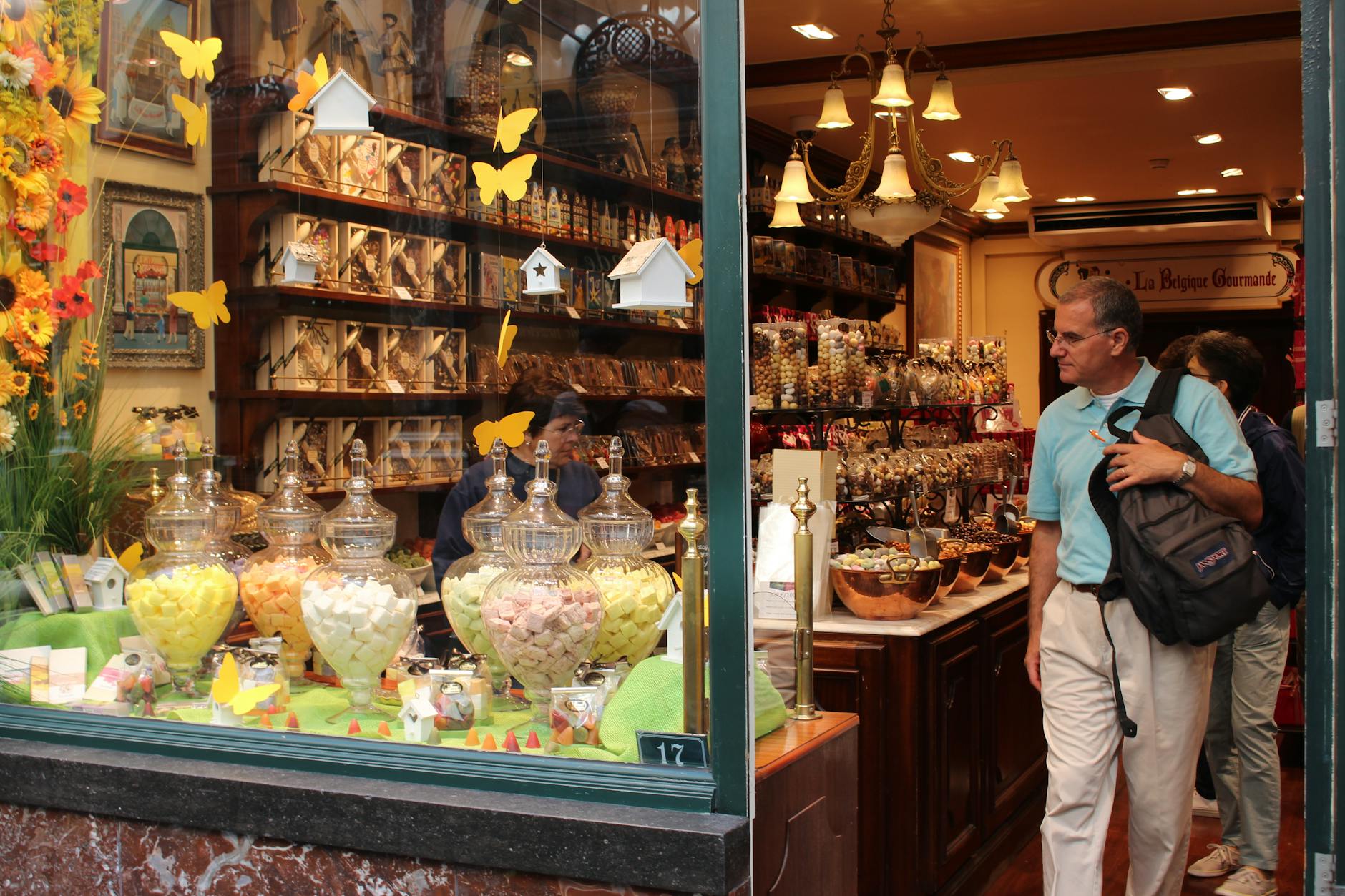
Belgium produces over 220,000 tonnes of chocolate annually, and Brussels is the epicentre of this sweet obsession. The city is home to dozens of master chocolatiers, from historic houses to innovative newcomers, and tasting your way through them is one of the essential Brussels experiences.
The Sablon district is ground zero for premium chocolate. Here you’ll find Wittamer (established 1910, official supplier to the Belgian Royal Court), Pierre Marcolini (two Sablon locations, known for single-origin cocoa), and Laurent Gerbaud (famous for unexpected flavour combinations with dried fruits and spices instead of cream).
For a deeper dive, visit Choco-Story Brussels, a dedicated museum tracing the journey from cocoa bean to Belgian praline. Open daily 10am-6pm, it includes live demonstrations where you watch a master chocolatier craft pralines by hand, and the “Tablet Workshop” lets you create your own chocolate bar under artisan guidance.
Other must-visit chocolatiers include Neuhaus (inventor of the Belgian praline in 1912, with a flagship in the Galeries Royales Saint-Hubert), Mary (Royal Warrant holder since 1942), and Frederic Blondeel (a bean-to-bar specialist in the Dansaert district known for innovative flavours).
Insider tip: Skip the tourist-trap chocolate shops on Rue des Bouchers (you’ll recognise them by the piled-high window displays). Instead, head to the Sablon or the Galeries Saint-Hubert for the real deal. Most quality chocolatiers offer free tastings if you ask politely.
7. Discover Belgian Beer Culture at Belgian Beer World
Belgium’s beer culture is UNESCO-recognised, and Brussels is the best place on Earth to experience it. With over 1,500 distinct Belgian beers — from crisp Trappist ales brewed by monks to complex lambics fermented with wild yeast — the depth and variety are staggering.
The newest and most impressive beer experience is Belgian Beer World, housed in the magnificently renovated 19th-century Brussels Stock Exchange (Bourse) on Anspach Boulevard. This immersive attraction takes you through the history, science, and culture of Belgian brewing across multiple interactive floors, culminating in a beer tasting and access to a rooftop terrace with panoramic views over the Brussels skyline. Open Tuesday-Sunday, 10am-5:30pm.
For a more traditional experience, head to Delirium Café, a few minutes’ walk from the Grand Place, which holds the Guinness World Record for the most beers available — over 2,000 varieties from Belgium and around the world. The atmosphere is lively, the beer list is encyclopaedic, and the adjacent Delirium Village includes a tequila bar, an absinthe bar, and a cocktail bar.
Other essential beer stops include À la Mort Subite (a gorgeous art deco café serving traditional lambics and krieks since 1928), Cantillon Brewery (a working lambic brewery open for self-guided tours), and Moeder Lambic in Saint-Gilles (40 taps of rare Belgian craft beers).
Insider tip: Belgian Beer World ticket holders receive a code for 40% off SNCB train tickets on the day of their visit — perfect if you’re arriving from Bruges or Ghent.
8. Follow the Comic Strip Trail — Brussels as the Capital of Comics
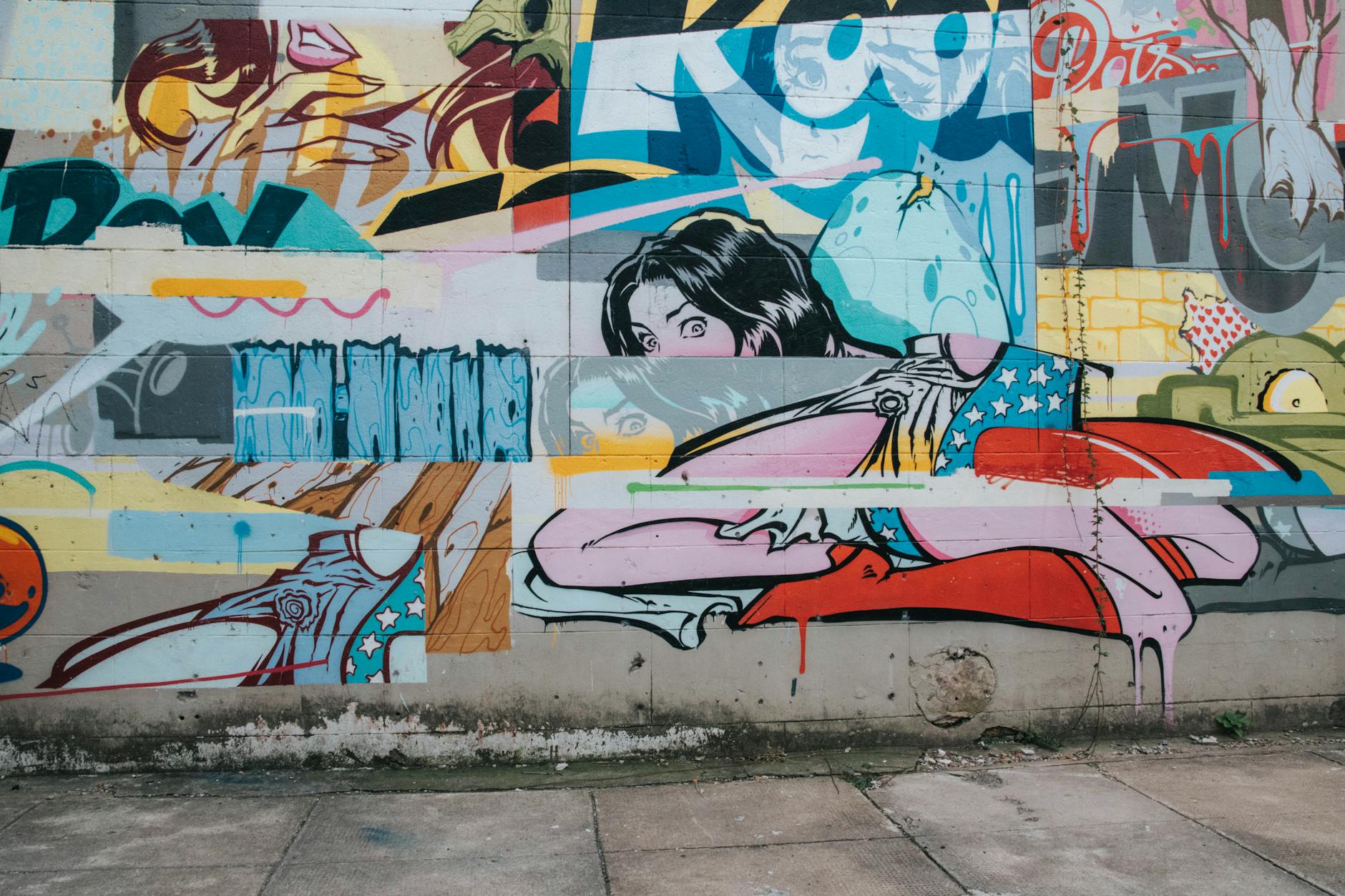
Brussels is the undisputed capital of the comic strip. This is the city that gave the world Tintin, the Smurfs, Lucky Luke, and hundreds of other beloved characters. Belgium has produced more comic strip artists per square kilometre than any other country, and Brussels celebrates this heritage in spectacular fashion.
The Comic Strip Route is a self-guided outdoor gallery of over 80 building-sized murals scattered across the city, each depicting scenes from famous Belgian comics. Started in 1991, the route links neighbourhoods from the city centre to Laeken and beyond. Download the free map from visit.brussels or simply wander — you’ll stumble upon murals around almost every corner.
For the full story, visit the Belgian Comic Strip Centre at 20 Rue des Sables, housed in a stunning Art Nouveau building designed by Victor Horta himself. The permanent exhibition, “The Museum of Imagination,” traces the history of Belgian comics from 1929 to the present, with original artwork, interactive displays, and a comprehensive section on Hergé’s Tintin — translated into 40 languages with over 140 million copies sold worldwide.
Insider tip: The best murals for photography are clustered between the Grand Place and the Bourse area. Look up — many murals are on upper floors and easy to miss if you’re not paying attention. The expanded 2026 route now links even more neighbourhoods, making a full circuit a half-day adventure.
9. Eat Your Way Through Brussels: Waffles, Frites & Moules
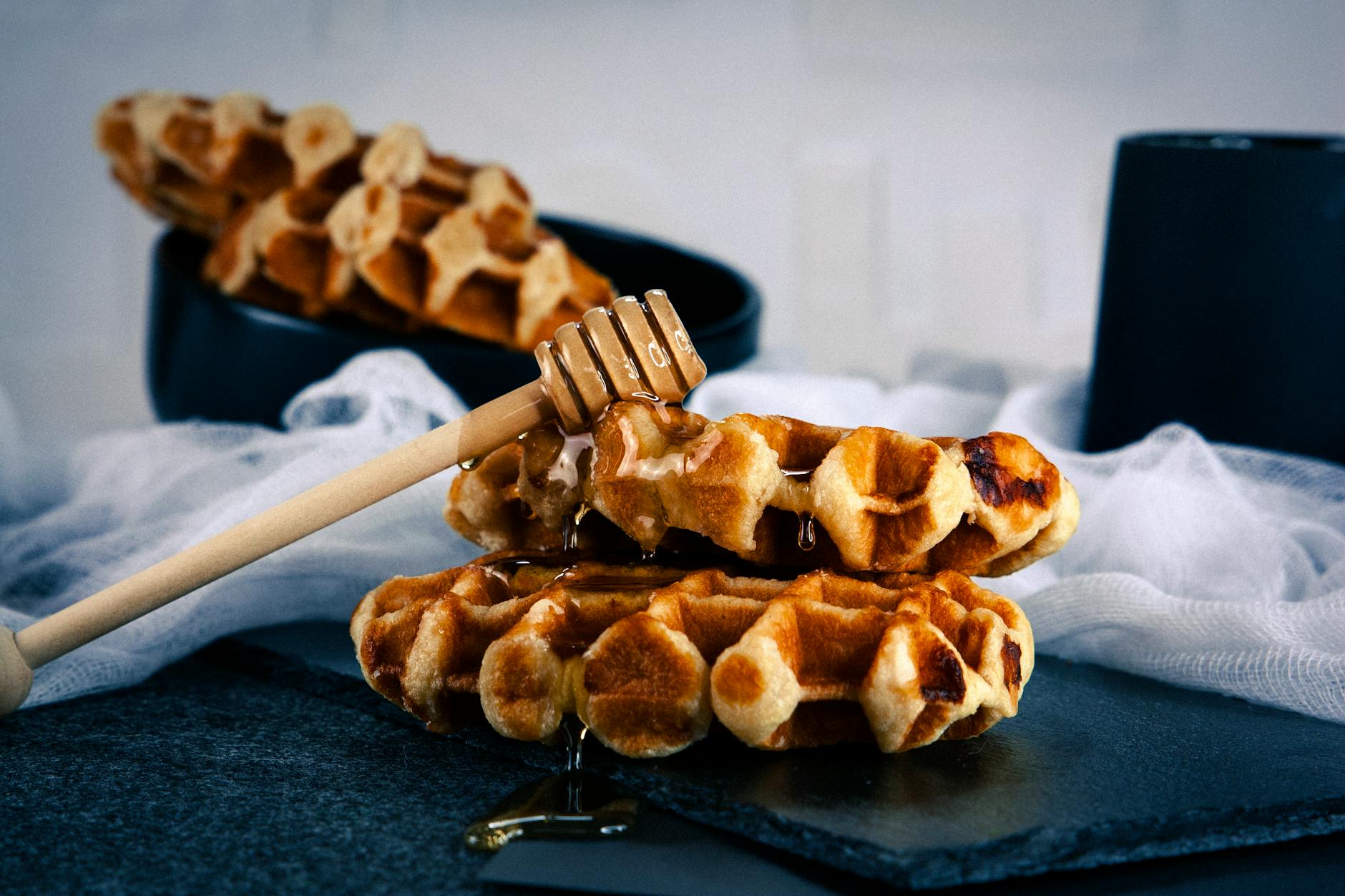
Brussels is a food lover’s paradise, and three iconic dishes define the city’s culinary identity.
Belgian Waffles: There are two types, and knowing the difference will transform your experience. The Brussels waffle is light, fluffy, and rectangular with deep pockets — best eaten plain or with a light dusting of powdered sugar. The Liège waffle is denser, chewier, and studded with pearl sugar that caramelises during cooking. For the best Brussels waffle, head to Maison Dandoy (established 1829) near the Grand Place. For Liège waffles, look for the places where locals queue, not the tourist stands on Rue des Bouchers.
Belgian Frites: Forget “French fries” — the Belgians claim they invented them, and theirs are superior. Traditionally double-fried in beef tallow for an impossibly crispy exterior and fluffy interior, they’re served in a paper cone with your choice of sauce. Mayonnaise is the classic, but try andalouse (slightly spicy) or samourai (fiery pepper sauce). The best friteries include Maison Antoine in Place Jourdan and Fritland near the Bourse.
Moules-Frites: Mussels and chips is the quintessential Brussels dish, typically served in enormous steaming pots. The classic preparation is moules marinières (white wine, celery, and onion), but you’ll also find them in cream, curry, or Roquefort sauces. Chez Léon (since 1893) on Rue des Bouchers is the most famous, but locals prefer the seafood restaurants around Place Sainte-Catherine, where the old fish market once stood — try Noordzee/Mer du Nord for the freshest catch, served standing at outdoor counters.
10. Admire Brussels’ Art Nouveau Architecture
Brussels is one of the birthplaces of Art Nouveau, and the city preserves hundreds of buildings from this revolutionary architectural movement that swept through Europe at the turn of the 20th century. The star of the show is Victor Horta (1861-1947), whose innovative use of iron, glass, and natural light earned four of his Brussels town houses UNESCO World Heritage status in 2000.
The Horta Museum at 23-25 Rue Américaine in Saint-Gilles is the essential visit — Horta’s own house and workshop, preserved as a museum. Every detail, from the wrought-iron banisters to the mosaic floors to the custom-designed door handles, demonstrates his philosophy that architecture should be a total work of art. The building’s open floor plan and innovative use of skylights were revolutionary for the 1890s.
The four UNESCO-listed Horta houses are the Hôtel Tassel (the first Art Nouveau building, 1893), Hôtel Solvay, Hôtel van Eetvelde, and the Horta House itself. Beyond Horta, look for works by Paul Hankar, Gustave Strauven, and Paul Cauchie throughout the Ixelles, Saint-Gilles, and Schaerbeek districts.
Insider tip: Visit Brussels offers a list of 10 must-visit Art Nouveau houses and mansions. Many are private residences viewable only from the outside, but the Horta Museum and the Musical Instruments Museum (housed in the stunning Old England building on Mont des Arts) offer full interior access.
11. Visit the European Parliament — Democracy in Action
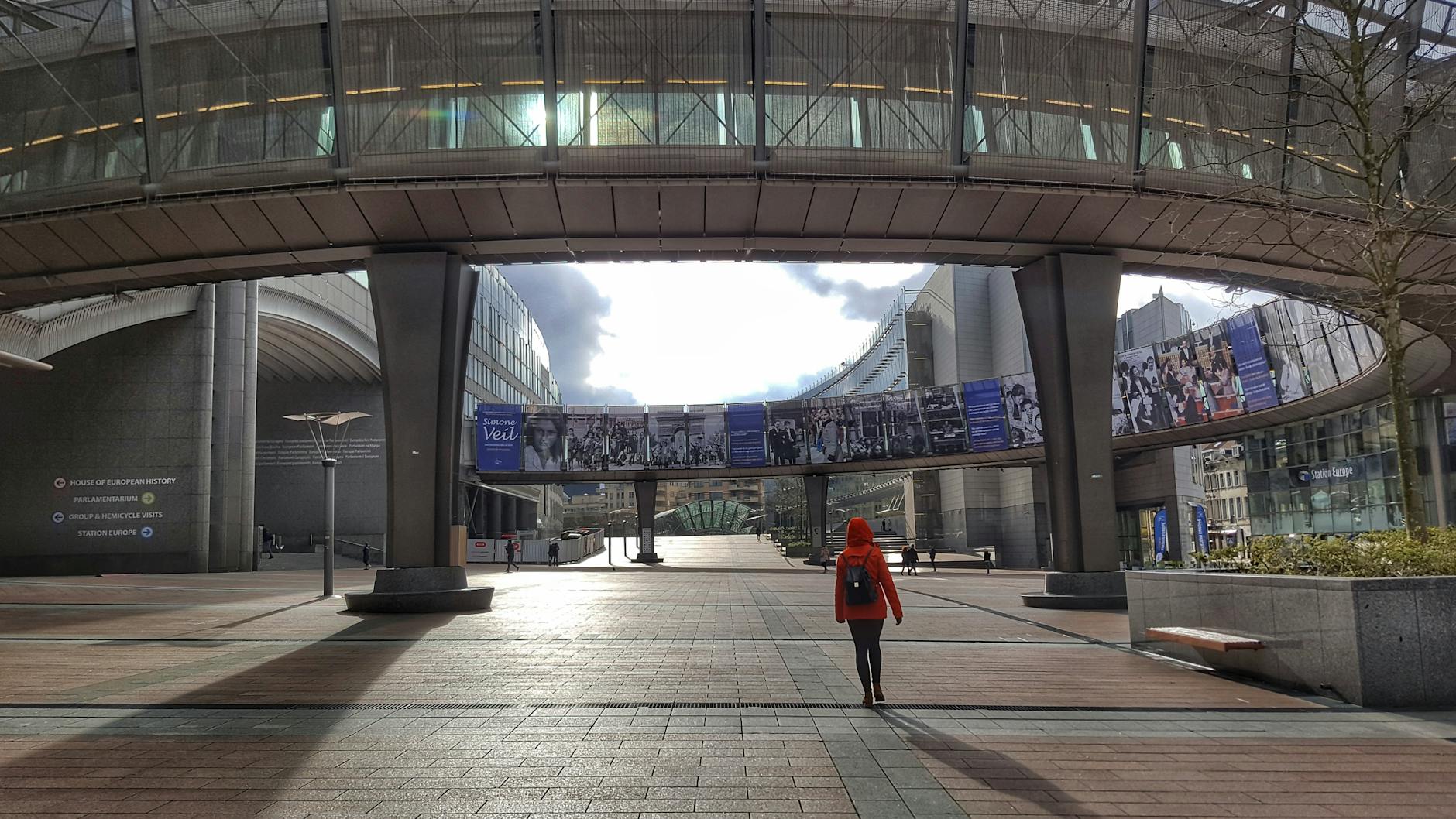
Brussels is the de facto capital of the European Union, and visiting the EU institutions is a unique experience you won’t find anywhere else. The centrepiece is the Parlamentarium, Europe’s largest parliamentary visitors’ centre, where interactive multimedia exhibits guide you through the history of European integration and how the Parliament works today.
The Parlamentarium is free, open seven days a week, and available in all 24 official EU languages. Self-guided visits take about 90 minutes. The experience is surprisingly engaging even for non-political visitors, with immersive 360-degree cinemas and interactive displays.
Beyond the Parlamentarium, you can visit the European Parliament hemicycle (the debating chamber) on self-guided tours during weekdays — pre-registration required, and bring a valid passport or national ID. The European Commission’s Berlaymont building at the Schuman roundabout offers guided tours, and the nearby House of European History is another free museum exploring the continent’s shared history.
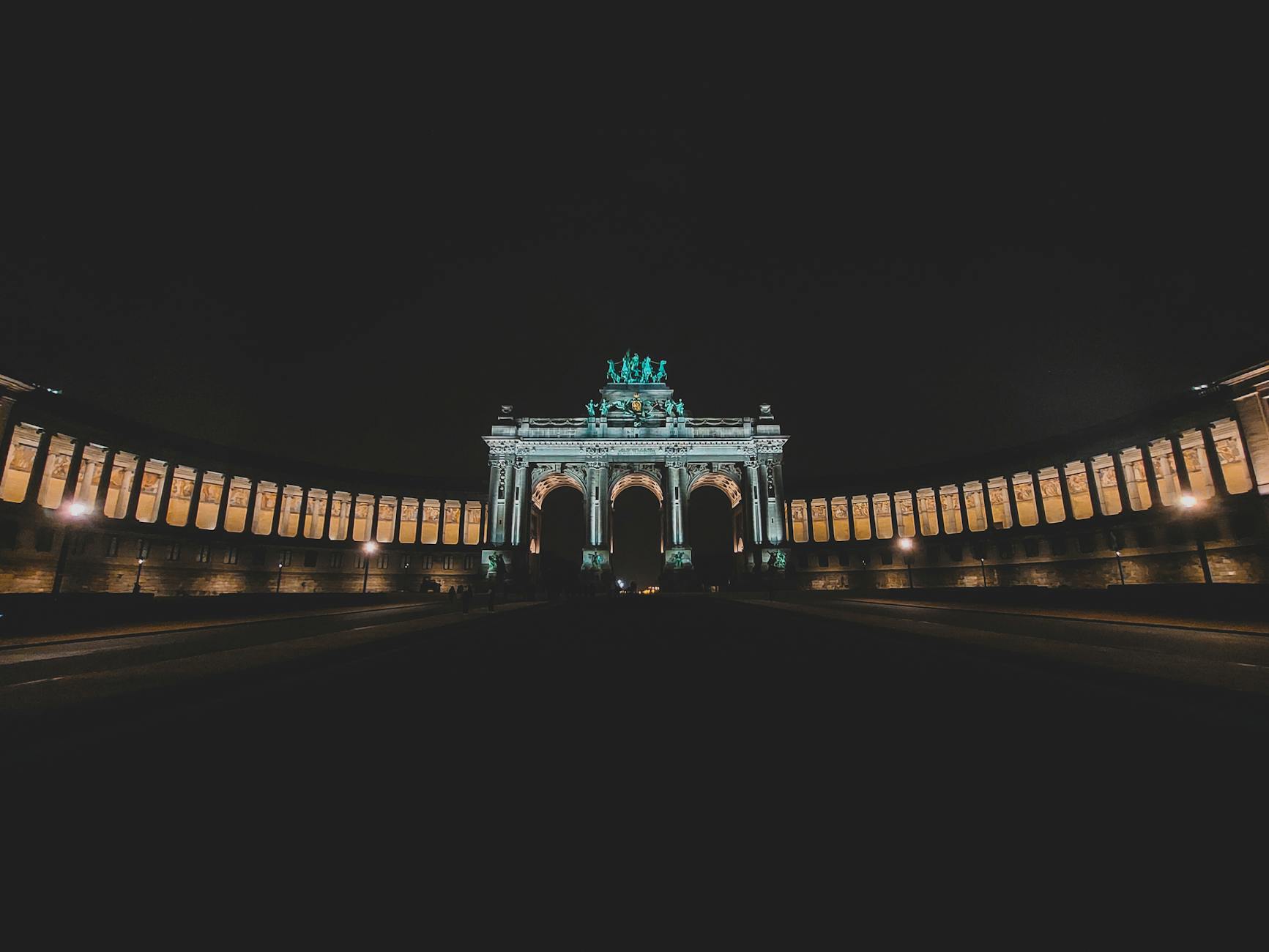
The entire European Quarter (Leopold Quarter) is worth exploring on foot. The contrast between the massive modern EU buildings and the elegant 19th-century townhouses of the surrounding streets is fascinating. Cinquantenaire Park, with its monumental triumphal arch, is a 10-minute walk away.
12. Take in the View from Mont des Arts
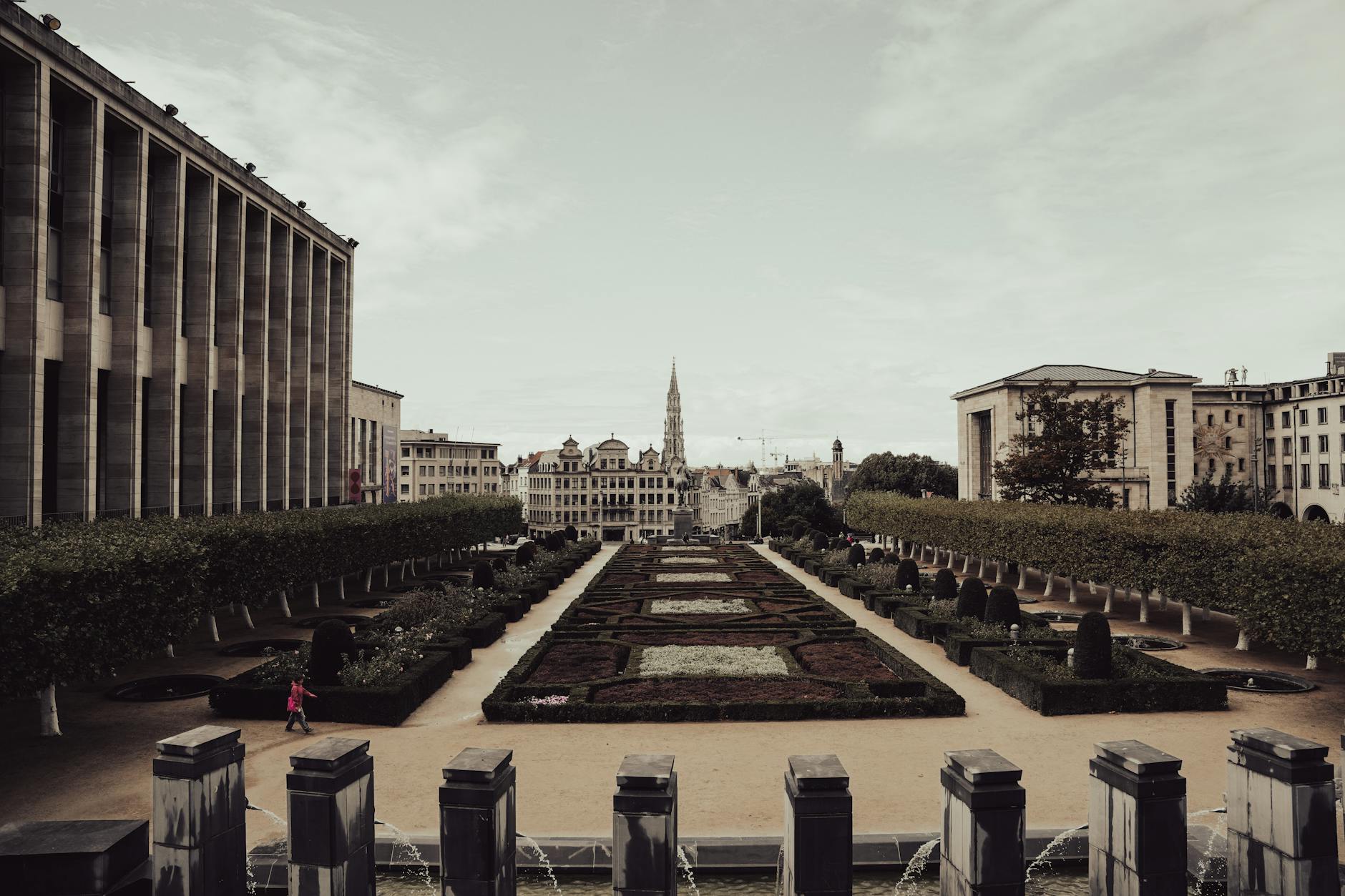
The Mont des Arts (Hill of the Arts) is a public garden and cultural complex connecting the Royal Quarter to the lower city around the Grand Place. It’s one of the best viewpoints in Brussels, offering a sweeping panorama that includes the Town Hall tower, the rooftops of the old city, and on clear days, the Atomium and the Basilica of Koekelberg in the distance.
The geometric gardens were designed by landscape architect René Pechère for the 1958 World Expo, and they frame the view perfectly. The area is surrounded by some of Brussels’ most important cultural institutions: the Magritte Museum, the KBR (Royal Library), the Musical Instruments Museum, and the Bozar Centre for Fine Arts.
A musical clock (carillon) chimes at regular intervals, and the area is beautifully lit after dark. It’s completely free and open 24/7 — the perfect spot for a sunset photo or a quiet moment between museum visits.
13. Browse Antiques and Chocolate in the Sablon
The Place du Grand Sablon is Brussels’ most refined square — an elegant, tree-lined space surrounded by high-end antique shops, art galleries, premium chocolate boutiques, and pavement cafés. It’s the antidote to the tourist bustle of the Grand Place, with a distinctly sophisticated, local atmosphere.
The Sablon Antiques Market runs every Saturday and Sunday beneath the tower of the Notre Dame du Sablon church. Expect books, vintage watches, jewellery, paintings, silverware, and decorative arts — it’s been a go-to for antique hunters since the 1960s.
The square is also home to the highest concentration of premium chocolatiers in Brussels. Wittamer, Pierre Marcolini, and Passion Chocolat all have Sablon locations. After browsing, settle into a terrace café and watch the neighbourhood’s well-heeled residents go about their weekend.
14. Treasure Hunt at the Marolles Flea Market
Just downhill from the Sablon, the Marolles is Brussels’ most characterful working-class neighbourhood, and its heart is the Place du Jeu de Balle flea market — the most famous flea market in Belgium.
The market operates daily from 6am to 2pm (until 3pm on Sundays), 365 days a year, with approximately 450 merchants. The early morning hours are best for serious finds, when dealers arrive with fresh stock. You’ll find everything from vintage furniture and vinyl records to antique kitchenware, old maps, and curios of every description.
The surrounding streets of the Marolles are lined with permanent vintage shops, quirky cafés, and traditional restaurants. Take the glass elevator from the Place Poelaert (near the Palais de Justice) down to the Marolles for a dramatic entrance with panoramic views.
15. Feast on Seafood in the Sainte-Catherine District
The area around Place Sainte-Catherine was once Brussels’ inner port and fish market, and it remains the city’s seafood capital. The original Vismet (fish market) operated from 1884 to 1955, and its culinary legacy lives on in the excellent seafood restaurants that line the surrounding streets.
The standout is Noordzee/Mer du Nord, a legendary seafood stall where you eat standing at high tables on the pavement — think freshly shucked oysters, croquettes de crevettes (shrimp croquettes), and steaming bowls of fish soup. It’s been run by the same family for over 20 years and is perpetually packed with locals, which tells you everything. Other excellent choices include Bij den Boer for classic bouillabaisse and Le Vismet for a sit-down experience.
16. Admire the Royal Palace of Brussels
The Royal Palace of Brussels is the official palace of the Belgian King and Queen, used for state functions and audiences. While the royal family lives at the Royal Palace of Laeken, this imposing neoclassical building on the Place des Palais is the ceremonial face of the Belgian monarchy.
The palace opens to the public for free each summer, typically from July 21 (Belgian National Day) through early September. Visits are self-guided and take about an hour, showcasing opulent state rooms, the Throne Room, and a remarkable ceiling installation by contemporary artist Jan Fabre made entirely of jewel beetle wing cases.
Booking: Online reservation is mandatory for a timed entry slot. Open Tuesday-Sunday, 10:30am-5pm (last entry 3:45pm) during the summer season.
17. Spend an Afternoon in Cinquantenaire Park
The Parc du Cinquantenaire is Brussels’ most impressive public park, created in 1880 to celebrate Belgium’s 50th anniversary of independence. Its centrepiece is a monumental triumphal arch topped by a bronze chariot, which contains a hidden staircase leading to a rooftop viewing platform — one of Brussels’ best-kept secrets (access via the Royal Military Museum).
The park houses three major museums: Autoworld (over 300 vintage and classic vehicles, €18), the Royal Museum of Armed Forces and Military History (one of Europe’s finest war museums with dozens of aircraft, tanks, and uniforms, €12), and the Art & History Museum (€10). A combi-ticket for all three costs €25 and is valid for three months.
Beyond the museums, the park is a favourite of local joggers, picnickers, and families. The lawns are perfect for a sunny afternoon, and the monumental architecture provides a grand backdrop. It’s also one of the best spots in Brussels for autumn foliage photography.
18. Stroll Through the Galeries Royales Saint-Hubert
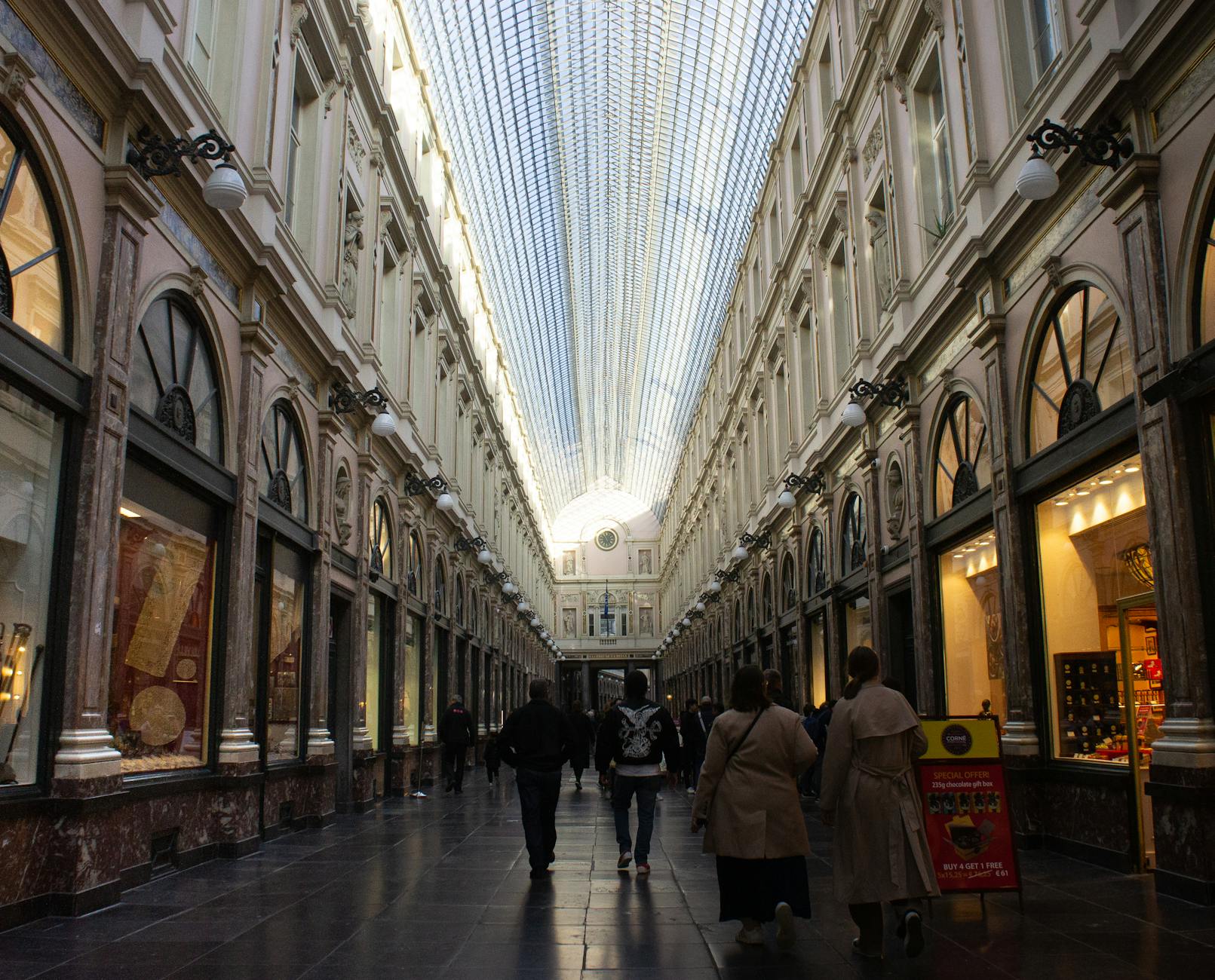
Inaugurated in 1847, the Galeries Royales Saint-Hubert is one of Europe’s oldest covered shopping arcades and one of its most beautiful. The glass-vaulted ceiling floods the arcade with natural light, illuminating a curated collection of luxury boutiques, chocolatiers, bookshops, and cafés.
The arcade comprises three interconnected galleries: the Galerie du Roi, the Galerie de la Reine, and the smaller Galerie des Princes. Neuhaus, the inventor of the Belgian praline, has its original shop here (since 1857). The Théâtre Royal des Galeries, one of Belgium’s most prestigious theatres, occupies the upper levels.
The Galeries draw approximately 6 million visitors annually, making them one of Brussels’ most visited attractions. Entry is free — just stroll through and admire the architecture, or stop for a coffee at one of the historic cafés.
19. Meet the Dinosaurs at the Museum of Natural Sciences
The Museum of Natural Sciences (Institut Royal des Sciences Naturelles) houses the largest dinosaur gallery in Europe — a 3,000-square-metre hall featuring the world’s most significant collection of Iguanodon skeletons, discovered in a Belgian coal mine in 1878. With 30 complete specimens, it’s a jaw-dropping display that thrills visitors of all ages.
Beyond dinosaurs, the museum covers evolution, biodiversity, and the natural world with interactive, family-friendly exhibitions. The “Gallery of Evolution” traces 3.7 billion years of life on Earth, while temporary exhibitions rotate regularly. It’s one of the best museums in Brussels for children, but equally fascinating for adults.
20. Experience Local Life at Brussels’ Street Markets
Beyond the Marolles flea market, Brussels hosts a vibrant network of street markets that offer a window into authentic local life.
The Marché du Midi (Gare du Midi market) is the largest market in Brussels, running every Sunday morning along the streets surrounding the Midi/Zuid train station. It’s a sprawling, multicultural affair with over 400 stalls selling everything from fresh produce and spices to clothing and electronics — the atmosphere is electric, the prices are local, and the North African and Mediterranean food stalls are exceptional.
Other notable markets include the Marché bio du Châtelain (organic market in Ixelles, Wednesday afternoons), the Place du Jeu de Balle daily flea market in the Marolles, and the Marché aux Puces de la Place du Grand Sablon (antiques, weekends). Each offers a completely different experience and atmosphere.
21. Visit the Cathedral of St. Michael and St. Gudula
Brussels’ main cathedral is a magnificent Gothic masterpiece that took nearly 300 years to complete (13th to 15th centuries). The Cathedral of St. Michael and St. Gudula sits on a hill between the upper and lower town, its twin towers visible from much of the city centre.
Inside, the highlights include stunning 16th-century stained glass windows, an ornate baroque pulpit, and the crypt containing archaeological remains dating to the Romanesque period. The cathedral hosts royal weddings and state funerals, and regular organ concerts fill the vast nave with glorious sound.
Entry is free. The cathedral is open daily and makes a perfect stop when walking between the Grand Place and the Royal Quarter.
22. Discover Brussels’ Emerging Art Scene
Brussels has a thriving contemporary art scene that extends well beyond its historic museums. The most anticipated cultural event of 2026 is the opening of Kanal — Centre Pompidou, a partnership with Paris’s Centre Pompidou that is transforming a long-dormant factory into a massive contemporary arts centre with exhibition spaces, performance venues, a five-storey restaurant, and a rooftop bar with panoramic city views. Scheduled to open in November 2026, it will instantly become one of Brussels’ most important cultural destinations.
In the meantime, explore the galleries clustered around Rue Dansaert in the Dansaert district, the contemporary exhibition spaces at Bozar Centre for Fine Arts, and the creative hub at Gare Maritime — a former freight station transformed into a stunning sustainable architecture space hosting design fairs and chef-led food stalls.
23. Listen to History at the Musical Instruments Museum
The Musical Instruments Museum (MIM) occupies one of Brussels’ most beautiful buildings — the Old England department store, a masterpiece of Art Nouveau architecture on Mont des Arts with a striking black iron-and-glass facade.
Inside, a collection of over 8,000 instruments spans centuries and continents. The audio guide is what makes MIM special: as you approach each display, your headphones play the sound of that instrument, creating an immersive sonic experience. The rooftop restaurant offers one of the best views in Brussels — a panorama stretching from the Grand Place to the Atomium.
24. Relax in Brussels’ Green Spaces
For a city of its size, Brussels is remarkably green. Beyond Cinquantenaire, the Parc de Bruxelles (Brussels Park/Warandepark) stretches between the Royal Palace and the Belgian Parliament — a formal French garden ideal for a midday break. The Bois de la Cambre, at the southern end of Avenue Louise, is Brussels’ equivalent of London’s Hampstead Heath: a vast urban forest with a lake, rowing boats, and winding paths.
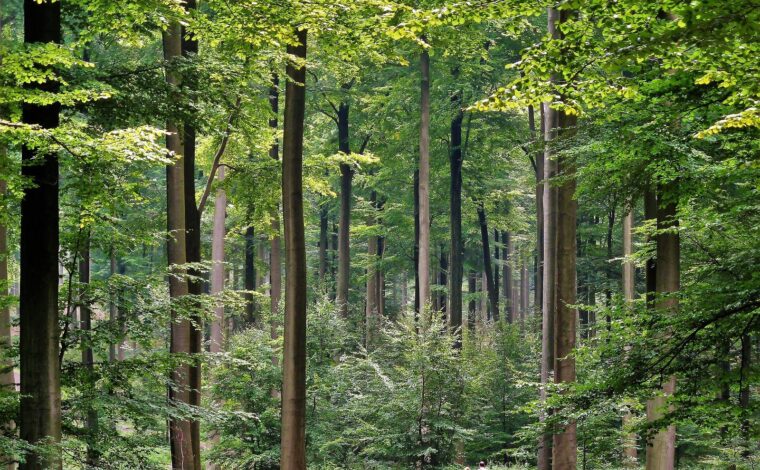
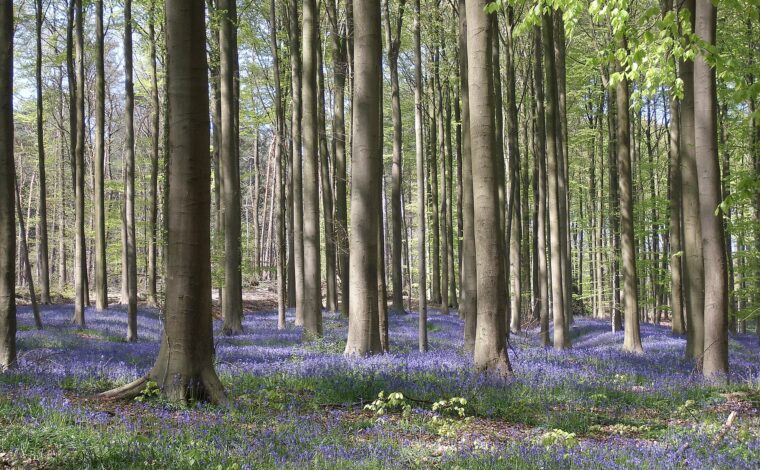
For something wilder, the Forêt de Soignes (Sonian Forest) on the city’s southeastern edge is a UNESCO-recognised beech forest covering 4,400 hectares — one of the largest urban forests in Europe. Its cathedral-like columns of ancient trees are stunning in every season.
Families should head to Parc du Cinquantenaire for its two excellent playgrounds (one with a dragon-themed sandpit) or the Etangs d’Ixelles (Ixelles Ponds) for duck-feeding and lakeside cafés.
25. Practical Tips for Visiting Brussels
Getting Around
Brussels’ STIB/MIVB public transport network covers metro, tram, and bus. A single journey costs €2.40 with contactless payment (€2.90 on a paper ticket), and contactless stops charging at €8.50 a day. The city centre is highly walkable — most major attractions are within 20 minutes on foot from the Grand Place.
Money-Saving Tips
The Brussels Card offers free entry to 40+ museums, optional unlimited public transport, and discounts at restaurants and shops for 24, 48, or 72 hours. Many museums offer free or reduced entry on the first Wednesday of each month. The European Parliament, Parlamentarium, and House of European History are always free.
Best Time to Visit
May to September offers the best weather (15-25°C). Shoulder months (April, October) bring fewer crowds and lower hotel prices. Winter (December-January) means Christmas markets and cosy café culture but shorter daylight hours and temperatures near freezing.
Safety
Brussels is generally very safe for tourists. Standard precautions apply: watch for pickpockets on public transport and in crowded areas around the Grand Place and Gare du Midi. Avoid walking alone late at night around Brussels North station and parts of Molenbeek.
Languages
Brussels is officially bilingual (French and Dutch), but in practice, French dominates in the city centre. English is widely spoken in tourist areas, hotels, and restaurants. A simple “Bonjour” goes a long way.
Explore Things to Do in Depth
This guide is the overview. Each link below goes deeper on one part of it:
- Top 25 Tourist Attractions in Brussels You Can’t Miss — the full guide to top 25 tourist attractions in brussels you can’t miss
- 15 Best Free Things to Do in Brussels — the full guide to 15 best free things to do in brussels
- Unique Experiences in Brussels — Beyond the Tourist Trail
- Best Outdoor Activities and Parks in Brussels — the full guide to best outdoor activities and parks in brussels
- Self-Guided Walking Tours in Brussels — 5 Routes You’ll Love
- Most Romantic Things to Do in Brussels for Couples — the full guide to most romantic things to do in brussels for couples
- What to Do in Brussels When It Rains — Indoor Activities Guide
- Best Instagram & Photography Spots in Brussels — the full guide to best instagram & photography spots in brussels
Frequently Asked Questions About Things to Do in Brussels
How many days do you need in Brussels?
Two to three days is ideal for most visitors. Two days covers the major highlights (Grand Place, Atomium, museums, food experiences), while three days allows you to explore neighbourhoods like the Sablon and Marolles, take a day trip to Bruges or Ghent, and enjoy Brussels at a more relaxed pace. If you’re a museum enthusiast or foodie, you could easily fill four to five days.
Is Brussels worth visiting?
Absolutely. Brussels is often overlooked in favour of Paris, Amsterdam, or Bruges, but it offers world-class art, architecture, food, and beer at lower prices and with fewer crowds. The Grand Place alone is worth the trip, and the city’s multicultural character, comic strip heritage, and position as the EU capital give it a unique personality unlike anywhere else in Europe.
What is the best area to stay in Brussels?
For first-time visitors, the city centre (Lower Town near Grand Place) is most convenient. For a more local experience with better value, Ixelles (around Place Flagey) and Saint-Gilles offer trendy restaurants, bars, and Art Nouveau architecture. The Sablon is perfect for those wanting a refined, upscale atmosphere.
Is Brussels expensive?
Brussels is moderately priced by Western European standards — notably cheaper than Paris, London, or Amsterdam. A mid-range hotel costs €100-150/night, a restaurant meal €15-25, and a Belgian beer €3-5. Many top attractions (Grand Place, European Parliament, street art, parks) are completely free.
What food is Brussels famous for?
Brussels is famous for Belgian waffles (both Brussels and Liège styles), moules-frites (mussels and chips), Belgian chocolate pralines, artisan frites (double-fried in beef tallow), and an extraordinary variety of Belgian beers including Trappist ales, lambics, and krieks. The city also has a growing Michelin-starred restaurant scene and excellent North African and Mediterranean cuisine reflecting its multicultural population.
Brussels is a city that consistently exceeds expectations. Behind every ornate guildhall and down every cobblestoned alley, there’s something to discover — a hidden courtyard, a master chocolatier, a 500-year-old pub, or a building-sized comic strip mural. The 25 experiences in this guide are just the beginning. Brussels rewards those who slow down, look up, and let curiosity guide their footsteps.
Planning your Brussels trip? Explore our detailed guides to where to stay in Brussels, Brussels food and drink, day trips from Brussels, and getting around the city.
A fair number of the attractions above can be seen with a guide rather than alone, and the quality varies enormously — a lambic brewery walk is worth every euro, a coach lap of a city you can cross on foot is not. Our guide to Brussels tours and experiences prices each type of tour, names the operators and says plainly which ones we would not book.
Much of what is best about Brussels is seasonal rather than permanent — a forest of bluebells in April, a flower carpet on the Grand-Place in August of even-numbered years, six weeks of chalets from late November. If your dates are fixed, our Brussels events calendar tells you what will be on while you are here.