Brussels sits at the centre of one of Europe’s most compact and well-connected countries. Belgium’s efficient rail network means that medieval cities, battlefields, castles, and even neighbouring countries are rarely more than two hours away by train. Whether you want to cruise the canals of Bruges, sample craft beer in a university town, or stand on the ground where Napoleon met his defeat, the day trips from Brussels are among the most rewarding on the continent.
This guide covers the best day trips from Brussels, organised by travel time and transport options. Every destination listed here is reachable by public transport — no car needed. We include specific train times, ticket costs, and suggested itineraries so you can plan each trip with confidence. From the big three (Bruges, Ghent, and Antwerp) to lesser-known gems that most tourists miss entirely, these are the excursions that will make your Brussels visit unforgettable.
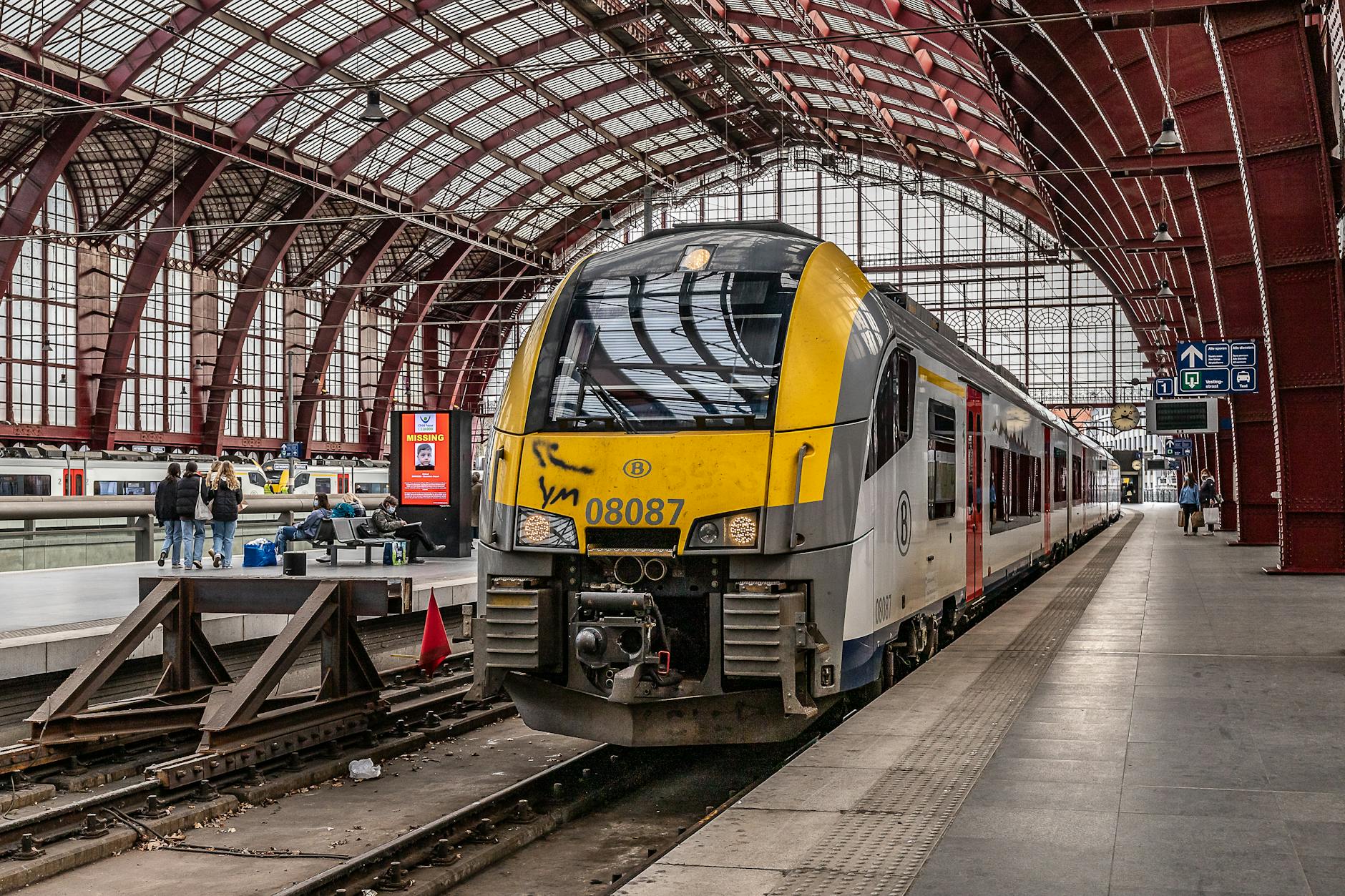
Belgium’s railway system, operated by NMBS/SNCB, is your best friend for day trips from Brussels. Trains run frequently, are reasonably priced, and depart from Brussels’ three main stations: Brussels-Midi/Zuid (also the Eurostar terminal), Brussels-Central, and Brussels-North/Noord. Since SNCB’s 2025 fare overhaul every ticket is priced by distance, and no second-class single inside Belgium costs more than about €21. Adults aged 26–64 get 30% off at weekends, singles included, which makes Saturday and Sunday the cheapest days to explore, and under-26s and over-65s get 40% off at any time. Our Belgium by train guide explains the fares and discounts.
Bruges: Medieval Canals and Chocolate Boxes
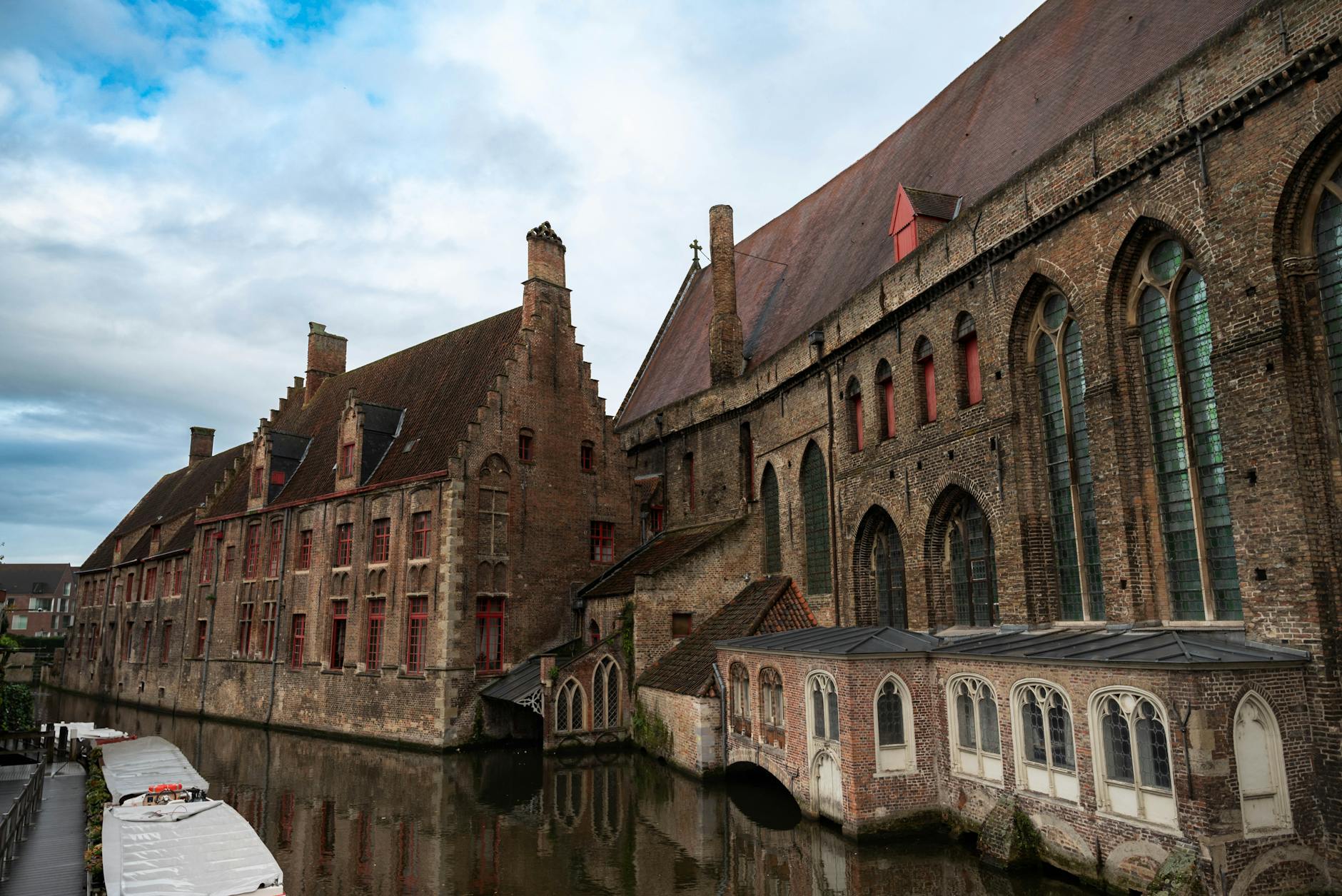
Bruges is Belgium’s most visited city outside Brussels, and it earns every superlative thrown at it. The entire medieval centre is a UNESCO World Heritage Site — a remarkably preserved ensemble of Gothic churches, guild houses, cobblestone lanes, and tree-lined canals that has changed little since the 15th century, when Bruges was one of the richest cities in Europe.
Getting There
Direct trains run from Brussels-Central and Brussels-Midi to Brugge station every 20 to 30 minutes. The journey takes approximately 60 minutes. It’s one of the longer runs, so a standard second-class single comes in under the national cap of about €21. The station is a 15-minute walk south of the Markt (central square).
What to See and Do
Start at the Markt, the main square dominated by the 83-metre Belfry — climb the 366 steps for panoramic views over the red-tiled rooftops. The Burg, a smaller square just east of the Markt, houses the Basilica of the Holy Blood, which claims to hold a relic of Christ’s blood brought back from the Crusades. The Church of Our Lady contains Michelangelo’s Madonna and Child, one of the few works by the artist to leave Italy during his lifetime.
A canal boat tour (approximately 30 minutes, around €12) is the quintessential Bruges experience. The boats glide beneath stone bridges and past the back gardens of medieval mansions, offering perspectives you cannot get from the streets. The Groeninge Museum houses an exceptional collection of Flemish Primitive paintings, including works by Jan van Eyck and Hans Memling. For beer lovers, the De Halve Maan brewery offers tours that include a tasting of their Brugse Zot — and the brewery is connected to its bottling plant across town by an underground beer pipeline.
Walk south along the canals to the Begijnhof (Beguinage), a serene courtyard of whitewashed houses founded in 1245 and now occupied by Benedictine nuns. In spring, the courtyard fills with daffodils. Continue to the nearby Minnewater (Lake of Love), a tree-lined body of water that is one of the most photographed spots in Belgium.
Where to Eat
De Gastro on Braambergstraat serves refined Belgian-French cuisine at reasonable prices. For chocolate, visit The Chocolate Line on Simon Stevinplein, where Dominique Persoone creates unconventional flavours (wasabi, tobacco, cola). For an affordable lunch, the frituren around the Markt serve crispy Belgian frites — Chez Albert near the Belfry is a local favourite.
Best For
First-time visitors to Belgium, photography enthusiasts, art lovers, couples, and anyone who appreciates perfectly preserved medieval architecture.
Ghent: Where History Meets Student Energy
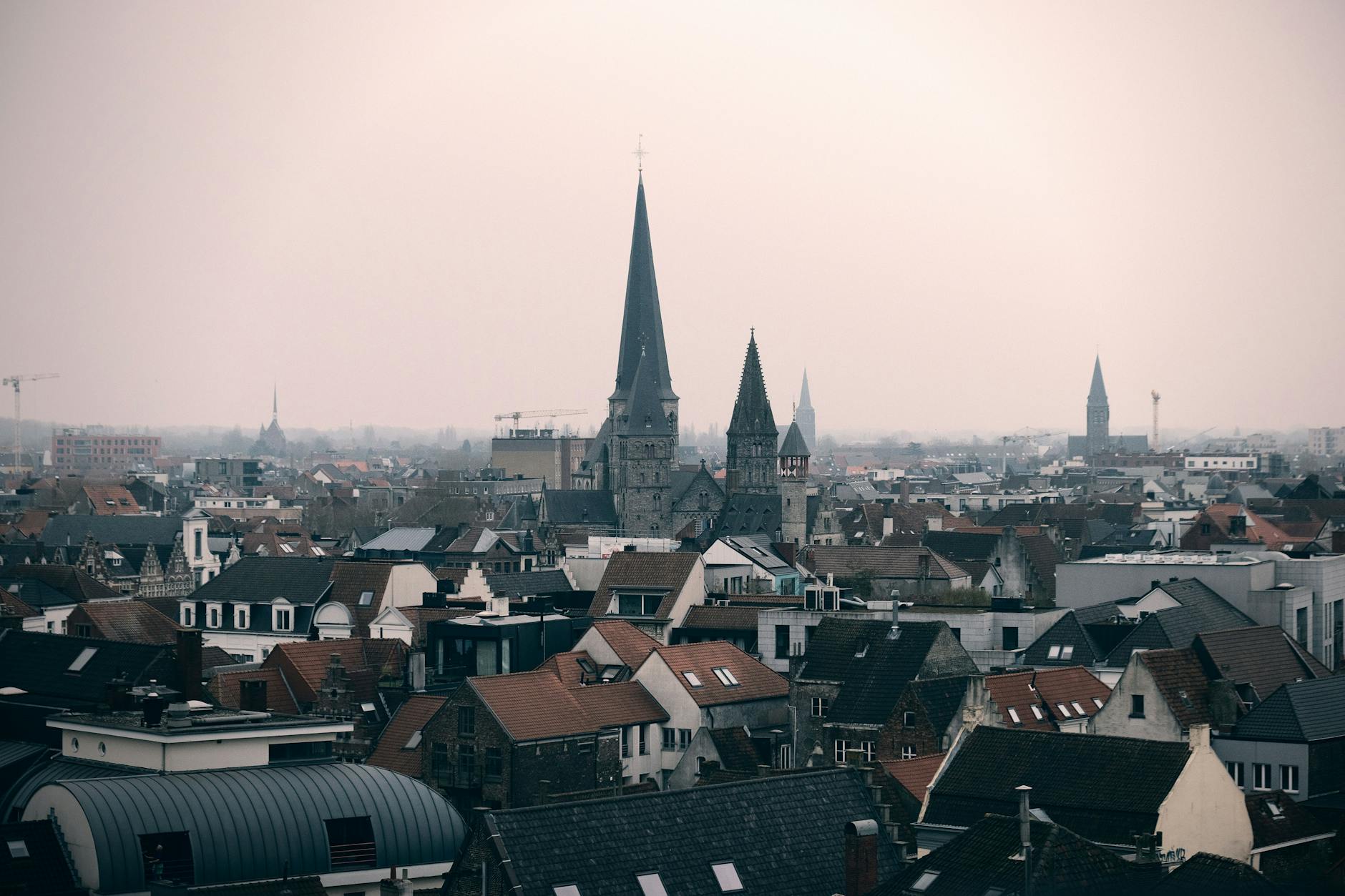
If Bruges is a museum city frozen in time, Ghent is its livelier, more complex sibling. Belgium’s third-largest city combines a stunning medieval core with a thriving university, a progressive food scene, and a street art culture that gives even Berlin a run for its money. Many repeat visitors to Belgium rank Ghent above Bruges for its authenticity and energy.
Getting There
Direct trains from Brussels-Central or Brussels-Midi to Gent-Sint-Pieters run every 10 to 15 minutes, making this one of the most frequent rail connections in Belgium. The journey takes 30 to 40 minutes. Fares are priced by distance, and Ghent is a mid-length run, well under the national cap of about €21 for a single. From the station, tram 1 takes you to the city centre in about 15 minutes, or you can walk in 25 minutes.
What to See and Do
The Ghent Altarpiece (The Adoration of the Mystic Lamb) by the Van Eyck brothers in St. Bavo’s Cathedral is one of the most important paintings in Western art history. Completed in 1432, it has been stolen, dismembered, hidden from Napoleon, and recovered from a Nazi salt mine. The restored panels are displayed in a dedicated visitor centre with multimedia commentary that makes the experience accessible to everyone, not just art historians.
Walk from St. Bavo’s to the Graslei and Korenlei, twin medieval waterfronts facing each other across the Leie river. The guild houses here — the Grain Measurers’ House, the Toll House, the Masons’ Guild Hall — create one of the most photographed streetscapes in Belgium. The view is particularly atmospheric at dusk when the buildings are illuminated. Gravensteen, the 12th-century Castle of the Counts, sits in the middle of the city like a medieval fortress dropped into an urban landscape. The interior houses a museum of medieval judicial instruments, and the rooftop offers sweeping views over the city.
For something contemporary, the SMAK (Municipal Museum of Contemporary Art) and the MSK (Museum of Fine Arts) sit side by side in the Citadelpark and together cover everything from Old Masters to cutting-edge installations. Ghent’s Patershol quarter, a warren of medieval lanes north of the Graslei, has evolved into the city’s dining district with restaurants occupying centuries-old townhouses.
Where to Eat
Ghent was Europe’s first city to officially promote a weekly vegetarian day (Donderdag Veggiedag — Thursday Veggie Day), and the plant-based dining scene is exceptional. Komkommertijd on Reep serves creative vegetarian and vegan dishes in a relaxed setting. For traditional Flemish fare, Pakhuis on Schuurkenstraat occupies a converted warehouse and serves excellent waterzooi, the creamy chicken or fish stew that originated in Ghent. The Groentenmarkt (Vegetable Market) hosts a daily market where you can pick up local cheeses, bread, and charcuterie for a canal-side picnic.
Best For
Art lovers (the Ghent Altarpiece is a must), foodies, students and younger travellers, repeat visitors to Belgium who want something less touristy than Bruges.
Antwerp: Fashion, Diamonds & Rubens
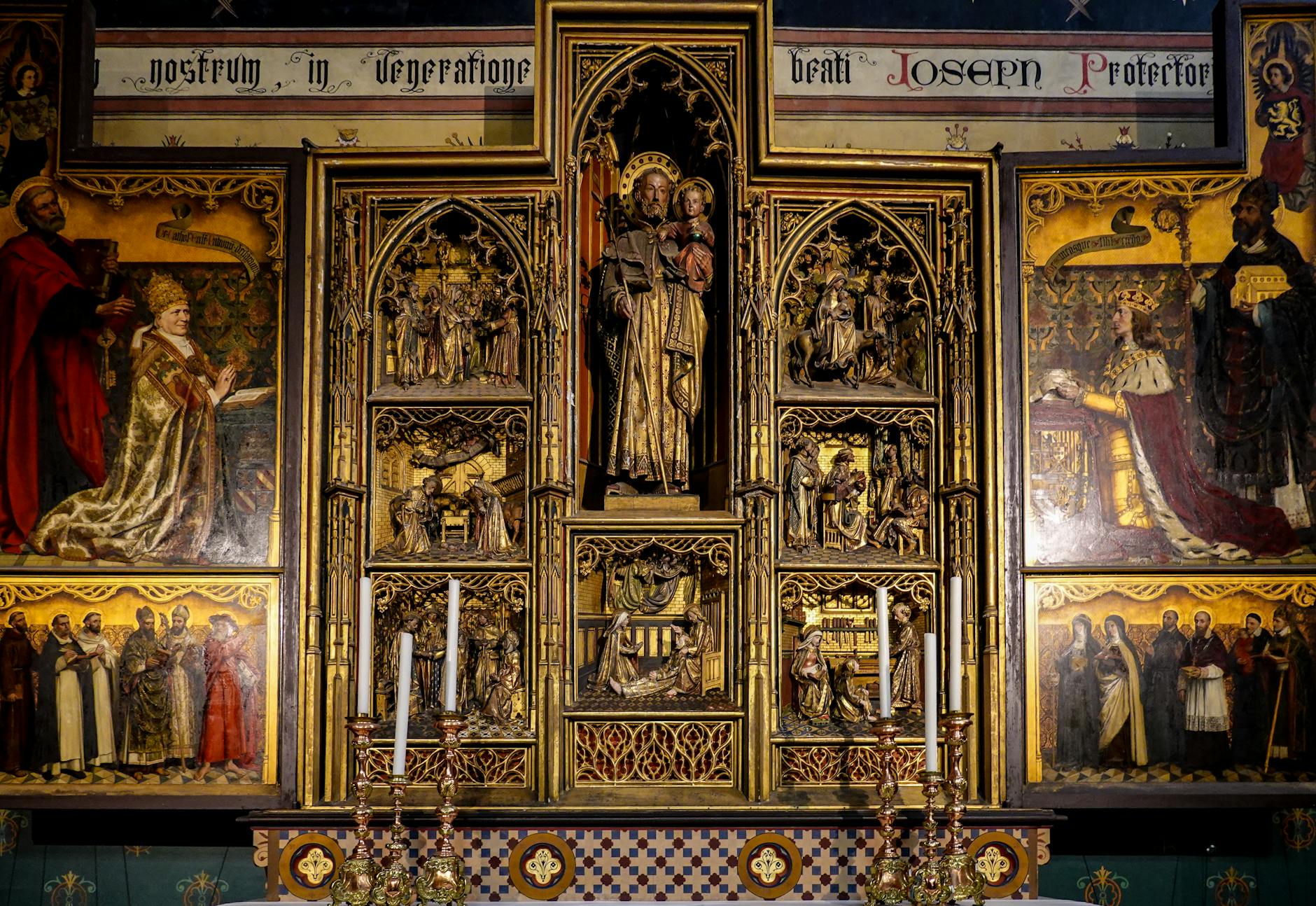
Antwerp is Belgium’s second-largest city and its cultural powerhouse. The city has reinvented itself over the centuries — from medieval trading hub to Baroque art capital to global diamond centre to contemporary fashion mecca. Where Bruges and Ghent trade on their preserved medieval beauty, Antwerp thrives on forward-looking creative energy layered over a rich historical foundation.
Getting There
Direct trains from Brussels-Central to Antwerp-Centraal run every 15 to 20 minutes. The journey takes approximately 45 to 50 minutes. As a mid-length run, it costs well under the national cap of about €21 for a single. Antwerp-Centraal station is itself a destination — the 1905 railway cathedral with its soaring dome, marble staircases, and multiple levels is regularly cited as one of the most beautiful train stations in the world.
What to See and Do
The Cathedral of Our Lady (Onze-Lieve-Vrouwekathedraal) is Belgium’s largest Gothic church and houses four major works by Peter Paul Rubens, including The Raising of the Cross and The Descent from the Cross. The Rubenshuis (Rubens House), the artist’s home and studio, has been restored to its 17th-century splendour with an Italianate garden and a collection of his works and personal effects.
The Museum aan de Stroom (MAS) on the docks is Antwerp’s most striking contemporary building — a stacked tower of sandstone and curved glass. The rooftop terrace (free entry) offers panoramic views over the harbour, city, and the meandering Scheldt river. The museum’s permanent collections trace Antwerp’s history as a global port. The Plantin-Moretus Museum, a UNESCO World Heritage Site, is the world’s only museum dedicated to the history of printing — it preserves the original workshop of Christophe Plantin, the most prolific printer of the 16th century.
For fashion, the MoMu (Fashion Museum) in the fashion district showcases Belgian and international design. The surrounding streets — particularly the Nationalestraat and Kammenstraat — are lined with boutiques from Antwerp Six designers and emerging talent. The Diamond Quarter around Hoveniersstraat processes roughly 80% of the world’s rough diamonds, and the DIVA museum tells the story of this trade through dazzling exhibits.
Where to Eat
The Grote Markt and the lanes around it offer classic Flemish dining. Het Vermoeide Model on Lijnwaadmarkt serves generous Belgian dishes in a candlelit interior named after a Rubens painting. For something more contemporary, the Eilandje harbour district has reinvented itself with waterfront restaurants and cocktail bars. Frites Atelier, the chipshop concept by Sergio Herman (a two-Michelin-star chef), serves frites with gourmet dipping sauces — a perfect quick lunch.
Best For
Fashion enthusiasts, art lovers (particularly Baroque), architecture buffs, shoppers, and visitors who enjoy cities with contemporary creative energy alongside historic depth.
Leuven: Beer Capital of Belgium
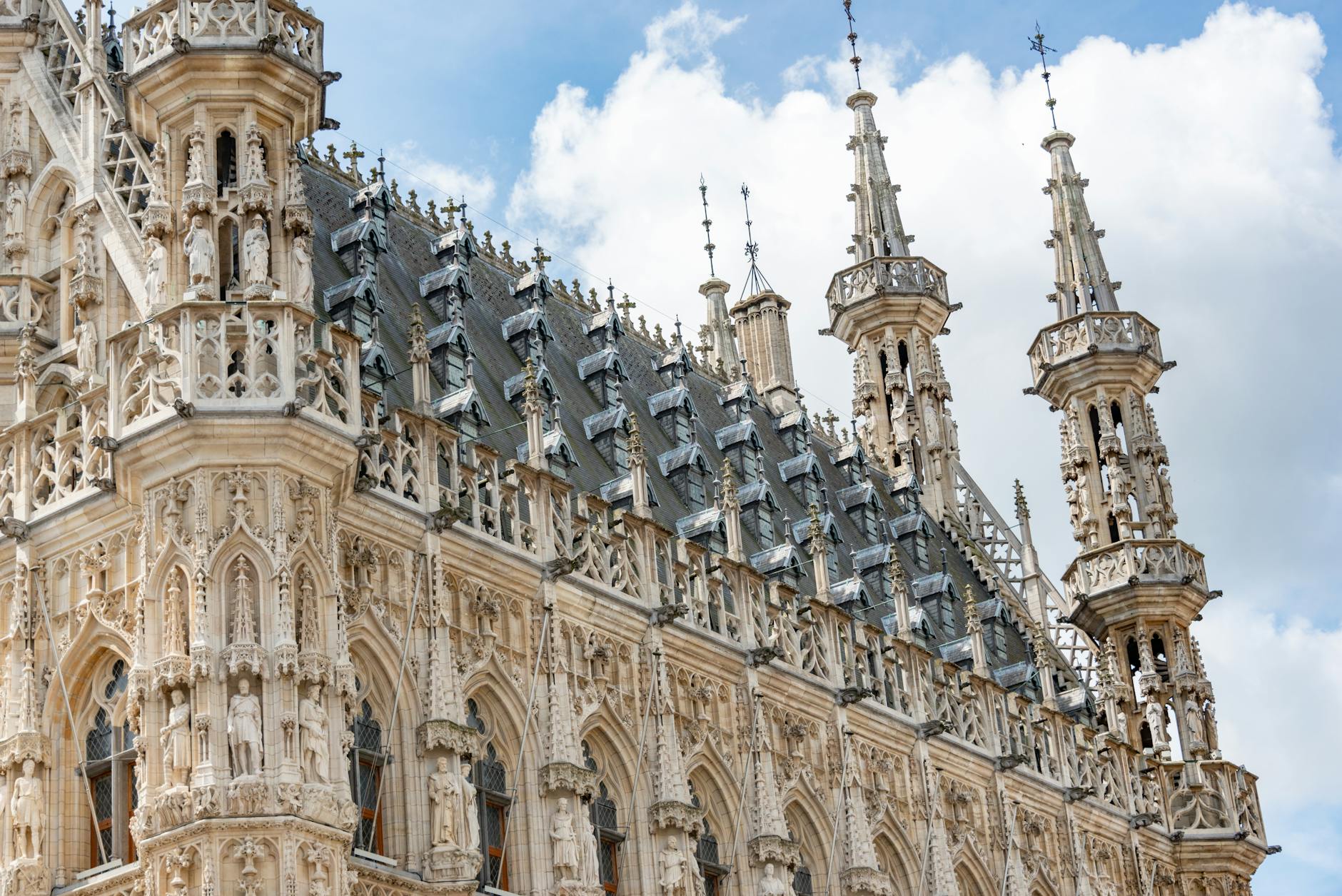
Leuven is one of Europe’s most underrated small cities and one of the easiest day trips from Brussels. Home to the oldest Catholic university in the world (founded in 1425) and the headquarters of AB InBev (the world’s largest brewer, which produces Stella Artois here), Leuven blends centuries of academic tradition with a youthful energy that comes from having 60,000 students in a city of 100,000 people.
Getting There
Direct trains from Brussels-Central to Leuven run every 10 to 15 minutes. The journey takes just 25 minutes, making Leuven the closest major city to Brussels by rail. It’s a short hop, so a single costs a few euros. The station is a short walk from the city centre.
What to See and Do
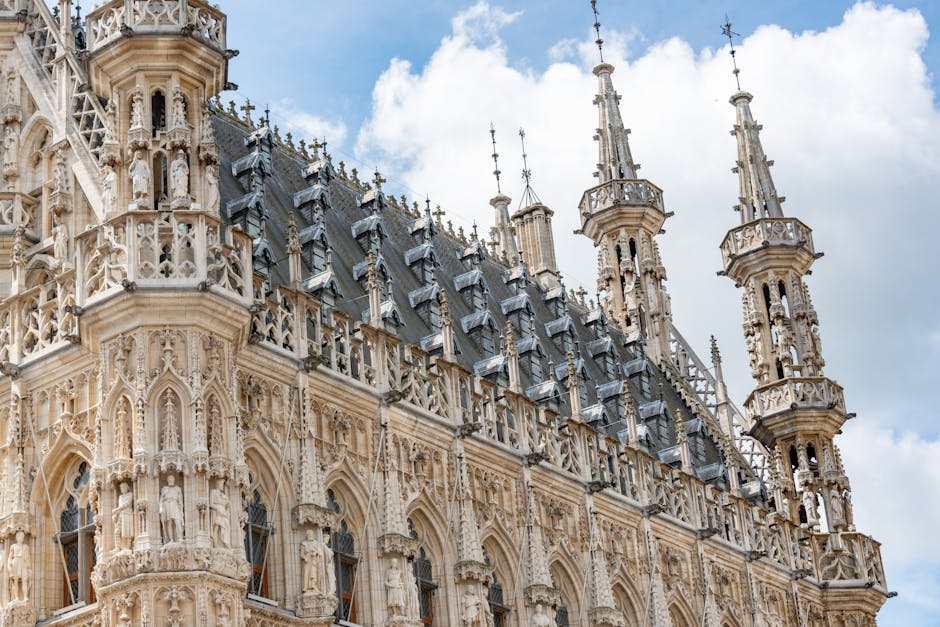
The Leuven Town Hall on the Grote Markt is arguably the finest Gothic building in Belgium. Completed in 1469, its three-storey facade is covered in 236 statues depicting biblical figures, saints, and local historical characters added in the 19th century. Every niche and pinnacle is carved with extraordinary detail. Directly opposite, St. Peter’s Church houses a museum with works by Dirk Bouts, including his Last Supper — considered one of the masterpieces of early Netherlandish painting.
The Grand Beguinage (Groot Begijnhof) is a UNESCO World Heritage Site and one of the best-preserved beguinages in Belgium. This walled enclave of 72 red-brick houses, gardens, and squares along the Dijle river was founded in the 13th century and now serves as university housing. Walking through its cobbled lanes and over its tiny bridges feels like stepping into a Flemish painting.
The Oude Markt, often called the longest bar in Europe, is Leuven’s social heart — a long square entirely ringed by café terraces that fill up at the first sign of sunshine. For beer culture beyond the terraces, the Stella Artois brewery offers guided tours that trace the history of Belgium’s most famous export.
Best For
Beer enthusiasts, architecture lovers, visitors with limited time (the shortest day trip from Brussels), and anyone who enjoys vibrant university cities.
Mechelen: Compact Charm Between Brussels & Antwerp
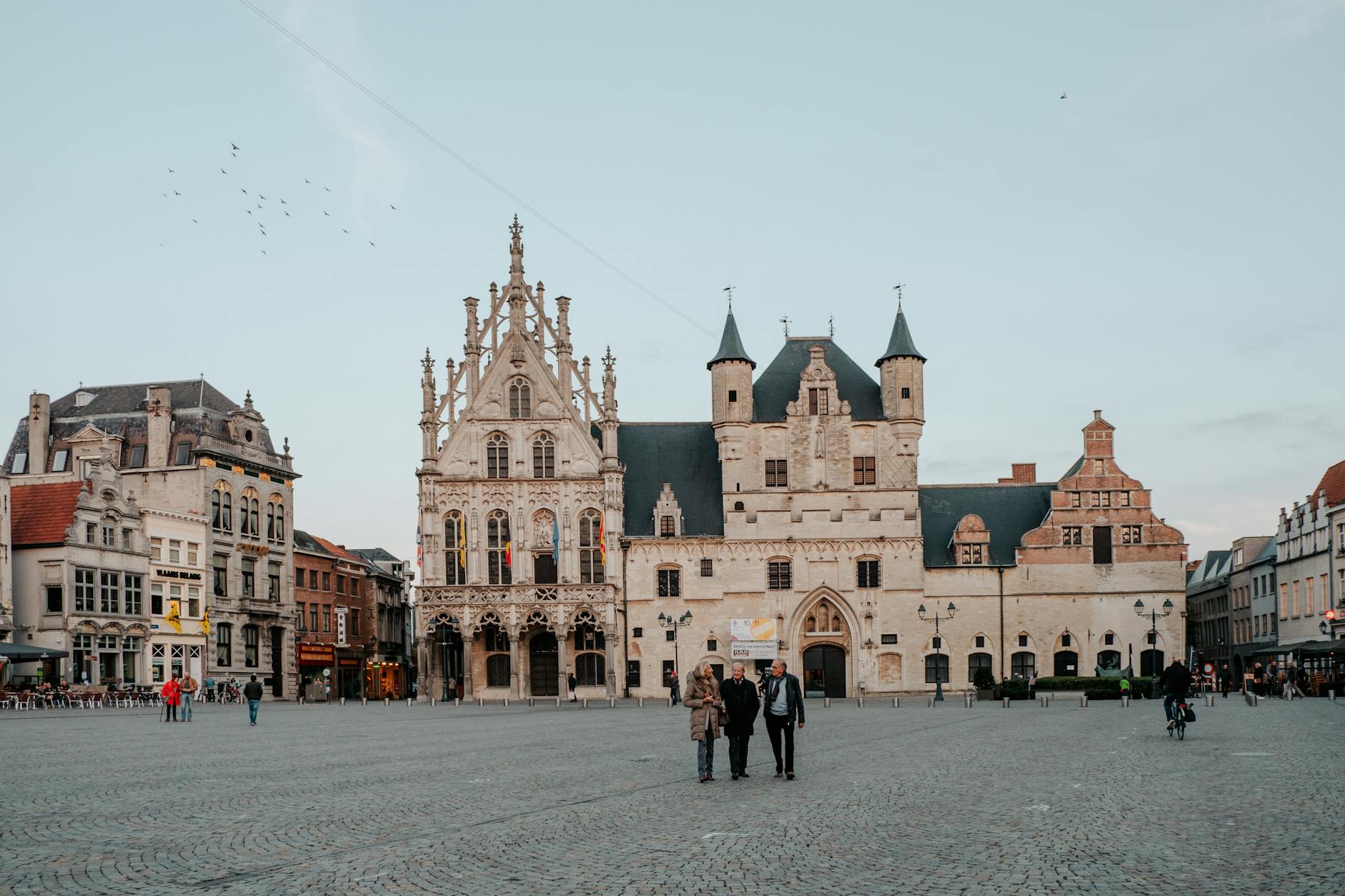
Mechelen is the hidden gem of Flanders — a city with the architectural pedigree of Bruges or Ghent but a fraction of the tourist crowds. In the 16th century, it served as the capital of the Burgundian Netherlands under Margaret of Austria, and that regal heritage is visible in its churches, palaces, and one of Belgium’s most impressive cathedrals.
Getting There
Direct trains from Brussels-Central to Mechelen run every 10 minutes. The journey takes just 20 minutes, making it even closer than Leuven. A single costs a few euros. The station is a 10-minute walk from the Grote Markt.
What to See and Do
St. Rumbold’s Cathedral dominates the skyline with its 97-metre tower — originally planned to reach 167 metres, which would have made it the tallest in the world. Climb the 538 steps for panoramic views that extend to Brussels, Antwerp, and on clear days, the spires of Leuven. The cathedral houses two paintings by Anthony van Dyck. The Schepenhuis (Aldermen’s House) on the Grote Markt is one of the oldest stone buildings in Belgium.
The Mechelen Beguinage, a UNESCO World Heritage Site, is a tranquil enclosure of baroque houses, gardens, and a church that was home to a community of beguines from the 13th century. Kazerne Dossin, housed in the former transit camp where Jews and Roma were assembled before deportation to Auschwitz during World War II, is now a powerful museum and memorial dedicated to human rights and the Holocaust.
For families, Technopolis is a hands-on science centre with interactive exhibits spread across indoor and outdoor spaces. Mechelen’s compact size means you can see the main sights in a half day, making it easy to combine with a visit to another nearby city.
Best For
History enthusiasts, families (Technopolis), visitors short on time who want a charming Flemish city without crowds, and travellers looking to combine two destinations in one day.
Dinant: Cliffs, Citadels & Saxophones
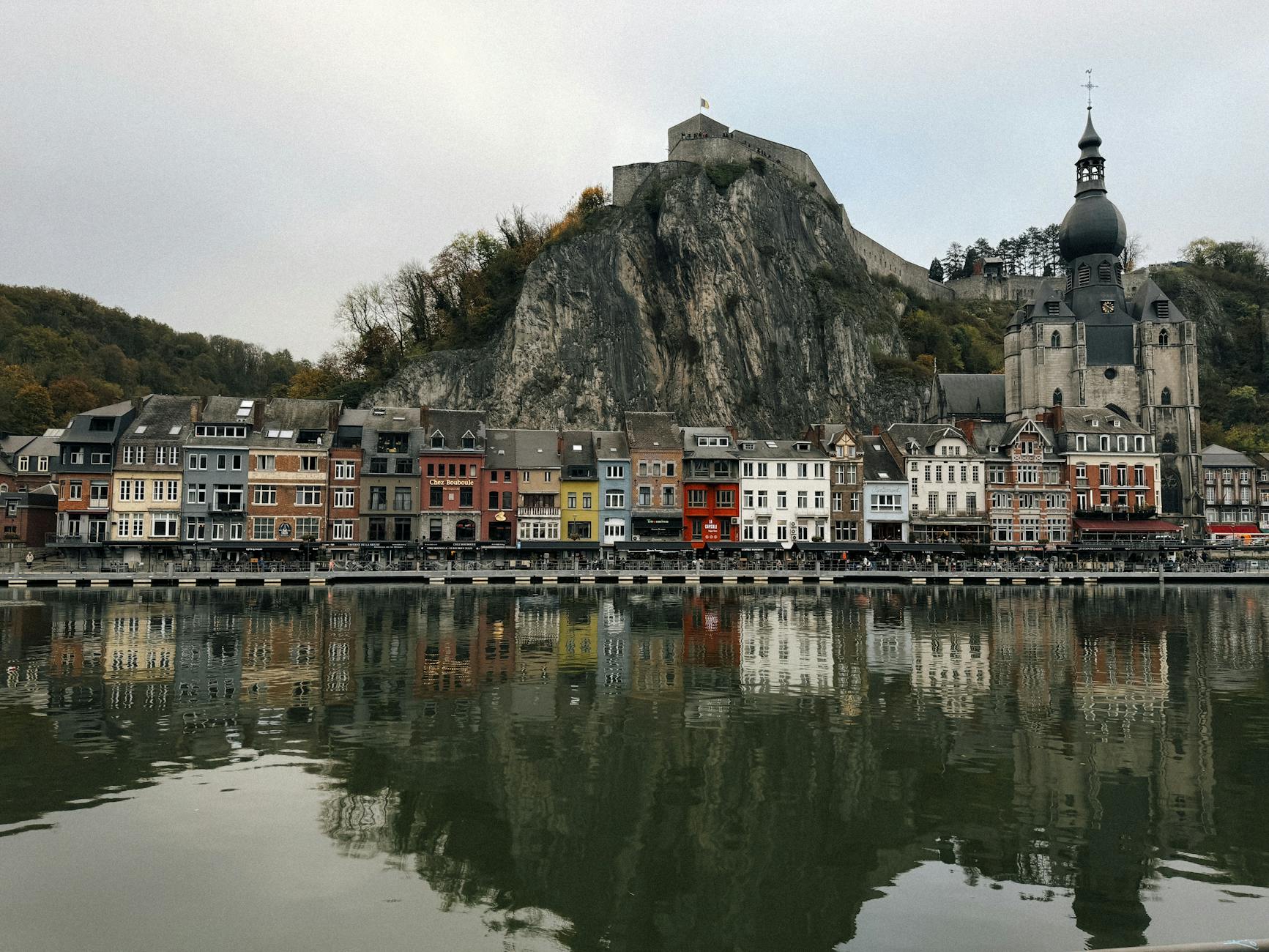
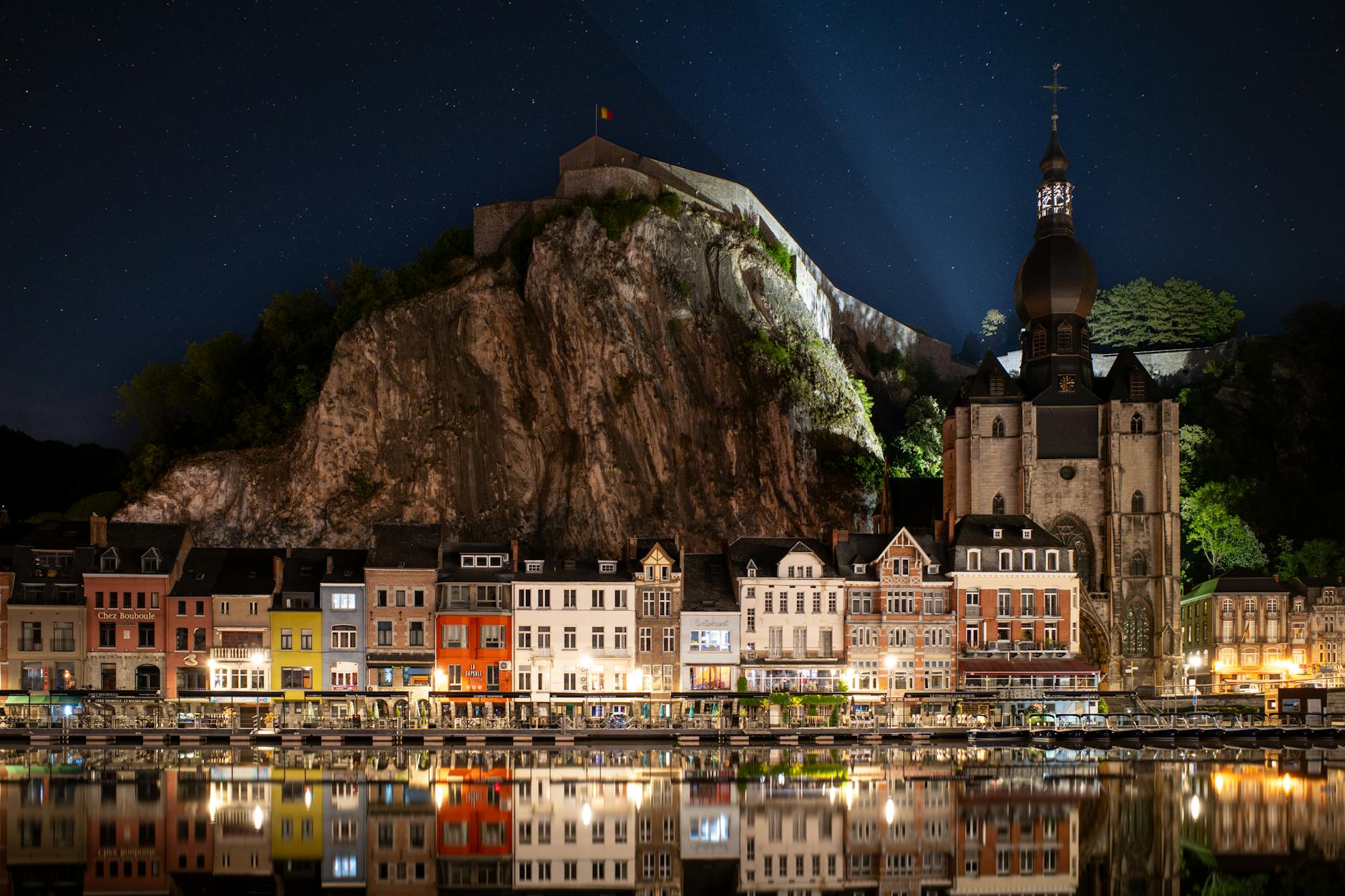
Dinant is one of the most visually dramatic small towns in Belgium. Wedged between the Meuse River and towering limestone cliffs, the town’s colourful waterfront houses, onion-domed Collegiate Church, and clifftop citadel create a scene that looks almost too picturesque to be real. Dinant is also the birthplace of Adolphe Sax, inventor of the saxophone, and the town celebrates this heritage with saxophone-shaped street furniture and a dedicated museum.
Getting There
Direct trains from Brussels-Central to Dinant run approximately every hour, with some services requiring a change at Namur. The journey takes 1 hour 30 minutes to 1 hour 50 minutes. It’s one of the longer runs, so a standard single comes in under the national cap of about €21. The station sits directly below the citadel with the town centre steps away.
What to See and Do
The Dinant Citadel, perched 100 metres above the river, offers commanding views of the Meuse Valley. You can reach it by cable car (combined ticket with citadel entry around €12) or by climbing the 408 steps carved into the cliff. Inside, exhibits cover Dinant’s turbulent military history, including its near-complete destruction during World War I. The Collegiate Church of Notre-Dame, with its distinctive bulbous spire, is the town’s most recognisable landmark.
Take a river cruise on the Meuse (various options from 45 minutes to several hours) to see the dramatic limestone gorges downstream. The Maison de Monsieur Sax, Adolphe Sax’s birthplace on Rue Adolphe Sax, is a small museum dedicated to the inventor and his instrument. For nature lovers, the Grotte la Merveilleuse is a cave system with spectacular stalactites accessible via guided tours. Kayaking on the Lesse and Meuse rivers is popular from May to September — rental operators at Anseremme (a short walk from Dinant) offer routes of varying lengths.
Best For
Photographers, outdoor enthusiasts, families, and anyone wanting a change of pace from Flemish cities — Dinant is in Wallonia and has a distinctly different, more francophone character.
Namur: Wallonia’s Understated Capital
Namur, the capital of Wallonia, sits at the confluence of the Meuse and Sambre rivers and is dominated by one of Europe’s largest citadels. It is a quieter, more relaxed destination than the Flemish cities — a place where you can stroll along river promenades, explore a massive fortress, and enjoy excellent Walloon cuisine without competing for space with tour groups.
Getting There
Direct trains from Brussels-Central to Namur run every 30 minutes. The journey takes approximately 1 hour. A standard single costs well under the national cap of about €21. The station is centrally located, a short walk from the old town.
What to See and Do
The Citadel of Namur is one of the largest fortified complexes in Europe, with roots dating back to Roman times. The current structures span from the medieval period to the 19th century. You can explore the ramparts, underground tunnels, and visitor centre on foot, or take the tourist train that loops through the grounds. The views from the ramparts over the two rivers and the city below are spectacular.
In the old town, the Église Saint-Loup is a masterpiece of Baroque architecture with an extraordinary carved ceiling. The Félicien Rops Museum is dedicated to the 19th-century Belgian artist known for his provocative and satirical work. The Musée des Arts Anciens du Namurois houses an important collection of medieval goldwork and Mosan art from the Meuse Valley region. Walk along the Confluence — the point where the two rivers meet — for one of the city’s most atmospheric spots, particularly at sunset.
Best For
Visitors interested in military history and fortifications, those looking for a relaxed Walloon experience, and travellers who want a base for exploring the Meuse Valley (Dinant and Namur can be combined in a long day).
Ypres (Ieper): WWI Remembrance & the Menin Gate
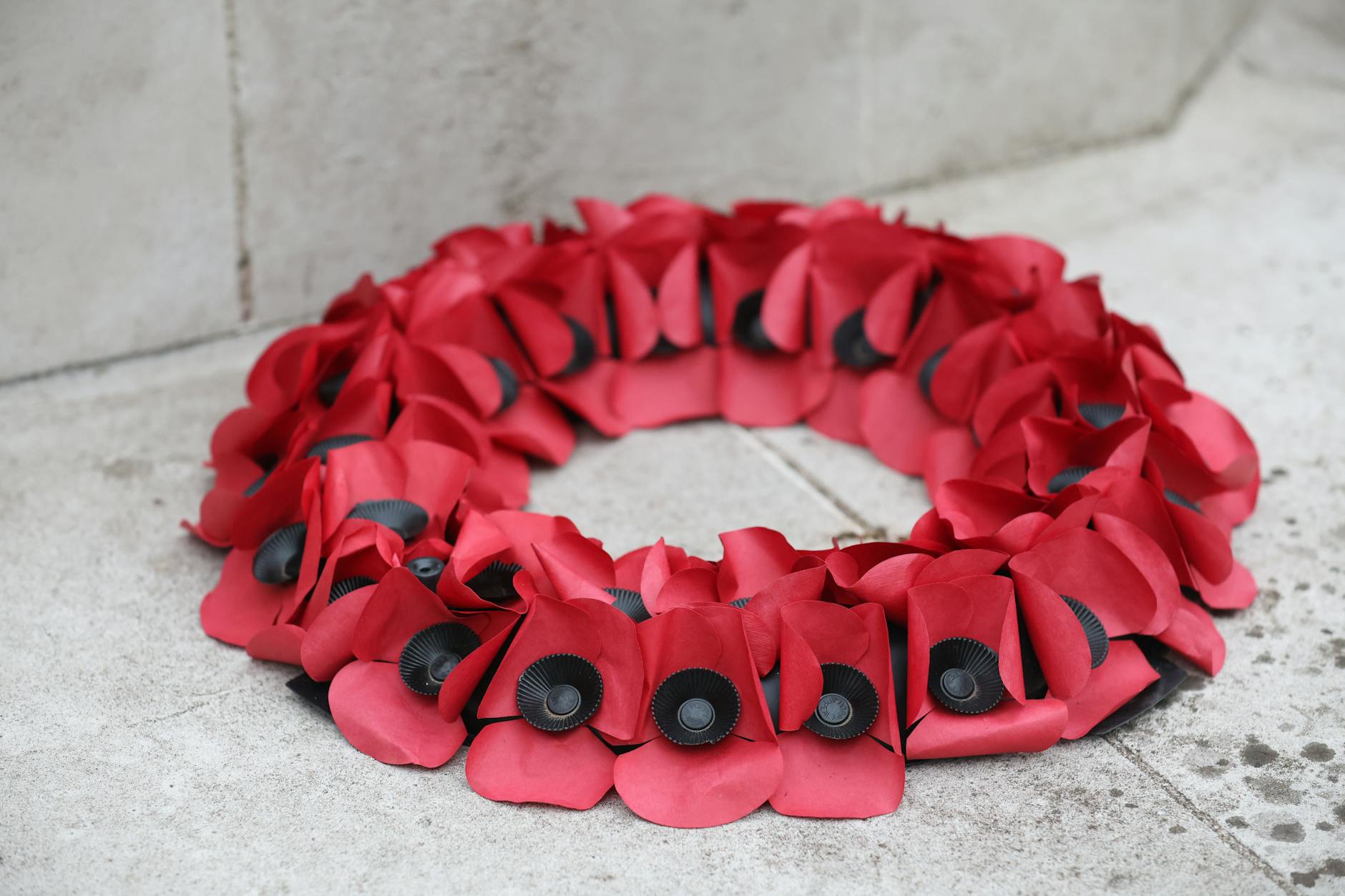
Ypres is the most important World War I remembrance destination in Belgium, and for many visitors, a trip here is the most moving experience of their time in the country. The Ypres Salient — the area around the city — saw some of the most devastating fighting of the war, including the first use of chemical weapons. The landscape is now peaceful farmland dotted with cemeteries, memorials, and preserved trenches that bear witness to what happened here.
Getting There
Direct trains from Brussels-Midi to Ieper (the Flemish name for Ypres) are limited. The most practical route involves a train to Kortrijk (50 minutes) and a connection to Ieper (30 minutes), with total travel time of about 1 hour 50 minutes. Ypres is far enough out that a standard single costs at or near the national cap of about €21. Alternatively, several tour operators run guided day trips from Brussels that include transport and expert commentary — highly recommended for first-time visitors to the battlefields.
What to See and Do
The In Flanders Fields Museum in the rebuilt Cloth Hall is one of the finest war museums in Europe. Using personal stories, interactive exhibits, and original artefacts, it tells the story of the Ypres Salient from the perspectives of soldiers, civilians, and medical staff on all sides. Allow at least two hours.
The Menin Gate Memorial bears the names of nearly 55,000 British and Commonwealth soldiers who died in the Salient and whose bodies were never found. Every evening at 8pm, the Last Post ceremony — a tradition since 1928, interrupted only during the German occupation — is performed by buglers of the local fire brigade. Attending this ceremony is a profoundly moving experience.
Outside the city, Tyne Cot Cemetery is the largest Commonwealth war cemetery in the world, with nearly 12,000 graves and a memorial to another 35,000 missing. The preserved trenches at Hill 62 (Sanctuary Wood Museum) offer a visceral sense of the conditions soldiers endured. Langemark German Military Cemetery provides the perspective of the other side — its sombre, dark granite headstones and mass graves contrast starkly with the white stones of the Commonwealth sites.
Best For
History enthusiasts, anyone with a personal or family connection to WWI, and travellers seeking a deeply meaningful cultural experience beyond the typical tourist trail.
Waterloo: Where Napoleon Met His Defeat
The Battle of Waterloo on 18 June 1815 was one of the most consequential military engagements in European history, ending Napoleon’s rule and reshaping the continent’s political landscape. The battlefield, located just 20 kilometres south of Brussels, has been preserved as a memorial and education site that brings the battle vividly to life.
Getting There
Take bus W from Brussels-Midi station directly to the Waterloo battlefield visitor centre — the journey takes approximately 40 minutes. Alternatively, take a train to Braine-l’Alleud station (20 minutes from Brussels) and bus or taxi the remaining 5 kilometres. The battlefield is less practical by public transport than rail-connected cities, so a guided tour from Brussels is worth considering.
What to See and Do
The Memorial 1815 visitor centre, opened in 2015 for the battle’s 200th anniversary, is a state-of-the-art museum that places you inside the action with immersive audiovisual displays, a 4D cinema experience, and detailed tactical maps. The Lion’s Mound (Butte du Lion), a 40-metre artificial hill topped with a 28-tonne cast-iron lion, offers 360-degree views over the battlefield — from here, you can trace the movements of the French, British, Prussian, and Allied forces across the rolling farmland.
The Panorama of the Battle of Waterloo, painted in 1912, is a massive 360-degree canvas measuring 110 metres in circumference that depicts the battle at its climax. Hougoumont Farm, where some of the fiercest fighting took place, has been restored and opened to visitors with an exhibition telling the story of the farmhouse’s defence.
Best For
Military history enthusiasts, Napoleon buffs, families (the interactive museum is excellent for older children), and visitors looking for a half-day trip that can be combined with other activities in Brussels.
Cross-Border Day Trips from Brussels
Belgium’s central position in Western Europe means that several foreign cities are within easy day-trip distance from Brussels. These options require slightly more planning but reward the effort with a change of country, culture, and currency (in some cases).
Luxembourg City (Luxembourg)
The capital of the Grand Duchy of Luxembourg is reachable by direct InterCity train from Brussels in approximately 3 hours. The compact old town, perched on dramatic gorges, is a UNESCO World Heritage Site. Walk the Chemin de la Corniche — described as Europe’s most beautiful balcony — for views over the Grund valley, visit the Grand Ducal Palace, and explore the Bock Casemates, a network of underground fortifications carved into the rock. Luxembourg’s museums (including the ultramodern Mudam) are free on the first Sunday of each month.
Lille (France)
Lille is just 35 minutes from Brussels by Eurostar or TGV, making it one of the fastest cross-border trips available. This vibrant French city offers a stunning Flemish-Baroque old quarter (Vieux Lille), the Palais des Beaux-Arts (one of France’s largest art museums outside Paris), excellent shopping, and a food scene that blends French gastronomy with Flemish heartiness. Come in September for the Braderie de Lille, Europe’s largest flea market.
Maastricht (Netherlands)
Maastricht, in the Netherlands’ southernmost province, is roughly 1 hour 30 minutes from Brussels by train (change at Liège). This elegant city on the Meuse features Europe’s most beautiful bookshop (Boekhandel Dominicanen, housed in a 13th-century church), excellent museums, a vibrant food market at the Markt, and a café culture that owes more to Burgundy than to Amsterdam. The Bonnefantenmuseum houses an eclectic collection spanning medieval sculpture to contemporary art.
Aachen (Germany)
Aachen, just across the German border, is reachable in about 1 hour 45 minutes by train via Liège. Charlemagne’s capital features the Aachen Cathedral — the first German UNESCO World Heritage Site — where Holy Roman Emperors were crowned for 600 years. The cathedral treasury is one of the most important ecclesiastical collections in northern Europe. Aachen is also famous for its thermal baths (Carolus Thermen) and Printen, the local gingerbread-like speciality.
Getting Around: Transport Tips for Day Trips from Brussels
Train Tickets and Passes
For a single day trip, buy your tickets at any NMBS/SNCB counter or ticket machine, or through the NMBS/SNCB app. Fares are priced by distance, and the discounts apply to singles as well as returns: adults aged 26–64 get 30% off at weekends, and under-26s and over-65s get 40% off at any time. Older guides mention the Rail Pass, the Go Pass 10 and the Multi cards; none of them is sold any more.
Eurostar for Cross-Border
For Lille, book Eurostar or TGV tickets in advance through the Eurostar app — prices start from around €29 each way but can reach €100+ if booked last-minute. For Luxembourg, standard NMBS tickets cover the route. For Maastricht and Aachen, a combination of Belgian and Dutch/German rail tickets is needed — the DB Navigator app handles cross-border bookings well.
Guided Tours vs. Independent Travel
Most day trips from Brussels are straightforward to do independently by train. The exceptions where guided tours add genuine value are Ypres and the WWI battlefields (where a knowledgeable guide brings the scattered sites to life and provides transport between cemeteries), Waterloo (where the battlefield layout is easier to understand with commentary), and the Ardennes region (where public transport is limited).
Day Trip Planning: Quick Reference
For a one-week stay in Brussels, a solid day trip schedule might look like this: Day 1 in Bruges for medieval charm, Day 2 in Ghent for art and food, Day 3 in Antwerp for fashion and Rubens, and Day 4 split between Leuven (morning, beer culture) and Mechelen (afternoon, compact historic city). With additional days, add Dinant for Walloon scenery, Ypres for WWI history, or a cross-border adventure to Lille or Luxembourg.
For shorter stays, prioritise based on your interests. Bruges is the classic first choice but can feel crowded in peak season — in that case, Ghent offers a similar aesthetic with more local energy. Art lovers should choose Antwerp. History enthusiasts should not miss Ypres. And if time is truly limited, Leuven or Mechelen can be visited in a half day and still feel worthwhile.
For more on planning your Brussels visit, see our things to do in Brussels guide, our accommodation guide for the best areas to stay, and our Brussels food guide for culinary inspiration. Our neighbourhoods guide helps you explore the city’s diverse districts between day trips.
Explore Day Trips in Depth
This guide is the overview. Each link below goes deeper on one part of it:
- Durbuy Day Trip from Brussels — Smallest City in Belgium
Frequently Asked Questions
What is the best day trip from Brussels for first-time visitors?
Bruges is the classic choice for first-time visitors — its medieval canals, Gothic architecture, and compact walkable centre make it the most immediately rewarding day trip from Brussels. It is also one of the simplest logistically, with direct trains running every 20 to 30 minutes and a journey time of just one hour.
Can I visit Bruges and Ghent in the same day?
Yes, but it requires early starts and efficient planning. Take a morning train to Ghent (about 35 minutes), spend 3 to 4 hours seeing the highlights, then catch a 30-minute train to Bruges for the afternoon. However, both cities deserve a full day each. If you must choose one, Bruges is more visually spectacular while Ghent offers a more authentic, less touristy experience.
Are Belgian trains reliable for day trips?
Belgian trains are generally reliable, with punctuality rates around 85 to 90 percent. Delays, when they occur, are usually minor (5 to 15 minutes). Trains run frequently on major routes, so missing one train rarely causes significant disruption. The NMBS/SNCB app provides real-time updates. Weekend services run less frequently than weekday schedules on some routes.
What is the cheapest day trip from Brussels?
Mechelen (20 minutes) and Leuven (25 minutes) are the cheapest day trips by rail: fares are priced by distance, and both are short hops costing a few euros each way. At weekends adults aged 26–64 get 30% off every ticket, and under-26s and over-65s get 40% off at any time, which takes a useful slice off longer runs such as Bruges. Check exact fares on belgiantrain.be.
Are guided tours worth it for day trips from Brussels?
For Bruges, Ghent, Antwerp, Leuven, and Mechelen, independent travel by train is straightforward and more flexible. Guided tours are most valuable for Ypres and the WWI battlefields (the sites are spread across a wide rural area), Waterloo (battlefield interpretation benefits from expert commentary), and the Ardennes region (limited public transport). Budget between €50 and €120 per person for a quality guided day tour.
One day trip is worth planning a whole visit around, and it only happens once a year: the Carnival of Binche on Shrove Tuesday, about an hour away and on the UNESCO intangible heritage list. Our guide to Brussels in February explains what to expect and why you should not wear anything you value.
If you are heading out for the day on the way to somewhere else — a morning in Ghent before an evening Eurostar, say — do not carry your luggage to Flanders and back. Store it before you leave and travel with a day bag. Our guide to luggage storage in Brussels covers the 24-hour lockers at Brussels-Midi, Central and Nord, what they cost per calendar day, and the app-booked alternatives worth knowing about for shorter gaps.
Worth stepping back from the individual routes for a moment: the reason so many of them work is that Belgium is small and its railway runs through the capital. If you are still shaping the trip rather than picking a day out — deciding how many days the country needs, how the train fares work, or whether the Ardennes and the coast can be done from here at all — start with our Belgium travel guide, which covers the country as a whole from a Brussels base.
There is a limit to how much of Belgium a run of day trips can show you, and it is the clock: everything gets seen between eleven and five. If you have a full week rather than a long weekend, our 7-day Belgium itinerary restructures the same cities around two hotel moves, which cuts roughly six hours of return train travel out of the week and puts you in Bruges before the coaches arrive.
Before you fill every day with an outing, it is worth asking how many days the trip should have been in the first place. Our guide to how many days you need in Belgium sets out what each trip length covers and makes the case that the cost of a packed day-trip schedule is the early mornings and late evenings — which is where Bruges and Ghent are at their best.
Bruges is the most popular of these routes and also the one that suffers most from being compressed into a single daytime visit. If it is the main reason for your trip rather than one stop among several, our Bruges travel guide makes the case for staying the night and lays out a two-day plan that reaches the quarters a day trip never gets to.
Ghent is half an hour away, which makes it the easiest of these trips and also the one most often treated as a quick look. It rewards more than that: our Ghent travel guide covers the two-day version, including the Van Eyck altarpiece, the Gravensteen’s oddly funny audio guide, and the reason so many people end up using Ghent as a base rather than a stop.