The Natural Sciences Museum Brussels holds the world’s largest dinosaur gallery — 30 complete iguanodon skeletons discovered in 1878 in a Belgian coal mine, plus a full-size Tyrannosaurus rex and over 4,500 square metres of prehistoric exhibits. Part of the Royal Belgian Institute of Natural Sciences, this is one of Brussels’ best museums for families and one of Europe’s most important natural history collections. This Natural Sciences Museum Brussels guide for 2026 covers tickets, opening hours, what to see, and how to plan a perfect visit.
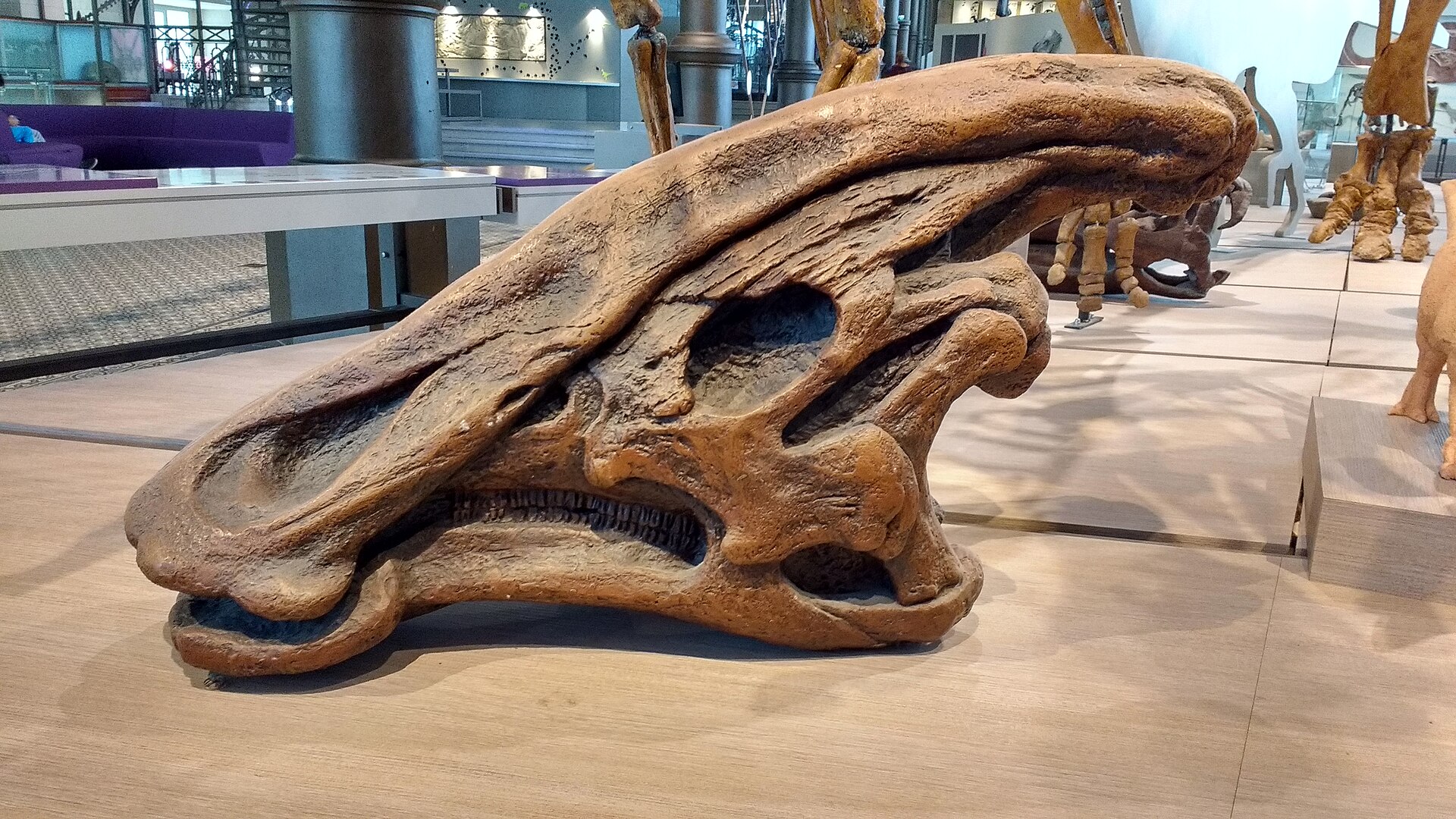
Why Visit the Natural Sciences Museum Brussels?
The Natural Sciences Museum Brussels essentials begin with the Dinosaur Gallery — the largest museum hall completely dedicated to dinosaurs anywhere in Europe (and arguably the world). The 30 iguanodon skeletons displayed here are the most complete dinosaur fossils ever found, recovered from a single Belgian coal-mine site at Bernissart in 1878. The Natural Sciences Museum Brussels also covers human evolution, biodiversity, minerals, and modern ecology across multiple galleries.
For families with kids, this is Brussels’ most engaging museum. For science enthusiasts, the depth of the collection rewards a full half-day visit.
Natural Sciences Museum Brussels: Practical Information
Address
Rue Vautier 29, 1000 Brussels (in the European Quarter / Léopold Park area).
Opening Hours
Tuesday-Friday: 9:30 AM – 5:00 PM. Saturday-Sunday: 10:00 AM – 6:00 PM. Closed Mondays, plus 1 January, 1 May, 25 December.
Tickets
Adult: €15. Student/youth (4-17): €5. Under 4: Free. Thursday afternoon: €2.50. First Wednesday of the month after 1:00 PM: Free for everyone.
How to Get There
Metro: Maelbeek or Trône (Lines 1, 2, 5, 6) — 10 minutes’ walk.
Walking from Grand Place: 20 minutes via Rue Belliard.
Bus: Multiple lines stop at Place du Luxembourg, 5 minutes’ walk.
What to See at the Natural Sciences Museum Brussels
1. Dinosaur Gallery (Galerie des Dinosaures)
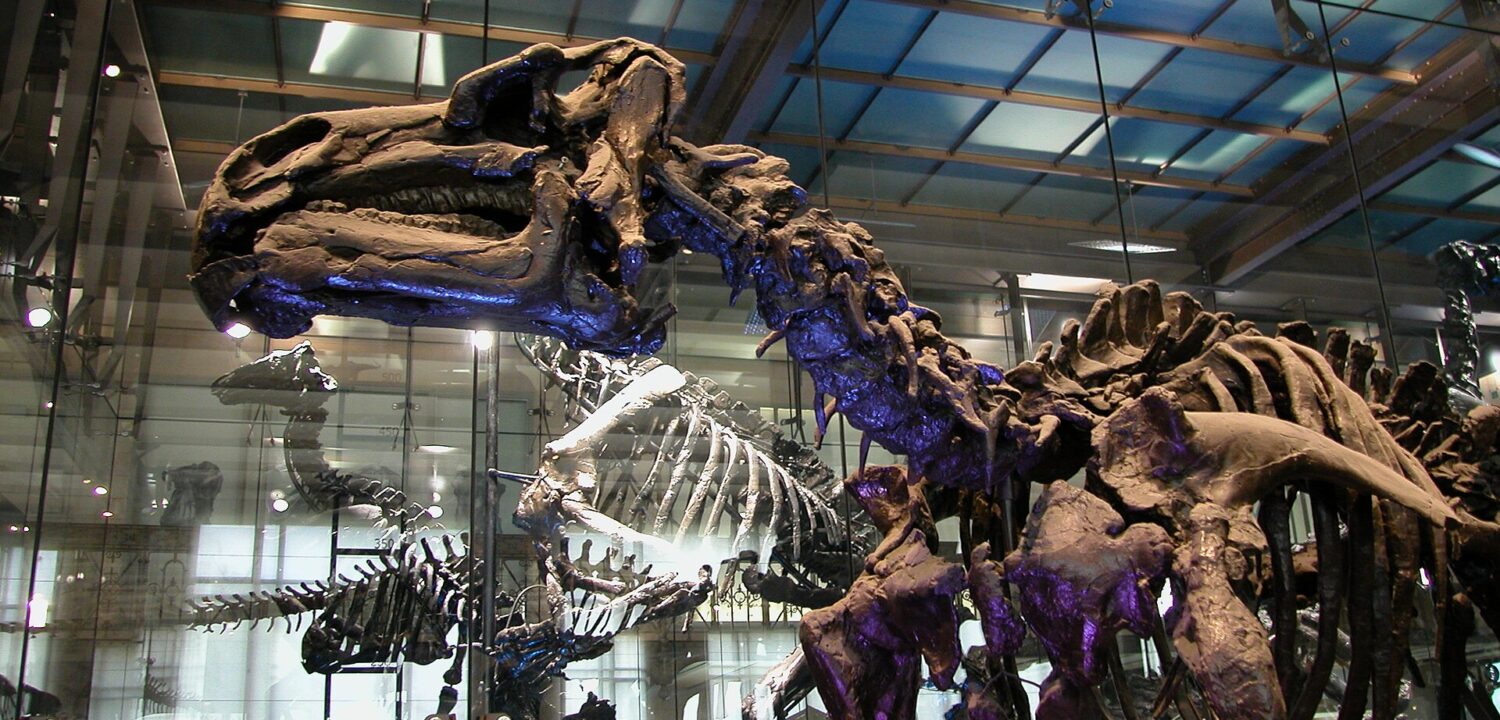
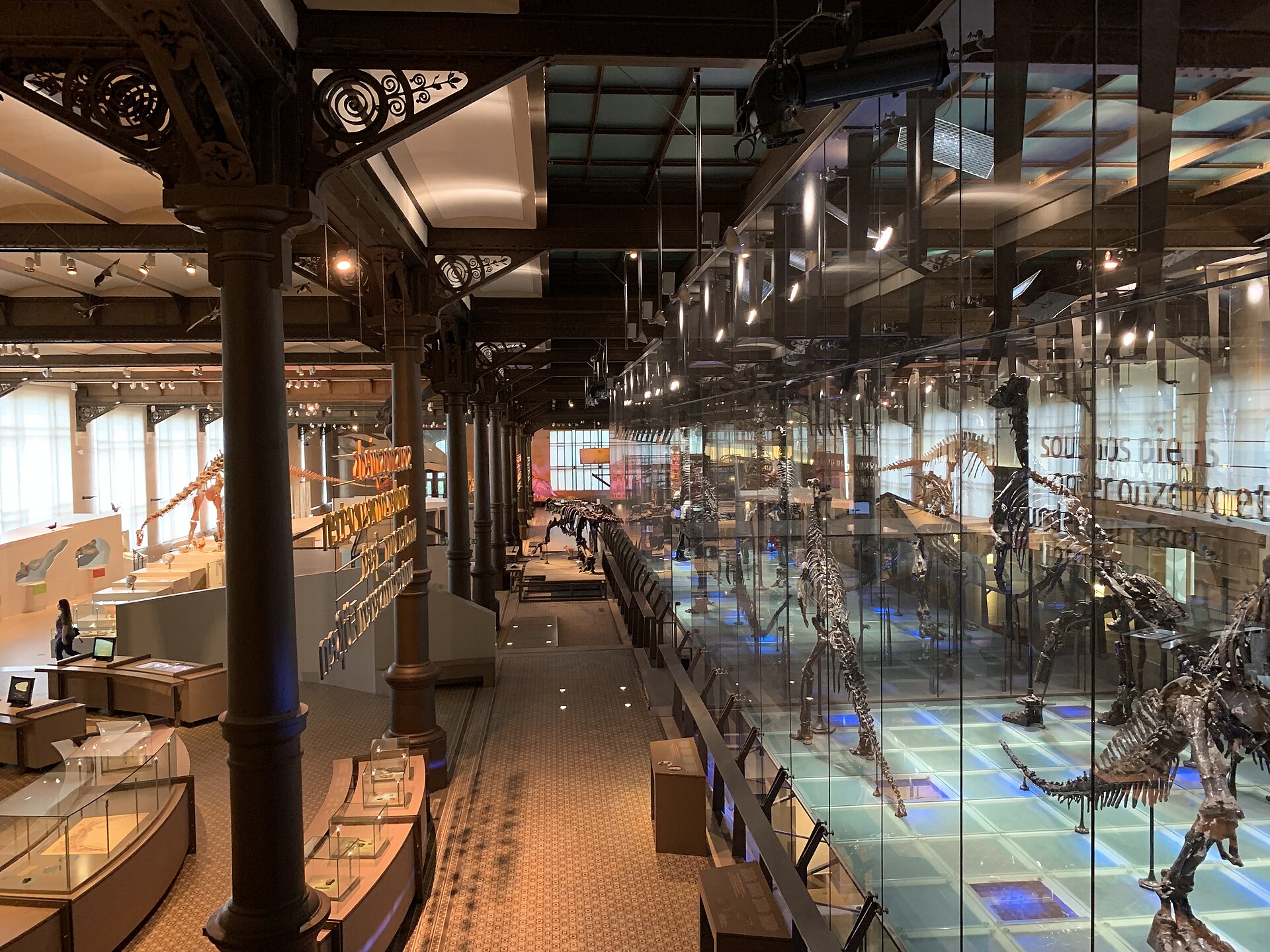
The 4,580 m² hall is the world’s largest dedicated dinosaur exhibition. The centrepiece: 30 complete iguanodon skeletons from Bernissart, Belgium, discovered 322 metres deep in a coal mine in 1878. These are the most complete dinosaur fossils ever found anywhere. Plus full-size T. rex, triceratops, plateosaurus, and other prehistoric specimens. Allow 90 minutes.
2. Living Planet Gallery
Biodiversity exhibit showcasing global ecosystems — rainforests, deep seas, savannahs, polar regions. Strong interactive elements for kids. Same admission ticket.
3. Gallery of Humankind (Human Evolution)
The human body and evolution gallery. Hominid skulls (Lucy cast, Neanderthal reconstructions), full-body anatomical models, and evolution timeline. Same admission.
4. Gallery of Evolution
The history of life on Earth, from Precambrian microorganisms through the Cambrian explosion to modern animals.
5. Mineral Gallery
Crystals, cut gems, meteorites, and Moon rock fragments (collected by the Apollo missions). Smaller but spectacular.
6. BiodiverCITY
A gallery focused on urban wildlife — species adapting to city environments. Includes Brussels-specific exhibits on local foxes, falcons, and parakeets.
7. Temporary Exhibitions
The museum hosts 1-2 major temporary exhibitions annually. Check the official site for current shows.
Natural Sciences Museum Brussels: Sample 3-Hour Itinerary
10:00 AM: Arrive at the museum (via Maelbeek metro).
10:15 AM: Dinosaur Gallery — start with the iguanodons (90 minutes).
11:45 AM: Living Planet biodiversity gallery (45 minutes).
12:30 PM: Lunch at the museum café or in Place du Luxembourg.
13:30 PM: Gallery of Humankind (60 minutes).
14:30 PM: Mineral Gallery and BiodiverCITY (30 minutes).
15:00 PM: Museum shop and exit.
Visitor Tips
Visit on Thursday afternoons. €2.50 admission Thursday afternoons (vs €15 standard) makes this Brussels’ best museum value.
First Wednesday after 1 PM is free. Expect crowds.
Combine with the European Quarter. The Natural Sciences Museum is a 5-minute walk from the European Parliament. Pair both for a full day. See our European Quarter Brussels guide.
Kids love the Dinosaur Gallery. If you have young children, dedicate at least 60-90 minutes there.
Photography is permitted. Without flash. The Dinosaur Gallery is one of Brussels’ most-photographed museum interiors.
Plan 3-4 hours. The full collection takes longer than you’d think.
Natural Sciences Museum Brussels: Quick Reference
| Detail | Information |
|---|---|
| Address | Rue Vautier 29, 1000 Brussels |
| Adult ticket | €15 |
| Student/youth | €5 |
| Thursday afternoon | €2.50 |
| First Wed after 1 PM | Free |
| Hours | Tue-Fri 9:30-17:00; Sat-Sun 10:00-18:00 |
| Closest metro | Maelbeek, Trône |
| Top attraction | 30 Iguanodons (world’s largest dinosaur hall) |
| Time needed | 3-4 hours |
Natural Sciences Museum Brussels: Highlights Not to Miss
The Natural Sciences Museum Brussels (Royal Belgian Institute of Natural Sciences) collection rewards a focused 2-3 hour visit. The must-see highlights:
- The Bernissart Iguanodons: The museum’s signature collection — most visitors find these the highlight regardless of personal interest.
- The dinosaur skeletons, mineral collections, biodiversity exhibits: The collection’s principal attraction. Allow at least 45 minutes for deeper appreciation.
- Temporary exhibits: Rotate every 3-6 months; check the museum website before visiting to see what’s currently on display.
- Interactive stations: Modern museum design — touchscreen learning stations and immersive video presentations supplement the static collection.
- Audio guide: Available in English, French, Dutch, and typically German/Spanish. Significantly enhances the visit; included with your ticket.
- Photography: Allowed without flash throughout the permanent collection. Temporary exhibits sometimes restrict.
- Building architecture: The museum building itself often deserves attention — many Brussels museum buildings are historically significant.
- Quiet corners: Off-the-beaten-track galleries see one-fifth the foot traffic of headline exhibits — better viewing experience.
Natural Sciences Museum Brussels: Practical Visiting Tips
Practical Natural Sciences Museum Brussels planning notes that frequent Brussels museum-goers rely on:
- Best day: Tuesday or Thursday — least crowded weekdays.
- Best time: Late afternoon (15:00 onwards). Morning sees school groups; midday brings tour buses.
- Closed Mondays as is the case with most major Brussels museums.
- Allow 2-3 hours minimum. Devoted enthusiasts easily spend 4 hours.
- Cloakroom: Free, accepts large bags. Strollers usually allowed throughout.
- Café/restaurant on-site: Most major Brussels museums have a café — quality varies. Plan lunch elsewhere if you’re particular.
- Wheelchair accessible: Lifts in most major museums; verify on the museum’s accessibility page.
- Combined tickets: Brussels Card (€41 24h / €59 72h) includes 49 museums, with STIB transport as an add-on — pays for itself with 2-3 visits.
- Free admission days: Many museums offer first-Wednesday or first-Sunday free entry — check before planning.
- Pre-book online via the museum website to skip the ticket counter queue.
Natural Sciences Museum Brussels: Family and Education Programs
The Natural Sciences Museum Brussels programs targeting kids and educational groups are worth knowing about whether you have children or not:
- Family audio guides: Kid-friendly versions of the main audio guide; usually free or €1-€2 supplement.
- Saturday children’s workshops: Ages 6-12 hands-on activities; €15-€20 per child; pre-book online.
- School holiday programs: Brussels-area school holidays (late October, Christmas, Carnival, Easter, summer) see expanded family programming.
- Birthday party packages: Many museums offer themed children’s birthday packages with museum tour + activity + cake.
- School group tours: Bookable tours for organised school visits; English-language groups welcome.
- Adult learning classes: Some museums offer evening adult education series on specialised topics.
- Free family entry days: Several Brussels museums offer free entry for families on specific dates throughout the year.
- Museum night: Brussels Museum Night Fever (annually, usually March) offers free entry to most museums with extended evening hours.
Natural Sciences Museum Brussels: How to Combine With Brussels Sights
Most visitors get more out of Natural Sciences Museum Brussels by combining it with nearby Brussels attractions in a half- or full-day plan:
- Morning: Arrive at the museum at 10:00 opening for the first crowd-free hour.
- Late morning: Coffee at the on-site café or a nearby café.
- Lunch (12:00-14:00): Belgian classics at a brasserie within 10 minutes’ walk.
- Afternoon: Visit a complementary museum or nearby sight.
- Late afternoon: Pentagon or Sablon walking time.
- Evening: Belgian beer at a Pentagon brasserie.
For the full Brussels museum landscape, see our Brussels museums guide covering 25+ institutions.
Natural Sciences Museum Brussels: The Iguanodon Story
The Royal Belgian Institute of Natural Sciences holds Europe’s largest collection of complete dinosaur skeletons — the famous Bernissart Iguanodons. The story behind them is as remarkable as the skeletons themselves.
In 1878, coal miners in the village of Bernissart (Wallonia) accidentally broke into a vast underground chamber containing 38 nearly-complete Iguanodon skeletons — fossilised together 125 million years ago. The collection became one of palaeontology’s most important finds. Museum staff spent decades reconstructing the skeletons in their original Cretaceous-era poses.
Today, 30 fully-articulated Iguanodons stand in the museum’s signature “Bernissart Hall” — the world’s largest exhibit of complete dinosaur skeletons. Allow at least 30 minutes for this hall alone. The interactive panels explain the excavation, mounting techniques, and what scientists have learned about Iguanodon behavior since their 1878 discovery.
Natural Sciences Museum Brussels: Beyond the Dinosaurs
The Natural Sciences Museum Brussels collection extends far beyond the dinosaur hall. Other notable exhibits worth dedicated time:
- Whale Hall: 18 whale skeletons including a 19-metre blue whale and a sperm whale. Suspended dramatically; recently restored.
- Gallery of Evolution: Comprehensive evolution timeline from single cells to humans. Strong for school-age children.
- Mineral and Gem Hall: 500+ minerals and gemstones from around the world. The fluorescent minerals room (with UV lights) is a hidden gem.
- Insect Gallery: One of Europe’s largest insect collections — 1.5+ million specimens.
- African biodiversity: Strong gorilla and chimpanzee skeletal exhibits and West African primate material.
- 250 Years of Science: Historical scientific instruments from Brussels-area researchers.
- Antarctic exhibit: Belgium has a strong Antarctic research history; the exhibit tells that story.
- Galerie du Cabinet d’Histoire Naturelle: Recreated 19th-century natural history “cabinet of curiosities” — atmospheric and Instagram-friendly.
Natural Sciences Museum Brussels: Family Tips
The Natural Sciences Museum Brussels is Brussels’ top family museum — kids love the dinosaurs. Family-specific tips:
- Best for ages 5-14. Younger toddlers tire quickly; teens enjoy the science depth but want shorter visits.
- Buy timed tickets online via naturalsciences.be to skip the ticket queue.
- Family workshops: Saturday and Sunday morning hands-on workshops (€10-€20 per child); pre-book online.
- Cafeteria: Family-friendly on-site cafeteria, €8-€15 for kids’ lunch including drink.
- Stroller-friendly: Lifts to all floors; baby-changing rooms; designated nursing areas.
- Educational quiz sheets: Free at the entrance — turns the visit into a treasure hunt.
- Combine with Royal Greenhouses of Laeken: (open about three weeks in spring, usually mid-April to early May; the monarchy announces the dates) for an outdoor extension day.
- Free entry for under-6s; €5 for 6-18 year-olds; €12 adults.
Natural Sciences Museum Brussels: Combining With Nearby Brussels Sights
Most Natural Sciences Museum Brussels visitors get more out of the museum by combining it with nearby Brussels attractions in a half- or full-day plan:
- Cinquantenaire Park complex: 30-hectare formal park, free, with sweeping lawns and the imposing Triumphal Arch (1905). The central arch is a major Brussels postcard view.
- Royal Museum of the Armed Forces: Free admission. Massive collection covering Belgian military history from medieval period to NATO era. Allow 90 minutes minimum.
- Royal Museums of Art and History: European decorative arts, Egyptian collection, Belgian medieval treasures. €10 entry.
- Temple of Human Passions: Small but powerful Victor Horta-designed pavilion (1899) housing Jef Lambeaux’s controversial 19th-century sculpture. Free.
- Aviation Hall: Vintage aircraft from the Royal Museum of the Armed Forces collection.
- Café Vert Tilleul: Park-edge café for lunch break — €15-€25 Belgian classics.
- European Quarter walk: The Cinquantenaire area connects naturally to the EU institutions area — 15 minutes’ walk west.
- Mont des Arts: Brussels’ central cultural quarter — Magritte Museum, Royal Museums of Fine Arts, BELvue. 20 minutes via metro Line 1/5.
Natural Sciences Museum Brussels: Local Tips Worth Knowing
Natural Sciences Museum Brussels insider tips frequent Brussels museum-goers rely on but rarely make it into mainstream guides:
- First Wednesday afternoon free admission applies to most Brussels museums (after 13:00). The single best Brussels cultural bargain.
- Sunday morning vs Saturday morning: Sunday mornings are noticeably quieter than Saturdays.
- Annual membership: If you’re staying in Brussels long-term, annual memberships at €30-€50 pay for themselves quickly.
- Museum Night Fever: Annual Brussels event (usually March) offers free entry to most museums during evening hours, plus themed live performances. Wristband €20.
- “Museum Pass Musées”: Belgian-wide museum pass (€59/year) covers 200+ museums across Belgium. Great if visiting multiple Belgian cities.
- Audio guide language: Typically available in English, French, Dutch, German, Spanish, Italian. Smaller museums may only offer French/Dutch.
- Best photo backgrounds: Most Brussels museums have at least one signature exhibit that makes for striking Instagram content — research before visiting.
- Combined ticket strategies: Brussels Card holders should plan museum visits early in their 24/48/72-hour window to maximise pass value.
- School holidays: Brussels-area school holidays bring family programming and increased crowds.
- Cafés and lunch: On-site museum cafés vary in quality. Plan to eat elsewhere if you’re particular — central Brussels has hundreds of café options within 10 min walk.
Natural Sciences Museum Brussels: Frequently Asked Practical Questions
Common questions about visiting Natural Sciences Museum Brussels that catch first-time visitors out:
- How early should I arrive? The museum opens at 10:00; arriving by 10:15 gives you 60-90 minutes of crowd-free viewing before the tour group peak around 11:30.
- Are pre-booked tickets necessary? Generally not for weekday visits, but strongly recommended for weekends and school holidays — the ticket counter queue can reach 30-40 minutes during peak periods.
- What about photography policy? Photography without flash is allowed throughout the permanent collection. Tripods and selfie sticks generally banned. Temporary exhibits sometimes restrict photography entirely.
- Can I leave my bag at the museum? Yes — free cloakroom accepts large bags and coats. Lockers available for valuables.
- Is the museum wheelchair accessible? Yes — lifts to all floors, accessible toilets, free entry for an accompanying caregiver.
- Family ticket options? Most museums offer family discount packages (2 adults + 2 children at 15-20% off individual ticket cost).
- Can I bring food and drink? Generally no — but on-site cafés serve light meals, and you can leave the museum and return on the same ticket.
- Public transport from Brussels-Central? Most major Brussels museums are 15-25 minutes from Brussels-Central via metro or tram.
- Is English support strong? Yes — audio guides, signage, and most staff speak English. French and Dutch are official languages but English works throughout.
- Free entry days? Many Brussels museums offer first-Wednesday or first-Sunday free admission — check the museum’s official site before planning.
Useful Resources
- Royal Museum of Natural Sciences — official site.
- visit.brussels — official tourism office.
- Brussels Museums Portal — combined city-museum information.
Frequently Asked Questions
What is the Natural Sciences Museum Brussels famous for?
The Dinosaur Gallery — the world’s largest museum hall dedicated to dinosaurs — featuring 30 complete iguanodon skeletons discovered in a Belgian coal mine in 1878. Plus the broader natural history collection across biodiversity, human evolution, and minerals.
How much does the Natural Sciences Museum Brussels cost?
Adult €15, student/youth €5, under-4 free. Thursday afternoons €2.50. First Wednesday after 1 PM free for everyone.
How long should I plan for the Natural Sciences Museum Brussels?
3-4 hours minimum for the full collection. The Dinosaur Gallery alone takes 90 minutes.
Is the Natural Sciences Museum Brussels good for kids?
Yes — it’s one of Brussels’ best museums for kids 6-14. The Dinosaur Gallery, interactive Living Planet displays, and engaging exhibits hold children’s attention well.
When is the Natural Sciences Museum Brussels free?
First Wednesday of every month after 1:00 PM. €2.50 admission Thursday afternoons.
Where is the Natural Sciences Museum Brussels?
Rue Vautier 29, in the European Quarter. 10 minutes’ walk from Maelbeek metro, 20 minutes from Grand Place.
Final Thoughts
The Natural Sciences Museum Brussels delivers one of Europe’s best natural-history experiences. Whether you marvel at the 30 iguanodons, walk through the Gallery of Humankind, or simply enjoy the moon rocks, you’ll find this museum rewards 3-4 hours of careful exploration. For more on Brussels museums, see our complete Brussels museums guide and European Quarter Brussels guide.
Photo Credits
-
An Iguanodon in the Brussels dinosaur gallery: Quartier Européen, Bruxelles, Belgium – panoramio (5) by Istvan Vizi, CC BY 3.0, via Wikimedia Commons.
-
A dinosaur skull in the Brussels gallery: Charonosaurus jiayinensis.001 – MSNBrussel by Fernando Losada Rodríguez, CC BY-SA 4.0, via Wikimedia Commons.
-
The dinosaur gallery in Brussels: Vue de la salle des dinosaures, muséum des sciences naturelles de Belgique by Benoît Prieur, CC0, via Wikimedia Commons.