languages spoken in brussels: What do they speak in Brussels? Officially, Brussels is bilingual French and Dutch — but in practice, it’s a polyglot city of 104 languages where English is spoken in most tourist contexts. This languages spoken Brussels guide for 2026 covers the official languages, who speaks what, useful tourist phrases, and the practical reality for visitors who don’t speak French or Dutch.
Wondering about languages spoken in brussels? You’re in the right place. This languages spoken in brussels guide pulls together official statistics, on-the-ground observation and the practical tips travellers need to navigate the city confidently.
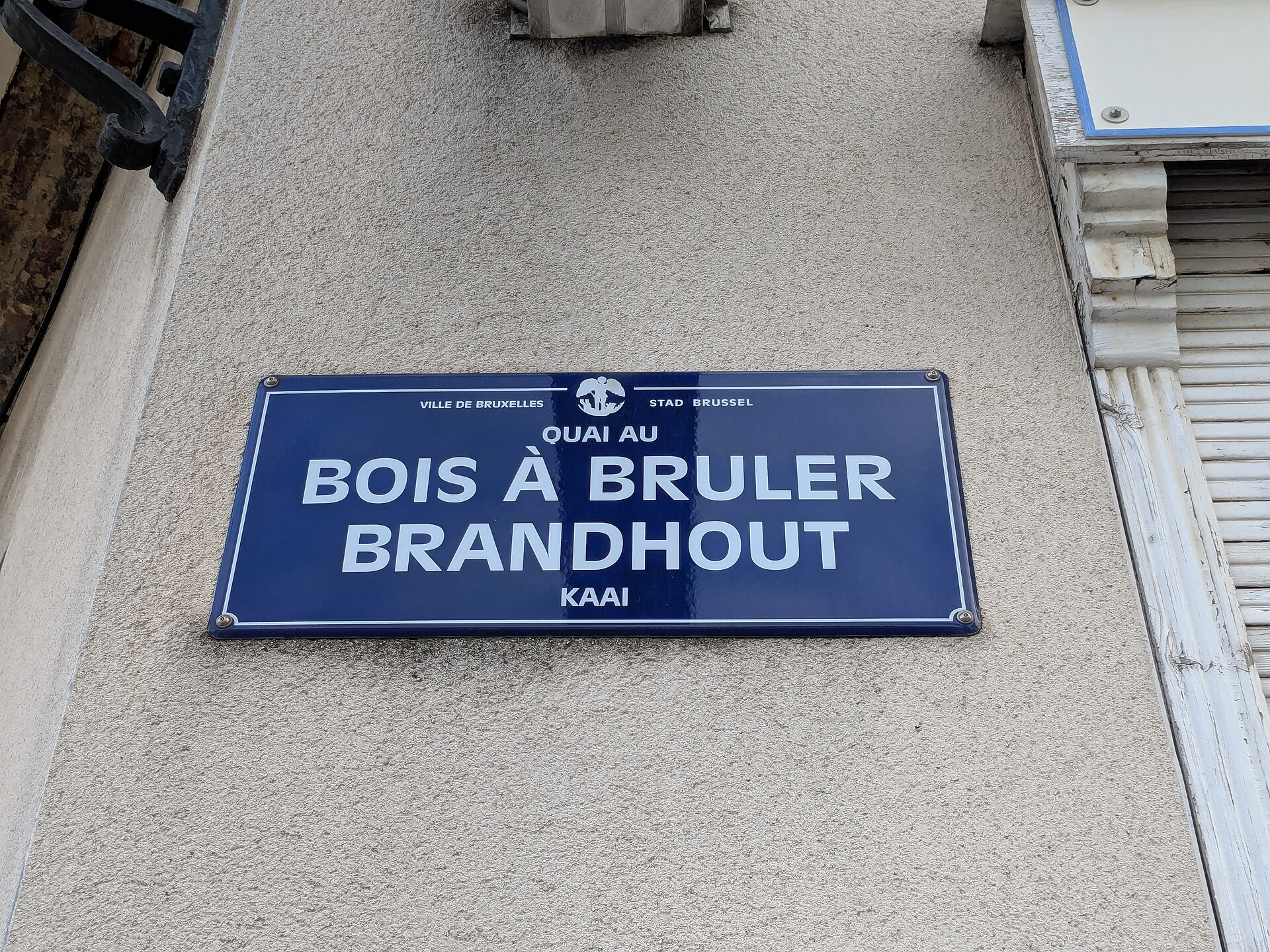
Languages Spoken Brussels: The Quick Answer
- Official languages: French and Dutch (legally equal status).
- In practice: French dominates daily life. ~88% speak French; 23% speak Dutch.
- English: Widely spoken in tourist areas, restaurants, hotels, and the European Quarter. ~30% of residents speak English well.
- Other major languages: Arabic (18%), Spanish (9%), German (7%), Italian and Turkish (5% each).
- Home languages: Brussels residents speak a total of 104 languages.
Languages Spoken Brussels: For Tourists
For travellers tracking languages spoken in brussels, the practical points covered here distil what actually matters on the ground in Brussels.
You don’t need French or Dutch to visit Brussels. English works in:
- Hotels, restaurants, cafés in central Brussels.
- Museums (audio guides typically available in English).
- Train stations, airport, metro.
- Most shops in the Pentagon, Ixelles, Sablon, and tourist areas.
- The European Quarter (English is the working lingua franca).
Where French or Dutch helps:
- Outer communes (Schaerbeek, Anderlecht, Molenbeek).
- Smaller local cafés and friteries.
- Government offices.
- Trips to Flanders (Antwerp, Ghent, Bruges) — Dutch becomes essential.
- Trips to Wallonia (Liège, Namur, Charleroi) — French becomes essential.
Languages Spoken Brussels: Why Bilingual?
Belgium itself is a federal country with three official languages:
- Dutch (Flemish): Flanders region (northern Belgium).
- French: Wallonia region (southern Belgium) and Brussels.
- German: Small region in eastern Belgium (~75,000 speakers).
Brussels sits geographically in Flanders (Dutch-speaking territory) but is overwhelmingly French-speaking — a historical legacy of French-speaking elite culture, postwar immigration, and the city’s role as international/EU capital. The result: legally bilingual, with all street signs, government communications, and public services in both languages.
Languages Spoken Brussels: The Bilingual Signage Reality
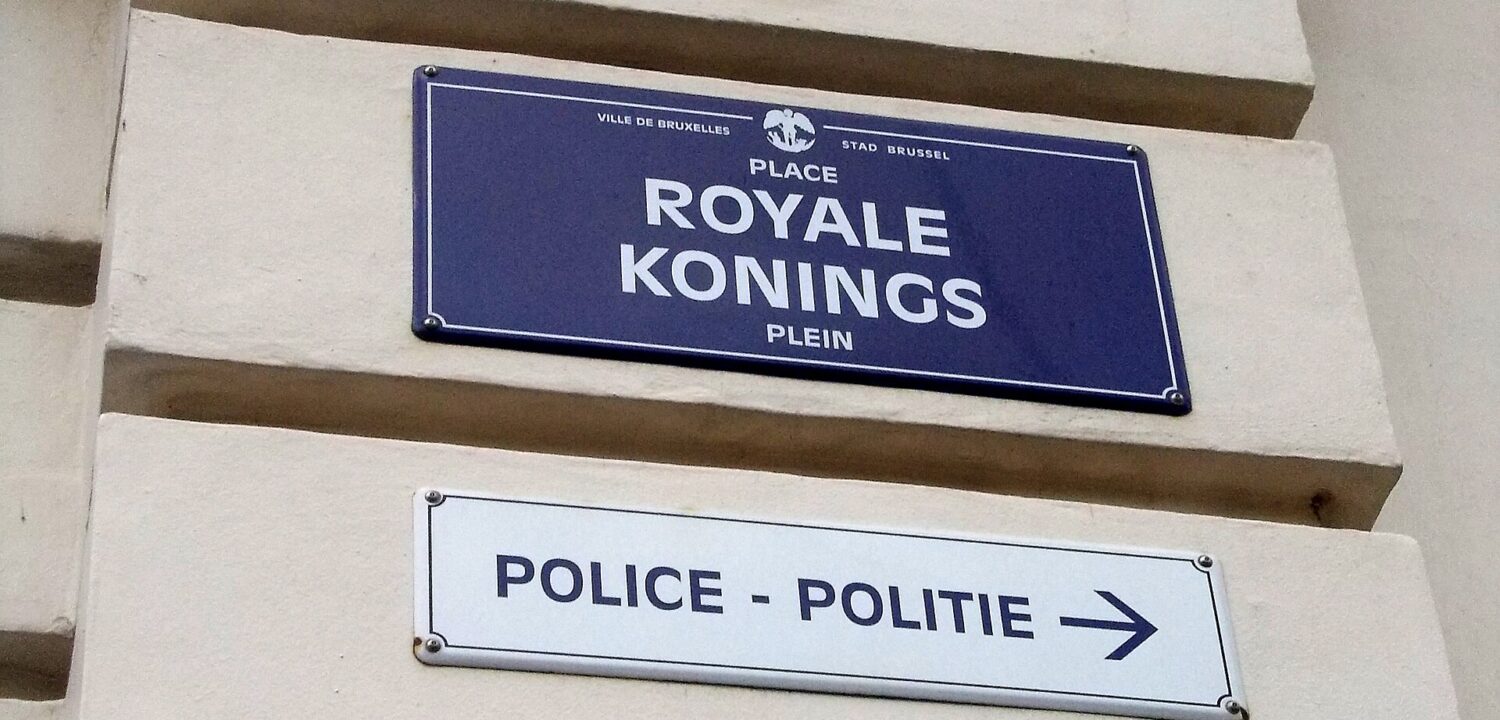
Every Brussels street sign, metro station name, and government notice appears in both French and Dutch. Examples you’ll see daily:
- Brussels-Central = “Bruxelles-Central” (FR) / “Brussel-Centraal” (NL).
- Brussels-Midi = “Bruxelles-Midi” (FR) / “Brussel-Zuid” (NL).
- Grand Place = “Grand-Place” (FR) / “Grote Markt” (NL).
- Town Hall = “Hôtel de Ville” (FR) / “Stadhuis” (NL).
- Royal Park = “Parc Royal” (FR) / “Koninklijk Park” (NL).
Google Maps and most apps default to one language at a time — switch your phone’s language settings if you want consistency.
Languages Spoken Brussels: Useful Tourist Phrases
| English | French | Dutch |
|---|---|---|
| Hello / Good day | Bonjour | Goeiedag / Hallo |
| Good evening | Bonsoir | Goedenavond |
| Goodbye | Au revoir | Tot ziens |
| Thank you | Merci | Dank u |
| Please | S’il vous plaît | Alstublieft |
| Sorry / Excuse me | Pardon | Pardon / Sorry |
| Yes / No | Oui / Non | Ja / Nee |
| Do you speak English? | Parlez-vous anglais? | Spreekt u Engels? |
| The bill, please | L’addition, s’il vous plaît | De rekening, alstublieft |
| Where is…? | Où est…? | Waar is…? |
| How much? | Combien? | Hoeveel? |
| Cheers! | Santé! | Proost! |
| One beer, please | Une bière, s’il vous plaît | Een biertje, alstublieft |
Languages Spoken Brussels: Which to Use?
Default to French in Brussels. ~88% of residents speak French; ~23% Dutch. French greetings are safe in any Brussels context.
Switch to English when stuck. Most Brussels servers, hotel staff, and shopkeepers speak excellent English. They’d rather you switch to English than struggle in poor French.
Always try the local greeting first. Even a “Bonjour” before switching to English is appreciated.
Outside Brussels: Adjust your greeting:
- Flanders (Antwerp, Ghent, Bruges): always start in Dutch (“Goeiedag”).
- Wallonia (Liège, Namur): start in French.
- German-speaking East: try “Guten Tag” — but French and English work too.
Languages Spoken Brussels: The European Quarter Exception
The European Quarter (around Schuman) operates primarily in English. EU institutions function in English as the lingua franca. Restaurants, cafés, and shops in this district default to English. You may hear French and Dutch, but you’ll hear more English than either.
Languages Spoken Brussels: Cultural Politeness
Don’t ask “Do you speak English?” first. Start with the local greeting (“Bonjour” / “Goeiedag”). Once eye contact is established, then ask. This is significantly more polite.
Avoid mixing French and Dutch in one sentence. Pick one. Switching mid-sentence (which some bilingual Brussels locals do casually) is not how foreigners should attempt the languages.
Don’t assume a Brussels person speaks Dutch. ~77% of Brussels residents do NOT speak Dutch fluently. Approaching someone in Dutch can backfire awkwardly.
Don’t speak loudly in English. A common stereotype is that English speakers shout when not understood. Be patient and clear instead.
Languages Spoken Brussels: Quick Reference
| Language | % Spoken Well | Where |
|---|---|---|
| French | 88% | Default daily language |
| English | 30% | Tourist areas, EU Quarter, hotels |
| Dutch | 23% | Some neighbourhoods, Flanders adjacent |
| Arabic | 18% | Molenbeek, Anderlecht |
| Spanish | 9% | Various; growing |
| German | 7% | Various; close to German border |
| Italian / Turkish | 5% each | Various |
Languages Spoken In Brussels — Final Tip
One more practical takeaway about languages spoken in brussels: in 95% of tourist-facing contexts (hotels, restaurants, museums, transport), English is fine. Save your French effort for the small thank-you at the end of an interaction.
Hidden Stories of Languages Spoken in Brussels Most Tourists Miss
The official “bilingual Brussels” tag hides a much messier truth. The history of the languages spoken in Brussels is full of street-level moments most visitors never hear.
- The 1963 linguistic frontier law: The fixed French/Dutch language boundary cuts through Brussels’ 19 communes, but the city itself was carved out as a bilingual exception. Walk along Avenue Louise and you cross from Ixelles (officially bilingual) to Saint-Gilles in 90 seconds, yet street signs subtly change typography style.
- The “Don’t speak French to me!” Flemish movement: Until the 1968 university split, all teaching at KU Leuven was in French. Flemish students chanted “Walen buiten!” (Walloons out!) and the university split overnight – the entire French-speaking faculty was moved to a brand-new campus south of Brussels, Louvain-la-Neuve. The taxi route between the two campuses (60 km) is now a curiosity tour.
- The Marollien dialect of the Marolles district: A pidgin of Brabantian Dutch, French and Yiddish, spoken by working-class brusseleirs into the 1970s. You can still catch fragments at the Jeu de Balle flea market, especially among the older traders selling vinyl records. Hergé inserted Marollien curses into Captain Haddock’s vocabulary.
- The English-language inflation in the EU quarter: Although not an official language of Brussels, English is the dominant working language in Etterbeek and parts of Ixelles. Several restaurants in Place du Luxembourg are now monolingual in English; only the legal receipt is bilingual French/Dutch as required by law.
Knowing these layers transforms a sign-reading walk into a fascinating linguistic time-machine. The languages spoken in Brussels are a microcosm of European multilingualism that no museum captures.
Self-Guided Walking Tour of the Languages Spoken in Brussels
This 75-minute, 2-km loop takes you through neighbourhoods where each main language of Brussels dominates. Listen as much as you look.
- Start: Sainte-Catherine fish market area. Mostly French in 2026, but the older clientele at L’Huitriere or Mer du Nord drops in occasional Marollien. Listen at the oyster bar around 12:30.
- Walk 6 minutes north-east to Brussels-Nord station and Quartier Nord (Bockstael). Mostly Dutch on outdoor signs; this is one of Brussels’ most Flemish corners thanks to the De Beurs and KVS theatre crowd.
- Continue 10 minutes east to Place du Congres / Rue Royale. Civil-service zone, balanced bilingualism enforced; perfect spot to compare bilingual ministry signs.
- Walk 12 minutes south-east to Place du Luxembourg (EU quarter). 80% English in cafes, French signs on banks. Buy a coffee at Exki and listen to the polyglot lunch crowd.
- Continue 8 minutes south to Place du Chatelain (Ixelles). Very French-dominant, slight Flemish presence among older residents. Wednesday afternoon market is a great listening spot.
- Walk 5 minutes south-west to Place Flagey. Cosmopolitan: French, English, Portuguese (Cape Verdean diaspora), Arabic and Turkish all audible on a single bench.
- Finish at the Marolles flea market (Place du Jeu de Balle). Last bastion of Marollien. Sunday morning is most active; bargain with traders and listen for the rolling “r” sounds.
Common Misconceptions About Languages Spoken in Brussels
Several popular assumptions about the languages spoken in Brussels do not match the 2026 reality. These are the most common.
- Myth: Brussels is majority French-speaking. French is the most widely spoken first language (around 80% of residents speak it fluently), but only about half consider it their mother tongue. Arabic, Spanish, Italian, Portuguese, Turkish, English and Dutch all have significant L1 communities.
- Myth: All Brussels residents speak Dutch. Despite Brussels’ bilingual status, surveys show only 16-23% of residents speak fluent Dutch. Civil servants must, but the average barista does not.
- Myth: Speaking French to a Fleming is rude. Not in Brussels itself – the city is famously laid-back about language choice. Starting in English is the safest neutral opener for tourists; almost everyone under 40 will reply fluently.
- Myth: Street signs are always in both languages. Inside the 19 Brussels communes, yes (Rue Neuve / Nieuwstraat). Cross into Vilvoorde or Asse and signs switch to Dutch only; cross into Waterloo and they switch to French only – within 25 km of the centre.
- Myth: English is an official language. No – only French and Dutch. Yet English is now the most common language in EU-quarter workplaces and is taught from age 10 in Belgian schools. Practically, every museum, restaurant and transport map offers English.
- Myth: There is one Belgian accent of French. Brussels French (with its singing intonation and “septante” for 70 instead of “soixante-dix”) sounds quite different from Liege French or Wallonian French. Train conductors on SNCB use the Brussels variant.
For the political backdrop on why the languages spoken in Brussels are so finely balanced, see our history of Brussels guide. For the EU’s role in pushing English upward, see our Brussels EU capital guide.
How Languages Spoken in Brussels Shape Daily Life
For visitors, the practical realities of the languages spoken in Brussels matter more than the political theory. These details shape every shop, sign and bus journey.
- Restaurant menus: Almost every Brussels restaurant offers menus in French, Dutch, and English. Some pricier venues add German, Italian or Spanish for the EU-diplomat lunch crowd. Tap water (eau du robinet / leidingwater) is universally served free if asked politely.
- STIB metro announcements: All stations announce in French and Dutch automatically; line 1 (the EU line) adds English at Schuman, Maelbeek and Beaulieu.
- Hospital and medical: All Brussels hospitals must serve patients in their official language. Foreign visitors usually get assigned a French-speaking doctor by default; for English-speaking GPs, see the British Council list or use the Doctena app filter.
- Banking and ATMs: Belfius, BNP Paribas Fortis, ING and KBC all offer multilingual interfaces (typically FR/NL/EN/DE). Cash withdrawal fees for foreign cards are usually waived on the first three transactions.
- Calling 112: Belgium’s emergency number connects to operators trained in French, Dutch and English. The 1722 non-emergency line (e.g. fallen-tree on car) is the same.
- Newspaper kiosks: Le Soir, La Libre Belgique (FR), De Standaard, De Morgen (NL), Politico Europe, The Brussels Times, The Bulletin (EN), El Pais and Le Monde all on sale at Press Shop branches. International New York Times available at Brussels-Midi and BRU airport.
For more on navigating the practical side of the languages spoken in Brussels, see how transport tickets, signage and apps work in our Brussels transport tickets guide.
Frequently Asked Questions About Languages Spoken in Brussels
Common visitor questions about the languages spoken in Brussels, answered for 2026.
- Do I need to speak French to visit Brussels? No. English is widely spoken by anyone under 50, and most signs, menus and tickets are translated. A few “bonjour” and “merci” go a long way but are not required.
- Which language do I greet someone in? “Bonjour” in central and southern Brussels (French-leaning), “Goedendag” in northern/Flemish-leaning quarters. “Hello” is fine and never wrong.
- Is German really an official language? Yes, but only spoken by about 1% of Belgians in the eastern cantons near Eupen and Sankt Vith. In Brussels itself, German is rare.
- What is “septante” and “nonante”? Belgian and Swiss French for 70 and 90, instead of France’s “soixante-dix” and “quatre-vingt-dix”. Simpler and used by all Brussels speakers.
- Can I use English at the doctor or hospital? Most younger doctors speak English; ask explicitly at booking. The Brussels British clinic and CHIREC group have many fluent English-speaking GPs.
- Is the Brussels accent of French distinctive? Yes – softer and more musical than Parisian French, with characteristic “ein” and “ien” endings and several Dutch-origin loanwords.
Related Brussels Guides
Keep planning with these companion guides:
- Brussels History and Culture — From Medieval Origins to Capital of Europe
- Art Nouveau Architecture Brussels — Complete Horta & UNESCO Guide
- Royal Palace Brussels Guide — Summer Opening, Tickets & History
- Brussels Comic Strip Culture — Tintin, Smurfs, Murals & Museums
Useful Resources
- Wikipedia: Demographics of Brussels — detailed language statistics.
- BRIO Brussels Language Barometer — official linguistic data.
- visit.brussels — official tourism office.
Frequently Asked Questions
What languages are spoken in Brussels?
Officially French and Dutch (legally equal status). In practice, French dominates — 88% speak French well; only 23% speak Dutch. English is widely understood in tourist areas (~30%). Brussels residents speak 104 languages in total.
Do they speak English in Brussels?
Yes — widely, especially in hotels, restaurants, museums, and the European Quarter. About 30% of Brussels residents speak English well. Most tourist-facing staff are comfortable in English.
Should I speak French or Dutch in Brussels?
French. ~88% of Brussels residents speak French well; only 23% speak Dutch. A “Bonjour” before switching to English is the safest default. In Flanders (Antwerp, Bruges, Ghent), switch to Dutch.
Why is Brussels officially bilingual?
Brussels sits geographically in Flanders (Dutch-speaking territory) but is overwhelmingly French-speaking historically. Belgian federal law requires both languages to have equal official status — so all signs, government services, and notices appear in both.
Is English the lingua franca in the European Quarter?
Effectively yes. EU institutions function primarily in English. Restaurants, cafés, and shops in the European Quarter default to English.
What greeting should I use in Brussels?
“Bonjour” (French) — safe in any Brussels context. In Flanders (Antwerp, Bruges, Ghent), use “Goeiedag” or “Hallo”. Always start with a local greeting before switching to English.
To recap: the languages spoken in brussels reality is more layered than the simple bilingual label suggests — and this languages spoken in brussels guide should help you navigate it with confidence.
Languages Spoken in Brussels: Why This Matters
The languages spoken in brussels story matters because it shapes everyday tourist experience — from greetings and signage to which language to attempt at a café counter. For broader context on the languages spoken in brussels backdrop, see our complete Languages Spoken in Brussels reference and Brussels first time visitor tips.
Final Thoughts
The languages spoken Brussels reality is simpler than the legal complexity suggests: default to French, switch to English when stuck, and you’ll do fine. For more, see our Belgian traditions and customs and Brussels first time visitor tips.
Photo Credits
-
Bilingual signs at Place Royale: Bilingual (French-Dutch) signs in Brussels by Andrijko Z., CC BY-SA 4.0, via Wikimedia Commons.
-
Quai au Bois a Bruler bilingual sign: Bruxelles – Quai au Bois à Brûler – Plaque by Romainbehar, CC0, via Wikimedia Commons.