Brussels invented Art Nouveau. The world’s first truly Art Nouveau building — Victor Horta’s Hôtel Tassel — was completed here in 1894, and four of Horta’s town houses are now UNESCO World Heritage sites. This comprehensive 2026 guide to Art Nouveau architecture Brussels covers the major buildings, the architects who pioneered the movement, how to visit, and a self-guided walking route covering the must-see facades.
Art Nouveau Architecture Brussels: Quick Facts
- Birthplace: Brussels (Hôtel Tassel, 1893-94).
- Father of Art Nouveau: Victor Horta (1861-1947).
- UNESCO sites: 4 Horta town houses inscribed in 2000.
- Brussels Art Nouveau buildings: 500+ remain across the city.
- Best neighbourhoods: Ixelles, Saint-Gilles, Schaerbeek, European Quarter.
Art Nouveau Architecture Brussels: Why Brussels?
In the 1890s Brussels was wealthy from Belgian Congo and industrial Belgium. Cultural confidence was high; a young generation of architects — Victor Horta, Paul Hankar, Henry van de Velde, Gustave Strauven — wanted to break from historicist styles (neo-Gothic, neo-Renaissance) and create something genuinely new.
Their innovations: open-plan interiors, exposed iron and glass, whiplash curves from nature (leaves, tendrils, hair), unified design from staircase to doorknob, and the integration of new materials (cast iron, plate glass) into bourgeois residential architecture.
The result was a stylistic revolution that spread from Brussels to Paris (Métro entrances), Vienna (Secession), Barcelona (Gaudí), and beyond — all within a decade.
Art Nouveau Architecture Brussels: The 4 UNESCO Horta Houses
1. Hôtel Tassel (1893-1894) — Rue Paul-Émile Janson 6, Ixelles
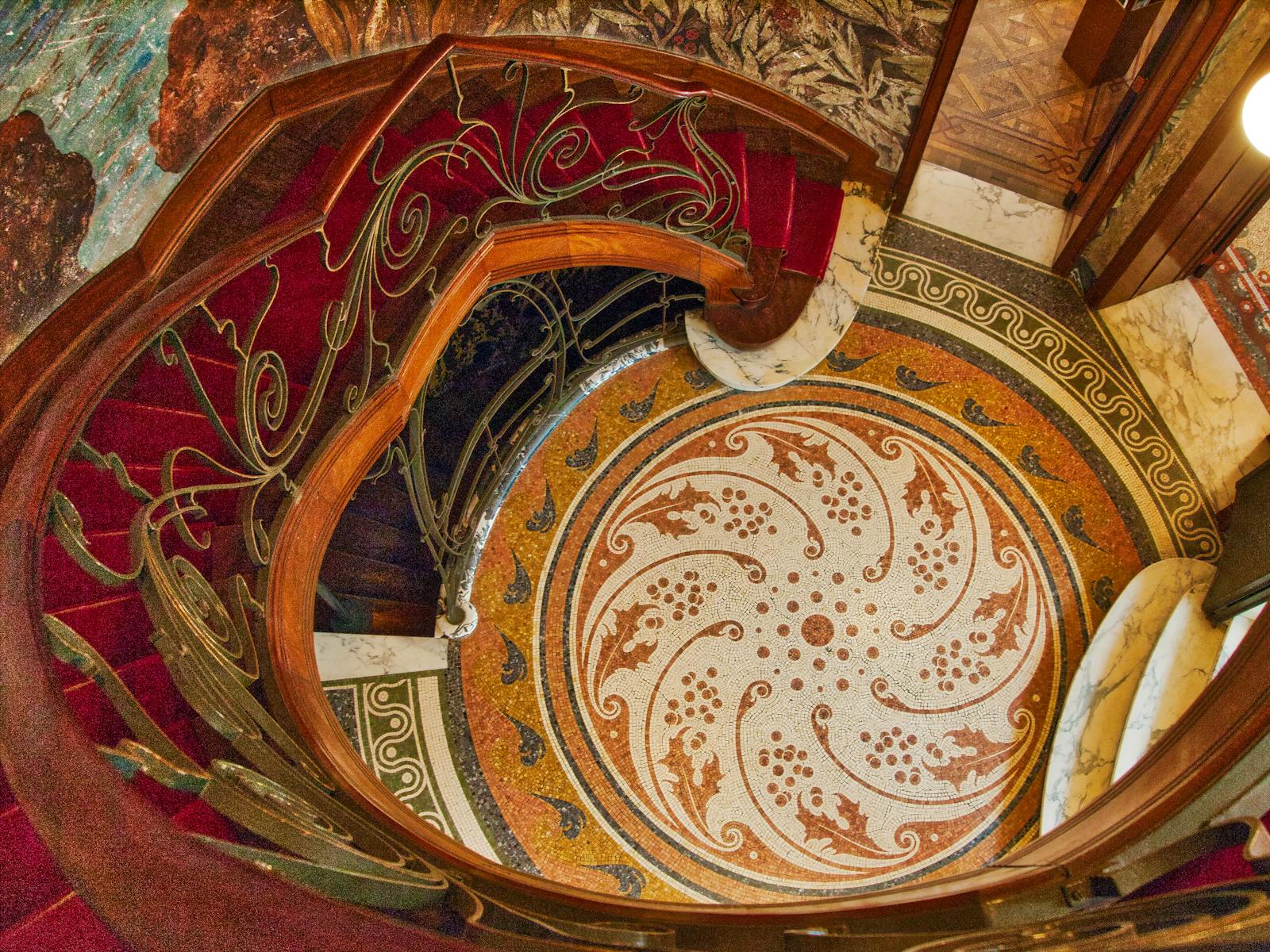
The first true Art Nouveau building. Designed for chemistry professor Emile Tassel. Innovations: open floor plan replacing rigid hallway-and-rooms layout, exposed iron columns, central skylit staircase with botanical iron tracery, unified decor from mosaic floor to ceiling.
Visiting: Private residence — view facade only.
2. Hôtel Solvay (1894-1900) — Avenue Louise 224, Ixelles
Horta’s most lavish residential work. Built for industrial chemist Armand Solvay with effectively unlimited budget. Marble, exotic woods, custom-designed furniture, stained glass throughout.
Visiting: Limited guided tours; book months ahead via the Hôtel Solvay website.
3. Hôtel van Eetvelde (1895-1901) — Avenue Palmerston 2-4, Brussels
Built for Baron Edmond van Eetvelde, administrator of the Congo Free State. Famous for its octagonal glass-roofed salon — one of Art Nouveau’s most spectacular interior spaces.
Visiting: Private residence — view facade only.
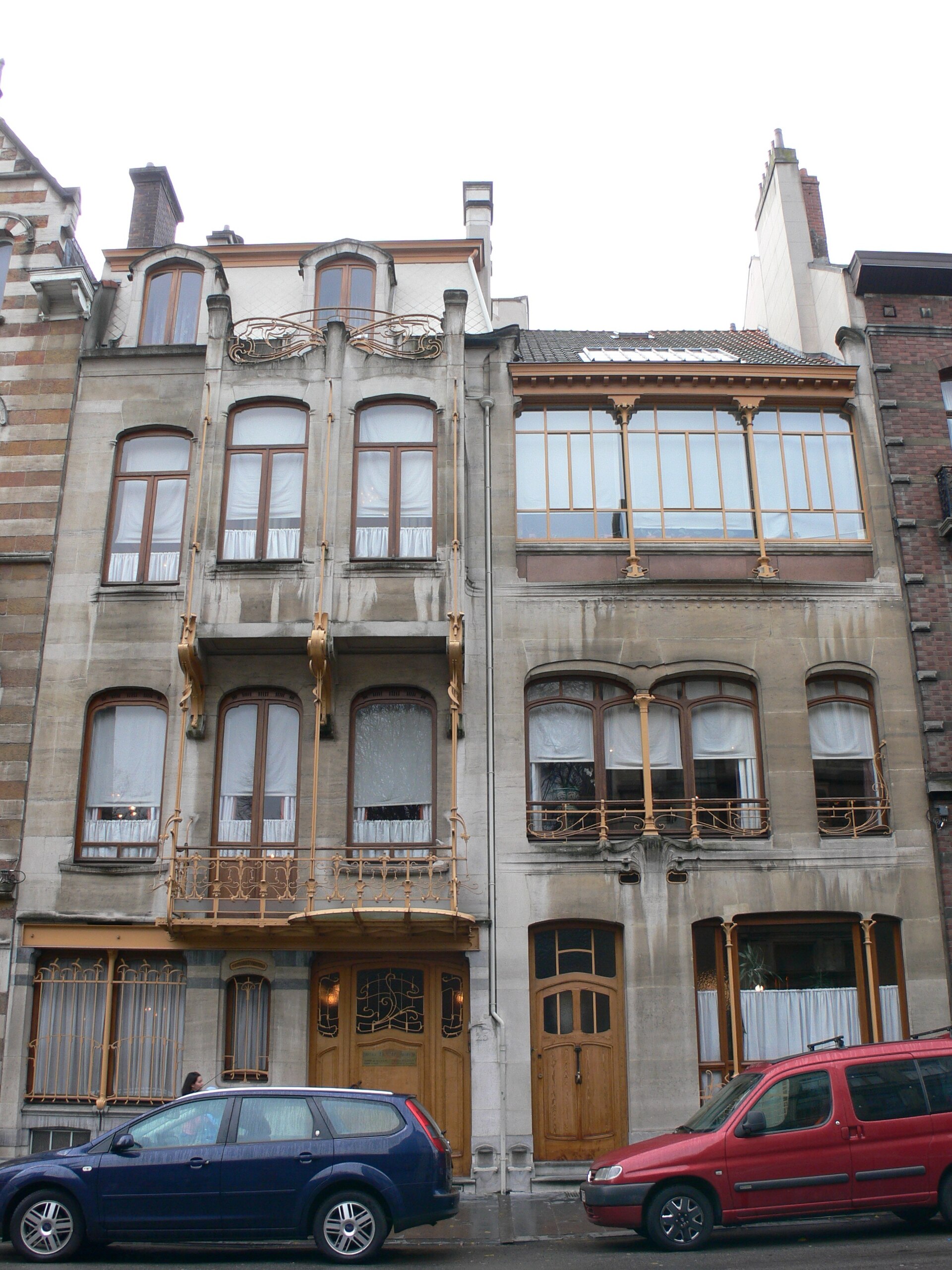
4. Maison & Atelier Horta (1898-1901) — Rue Américaine 25, Saint-Gilles
Horta’s own house and studio. Now the Horta Museum. Demonstrates Horta’s principles on a smaller budget — proportion, light, and detail over expensive materials.
Visiting: Open to the public Tuesday-Sunday 14:00-17:30. €12 admission. The only Horta house with full interior access.
Art Nouveau Architecture Brussels: Other Essential Buildings
Hôtel Hannon (1903) — Avenue de la Jonction 1, Saint-Gilles
Designed by Jules Brunfaut. Recently restored and now open as a museum. Stained-glass conservatory, original fresco staircase.
Maison Saint-Cyr (1900-1903) — Avenue Palmerston 11
By Gustave Strauven, Horta’s collaborator. The narrowest facade in Brussels (4 meters wide) packed with floral ironwork — one of the most photographed Art Nouveau buildings.
Maison Cauchie (1905) — Rue des Francs 5, European Quarter
By Paul Cauchie, who designed both the building and its sgraffito allegorical decorations. Now a small museum; open first weekend of each month.
Old England Building (1899) — Mont des Arts
By Paul Saintenoy. Now houses the Musical Instruments Museum (MIM). Black-painted iron and glass facade. The MIM’s rooftop café offers excellent central Brussels views.
Hôtel Ciamberlani (1897) — Rue Defacqz 48, Ixelles
By Paul Hankar — the Tassel’s contemporary rival. Hankar’s premature death in 1901 left Horta as the dominant Brussels Art Nouveau figure.
Magasins Waucquez (1906) — Rue des Sables 20
By Horta. Originally a textile warehouse, now houses the Comics Art Museum (CBBD). Massive iron-and-glass interior space.
Art Nouveau Architecture Brussels: Self-Guided Walking Tour
A focused 4-hour Art Nouveau walk:
- Start: Horta Museum (Rue Américaine 25) — pay for entry, see interior.
- Walk to Hôtel Tassel (Rue Paul-Émile Janson 6) — facade only.
- Continue to Hôtel Solvay (Avenue Louise 224) — facade.
- Walk via Avenue Louise to Hôtel Hannon (Avenue de la Jonction 1) — interior open.
- Optional: continue south to Hôtel Ciamberlani (Rue Defacqz 48).
For the European Quarter:
- Hôtel van Eetvelde (Avenue Palmerston 2-4) — facade.
- Maison Saint-Cyr (Avenue Palmerston 11) — facade, most photogenic.
- Optional: walk to Maison Cauchie (Rue des Francs 5).
Art Nouveau Architecture Brussels: How to Visit Interiors
Most major Art Nouveau houses are private residences with facade-only access. Confirmed interior access:
- Horta Museum: Tuesday-Sunday 14:00-17:30. €12.
- Hôtel Solvay: Limited guided tours; pre-book via hotelsolvay.com.
- Hôtel Hannon: Open to public after recent restoration; check current schedule.
- Maison Cauchie: First weekend of each month.
- Musical Instruments Museum (Old England Building): Tuesday-Sunday 09:30-17:00.
- Comics Art Museum (Magasins Waucquez): Tuesday-Sunday 10:00-18:00.
Art Nouveau Architecture Brussels: Annual “BANAD” Festival
Each March-April, the Brussels Art Nouveau and Art Deco Festival (BANAD) opens 30+ private Art Nouveau and Art Deco houses for one-weekend-only public tours. The single best opportunity to see private interiors. Book months ahead — tickets sell out fast.
Art Nouveau Architecture Brussels: Quick Reference
| Building | Architect | Year | Access |
|---|---|---|---|
| Hôtel Tassel | Horta | 1893-94 | Facade only |
| Hôtel Solvay | Horta | 1894-1900 | Pre-book tour |
| Hôtel van Eetvelde | Horta | 1895-1901 | Facade only |
| Horta Museum | Horta | 1898-1901 | Tue-Sun 14:00-17:30 |
| Hôtel Hannon | Brunfaut | 1903 | Open to public |
| Maison Saint-Cyr | Strauven | 1900-03 | Facade only |
| Maison Cauchie | Cauchie | 1905 | 1st weekend/month |
| MIM (Old England) | Saintenoy | 1899 | Tue-Sun 09:30-17:00 |
| Comics Centre (Waucquez) | Horta | 1906 | Tue-Sun 10:00-18:00 |
Hidden Art Nouveau Architecture Brussels Stories Most Tourists Miss
Beyond the famous Horta Museum and Hotel Tassel, Art Nouveau architecture Brussels has dozens of quirky stories tied to specific facades. These four are anchored to addresses you can photograph today.
- The “Strauven sisters” facade at 83 Rue Faider: Architect Gustave Strauven designed the Maison Saint-Cyr (1903) at age 22 as a wedding-gift commission; the riotous wrought-iron tendrils that climb six floors were almost demolished in the 1960s when the daughter inherited and tried to convert it into flats. A neighbour’s petition saved it days before the wrecking ball.
- The poisoned-architect myth of Hotel Solvay: Industrialist Ernest Solvay gave Victor Horta unlimited budget for the 1894 mansion at 224 Avenue Louise. Legend says Horta drank lead-glazed coffee from the custom-made dining service for months during installation; the slow cognitive decline that followed in his later career is sometimes blamed on those visits. You can verify the dining service is still in situ on the public tours offered Saturday mornings.
- The vanishing tiles of Cauchie House: The 1905 sgraffito facade at 5 Rue des Francs in the EU quarter loses fragments every winter. The current owners run a discreet repair workshop in the basement; you can sometimes see them on the first weekend of each month when the house opens (€7 entry, cash only).
- The secret Horta safe at the Old England building: The Musical Instruments Museum (former Old England department store, Paul Saintenoy 1899) hides a riveted-steel safe in its basement that contained the original wage books. Staff occasionally show it on the Heritage Days weekend in September.
These anecdotes turn a facade-photo walk into a layered visit. The best Art Nouveau architecture Brussels has on display is rarely behind a fence, but it does take some local knowledge to spot the back stories.
Self-Guided Art Nouveau Architecture Brussels Walking Tour
This 2-hour loop covers nine major buildings in the Ixelles and Saint-Gilles communes – the densest concentration of Art Nouveau architecture Brussels still preserves. Start at Louise metro and end at Horta Museum.
- Hotel Tassel, 6 Rue Paul-Emile Janson (Horta, 1893) – widely considered the world’s first Art Nouveau building. UNESCO listed. Exterior only.
- Hotel Solvay, 224 Avenue Louise (Horta, 1894) – opens Wed/Sat for ticketed tours (€18, book ahead at hotelsolvay.be).
- Hotel Hannon, 1 Avenue de la Jonction (Jules Brunfaut, 1903) – reopened 2023 after restoration, photography exhibitions inside (€10).
- Horta Museum, 25 Rue Americaine (Horta’s own home, 1898) – the highlight, €14, allow 90 minutes for the staircase alone.
- Maison Hankar, 71 Rue Defacqz (Paul Hankar, 1893) – exterior only, but the sgraffito frieze under the eaves is exquisite.
- Maison Saint-Cyr, 11 Square Ambiorix (Strauven, 1903) – the EU quarter detour, exterior only.
- Cauchie House, 5 Rue des Francs – first weekend opening, otherwise exterior only.
- Old England Building / MIM, 2 Rue Montagne de la Cour (Saintenoy, 1899) – €18 museum entry.
- Magasins Waucquez (Comic Strip Museum), 20 Rue des Sables (Horta, 1906) – €14 museum entry, the cast-iron column structure inside is breathtaking.
For the comic-art angle of stop 9, see our Brussels comic strip culture guide.
Where to Experience Art Nouveau Architecture Brussels in Real Time
Most of the time, Art Nouveau architecture Brussels means peering through wrought-iron gates. But these recurring events open the doors for a few precious weekends every year.
| Event | When | What you see | Cost |
|---|---|---|---|
| BANAD Festival (Brussels Art Nouveau & Art Deco) | 2 weeks in March | 40+ usually-private interiors open | €16 per visit, pack of 4 for €56 |
| Heritage Days (Journees du Patrimoine) | 3rd weekend September | ~120 buildings, mostly free | Free, book popular slots online |
| Iris Festival | Early May, Brussels region day | Many heritage buildings on guided tours | Free guided walks in EN/FR/NL |
| ARAU guided architecture tours | Saturdays, year-round | Coach + walking tours, EN/FR/NL | €20-€28 per tour |
| Hotel Hannon photo exhibitions | Year-round, rotating | Interiors + temporary exhibits | €10 |
For deeper context on how the early 20th-century building boom reshaped the city, see how the history of Brussels intersects with the Art Nouveau golden decade (1893-1914).
How Art Nouveau Architecture Brussels Shapes the City Today
Art Nouveau architecture Brussels is not just historic decoration – it influences how the city looks, sells itself and lives in 2026. Spotting the modern legacy makes a walk through Ixelles or Saint-Gilles richer.
- Real-estate premium: An Art Nouveau facade adds an estimated 15-25% to property prices in Ixelles and Saint-Gilles. Owners face strict heritage rules but cannot do whatever they want with the interior either – the city’s “permis d’urbanisme” process requires Art Nouveau details to be preserved during any major renovation.
- Tourism marketing: Visit Brussels uses Horta motifs in its 2026 visual identity; the iconic whiplash curve appears on metro pylons at Louise and Schuman stations.
- Education revival: La Cambre architecture school runs a popular Art Nouveau workshop series for stained-glass and wrought-iron crafts; visitors can join one-day classes (€85) on Saturdays.
- Annual restoration grants: Brussels Region awards roughly €1.5 million annually for Art Nouveau facade restoration, visible in the steady stream of scaffolded facades across the city.
- Souvenir industry: Look at any tourist shop on Rue de l’Etuve and you will see Horta-inspired keychains, mousepads and tea towels alongside the Tintin merchandise. The Art Nouveau architecture Brussels brand is now firmly intertwined with the chocolates-and-comics commercial identity.
Family-Friendly Angles on Art Nouveau Architecture Brussels
Children rarely get excited about facades, but with the right framing the Art Nouveau architecture Brussels can become a delightful scavenger hunt.
- The “spot the dragonfly” game: Insect, plant and animal motifs hide everywhere in Brussels Art Nouveau. At Hotel Tassel the staircase banister hides a snake; the Horta Museum has butterflies in the stained glass; Cauchie House has peacock motifs.
- The Horta Museum kids’ kit (€2 at the desk): a sketch pad, three coloured pencils and a checklist of 12 details to find around the house. Best for ages 7-12.
- Sablon Park playground next to the Magritte: Combine a visit to the MIM with a swing-and-slide break for under-7s. The Maison du Spectacle La Bellone nearby has interactive Art Nouveau projects on weekends.
- Belgian Comic Strip Centre (Magasins Waucquez): Even kids uninterested in architecture love the giant cast-iron Horta staircase as a backdrop for selfies; the entry ticket (€14 adults, €6 ages 6-11) also covers the Smurfs and Tintin galleries.
- Snack stop at Charli (Rue Saint-Boniface 23): A bakery in an Art Nouveau facade with award-winning chocolate eclairs (€4.50) – kid-pleasing reward for finishing the architecture walk.
For tips on which other Brussels sights work well in a family-tourist mix, see our 2 days in Brussels itinerary, which features an Art Nouveau morning combined with a chocolate workshop.
Frequently Asked Questions About Art Nouveau Architecture Brussels
Quick answers to the most common questions about Art Nouveau architecture Brussels in 2026.
- When was the Brussels Art Nouveau golden age? 1893 (Hotel Tassel) to 1914 (WWI outbreak). Most major works in Ixelles and Saint-Gilles date from 1898-1905.
- Can I go inside any Art Nouveau building? Year-round: Horta Museum, Old England building (MIM), Belgian Comic Strip Centre, Cauchie House (first weekend monthly), Hotel Hannon. Hotel Solvay opens Wed/Sat with tickets; Hotel Tassel only during BANAD Festival (March).
- What is the difference between Art Nouveau and Art Deco in Brussels? Art Nouveau (1893-1914) is curvy, organic, asymmetric (Horta, Hankar, Strauven). Art Deco (1920s-1930s) is geometric, streamlined, often industrial (Stoclet Palace, Villa Empain, Boulevard Adolphe Max facades).
- Which Brussels Art Nouveau site is UNESCO listed? Four Horta town houses: Hotel Tassel, Hotel Solvay, Hotel van Eetvelde and Horta Museum (his own house). Listed together in 2000.
- Is the Art Nouveau architecture Brussels tour buggy-friendly? Yes – most facades are on flat pavements in Ixelles. Only the Horta Museum interior has many stairs; pre-book a slot for assistance.
Art Nouveau Architecture Brussels: Practical Photography Tips
Brussels’ Art Nouveau facades reward patient photographers. Lighting and angles vary dramatically by season and time of day — here is the practical advice that gets you publishable shots:
- Best time of day: Late morning (10:00-11:30) for east-facing facades (Maison Saint-Cyr, Hôtel Tassel), late afternoon (15:30-17:00) for west-facing (Hôtel Solvay on Avenue Louise).
- Best lens: 24mm-35mm wide-angle for full facades; 50mm for ironwork detail; smartphone wide-angle works fine for most subjects.
- Best season: Winter (December-February) when bare trees expose the architecture; or spring (April-May) when flowering trees add colour.
- Permission for interiors: Photography is allowed inside the Horta Museum without flash. Hôtel Solvay tours allow photography. Private houses (Hôtel Tassel, Hôtel van Eetvelde) — facades only.
- Where the tourists aren’t: Avenue Palmerston (Maison Saint-Cyr, Hôtel van Eetvelde) gets a fraction of the foot traffic of central Pentagon — better photos with less crowd.
For a deeper dive into Brussels’ art nouveau architecture beyond Horta, the annual BANAD Festival (March-April) opens 30+ private houses for one weekend — an unparalleled photo opportunity. See our Art Nouveau Brussels tour for the full self-guided route.
Related Brussels Guides
Keep planning with these companion guides:
- Brussels History and Culture — From Medieval Origins to Capital of Europe
- Brussels European Union Capital — Visit the EU Institutions
- Royal Palace Brussels Guide — Summer Opening, Tickets & History
Useful Resources
- UNESCO: Major Town Houses of Victor Horta — official inscription.
- Horta Museum — visit info.
- visit.brussels Art Nouveau — official tourist guide.
Frequently Asked Questions
Where was Art Nouveau invented?
Brussels — Victor Horta’s Hôtel Tassel (1893-94) is widely considered the world’s first true Art Nouveau building. Brussels remains the world’s richest concentration of Art Nouveau architecture.
What are the must-see Art Nouveau buildings in Brussels?
The 4 UNESCO-inscribed Horta houses (Tassel, Solvay, van Eetvelde, Maison Horta), plus Maison Saint-Cyr, Maison Cauchie, the Musical Instruments Museum (Old England building), and the Comics Centre (Magasins Waucquez).
Can you visit Hôtel Tassel?
No — it’s a private residence. You can view the facade from Rue Paul-Émile Janson 6 in Ixelles.
What’s the best Art Nouveau museum in Brussels?
The Horta Museum (Rue Américaine 25, Saint-Gilles) — Horta’s own house and studio, preserved as he designed it. €12. Tuesday-Sunday 14:00-17:30.
Are private Art Nouveau houses ever open?
Yes — the BANAD Festival (March-April annually) opens 30+ private houses for one weekend. Book months ahead.
What neighbourhood is best for Brussels Art Nouveau?
Ixelles and Saint-Gilles — concentrated Horta works around Place Brugmann. The European Quarter (Avenue Palmerston, Rue des Francs) has Strauven, Cauchie and Horta’s van Eetvelde.
Final Thoughts
Brussels’ Art Nouveau architecture is a unique global treasure — visit the Horta Museum first, walk the Avenue Louise / Ixelles corridor for facades, and plan around the BANAD Festival if your dates align. For more, see our Art Nouveau Brussels tour and Brussels museums guide.
Photo Credits
-
The Horta Museum facade: BE Bruxelles Horta maison by François BERNARDIN, CC BY 3.0, via Wikimedia Commons.