Brussels has a rich flea market scene — from the daily Jeu de Balle market, with more than 300 stalls and fifth place in the Guardian’s 2007 list of Europe’s top ten flea markets, to the large Sunday Marché du Midi (which the tourism office counts among the largest in Europe) and smaller neighborhood markets across the city. This Brussels flea markets guide for 2026 covers every major market, opening hours, what you’ll find at each, bargaining strategy, and how to plan a treasure-hunting day.

Brussels Flea Markets Guide: Quick Comparison
| Market | Days | Hours | Stalls | Best For |
|---|---|---|---|---|
| Jeu de Balle (Marolles) | Daily | 07:00-14:00 (07:00-15:00 Sat-Sun) | 300+ | Vintage, bric-a-brac |
| Marché du Midi | Sunday | Morning | Large | Everything, multi-ethnic |
| Sablon Antiques Market | Sat-Sun | Sat 09:00-17:00 / Sun 09:00-15:00 | — | Quality antiques |
| Place Flagey | Sat-Sun | 08:00-14:30 | — | Food, plants and flowers |
| Place du Châtelain | Wednesday | 12:00-20:30 | — | Food and produce |
| Marché des Tanneurs | Tue-Sun | Tue-Fri 11:30-18:30, Sat-Sun 10:00-17:00 | — | Organic food |
Brussels Flea Markets Guide: Jeu de Balle (The Daily Market)
Place du Jeu de Balle in the Marolles district hosts the world-famous “Vieux Marché” (Old Market) — a flea market with more than 300 stalls operating daily, ranked fifth in the Guardian’s 2007 list of Europe’s top ten flea markets.
What you’ll find
- Vintage furniture (1950s-1990s): mid-century, Scandinavian, French.
- Vintage clothing — designer and everyday from 1960s-2000s.
- Vinyl records — boxes of jazz, classical, French chanson, Belgian rock.
- Rare books — French, Dutch, English; vintage Tintin first editions occasionally surface.
- Art and prints — Original 19th-20th century artwork, framed and unframed.
- Cameras and watches — both functional and restoration projects.
- Decorative arts — Belgian and European porcelain, glassware, silver.
- Tools and hardware — vintage and antique.
- Costume jewelry — costume mostly; occasional silver or gold finds.
- Architectural salvage — door handles, knockers, vintage tiles.
Best time of day
- 07:00-08:00: Best for serious antique hunters and the first pick of new arrivals.
- 09:00-11:00: Vendors fully set up; best general browsing.
- 11:00-13:00: Casual tourist hours; less serious dealing.
- 13:30-14:00: Vendors packing up; bargains possible on remaining stock.
Brussels Flea Markets Guide: Marché du Midi (Sunday Mega-Market)
Marché du Midi — a large, multicultural market that the tourism office counts among the largest in Europe. It stretches along Boulevard du Midi every Sunday morning.
What you’ll find
- Mediterranean fresh produce: Vegetables, fruits, olives, breads from North African and Southern European sellers.
- Spices and dried goods: Bulk spices, dried fruits, nuts, grains, oils.
- Halal and ethnic foods: Moroccan, Tunisian, Turkish foods.
- Clothing: Both new and vintage; broader range than Jeu de Balle.
- Household goods: Kitchenware, linens, cleaning supplies.
- Electronics: Mostly cheap; quality varies.
- Watches and jewelry: Mostly modern, low-end.
- Vintage items: Scattered but present.
- Plants and flowers: Affordable, high turnover.
- Hot food and drinks: Multiple food stalls — kebabs, crepes, mint tea, baklava.
Marché du Midi practicalities
- Hours: Sunday mornings only.
- Location: Boulevard du Midi, surrounding Brussels-Midi station.
- Pickpockets: Active in the dense crowds — keep wallets in front pockets, bags closed.
- Pace yourself: It is a large market, so allow time to cover it properly.
- Food shopping: Bring cash and a sturdy bag.
- Cultural experience: The market is a Brussels cultural institution — worth visiting even without shopping.
Brussels Flea Markets Guide: Sablon Antiques Market
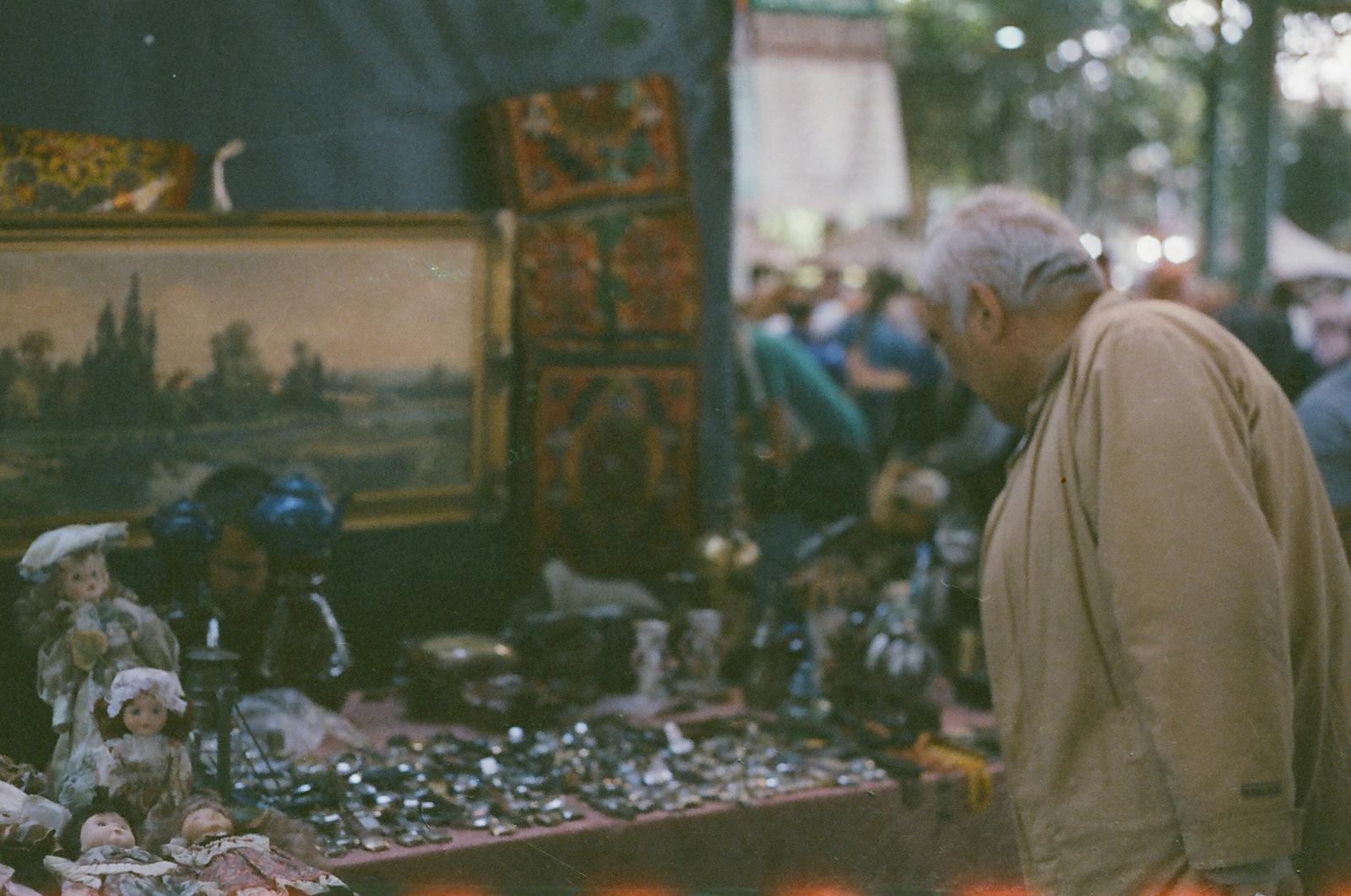
The upscale weekend counterpoint to Jeu de Balle. Where Jeu de Balle is bric-a-brac chaos, the Sablon market is curated antiques.
Hours and location
- Saturday: 09:00-17:00
- Sunday: 09:00-15:00
- Location: Place du Grand Sablon, central Brussels
What you’ll find
- Luxury furniture: 18th-century French, 19th-century Belgian, English antiques.
- Silver and silverware: Belgian, English, French.
- Fine art: Original paintings, antique prints, sculptures.
- Vintage jewelry: Higher-end with expert dealers.
- Maps and antique books: Specialty dealers with strong Belgian/Flemish collections.
- Asian antiques: Chinese porcelain, Japanese woodblocks.
Bargain modestly. Cards widely accepted.
Brussels Flea Markets Guide: Place Flagey Sunday Market
Place Flagey in Ixelles hosts a general market on Saturdays and Sundays and a plants and flowers market from Tuesday to Friday. Less famous than Jeu de Balle but with distinctive character.
- Hours: Saturday and Sunday 08:00-14:30.
- What you’ll find: Fresh produce, prepared food, plants and flowers.
- Atmosphere: Younger, hipper crowd; Café Belga and other terraces face the square.
- Best for: Fresh produce and flowers, and brunch combined with browsing.
Brussels Flea Markets Guide: Place du Châtelain (Wednesday)
Place du Châtelain in Ixelles hosts a food and produce market on Wednesdays, a weekday alternative to the weekend markets (Jeu de Balle runs daily).
- Hours: Wednesday 12:00-20:30.
- What you’ll find: Organic produce and prepared food.
- Crowd: Sophisticated Ixelles locals; less tourist-heavy.
- Best for: Food shopping mid-week.
- Combine with: Brussels Châtelain neighborhood walking and Ixelles brasserie dinner.
Brussels Flea Markets Guide: Marché des Tanneurs (Tuesday to Sunday)
Indoor organic market in the Marolles, open Tuesday to Sunday and closed on Mondays. Less touristy than the famous Jeu de Balle just up the street.
- Hours: Tuesday to Friday 11:30-18:30, Saturday and Sunday 10:00-17:00; closed Mondays.
- What you’ll find: Organic produce and other organic food.
- Best for: Combining with Marolles antique shopping; quieter alternative to Jeu de Balle.
Brussels Flea Markets Guide: Bargaining Etiquette
Brussels flea market bargaining has its own conventions:
At Jeu de Balle and Marché du Midi
- Cash strongly preferred (small denominations); cards rarely accepted.
- Offer below the asking price on anything beyond small items; bigger discounts on larger purchases.
- Smaller items (under €10): Less room to bargain.
- Group purchases get bigger discounts.
- Cash shown: Helps close deals quickly.
- French preferred but Dutch and English work.
- Walk away tactic: Often produces counter-offer if vendor wants the sale.
- Reciprocal bargaining: Don’t lowball aggressively; it’s seen as disrespectful.
At Sablon Antiques Market
- 10-20% off asking is realistic — not the 50% common at Jeu de Balle.
- Cards usually accepted.
- Professional dealers rarely accept extreme lowballs.
- Quality and authenticity are the bargaining points, not just price.
At smaller markets
- 20-30% off asking is typical.
- Higher-end vendors match Sablon-style bargaining.
- Casual vendors more flexible.
Brussels Flea Markets Guide: One-Day Treasure-Hunting Plan
A productive Saturday flea market crawl covering 3 major markets:
- 07:00 — Coffee in Marolles (near Jeu de Balle).
- 07:30 — Jeu de Balle (2 hours). Cover all stalls; first sweep at 07:30 with second pass at 09:30 for items that didn’t sell.
- 09:30 — Coffee break at a Marolles café.
- 10:00 — Walk Rue Blaes and Rue Haute shops (1 hour — vintage clothing and mid-century furniture).
- 11:00 — Walk uphill to Sablon (15 minutes).
- 11:30 — Sablon Antiques Market (90 minutes — curated antiques).
- 13:00 — Lunch at Wittamer or Sablon brasserie.
- 14:30 — Walk to Galeries Royales Saint-Hubert (15 minutes).
- 15:00 — Galeries Royales (60 min — historic arcade, chocolates).
- 16:30 — End at Pentagon or continue with Grand Place.
Brussels Flea Markets Guide: Treasure Hunting Strategy
What to look for
- Mid-century Belgian furniture (Pieter de Bruyne, Jules Wabbes, Emile Galle). Belgian provenance commands premiums.
- Original Tintin and Belgian comics first editions. Rare; appear at Sablon and weekend Jeu de Balle.
- Art Nouveau objects: Brussels has strong Art Nouveau heritage; original pieces (lighting, glass, ironwork) appear regularly.
- Vintage Belgian beer glasses: Specific to each brewery; collectible.
- Old Belgian postcards: Brussels and Belgian provincial scenes from 1880s-1950s.
- Vintage Tintin and Smurfs merchandise: Original packaging especially valuable.
- Belgian Royal Family memorabilia: Coins, stamps, prints, official ceremonial items.
What to avoid
- Mass-produced “antique” reproductions — common at tourist-oriented vendors.
- Damaged electronics — restoration costs often exceed antique value.
- Items needing fragile shipping — large furniture is impractical for most visitors.
- “Vintage” items younger than 30 years — many vendors stretch the definition.
- Soft items without thorough inspection — fabric items hide damage easily.
Brussels Flea Markets Guide: Practical Tips
- Bring cash. Especially for Jeu de Balle and Marché du Midi.
- Comfortable shoes. Cobblestones everywhere; expect 5-10 km on a serious market day.
- Folding bag or large tote for carrying finds.
- Bring a small flashlight for inspecting items in dim morning light.
- Measure space at home before buying large furniture.
- Plan shipping in advance for larger purchases (€80-€500 depending on size).
- Watch for pickpockets in dense crowds.
- Dress in layers — Brussels weather changes; mornings cool.
- Bring water and snacks — limited food at smaller markets.
- Customs declarations for non-EU export of items over €1,000.
Related Brussels Guides
Keep planning with these companion guides:
- Shopping in Brussels — The Complete Guide to Stores, Markets, and Souvenirs
- Belgian Chocolate Souvenirs — Brands & Where to Buy in Brussels
- Avenue Louise Luxury Shopping Brussels — Complete Designer Brand Guide
Useful Resources
- Place du Jeu de Balle market (official)
- Brussels outdoor markets (official)
- Brussels markets directory
Frequently Asked Questions
What’s the best Brussels flea market?
Jeu de Balle (Marolles) — Brussels’ famous daily flea market with 300+ stalls. Open 07:00-14:00 on weekdays and 07:00-15:00 at weekends. Ranked fifth in the Guardian’s 2007 list of Europe’s top ten flea markets.
When is the Marché du Midi?
Sunday mornings only, at Boulevard du Midi (around Brussels-Midi station). A large, multicultural market that the tourism office counts among the largest in Europe.
Can I bargain at Brussels flea markets?
Yes — and you’re expected to. At Jeu de Balle, offer below the asking price; at the Sablon Antiques Market, keep the haggling modest. Cash preferred at Jeu de Balle and Marché du Midi.
What’s the difference between Jeu de Balle and the Sablon market?
Jeu de Balle (daily, Marolles) is bric-a-brac chaos with affordable vintage finds. Sablon Antiques Market (weekends only) is curated, polished, and significantly pricier.
Are Brussels flea markets safe?
Generally yes, but the dense Sunday Marché du Midi crowds attract pickpockets — keep wallets in front pockets, bags closed. Standard urban precautions.
Can I ship flea market purchases home?
Yes — specialised antique shipping services (€80-€500) handle furniture. Smaller items go via DHL/UPS/FedEx. Items over €1,000 may require export documentation.
Final Thoughts
Brussels flea markets guide essentials — Jeu de Balle daily, Marché du Midi Sunday, Sablon weekends, plus several neighborhood markets — are enough to fill a treasure-hunting weekend. For more, see our Brussels vintage antique markets and Marolles Brussels guide.