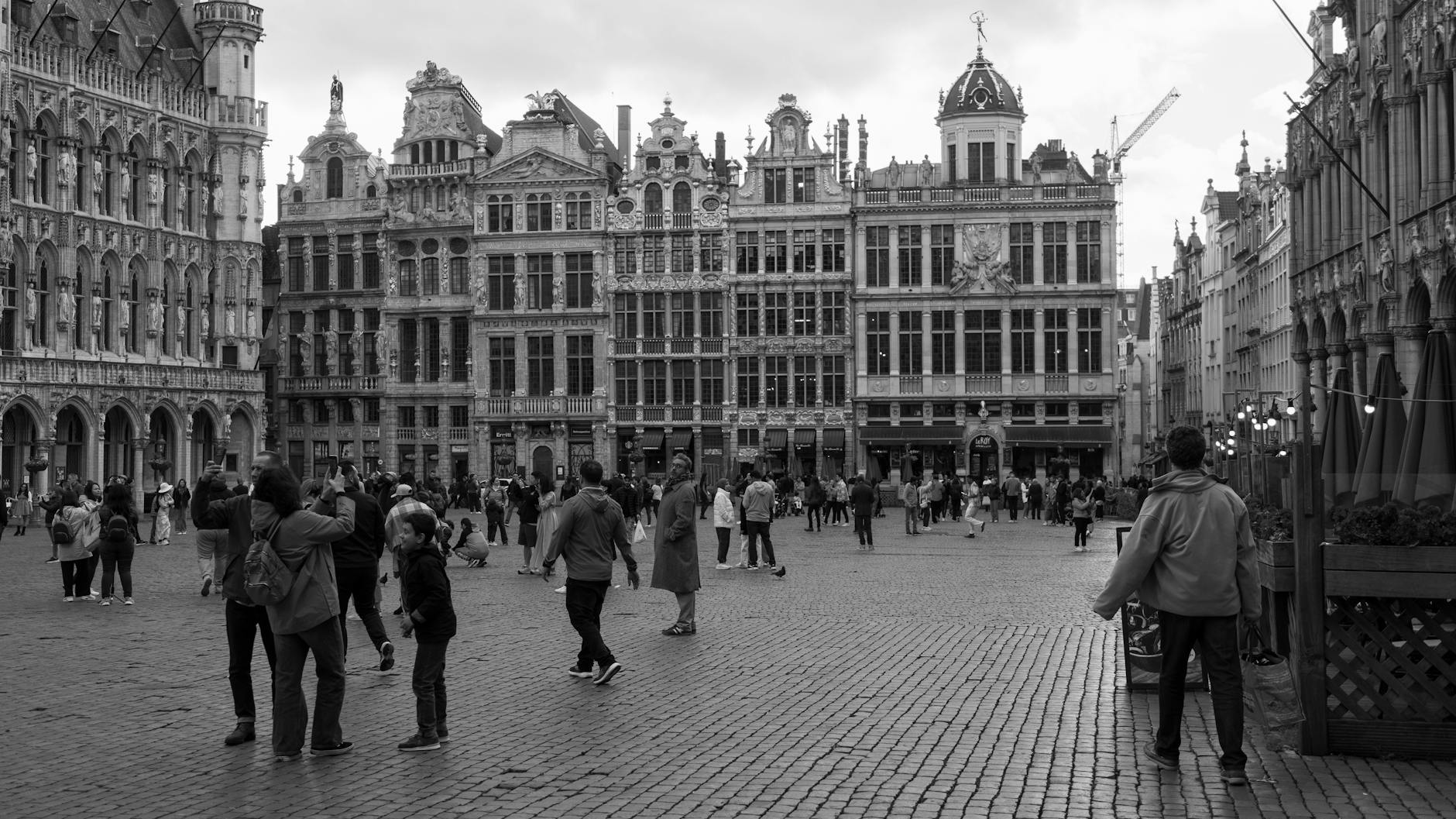
At five to eleven on the Grand-Place, in front of the Town Hall tower, there is a small forest of coloured umbrellas and a lot of people trying to work out which one they signed up to. Red for one company, yellow for another, a laminated sign for an independent. Nobody has paid anything yet, and in about two and a half hours roughly half of them will hand over ten euros and the other half will not. That is the economics of a Brussels free walking tour in one sentence, and understanding it is the difference between a good morning and an awkward one.
This page covers the guided, tip-based tours: who runs them, where they meet, what they cover, how much to actually tip and when a free tour is the wrong choice. If you would rather do it alone with a route in your pocket, our guide to self-guided walking tours in Brussels has the DIY versions. Details were checked in September 2026; departure times shift seasonally, so confirm on the operator’s site the night before.
What “Free” Actually Costs
| Format | What you pay | Length | Book ahead? |
|---|---|---|---|
| Tip-based free walking tour | €10–15 typical, €20 for a very good one | 2–2.5 hrs | Optional, and worth doing |
| Themed free tour (street art, dark history) | Same tipping norm | 2 hrs | Yes — smaller capacity |
| Brussels Greeters (volunteer host) | Genuinely nothing — no tip | 2–3 hrs | Weeks in advance |
| Paid small-group walking tour | €20–35 fixed | 2–3 hrs | Yes |
| Private guide | €120–200 for the group | 2–3 hrs | Yes |
A free tour is not free and everyone involved knows it. The guides are self-employed, they usually pay the company a fee per person who turns up, and a walk-off without tipping costs them money rather than merely disappointing them. Budget for it as a €10–15 activity and it becomes what it actually is: the best-value guided experience in the city.
The Operators
SANDEMANs NEW Europe
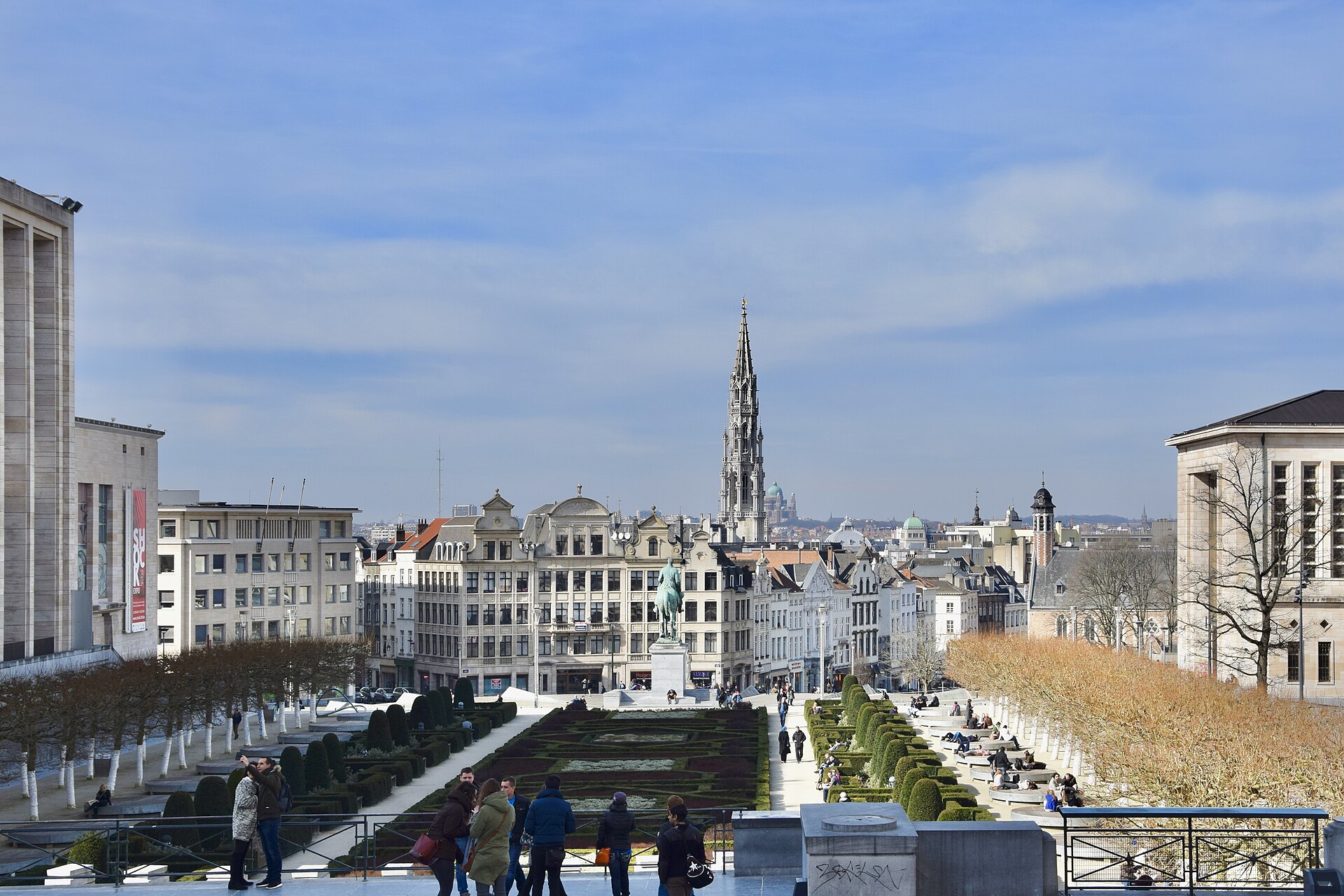
The largest and the easiest to find. Tours depart daily from in front of the Town Hall tower on the Grand-Place/Grote Markt, typically at 11:00 and 14:00, and run about two and a half hours, finishing at the Mont des Arts. Look for red t-shirts and red umbrellas. You can book a place online or simply turn up, though booking helps the guide plan and occasionally matters when a departure is full.
The tour is designed for independent travellers rather than groups, uses no public transport at all, and covers the historic core plus the climb into the upper town. Quality varies by guide, which is true of every tip-based operation everywhere; the good ones in Brussels are very good indeed, because a bilingual, surrealist, administratively strange city gives a decent storyteller a great deal to work with.
Independent guides via marketplaces
GuruWalk and similar platforms list independent Brussels guides running their own tip-based walks, often with more specific angles than the big operators — a Marolles walk, an EU quarter walk, a comic-mural route. Groups are usually smaller and the guide keeps more of the tip. Read the individual guide’s reviews rather than the platform’s, because on a marketplace you are booking a person, not a brand.
Other free-tour companies
Several smaller companies run daily Brussels departures on the same model, meeting at or near the Grand-Place. They tend to differentiate on theme or on group size rather than on price, since the price is nominally zero. If the big operator’s departure looks like fifty people and three umbrellas, one of the smaller ones is usually the better morning.
Brussels Greeters — the genuinely free one
Worth separating out clearly, because it is not a tour and it is not tip-based. Brussels Greeters is part of the International Greeter Association: local volunteers who take one to six visitors around a part of the city they personally like, for two or three hours, at no cost. They explicitly do not accept tips.
What it costs instead is lead time. You submit a request weeks ahead, describe your interests, and are matched with someone available. It is not a substitute for a structured city introduction — a greeter will show you their Schaerbeek or their Saint-Gilles, not a curated highlights route — but as a way to see the city through a resident’s eyes it has no paid equivalent. Do not turn up expecting it to work as a walk-in.
How Much to Tip, Honestly
The working norm in Brussels is €10 to €15 per person for a two-and-a-half-hour tour you enjoyed. Twenty euros is generous and appropriate for a guide who was genuinely excellent. Five euros is what you give if it was poor and you still want to acknowledge the time. Nothing at all is what you give if you walked away after twenty minutes, which is fair enough — the format explicitly allows it.
Three practical points that trip people up:
- It is per person, not per couple. A couple tipping €10 between them has tipped €5 each, which is below the norm.
- Bring cash. Many guides now take cards or a payment app, but not all, and standing at the Mont des Arts discovering you have no coins is a poor end to a good tour.
- Tip at the end, in person. There is no collection point and no pressure; the guide will simply say thank you and stand there while people come forward.
If a tour was disappointing, the honest thing is to say so briefly and tip small rather than slipping away. Guides get almost no feedback in this format and most of them want it.
What the Standard Route Covers
Nearly every general free tour in Brussels walks a version of the same loop, and knowing it in advance helps you decide whether you want it:
- The Grand-Place — the guildhouses, the 1695 bombardment, why the square is a reconstruction and why it is still remarkable. Our Grand-Place guide covers the detail.
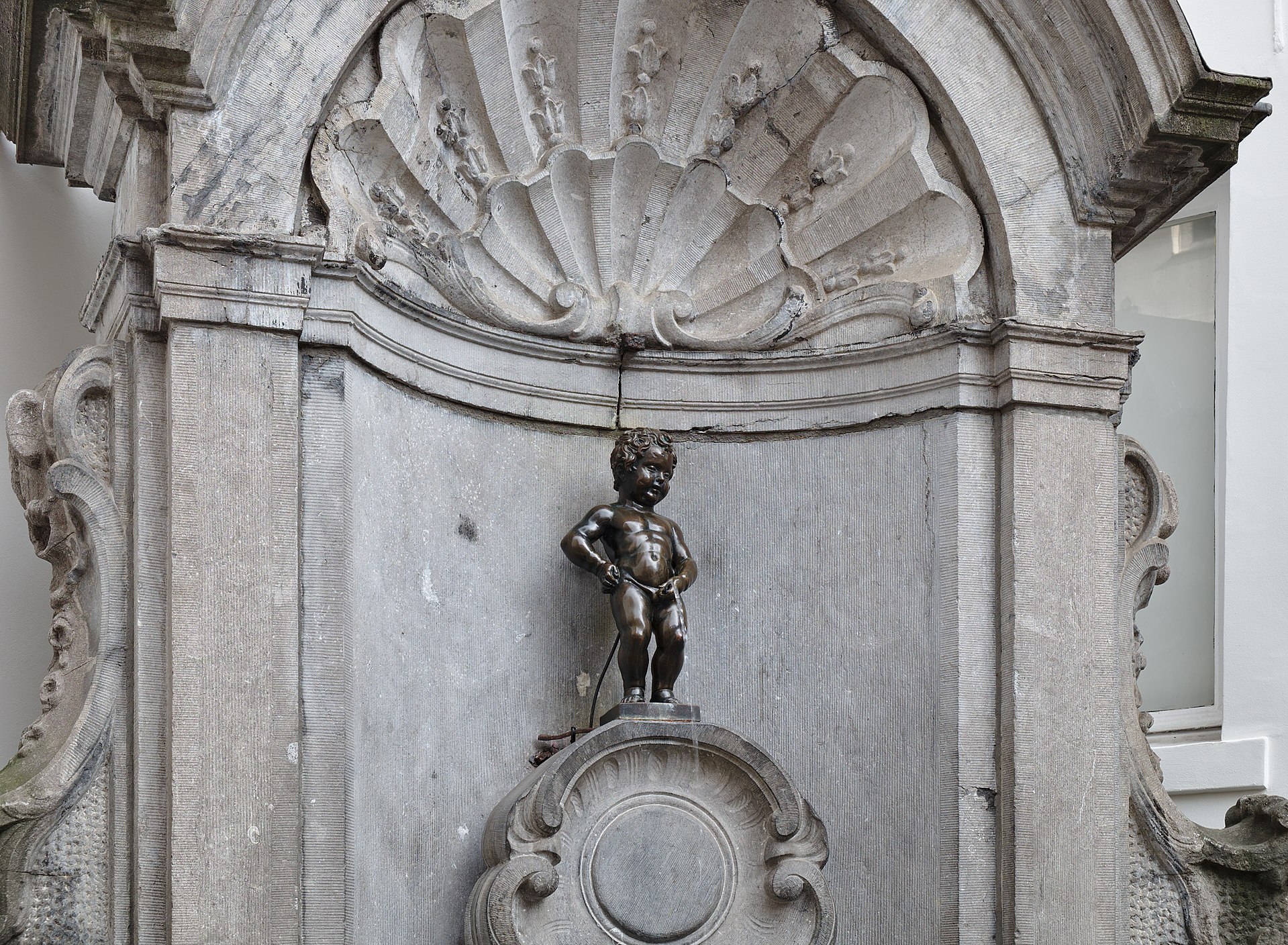
- Manneken Pis — smaller than you expected, which every guide says, because everyone thinks it and nobody expects the guide to admit it.
- The Îlot Sacré and Rue des Bouchers — usually with a warning about the restaurant touts, which is the most useful thirty seconds of the entire tour.
- Galeries Royales Saint-Hubert — one of Europe’s oldest covered shopping arcades, opened in 1847, with a good story to go with it.
- The Bourse, Sainte-Catherine or the Marolles depending on the guide.
- The climb to the upper town — Mont des Arts, Place Royale, and the view back over the lower city where the tour ends.
What it does not cover: the Atomium, the European Quarter, the Art Nouveau houses in Ixelles and Saint-Gilles, or anything requiring transport. Free tours are a walkable-core product. If you want the EU institutions or Horta, you want a themed or paid tour, and our guide to Brussels tours and experiences covers those.
Are They Any Good? The Honest Verdict
Yes, with one qualification. A tip-based tour is an excellent way to spend your first morning in Brussels — it orients you geographically, it explains a city that genuinely needs explaining, and at €10–15 it is the best value of anything guided here. For a first-time visitor with two or three days, we would book one on day one and then not book another guided walk at all.
The qualification is depth. A free tour is a broad, entertaining, two-and-a-half-hour introduction, and it is optimised for a mixed group of thirty people, some of whom are hungover. It will not go deep on Art Nouveau, Belgian politics, the comic tradition, or the colonial history that sits under a lot of what you are looking at. If a subject matters to you, pay for a specialist — €25 to a guide who chose the topic buys something a free tour structurally cannot.
The other honest note: group size. A summer 11:00 departure from the Grand-Place can be forty people, and the back of forty people hears very little. The 14:00 departures are usually smaller, and the smaller companies smaller still.
Practical Details
- Book, even though you do not have to. It costs nothing, it tells the guide how many to expect, and some departures do fill.
- Arrive ten minutes early. The Grand-Place at eleven has several tours leaving at once and finding the right umbrella takes a minute.
- Wear real shoes. The historic core is cobbled throughout and the upper-town climb is genuinely steep. Our walking in Brussels guide covers the terrain.
- There are no toilet stops on most two-and-a-half-hour tours, and no café break unless the guide offers one.
- Weather happens. Tours run in rain. Bring a hood rather than an umbrella — you will already be following one.
- Language. English departures are daily and reliable; French, Spanish and other languages are seasonal and thinner from November.
- Accessibility. The standard route includes cobbles and a substantial hill. If that is a problem, contact the operator in advance or consider a paid tour that can adapt the route.
Free Tour, Paid Tour or On Your Own?
| You want… | Book | Cost |
|---|---|---|
| An orientation on day one | Free walking tour | €10–15 tip |
| A local’s perspective, planned weeks ahead | Brussels Greeters | Nothing |
| Depth on one subject | Paid specialist tour | €20–35 |
| Your own pace and no group | A self-guided route | Free |
| Somebody to answer your questions | Private guide | €120–200 per group |
Related Brussels Guides
- Self-Guided Walking Tours in Brussels — the same ground, alone, at your own pace.
- Brussels Tours and Experiences — every paid option priced and judged.
- Walking in Brussels — distances, hills, cobbles and how long things take.
- Free Things to Do in Brussels — what actually costs nothing here.
- Grand-Place Guide — where every tour begins.
- Brussels for First-Time Visitors — how to build a first day around a morning tour.
- One Day in Brussels — a free tour is the obvious opening move.
Useful Resources
- SANDEMANs NEW Europe — daily English departures from the Town Hall tower on the Grand-Place; book a free place online.
- GuruWalk — independent Brussels guides running tip-based walks, often with a sharper theme.
- Brussels Greeters, via the International Greeter Association — genuinely free, volunteer-led, and needs weeks of notice.
- visit.brussels — the official listings, and where seasonal or one-off free tours appear.
- STIB/MIVB — not needed for the tour itself, but useful for getting to the Grand-Place beforehand.
Frequently Asked Questions
Are Brussels free walking tours really free?
No fee is charged and you can leave at any point without paying, but the guides are self-employed and generally pay the operator per participant. The tour is free to join and expected to be tipped, which is a meaningful difference from free.
How much should I tip on a Brussels free walking tour?
€10–15 per person for a good two-and-a-half-hour tour, €20 for an excellent one, and around €5 if it disappointed you. Tip per person rather than per couple, and carry cash — not every guide takes cards.
Where do Brussels free walking tours start?
Almost all of them on the Grand-Place. The largest operator meets in front of the Town Hall tower, with guides in red t-shirts carrying red umbrellas, typically at 11:00 and 14:00 daily.
How long is a Brussels free walking tour?
About two and a half hours for the standard city tour, covering the historic core and finishing up at the Mont des Arts. Themed tours are usually nearer two hours.
Do I need to book a free walking tour in advance?
Not strictly, but it is free to do and worth it. Booking helps the guide plan, and occasionally a popular summer departure fills. For Brussels Greeters, booking weeks ahead is essential — that one cannot be walked into.
What does a free walking tour actually cover?
The Grand-Place, Manneken Pis, the Îlot Sacré, the Galeries Royales Saint-Hubert, and the climb to the Mont des Arts and Place Royale. No public transport, so nothing at the Atomium, the European Quarter or the Art Nouveau houses.
Is a free tour better than a paid one?
For a first orientation, yes — it is the best value guided experience in the city. For depth on a specific subject, no: a €25 specialist tour with a guide who chose the topic will always beat a broad tour built for a group of thirty.
Can I leave a free walking tour early?
Yes, and nobody will object; the format is built on it. If you have been with the guide for an hour or more, though, it is decent to hand over something on the way out rather than simply disappearing.
Photo Credits
The view from the Mont des Arts: Brussels view from Mont des Arts, Brussels, Belgium (Ank Kumar) 01 by Ank Kumar, CC BY-SA 4.0, via Wikimedia Commons.
Manneken Pis: Manneken Pis, Brussels (DSCF4465) by Trougnouf, CC BY 4.0, via Wikimedia Commons.
Final Thoughts
Brussels is a city that does not explain itself. The signage is in two languages that disagree about the street names, the politics are genuinely complicated, the most famous statue is a small boy urinating, and the finest square in Europe is a reconstruction of something the French shelled. Two and a half hours with somebody who can hold all of that together is worth a great deal more than the ten or fifteen euros it costs.
So take one on your first morning, tip properly at the Mont des Arts, and then go and do the specific thing you actually came for — the brewery, the museum, the Art Nouveau house — with a map and no group. That is the right shape for a Brussels trip, and the free tour is the best possible way to begin it.