Explore Brussels on Foot: 5 Self-Guided Routes
Walking is the best way to experience Brussels. The city centre is remarkably compact, but the real rewards come from slowing down and exploring neighbourhood by neighbourhood, street by street. Brussels reveals itself gradually: a comic strip mural on a side street, an Art Nouveau facade behind a busy intersection, a medieval courtyard hidden behind an office building.
These five self-guided walking tours cover the essential Brussels experiences, from the historic Grand Place circuit to deep neighbourhood explorations that most visitors never attempt. Each route includes a clear starting point, key stops, approximate timing, and practical tips. Print them out or follow along on your phone — no guide needed. For an overview of all attractions, see our Top 25 Tourist Attractions in Brussels.
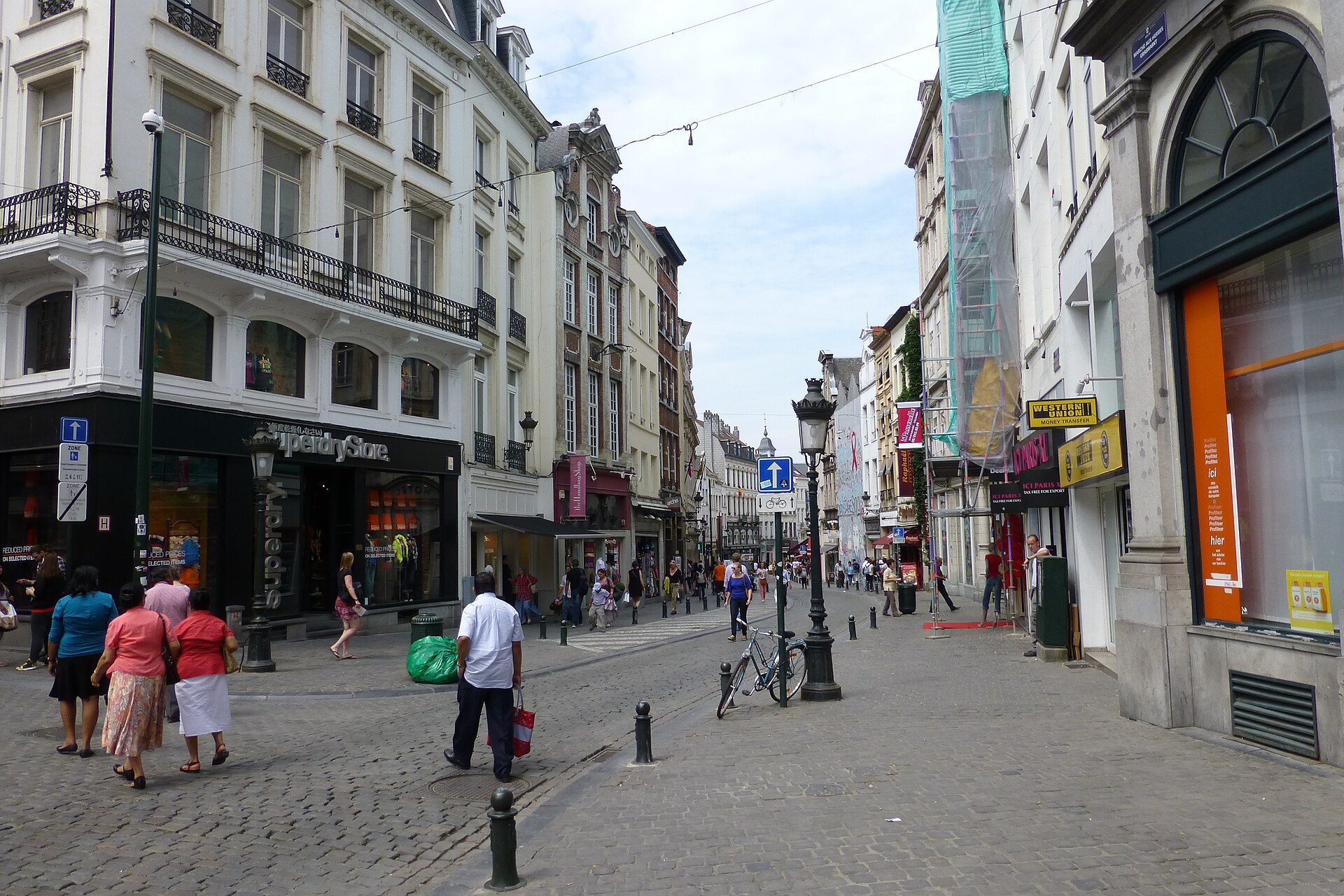
Route 1: The Grand Place and Historic Centre (2 Hours, 3 km)
Overview
This essential walk covers the historic heart of Brussels — the must-see landmarks that define the city. It is the ideal first walk for visitors arriving in Brussels, providing orientation and hitting the major highlights. Start in the morning for the best light on the Grand Place and fewer crowds at the Manneken Pis.
The Route
Start: Brussels Central Station. Exit towards the city centre and walk down the hill along Rue de la Montagne. You will pass through the Putterie Passage — look up to spot the Smurfs ceiling mural hidden above commuters’ heads. Continue to the Grand Place, arriving from the northeast corner for the most dramatic reveal of the square.
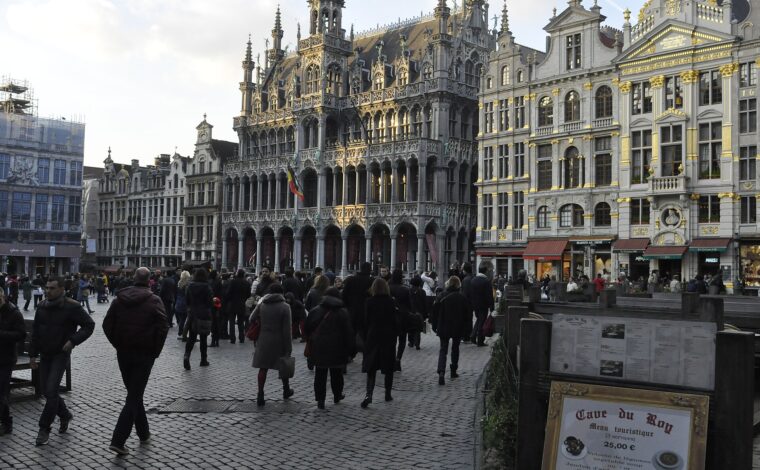
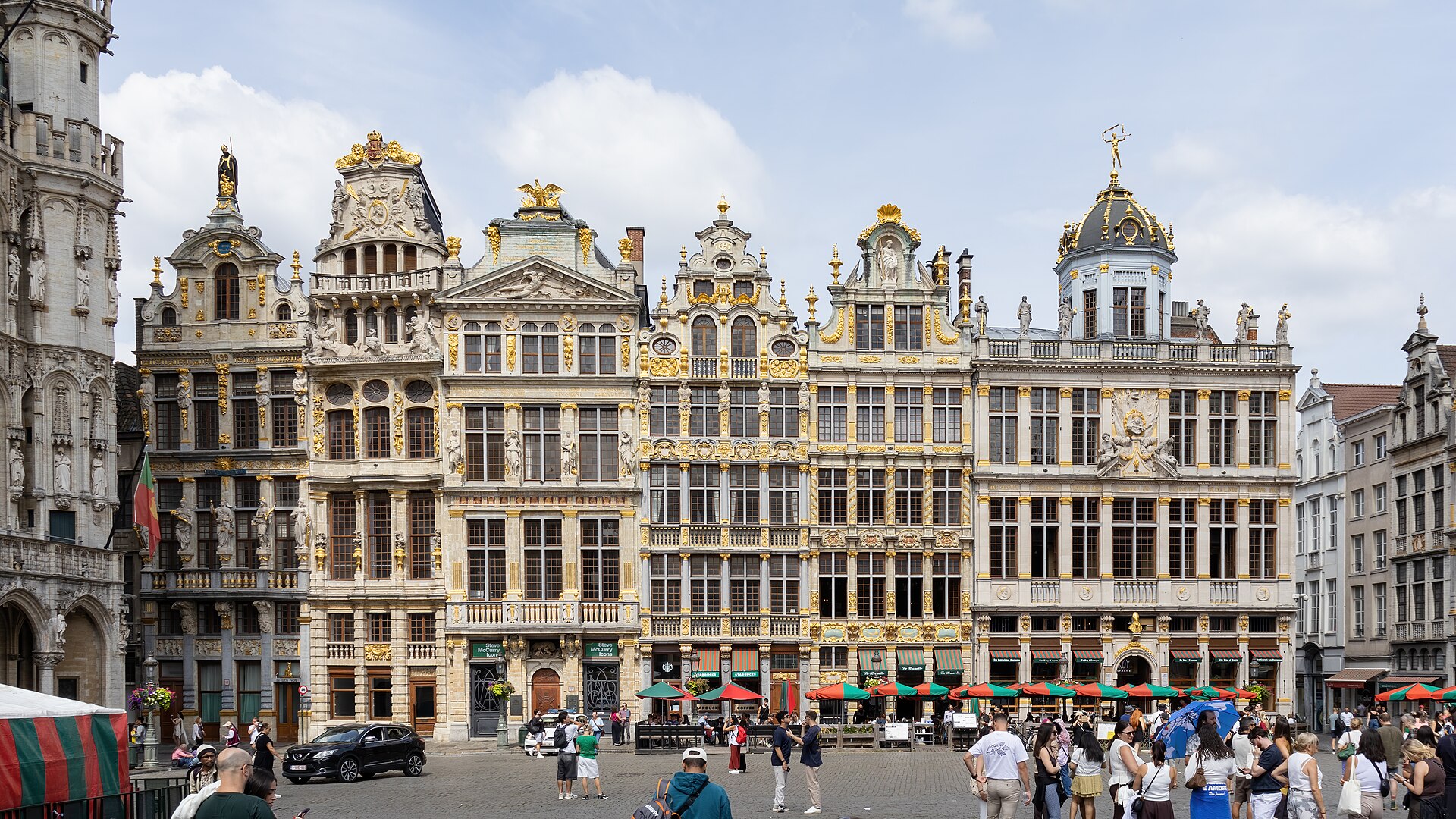
Spend time in the Grand Place admiring the guild houses, the Gothic Hôtel de Ville, and the Maison du Roi. The square is an open public space with no admission charge. Exit via the southwest corner along Rue de l’Étuve to find the Manneken Pis — manage expectations (he is 61 centimetres tall) and check if he is wearing one of his 1,000+ costumes. Continue to the free GardeRobe MannekenPis museum on Rue du Chêne for a surprisingly entertaining display of his wardrobe.
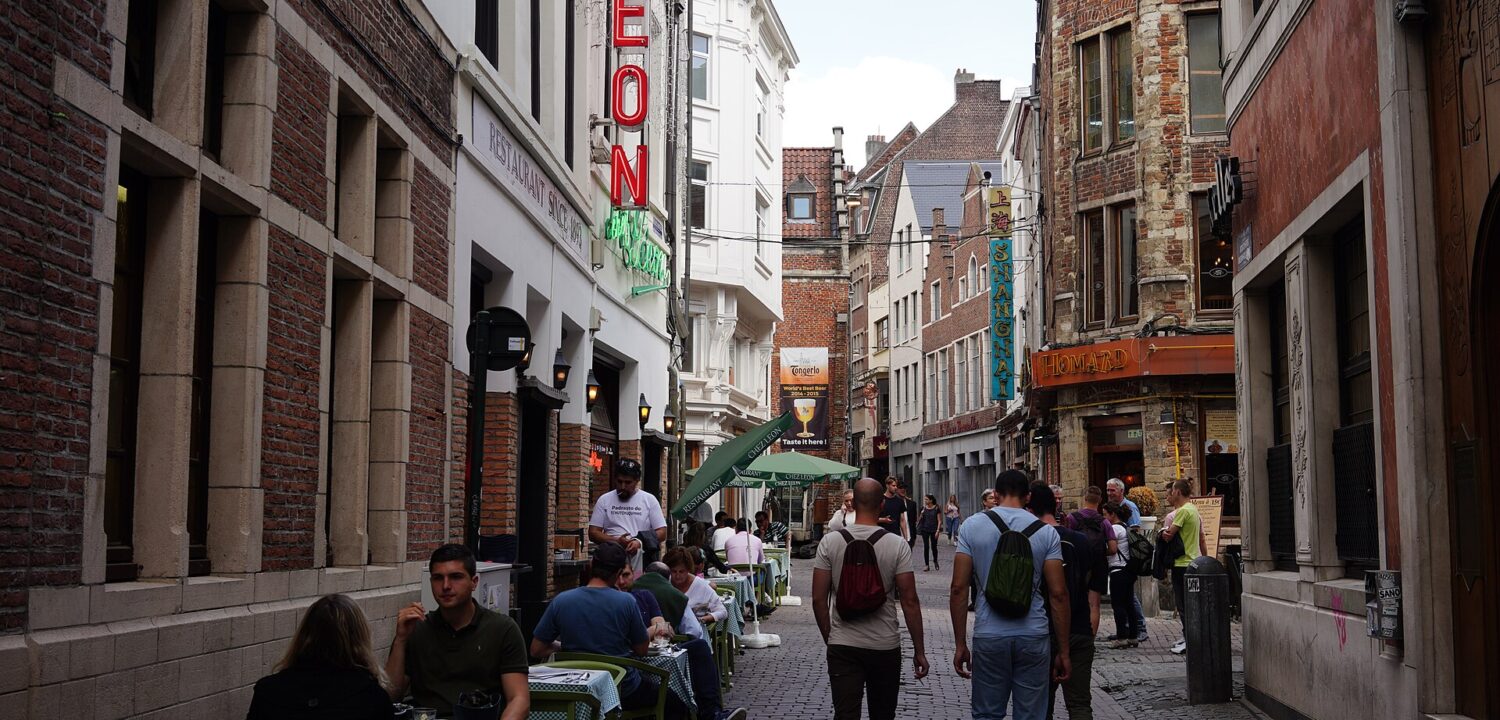
Walk back north via Rue des Bouchers — Brussels’ famous restaurant street — and duck into the Impasse de la Fidélité to find the Jeanneke Pis (female counterpart) and the entrance to the legendary Delirium Café. Continue through the stunning Galeries Royales Saint-Hubert, emerging near the Cathedral of Saints Michael and Gudula.
End at the Cathedral (free entry). From here, you can return to Central Station or continue to the Mont des Arts for panoramic views. For the full history of these landmarks, see our Brussels History & Culture Guide.
Highlights: Grand Place, Manneken Pis, Galeries Royales, Cathedral. Best for: First-time visitors, short stays. Cost: Free.
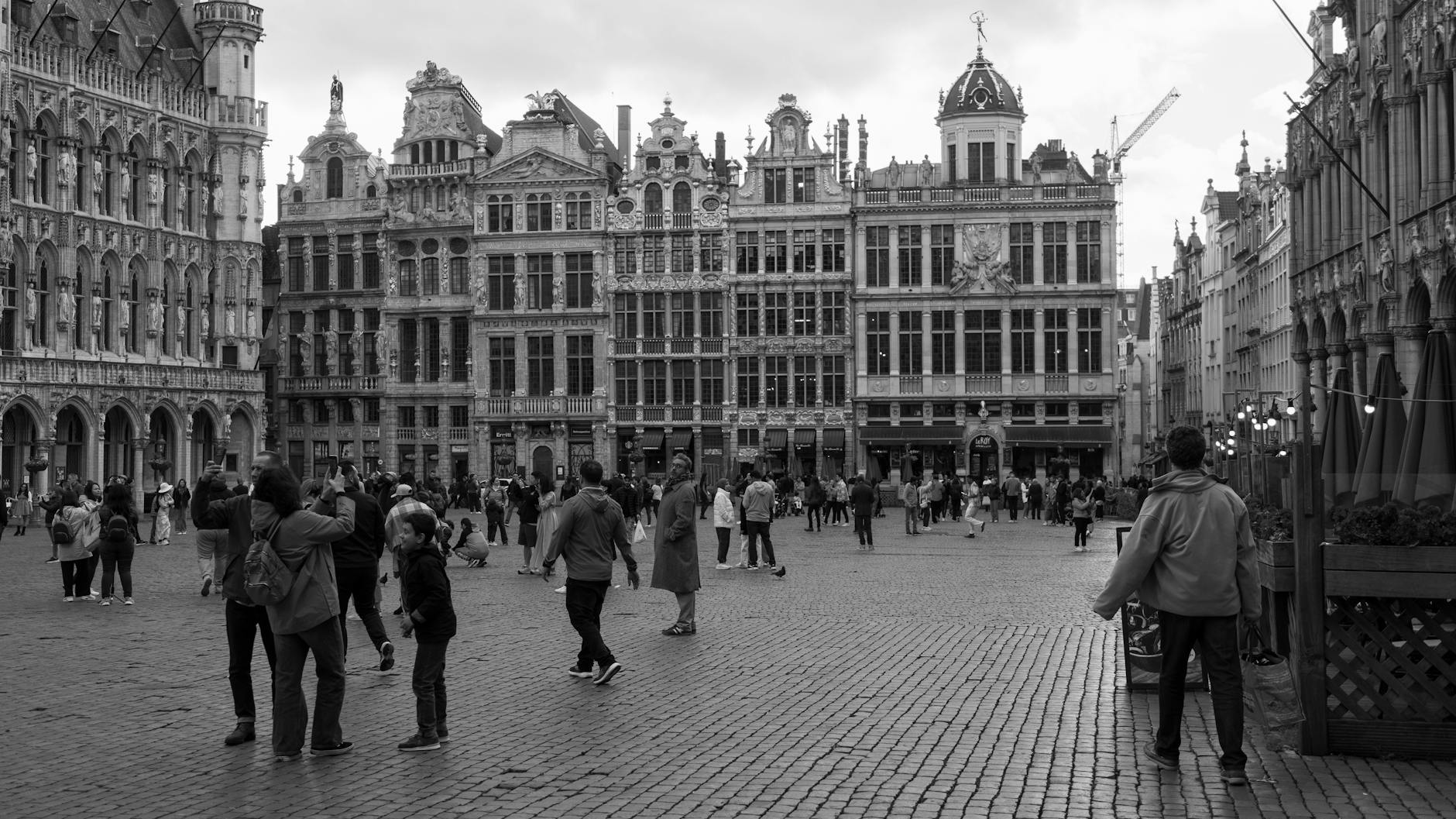
Route 2: The Art Nouveau Trail (3–4 Hours, 5 km)
Overview
Brussels is the birthplace of Art Nouveau — the revolutionary architectural movement that began in 1893 when Victor Horta designed the Hôtel Tassel. This walk takes you through the neighbourhoods where Art Nouveau flourished, passing dozens of extraordinary facades that can be admired for free from the street. The route focuses on Saint-Gilles and the area around the Horta Museum, both of which feature prominently on Brussels’ Art Nouveau architecture walks.
The Route
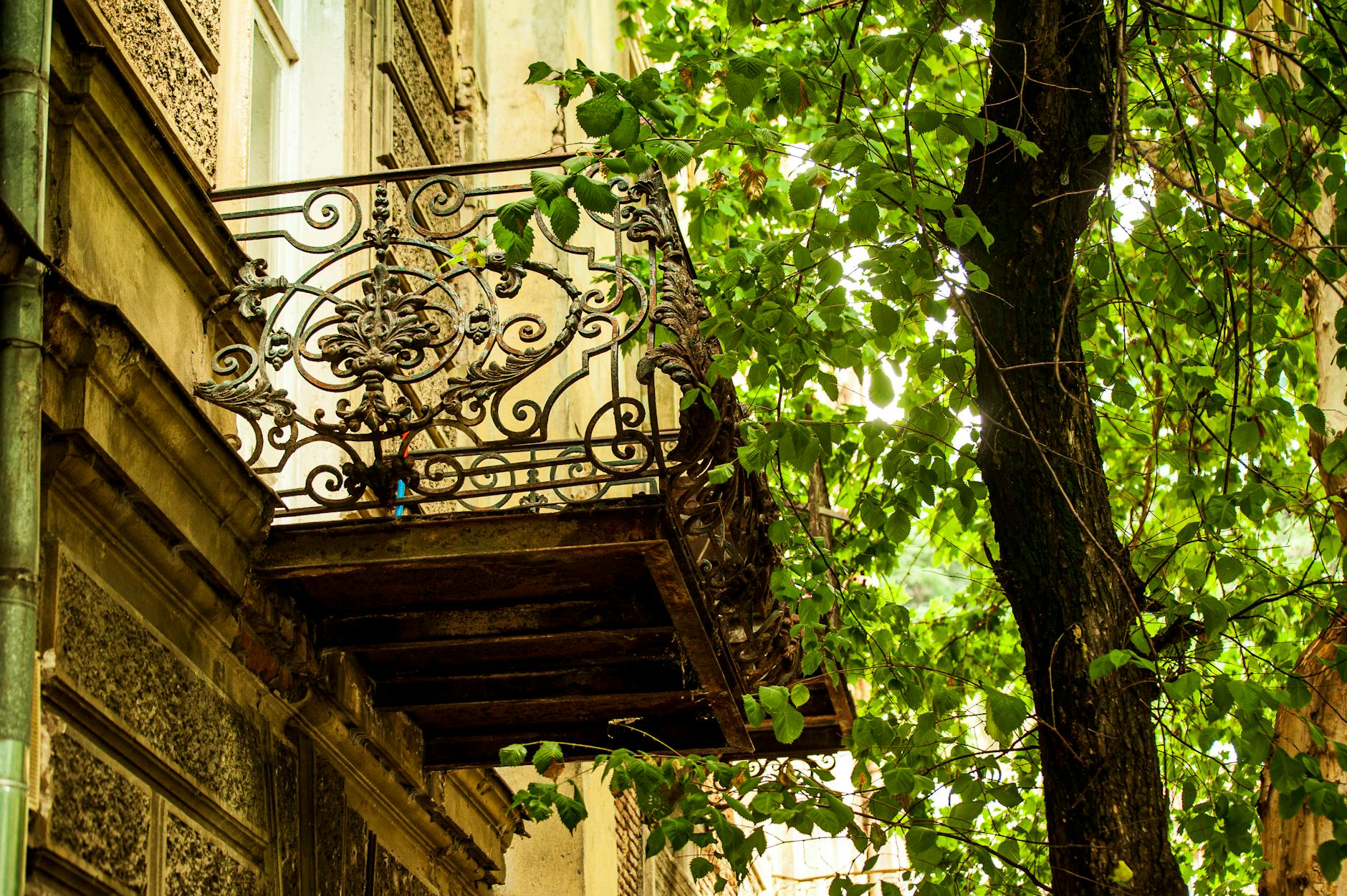
Start: Louise Metro Station. Walk south along Rue de la Victoire and Rue Paul Émile Janson towards Saint-Gilles. Along these streets and the surrounding area, you will find some of Brussels’ finest Art Nouveau residential buildings — ornate facades with flowing ironwork, coloured sgraffito murals, mosaic details, and stained-glass windows.
Make your way to the Horta Museum (Rue Américaine 25) — Victor Horta’s personal home and studio, now a UNESCO World Heritage Site. Even if you choose not to enter (€14), the exterior and surrounding streets are rich with Art Nouveau examples. Continue south through Saint-Gilles, passing the Hôtel Hannon (Avenue de la Jonction), which features remarkable stained-glass windows and a monumental staircase visible through the ground-floor windows.
Walk east through the residential streets of Saint-Gilles towards the Parvis de Saint-Gilles — the neighbourhood’s main square, surrounded by independent cafés, vintage shops, and a weekly market. The streets radiating from the Parvis are lined with Art Nouveau and Art Deco buildings, many with beautifully preserved facades.
Continue north towards Avenue Louise and the Hôtel Solvay (Number 224) — another Horta masterpiece, occasionally open for guided tours. End at the Old England Building on Rue Montagne de la Cour — now the Musical Instruments Museum — whose dramatic iron-and-glass Art Nouveau facade is one of the most photographed in Brussels.
Highlights: Horta Museum, Hôtel Hannon, Saint-Gilles neighbourhood, Old England Building. Best for: Architecture enthusiasts, photographers. Cost: Free (exterior viewing); €14 for Horta Museum entry.
Route 3: The Comic Strip Mural Trail (3 Hours, 6 km)
Overview
Brussels celebrates Belgium’s comic strip heritage with more than 60 murals painted on building facades across the city. This self-guided trail connects the most impressive murals in a loop through the historic centre and surrounding neighbourhoods.
The Route
Start: Brussels Central Station. Head towards the Belgian Comic Strip Centre (Rue des Sables 20) — housed in a beautiful Victor Horta building that is worth admiring from outside even if you do not enter the museum. The museum is one of Brussels’ best, covering the creation process from script to publication.
From here, walk south towards the Grand Place area. The comic murals are scattered throughout the streets, each occupying an entire building wall. Key murals to look for include: Tintin (Hergé) near Rue de l’Étuve, Lucky Luke (Morris) on Rue de la Buanderie, Gaston Lagaffe (Franquin) on Rue du Midi, Broussaille (Frank Pé) near the Plattesteen, and Nero (Marc Sleen) on Place Saint-Géry.
The trail meanders through the Marais, Saint-Jacques, and Marolles neighbourhoods, taking you through parts of Brussels that most tourists never explore. Each mural is accompanied by a small information plaque identifying the character and artist. Free maps are available from the Visit Brussels tourist office on the Grand Place, or you can download the official app.
Highlights: Murals including Tintin and the Smurfs, Belgian Comic Strip Centre (exterior), neighbourhood exploration. Best for: Families, comic enthusiasts, street art lovers. Cost: Free. Museum entry (optional) is €14 for adults, €11 for ages 12–25 and visitors aged 65+, €6 for ages 6–11, and free for under-6s.
Route 4: The Marolles and Lower Town (2.5 Hours, 4 km)
Overview
The Marolles is Brussels at its most authentic — a working-class neighbourhood that has resisted gentrification more successfully than most European city centres. This walk takes you through the area’s flea markets, street art, steep streets, and neighbourhood bars, offering a perspective on Brussels that is worlds away from the Grand Place tourist circuit.
The Route
Start: Place Poelaert (beside the enormous Palais de Justice). Take in the panoramic view from the esplanade — one of the best sunset viewpoints in Brussels. Take the free panoramic elevator down to the Marolles neighbourhood below.
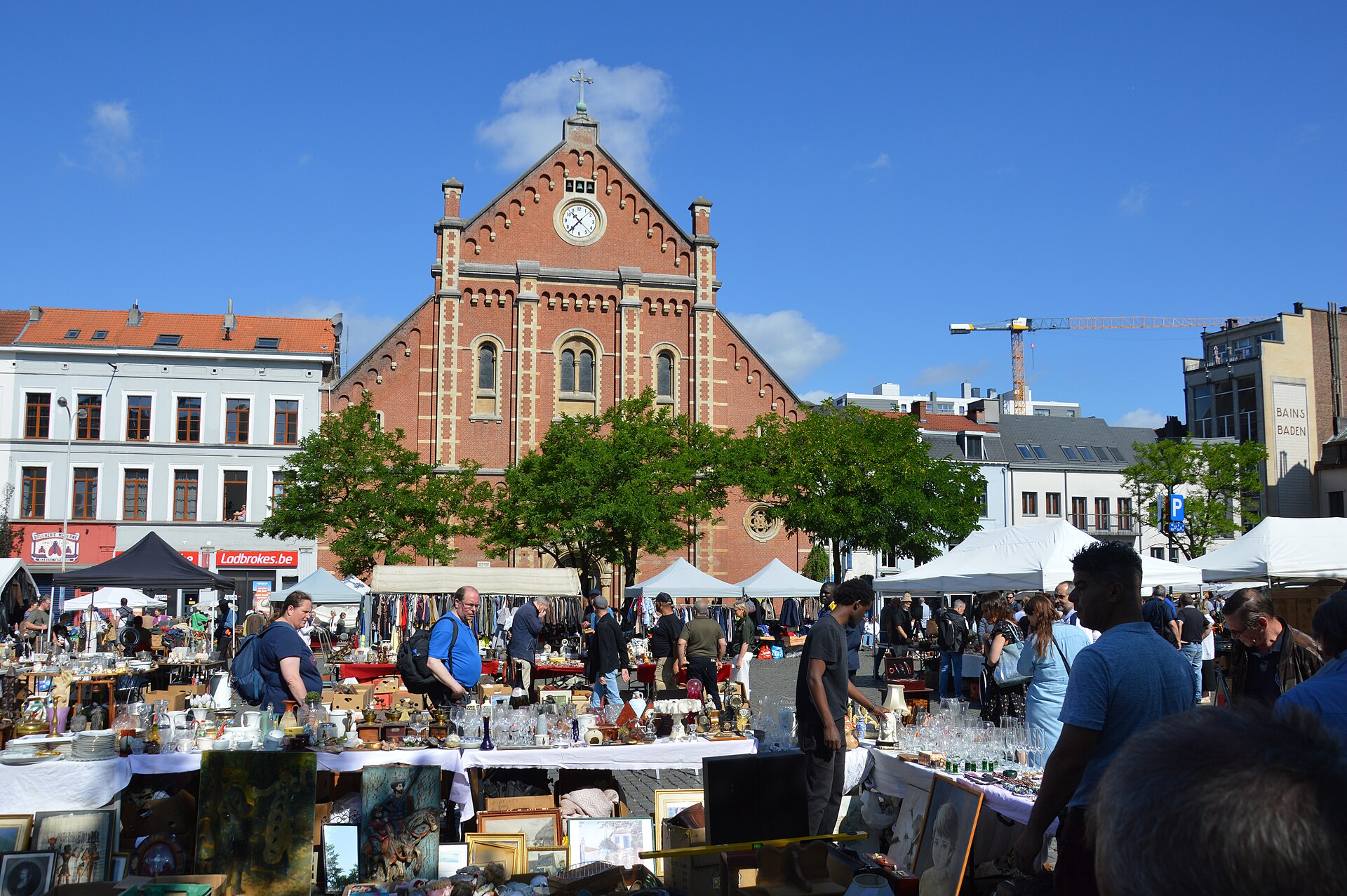
At the bottom, walk to the Place du Jeu de Balle — the heart of the Marolles and home to the daily flea market (best on weekend mornings). Browse furniture, second-hand clothes, vinyl records, old photos and crockery. The surrounding streets — Rue Haute, Rue Blaes, Rue des Renards — are lined with antique shops, neighbourhood cafés, and studio galleries.
Walk north along Rue Haute — a street with deep roots in medieval Brussels — past the Porte de Hal (the only surviving medieval city gate) and through the Marolles’ steep side streets. The neighbourhood’s character shifts block by block: working-class Brussels, multicultural communities, creative studios, and traditional estaminets (old Brussels pubs) sit side by side.
Continue to the Sablon district for a contrast — refined antique galleries, world-famous chocolatiers, and the stunning Church of Notre-Dame du Sablon with its illuminated stained-glass windows. End at the Petit Sablon garden with its 48 bronze guild statuettes. For more neighbourhood guides, see our Brussels Neighbourhoods Guide.
Highlights: Panoramic elevator, Marolles flea market, Rue Haute, Sablon chocolatiers, Notre-Dame du Sablon. Best for: Authentic local culture, vintage shopping, food lovers. Cost: Free.
Route 5: The European Quarter and Cinquantenaire (2.5 Hours, 4 km)
Overview
Brussels is the de facto capital of the European Union, and the European Quarter — clustered around the Schuman roundabout — tells that story through striking modern architecture, outstanding free museums, and one of Brussels’ grandest parks. This walk combines political history with green space, museums, and panoramic views.
The Route
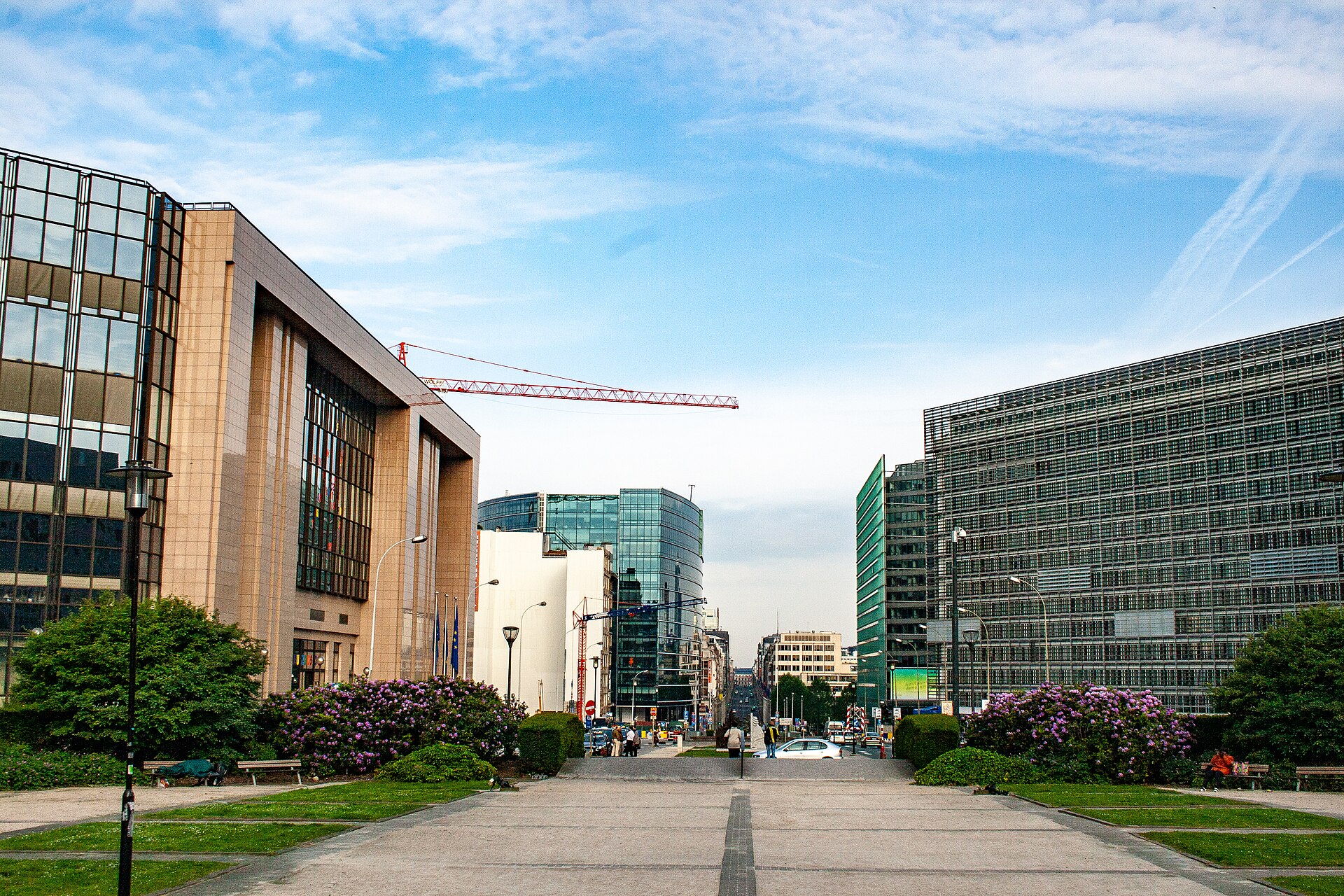
Start: Schuman Metro Station. Emerging at street level, you face two of Europe’s most important buildings: the star-shaped Berlaymont Building (European Commission headquarters) and the extraordinary lantern-shaped Europa Building (Council of the European Union), whose facade incorporates reclaimed wooden window frames from almost all the EU member states at the time of construction.
Walk to the Parlamentarium (European Parliament visitor centre) — one of Brussels’ best free museums. This immersive, multimedia experience takes 90 minutes and includes a 360-degree cinema, interactive exhibits, and audio guides in all EU languages. Directly adjacent, the House of European History (also free) covers the shared European experience from antiquity to the present across six floors.
From the European Quarter, walk east along Rue de la Loi to the magnificent Parc du Cinquantenaire. Enter through the monumental triumphal arch and explore the park’s lawns, colonnades, and tree-lined avenues. Inside the park, visit the Royal Museum of the Armed Forces (adult admission €12, excellent aviation halls) and climb to the rooftop terrace of the triumphal arch for panoramic views across Brussels.
The park also houses Autoworld (vintage cars) and the Art & History Museum (one of Europe’s largest), both worth visiting if time allows. End with a coffee at one of the cafés along the park’s perimeter.
Highlights: EU buildings, Parlamentarium (free), House of European History (free), Parc du Cinquantenaire, Military Museum (€12), rooftop views. Best for: History and politics enthusiasts, families, budget travellers. Cost: Free (main attractions).
Practical Walking Tips for Brussels
Footwear and Terrain
Brussels is a city of hills and cobblestones. Comfortable walking shoes with good grip are essential — heels and thin-soled shoes will make you miserable on the Grand Place’s cobbles and the Marolles’ steep streets. The upper town sits significantly higher than the lower town, and several walks involve noticeable elevation changes.
Weather Preparation
Brussels weather is famously unpredictable. Rain is possible in any month, and it can shift from sunshine to showers within an hour. A packable waterproof jacket is the single most useful item for a Brussels walking tour. In summer, sun protection is advisable during midday hours. Winter walking is perfectly possible with warm layers — the city centre has abundant cafés for warming up.
Navigation
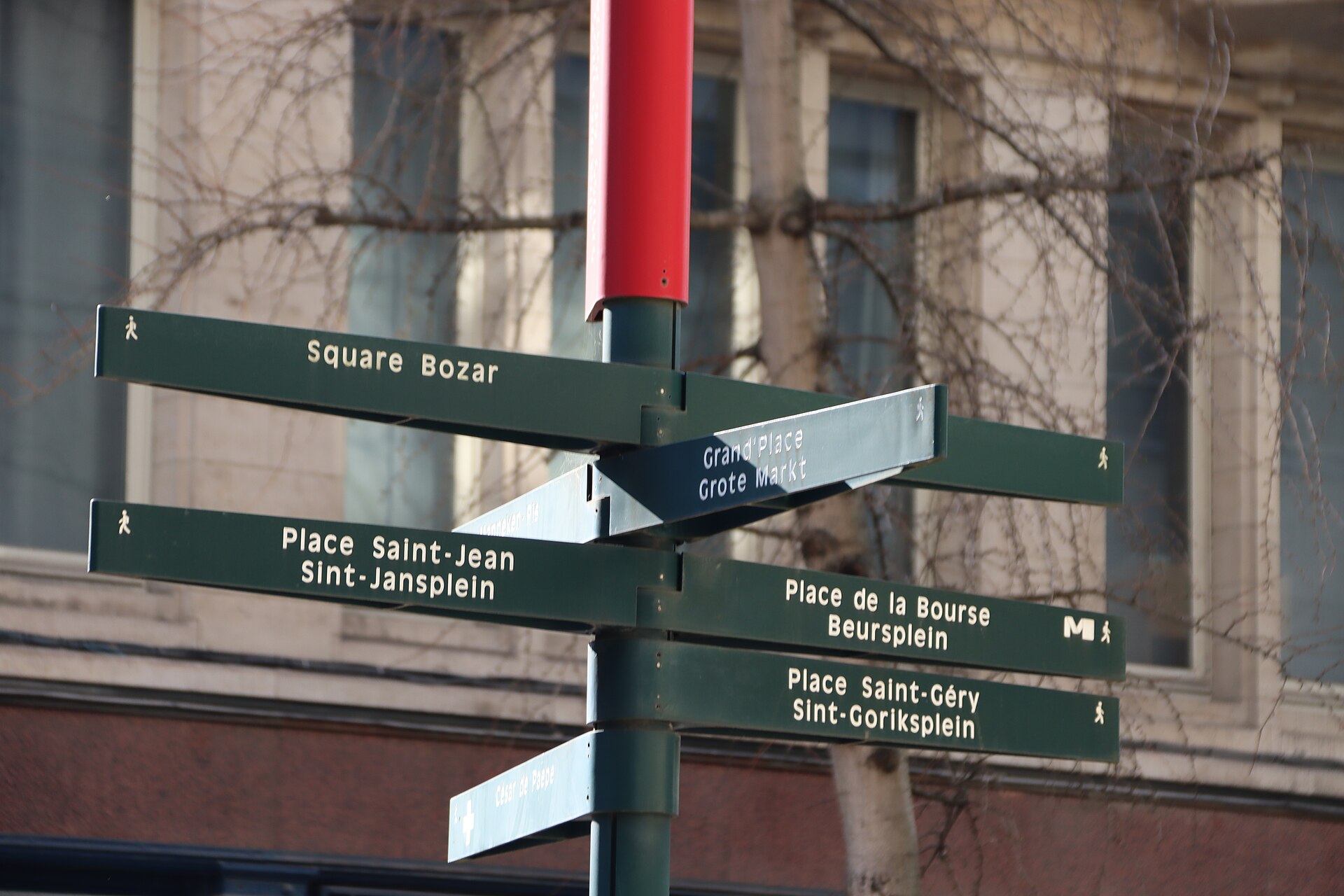
The Visit Brussels tourist office on the Grand Place provides free city maps that are excellent for self-guided walks. The official Visit Brussels app includes walking routes with GPS navigation. Google Maps works well for street-level navigation in Brussels. For the Comic Strip Trail specifically, a dedicated map is available from the tourist office. For transport between starting points, see our Brussels Getting Around Guide.
Timing and Pace
The times listed for each route are approximate and assume a moderate pace with brief stops at key landmarks. If you plan to enter museums, add 60–90 minutes per museum visit. The Grand Place route works best in the morning (fewer crowds, better light). The Art Nouveau route is rewarding at any time of day. The Marolles route is best on weekend mornings when the flea market is in full swing. The European Quarter route is ideal on weekdays when the institutions are active.
Combining Routes
With a full day, you can comfortably combine Route 1 (Grand Place, 2 hours) with Route 4 (Marolles, 2.5 hours) for a comprehensive overview of historic Brussels. Routes 2 (Art Nouveau) and 5 (European Quarter) pair well for a second day focused on architecture and politics. Route 3 (Comic Strip Trail) works as a standalone half-day or can be combined with Route 1 since the murals are scattered across the same general area.
Refreshment Stops
Brussels is blessed with an extraordinary density of cafés, bars, and food stops. On Route 1, the Galeries Royales Saint-Hubert has excellent cafés. On Route 2, the Parvis de Saint-Gilles offers local neighbourhood options. Route 3 passes bars and cafés in the Saint-Géry area. Route 4 has the Marolles’ traditional estaminets and the Sablon’s upscale chocolate shops.
Guided Alternatives
Brussels Greeters (Free)
If you prefer company and local knowledge, the Brussels Greeters programme connects visitors with volunteer residents who offer free, personalised walking tours tailored to your interests. Book at least a week in advance through the Visit Brussels website. For more unique ways to experience Brussels, see our Unique Experiences in Brussels Guide.
Free Walking Tours
Several companies offer free (tip-based) guided walking tours of the historic centre, departing daily from the Grand Place. These typically cover 2–3 hours and provide historical context and anecdotes that a self-guided walk cannot match. No reservation required for most — just show up at the meeting point.
Doing it yourself is free and, in a city this compact, perfectly practical. But there are a handful of things a guide unlocks that a map cannot — access to Art Nouveau interiors, a proper explanation of lambic, and the comic murals in an order that makes sense. If you are weighing the two approaches, our guide to Brussels tours worth booking compares the paid options honestly, tipping norms included.
The alternative to doing it yourself is joining somebody who does it every day and paying them what you think it was worth. Our guide to free walking tours in Brussels covers the tip-based operators, where they gather on the Grand-Place, what the standard route includes — and the €10–15 per person that nobody puts on the booking page.
Related Brussels Guides
Keep planning with these companion guides:
- The Ultimate Guide to Things to Do in Brussels — the full guide to the ultimate guide to things to do in brussels
- Top 25 Tourist Attractions in Brussels You Can’t Miss — the full guide to top 25 tourist attractions in brussels you can’t miss
- 15 Best Free Things to Do in Brussels — the full guide to 15 best free things to do in brussels
- Unique Experiences in Brussels — Beyond the Tourist Trail
Frequently Asked Questions
Can you explore Brussels on foot?
Absolutely. Central Brussels is compact, and the main sights around the Grand Place are easy to reach on foot. The five routes in this guide cover the essential experiences, from the historic centre to neighbourhood explorations, all at a comfortable walking pace. Brussels is one of the most rewarding European capitals for walking.
How long do you need to walk around Brussels?
The historic centre highlights (Route 1) can be covered in 2 hours. A comprehensive exploration covering multiple routes requires 2–3 full days. Each route in this guide takes 2–4 hours at a moderate pace, not including museum visits.
Is Brussels hilly?
Yes. Brussels has a distinct upper town and lower town separated by a noticeable hill. The Mont des Arts, the Marolles area, and the approaches to the Palais de Justice all involve significant elevation changes. Comfortable shoes are essential, and the free panoramic elevator at Place Poelaert helps with the steepest section.
Are self-guided walking tours free?
Yes, all five routes in this guide are free to walk; museum entries are extra. The attractions along the routes are predominantly free (Grand Place, churches, parks, comic murals, EU museums). Optional museum entries range from €8–15. The only essential cost is comfortable shoes and a waterproof jacket.
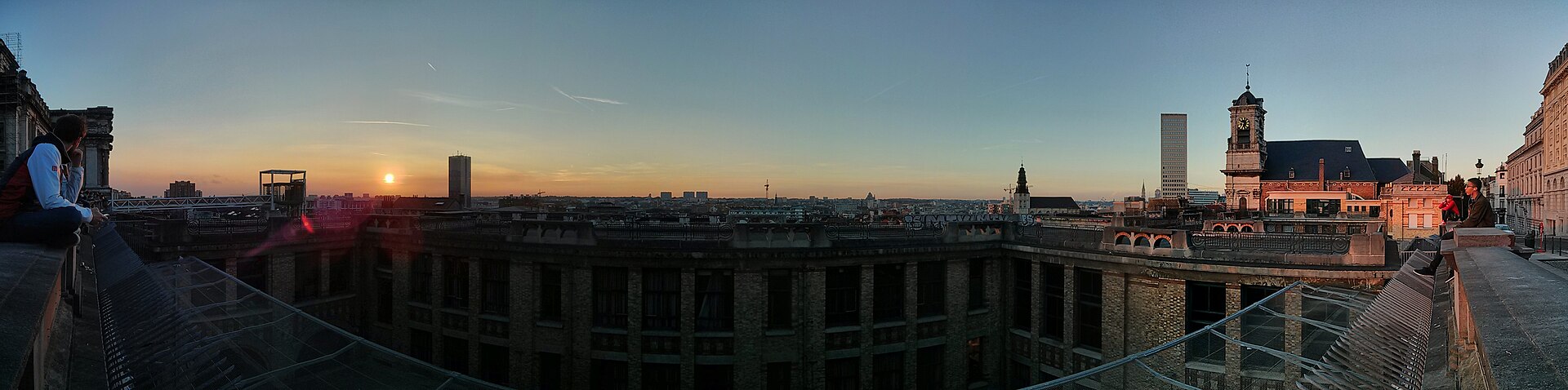
Photo Credits
-
Rue des Bouchers on foot: 20180615 GrandPlace 3999 (48385485102) by Ray Swi-hymn from Sijhih-Taipei, Taiwan, CC BY-SA 2.0, via Wikimedia Commons.
-
A walk along Rue du Marche aux Herbes: Brussels, Belgium (9335784453) by Aram Zucker-Scharff from Fairfax, VA, USA, CC BY 2.0, via Wikimedia Commons.
-
The European Quarter around Schuman: 2009-05-21 in Brussels 16 by Szilas, CC BY-SA 4.0, via Wikimedia Commons.
-
Visitors on the Grand-Place: Grand-Place (Brussels) – Row of historic Baroque guildhouses from number 1 to 7 with tourists in the square by iMahesh, CC BY-SA 4.0, via Wikimedia Commons.
-
Sunset panorama from Place Poelaert: Brussels city view – panoramio by U4U, CC BY 3.0, via Wikimedia Commons.
-
The Jeu de Balle market beneath the church: Flea market at Place du Jeu de Balle, Brussels, 2024 by DimiTalen, CC0, via Wikimedia Commons.
-
Pedestrian signposts in central Brussels: Toeristische wegwijzers Brussel 200 01 by FrDr, CC BY-SA 4.0, via Wikimedia Commons.