Every capital has a station it apologises for, and in Belgium it is this one. Brussels Midi station — Bruxelles-Midi in French, Brussel-Zuid in Dutch, and Brussels South on your Eurostar ticket — is the busiest railway station in the country, the arrival point for almost every international train, and the place where more visitors form their first impression of Brussels than anywhere else. It is functional, confusing in patches, and it has a genuine pickpocket problem that nobody in an official capacity is very keen to talk about.
This page is the practical one: how the station is laid out, where the Eurostar terminal is and how early you actually need to be there, where the lockers are and what they cost, how to get from here to your hotel, and what to watch for. Details were checked in September 2026; Eurostar’s check-in rules in particular change, so confirm on your booking before you travel.
The Essentials
| Detail | What to know |
|---|---|
| Names | Bruxelles-Midi (FR) · Brussel-Zuid (NL) · Brussels South (Eurostar) |
| Eurostar terminal | Concourse level, signed “Channel Terminal”, by platforms 1–2 |
| Eurostar check-in closes | 30 minutes before departure — 15 with a Premier ticket |
| Realistic arrival time | An hour before, more at peak |
| Other international high-speed | Platforms 3–6 |
| Luggage lockers | 24h, near the international ticket office; two adjacent zones |
| Locker prices | From €5 a day small to €14.50 suitcase-sized; staffed left luggage around €6 a piece |
| Onward transport | Metro 2 and 6, several tram lines, local trains to Central and Nord |
| Safety | Known pickpocket hotspot — keep bags closed and in front of you |
Understanding the Layout
Midi is built on two levels: the platforms above, and a long concourse beneath them running the width of the station, with shops, ticket offices, food outlets and the entrances to the metro. Almost everything you need is on that concourse, and almost everything confusing about the station comes from the fact that it has entrances at both ends and they look nothing like each other.
The northern end faces the city and the Avenue Fonsny; the southern end faces the coach stands, where the airport shuttles arrive. Signage is bilingual throughout, and the two languages disagree about almost everything except the platform numbers — so if you are lost, look for the numeral rather than the word.
Platforms are numbered from one side of the station to the other. The low numbers are the international ones. Everything from about platform 7 upwards is domestic and suburban traffic, which is where the great majority of the station’s daily half-million or so movements actually happen.
The Eurostar Terminal
Eurostar operates from a separate, gated terminal rather than an open platform. The entrance is on the main concourse level next to platforms 1 and 2, signed Channel Terminal; if you come in through the northern entrance it is just inside on the right.
How early to arrive
Eurostar requires you to check in at least 30 minutes before departure, or 15 minutes with a Premier ticket. That is the deadline, not the target. Between check-in, security screening and two sets of passport control — Belgian exit and British entry, both conducted here rather than at the other end — the realistic figure is an hour, and more on a Friday evening or a Sunday afternoon.
Miss the check-in cut-off and you do not board. There is no running down the platform at Midi; the gate simply closes.
What happens inside
Ticket scan, then airport-style security with bags through a scanner, then Belgian border control, then UK border control. Passports are stamped where applicable, which adds time that did not exist a few years ago. Once through, there is a departure lounge with seating, a café and toilets, and boarding is called for a specific platform a few minutes before departure.
Our Eurostar Brussels guide covers the London service in full — fares, booking windows, luggage allowances and which class is worth paying for.
Other International Trains
Midi is the Belgian end of the whole north-west European high-speed network, and services to Paris, Amsterdam, Rotterdam, Cologne and beyond use platforms 3 to 6. These are ordinary platforms with no check-in and no border control inside the Schengen area — you walk up and board, exactly as you would for a domestic train.
That difference catches people out in both directions. Travellers used to Eurostar’s terminal turn up an hour early for a Paris train they could have boarded five minutes before departure; travellers used to walking on to a Paris train miss the Eurostar check-in entirely. Know which kind of train you are on.
Journey times from here are short by any standard: Paris in about an hour and a half, Amsterdam in around two hours with roughly nineteen departures a day, Cologne in under two. Our how to get to Brussels guide covers the routes in the other direction.
Domestic Trains and the Three-Station Rule
The single most useful thing to understand about Belgian railways in Brussels is that Midi, Central and Nord sit on the same north–south junction line, a few minutes apart, and almost every domestic train calls at all three. Local trains run between them constantly — Midi to Central takes about five minutes.
Domestic tickets to Brussels are generally sold to the city rather than to a specific station, which means arriving at Midi and continuing to Central usually costs nothing extra. Check the conditions when you buy, but do not assume you have to get off at the first Brussels station the train reaches. If your hotel is near the Grand-Place, staying on to Central saves you a metro ride and a walk.
From Midi you can also reach the rest of Belgium directly. Bruges is about an hour, Ghent around half that, Antwerp roughly forty minutes, and the coast about an hour and a half. Our day trips guide covers the destinations and our Brussels to Bruges guide the single most popular route.
Metro, Tram and Getting to Your Hotel
Metro lines 2 and 6 serve Midi, running around the inner ring of the city; several tram lines call here too, including services north into the centre and south into Saint-Gilles and Forest. Entrances to the metro are off the main concourse and clearly signed.
Three practical routes out:
- To the Grand-Place and the lower town: a local train to Brussels-Central, five minutes, then a five-minute walk. Almost always the quickest option.
- To the European Quarter: metro 2 or 6 to Arts-Loi and change, or a direct train to Bruxelles-Luxembourg.
- To Ixelles, Saint-Gilles or Avenue Louise: tram, or a short taxi — this is one of the few Brussels journeys where a taxi genuinely saves time.
Our metro guide explains the network and our transport tickets guide the fares. A single STIB journey is a couple of euros; the STIB 1-day ticket is €9, and contactless payment stops charging at €8.50 a day.
Luggage Storage
Self-service lockers operate 24 hours a day near the international ticket office, in two zones next to each other — if the first is full, walk to the second rather than giving up. Prices run from €5 a day for a small locker to €14.50 for one that takes a suitcase. There is also a staffed left-luggage counter at around €6 a piece, which is the better option for anything awkwardly shaped.
You can reserve a locker online in advance through the Belgian railways’ own site, which is worth doing on a busy weekend. Allow more time than you think to retrieve a bag before a train — the lockers are not next to the Eurostar terminal, and people have missed departures over exactly this.
Food, Shops and Facilities
The concourse carries the usual station retail: bakeries, sandwich chains, a supermarket, pharmacies, currency exchange and a bookshop or two. It is adequate rather than good, and considerably more expensive than an equivalent shop three streets away. The Eurostar departure lounge has its own café.
Toilets are paid and on the concourse. There is free WiFi of the usual station quality. Cash machines are present but the ones inside the station carry higher fees than a bank branch outside.
If you have an hour to fill and it is not raining, walking out of the northern entrance and into Saint-Gilles is a far better use of the time than sitting on the concourse — our Saint-Gilles guide covers what is within ten minutes.
The Safety Question, Honestly
Brussels-Midi/Zuid is consistently named as one of the city’s worst spots for pickpocketing, along with Brussels-Central, Brussels-Nord and the area immediately around the Grand-Place. This is not a reason to avoid it — it is a reason to behave sensibly in it.
What actually happens: distraction techniques, usually by pairs, targeting phones set down on café tables, wallets in back pockets and bags left beside a seat while somebody reads a departure board. The concourse at rush hour and the metro entrances are the specific spots.
The practical response is unglamorous and effective. Bag closed, in front of you, strap across the body. Phone in a front pocket, not on the table. Do not put a rucksack down while you study a map. At night, the streets immediately around the station are quieter and less pleasant than the centre, so take a tram or a taxi rather than walking twenty minutes with luggage. None of that is specific to Brussels; it is simply true here.
The Sunday Market
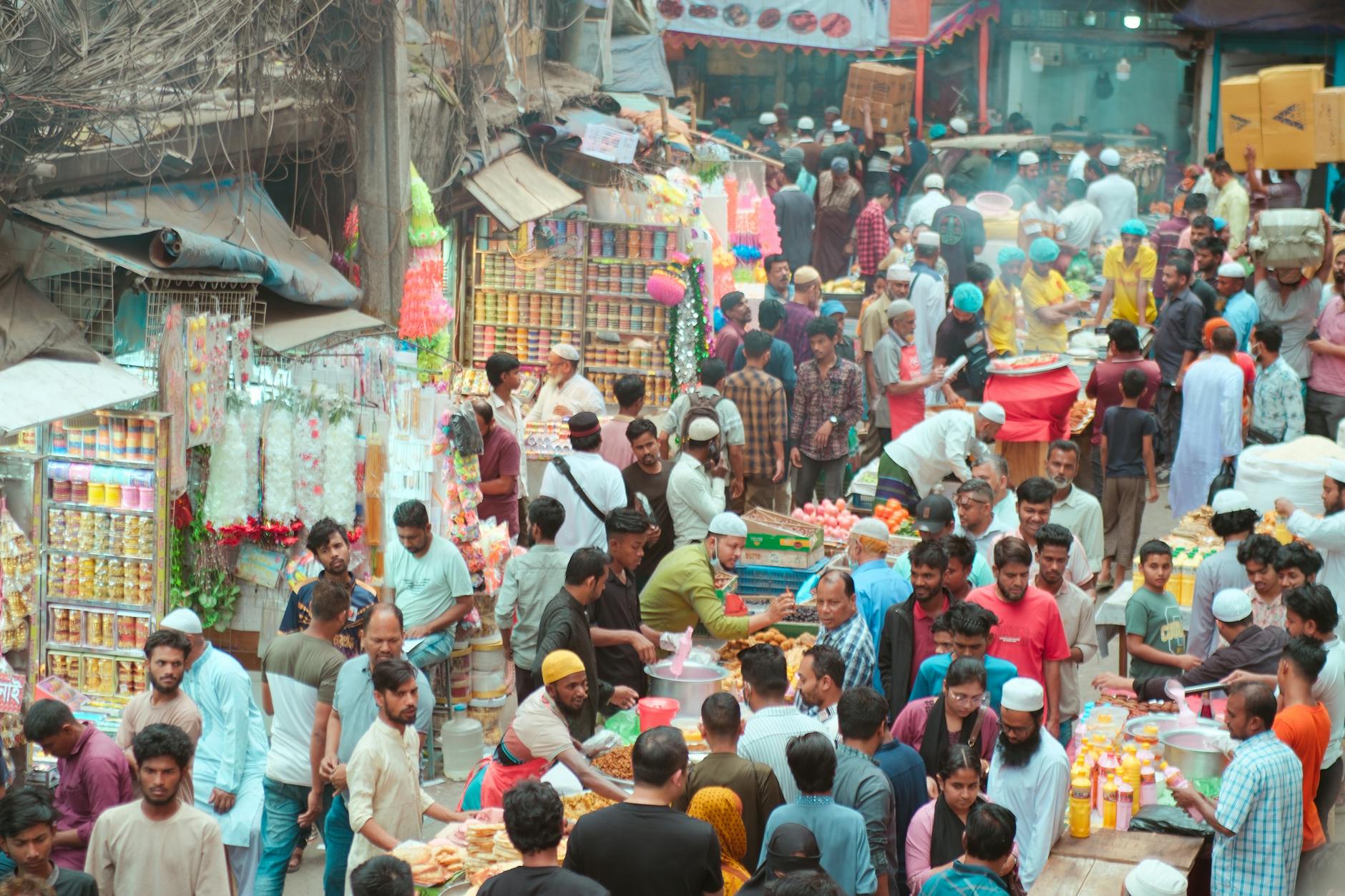
The one thing that makes Midi worth visiting rather than merely passing through. On Sunday mornings the streets and viaducts around the station host an enormous market — food, produce, spices, textiles, North African and Mediterranean stalls, and a scale that surprises people who thought they knew Brussels. It runs from early morning until around lunchtime and it is busy, loud and cheap.
It is also, predictably, a pickpocket’s paradise, so apply everything in the section above. Our food markets guide covers it alongside the city’s other markets.
Accessibility
The station has lifts to all platforms and step-free routes between the concourse and street level, but it is large, busy and not always intuitive, and lifts are occasionally out of service. Belgian railways provide assistance if booked in advance — the standard request window is a few hours before travel, and longer is better. Eurostar has its own assistance process, booked through them rather than through the station. Our accessible Brussels guide covers the wider picture.
Common Mistakes
- Treating a Eurostar like a Thalys-style Schengen train. One has a check-in that closes 30 minutes out; the other does not. Arriving ten minutes before a London departure means not travelling.
- Getting off at Midi when your hotel is by the Grand-Place. Stay on to Brussels-Central — usually included in the same ticket.
- Leaving bag retrieval to the last minute. The lockers are not near the Eurostar gate.
- Assuming “Brussels South” means south Brussels. It is the station’s name, not a district, and it is very central.
- Standing still on the concourse with an open bag. This is the single behaviour that gets people robbed here.
- Eating on the concourse. Ten minutes’ walk in almost any direction is better and cheaper.
One practical footnote to all of the above: the lockers near the international ticket office are only one of several ways to get a bag off your shoulder in this city, and they are not always the cheapest. If you are weighing a locker here against a bag drop nearer the Grand-Place, or against simply asking your hotel, our guide to luggage storage in Brussels compares the station lockers, the app-booked drops and the airport bank side by side, with current prices.
Related Brussels Guides
- Eurostar Brussels Guide — the London service, fares and booking.
- How to Get to Brussels — rail, air and road compared.
- Charleroi Airport to Brussels — the shuttle that arrives at Midi’s coach stands.
- Brussels Metro Guide — lines 2 and 6 and where they take you.
- Brussels Transport Tickets — what to buy on arrival.
- Brussels Food Markets — including the Sunday market outside the station.
- Saint-Gilles — the neighbourhood on the station’s doorstep, and a better place to wait.
Useful Resources
- belgiantrain.be (SNCB/NMBS) — domestic timetables, fares, locker reservations and assistance booking.
- Eurostar — check-in rules, which change, and assistance requests for the London service.
- STIB/MIVB — metro, tram and bus from the station into the city.
- Flibco — the Charleroi shuttle, which uses the coach stands at the southern end.
- visit.brussels — for what is on in the city once you have escaped the concourse.
Frequently Asked Questions
How early should I arrive at Brussels-Midi for Eurostar?
Check-in closes 30 minutes before departure, or 15 minutes on a Premier ticket, but that is the cut-off rather than the plan. Allow an hour for security and two sets of passport control, and more on Friday evenings and Sunday afternoons.
Where is the Eurostar terminal at Brussels-Midi?
On the main concourse level beside platforms 1 and 2, signed “Channel Terminal”. Coming in through the northern entrance, it is just inside on the right.
Are there luggage lockers at Brussels-Midi?
Yes, 24 hours a day, near the international ticket office, in two adjacent zones. From €5 a day for a small locker to €14.50 for a suitcase-sized one, with a staffed left-luggage counter at around €6 a piece. Lockers can be reserved online through the Belgian railways.
Is Brussels-Midi station safe?
It is safe to use, and it is also one of the city’s known pickpocket hotspots. Keep your bag closed and in front of you, keep your phone off café tables, and take a tram or taxi rather than walking through the surrounding streets late at night with luggage.
How do I get from Brussels-Midi to the Grand-Place?
Take a local train to Brussels-Central — about five minutes, usually covered by the same domestic ticket — then walk five minutes. Metro lines 2 and 6 also serve Midi if you are heading elsewhere in the city.
What is the difference between Brussels-Midi, Central and Nord?
They sit on the same north–south line a few minutes apart. Midi handles almost all international traffic, Central is the most convenient for the historic centre, and Nord serves the business district. Most domestic trains call at all three.
Do I need to check in for the train to Paris or Amsterdam?
No. Schengen high-speed services use ordinary platforms — 3 to 6 — with no check-in and no border control. Only the London Eurostar uses the gated Channel Terminal.
Is there a market at Brussels-Midi?
Yes — one of the largest markets in Europe takes over the streets around the station on Sunday mornings, running from early until around lunchtime. Food, produce, spices and textiles, and very busy.
Photo Credits
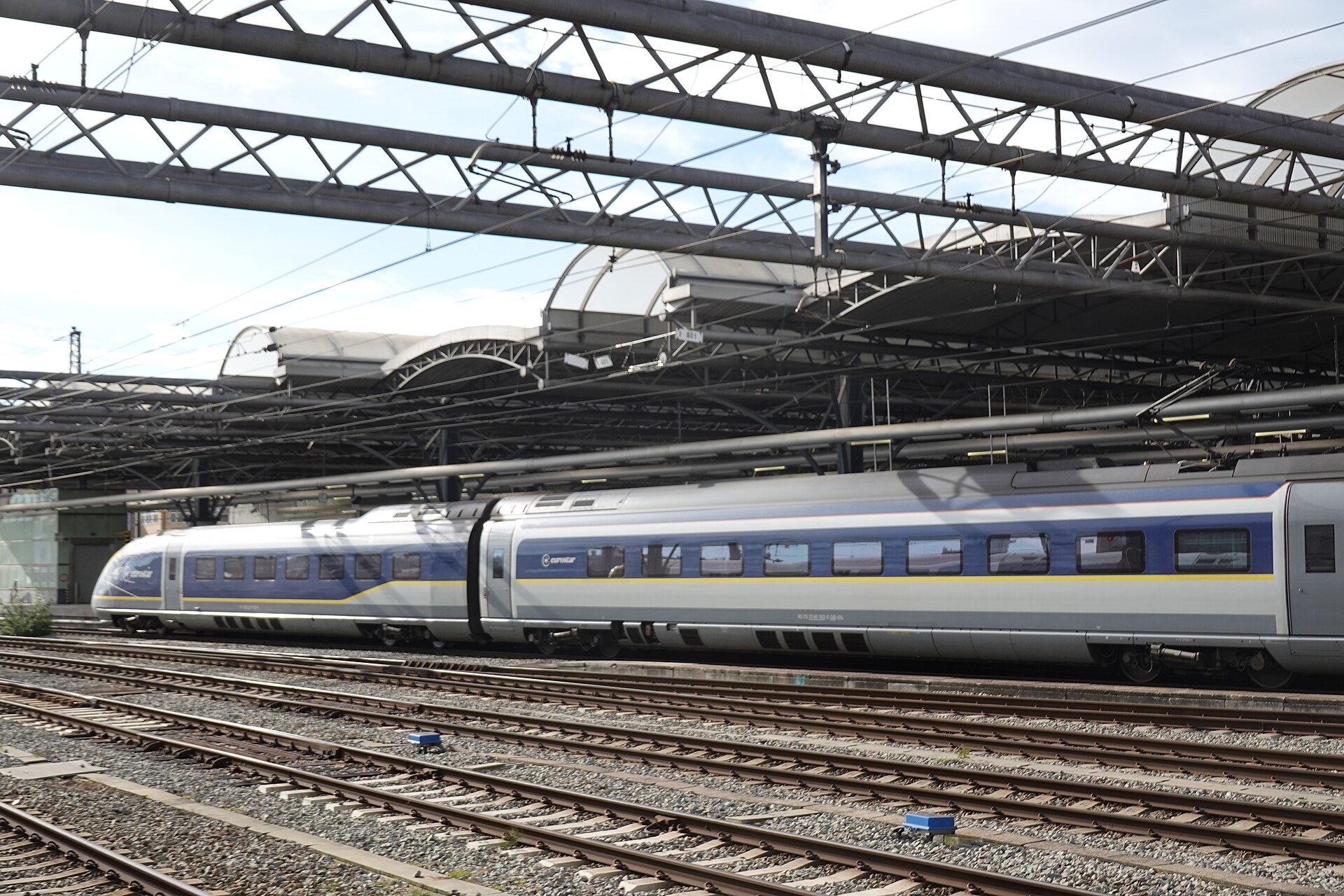
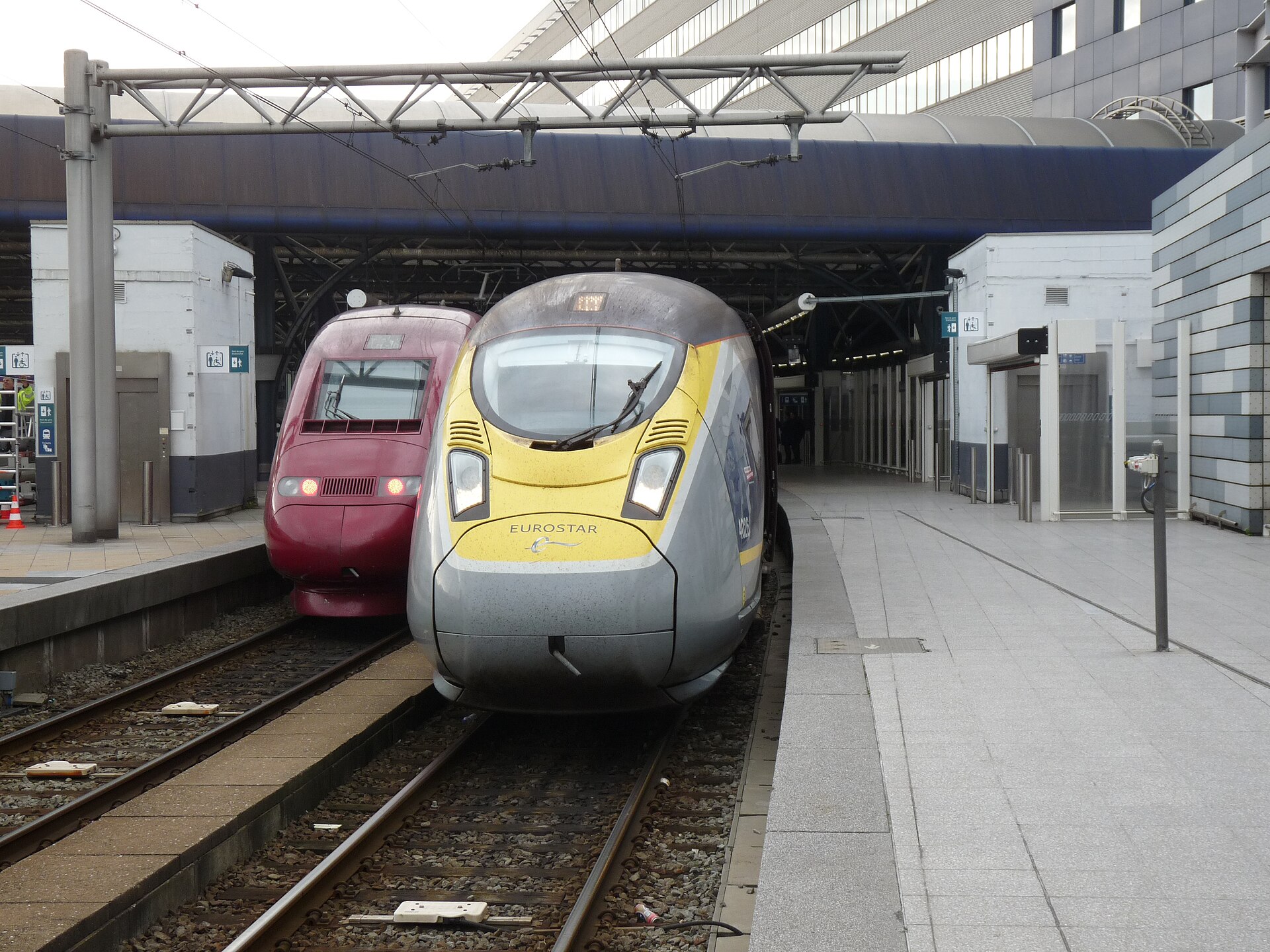
Eurostar at Brussels-Zuid: Brussel Zuid Eurostar 2024 1 by Smiley.toerist, CC BY-SA 4.0, via Wikimedia Commons.
The international platforms at Brussels-Midi: Brussels Midi okt 2019 2 by Smiley.toerist, CC BY-SA 4.0, via Wikimedia Commons.
Final Thoughts
Nobody arrives at Brussels-Midi and thinks, what a beautiful building. It is a working railway station in a country that runs a great many trains, and its virtues are logistical rather than architectural: you can be in Paris in ninety minutes, London in two hours, Bruges in one, and the Grand-Place in ten.
Treat it accordingly. Know which platform group your train leaves from, allow the full hour if it is Eurostar, keep your bag in front of you on the concourse, and get out of it promptly in either direction. Then come back on a Sunday morning with an empty rucksack and buy your lunch at the market, which is the one time this station is genuinely, unambiguously worth being at.