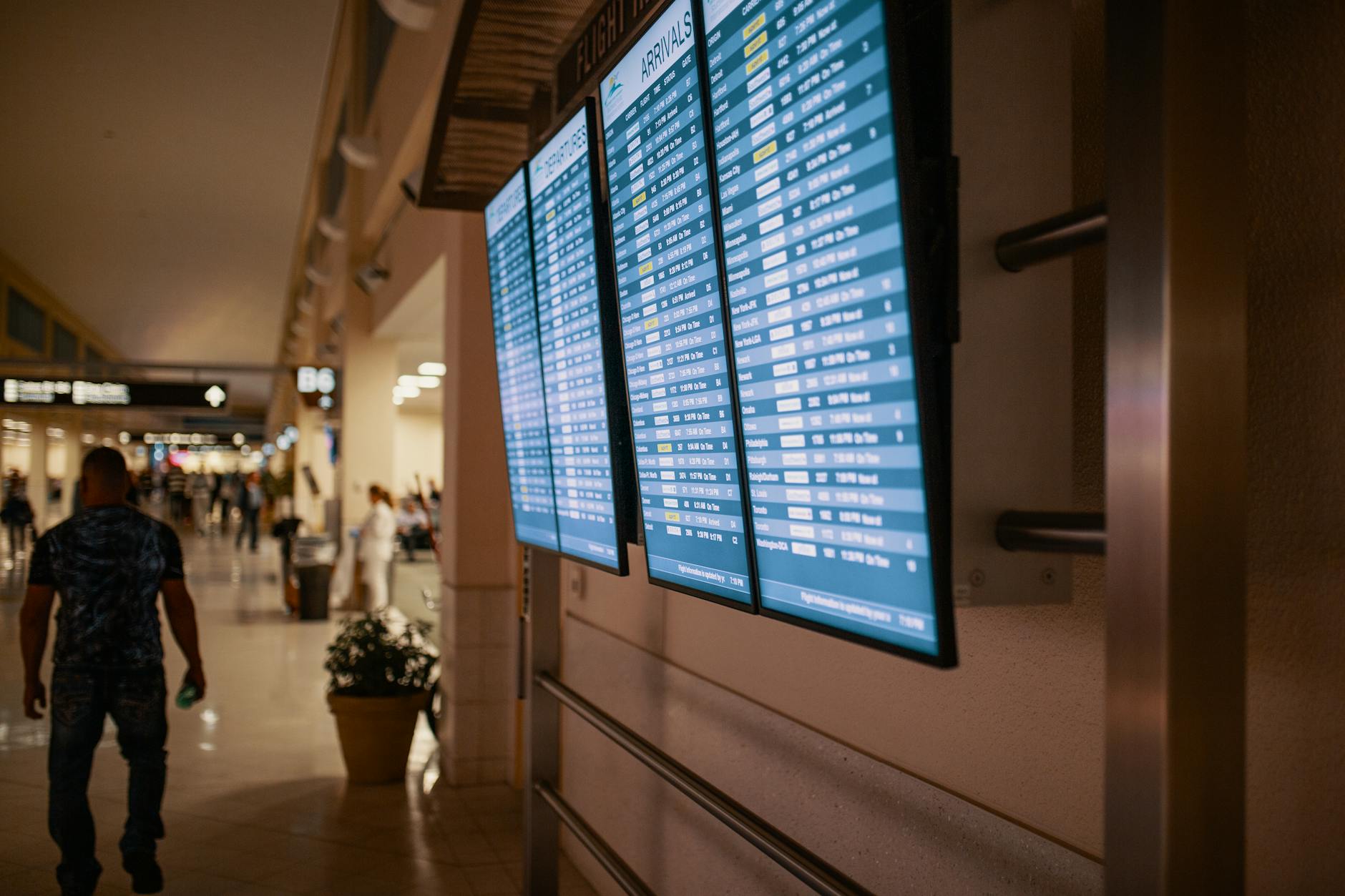
The decision is always made in the same place: standing under the departure board in the arrivals hall at Zaventem, doing sums. Your connection is in seven hours. The train to the city takes twenty minutes. That sounds like plenty until you start subtracting the things nobody counts — the walk to the station, the locker, the walk back, the security queue, the gate closing. A Brussels layover is genuinely one of the best in Europe, because the airport is unusually close to the centre and the centre is unusually small. But it only works if you do the arithmetic honestly before you leave the terminal.
This page is that arithmetic. It is not an itinerary — for a proper day in the city, see our one day in Brussels itinerary. This is the go/no-go call by layover length, the time each stage actually consumes, what to do with your bags, and the specific circumstances in which leaving the airport is a mistake. Details were checked in September 2026.
The Go/No-Go Table
| Layover | Leave the airport? | What you get |
|---|---|---|
| Under 4 hours | No | Stay airside; you will spend it all travelling |
| 4–5 hours | Only with hand luggage and a Schengen-to-Schengen connection | About an hour in the city — not worth it |
| 6 hours | Yes, carefully | Two and a half hours: Grand-Place, a walk, a coffee |
| 8 hours | Yes | Four hours: the historic core properly, plus lunch |
| 12 hours | Definitely | Six to seven hours: a museum, the core, a real meal |
| Overnight | Yes, with a hotel | An evening and a morning |
All of that assumes Brussels Airport at Zaventem. Charleroi is a different and much less encouraging calculation, dealt with further down.
The Time Maths, Stage by Stage
Here is where a layover actually goes. Add these up before you decide, and be pessimistic rather than optimistic about each one.
- Disembarking and walking to arrivals: 15–25 minutes at a large airport, more from a remote stand.
- Immigration, if you are arriving from outside Schengen: 10–45 minutes, and genuinely unpredictable.
- Storing bags: 10 minutes, if you know where the lockers are.
- Walking to the station and waiting for a train: 10–15 minutes.
- Train to Brussels-Central: about 20 minutes, with five or more trains an hour.
- Walk from Central to the Grand-Place: 5 minutes.
- The same again in reverse: roughly an hour.
- Check-in, security and passport control on departure: 60–90 minutes, and Brussels advises being at the gate well before boarding.
Total overhead, before you have looked at anything: three to four hours. That is the number that decides everything, and it is why a six-hour layover yields about two and a half hours in the city rather than five.
The Bag Problem
Nothing shapes a layover more than what you are carrying. Dragging a suitcase around the Grand-Place is miserable, and most museums will not admit it.
Brussels Airport has self-service lockers just outside the terminal on level 0, by the bus stops at the arrivals hall exit, available 24 hours a day. Prices run roughly €2 an hour for a medium locker, €2.50 for a large, €3 for extra-large and €3.50 for the biggest, with 24-hour rates of about €10 to €16. Oversized items — bicycles, golf bags, instruments — are handled by staff via an intercom at the lockers, at around €12 a day for up to three pieces.
For a six-hour layover, roughly €12–18 buys you the ability to walk around unencumbered, which is money well spent. If you are travelling on a single through ticket with checked bags, they should be tagged through to your final destination and you will not see them at all — which is the ideal situation, and worth confirming at the desk before you fly rather than assuming.
There is also left luggage at Brussels-Midi/Zuid if you end up in the city with bags, covered in our Brussels-Midi station guide.
Schengen, Non-Schengen and the Thing That Ruins Layovers
The single biggest variable is where your flights are from and to. A Schengen-to-Schengen connection is simple: you walk out, you walk back in, there is no border control in either direction, and the overhead is at the low end of every estimate above.
A connection involving a non-Schengen flight adds immigration on the way in and passport control on the way out, each of which can take anything from ten minutes to the better part of an hour. If you are arriving from outside Schengen and departing to outside Schengen, you would technically be entering the Schengen area to go into the city and leaving it again — perfectly normal, but it means two border crossings you would otherwise not have made.
Check your visa position before you plan anything. If you need a Schengen visa and hold only an airside transit arrangement, you cannot leave the terminal at all, and no amount of layover length changes that.
Getting to the City and Back
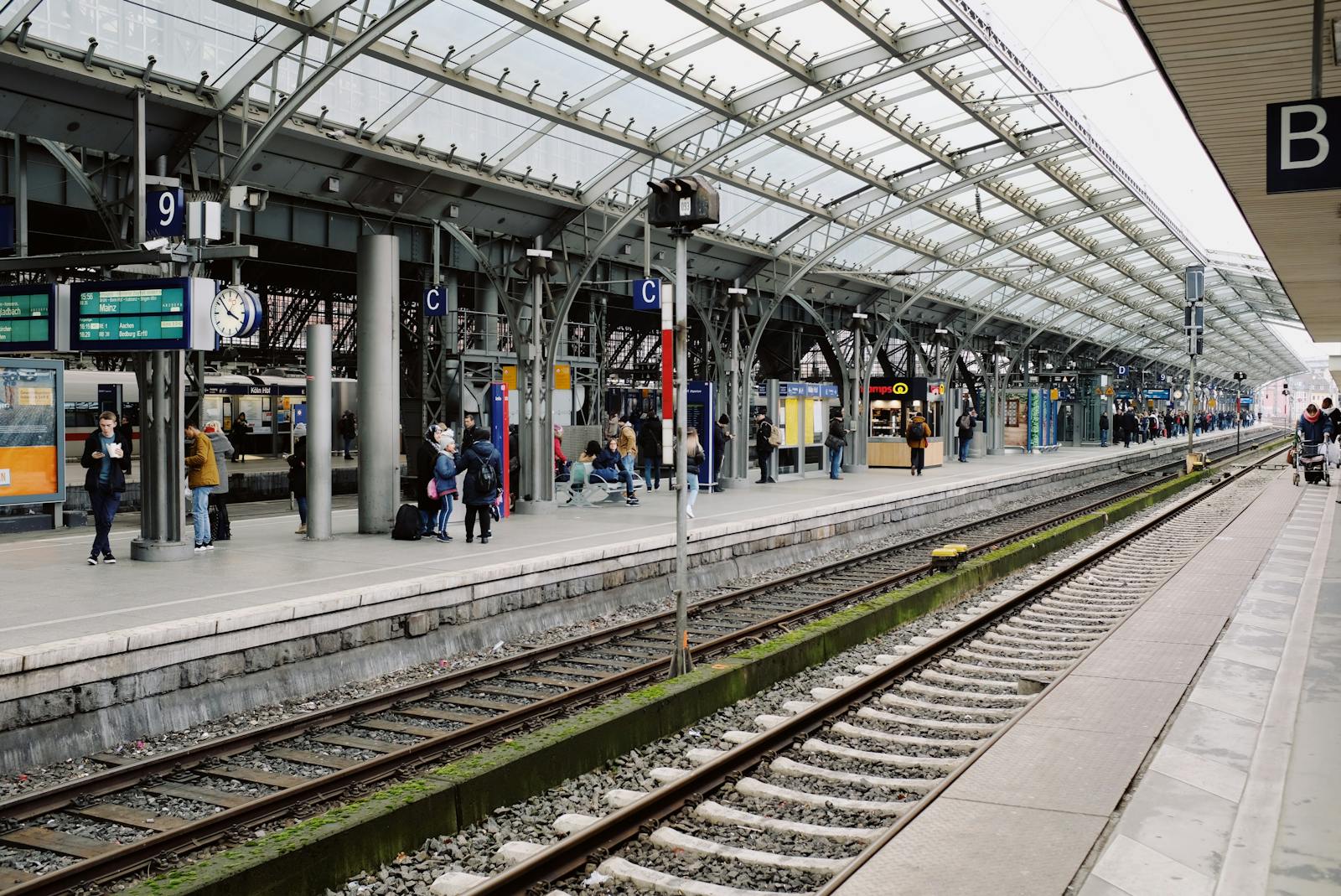
Brussels Airport’s greatest advantage is the railway station directly beneath the terminal. Six direct trains an hour run to Brussels-Central, taking about 18 minutes, and the fare is high for the distance, because a mandatory €6.90 airport supplement is baked into it.
The alternative is STIB bus 12 (weekday daytime) or 21 (evenings, weekends and holidays) to Schuman and Luxembourg in the European Quarter, about 30 minutes. The fares here are asymmetric in a way that catches people out: airport to city costs around €7.90 contactless or €8.40 on a paper ticket because of a surcharge, while city to airport is the normal €2.40 fare. On a layover you pay both, so budget for the expensive direction.
A taxi averages about €50 each way, which for a solo traveller is absurd and for four people sharing is defensible if the clock is tight. Our airport to city centre guide covers every option in detail.
Coming back, leave more time than you think. The train is reliable but not immune to delay, and a missed connection because you cut it fine is entirely uninsured. Aim to be back in the terminal three hours before a long-haul departure and two before a short-haul one.
What to Actually Do
Six hours: two and a half in the city
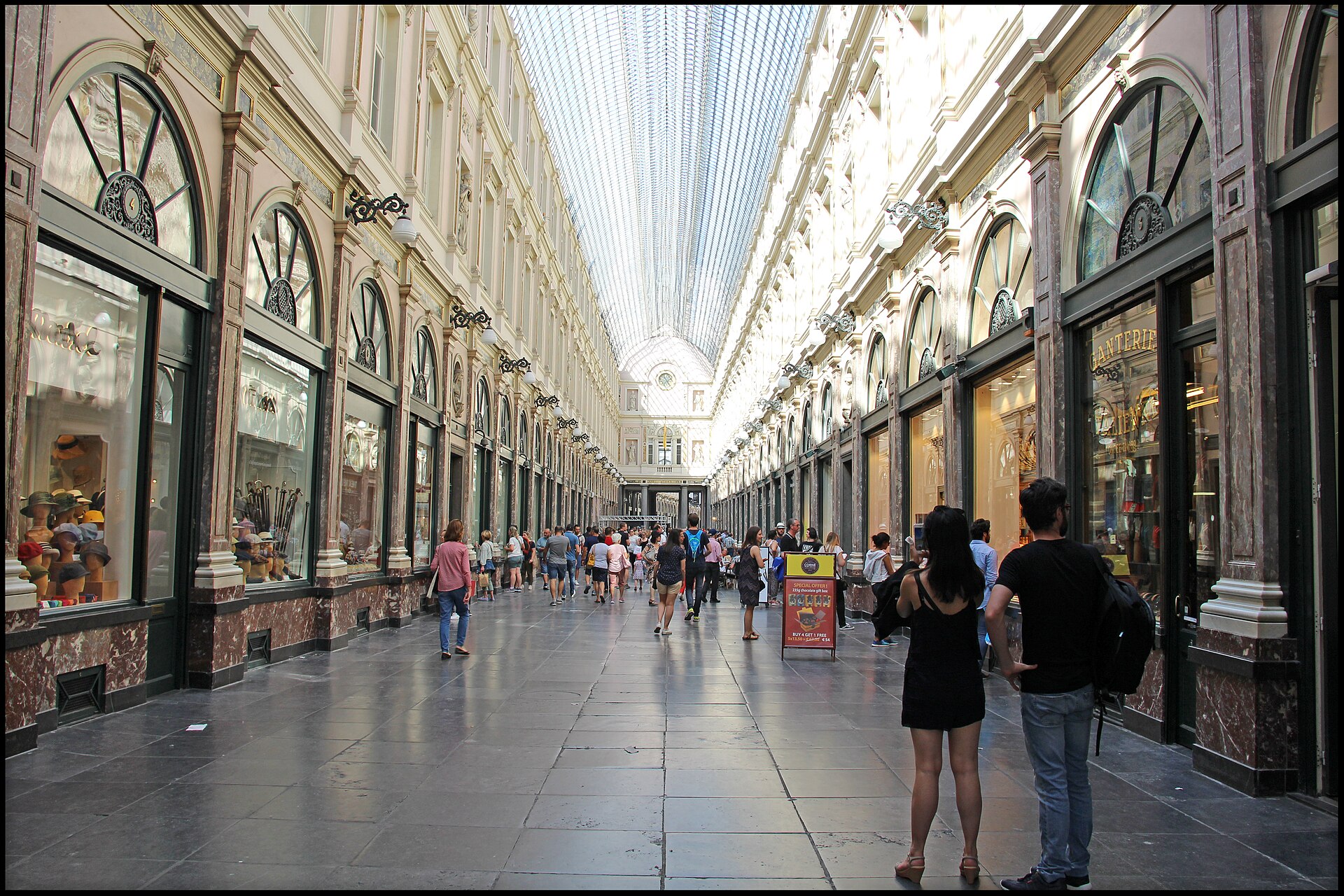
Train to Brussels-Central. Walk down to the Grand-Place, which takes five minutes and is worth ten of standing still. Then a loop: Galeries Royales Saint-Hubert, Manneken Pis if you must, a waffle or a plate of frites, and back. Do not attempt a museum — the ticket queue alone will eat your margin.
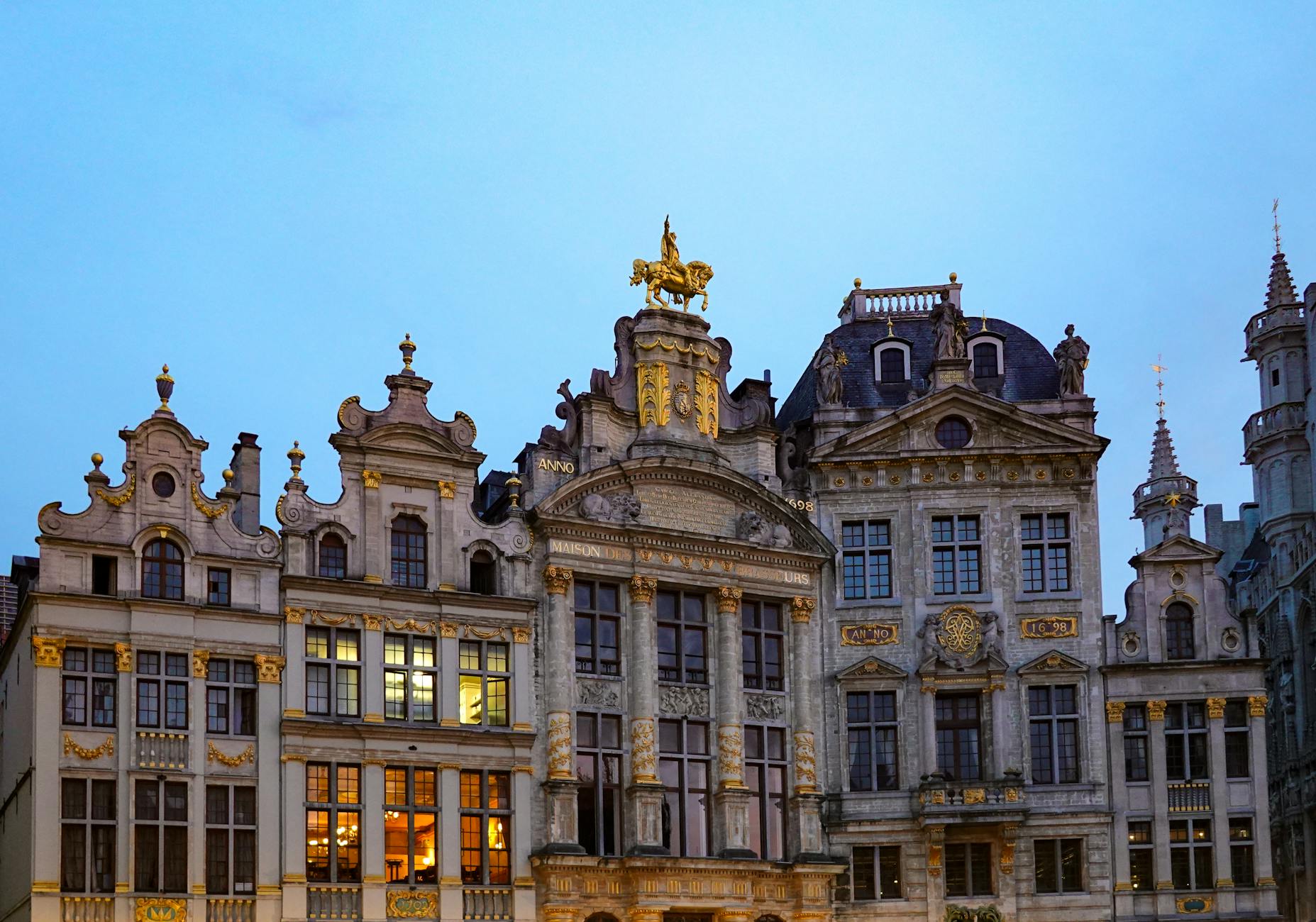
This is enough to have genuinely seen the best square in Europe and eaten something Belgian, and it is a far better two and a half hours than the same time in a departure lounge.
Eight hours: four in the city
The same, plus one of: the Mont des Arts and Place Royale for the view and the upper town; the Sablon for chocolate and antiques; or a proper sit-down lunch rather than street food. Our Grand-Place guide and Sablon guide cover both ends of that walk.
Four hours is also enough for one museum if you pick a small one and go straight there. The Musical Instruments Museum is the best layover museum in the city: central, quick to get round, and with a rooftop café worth the entry on its own.
Twelve hours: six or seven in the city
Now you can behave like a visitor. A museum, the historic core, lunch, and a walk somewhere less obvious — the Marolles, Sainte-Catherine, or the comic murals. This is essentially a short day trip, and our guide to the top attractions is the right starting point.
The one discipline to keep is the return time. Set an alarm for the train you intend to catch, not the one you could catch, and stick to it.
Under four hours: stay where you are
Brussels Airport is a decent place to be stuck. There are lounges, showers, a reasonable food offer and a Belgian beer bar airside that is considerably better than the airport-bar average. Buy chocolate here rather than in the city — the prices are similar and the queue is shorter. Our Brussels Airport guide covers the terminal in detail.
Overnight Layovers
If your connection is overnight, the choice is an airport hotel or a city one. Airport hotels are a short shuttle or walk away and let you sleep as late as possible; city hotels cost less and let you have an evening in Brussels, which is the whole reason you might have wanted the layover. Our hotels near Brussels Airport guide covers the first option and where to stay in Brussels the second.
The deciding factor is the first train. Trains from the city to the airport start early but not all night, so a 06:00 departure from Zaventem effectively requires an airport hotel or a taxi. Check the first departure before booking a city room.
Charleroi Layovers: The Honest Answer
Usually no. Charleroi is 55 kilometres from Brussels with no station at the airport, and the shuttle takes 55 to 60 minutes each way at €15–19 a head. That is two hours and €30–38 of pure overhead on top of everything else, which means a six-hour layover yields almost nothing and even an eight-hour one is marginal.
If you have eight hours or more at Charleroi and want to leave the airport, the better move is Charleroi itself — twenty minutes by bus, with a genuinely good contemporary art museum and the Bois du Cazier mining site nearby. Our Charleroi Airport guide covers the airport and the city, and our Charleroi to Brussels guide the transfer if you decide to do it anyway.
Things That Go Wrong
- Two separate tickets. If your flights are booked separately, a missed connection is your problem and your cost. Leave far more margin.
- A late inbound. Recalculate the moment you land, not from the schedule you memorised at home.
- Assuming you can collect bags. On a through ticket you often cannot, which is good news; on separate tickets you must, which costs an hour.
- Sunday and public holidays. Many Brussels museums close on Mondays and some on Tuesdays, so check each one before you plan around it, and much of the city is quiet on Sundays. A layover on the wrong day yields a walk and a coffee.
- Forgetting the return fare direction. Airport to city is the expensive leg on the bus; the train is flat but pricey both ways.
- Cutting security fine. Brussels can queue badly at peak. Ninety minutes is not paranoid.
Every calculation on this page assumes you are not dragging a cabin case around the Grand-Place, which means solving the bag problem first. The airport’s own locker bank on level 0 is the obvious answer for a layover, but it is not the only one, and it is not the cheapest for every shape of gap — our guide to luggage storage in Brussels sets out what the airport lockers, the station lockers at Midi and the city bag-drop networks each cost.
Related Brussels Guides
- Brussels Airport Guide — the terminal, lounges and what is worth doing airside.
- Airport to City Centre — train, bus and taxi with real fares.
- One Day in Brussels — the full-day version of this walk.
- Grand-Place Guide — the one thing to see if you see nothing else.
- Charleroi Airport Guide — the other airport, and why layovers there are harder.
- Brussels-Midi Station Guide — left luggage if you end up in the city with bags.
- Hotels Near Brussels Airport — for overnight connections.
Useful Resources
- brusselsairport.be — locker locations and prices, live departures and current security waiting times.
- SNCB/NMBS — airport train timetables and the first and last departures of the day.
- STIB/MIVB — bus 12 and 21 to the European Quarter, and city transport generally.
- visit.brussels — opening days, which matter enormously on a Monday or a public holiday.
- Your airline — for whether bags are checked through, which changes the entire calculation.
Frequently Asked Questions
How long a layover do you need to leave Brussels Airport?
Six hours is the realistic minimum for it to be worth doing, and that yields about two and a half hours in the city. Under four hours, stay airside — the round trip and the security queue will consume everything.
How far is Brussels Airport from the city centre?
About 12 kilometres. Trains run from a station directly under the terminal to Brussels-Central in about 18 minutes, six times an hour, and the fare includes a €6.90 airport supplement.
Can you store luggage at Brussels Airport?
Yes. Self-service lockers sit just outside the terminal on level 0 by the arrivals hall exit, open 24 hours. Prices run from about €2 an hour for a medium locker to €3.50 for the largest, with 24-hour rates of roughly €10 to €16.
What can you see in Brussels in 6 hours?
Realistically two and a half hours in the city: the Grand-Place, the Galeries Royales Saint-Hubert, Manneken Pis and something to eat. Skip museums — the queue and the visit together will not fit.
Is a Charleroi layover worth leaving the airport for?
Rarely. Charleroi is 46 km from Brussels with a 55–60 minute shuttle each way at €15–19, which adds two hours and about €35 of overhead. With eight hours or more, Charleroi city itself is the better trip.
Do I need a visa to leave the airport on a layover?
If you are a national who requires a Schengen visa, yes — an airside transit arrangement does not permit you to enter Belgium. Check your own position before planning anything, because layover length is irrelevant if you cannot pass immigration.
Will my bags be checked through on a layover?
Usually yes on a single through ticket, and usually no if your flights are booked separately. Confirm at check-in, because collecting and re-checking bags adds an hour that many layover plans do not have.
How early should I get back to the airport?
Two hours before a short-haul departure and three before long-haul, measured from when you walk into the terminal — not from when you leave the Grand-Place. Set an alarm for the train you intend to catch.
Photo Credits
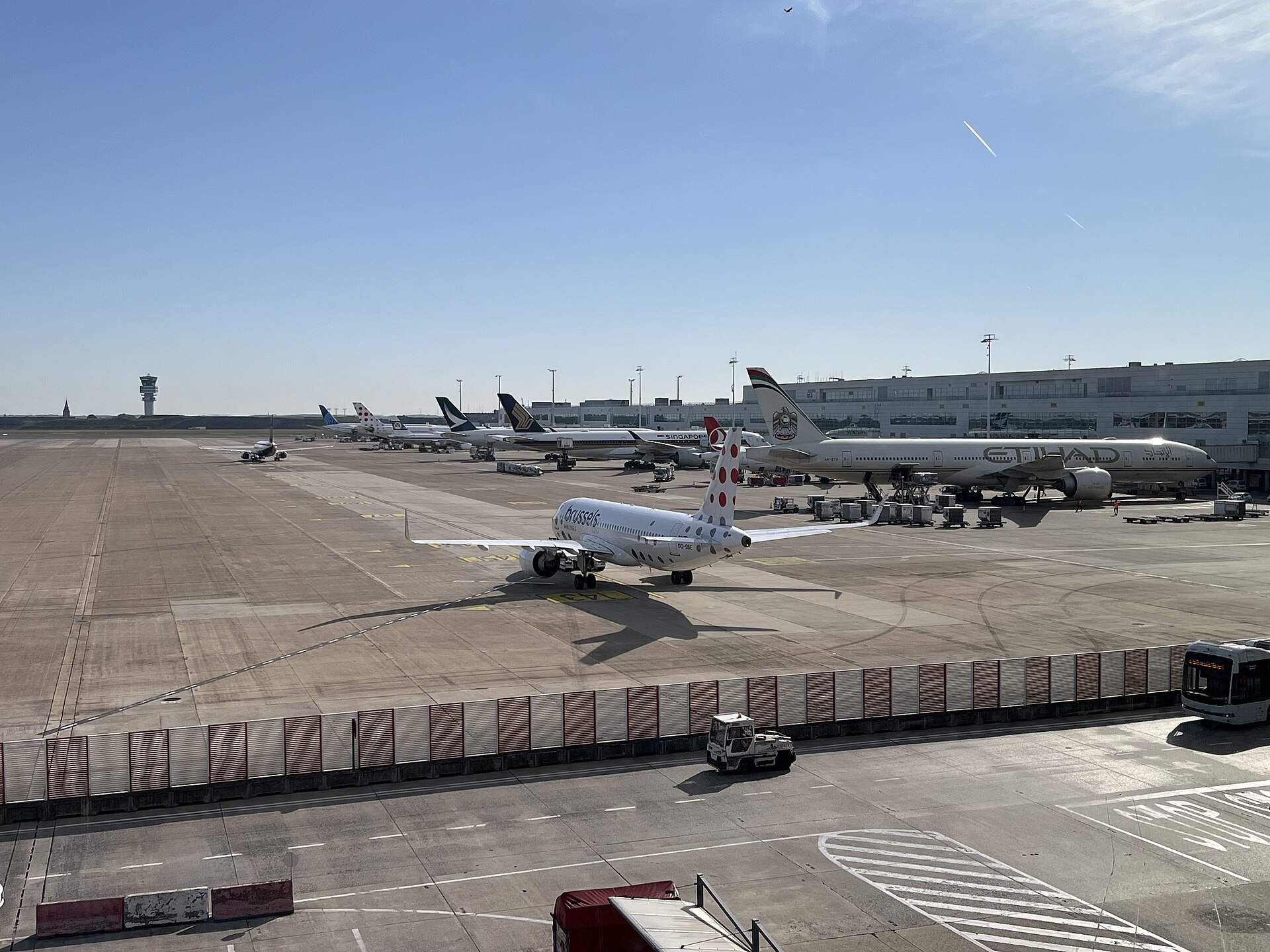
Brussels Airport apron: Brussels-Zaventem (BRU) – SN FR EY TK SQ CX EI UA – 2025-08-19 by Sjenghai, CC BY-SA 4.0, via Wikimedia Commons.
The Galeries Royales Saint-Hubert: Bruxelles – Les Galeries Royales Saint-Hubert by Fred Romero, CC BY 2.0, via Wikimedia Commons.
Final Thoughts
Brussels is one of the few European capitals where a layover genuinely converts into a visit, because everything is close together: the station is under the terminal, the train takes twenty minutes, and the historic core is a five-minute walk from where it drops you. Very few airports offer that geometry.
What defeats people is not the distance, it is the accounting. Three to four hours disappears into the logistics no matter what you do, so start from that number and work outwards. Six hours means a square and a waffle. Twelve means a proper afternoon. Anything less than four means a beer airside and a decent book — which, in an airport with a genuinely good Belgian beer bar, is not the worst outcome either.