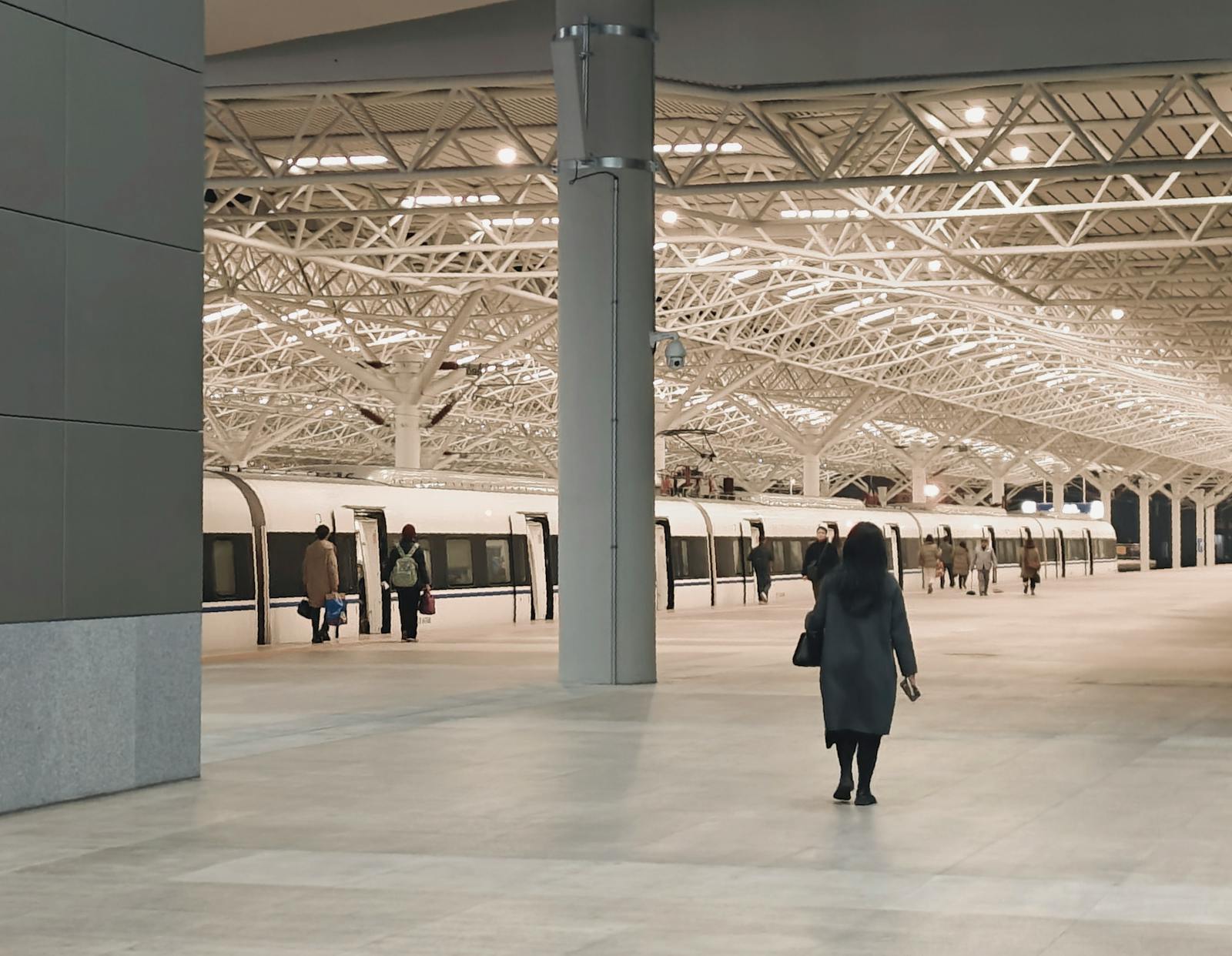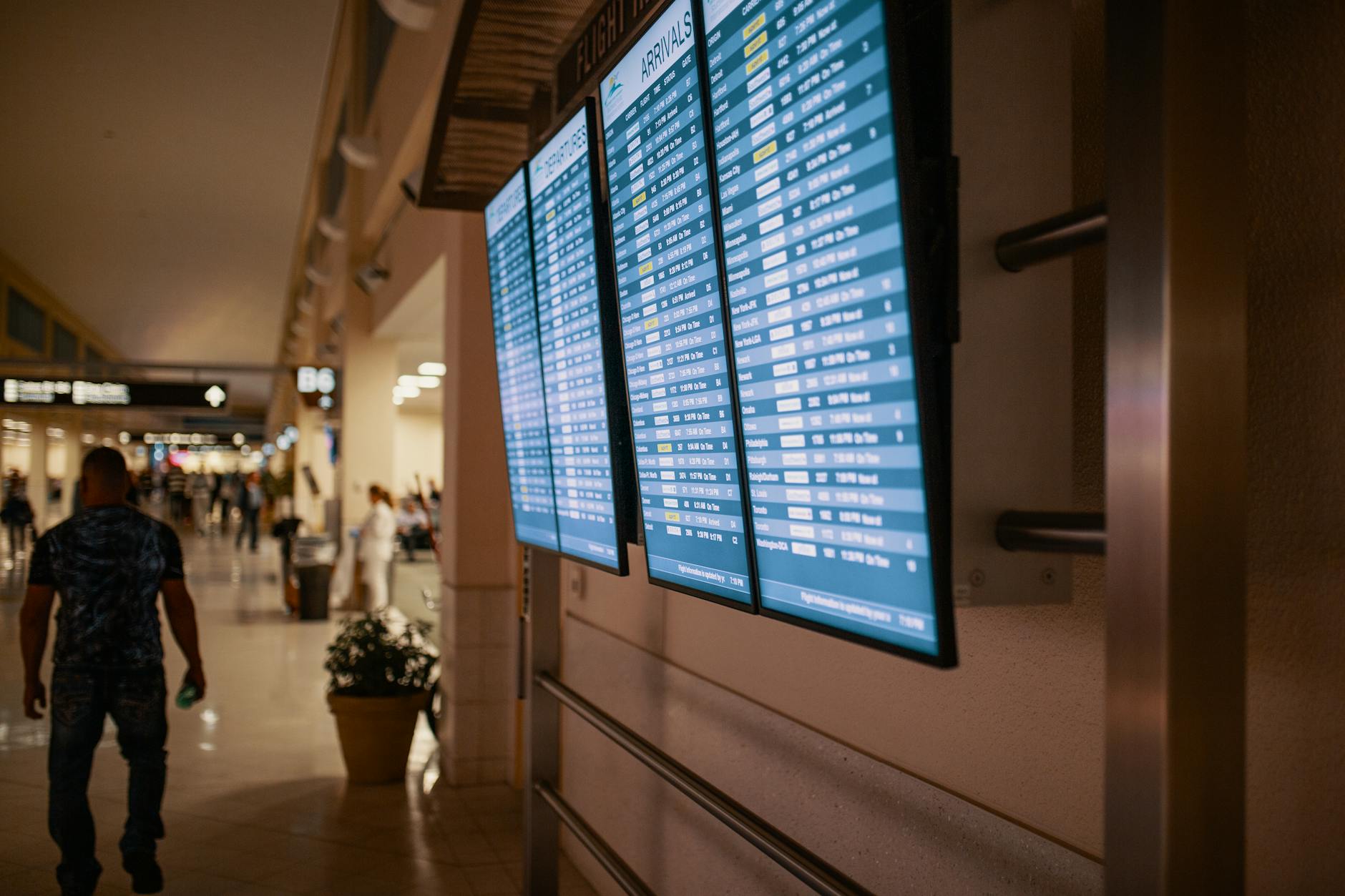
The first thing that surprises people about Brussels Airport is how quickly it is over. You come off the aircraft, walk a pier that is long but not punishing, ride one escalator down, and you are on a train platform beneath the terminal — no shuttle bus, no monorail, no twenty-minute walk to a distant station. Twenty-odd minutes later you are standing in Brussels-Central. This Brussels airport guide covers what the terminal is actually like to use in both directions: the layout, the timings that matter, the fare traps, and the handful of things that catch out first-time arrivals.
It covers Brussels Airport at Zaventem, which carries the code BRU and is the one virtually every scheduled airline uses. It is not the same place as Brussels South Charleroi, which is 46 km away and a Ryanair and Wizz base — that airport gets its own treatment further down and a link to the full transfer detail. Prices and times were checked in September 2026; treat them as the right order of magnitude, because Belgian rail supplements in particular are repriced more often than anyone would like.
Brussels Airport at a Glance
| Detail | What you need to know |
|---|---|
| Airport codes | BRU / EBBR — also called Zaventem or Brussels National |
| Distance to centre | About 12 km north-east |
| Terminals | One terminal, with piers A (Schengen), B (non-Schengen) and T |
| Train to Brussels-Central | About 18 min, 6 per hour, fare includes a €6.90 airport supplement |
| Bus 12 to the EU quarter | About 30 min, €7.90 contactless from the airport |
| Taxi to the centre | About €50 on average, metered, 25–45 min depending on traffic |
| Recommended arrival, Schengen | 2 hours before departure |
| Recommended arrival, non-Schengen | 3 hours before departure |
| Levels | Departures level 3, arrivals level 2, trains level −1 |
Arriving: The First Thirty Minutes
Arrivals is level 2. If you are coming from within the Schengen area — anywhere in the EU except Ireland, plus Switzerland, Norway and a handful of others — there is no passport control at all, and the walk from the aircraft door to the baggage belts is genuinely short. From outside Schengen, you pass through border control at Pier B, which is where any queue you experience will happen. Early mornings and the mid-afternoon long-haul bank are the pinch points.
Baggage reclaim is straightforward and the belts are all in one hall. Once you are through, you emerge into the arrivals hall with the usual apparatus: car hire desks, a tourist information point, banks of ATMs, and a lot of people holding names on tablets.
Getting Money and Data
Use the ATMs in the arrivals hall rather than the bureaux de change, which apply the spread you would expect at an airport. Belgium is comfortably card-based and contactless is accepted almost everywhere in Brussels, including on public transport. You will want a small amount of cash for market stalls, the odd frites stand and the occasional stubborn café, but €30 will cover a weekend.
EU roaming means most European visitors need do nothing about data. Everyone else should sort an eSIM before landing rather than buying an airport SIM, which is invariably worse value. Airport wifi is free and works.
Straight Down to the Trains
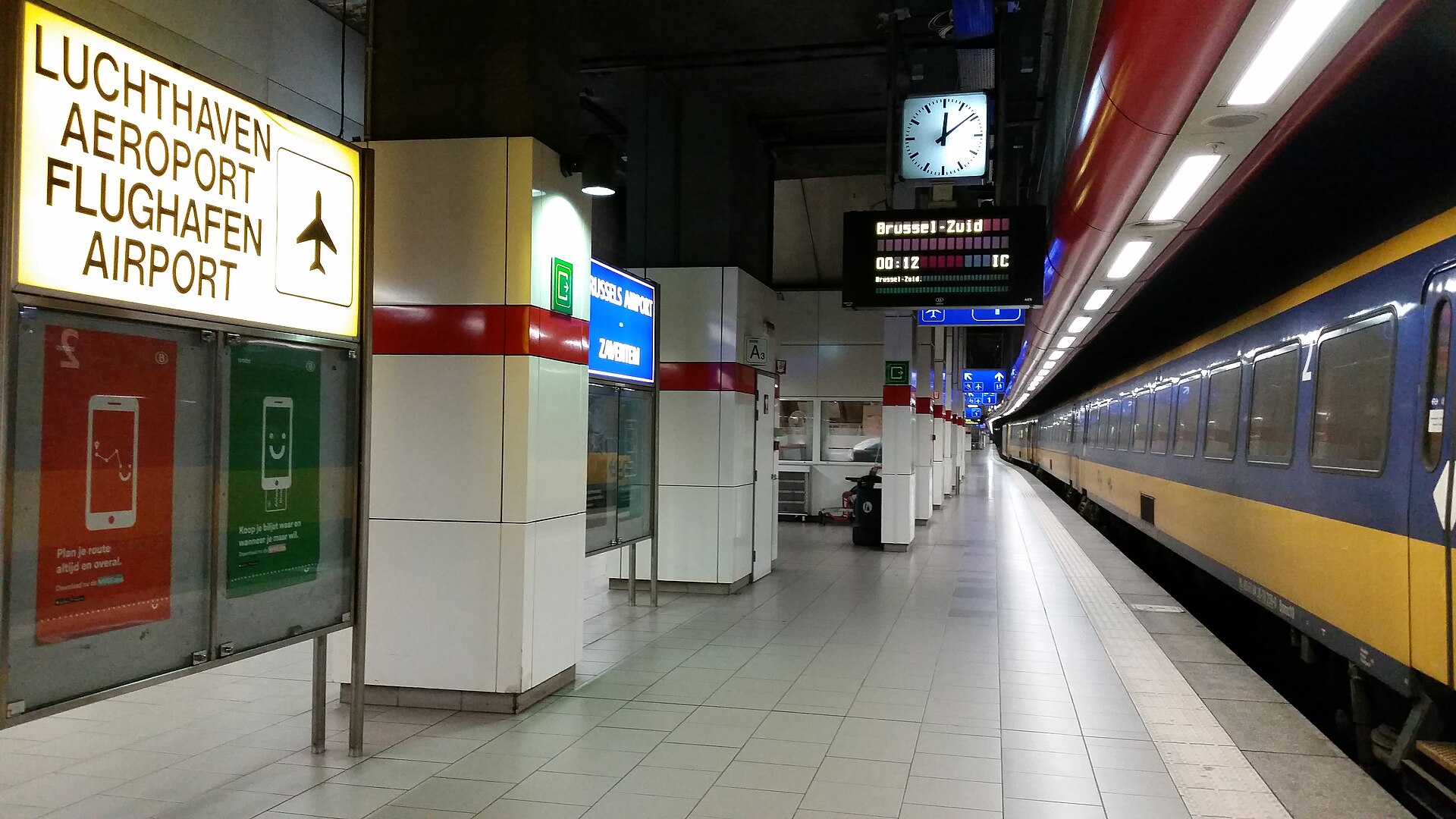
The single best thing about Brussels Airport is that the railway station is directly underneath the terminal on level −1, reached by escalator or lift from the arrivals hall. There is no transfer, no shuttle and no separate building. Five or more trains an hour run to the Brussels stations, and the journey to Brussels-Central takes 17 to 23 minutes.
Buy from the machines — they have an English option — or through the SNCB app. The fare feels high for twelve kilometres because it is: a mandatory Brussels Airport Supplement of €6.90 sits on top of the base fare and funds the tunnel that gets the trains under the terminal. Everyone aged 12 or over pays it, there is no way around it, and the exact total moves when the supplement is repriced, so check the machine rather than trusting a number you read months earlier.
One thing to get right before you board: know which Brussels station you want. Brussels-Central/Centraal is the one for the Grand-Place and most hotels in the historic centre. Brussels-Midi/Zuid is the international hub and where you want to be for Eurostar or a same-day onward train. Brussels-Nord/Noord serves the business district around Rogier. Most airport trains call at all three, so a wrong guess costs you a few minutes rather than a taxi fare, but it saves you dragging a case across town. Our airport to city centre guide has the full station-by-station breakdown.
The Bus, and a Fare Trap Worth Knowing
STIB bus 12 runs from the airport to Schuman and Luxembourg in the European Quarter in about half an hour, which beats the train if that is where you are staying. It is an express with few stops, and it runs on Saturdays as well. Check the day’s timetable on STIB’s site for evenings and Sundays.
Here is the trap. The fare is asymmetric. Going from the airport, the ticket costs €7.90 with contactless or a MOBIB card, or €8.40 with a paper ticket, because an airport surcharge applies. Going to the airport from the city, it is the ordinary €2.40 STIB fare with no surcharge at all. So the bus is a mediocre deal inbound and an excellent one outbound — if you are staying anywhere near the EU quarter, take the train in and the bus back out, and pocket the difference. Our transport tickets guide explains the wider STIB fare structure.
Taxis and Private Transfers
The official rank is directly outside arrivals. Fares are metered and a run to the city centre averages about €50, taking anywhere from 25 minutes at 6am to well over 45 in the evening peak. Fixed-price private transfers booked in advance start around the same level for an economy car and rise towards €60 for a business saloon, with vans for groups in between. For two people the train wins on both money and time. For four people with luggage arriving at midnight, a car is the sane choice. The Brussels taxi guide covers apps, tipping and the fare rules; the airport transfer guide compares every option side by side, including for Charleroi.

Departing: How Early Is Early Enough
Departures is level 3, reached directly from the train station by lift or escalator. The check-in hall is a single long row of desks and the signage tells you which row your airline is using.
The working rule at BRU is two hours for a Schengen flight and three hours for anything else. That is not padding. Brussels has a single central security filter feeding all the piers, and its throughput varies enormously — you can be through in eight minutes at 11am on a Tuesday and stuck for forty-five during the 6–8am wave, when a very large share of the day’s short-haul departures push off within the same two hours. Early Monday mornings and Friday evenings are the reliably bad slots.
Security, and the Liquids Question
Brussels has been installing newer CT scanners, but the rollout across all lanes has not been uniform, and lanes can differ on the same morning. Assume the old rules apply: liquids in containers of 100 ml or less, in one transparent resealable bag, laptops and large electronics out of the bag. If the lane you get is running the new scanners the staff will tell you that you can leave everything in, and you will feel briefly delighted. Plan for the strict version and treat the relaxed one as a bonus.
Schengen or Not
After security you are in the airside shopping area, and the split matters. Pier A handles Schengen flights and is reached without further checks. Pier B handles non-Schengen — the UK, the US, Africa, Asia, the Gulf — and requires passport control, which adds a queue. Pier T is a smaller satellite off the main structure. If your gate is in B, do the passport check first and shop afterwards, rather than the other way around.
VAT Refunds
If you are leaving the EU and have been buying chocolate, lace or anything else in quantity, the tax refund desks are landside in the departures hall, and you need to visit them before you check the bag containing the goods. This catches people out constantly. Our tax-free shopping guide explains the thresholds and paperwork.
Eating, Drinking and Waiting
Brussels Airport is a better-than-average European airport for food, which is a low bar cleared with room to spare. Both landside and airside you will find Belgian beer bars with a proper draught selection, waffle counters, and chocolate outlets for every major Belgian house — Neuhaus, Leonidas, Godiva and others. Prices are airport prices, roughly 40–60% above town.
Two honest observations. First, the chocolate at the airport is the same chocolate as in town at a premium, so if you are buying gifts, buy them in the city — the chocolate shops guide has the good ones — and use the airport only for the thing you forgot. Second, the airside beer bars are a genuinely pleasant way to spend a delay, and a Belgian airport is one of the few places where the departures-lounge beer is actually worth drinking.
For anything longer than a couple of hours, there are pay-per-use lounges available to anyone regardless of ticket class, generally bookable online for less than you would spend on two rounds and a sandwich. Showers exist. Quiet areas exist. The wifi is free and does not require an hourly re-login.
Layovers and Long Waits
Because the train station is under the terminal and Brussels-Central is around twenty minutes away, BRU is one of the easiest airports in Europe for going into town on a layover. The honest arithmetic: you need roughly ninety minutes of round-trip transit and security overhead, so a six-hour gap gives you three usable hours in the city, which is enough for the Grand-Place, a walk through the Galeries Royales, lunch and a waffle. Under five hours, do not attempt it.
The variables that decide it are whether you have to collect and re-check a bag, and whether you are re-entering through a non-Schengen border on return. If both apply, add an hour to the overhead. Left luggage facilities at the airport and at Brussels-Midi both exist, and using one removes the biggest obstacle. Our one-day itinerary works as a layover plan if you compress it, and the top attractions guide tells you what is genuinely near the station.
Sleeping At or Near the Airport
There is a hotel attached to the terminal and a cluster more within a short shuttle ride in Zaventem and Diegem. They exist for a specific set of people: 6am departures, missed connections, and anyone arriving after the last train. For everyone else, staying in the city is better in every way that matters, and the train makes it easy.
The one situation where an airport hotel genuinely wins is the early-morning departure — a 6:30am flight means being at the terminal by 4:30am, which is before the trains start running properly, and a pre-dawn taxi (about €50 on average) plus a hurried night in town costs more than the airport room did. Our hotels near Brussels Airport guide lists the options; the where to stay in Brussels guide covers the alternative.
Parking, Car Hire and Arriving by Road
The multi-storey car parks sit directly opposite the terminal, close enough that you walk rather than shuttle, and they are priced the way airport parking always is — punitive by the hour, merely expensive by the week, and appreciably cheaper if you book online in advance rather than taking a ticket at the barrier. If someone is dropping you off, check the current arrangement before you set out: the kerbside zone immediately outside departures is charged for by the minute, while the longer-stay car parks allow a free grace period that is generally long enough to unload a boot without hurrying.
All the major car hire firms have desks in the arrivals hall with their vehicles in the adjacent car park, which makes BRU an unusually painless airport at which to pick up a car. Whether you want one is another question. A car is a liability in Brussels itself — the centre is a low-emission zone with registration requirements for foreign plates, on-street parking is scarce and expensive, and everything you came to see is walkable. It becomes worth having the moment you leave the city for the Ardennes, the coast or the smaller Flemish towns. The sensible pattern is to do Brussels on foot and collect a car on the day you head out. Our car rental guide covers the low-emission zone paperwork, which genuinely catches people out and carries a fine.
Travelling with Children
BRU handles families well by European standards. There are play areas airside, family lanes at security that move faster than they look, and enough space in the piers that a delayed toddler can be walked rather than contained. Buggies can be taken to the aircraft door and are returned there on arrival by most airlines operating here, though it is worth confirming with yours rather than assuming.
The train is the easy option with children, because it is a straight escalator ride down and no waiting outside in Belgian weather. Under-12s travel free on Belgian trains when accompanied, which quietly makes the airport train much better value for a family than the headline fare suggests. Once you are in the city, our Brussels with kids guide and the toddlers and babies guide take over.
When the Airport Is Busy
The seasonal peaks are the ones you would expect — July and August, the Christmas and New Year fortnight, and Easter — and they show up as longer security queues rather than as anything more dramatic. The weekly pattern matters more than the seasonal one at BRU, because the airport carries a heavy load of Monday-morning and Thursday-evening business traffic bound for the European institutions. A Monday 7am departure is the single worst slot in the week; a Tuesday or Wednesday midday flight is the best.
Belgium also has a history of national strike days that affect rail and, occasionally, airport ground handling, usually announced some days ahead. If one falls during your trip, the airport train may not run and the bus becomes the fallback. It is worth a glance at the news the day before you fly out. Our best time to visit guide covers the seasonal picture for the city itself.
Accessibility
Assistance at BRU is requested through your airline, ideally at booking and at the latest 48 hours before departure, and is provided free under EU regulation. The terminal is step-free throughout with lifts to every level including the railway platforms, and the train station is one of the more genuinely accessible airport stations in Europe precisely because it is built into the building rather than bolted on.
Belgian trains themselves are more variable, and boarding assistance at the destination station needs booking in advance with SNCB. Brussels-Central in particular is an awkward station with limited lift capacity at busy times. Our wheelchair accessibility guide covers what to expect once you are in the city, where the cobbles become the main obstacle.
Charleroi: The Other Airport
Brussels South Charleroi Airport, CRL, is 46 km from Brussels and is not in any meaningful sense a Brussels airport. It is a Ryanair and Wizz base, and if your ticket says Brussels but your fare was suspiciously cheap, check which airport it is before you plan anything.
The transfer is the Flibco shuttle, which runs between CRL and Brussels-Midi roughly every twenty minutes, takes about 55 minutes with no intermediate stops, and starts around €19 one way. It departs from the front exit of Terminal 1. Terravision runs a competing service to the same station. There is a rail alternative — bus A to Charleroi-Sud, then a train — which is slower and usually cheaper.
Factor that hour and that €19 into any fare comparison. A €30 flight into Charleroi against a €65 flight into Zaventem is not the saving it appears to be once you have added two shuttle legs and two hours. The full comparison, in both directions, is in our airport transfer guide.
Onward Travel: Brussels as a Hub
Brussels Airport station is not only a link to the city. Direct trains run from beneath the terminal to Antwerp, Ghent, Leuven, Mechelen and Namur without changing in Brussels at all, which is worth knowing if the city is not your destination. Leuven in particular is about fifteen minutes away.
For international onward travel you will usually change at Brussels-Midi/Zuid, which is where Eurostar and the other international high-speed services run from. It is Belgium’s busiest station and a well-known pickpocket hotspot — keep your bag in front of you and do not put your phone on the café table. Eurostar check-in and passport control close 30 to 45 minutes before departure, so arrive an hour before, and note that this is a hard cut-off rather than a suggestion. The Eurostar guide has the detail, and how to get to Brussels covers arriving by every other means.
Mistakes People Make at Brussels Airport
- Booking a Charleroi flight thinking it is Brussels. It is an hour and €19 away, each way.
- Buying the bus ticket inbound. €7.90 from the airport versus €2.40 towards it — take the train in, the bus out.
- Arriving two hours before a long-haul flight. Non-Schengen needs three, because passport control sits after the central security filter.
- Doing the VAT refund after checking in. The desks are landside and they may want to see the goods.
- Buying chocolate airside as gifts. Same product, city prices plus half again.
- Attempting a city layover on a four-hour connection. The transit is easy, but the overhead is still about ninety minutes.
- Assuming the last train runs late. Service thins considerably after about 11pm; a late arrival means a bus or a taxi.
Brussels has a second airport, and confusing the two is an expensive mistake. Brussels South Charleroi sits 46 km away in Wallonia with no railway station of its own, and it works to a completely different set of rules. Our Charleroi Airport guide covers its terminals, security queues, facilities and transfers.
If you are only passing through, the question is whether to leave at all. Our Brussels layover guide does the arithmetic properly — roughly three to four hours vanish into disembarking, lockers, trains and security before you see anything — and gives the go/no-go call for six, eight and twelve-hour connections.
If what you actually need is the inside of the building rather than the overview — which check-in row, how bad security is at seven in the morning, whether your gate is a five-minute walk or a twenty-minute one — that detail has its own page. Our Brussels Airport terminal guide works through the levels, the check-in zones, the pier A and pier B split and the realistic connection times for each combination.
Related Brussels Guides
- Brussels Airport to City Centre — the transfer in detail, station by station.
- Brussels Airport Transfer Options — every route from both airports, compared on price and time.
- Hotels Near Brussels Airport — when an airport hotel is the right call.
- How to Get to Brussels — by air, rail, coach and car.
- Eurostar to Brussels Guide — the London service and the Midi terminal.
- Brussels Transportation Guide — getting around once you have arrived.
- Brussels for First-Time Visitors — what to know before you land.
Useful Resources
- brusselsairport.be — live departures, current security waiting times and the terminal map.
- belgiantrain.be (SNCB/NMBS) — the authoritative source for the airport fare, including the current supplement.
- STIB/MIVB — timetables and fares for buses 12 and 21.
- Flibco — Charleroi shuttle bookings; cheaper booked online than at the airport.
- Your airline — the only route to booking accessibility assistance, ideally at the time of booking.
Frequently Asked Questions
How far is Brussels Airport from the city centre?
About 12 km north-east, at Zaventem. The train from beneath the terminal reaches Brussels-Central in 17 to 23 minutes; a taxi takes 25 to 45 depending entirely on traffic.
How much is the train from Brussels Airport to the city?
The ticket is priced by distance like any other, plus a mandatory Brussels Airport Supplement of €6.90, which makes it expensive for the distance. Everyone aged 12 or over pays the supplement, and off-peak and weekend discounts cut only the ticket part. Check belgiantrain.be or the platform machines for the current total, as the supplement is repriced periodically.
How early should I arrive at Brussels Airport?
Two hours for a Schengen departure, three for anything outside Schengen, because non-Schengen flights pass through passport control at Pier B after the main security filter. The 6–8am wave and Friday evenings are the worst periods.
Does Brussels Airport have one terminal or two?
One terminal, with piers A for Schengen flights, B for non-Schengen, and the smaller satellite pier T. Departures is on level 3, arrivals on level 2, and the railway station on level −1.
Is Brussels Charleroi the same as Brussels Airport?
No. Charleroi (CRL) is 46 km away and is a Ryanair and Wizz base. Getting to Brussels from there means the Flibco shuttle to Brussels-Midi — about 55 minutes and from roughly €19 one way. Budget an extra hour and €19 each way when comparing fares.
Can I leave the airport during a layover in Brussels?
Yes, and it is easier than at most European hubs because the station is under the terminal. Allow about ninety minutes of round-trip overhead, so a six-hour gap gives you roughly three usable hours in town. Do not try it with less than five hours, or with a bag you must collect and re-check.
Is there luggage storage at Brussels Airport?
Yes, and there are also 24-hour lockers at Brussels-Midi near the international ticket office, which are reservable online. For a layover trip into town, the Midi lockers are often the more practical choice.
Which Brussels station should I get off at from the airport?
Brussels-Central for the Grand-Place and most historic-centre hotels. Brussels-Midi/Zuid for Eurostar and international connections. Brussels-Nord/Noord for the Rogier business district. Most airport trains call at all three.
Is Brussels Airport wheelchair accessible?
Yes. The terminal is step-free with lifts to every level including the platforms. Assistance is free under EU rules but must be requested through your airline, at the latest 48 hours before departure. Boarding assistance on Belgian trains needs separate advance booking with SNCB.
Photo Credits
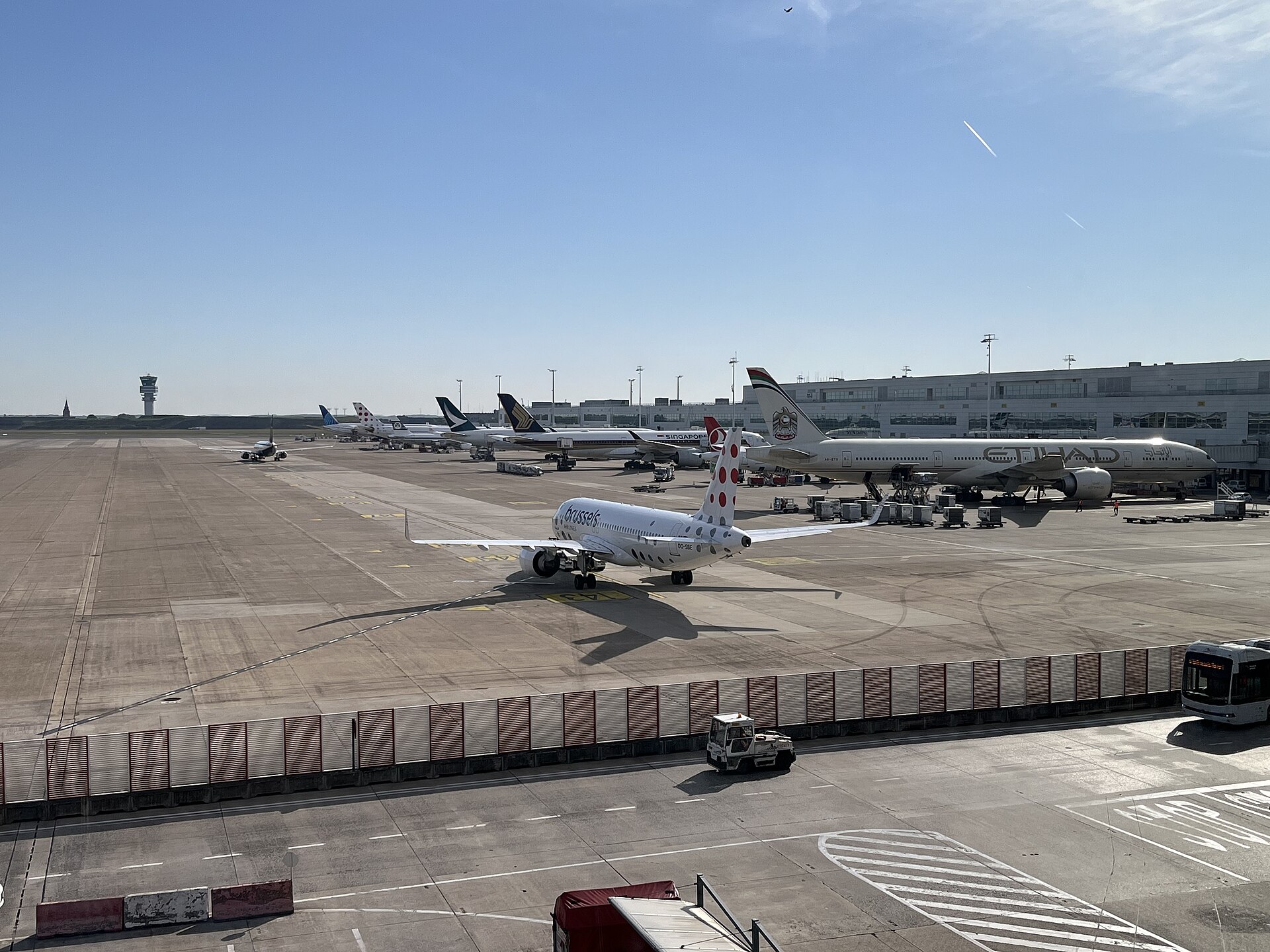
Aircraft at the piers at Brussels Airport: Brussels-Zaventem (BRU) – SN FR EY TK SQ CX EI UA – 2025-08-19 by Sjenghai, CC BY-SA 4.0, via Wikimedia Commons.
Brussels Airport railway platform: Brussels Airport train station 01 by Nenea hartia, CC BY-SA 4.0, via Wikimedia Commons.
Final Thoughts
Brussels Airport is a good airport, and its single best feature is one of geography rather than design: the trains run underneath it. That one fact removes the transfer anxiety that defines arriving at Charles de Gaulle or Stansted, and it means that the twelve kilometres between the runway and the Grand-Place are among the easiest in Europe to cross.
Learn three numbers and you will not go wrong here. Two hours for Schengen, three for everything else. €6.90 for the airport supplement on the train, in either direction, with no way around it. And €2.40 for the bus back out to the airport, against €7.90 for the same bus coming in — the one genuine piece of local knowledge this airport has to offer.