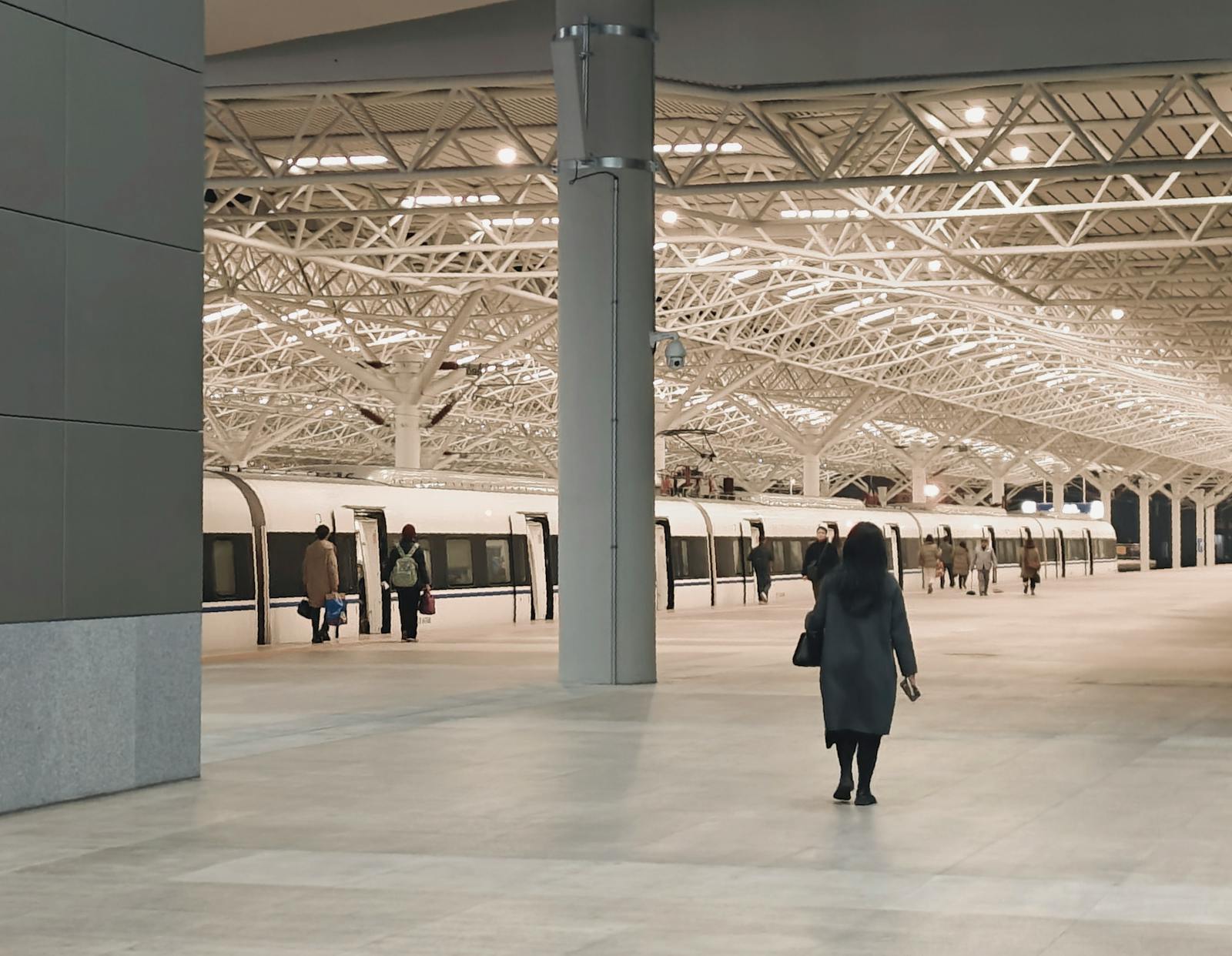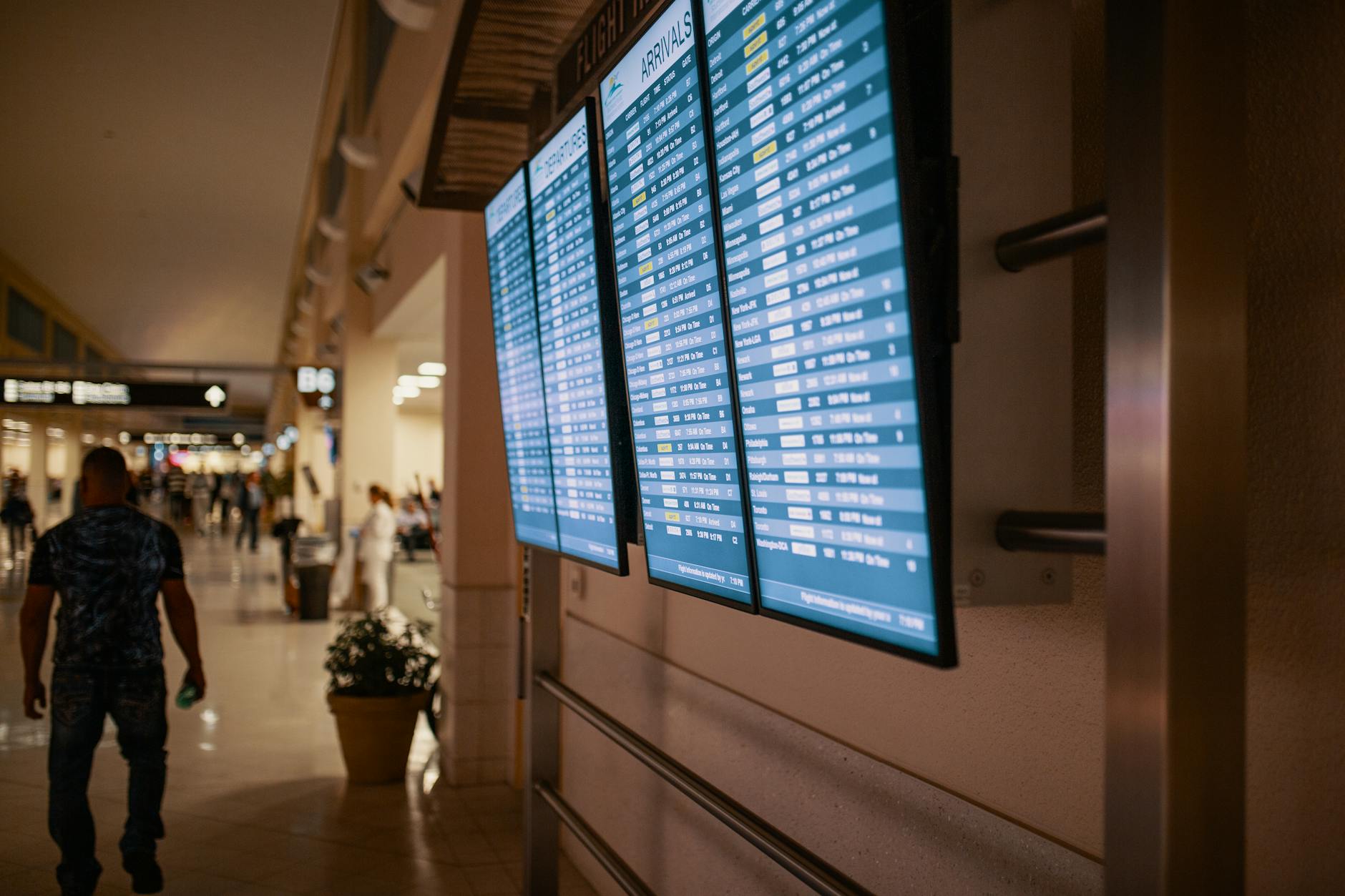
Brussels Airport is one of the easier big European airports to read, and the reason is architectural: there is only one of it. No shuttle bus between terminals, no wrong-building panic, no fifteen-minute walk you did not budget for because you landed at the satellite. The whole Brussels Airport terminal is a single stacked building at Zaventem, with the railway station in the basement, arrivals in the middle, departures on top and two piers running out towards the aircraft. Once you have the vertical layout in your head, the place stops being confusing almost immediately.
This guide covers the levels and what is on each, how check-in is organised, what security queues actually look like at different times of day, the difference between pier A and pier B and why it decides your walking distance, and how long to allow for a connection. Details were checked in September 2026 and are written for travel into 2027. Gate numbering and desk allocations do move, so treat the specifics here as orientation and follow the screens on the day.
Brussels Airport at a Glance
| What | Where | Worth knowing |
|---|---|---|
| Departures hall | Level 3 | Check-in desks, bag drop, security entrances |
| Arrivals hall | Below departures | Baggage reclaim, car hire, meeting point |
| Railway station | Level -1, directly under the terminal | 5+ trains an hour to the city, 17–23 min |
| Buses, taxis, lockers | Level 0, outside | 24-hour self-service lockers by the arrivals exit |
| Pier A | Schengen, gates A1–A60 | Plus the T-zone, T61–T72, at the far end |
| Pier B | Non-Schengen | Passport control before you reach it |
| Advised arrival | 2h Schengen / 3h non-Schengen | Longer on a summer weekday morning |
One Terminal, Several Levels
Everything at Brussels Airport happens in one building, and the levels do the work that separate terminals do elsewhere. Getting this straight before you arrive saves more time than any other piece of preparation.
Level 3 — Departures
The departures hall is the top level and the one you want on the way out. Trains and buses arrive below it, so if you come in by rail you will take a lift or escalator up two or three floors. There is a single long hall with the check-in desks along one side, security entrances behind them, and the usual ranks of self-service kiosks and automated bag-drop machines. It is bright, it is legible, and it is well signed in four languages.
Arrivals
Arrivals sits below departures: baggage reclaim, the customs channels, the car hire desks and the meeting point. If you are picking someone up, this is the level to wait on — not departures, which is a common and irritating mistake because the two halls are not directly connected by a short walk at the point most people are standing.
Level -1 — the railway station
The station is directly underneath the terminal, which is a genuine luxury and something Charleroi conspicuously lacks. Six direct trains an hour run into the city: about 11 minutes to Brussels-Nord/Noordstation, 18 to Brussels-Central and 23 to Brussels-Midi/Zuid. Tickets cost much more than an ordinary trip of that length, because the mandatory €6.90 Brussels Airport supplement is built into the fare. Buy from a machine or the app before you go down; the platform ticket queues are worse than the hall ones.
Level 0 — buses, taxis and the lockers
Outside at ground level you will find the bus stops, the taxi rank and the airport’s self-service luggage lockers, which run 24 hours and are landside, so you do not need a boarding pass to use them. STIB bus 12 links the airport with Schuman and Luxembourg, and it runs on Saturdays too. Note the asymmetry that catches everyone out: the airport-to-city fare carries a surcharge and costs around €7.90 contactless, while city-to-airport on the same bus is the normal €2.40.
Check-In: Zones, Rows and Bag Drop
Check-in is organised into numbered zones and rows rather than by airline alliance, and which desk you want changes with the season and even the day. The broad picture: Zone 1 covers desks 1 to 10 and Zone 2 covers desks 11, 12 and 14. The screens in the hall tell you which row your flight is using, and they are the only source worth trusting.
Most airlines here now push you towards self-service. You check in online, print or scan a bag tag at a kiosk, attach it yourself and drop the bag at an automated belt. It is quick when it works and maddening when the tag printer jams and there is one staff member covering twelve machines. If you are travelling with a pushchair, sports equipment, an instrument or anything the machines will not take, look for the oversize baggage desk rather than joining the standard queue and discovering the problem at the front.
A practical note on timing: for a Schengen flight, two hours before departure is the airport’s own advice and is generous outside the peaks. For a non-Schengen departure, three hours is not padding — you have security and an outbound passport check to clear, and the walk to the far end of a pier is longer than it looks from the map.
Security: How Long It Really Takes
The honest answer is that Brussels Airport security is usually fast and occasionally awful, and the difference is almost entirely the clock. Off-peak, five to ten minutes is normal and people routinely walk straight through. At peak, the queue snakes back into the hall.
The peaks
Two blocks are consistently the worst: 06:00 to 09:00 and 16:00 to 19:00. The morning peak is the more punishing of the two, and the 05:00–08:00 window on a summer weekday is the single hardest slot in the timetable, because the short-haul European wave and the outbound long-haul departures overlap. If your flight is at 07:30 in July, do not treat two hours as comfortable. If your flight is at 13:00 in November, two hours is more than you need.
Fast Lane and how to skip the queue
There is a paid Fast Lane, whose entrance in the departures hall lines up roughly with check-in rows 1 to 3. It is sold on the airport website and included with some business fares and frequent-flyer tiers. It is a genuinely useful €10-to-€20-ish purchase on a summer Monday at 06:30 and a complete waste of money on a Tuesday afternoon in February. Buy it for the peak, not as a reflex.
Security filters run long hours — roughly 03:30 to 01:00 on the pier A side — which matters if you have an early departure or are arriving on the last wave of the night.
Passport formalities
If you are leaving the Schengen area, you clear an exit passport check before pier B, and biometric registration requirements at the Schengen external border have been changing. Allow more time than you would have a few years ago for a non-Schengen departure or arrival, and check the current position with your airline before you travel rather than assuming it is the same as your last trip.
Pier A, Pier B and the T-Zone
The two piers are the part of the layout that actually affects your day, because they decide how far you walk and whether you meet a passport officer.
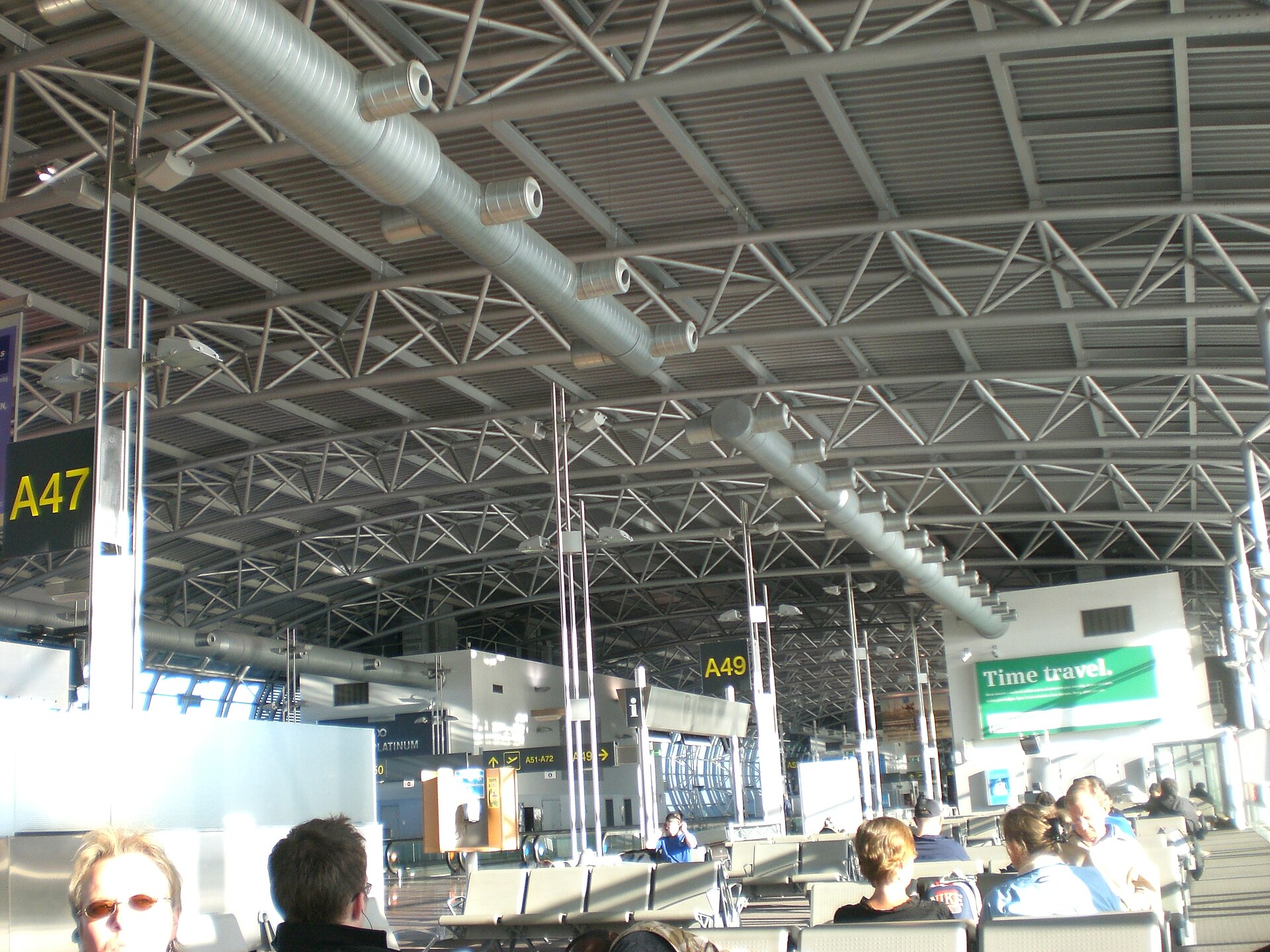
- Pier A handles Schengen flights, with gates running from A1 up into the fifties. It is the newer of the two, with a light barrel-vaulted roof and the better share of the seating.
- The T-zone, gates roughly T61 to T72, sits at the far end of pier A and handles Brussels Airlines’ African network and the daily service to New York JFK. It is a long walk from the security filter — allow twenty minutes from the top of pier A, more with children or a mobility issue.
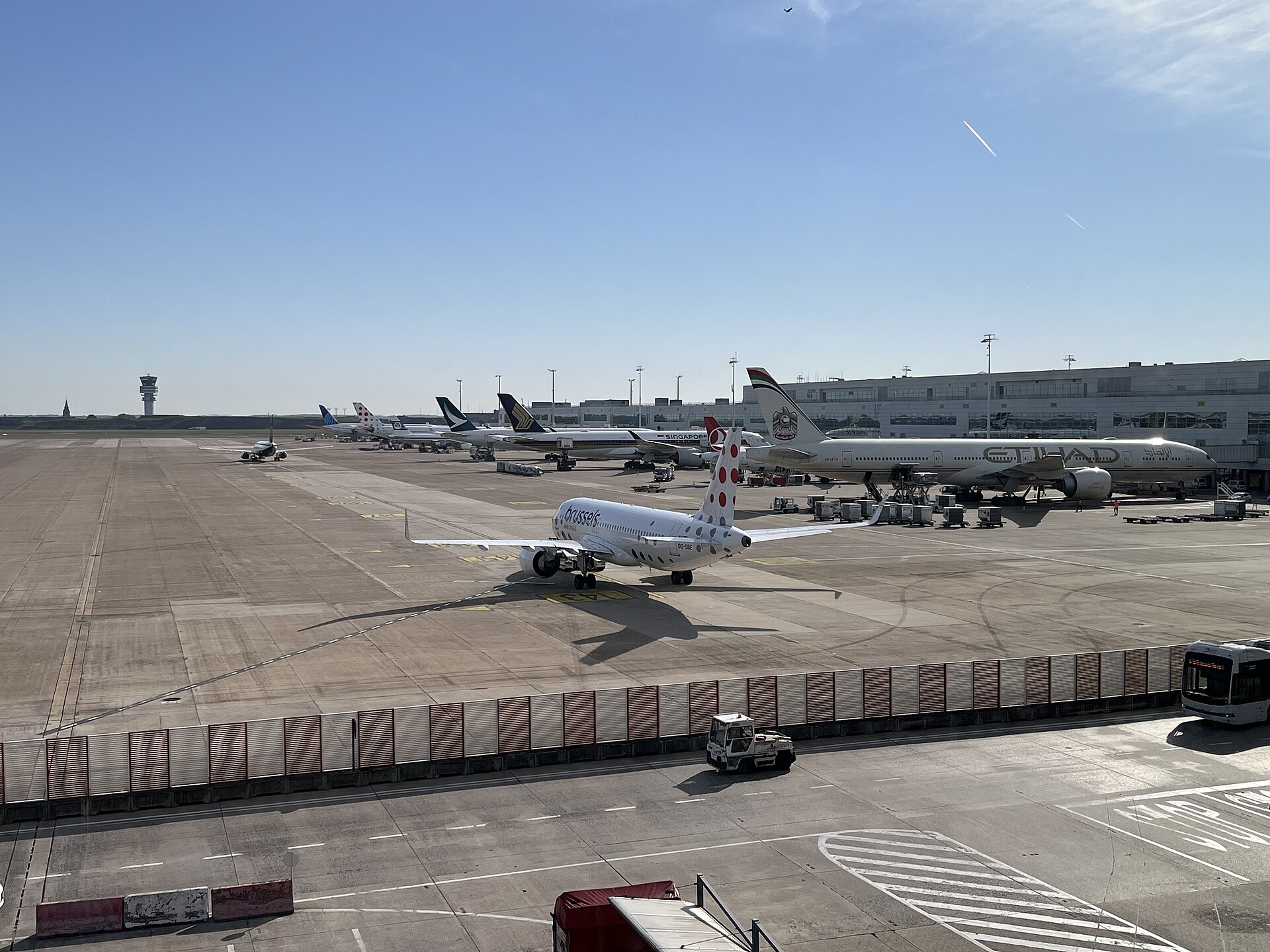
- Pier B is the non-Schengen pier. You clear passport control on the way to it. This is where the wide-body traffic sits, so it is where you will end up for the Gulf carriers, the Asian long-haul services and anything to the UK.
An above-ground connector building joins the two piers, which is what makes transfers here manageable rather than desperate. It is also the reason a Schengen-to-non-Schengen connection is not the disaster it can be at airports where the two are in separate buildings.
Connecting at Brussels Airport
Brussels Airlines runs a proper hub operation here, and the airport is built for transfers. The practical minimums, in rough terms:
- Schengen to Schengen — you stay airside within pier A. Comfortable at around 45 minutes if your bags are checked through.
- Schengen to non-Schengen — through the connector and an exit passport check. Allow an hour.
- Non-Schengen to Schengen — you clear entry passport control on arrival, which is the step most likely to run long. Allow an hour and a quarter, more at peak.
- Anything on separate tickets — you leave, reclaim your bag, re-check and go through security again. Allow three hours and accept that no one owes you a rebooking if it fails.
If your connection is long enough to leave the airport — four hours or more, realistically — the city is genuinely reachable and worth the trip. Our Brussels layover guide does the go/no-go arithmetic by the hour, and if you want to travel in without your bag, luggage storage in Brussels covers the airport lockers and the city alternatives.
Eating, Shopping and Waiting
Airside at Brussels Airport is comfortable and expensive, which is not a surprise but is worth planning around. There is a decent spread of cafés and bars, the usual duty-free hall, a Belgian chocolate presence that is much bigger than the local demand justifies, and a set of paid lounges available to buy into if you are not entitled to one.
The honest verdict on the chocolate: the airport shops are convenient and the prices are noticeably higher than in town. If you want to bring good chocolate home, buy it in the city the day before — our guide to the best chocolate shops in Brussels is a better use of thirty minutes than the departures hall, and the same applies to beer, where a supermarket or a specialist shop will beat the airport on both price and range. See Brussels beer shops for where to look.
If you are stuck for hours and the lounges are full, the far end of pier A and the T-zone are consistently quieter than the middle of the pier, simply because fewer flights board from there at any one time.

Arrivals: What Happens After You Land
Arriving is straightforward. Off the aircraft, follow the signs for baggage reclaim; if you have come from outside Schengen you clear passport control first. Belgian customs run the usual green and red channels and are visible rather than intrusive. Baggage delivery is generally quick by European standards, though a wide-body arrival at the same moment as three narrow-bodies will slow the belts.
Once you are through, the decision is transport, and the default answer is the train. The station is signposted from the arrivals hall and is two levels down. It runs from very early to around midnight; outside those hours you are looking at a metered taxi, which averages about €50 between the airport and the city centre, or a pre-booked transfer. Our guide to getting from Brussels Airport to the city centre compares the train, the bus and the taxi properly, including which one makes sense with luggage and children.
If You Are Flying From Charleroi Instead
None of the above applies at Brussels South Charleroi (CRL), which is a different airport 46 km away with a different character: low-cost carriers, walk-out stands rather than air bridges, and an airport that tells you plainly to arrive three hours before departure at peak. It has no railway station of its own. If your booking says “Brussels South”, read our Charleroi Airport guide and Charleroi Airport to Brussels instead — the Flibco shuttle from Brussels-Midi takes 55 to 60 minutes and needs booking ahead to get the good fare.
Common Mistakes
- Waiting on the wrong level. Meeting someone off a flight means arrivals, not departures. Agree the level, not just the airport.
- Treating two hours as universal. It is fine at 13:00 in February and tight at 07:00 in July. Match the buffer to the peak, not to a rule of thumb.
- Underestimating the T-zone walk. A gate in the T60s is a long way from security. If you are boarding for Africa or New York, start moving earlier than the screens suggest.
- Buying the bus ticket at the wrong end. Airport to city on bus 12/21 carries a surcharge; city to airport does not. Same bus, very different price.
- Leaving souvenir shopping to the airport. The chocolate and beer are better and cheaper in the city, and you have already paid for the bag allowance.
- Assuming a separate-ticket connection is protected. It is not. Two bookings means two contracts and a missed connection is your problem.
Related Brussels Guides
- Brussels Airport Guide — the wider picture: airlines, facilities and arrival practicalities.
- Brussels Airport to the City Centre — train, bus and taxi compared, with fares.
- Brussels Layover Guide — whether your connection is long enough to leave the airport.
- Luggage Storage in Brussels — airport lockers, station lockers and city bag drops.
- Hotels Near Brussels Airport — for very early departures and long misconnections.
- Charleroi Airport Guide — the other “Brussels” airport, and why it is nothing like this one.
- How to Get to Brussels — flying, rail and road options from across Europe.
Useful Resources
- brusselsairport.be — live departures, current security wait times, Fast Lane sales, terminal maps and lounge booking.
- belgiantrain.be — airport train times and fares, including the Brussels Airport supplement.
- stib-mivb.be — bus 12 and 21 timetables and the city fare structure.
- Your airline’s app — the single most reliable source for which check-in row and which gate, and it will update before the hall screens do.
Frequently Asked Questions
How many terminals does Brussels Airport have?
One. Everything happens in a single building at Zaventem, arranged over several levels — departures at the top, arrivals below, the railway station in the basement and buses, taxis and lockers outside at ground level. The two piers, A and B, are extensions of the same building rather than separate terminals, and are joined by an above-ground connector.
What is the difference between Pier A and Pier B?
Pier A serves Schengen destinations, with gates numbered from A1 upwards, plus the T-zone at its far end for Brussels Airlines’ African routes and the daily New York JFK service. Pier B serves non-Schengen destinations, and you clear passport control on the way there. Most long-haul wide-bodies use pier B.
How early should I arrive at Brussels Airport?
Two hours for a Schengen flight and three hours for a non-Schengen or intercontinental one is the airport’s own advice. Add to that if you are flying between 06:00 and 09:00 or between 16:00 and 19:00, and particularly on summer weekday mornings, when security queues are at their longest.
How long are security queues at Brussels Airport?
Off-peak, often under ten minutes. At the morning and late-afternoon peaks it can run considerably longer. The airport publishes live wait times on its website, which is worth checking before you leave your hotel. A paid Fast Lane is available and is genuinely worth buying for a peak-hour departure.
Is there a train station inside Brussels Airport?
Yes — it is directly beneath the terminal at level -1, with six direct trains an hour into Brussels. Journey time to Brussels-Central is about 18 minutes and the ticket includes a mandatory €6.90 airport supplement, which makes it much dearer than an ordinary trip of that length. Trains continue to Brussels-Midi/Zuid and Brussels-Nord/Noordstation.
What is the minimum connection time at Brussels Airport?
Around 45 minutes for a Schengen-to-Schengen connection on a single ticket, an hour if you cross between the Schengen and non-Schengen sides, and an hour and a quarter or more if you are arriving from outside Schengen and need to clear entry passport control. On separate tickets, allow three hours — you will have to reclaim your bag and check in again.
Can I leave the airport during a layover?
Yes, and with four hours or more it is often worth it: the train reaches central Brussels in about twenty minutes and the historic core is walkable. Use the level 0 lockers rather than dragging your bag around, and work backwards from your boarding time rather than your departure time.
Photo Credits
-
Pier A departure gates: Brussels Airport Pier A by 012maximus345, CC BY 3.0, via Wikimedia Commons.
-
Long-haul aircraft at the non-Schengen stands: Brussels-Zaventem (BRU) — SN FR EY TK SQ CX EI UA — 2025-08-19 by Sjenghai, CC BY-SA 4.0, via Wikimedia Commons.
Final Thoughts
Brussels Airport rewards a small amount of preparation and punishes none. Learn the levels, check which pier your gate is on before you clear security, and set your arrival buffer by the hour of the day rather than by habit. Do those three things and the terminal becomes what it is designed to be: a straightforward, well-signed building you pass through rather than an obstacle you survive.
The one judgement call worth making deliberately is whether to leave the airport on a long connection. Brussels is unusually close to its main airport by European standards, and twenty minutes on a train is a low price for a few hours in one of the more interesting city centres on the continent. If the numbers work, go.