Ten minutes’ walk west of Brussels-Midi/Zuid, on a residential street in Anderlecht where nothing suggests anything of interest, there is a green-painted door with a small sign. Behind it is a brewery that has not fundamentally changed since 1900, that still ferments its beer using yeast blown in off the Senne valley, and that charges nine euros to let you walk round it on your own with three beers at the end. A Cantillon Brewery visit is the single best-value thing you can do in Brussels, and it is also the one most likely to be missed by people who spend their whole trip within four hundred metres of the Grand-Place.
This page covers the practical side — prices, the days it is open and the days it is not, the difference between the self-guided and guided visits, how to get there, what to expect inside and what to drink when you do. Prices and hours were checked against the brewery’s own site in September 2026; the closed days in particular change around Belgian public holidays, so confirm before you travel across the city.
The Essentials
| Detail | What to know |
|---|---|
| Address | Rue Gheude 56, 1070 Anderlecht (Brussels) |
| Self-guided visit | €9, about an hour, three tastings included |
| Guided visit | €13, 90 minutes, Saturdays only, three tastings |
| Under-16s | Free, on both formats |
| Open | Mon, Tue, Thu, Fri, Sat · 10:00–16:00 (shop to 17:00) |
| Closed | Wednesday, Sunday and all public holidays |
| Booking | Not needed for self-guided; mandatory online for Saturday guided tours |
| Groups | Over 10 people must book a private tour, two weeks ahead |
| Dogs | Not allowed inside |
The Two Ways to Visit
Self-guided, €9, weekdays
The standard visit. You pay at the counter, are handed a leaflet, and walk through the brewery yourself — the brewhouse, the mash tun, the coolship room, the barrel cellars — reading the signs at your own pace, in roughly an hour. Three beers are included, poured at the bar at the end.
No booking is needed and no one hurries you. This is deliberate: Cantillon’s view is that a working brewery explains itself if you look at it, and the leaflet does the rest. For most visitors this is the right choice, and not only on price. Being alone in a nineteenth-century barrel cellar with several hundred casks of beer quietly going about their business is the whole point, and a guide talking over it is a net loss.
Guided, €13, Saturdays only
Ninety minutes with a guide, the same three tastings, and online booking is mandatory — Saturdays sell out, particularly in the autumn and winter brewing season. Four extra euros for someone who can answer questions about blending ratios and barrel provenance is fair value if lambic genuinely interests you, and the guides at Cantillon are brewery staff rather than tour-company hires.
If you have never had a sour beer in your life, take the self-guided visit and save the money. If you have come to Brussels partly because of what happens in this building, book the Saturday.
What You Actually See
The brewhouse and the mash tun
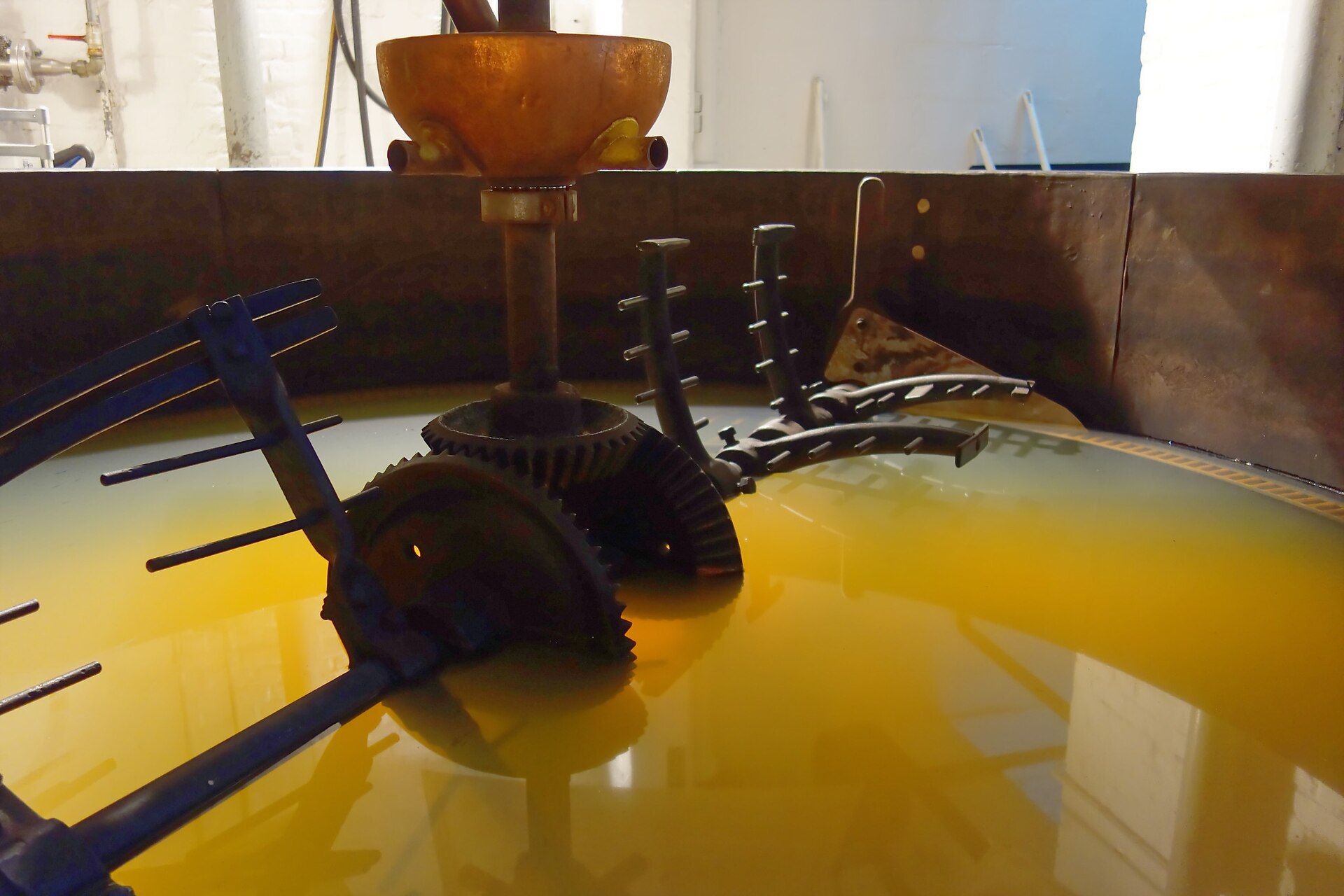
The first room holds the copper and the mash tun, where malted barley and unmalted wheat are steeped. The rakes turning slowly through cloudy gold wort are the most photographed thing in the building for a reason. Everything here is old, and much of it is original, because Cantillon has replaced equipment only when it has actually broken.
The coolship
Upstairs is the room that makes Cantillon different from every other brewery you will ever tour. The coolship — a wide, shallow open copper vessel — sits under a roof with louvres deliberately left open to the night air. Hot wort is pumped up here and left overnight, and while it cools, wild yeasts and bacteria drift in and begin fermenting it. Nobody adds yeast. Nobody can fully control what lands.
This is why lambic is a Brussels beer rather than a Belgian one: the microflora of the Senne valley is a real, local, physical thing, and brewers who have tried to replicate the process elsewhere get something else. It is also why the brewery only brews from roughly October to April — in summer the night air is too warm and carries the wrong organisms.
The barrel cellars
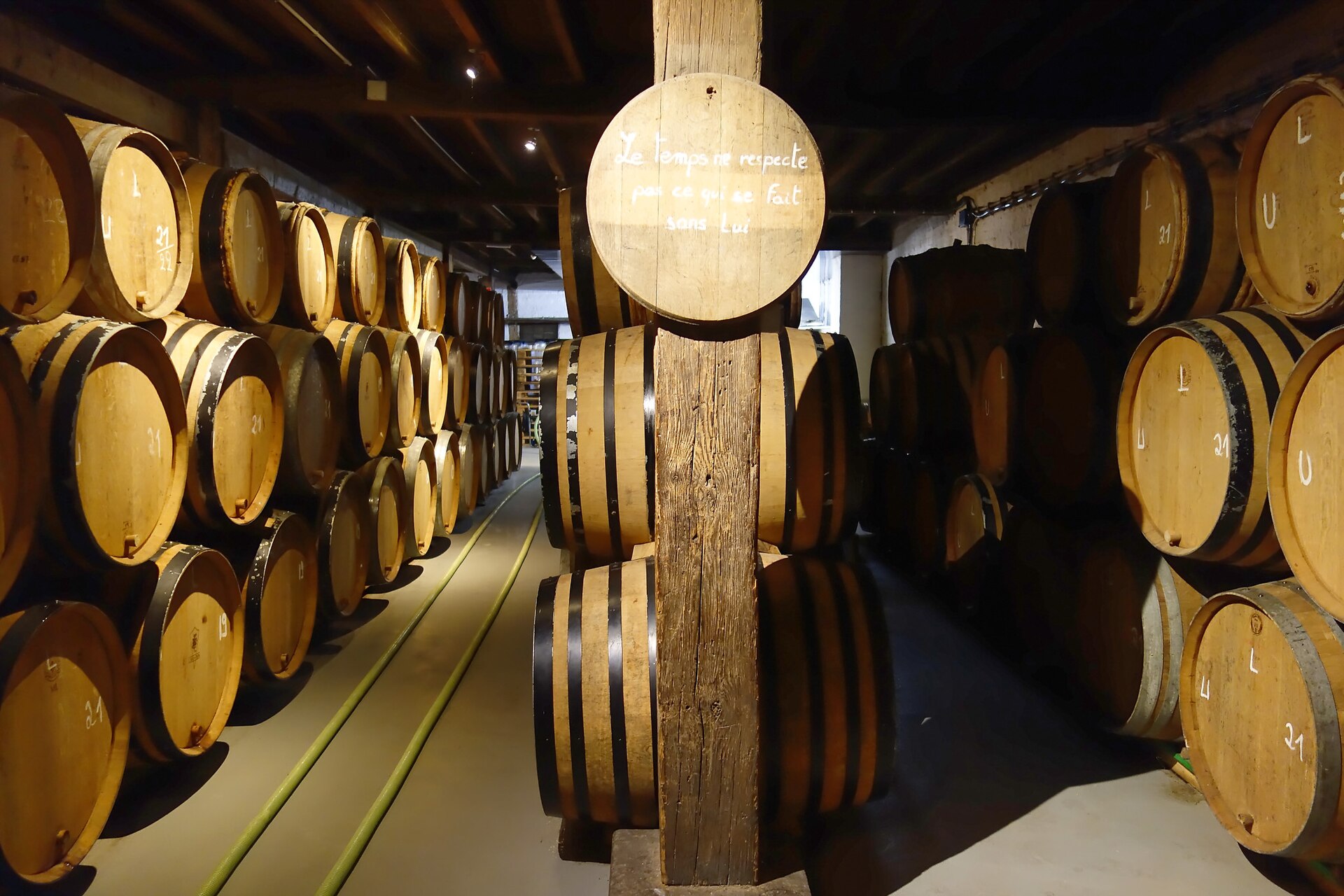
Then the casks: hundreds of reused wine, port and cognac barrels, stacked two and three high in long dim rows, each holding lambic of a particular age. Young lambic is one year old, old lambic two or three. Gueuze is a blend of the two, refermented in the bottle; kriek is lambic macerated on whole cherries; framboise on raspberries. The blender’s job — deciding which barrels go together — is the part of the process that is genuinely an art, and standing among the barrels is when that lands.
The Three Beers, and What to Order After
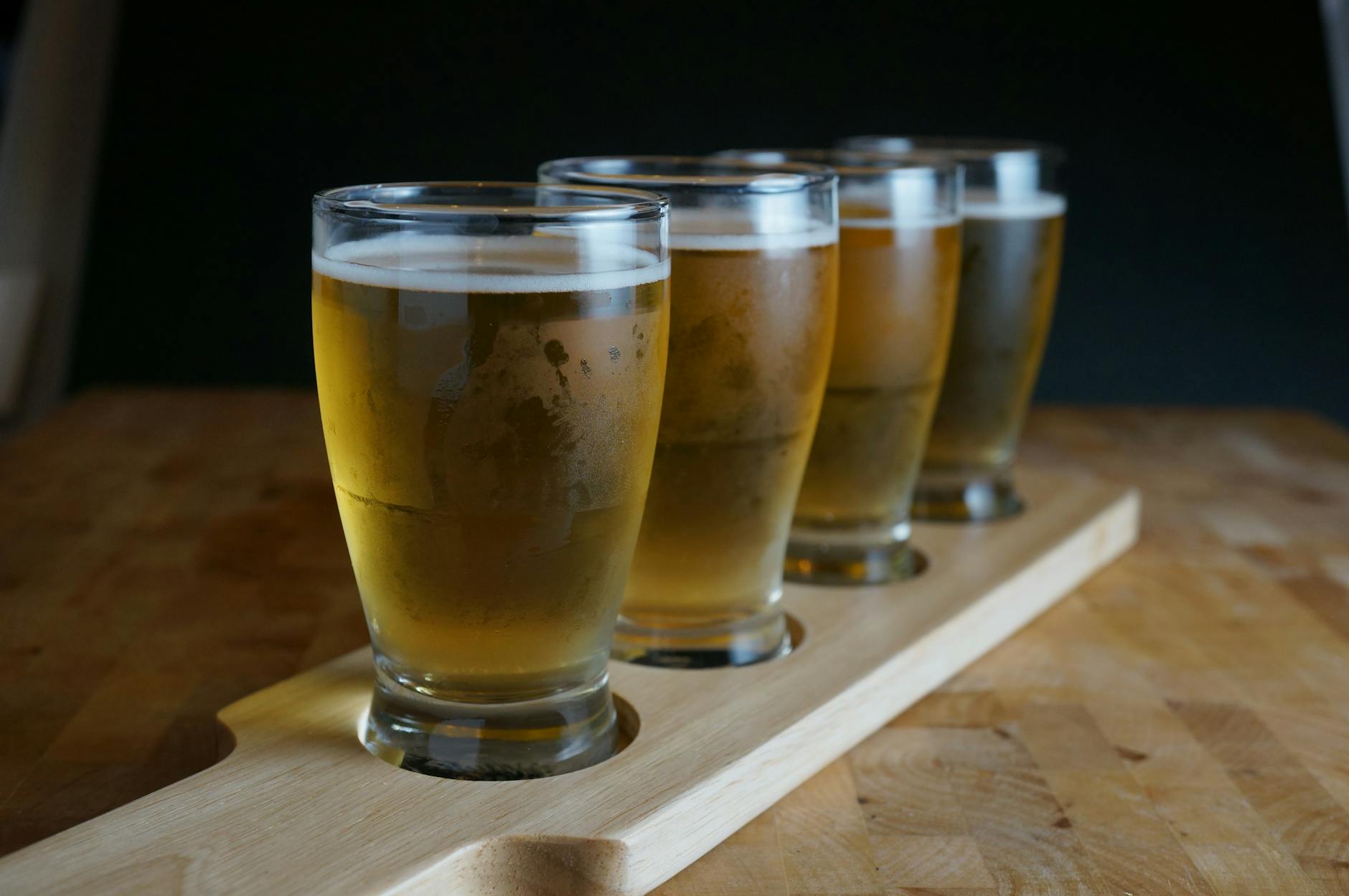
Your ticket includes three tastings, normally the Gueuze and two others depending on what is available. A rough order of operations for a first-timer:
- Gueuze first. Dry, sharply acidic, sparkling, more like a farmhouse cider or a very dry champagne than anything you would recognise as beer. It is the reference point for everything else.
- Kriek second. Whole cherries, no sugar — so it is emphatically not a sweet cherry beer. Tart, almondy from the stones, and the single best argument against the supermarket versions of the style.
- Faro or a fruit lambic third, if offered. Faro is lambic sweetened with candi sugar, and it is the gentlest thing in the building.
The upstairs bar sells special cuvées and single-barrel bottlings that are not distributed, and this is the only place many of them are available at all. If you buy one thing, buy something you cannot get at home rather than a standard Gueuze you could order in any decent bar; our Brussels beer shops guide covers where to buy the rest.
One honest warning: some people simply do not like this. Straight lambic is aggressively sour and it is not a taste most palates arrive with. If you try the Gueuze and recoil, ask for the sweetest thing they have and enjoy the building instead. Nobody will mind. What you should not do is book a €70 lambic-focused tour before finding out whether you like lambic.
Getting There
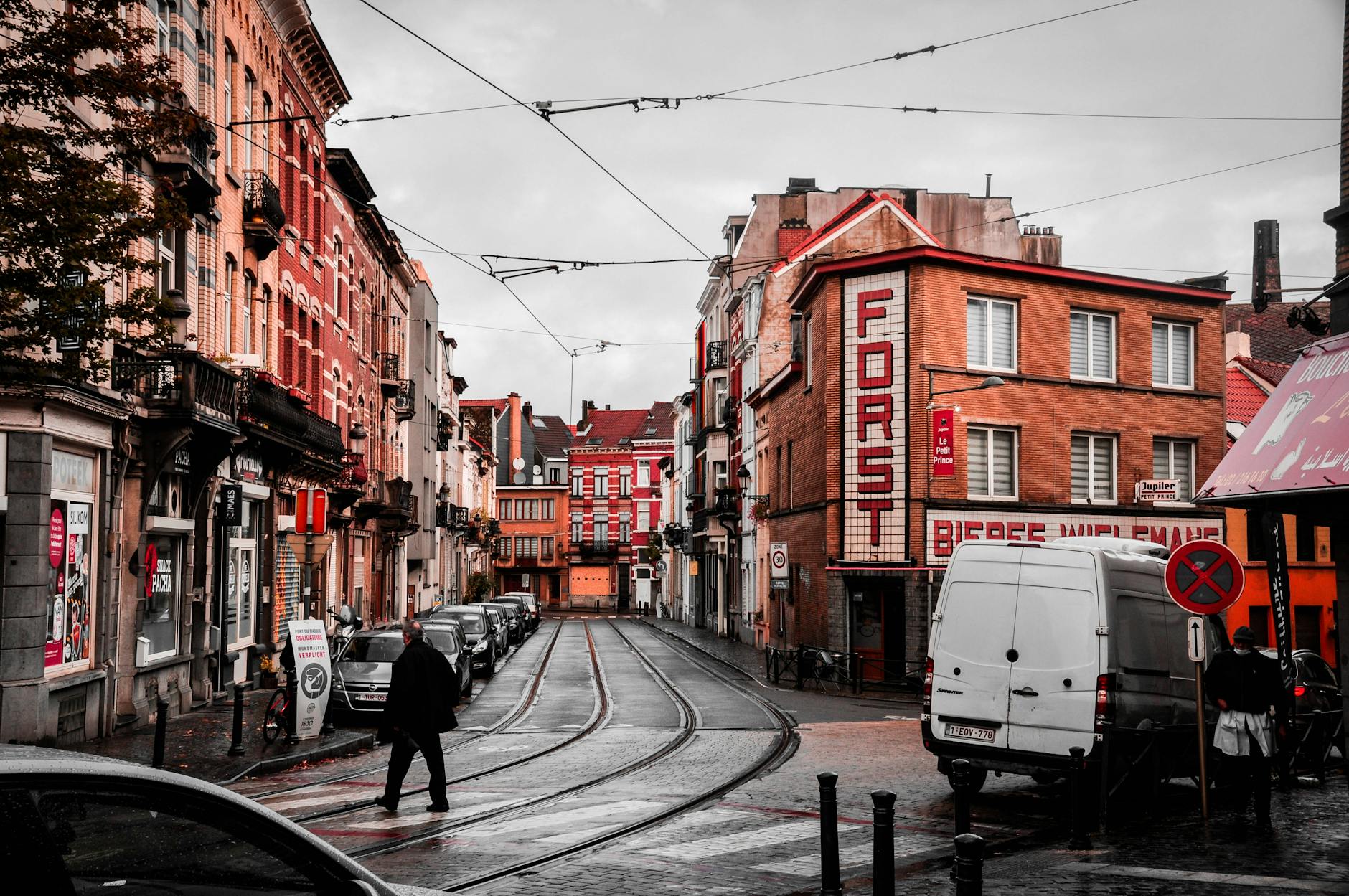
Rue Gheude sits in Cureghem, the part of Anderlecht immediately west of Brussels-Midi/Zuid, and the simplest approach is on foot from that station — roughly ten minutes, and easy enough with a map, though it is not a walk that signposts itself. The area is ordinary working Brussels rather than a tourist quarter: unremarkable, perfectly fine in daylight, and worth the usual sensible caution around the station itself, which is a known pickpocket spot.
Coming from the centre, take a train or the metro to Brussels-Midi/Zuid and walk, or use the metro and tram network as far as the Gare du Midi interchange. Our Brussels metro guide covers the lines, and the transport tickets guide explains the fares. A single STIB journey is a great deal cheaper than a taxi and the walk is flat.
Combine it with the Sunday market at Midi if you are here at a weekend — though remember Cantillon is closed on Sundays, so that is a market-then-something-else morning rather than a market-then-brewery one.
When to Go
- Brewing season, roughly October to April. If you want to see the plant actually working — steam, wort, the smell of hot grain — come in the colder months. Outside it, you see cold equipment and a lot of barrels, which is still worth nine euros but is a quieter experience.
- Weekday mornings are quietest. Arrive at opening and you may have the coolship room to yourself.
- Saturdays are busy and guided-only in practice. Book ahead if that is your only option.
- Public holidays close it. This catches people out constantly — Belgium has ten of them, and the brewery shuts for all of them plus a summer break.
- Last entry is 16:00, not closing time. The shop stays open until 17:00, but the visit does not.
Is It Suitable for Children?
Under-16s go free, which is generous, and older children who like machinery tend to enjoy the brewhouse. But it is a working industrial building with stairs, uneven floors, hoses across the ground and no attempt at child-proofing, and there is nothing interactive. A curious ten-year-old will have a good half-hour; a toddler will not. Our Brussels with kids guide has better options for the very young.
Related Brussels Guides
- Brussels Beer Tours and Brewery Visits — how Cantillon compares with every paid tour in the city.
- Belgian Beer Guide — lambic, gueuze, kriek and the rest of the styles explained.
- Craft Beer Bars in Brussels — where to drink lambic once you have decided you like it.
- Brussels Beer Shops — for taking bottles home properly.
- Brussels Hidden Gems — more of the city that sits outside the tourist rectangle.
- Unique Experiences in Brussels — the other things here that exist nowhere else.
- Brussels Tours and Experiences — the honest verdict on what is worth booking.
Useful Resources
- cantillon.be — the brewery’s own visit page carries the current prices, the Saturday booking form and, crucially, the list of exceptional closing days.
- [email protected] — for private group bookings, which need about two weeks’ notice.
- SNCB/NMBS and STIB/MIVB — for reaching Brussels-Midi/Zuid, from which it is a short walk.
- visit.brussels — for what else is open in Anderlecht on the day you go.
Frequently Asked Questions
How much does a Cantillon Brewery visit cost?
€9 for the self-guided visit on weekdays and €13 for the Saturday guided tour, both including three tastings. Under-16s are free on either format. Private group tours are €13 per person for groups over fifteen.
Do you need to book Cantillon in advance?
Not for the self-guided weekday visit — you pay at the door. Online booking is mandatory for the Saturday guided tours, and groups of more than ten must arrange a private visit roughly two weeks ahead.
When is Cantillon open?
Monday, Tuesday, Thursday, Friday and Saturday, 10:00 to 16:00, with the shop open until 17:00. It is closed on Wednesdays, Sundays, all Belgian public holidays and for a summer break, so check the exceptional closures on the brewery’s site before travelling.
How long does the visit take?
About an hour for the self-guided route and ninety minutes for the Saturday guided tour, tastings included. Allow a little longer if you plan to stay at the upstairs bar, which is where the special cuvées are.
How do you get to Cantillon from Brussels city centre?
Take a train or metro to Brussels-Midi/Zuid and walk about ten minutes west into Cureghem. It is flat, straightforward with a map, and considerably cheaper than a taxi. Rue Gheude 56, 1070 Anderlecht.
Is Cantillon worth visiting if you do not like sour beer?
Yes, for the building — but manage expectations. It is a working brewery of a type that barely exists any more, and the coolship room alone justifies the ticket. If the Gueuze is too much, ask for the faro or a fruit lambic, both of which are far gentler.
Can you see the brewing in action?
Only in the colder months. Cantillon brews roughly October to April, because spontaneous fermentation depends on cold night air. Outside that window the equipment is idle, though the cellars are full year-round.
Is the Gueuze Museum the same as the brewery?
Yes — Cantillon operates as a working brewery and a museum of gueuze at the same address, which is exactly what makes the visit unusual. You are not looking at a reconstruction.
Photo Credits
The barrel cellar at Cantillon: Brasserie Cantillon 10 by Abujoy, CC BY 4.0, via Wikimedia Commons.
The mash tun at Cantillon: Brasserie Cantillon 03 by Abujoy, CC BY 4.0, via Wikimedia Commons.
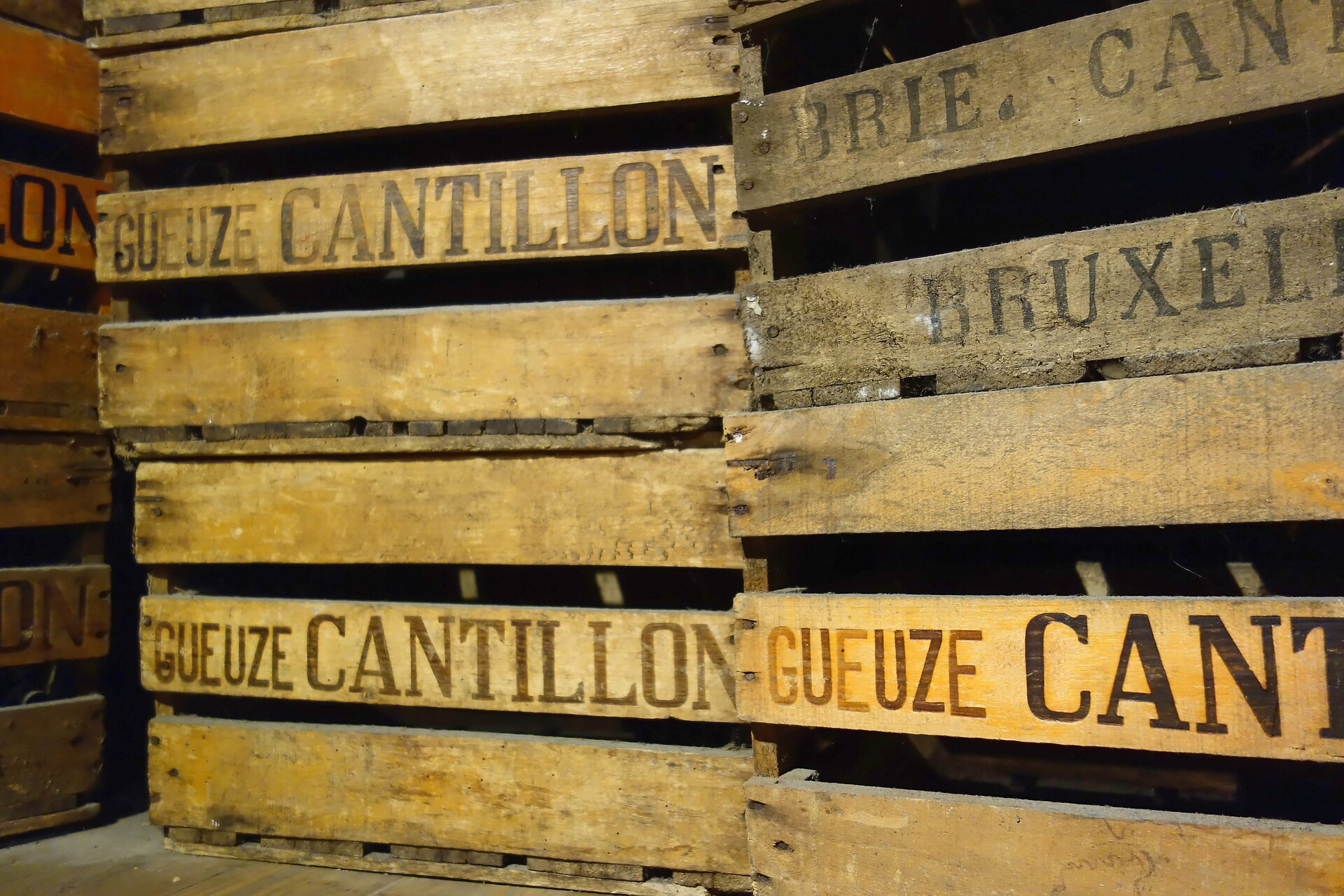
Gueuze Cantillon delivery crates: Brasserie Cantillon 07 by Abujoy, CC BY 4.0, via Wikimedia Commons.
Final Thoughts
Almost everything about Cantillon runs against how attractions normally work. There is no timed entry, no queue management, no app, no gift shop worth the name, no attempt to be impressive. The signage is functional. The floors are wet. The family who own it are usually somewhere in the building doing something more important than talking to you.
That is precisely why it works. You are not being shown a brewery; you are being allowed into one, on the understanding that you will look where you are going and not touch the barrels. For nine euros, in a European capital, in the year 2027, that is close to unheard of. Go on a cold weekday morning while they are actually brewing, take the self-guided route, and stay for a second beer upstairs afterwards. It is the best thing in Brussels that nobody puts on a postcard.