Most cities’ parades celebrate something old. Brussels’ Zinneke celebrates the city as it is now: a tangle of neighbourhoods, languages and backgrounds that do not always mix, brought together for one afternoon in costumes they spent months making themselves. The Zinneke Parade has no floats with engines and no sponsors’ trucks, just residents by the thousand walking, dancing and drumming through the centre, and it is one of the most likeable things the city does.
The catch for visitors is the timing. Zinneke runs every two years, in even-numbered years, and the most recent edition was on 30 May 2026. There is no parade in 2027; the next one is in 2028. This guide explains what Zinneke is and how to see the 2028 edition, then sets out the rest of the Brussels folklore calendar that you can catch in 2027, from Manneken Pis in costume to the Meyboom and the students’ Saint-Verhaegen. Details were checked in November 2026 against the City of Brussels and the organisers’ own sites.
Zinneke at a Glance
| What | Details |
|---|---|
| Next edition | 2028 (check zinneke.org for the date and theme) |
| Last edition | Saturday 30 May 2026, from 15:00, the 14th parade |
| How often | Every two years, in even-numbered years |
| Where | The city centre; in 2026 between the Bourse and the Grand-Place via the Halles Saint-Géry |
| Cost | Free |
| 2026 theme | “Dream” |
| House rules | Human-powered: no motorised vehicles |
What the Zinneke Parade Is
Zinneke started in 2000, when Brussels was one of the European Capitals of Culture, and the first parade took place on 27 May that year. The idea was to build a parade from the bottom up, with the city’s own districts making it rather than watching it, and it has kept going on a two-year cycle since then.
The name is pure Brussels. A zinneke is a mongrel, a dog of no particular breed. The word comes from the stray dogs that hung around the banks of the Lesser Senne, the branch of the river that once ran through the city before it was covered over. Calling yourself a zinneke in Brussels means being a bit of everything, which is the point: the parade’s mascot is a mixed-up city.
Zinnodes: how a parade gets made
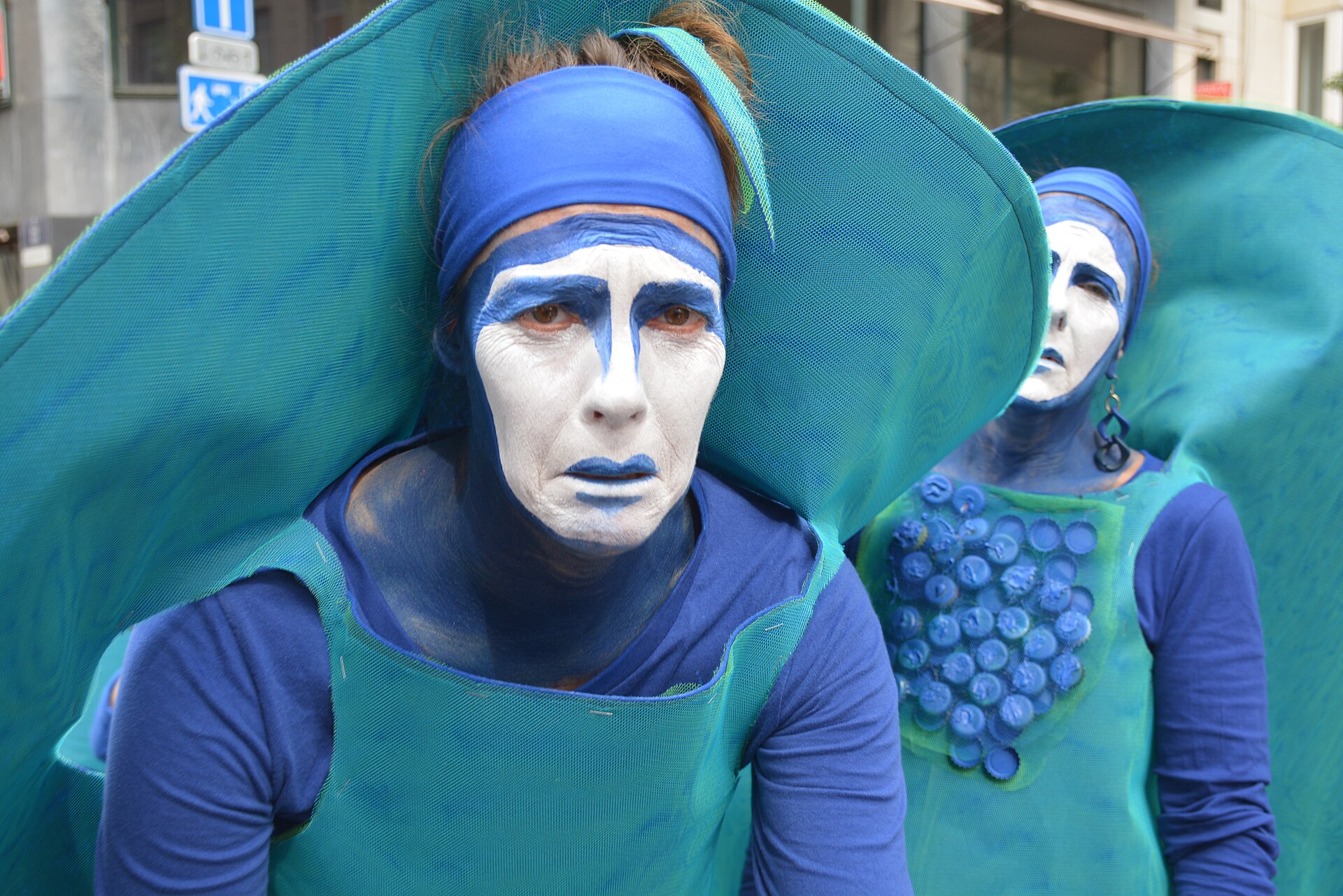
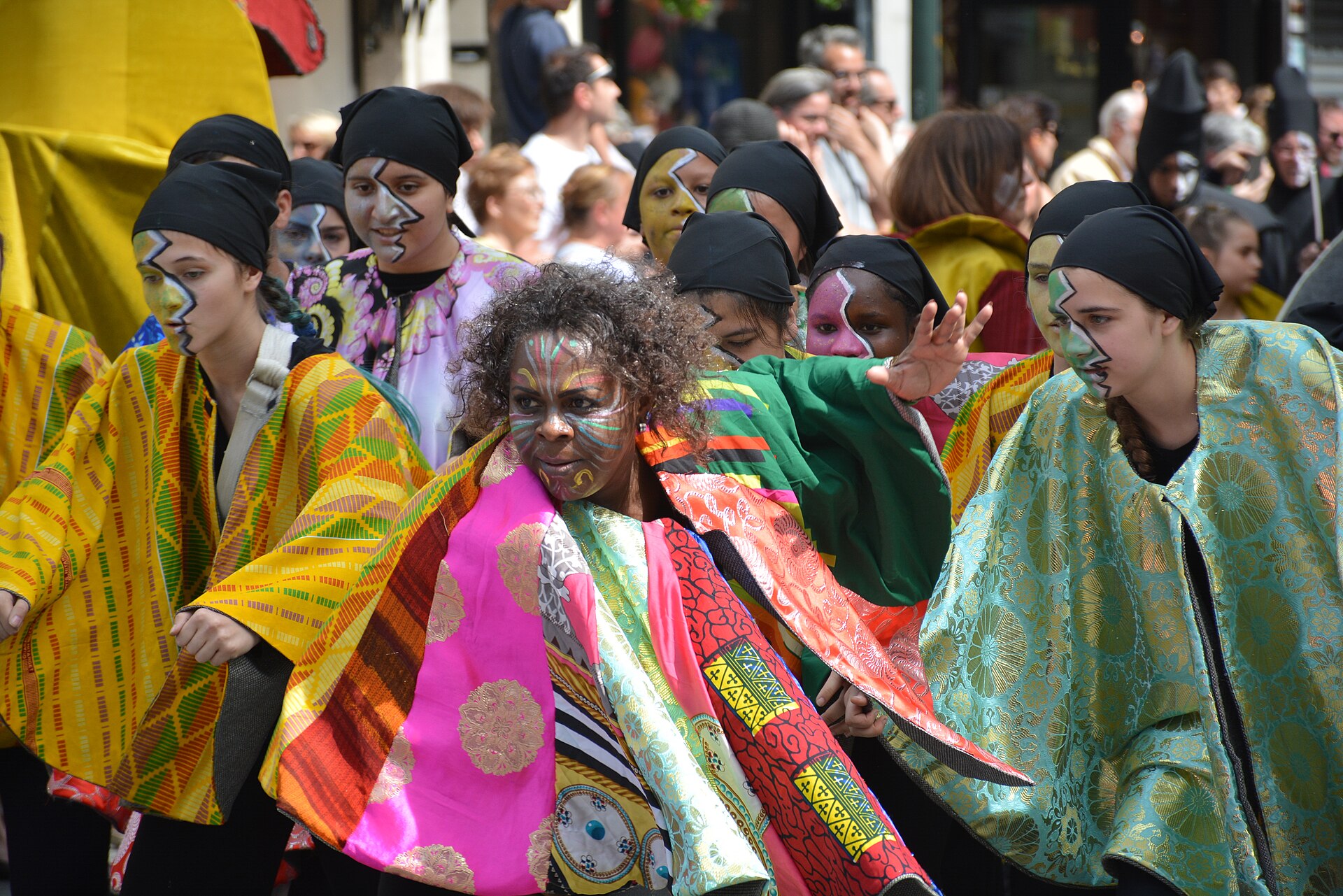
The building blocks of the parade are the zinnodes. Each one is a group of residents, local associations, schools and artists who make their own costumes, music and choreography together around a shared theme. Zinneke’s coordinator told VRT that groups start preparing around September and the workshops run from January, so a zinnode is the better part of a year’s work for the people in it.
The theme itself is put to a public vote, which starts on the day of the previous parade, so it is not dreamt up in an office. The 2026 theme was “Dream”; 2024’s was “Plaizir”. Every zinnode interprets it in its own way, which is why one group might come as cardboard robots and the next as a brass band in paper dresses.
The “100% human” rule
What makes Zinneke look and sound different from a carnival is its rule that everything moves by human power. There are no lorries and no motorised floats; if something is big, people push or carry it. The result is slower, quieter and much more intimate than a typical city parade.
The 2026 Parade, and Why It Was Smaller
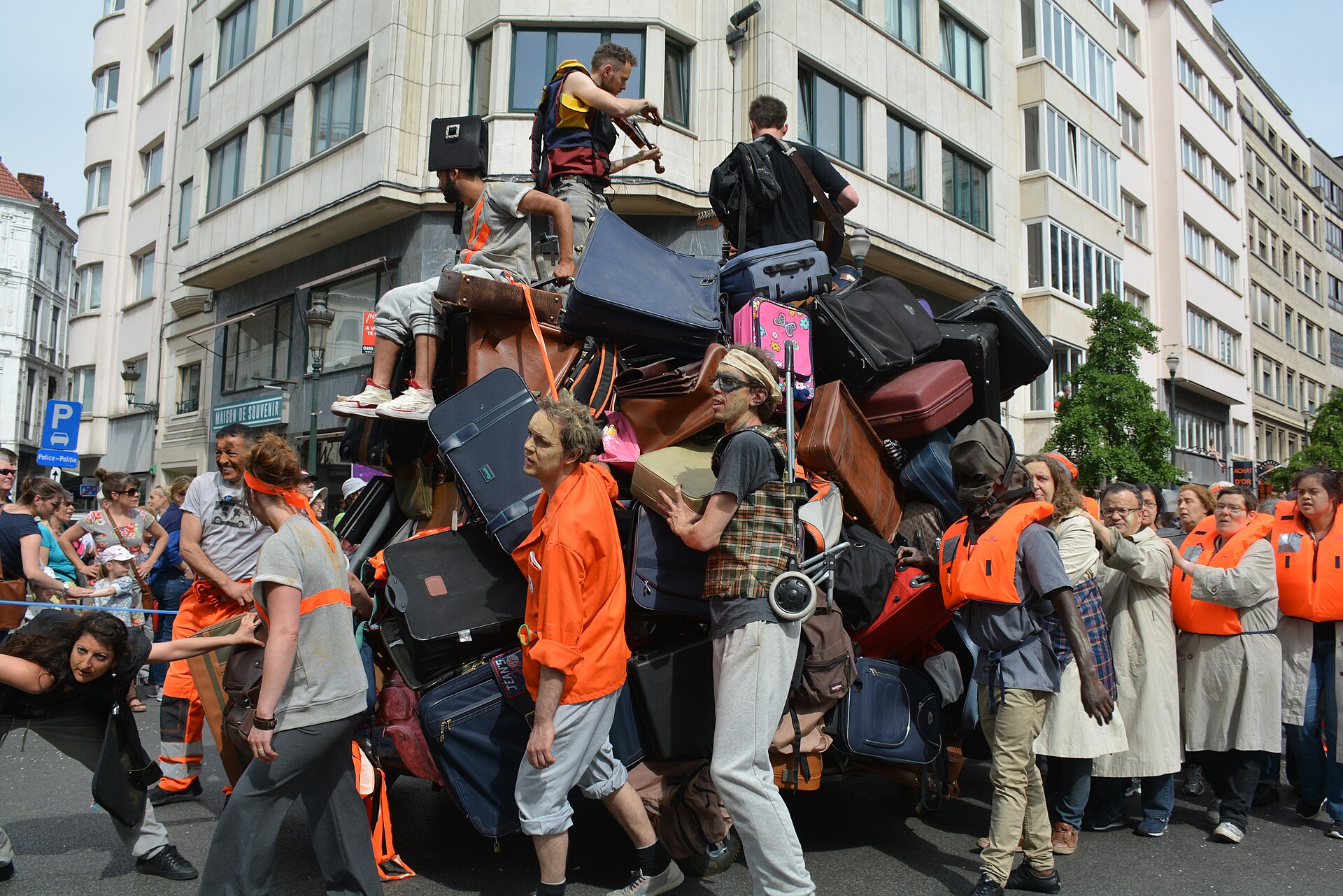
The 14th parade went ahead on Saturday 30 May 2026 at 15:00, on the theme “Dream”. According to La Libre’s report, it set off from the Bourse, passed by the Halles Saint-Géry and reached the Grand-Place, with the parade ending at the Place de la Bourse around 17:00. Each zinnode’s show lasts about fifteen minutes and is repeated along the way during a parade of around two hours, so wherever you stand you can catch the groups’ shows.
It was a smaller parade than planned: fewer zinnodes than the 20 the organisers had hoped for. In autumn 2025 there was real doubt over the regional subsidy that makes up 35 to 40% of Zinneke’s budget, and preparation went ahead under that cloud until the region’s policy statement settled the question in early 2026. The organisers hope to be back to 20 zinnodes from 2028, funding permitting.
Numbers for the parade vary with the source. La Libre’s headline put the 2026 parade at about 1,500 participants, while Zinneke’s coordinator told VRT that around 2,000 Brussels residents take part. Either way, it is a parade of locals, not professionals.
Zinneke 2028: How to Watch
Zinneke has said it will announce the 2028 date and theme at its Fiesta on 11 December 2026; check zinneke.org. The two most recent parades were held on Saturday afternoons at the turn of May and June (1 June 2024 and 30 May 2026). Once the date is out, here is how to make the most of it:
- It is free and unticketed. Just turn up along the route; check zinneke.org for the 2028 route nearer the date.
- Get there early. The streets around the Bourse and the Grand-Place fill up fast. A spot along the route away from the start and finish is usually easier.
- Stay in one place. Because each zinnode repeats its show along the way, you can see much of the parade from one spot. Wandering against the flow is hard work and gains you little.
- Bring children. It is one of the most family-friendly events in the city: no engines, and lots of costumes at child height.
- Weather. Late May and early June in Brussels can be anything from warm sunshine to steady drizzle; Uccle averages 14.7 days with some rain in May (1991–2020). A light waterproof is worth carrying.
Pair a parade weekend with the rest of the late-spring calendar; our Brussels in May guide covers what else is on.
Taking part
Zinneke is built by residents, and zinnodes bring together residents, associations, schools and artists. If you are moving to the city or already live there, check zinneke.org for the calls for participants and the workshop schedule, which start months before the parade.
The Brussels Folklore Calendar for 2027
No Zinneke in 2027 does not mean a quiet year. Brussels has a calendar of smaller, older and often stranger traditions, and several of them happen on fixed dates you can plan around.
| When | What | Where |
|---|---|---|
| Year-round, on fixed dates | Manneken Pis in costume | Rue de l’Étuve / Rue du Chêne |
| Year-round except January | Toone puppet theatre | Impasse Sainte-Pétronille, off the Rue du Marché aux Herbes |
| Spring (2026: 17 April–10 May) | Royal Greenhouses of Laeken open to the public | Laeken |
| Early July (check ommegang.be for 2027) | Ommegang | Sablon and Grand-Place |
| 9 August (Monday in 2027) | Meyboom | Rue des Sables / Rue du Marais |
| 20 November (Saturday in 2027) | Saint-Verhaegen | Sablon to the Bourse |
Manneken Pis in costume
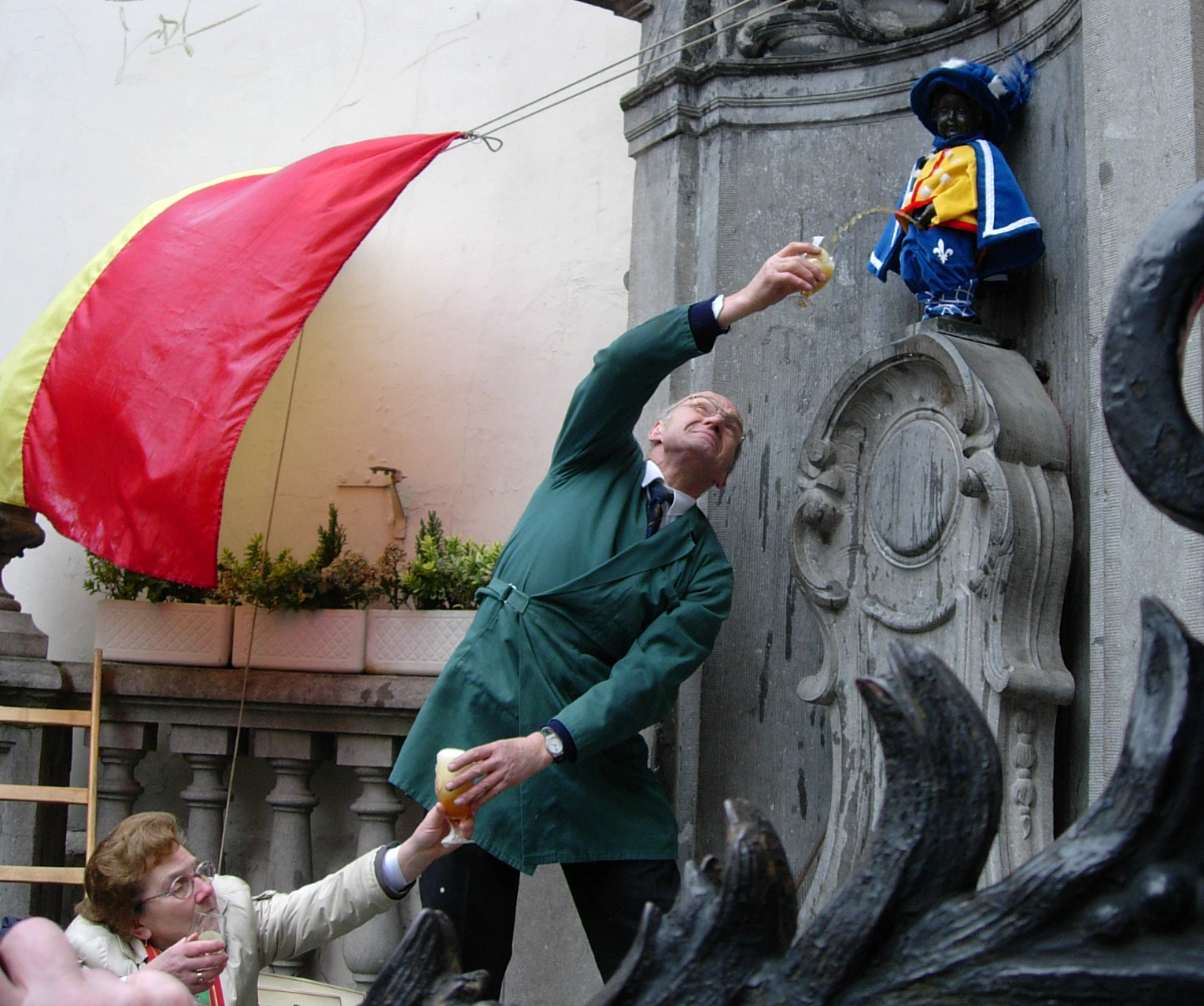
The little bronze boy on the corner of the Rue de l’Étuve and the Rue du Chêne is the most dressed statue you will ever see. According to the City of Brussels, he is dressed on 23 fixed dates a year by a city employee, and the dressing tradition goes back to 1615. Catching one of these dressings is far more fun than seeing him naked among the tour groups.
His wardrobe runs to more than 1,000 costumes; Belga counted more than 1,200 when the collection was moved in May 2026. In May 2026 the collection moved into storage at the Museum of Fashion and Lace on the Rue de la Violette while the Maison du Roi on the Grand-Place is renovated. Check mannekenpis.brussels for the dressing calendar and for whether the costume museum, GardeRobe MannekenPis, is open before you make a special trip.
For the statue itself and the tourist traps around it, see our Grand-Place guide.
Toone: Brussels puppets, in dialect
Down a narrow alley off the Rue du Marché aux Herbes, at number 66, the Impasse Sainte-Pétronille leads to Toone, which describes itself as the only remaining traditional Brussels puppet theatre. The Toone dynasty of puppeteers goes back to Antoine Genty, who opened his theatre around 1830, and the current theatre was inaugurated on 1 April 1966.
The plays are classics, from Cyrano to Faust and a Christmas Nativity, performed with rod marionettes and a heavy dose of Brussels humour. Shows are in French unless stated, with some performances in English, Spanish, Italian or German, and occasional shows in the old Brussels dialect. The summer 2026 run of Faust cost €20. Payment is in cash before the show, so bring notes. The bar is open from noon to midnight Wednesday to Sunday and is a good place for a beer even if you skip the show.
Worth it? If you have a soft spot for the odd and the local, absolutely. If you speak no French, choose a performance in your language, or go for the bar rather than sitting through a play you cannot follow.
The Meyboom (9 August)
Each 9 August a procession carries a young tree through the centre, and it must be planted at the corner of the Rue des Sables and the Rue du Marais before 17:00. The custom is traditionally dated to 1308. In 2027 the date falls on a Monday. Our guide to Brussels summer festivals covers it alongside the other August events.
The Ommegang (early July)
The great costumed pageant on the Grand-Place, recreating Emperor Charles V’s visit in 1549, has taken place over two evenings in early July (check ommegang.be for the 2027 dates). It is everything Zinneke is not: historical, scripted, ticketed in the grandstands. Our Ommegang guide explains the history, the free parts and the tickets.
Saint-Verhaegen (20 November)
Every 20 November, students of the city’s two free universities, the French-speaking ULB and the Dutch-speaking VUB, celebrate Saint-Verhaegen, or “St V”, in honour of Pierre-Théodore Verhaegen, founder of the Université libre de Bruxelles. It has been recognised as part of the Brussels region’s intangible heritage since 2019. In recent years the day has centred on a gathering at the Sablon and a procession down to the Bourse, and Manneken Pis gets his own Saint-Verhaegen costume.
Honest verdict: it is a student celebration, which means a lot of beer, a lot of noise and decorated lab coats. Watching the procession pass is good fun; trying to have a quiet dinner near the Bourse that evening is not. In 2027 it falls on a Saturday. Check the universities’ student pages for the programme.
The Royal Greenhouses of Laeken (spring)
Not folklore exactly, but a fixture of the Brussels year: for about three weeks each spring the Royal Greenhouses at Laeken open to the public. In 2026 they opened from 17 April to 10 May, with tickets at €7 and free entry for children aged 12 and under with a reservation, and every ticket sold out quickly. Check monarchie.be for the 2027 dates and book the moment sales open.
And in even years
If you are planning ahead to 2028, it is a bumper year: Zinneke in late spring and the Flower Carpet on the Grand-Place in mid-August are both even-year events. For the full month-by-month picture, see our Brussels events calendar.
Related Brussels Guides
- Brussels Events Calendar
- Belgian Traditions and Customs
- Ommegang Brussels Guide
- Brussels Summer Festivals
- Brussels in May
- Brussels with Kids
- Brussels Month by Month
Useful Resources
- Zinneke: the parade’s own site, for the 2028 date, theme and calls for participants
- City of Brussels: Zinneke Parade
- City of Brussels: Manneken Pis and mannekenpis.brussels for the dressing calendar
- Toone: programme and languages
- City of Brussels: Meyboom
- Royal Greenhouses of Laeken
Frequently Asked Questions
When is the next Zinneke Parade?
In 2028. Zinneke runs every two years, in even-numbered years, and the 14th parade took place on 30 May 2026. There is no parade in 2027. Check zinneke.org for the 2028 date.
Is the Zinneke Parade free?
Yes. It is a free, unticketed street parade; you simply find a spot along the route through the city centre.
What does “zinneke” mean?
It is Brussels slang for a mongrel dog, after the strays that hung around the banks of the Lesser Senne. The parade adopted it as a symbol of a mixed, many-sided city.
How long does the Zinneke Parade last?
Around two hours. In 2026 it started at 15:00 and ended around 17:00, with the parade ending at the Place de la Bourse. Each group’s show lasts about fifteen minutes and is repeated along the route.
Can tourists take part in the Zinneke Parade?
The zinnodes bring together residents, schools, associations and artists, and preparation runs for months. If you live in Brussels, check zinneke.org for the calls for participants.
When can I see Manneken Pis in costume?
He is dressed on 23 fixed dates a year, according to the City of Brussels. The dressing calendar is published on mannekenpis.brussels.
What folklore events are there in Brussels in 2027?
The Meyboom on 9 August, Saint-Verhaegen on 20 November, Manneken Pis’s costume changes throughout the year and the Toone puppet theatre (closed in January) all fall in 2027, and the Ommegang is held in early July; check ommegang.be for its 2027 dates. The Zinneke Parade and the Flower Carpet return in 2028.
Photo Credits
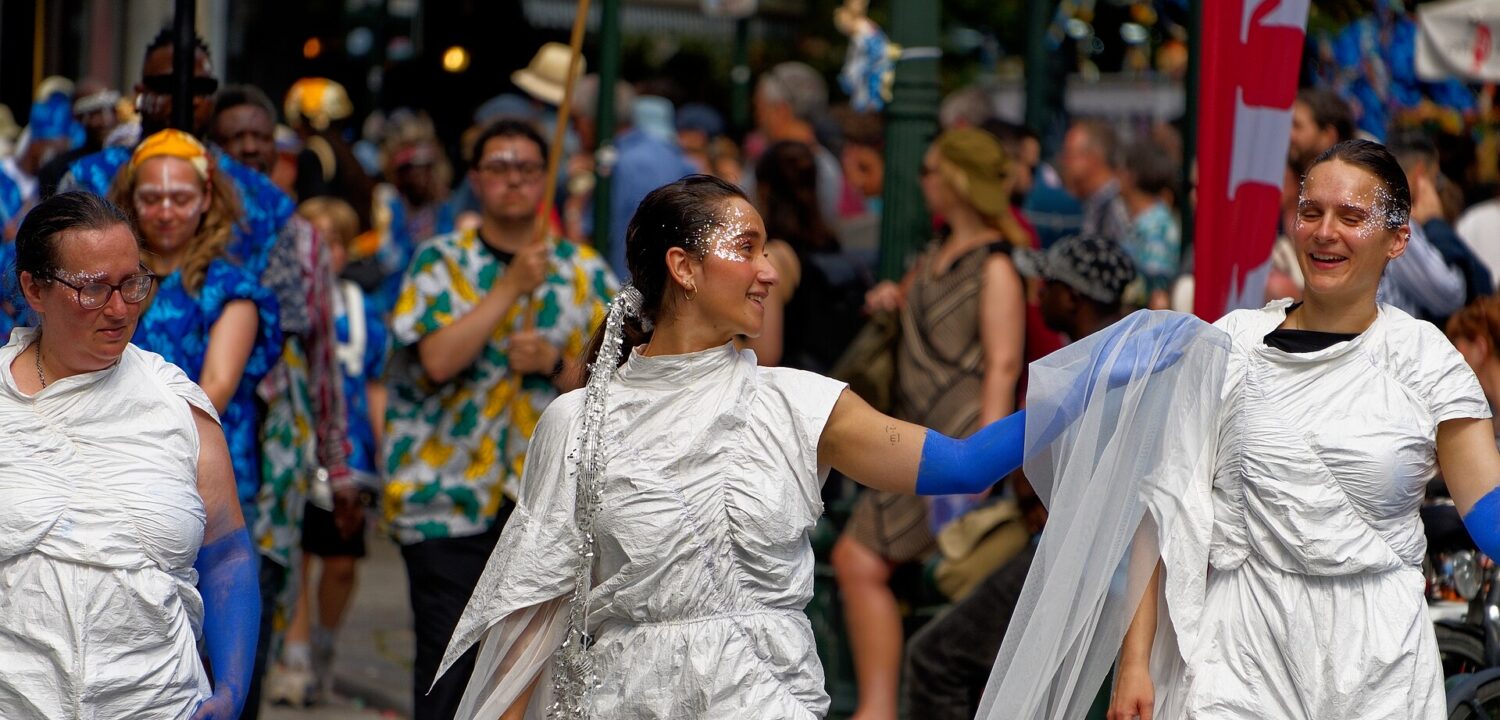
Painted performers at the Zinneke Parade: Zinneke Parade 2 Brussel by Winny Biets, CC BY 4.0, via Wikimedia Commons.
A suitcase set-piece at the Zinneke Parade: Zinneke Parade 3 Brussel by Winny Biets, CC BY 4.0, via Wikimedia Commons.
Costumed performers at the Zinneke Parade: Zinneke Parade Brussel by Winny Biets, CC BY 4.0, via Wikimedia Commons.
Manneken Pis in costume: 20050409 Brussels Manneken Pis 0678 by Jakub Hałun, CC BY-SA 3.0, via Wikimedia Commons.
Final Thoughts
If you can time a trip for a Zinneke year, do: it is the warmest, oddest and most genuinely local afternoon the city puts on. In 2027 you will have to wait, but Brussels’ folklore does not take the year off. Catch Manneken Pis in one of his 1,000-plus outfits, spend an evening with Toone’s puppets, follow the Meyboom tree on 9 August, and keep an eye on zinneke.org for the 2028 date.