Brussels has a reputation for having no seasons — just an undifferentiated grey that rolls from January to December with occasional interruptions. It is not true, but it is a useful starting point, because the differences between months here are less about temperature than about what is open, what is on, what a hotel room costs and how many other people are standing in front of the same painting. This Brussels month by month guide sets out the shape of the year: what defines each month, what it costs, and who it actually suits.
Think of this page as an index rather than an argument. It does not try to crown a best month — that question is answered elsewhere. It answers a different one: you have a month in mind, or a month forced on you by work or school holidays, and you want to know what you are walking into. Prices and dates were checked in September 2026 and should be read as the right order of magnitude, not a quotation.
The Brussels Year in One Table
Hotel pricing below is relative rather than absolute, because rates in this city are driven by the European institutions more than by tourism — which produces the pattern that catches everyone out, where weekdays cost more than weekends and August is one of the cheapest months of the year.
| Month | Typical high | Crowds | Hotel prices | What defines it |
|---|---|---|---|---|
| January | 6°C | Very low | Lowest | Market until the 3rd, then empty museums |
| February | 7°C | Very low | Low | Light festival, Carnival, cheap beds |
| March | 10°C | Low | Low–mid | Terraces reopen, weather unreliable |
| April | 14°C | Rising | Mid | Bluebells at Hallerbos, Easter crowds |
| May | 18°C | High | High | The city at its best, and busiest |
| June | 21°C | High | High | Long evenings, festival season starts |
| July | 23°C | High | Mid–high | Ommegang, National Day, holidays begin |
| August | 23°C | Moderate | Low | Half the city is away; bargain rates |
| September | 19°C | Moderate | High midweek | Heritage Days, business travel returns |
| October | 15°C | Moderate | Mid | Autumn colour, museum season restarts |
| November | 10°C | Low | Low, then high | Grim until the 27th, then transformed |
| December | 7°C | Very high | Highest | Winter Wonders and everything it brings |
Two patterns matter more than any individual row. First, the price line does not follow the crowd line: August is warm, pleasant and cheap, while September is cooler, quieter and expensive, because the institutions come back to work. Second, November contains the single sharpest transition in the Brussels year — the last week of it is a completely different city from the first three.
How to Read a Brussels Month
Four variables decide what a month in Brussels feels like, and only one of them is weather.
- Daylight. Brussels sits at 50°N. In late December it is dark by about 16:45 and barely light before 08:30, which compresses a sightseeing day far more than the temperature does. In June you get light until nearly 22:00.
- The institutional calendar. Parliament sessions, summits and the working weeks around them drive midweek hotel rates. August and the fortnight around Christmas are when this stops, and prices fall accordingly.
- What is closed. Many independent restaurants take two or three weeks off in August. Museums close on Mondays year-round. Public holidays close nearly everything.
- Rain, but not in the way you expect. Brussels rain is frequent and light rather than heavy and seasonal. There is no dry season. There is no monsoon. There is a roughly even chance of drizzle in any month, and you plan around it by carrying a jacket rather than by choosing a month.
If what you actually want is a recommendation on which month to choose, our guide to the best time to visit Brussels makes that call directly. For temperatures, rainfall and what to pack, the Brussels weather guide has the numbers. And for what is actually happening on your dates, the Brussels events calendar runs through the festivals.
Winter: January, February
January
Cold, dark, cheap and empty. The Winter Wonders market runs until 3 January, which means the first weekend of the month gives you the chalets, the wheel and the illuminations at post-Christmas hotel rates — comfortably the best-value few days in the Brussels year. After that the city exhales, the decorations come down, and January settles into the quietest four weeks it has.
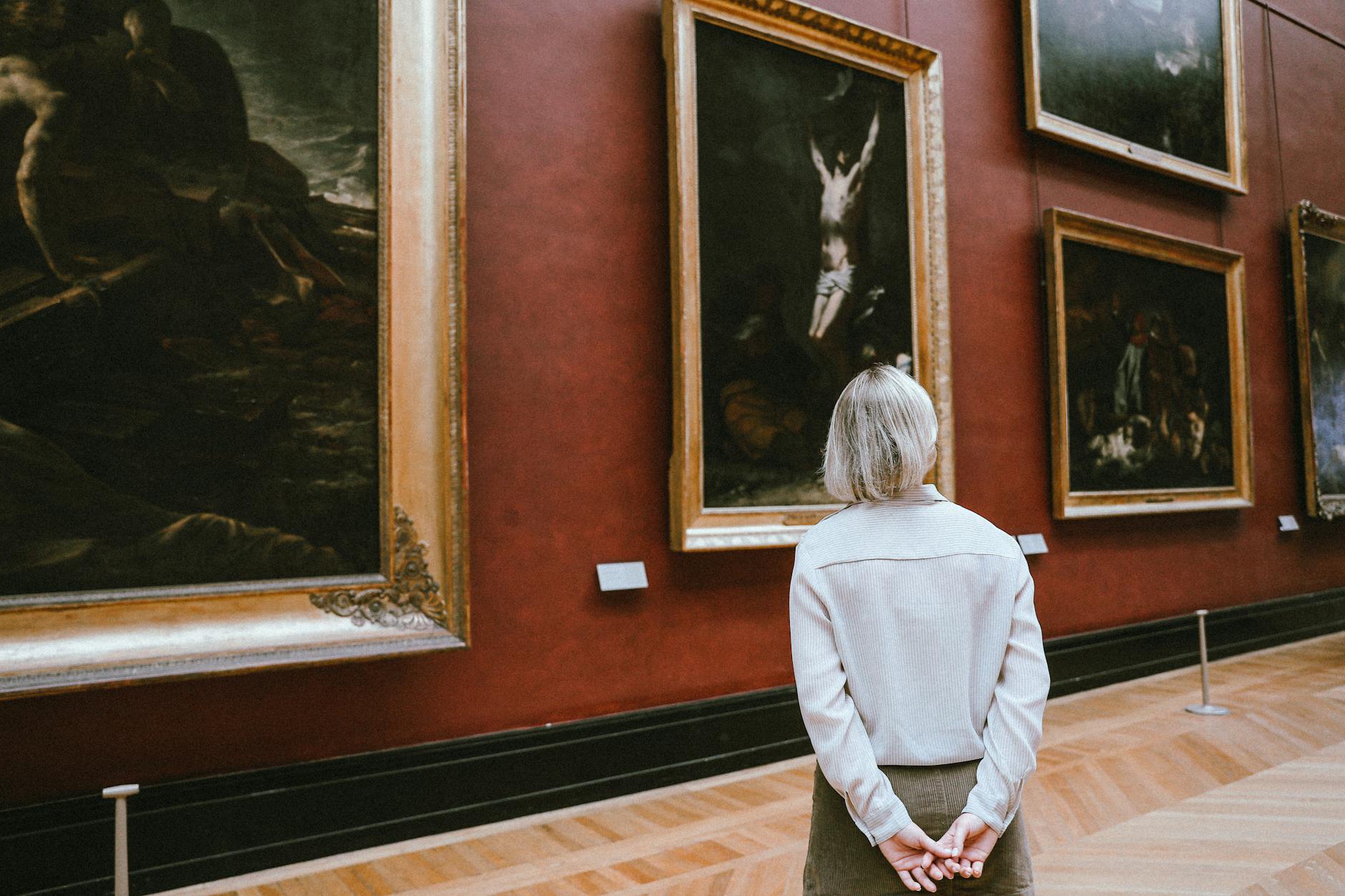
What that buys you is museums with nobody in them. Standing alone in front of the Bruegels at the Royal Museums of Fine Arts in mid-January is a genuinely different experience from queueing for them in July. BRAFA, the art and antiques fair, fills a week at the end of the month. The Brussels sales — the officially regulated soldes — run through January and are the one time of year the shopping is worth planning around.
Suits: museum-focused trips, budget travellers, anyone who dislikes crowds. Does not suit: anyone who needs daylight or outdoor terraces.
February
Marginally milder than January and no busier. The distinguishing feature is Bright Brussels, the light festival, which threads illuminated installations along a walkable route through the centre over a few evenings and is free. It is the correct answer to the question of what to do in Brussels after dark in February.
Carnival season also arrives, and while Brussels itself does little, the rest of Belgium does a great deal — Binche’s UNESCO-listed carnival on Shrove Tuesday is about an hour away by train. Belgian school holidays fall in February, which briefly fills the family attractions.
Suits: couples on a short break, budget travellers, anyone combining Brussels with Binche. Does not suit: anyone hoping to sit outside.
Spring: March, April, May
March
The month when the city physically changes. Terraces reappear on the Place Sainte-Catherine and around the Sablon on the first genuinely mild afternoon, and Brussels is immediately better for it. The weather is entirely unreliable — you can get 17°C and you can get sleet, sometimes in the same week — but prices are still low and the crowds have not arrived.
March is a good month for the things Brussels does indoors and does well: the museums, the comic strip centre, the beer bars, the chocolate workshops. Our rainy day guide exists precisely for months like this one.
Suits: flexible travellers, second visits, anyone who wants shoulder-season prices with a chance of sun.
April
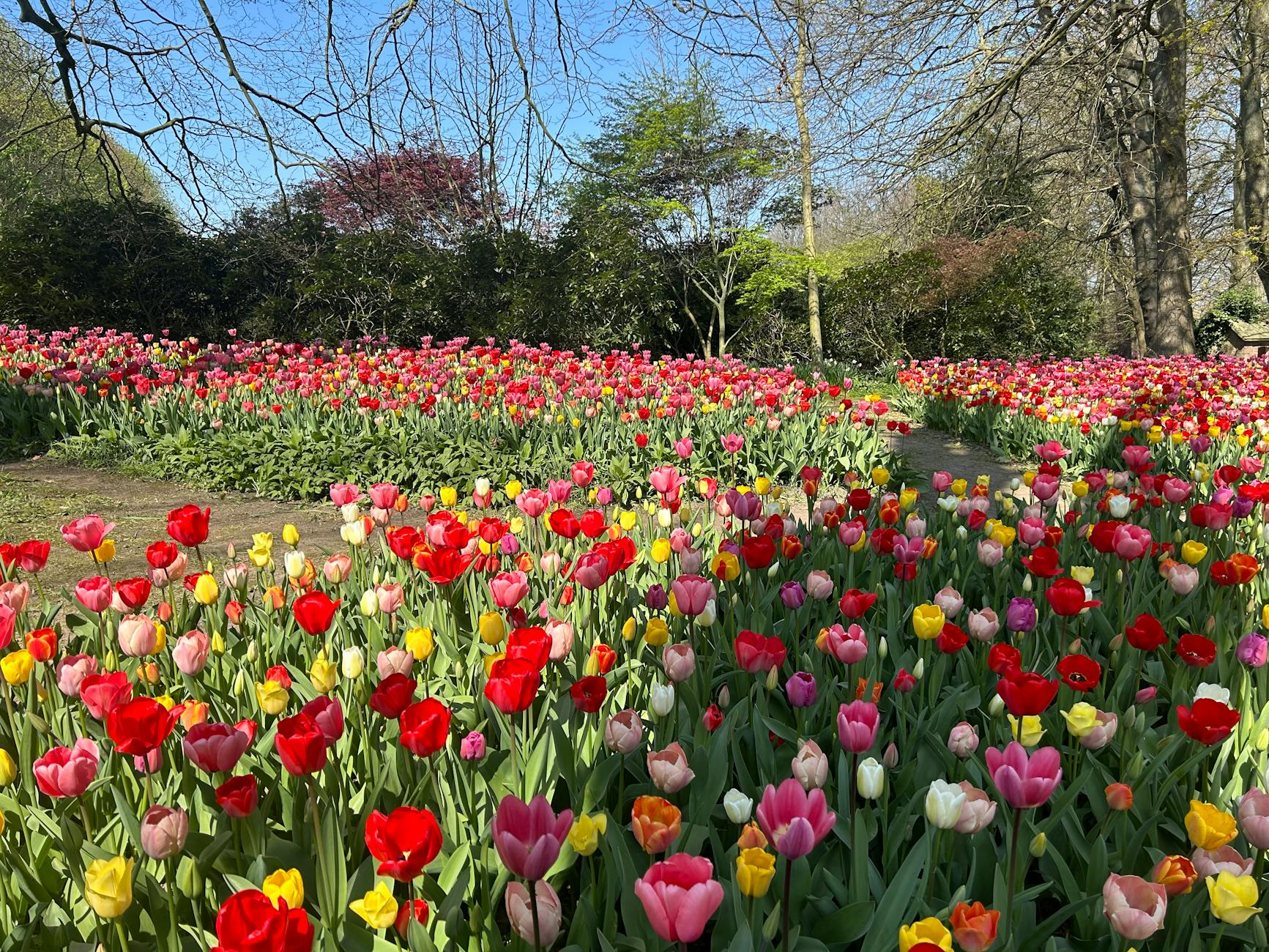
April is the bluebell month. Twenty kilometres south of the city, the beech floor of the Hallerbos turns violet-blue for roughly two to three weeks from mid-April, and it is the most striking natural spectacle within reach of Brussels by public transport. Take the train from Brussels-Midi to Halle and the free shuttle from Stationsplein on peak weekends, or hire a bike at Halle station for the five-kilometre ride. Weekday mornings are dramatically better than weekend afternoons.
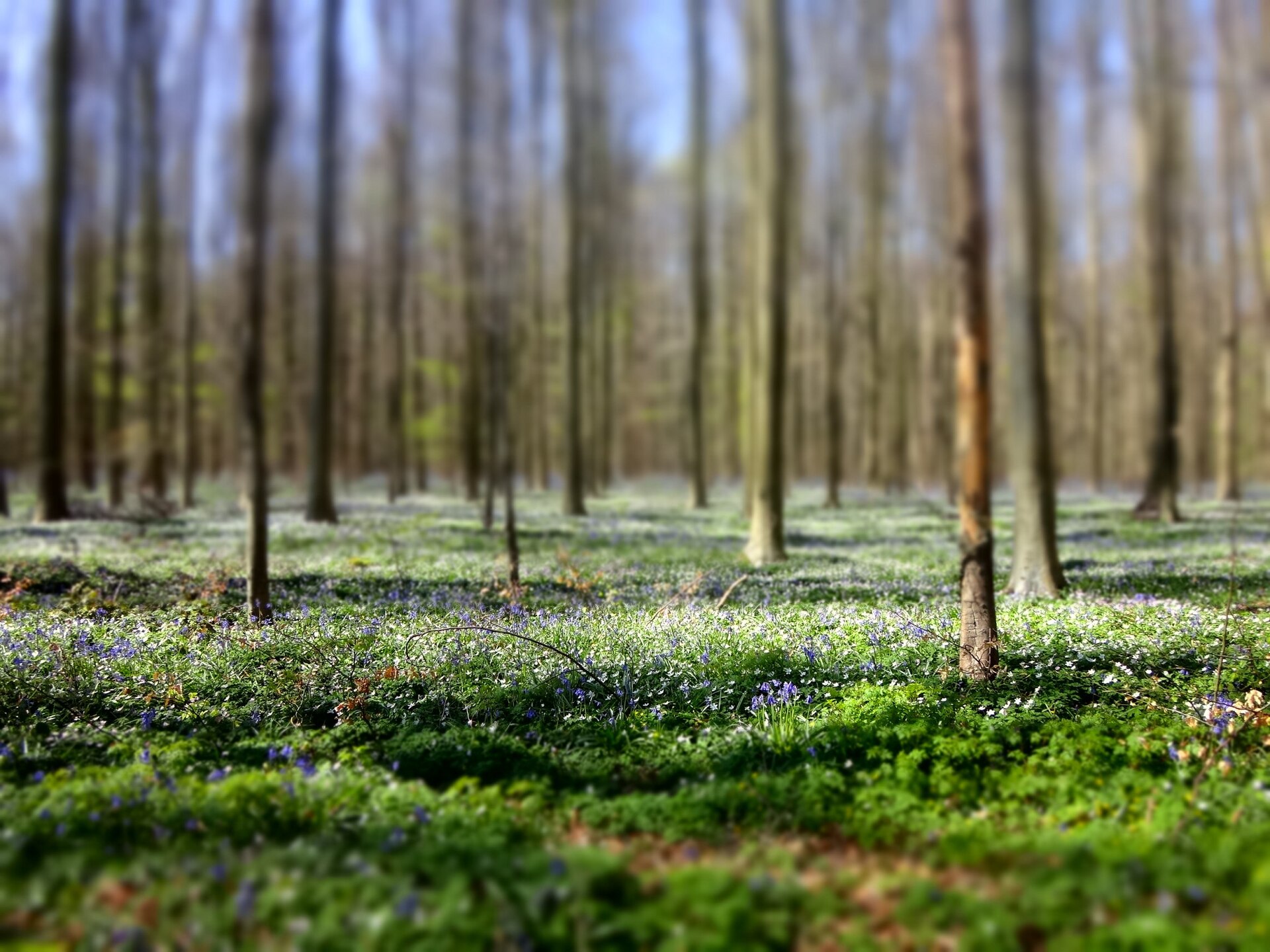
Easter falls in March or April depending on the year and brings a genuine spike in family visitors and hotel rates over the long weekend. Outside it, April is a pleasant, moderately busy month with lengthening days.
Suits: anyone who wants the bluebells, families over Easter, first-time visitors who do not want May’s crowds.
May
The strongest month of the year in Brussels, and everyone knows it. Reliable mild weather, terraces at full strength, long evenings, and a dense run of events — the Iris Festival for the region’s own day, Brussels Jazz Weekend with free stages across the centre, and in even-numbered years the biennial Zinneke Parade (none in 2027; the next is due in 2028).
The cost of all that is company. May is when the city centre feels genuinely busy, when the Grand-Place is difficult to photograph without a crowd in it, and when hotel rates in the centre reach their non-December peak. Book early or stay slightly out — our guide to the best areas to stay covers the neighbourhoods that stay affordable.
Suits: first-time visitors, anyone prioritising weather and atmosphere over price.
Summer: June, July, August
June
Light until nearly ten at night, which changes what an evening in Brussels can contain. Festival season opens properly with Couleur Café by the canal and the Brussels Short Film Festival, and the parks fill up. The Bois de la Cambre and the Cinquantenaire become the city’s living rooms.
June is also, quietly, one of the better months for day trips, because the Belgian coast and the Ardennes are pleasant and not yet full of Belgian school holidays. Bruges and Ghent are an hour or less away, and the light lasts long enough to make an evening return worthwhile — see our day trips guide.
Suits: long-evening travellers, day-trippers, festival-goers.
July
The month of set pieces. Ommegang processes into the Grand-Place in the first or second week with 1,400 costumed participants, and Belgian National Day on the 21st brings a parade, free access to the Royal Palace and fireworks. Both are worth timing a trip around, and both are covered in detail in the events calendar.
Belgian schools break up at the start of July, so the family attractions and the coast get busy from the first week. Brussels itself is warm rather than hot — 23°C is a typical high — and air conditioning is far from universal in older hotels, which occasionally matters during a heatwave. The Royal Palace summer opening, which runs from late July into early September, is one of the genuine free highlights of the year.
Suits: event-driven trips, families, anyone who wants Brussels at its most animated.
August
The month everyone gets wrong. August in Brussels is warm, calm and cheap, because the institutions shut down, a large share of residents leave, and the business travel that props up hotel rates simply stops. You can get a room in the centre in August for less than you would pay in March.
The trade-off is closures. Many independent restaurants take two or three weeks off, and some of the best small places in the city are shut for the whole month — check before you set your heart on one, using our restaurants guide as a starting point. What stays open is the tourist-facing infrastructure, the museums, the parks and Brussels Beach along the canal.
In even-numbered years, the Flower Carpet occupies the Grand-Place for four days in mid-August. The next edition is August 2028. The Meyboom planting on 9 August is annual, small, and much more genuinely Brussels than most of what is marketed.
Suits: budget travellers who want warm weather, second-time visitors, anyone allergic to crowds. Does not suit: food-led trips that depend on specific restaurants.
Autumn: September, October, November
September
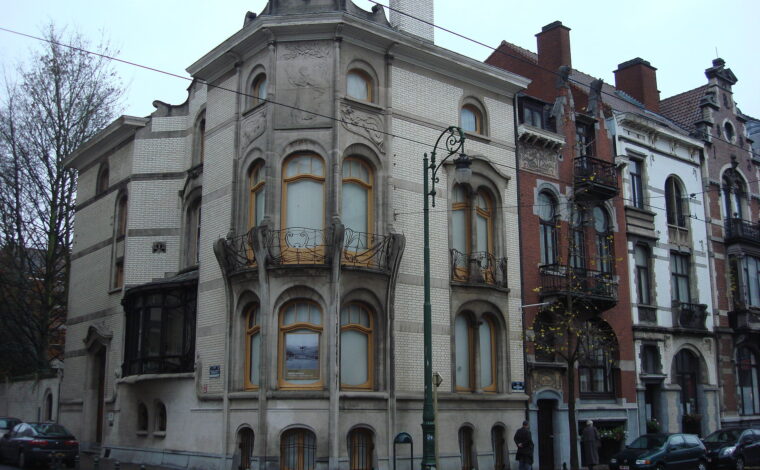
The best-kept secret in the Brussels calendar. The weather often holds into late September, the summer crowds have gone, and Heritage Days open buildings that are shut for the rest of the year — for anyone interested in Art Nouveau, that weekend alone justifies the trip. The Comic Strip Festival and its Balloon’s Day Parade fill another September weekend.
The catch is price. The institutions return in September and midweek hotel rates jump accordingly, sometimes above their summer level. Weekends stay reasonable. If you have flexibility, arrive on a Thursday and leave on a Sunday rather than the reverse — our hotel booking tips explain the inversion in detail.
Suits: architecture and culture trips, weekend breaks, anyone who found May too busy.
October
Autumn colour arrives properly, and Brussels has more of it than its reputation suggests — the Bois de la Cambre, the Sonian Forest on the city’s southern edge, and the Parc de Bruxelles all turn. It is the last month in which sitting outside is realistic and the first in which the indoor programme takes over. Nuit Blanche brings a night of art installations, and the marathon closes central roads for a Sunday morning.
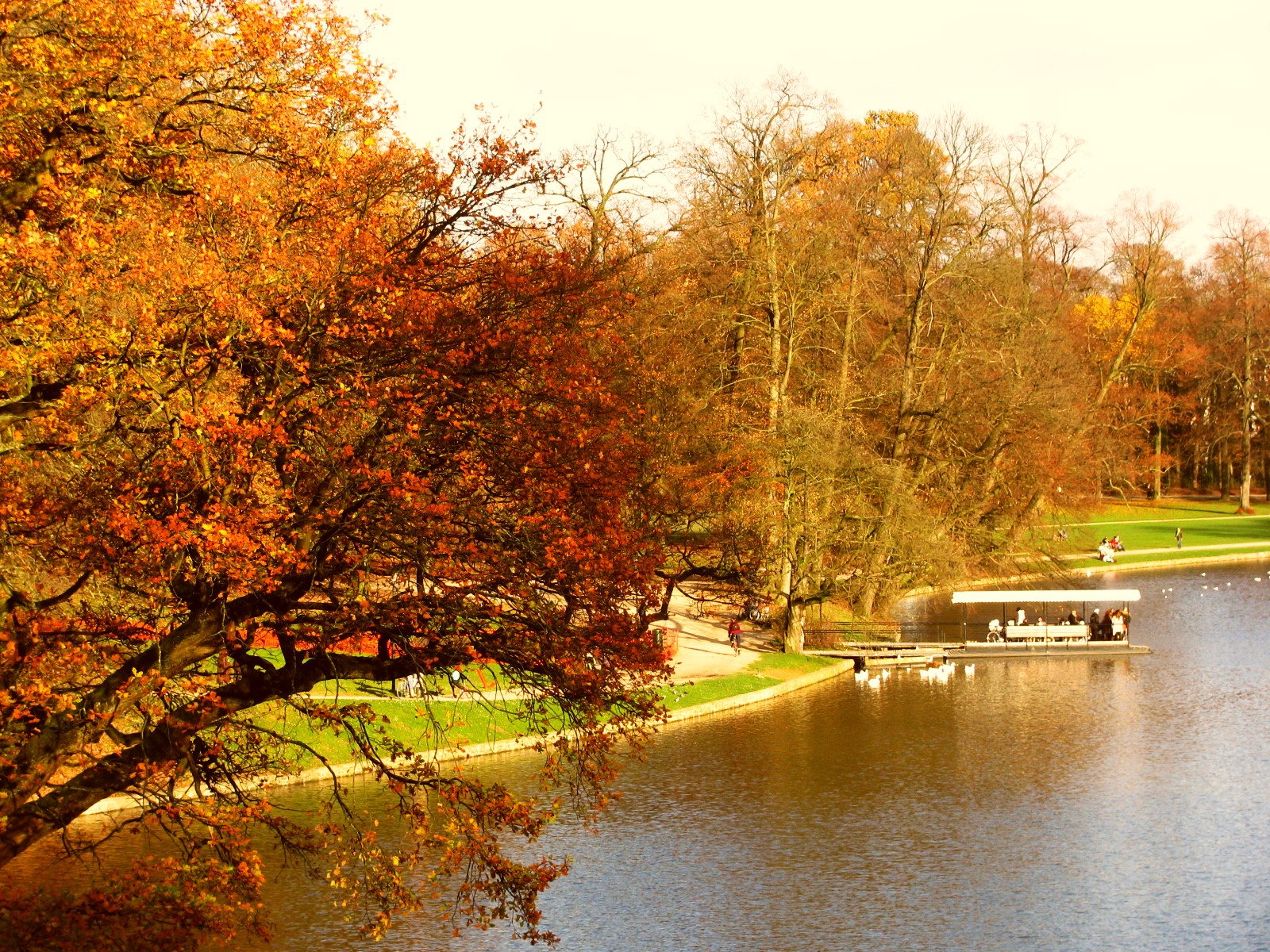
Suits: walkers, photographers, museum trips, anyone who wants shoulder prices with something to look at outdoors.
November
Two different months wearing one name. Until roughly the 26th, November is the least appealing time to be in Brussels: dark by half past four, persistently damp, and with almost nothing on. Hotel rates are correspondingly low, and if you are here for a specific indoor reason — an exhibition, a conference, a beer trip — it is perfectly fine.
Then Winter Wonders opens on 27 November 2026 and the whole city changes character overnight. From that date the centre carries 200-plus chalets, a big wheel, an ice rink and a nightly sound-and-light show, and the hotel rates that were bargain-level on the 25th are not on the 28th.
Suits: bargain hunters in the first three weeks; Christmas market visitors in the last few days.
December
The busiest and most expensive month, and for once the crowds are justified. Winter Wonders runs from 27 November 2026 through to 3 January 2027, daily 12:00–22:00, closing at 18:00 on 24 and 31 December. The market is laid out as a two-kilometre route through real streets from the Grand-Place to the Marché aux Poissons rather than as a fenced compound, which is why it is better than most of its European rivals.
The practical advice for December is entirely about timing. Weekday evenings are manageable; Friday and Saturday evenings between about 12 and 23 December are shoulder-to-shoulder along the stretch between the Bourse and Sainte-Catherine. Daylight is short. And Christmas Day and New Year’s Day close nearly everything — museums, most restaurants, all shops — with public transport on a Sunday service. Our Christmas market shopping guide covers what is actually worth buying from the chalets.

Suits: Christmas market trips, couples, anyone who books early. Does not suit: budget travellers or anyone expecting a normal city break the week of Christmas.
Public Holidays and School Terms
Two calendars sit underneath the tourist one and both change what a given week feels like.
Belgian public holidays are 1 January, Easter Monday, 1 May, Ascension Day, Whit Monday, 21 July, 15 August, 1 November, 11 November and 25 December. On all of them, shops close, many restaurants close, museums vary, and public transport runs a Sunday timetable. The three that most often catch visitors out are 1 May, when the city genuinely shuts, 15 August, which falls in the middle of the summer holiday season, and 11 November, which arrives in a month when travellers do not expect a holiday.
Belgian school holidays matter for anywhere child-facing. There is a week off around Carnival in February, two weeks at Easter, a week at the start of November, two weeks over Christmas, and the long summer break through July and August. During those weeks the family attractions, the coast and the day-trip destinations fill up and the museums run children’s programmes. Our school holiday activities guide covers what is laid on, and the family attractions guide covers what gets busy.
One more scheduling quirk worth knowing: Belgium has a habit of national strike days, usually announced several days in advance, which can stop trains and thin out public transport for twenty-four hours. They are not seasonal and cannot be planned around, but they are worth a glance at the news the day before any trip that depends on a train.

Choosing by What You Care About
- Lowest prices: January, February, and August — three months that have nothing else in common.
- Best weather: May through early September, with May and September the sweet spots.
- Fewest people: mid-January to early March.
- Most to do: May and December.
- Best for museums: January, when you get them to yourself. See the museums guide.
- Best for families: July and August for the weather, late December for the market. The Brussels with kids guide has the detail.
- Best for a first visit: May or September, and September if you can only pick one.
Things That Are True in Every Month
A few constants save a great deal of disappointment regardless of when you come.
- Museums close on Mondays. Almost all of them. Plan a Monday around markets, parks, churches and the Comic Strip Centre.
- Sundays are quiet. Many shops close; the markets are at their best. The Sunday market at the Gare du Midi is the biggest in Belgium.
- Bring a waterproof. Every month. Brussels rain is light, frequent and indifferent to the season.
- The centre is walkable in any weather. The historic core is about a mile and a half across, which is why the hop-on hop-off bus rarely earns its fare and why the cobbles matter more than the temperature for anyone with mobility limits.
- Weekday hotel rates beat weekend rates in reverse. Unlike almost every other European capital, Brussels is cheaper at weekends.
November deserves a closer look than most months, because it is really two: three of the quietest, cheapest weeks of the year, and then everything changes when Winter Wonders opens on the 27th. Our full guide to Brussels in November covers the weather, the two public holidays, the costs and what to pack.
December carries more planning traps than any other month here — eight hours of daylight, the year’s highest room rates, and a market whose atmosphere changes completely between a Tuesday and a Saturday. Our full guide to Brussels in December covers the weather, the costs, what closes and the one week that is dramatically better value.
January deserves more consideration than it usually gets. It is the cheapest month of the year, the museums are genuinely empty, the regulated winter sales run through it, and the Christmas market keeps going until the 3rd at post-Christmas hotel rates. Our full guide to Brussels in January makes the case and is honest about who should avoid it.
February is the one winter month with a genuine reason to be here rather than merely a cheap one — a free light trail through the centre, and the UNESCO-listed Binche carnival an hour down the line on Shrove Tuesday. Our full guide to Brussels in February covers both, along with the costs and the school holiday week.
If April is your month, the Hallerbos needs more planning than anything else on the calendar, because the bluebells peak for only a couple of weeks and the forest gets very busy at weekends. Our Hallerbos bluebells guide covers how to track the flowering, the train and free shuttle from Halle, and how to be among the trees before the crowds arrive.
March is the month to choose if architecture is your thing. In 2027 the BANAD festival runs from 6 to 21 March and opens dozens of Art Nouveau and Art Deco interiors that are closed the rest of the year, and Easter falls on 28 March. Our Brussels in March guide has the dates, the weather and the school-holiday calendar.
Related Brussels Guides
- Best Time to Visit Brussels — the direct recommendation on which month to pick.
- Brussels Weather Guide — temperatures, rainfall and what to pack.
- Brussels Events Calendar — the festivals, month by month.
- How Many Days in Brussels — how long to give the city once you have chosen your dates.
- Brussels Hotel Booking Tips — exploiting the weekday-weekend inversion.
- Brussels Travel Guide — the full planning overview.
Useful Resources
- visit.brussels — official event listings for the month you have chosen.
- RMI/KMI — the Belgian meteorological institute, for actual forecasts rather than seasonal averages.
- Hallerbos.be — bluebell progress reports through April.
- brussels.be — Winter Wonders dates and opening hours each winter.
- SNCB/NMBS — day-trip timings, which change with the seasonal timetable.
Frequently Asked Questions
What is the cheapest month to visit Brussels?
January, closely followed by February and August. January and February are cheap because they are cold and empty; August is cheap because the European institutions shut down and the business travel that drives hotel rates stops. August is the only one of the three that is also warm.
Which month has the best weather in Brussels?
July is the warmest at around 23°C, but May and September offer the best combination of mild temperatures and manageable crowds. There is no dry season — light rain is possible in any month.
Is Brussels worth visiting in winter?
Yes, for two quite different reasons. Late November to early January gives you Winter Wonders, which is one of the better Christmas markets in Europe. Mid-January to February gives you the city’s museums at their emptiest and its hotels at their cheapest.
When is Brussels busiest?
December weekends during Winter Wonders, followed by May. Midweek in September and October is busy with business travel even when the streets do not look crowded, which is why hotel rates are high in months that feel quiet.
What month is Brussels cheapest for hotels?
August, if you want warmth with it. Brussels hotel pricing follows the institutional calendar rather than the tourist one, so weekends are cheaper than weekdays and the summer holiday period is cheaper than the shoulder seasons.
How many days do I need in Brussels?
Two full days covers the centre comfortably; three lets you add a day trip to Bruges, Ghent or Antwerp. The month barely changes that arithmetic, except in December, when crowds slow everything down.
Does it snow in Brussels?
Occasionally and rarely enough to settle. Winters are damp and grey rather than snowy, and the daily high in January averages around 6°C. Pack for rain and wind rather than for snow.
What closes in August in Brussels?
Many independent restaurants take two or three weeks off, and the European institutions run at minimum staffing. Museums, tourist attractions, parks and the main shopping streets stay open throughout.
When do the Hallerbos bluebells flower?
Roughly mid-April into early May, with a peak window of about two weeks that shifts with the spring. The forest publishes progress updates. Go on a weekday morning; the weekends are extremely busy and the roads into the forest close when it is full.
Photo Credits
Bluebells in the Hallerbos: Bluebells at Hallerbos 05 by Lilianwhite, CC BY 4.0, via Wikimedia Commons.
Autumn at the Bois de la Cambre: Automne au bord du Lac – Bois de la Cambre – panoramio by charles lecompte, CC BY-SA 3.0, via Wikimedia Commons.
Final Thoughts
The month you pick for Brussels matters less than it would for a city that lives outdoors. There is no season here that ruins a trip and none that transforms it beyond recognition, because the best of Brussels — the museums, the beer, the chocolate, the architecture, the food — is largely indoors and open all year.
What the month really decides is what you pay and who you share the place with. If you want the city at its most alive, come in May. If you want it cheap and warm, come in August, and check that your restaurant is open. If you want it cheap and empty, come in January, and put on another layer. And if you want the version everyone photographs, come in the first week of December, book six months out, and go to the market on a Tuesday.