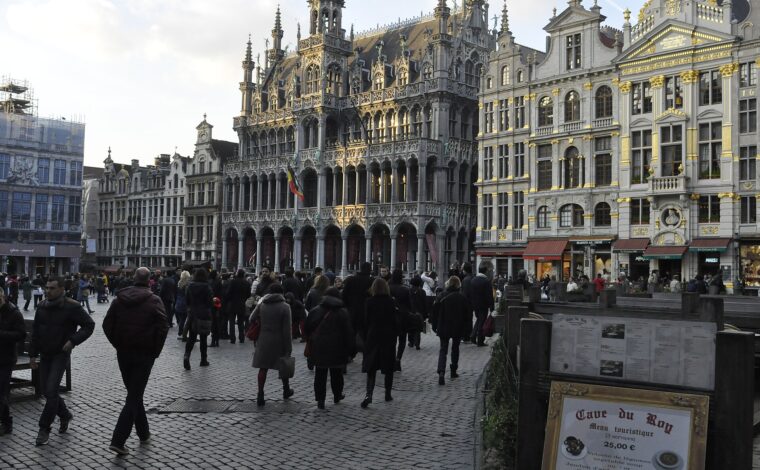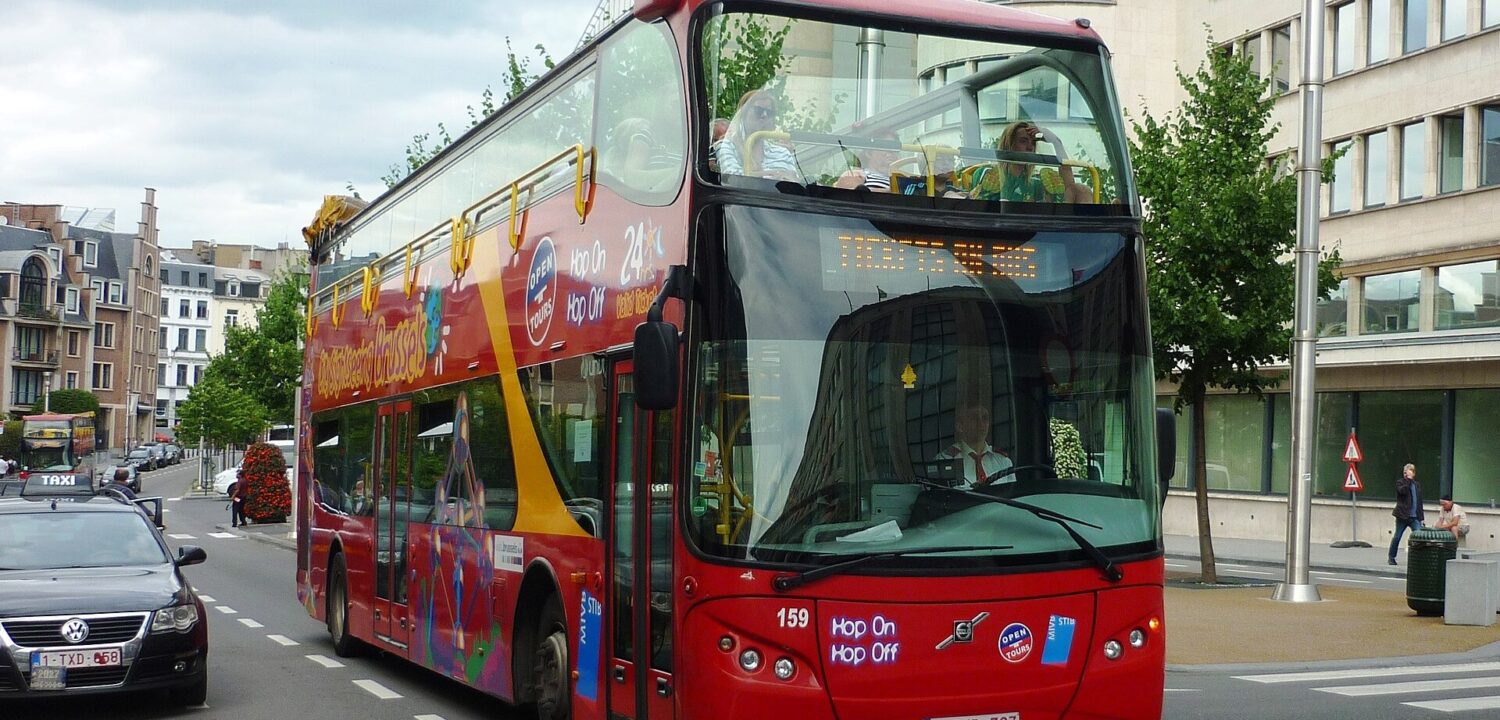
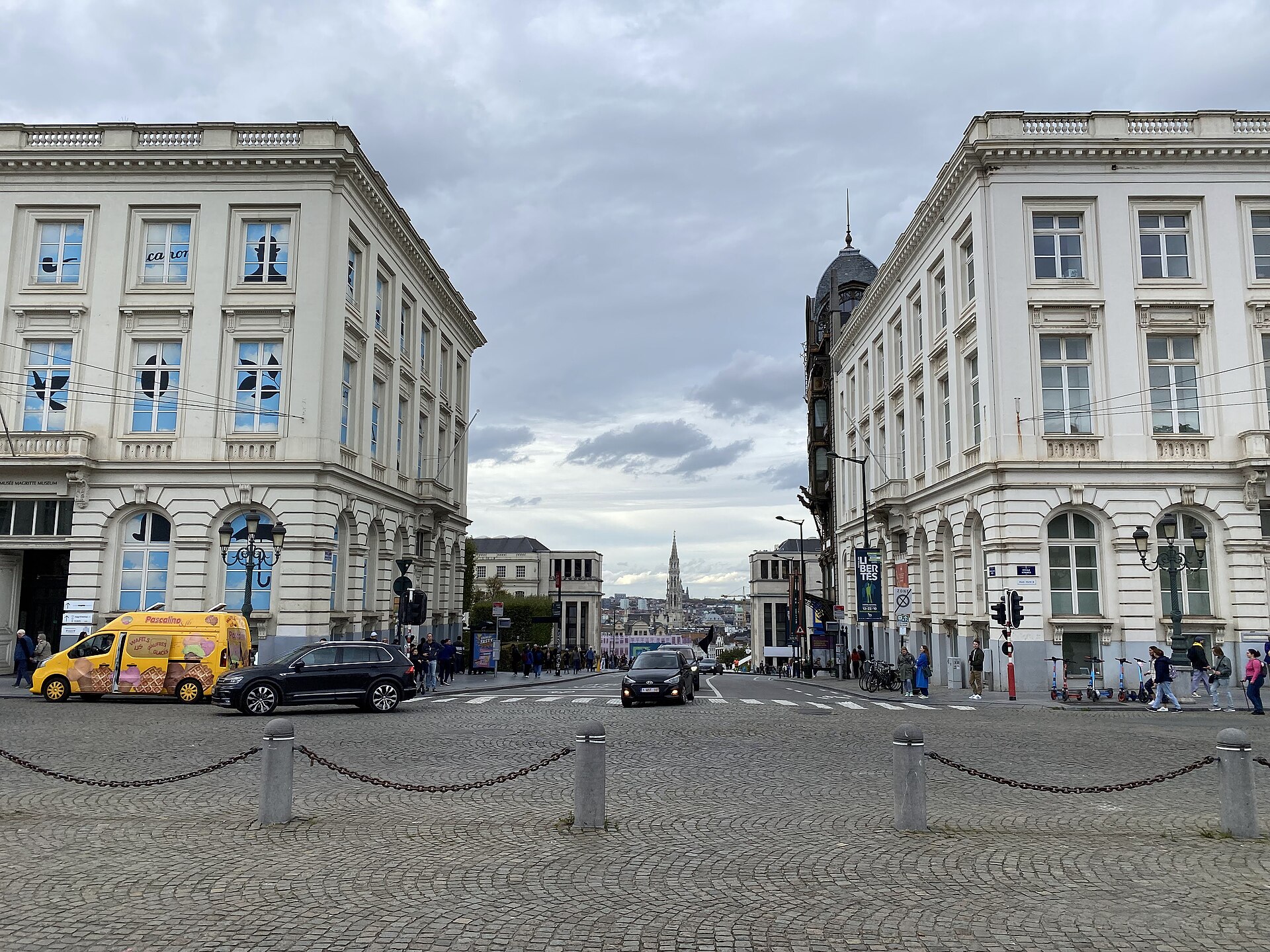
There is a particular moment on the Central Red Line, somewhere between the Palais de Justice and the Sablon, when the bus stops dead in traffic on a hill and a group of people on foot overtake it. They are not hurrying. They are simply walking, and the bus is simply not moving, and everyone upstairs on the open top deck sits in silence pretending not to have noticed. That moment is the whole argument about the Brussels hop on hop off bus compressed into about forty seconds, and any guide that does not mention it is selling you something.
This page covers what the service actually is in Brussels — one operator, two lines, a fixed loop — what it costs, what the alternatives cost, and the specific, fairly narrow set of circumstances in which buying a ticket is the right call rather than a small waste of money. Prices were checked in September 2026; treat them as the right order of magnitude rather than a quotation, because the resale platforms discount the list price almost permanently and the seasonal timetable changes four times a year.
What It Costs: The At-a-Glance Table
All figures are per adult for the standard product. Children’s fares run roughly 40–50% below adult, and under-fours generally travel free. The list price and the price you will actually pay are rarely the same number.
| Ticket | List price | Typical real price | Validity |
|---|---|---|---|
| Tootbus Brussels Discovery, 24h | €33 | €24–27 | 24h from first validation |
| Tootbus Brussels Discovery, 48h | €39–42 | €30–35 | 48h from first validation |
| Smart Tour (bus plus walking tour) | €39 | €30–35 | 24h |
| “Last Tour” evening panoramic, 1 hour | €23 | €23 | Single ride, no hopping |
| Bus plus Mini-Europe combination | Varies | €40–50 | 24h bus, dated Mini-Europe entry |
| For comparison | |||
| STIB 1-day ticket | €9 | €9 | 24h, whole network |
| Walking | €0 | €0 | Indefinite |
That last pair of rows is the uncomfortable part, and we will come back to it properly further down.
The Short Verdict
Buy a ticket if at least two of the following are true: you have mobility limits that make a hilly city centre hard work, you are travelling with young children who will not walk four kilometres, you have exactly one day and want the Atomium included without working out the metro, or it is January and horizontal rain is coming off the Senne valley and a covered lower deck sounds like a small mercy.
Do not buy a ticket if you are a reasonably mobile adult with two or three days in Brussels. The historic core — Grand-Place, Manneken Pis, Sainte-Catherine, the Sablon, Mont des Arts, the Royal Palace — fits inside a rectangle you can cross on foot in about twenty-five minutes. A bus that takes an hour to loop past all of it, in traffic, while a recorded voice tells you which guildhouse belonged to the brewers, is solving a problem you do not have.
Who Runs It: Tootbus, and Effectively Nobody Else
Brussels is unusual among European capitals in having a single serious hop-on hop-off operator. Tootbus — the former City Sightseeing Brussels operation, rebranded and now part of the RATP group — runs the open-top red buses you will see queuing on Rue du Cardinal Mercier. There is no competing red-versus-blue price war of the kind that keeps fares honest in Rome or Barcelona.
What that means in practice is that the direct price is the direct price, and the only real discounting happens on the resale platforms. Viator, GetYourGuide and the various aggregator sites all sell the identical Tootbus product, frequently at a quarter off list. There is no quality difference and no separate bus; you are buying the same seat through a different till. Booking direct is only worth it if you want a specific dated combination product or you are already inside the Tootbus app.
You may also see references to older brands — City Sightseeing, Brussels City Tours, various coach operators. Some of those still sell excursions to Bruges and Waterloo, but the in-city hop-on hop-off loop is Tootbus. If a seller is quoting you a suspiciously cheap city loop under a different name, check what you are actually buying before paying.
The Two Lines, and Why the Second One Matters More
Central Red Line
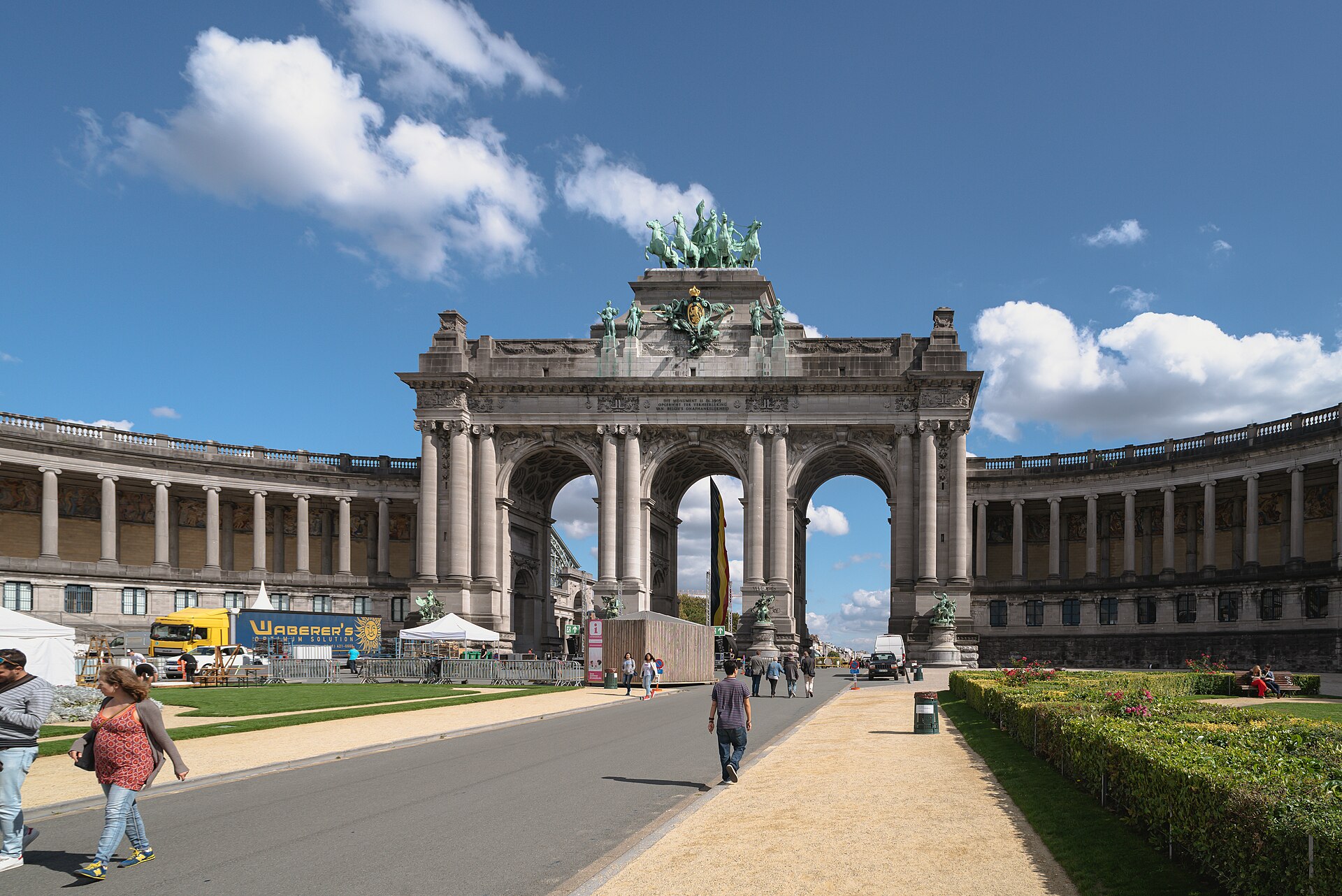
The main loop starts at stop 1, Central Station, at 33 Rue du Cardinal Mercier — a two-minute walk from Gare Centrale/Centraal Station itself. It runs eighteen stops around the historic centre and out through the upper town, taking in the Grand-Place area, Mont des Arts and Place Royale, the Palais de Justice and Marolles, the Sablon, Avenue Louise, and the European Quarter with the Cinquantenaire park at its eastern end. A full circuit takes roughly an hour and a quarter if traffic behaves, longer if it does not.
First departure is 10:00 and last departure 17:00. Frequency is the thing to watch: every twenty minutes at the height of summer, but every thirty to forty minutes in the January-to-March window. A forty-minute headway completely changes the economics of “hopping off” — you are not dipping in and out of a service, you are committing to a wait each time.
Atomium Blue Shuttle
The Blue Shuttle is the line that actually justifies the product. It runs from the centre out to the Heysel/Heizel plateau — the Atomium, Mini-Europe and Brussels Expo — which is genuinely inconvenient on foot and about twenty-five minutes away by metro line 6. In winter it runs 10:00 to 16:00 with a departure roughly every two hours, which is not a shuttle so much as a small number of scheduled coaches; in summer it is considerably more frequent.
If you are going to buy a hop-on hop-off ticket at all, plan the day around this line rather than the red loop. Take the Blue Shuttle out in the morning, do the Atomium and Mini-Europe properly, come back in the afternoon, and treat any red-line riding as a bonus. Miss the two-hourly winter departure, though, and you are on metro 6 to Heysel anyway — which is why the maths so often collapses.

What It Is Actually Like On Board
The buses are standard open-top double-deckers with a covered lower saloon. Commentary comes through disposable earphones — bring your own if you have wired ones, the supplied pairs are thin — in eleven languages including English, French, Dutch, German, Spanish, Italian, Japanese, Chinese, Arabic and Russian. It is recorded, not live, and it is competent rather than memorable: dates, dynasties, the occasional Tintin reference.
Your ticket validates on first boarding, not at purchase, so a 24-hour ticket bought at nine in the morning and first used at two in the afternoon still runs until two the following afternoon. That single detail is worth more than most of the discount codes: buy in the morning, ride in the afternoon, and you get a genuine second day out of a one-day ticket.
The top deck is where the value is, and the top deck is also where Brussels weather lives. This is a city that averages rain on roughly half the days of the year. If it is wet, you are downstairs behind a fogged window, watching a city you could have been walking through.
The Walkability Problem, Stated Plainly
Brussels is small. Not compact-for-a-capital small — genuinely small. From the Grand-Place you can reach Manneken Pis in four minutes, Sainte-Catherine in eight, the Mont des Arts in seven, the Sablon in twelve and the Palais de Justice in twenty. The Royal Museums of Fine Arts, the Magritte Museum, the Musical Instruments Museum and the Royal Palace all sit within a few hundred metres of each other on the same upper-town shelf.
A bus loop that services all of those points is, for most of its route, moving you between places that are a short walk apart, on roads that are frequently congested, at a fixed frequency you do not control. On the busiest central stretches you can and will be overtaken by pedestrians. The exceptions — Atomium, Cinquantenaire, the far end of Avenue Louise, Laeken — are real, but there are perhaps four of them, and a €9 STIB day ticket reaches every single one on metro and tram.
The honest comparison is not “bus versus nothing”. It is “€25–33 for a fixed loop” against “€9 for the entire metro, tram and bus network, running every few minutes, until midnight”. Our guide to Brussels transport tickets covers that pass in detail, and our Brussels metro guide explains the network, which is far simpler than it looks on the map.
When It Genuinely Makes Sense
Limited mobility
This is the strongest case, and it is a real one. Brussels has a pronounced upper town and lower town separated by a steep escarpment, cobbles everywhere in the historic core, and a metro network whose older stations are not uniformly step-free. A seated loop that deposits you at the door of major sights removes a genuine physical barrier. Check the accessibility details with the operator before booking — not every vehicle in the fleet has the same provision — and see our accessible Brussels guide for the wider picture.
Young children, one day, bad weather
The combination matters. A five-year-old will refuse the fourth kilometre of any walking day, the Atomium and Mini-Europe are the two attractions they will actually want, and the Blue Shuttle links them without a metro change. A bus plus Mini-Europe combination ticket at €40–50 is defensible on those terms. Our Mini-Europe guide and the wider Brussels with kids guide go into what is worth the queue up there.
A genuinely short stop
If you have six hours between trains and want an orientation rather than a visit, one full red-line circuit gives you a narrated overview of the city’s geography for the price of a decent lunch. That is a legitimate use, though six hours is usually better spent on foot in the centre with a coffee and a long lunch in it.
How to Pay Less
- Buy through a resale platform, not at the kiosk. The same Tootbus seat routinely lists a quarter cheaper on Viator or GetYourGuide than at the Rue du Cardinal Mercier booth.
- Validate late on day one. Because the clock starts on first boarding, a mid-afternoon first ride stretches a 24-hour ticket across two useful half-days.
- Do not buy 48 hours. Almost nobody rides a Brussels loop twice. The extra day is bought far more often than it is used.
- Check the Brussels Card first. If you were already planning three or more museums, the card’s museum coverage will eat your budget more usefully than a bus ticket will — the card runs €41 for 24 hours and covers 49 museums, and it breaks even at roughly three of them in a day.
- Ignore the evening panoramic unless you want exactly that. The €23 one-hour “Last Tour” is a pleasant illuminated-city ride, but it is a single ride with no hopping, and the Grand-Place at night is free.
Practical Details Worth Knowing
- Luggage. There is no hold. Cabin-sized bags are tolerated on the lower deck; suitcases are not, which rules the bus out as an airport-day solution.
- Toilets. None on board. The circuit is over an hour.
- Sun and rain. The top deck is fully exposed. Brussels manages both sunburn and downpour within the same afternoon with some regularity.
- Traffic. The centre has been progressively pedestrianised, which is excellent for walking and awkward for buses. Journey times inflate on weekday afternoons and during any event on the Grand-Place.
- Seasonality. Winter frequency on both lines is materially worse than summer. A ticket bought in February buys you a slower service than the same ticket in July.
Related Brussels Guides
- Brussels Tours and Experiences — every type of tour priced and judged, with the ones we would skip.
- Brussels Transport Tickets — the €9 day ticket and everything else STIB sells.
- Walking in Brussels — distances, hills, cobbles and how long things really take on foot.
- Self-Guided Walking Tours — free routes that cover the same ground as the red loop.
- Atomium and Mini-Europe — the Blue Shuttle’s destination, and how to reach it by metro instead.
- Top Tourist Attractions in Brussels — what the loop is driving past.
- Getting Around Brussels — the full picture on metro, tram, bus and bike.
Useful Resources
- Tootbus Brussels — the operator’s own timetable page is the only reliable source for the current seasonal frequency, which changes several times a year.
- STIB/MIVB — journey planner and fares; the 24-hour pass is the direct competitor to a bus ticket.
- visit.brussels — the official tourism board, and the place to check whether an event is closing central streets on your dates.
- Viator and GetYourGuide — the resale platforms where the same Tootbus ticket is usually cheaper than at the kiosk.
- Atomium.be — timed tickets for the Blue Shuttle’s main destination, which sell out on winter weekends.
Frequently Asked Questions
Is the Brussels hop-on hop-off bus worth it?
For most able-bodied visitors with more than a day in the city, no. Brussels is small enough to walk and the €9 STIB day ticket reaches everything the bus reaches, more often. It becomes worth it if you have mobility limits, young children, one very short visit, or you specifically want the Atomium shuttle without navigating the metro.
How much does the Brussels hop-on hop-off bus cost?
List price is around €33 for 24 hours, but the same Tootbus ticket typically sells for €24–27 on the booking platforms. The 48-hour version lists near €39–42. A one-hour evening panoramic ride is about €23 with no hopping included.
How long does the full circuit take?
Roughly an hour and a quarter for the Central Red Line in normal traffic, across eighteen stops. Add time on weekday afternoons and whenever there is an event in the centre.
Does the bus go to the Atomium?
Not on the main red loop — the Atomium is served by the separate Blue Shuttle, which is included in the ticket but runs far less often, as little as every two hours in winter. Metro line 6 to Heysel/Heizel is the faster alternative and is covered by a standard STIB ticket.
When does my 24-hour ticket start?
At first boarding, not at purchase. Buying in the morning and first riding in the afternoon effectively spreads one ticket across two half-days.
Is there a second hop-on hop-off operator in Brussels?
Not for the in-city loop. Tootbus is effectively the only operator, which is why there is no price competition and why the discounts all live on the resale platforms rather than at the kiosk.
Can I take luggage on board?
Cabin bags only, on the lower deck. There is no luggage hold, so the bus does not work as a way to fill time on an arrival or departure day.
Photo Credits
Place Royale, Brussels: BEL Brussels, Place Royale 003 by -wuppertaler, CC BY 4.0, via Wikimedia Commons.
The Cinquantenaire arch: 20180907 Arcade du Cinquantenaire 03 by Flocci Nivis, CC BY 4.0, via Wikimedia Commons.
A City Sightseeing bus in Brussels: 159 CitySightSeeingBruxelles – Flickr – antoniovera1 by Antonio Vera, CC BY-SA 2.0, cropped, via Wikimedia Commons.
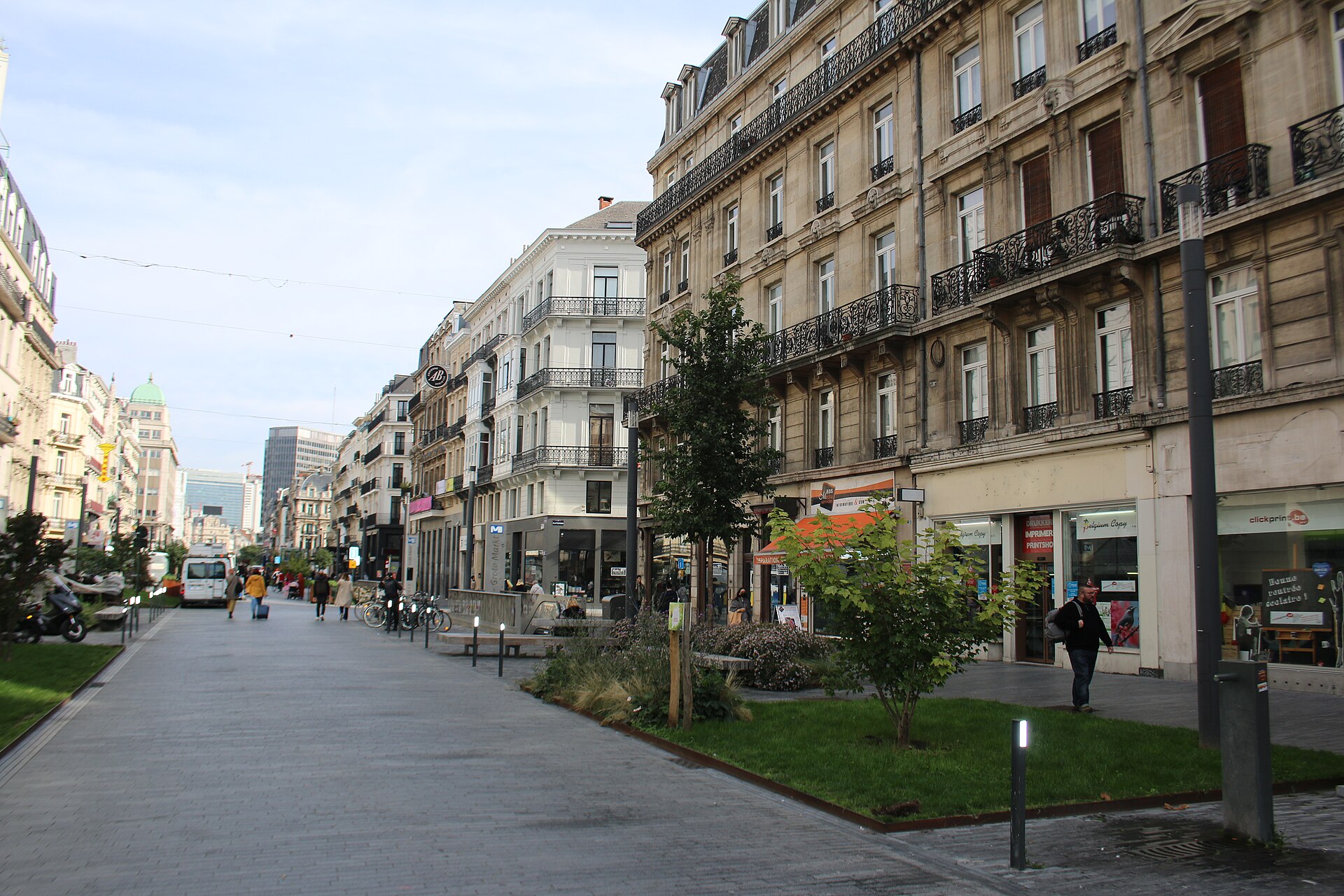
Walking along Boulevard Anspach: Anspachlaan 01 by FrDr, CC BY-SA 4.0, via Wikimedia Commons.
Final Thoughts
The hop-on hop-off bus is a product designed for cities where the sights are far apart and the public transport is intimidating. Brussels is neither. It is a capital you can cross on foot in the time it takes the bus to complete half a loop, with a metro that costs a third as much and runs ten times as often, and a historic core that has been deliberately closed to traffic precisely because walking through it is the better experience.
That said, there is no shame in buying one. If your knees hurt, if your children have stopped walking, if it is bucketing down and you have one afternoon left, a covered seat and a recorded voice explaining the Cinquantenaire is a perfectly reasonable thirty euros. Just buy it for that reason, on a resale platform, for twenty-four hours, and validate it after lunch — and spend the money you saved on the €9 ticket at Cantillon instead.