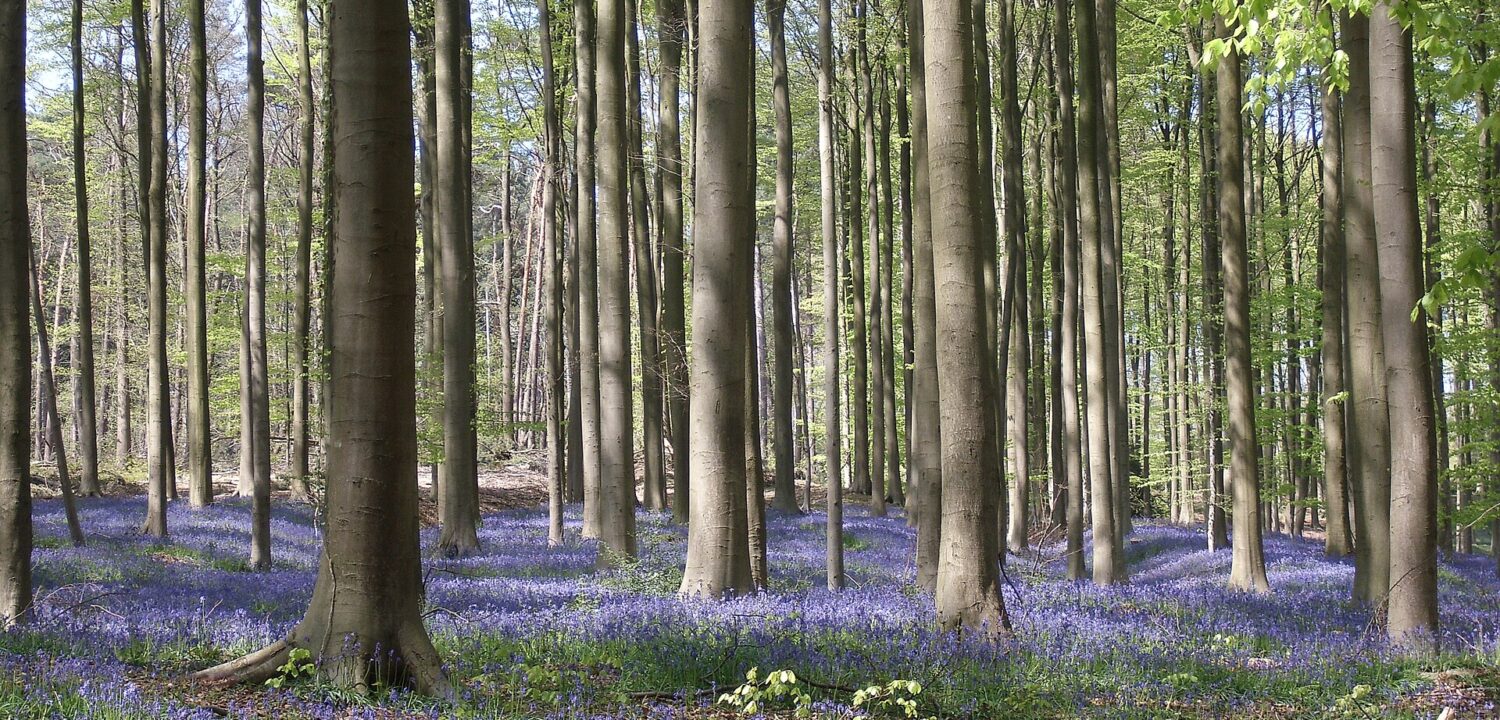
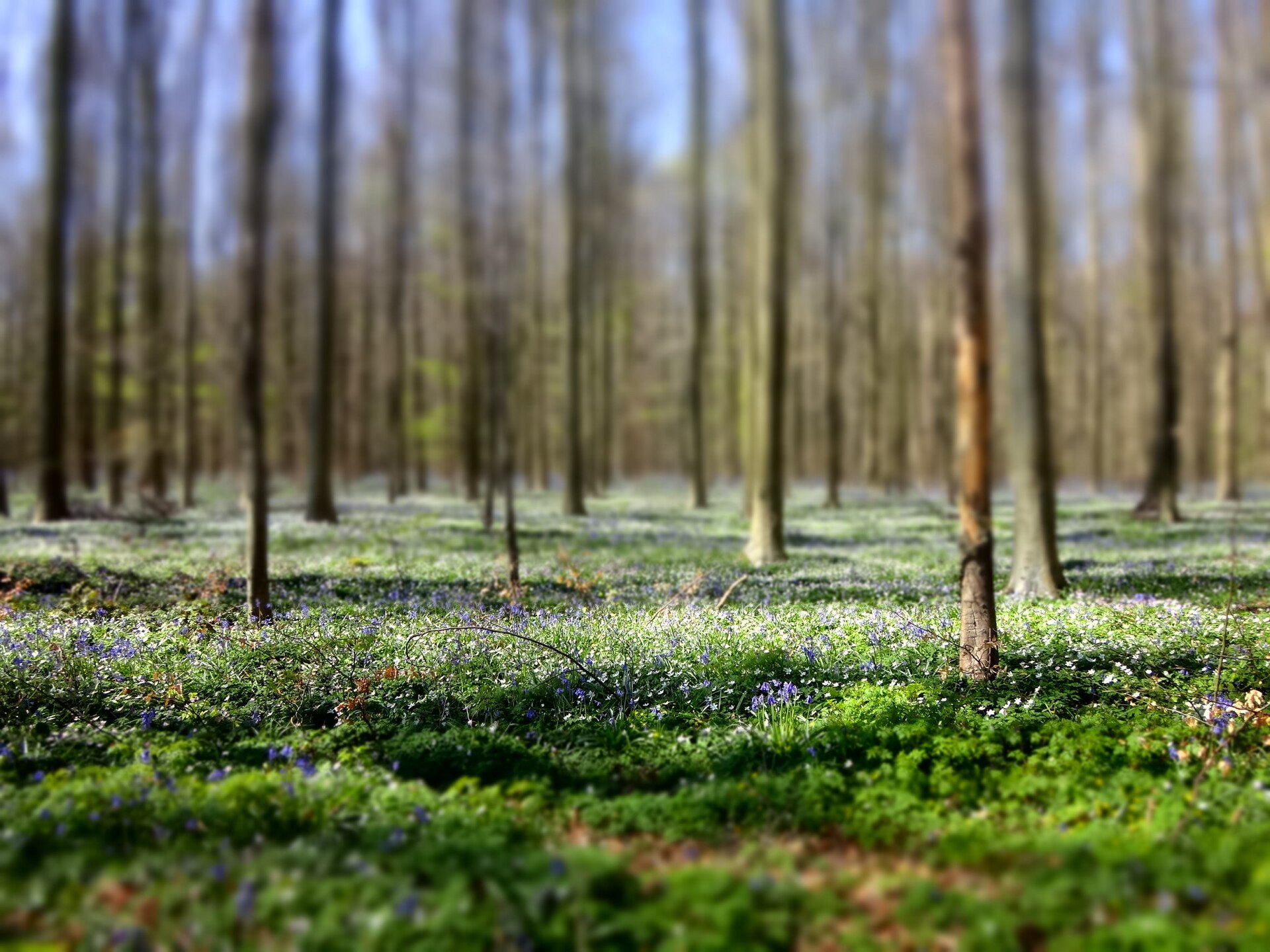
For two or three weeks each spring, the floor of a beech wood twenty kilometres south of Brussels turns a colour photographs never quite get right, somewhere between blue and violet, under beech leaves so new they’re almost yellow. The Hallerbos bluebells are the most striking natural sight within easy reach of Brussels, and they’ve become famous enough that seeing them well now takes a little planning. Arrive on a sunny Sunday afternoon without a plan and you’ll share the paths with half of Belgium. Arrive on a weekday morning at the right moment in April and you may have a whole slope of blue almost to yourself.
This guide covers when the bluebells flower, how to get there from Brussels by train, shuttle and bike, where to walk, how to avoid the crowds, how to photograph them without damaging them, and what else to do in Halle. The practical details were checked in September 2026 against the 2026 arrangements. The forest publishes each year’s shuttle dates and traffic measures in early spring, so check hallerbos.be before you set out.
Hallerbos at a Glance
| Where | Halle, Flemish Brabant, about 20 km south of Brussels |
| When | Mid-April to early May, depending on the spring. In 2026 the peak was expected around 16–22 April |
| Getting there | Train from Brussels-Midi to Halle, then the free festival shuttle on peak weekends, a bike (about 5 km) or a taxi |
| Entry | Free |
| Best time | A weekday, early in the morning or late in the afternoon |
| Allow | Half a day from Brussels, more with lunch in Halle |
| The one rule | Stay on the paths |
When Do the Bluebells Flower?
The flowers are wild hyacinths, the same bluebells as in English woods: boshyacinten in Dutch, jacinthes des bois in French. They flower in the short window between the forest floor warming up and the beech canopy closing overhead, which is why the display is so intense and so brief. In a typical year it runs from mid-April into early May, and the best of it lasts about two weeks. A warm March pulls it forward and a cold spring holds it back, so the dates shift from year to year. For 2026, the forest forecast flowering between about 12 and 25 April, with the peak around 16 to 22 April.
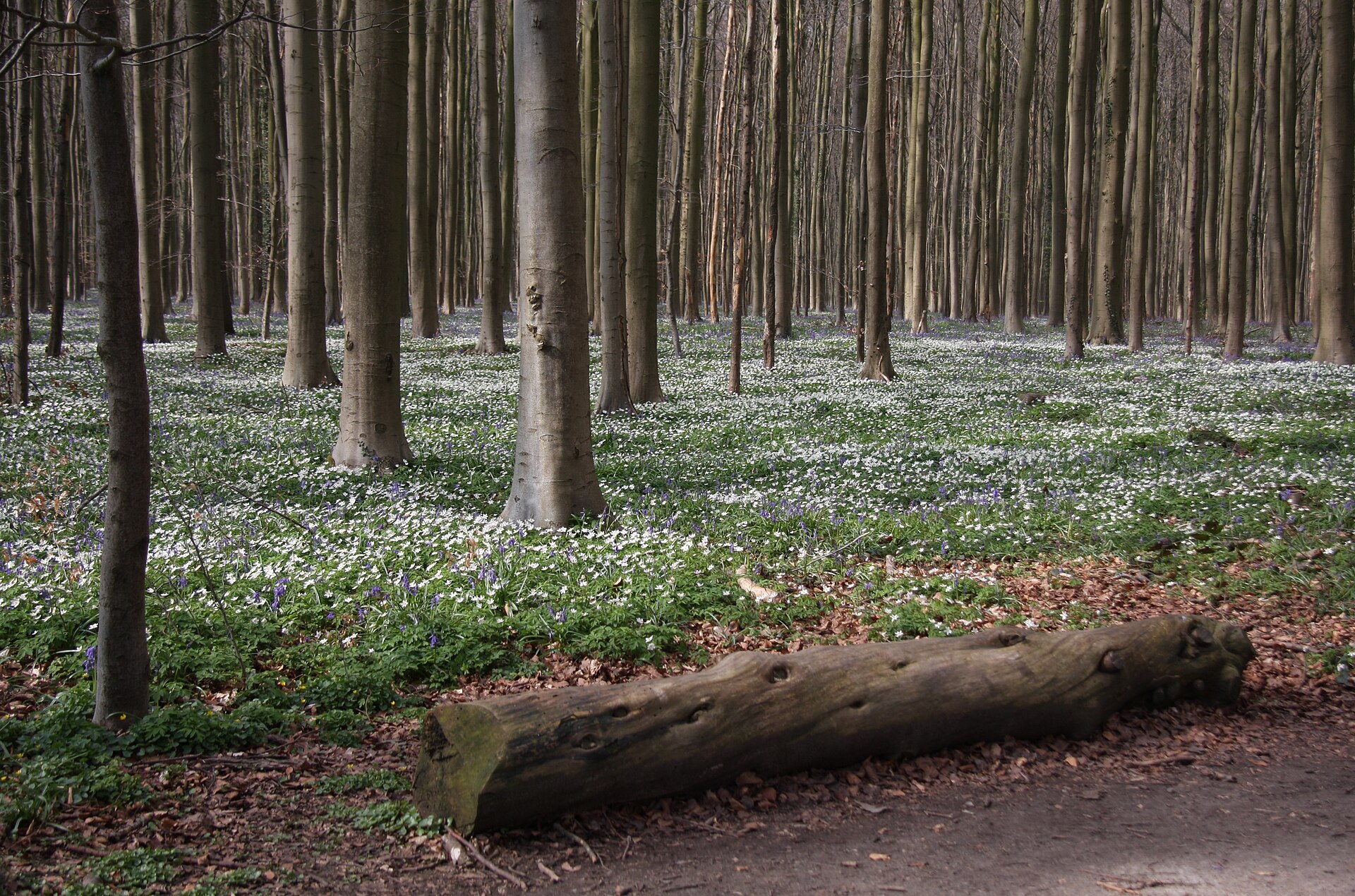
Don’t rely on a date you read months earlier. From late March, the Hallerbos website posts regular updates on how far the flowering has progressed, and that’s the only reliable guide. If you’re flexible, wait for the update that says the carpet is at its best and go within the next few days. Before the bluebells, from late March, the same slopes are white with wood anemones. That’s a lovely sight in its own right and a sign that the blue is about two to three weeks away.
Getting There from Brussels
The Hallerbos is one of the few great spring sights near Brussels that works perfectly by public transport, and on the busiest weekends that’s by far the easiest way to do it.
By Train and the Free Shuttle
Trains from Brussels-Midi to Halle take about 15 to 20 minutes and run frequently all day. During the bluebell season, the city of Halle and the Flemish forest agency run a free shuttle bus from Halle station to the forest on the peak weekends. In 2026 it ran on 11, 12, 18, 19, 25 and 26 April and on 1 May, every 20–30 minutes from 09:00. It leaves from the Stationsplein in front of Halle station, with further stops at the Welkomstlaan car park and on the Slingerweg in the town centre, and it drops you at the Bosmuseum car park (Parking 2) in the forest. Expect a queue at the station at mid-morning on a Sunday. It moves, but it’s another reason to go early. For tickets and passes on the train, see our Belgium by train guide.
By Train and Bike
From Halle station the forest is about 5 km away, and cycling is a very good option, especially on weekdays when there’s no shuttle. Bikes can be hired at Halle station, and in the festival period rental bikes are part of the city’s visitor offer. Be warned that the last stretch climbs, since the forest sits on the hills above the town, and bikes have to stay on the roads and marked tracks, not the walking paths.
On Weekdays Without the Shuttle
Outside the festival weekends there’s no shuttle. The practical choices are a bike, a taxi from Halle station, or a walk of an hour or more along roads that are not especially pleasant. A taxi for the short hop is a reasonable spend if you’re in a group, and it gets you to the forest in the quiet hours that make a weekday visit worthwhile.
By Car
On the peak weekends, don’t. The forest’s car parks are small, the roads fill quickly, and the city brings in traffic measures to cope. In 2026 the Vlasmarktdreef was closed from 4 April to 3 May, the Bosmuseum car park couldn’t be reached by car, and parking bans applied in surrounding streets from Friday 18:00 until Sunday or Monday evening on five busy weekends. One car park, Parking 4, was reserved for disabled badge holders. On a weekday outside peak times, driving is easy enough. If you’d rather someone else organised it, tour operators sell bluebell day trips from Brussels in season, and our Brussels tours guide explains how to tell the good ones from the rest.
Walking in the Forest
The Hallerbos covers more than 500 hectares of beech and mixed woodland on the hills south of Halle, crossed by a network of waymarked walks that loop out from the car parks. You don’t need a long route. The bluebells are spread through much of the forest, and a gentle loop of an hour or two takes you through plenty of the best of it. Download the walking map from the forest’s website before you go, or pick one up locally, because mobile signal under the trees can be patchy.
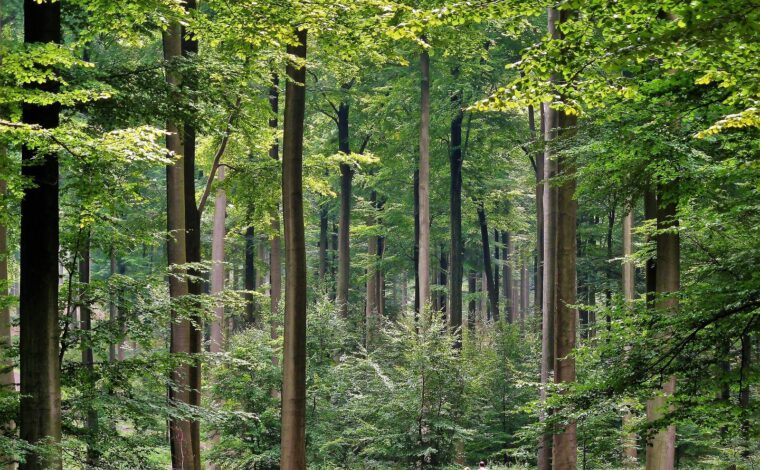
Look up as well as down. Much of the forest was felled during the First World War and replanted in the decades afterwards, which is why so many of the beeches are the same age and height, standing in those long, even ranks that make the photographs. The combination of the silver-grey trunks, the fresh green canopy and the blue floor is what makes the Hallerbos special. Plenty of forests have bluebells; few have them under trees like these.
How to Beat the Crowds
- Go on a weekday. The difference between a Tuesday and a Sunday is enormous.
- Go early or late. Before 09:00 the forest is quiet and the light is soft and low. The last two hours before sunset are nearly as good, and the day visitors have mostly gone.
- Avoid Sunday afternoons during the peak above all, and remember that the Easter school holidays fill the forest on weekdays too.
- Walk away from the car parks. Most visitors stay within a few hundred metres of where the bus drops them. Ten minutes further along the paths, it thins out dramatically.
Photographing the Bluebells
The blue is notoriously hard to capture. Bright midday sun washes it out and cameras tend to render it too purple. Soft light is your friend: early morning, late afternoon, or an overcast day, which saturates the colour beautifully. Get low, from the path, so the flowers fill the foreground, and use a longer focal length to compress the ranks of trunks behind them. A small tripod helps in the dim morning light, as long as it stays on the path too.
Leave the drone at home, because Flemish nature areas are strict about them and nobody in the forest wants one buzzing overhead. For other spring photo spots closer to the city, see our guide to photography spots in Brussels.
The Rules, and Why They Matter
The single most important thing is to stay on the paths. Every footstep on the carpet crushes the leaves the bulbs depend on, and a trampled patch can take years to recover. It’s the reason some side paths are closed at the peak. You’ll see people wading into the flowers for a photograph. Please don’t be one of them, however tempting the shot. The same goes for picking: the flowers are protected, and they wilt within minutes anyway. Keep dogs on a lead, take your litter home, and save the picnic for a spot away from the flowers.
Is the Hallerbos Worth It?
At the peak, on a quiet morning, absolutely. It’s one of the loveliest natural sights in the Low Countries, and it’s less than an hour from central Brussels by public transport. The honest caveats are about timing. A week before the peak you’ll see anemones and green shoots, and a week after it the blue is fading under a closing canopy. Go on a peak Sunday afternoon and the experience is more about queues and elbows than bluebells. If your trip falls outside the window, the Hallerbos is simply a pleasant beech wood, and there are nearer ones. Our round-up of Brussels parks and outdoor activities covers the alternatives.
Make a Day of It: Halle
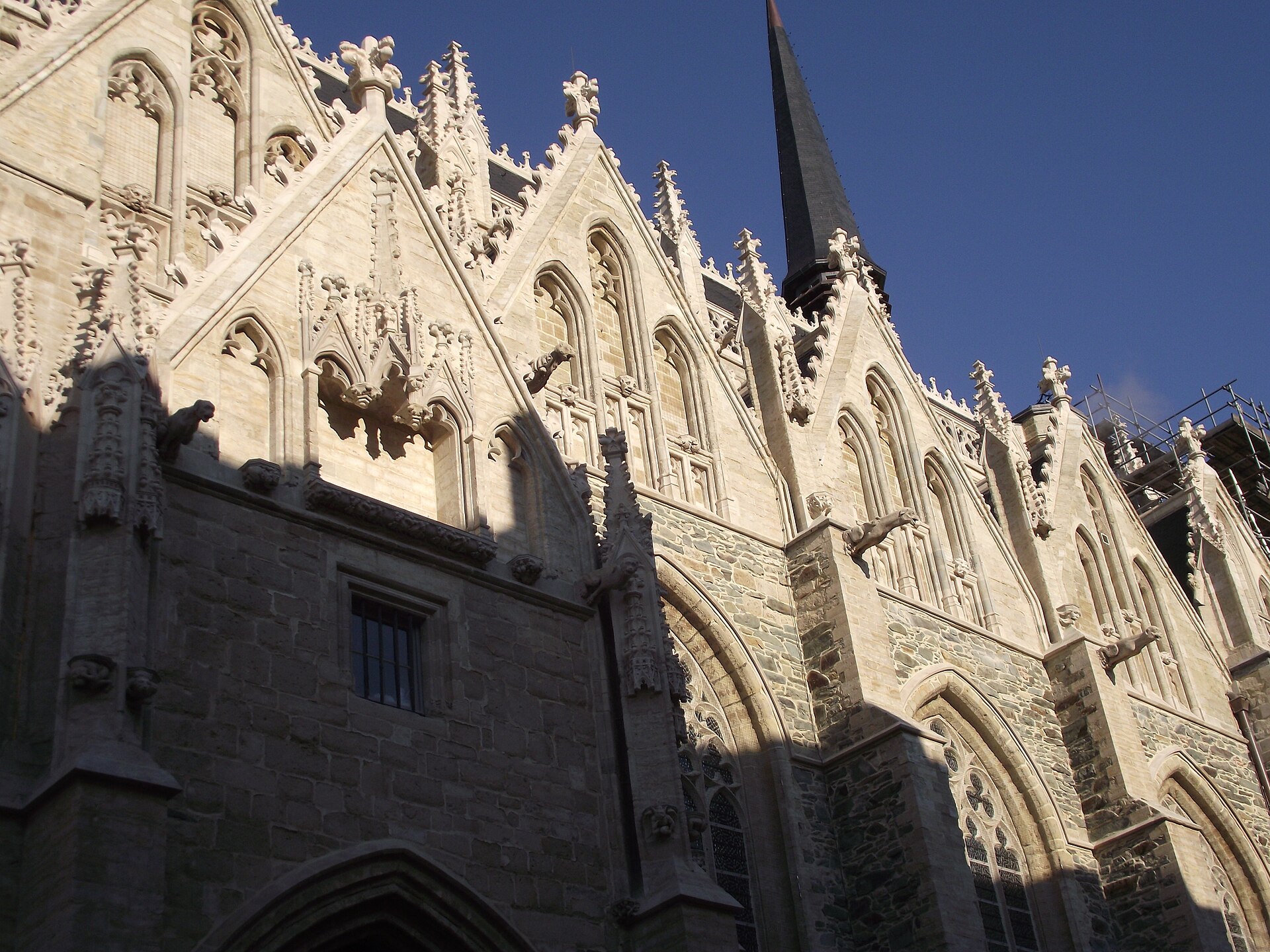
Halle itself is worth an hour. Its great Gothic basilica, the Sint-Martinusbasiliek, has drawn pilgrims for centuries to its Black Madonna, and it’s a fine, richly carved building. It’s a few minutes’ walk from the station, so you can see it before or after the forest. The small town centre around it has cafés and places for lunch.
Halle also sits on the edge of the Pajottenland, the rolling farmland of lambic beer and Bruegel landscapes. With a car or a bike, you can combine the bluebells with Beersel’s moated castle and its lambic breweries a few kilometres away. Our Belgium castles guide covers Beersel.
The Hallerbos with Children
Children tend to love it, especially if you turn it into a walk with a picnic afterwards. The forest paths are unpaved and can be muddy after rain, so an all-terrain pushchair or a baby carrier works better than a city buggy, and sturdy shoes are a must. The shuttle is the easiest way to arrive with small children, since it drops you right at the forest. For more family days out, see our guide to day trips from Brussels with kids.
If your dates miss the bluebells, the other great beech wood near Brussels is at its best across several seasons rather than one fortnight. The Sonian Forest starts on the city’s south-eastern edge, reachable by tram 44 or a short train ride to Groenendaal, and it’s glorious in May’s fresh green and November’s gold. Our Sonian Forest guide has the gateways and walks.
The bluebells aren’t the only reason to be here in the second half of April. The Royal Greenhouses of Laeken open for their short spring season around the same time, Floralia fills a castle park on the western edge of the city with tulips, and the terraces come back to life. Our Brussels in April guide puts the whole month together.
Related Brussels Guides
- Brussels Month by Month
- Brussels Events Calendar
- Best Time to Visit Brussels
- Brussels Weather Guide
- Day Trips from Brussels
- Brussels Outdoor Activities and Parks
- Belgium by Train
Useful Resources
- hallerbos.be: flowering updates from late March, the walking map, and each year’s shuttle and traffic arrangements.
- natuurenbos.be: the Flemish Agency for Nature and Forests, which manages the forest and organises the festival.
- halle.be: the city of Halle’s announcements on shuttles, rental bikes and road closures.
- belgiantrain.be: trains from Brussels-Midi to Halle.
Frequently Asked Questions
When is the best time to see the Hallerbos bluebells?
Usually mid to late April, with the peak lasting about two weeks. The exact dates depend on the spring weather, so follow the flowering updates on hallerbos.be from late March. A weekday morning at the peak is the ideal visit.
How do I get to the Hallerbos from Brussels without a car?
Take the train from Brussels-Midi to Halle, about 15 to 20 minutes. On peak weekends a free shuttle runs from Halle station to the forest. At other times, hire a bike at the station for the 5 km ride, or take a taxi.
Is the Hallerbos free?
Yes. There’s no entry charge for the forest, and the festival shuttle from Halle station is free. You only pay for the train.
How long should I spend in the Hallerbos?
An hour or two of walking covers plenty of the best bluebells. With travel from Brussels, allow half a day, or a full day if you add lunch in Halle or a visit to Beersel.
Can I bring my dog to the Hallerbos?
Yes, on a lead, and like everyone else it should stay on the paths.
Are there bluebells closer to Brussels?
There are smaller patches in the forests on the city’s southern edge, but nothing on the scale of the Hallerbos. For the full carpet under the beeches, it’s worth the short train ride to Halle.
Photo Credits
-
Bluebells under the beeches of the Hallerbos: Halle – Hallerbos by Maaike, CC BY 4.0, via Wikimedia Commons.
-
Wood anemones in the Hallerbos: Anemones in Hallerbos Belgium by Sally V, CC BY-SA 4.0, via Wikimedia Commons.
-
Bluebells coming into flower: Bluebells at Hallerbos 05 by Lilianwhite, CC BY 4.0, via Wikimedia Commons.
-
The Sint-Martinusbasiliek in Halle: Halle, Sint Martinusbasiliek 04 by Parsifall, CC BY-SA 3.0, via Wikimedia Commons.
Final Thoughts
The Hallerbos rewards a little planning more than almost any other sight near Brussels. Watch the flowering updates, pick a weekday if you possibly can, and be on the train to Halle early. Take the shuttle or a bike, walk ten minutes further than everyone else, and stay on the paths.
Get the timing right and you’ll stand among ranks of silver beech trunks rising from a floor of pure blue, under leaves that have only just opened, in near silence. It lasts two weeks a year, it’s free, and it’s less than an hour from the Grand-Place. If you’re in Brussels in the second half of April, there’s nothing else quite like it.