Antwerp is the Belgian city that behaves least like the postcard. It is a working port — the second-largest in Europe — with a diamond trade, a fashion industry with a global reputation, a nightlife that runs properly late, and a medieval core that happens to contain four Rubens altarpieces in the building they were painted for. This Antwerp travel guide is written for people who have done Bruges and Ghent and are wondering whether the third Flemish city is worth a full stop rather than an afternoon. It is, and by a wider margin than most itineraries allow for.
What follows covers Antwerp as a destination: two days properly used, what the museums cost, where to eat and sleep, and what has changed recently — including the fact that the Rubenshuis is not the museum most guides still describe. If you only have a day out and back from the capital, our Antwerp day trip from Brussels guide handles the compressed version. Prices were checked in September 2026 and are written for travel into 2027.
Antwerp at a Glance
| Where | North of Brussels on the Scheldt, ~35–55 minutes by train |
| Ideal stay | Two days. It is the largest and most varied city in Flanders |
| Station | Antwerpen-Centraal, a ten-minute walk from the centre and an attraction in itself |
| Cathedral | Around €12, four Rubens altarpieces, tallest church tower in the Low Countries |
| MAS | €10 (+€2 for temporary shows), free under 12, free first Wednesday, closed Monday |
| Rubenshuis | The historic house is closed for restoration; the Rubens Experience and garden are open from €15 |
| Free and excellent | The MAS rooftop, and the Sint-Anna pedestrian tunnel under the river |
| Compared with Bruges | Not pretty in the same way. Much more interesting to spend two days in |
Arriving: The Best Railway Station in Europe
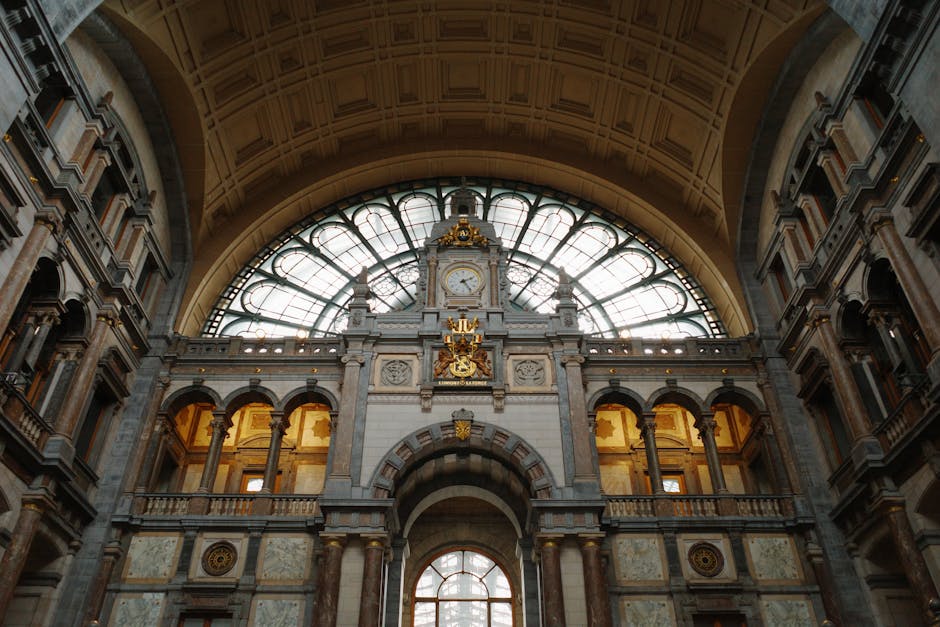
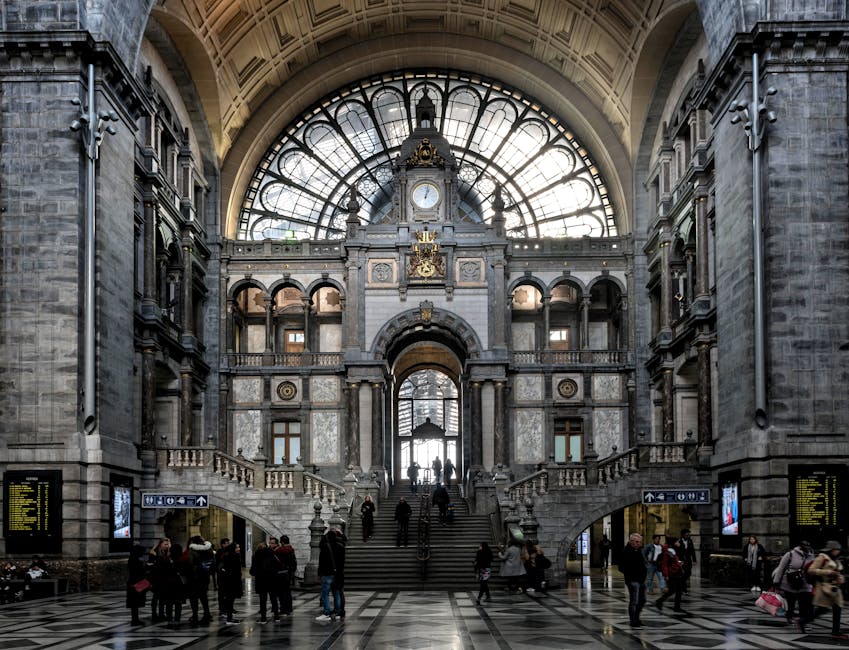
Start by looking up. Antwerpen-Centraal, finished in 1905, is a stone-clad neo-Baroque hall under an enormous iron-and-glass train shed, and when the station was rebuilt to take high-speed traffic the platforms were stacked onto four underground levels rather than the historic hall being touched. The result is a building routinely voted among the most beautiful stations in the world, and you walk into it before you have decided anything about the city.
Trains from Brussels take between thirty-five and fifty-five minutes depending on the service, at least twice an hour, no reservations. Ghent is about an hour, Bruges about an hour and a quarter. Centraal is a ten-minute walk from the historic centre through the Meir, the main shopping street; trams run the same route if you have a bag.
The Historic Centre
Grote Markt and the Cathedral
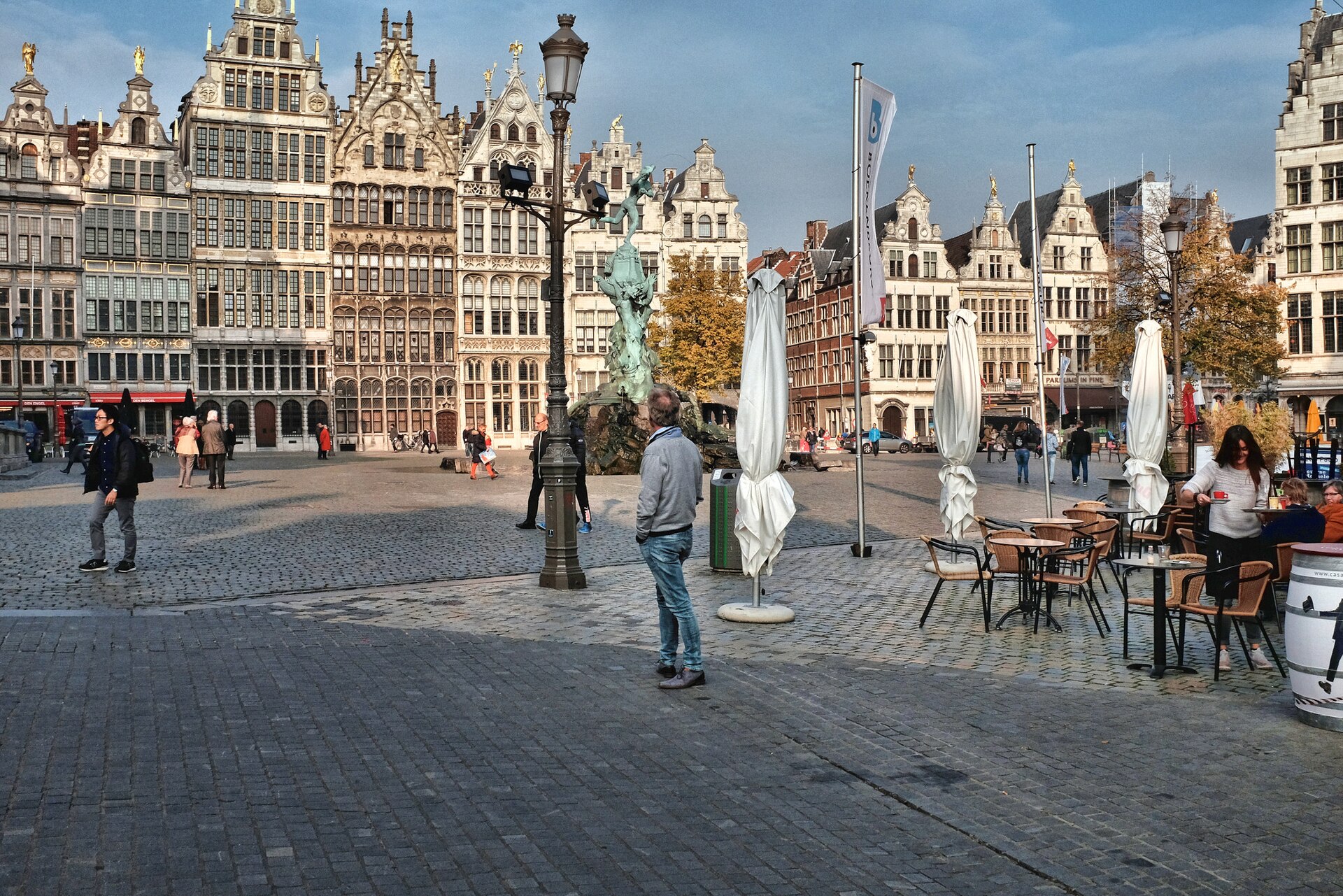
The Grote Markt is a triangle of tall Renaissance guild houses around the Brabo fountain, which depicts a Roman soldier throwing a giant’s severed hand into the Scheldt — the legend behind the city’s name, and an unusually violent piece of civic sculpture. The City Hall on the west side is sixteenth-century and UNESCO-listed.
Behind it rises the Cathedral of Our Lady, whose single completed tower at 123 metres is the tallest church tower in the Low Countries and, like the Brussels belfries, part of a UNESCO listing. Inside are four Rubens altarpieces including the Raising of the Cross and the Descent from the Cross — painted for this building, removed by the French, and returned. Entry is around €12. Seeing Rubens at the scale he intended, in the light he intended, is a different experience from seeing him in a gallery.
The Rubenshuis — read this before you go
Almost every guide to Antwerp tells you to visit Rubens’ house and studio. As of 2026 the historic residence is closed for a major restoration. What is open is the new Rubens Experience and the Rubens Garden, with tickets from around €15, typically Tuesday to Sunday 10:00 to 17:00 and closed Mondays.
Whether that is worth €15 depends on what you wanted. If you came to stand in the room where he worked, wait for the reopening — and check rubenshuis.be before you build a day around it. If you wanted context for the paintings in the cathedral, the Experience does that job. Either way, the cathedral is where the actual Rubens is.
Plantin-Moretus
The quietest great museum in Belgium and, for some visitors, the best thing in Antwerp. It is the house and workshop of the Plantin printing dynasty, occupied continuously from the sixteenth century, and it holds the two oldest surviving printing presses in the world. It is a UNESCO World Heritage Site in its own right — the only museum on the list — and it is almost always empty. Allow ninety minutes.
The River and the Docks
MAS
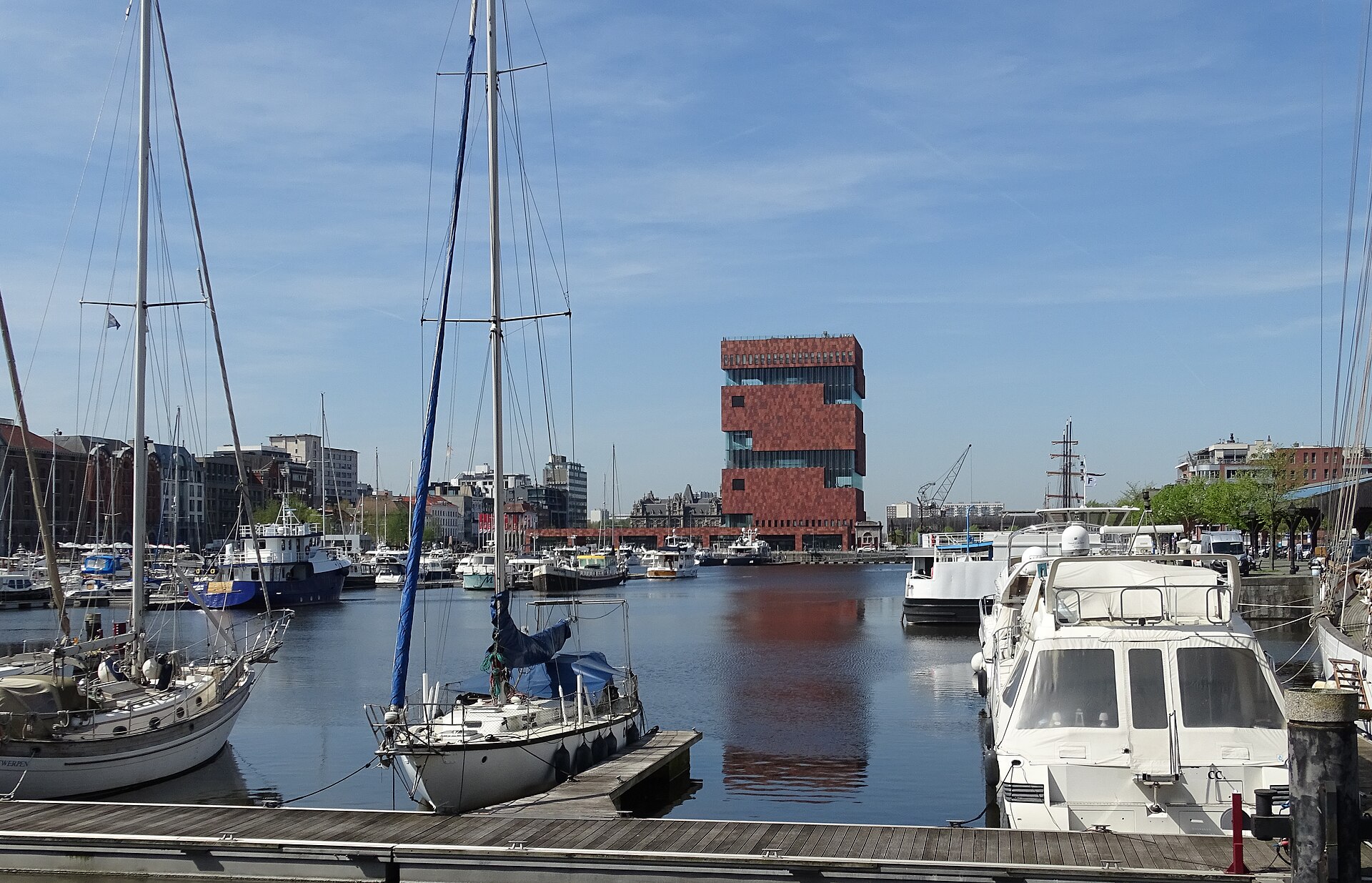
The Museum aan de Stroom is a stack of red Indian sandstone boxes, each rotated a quarter turn from the one below, standing in the old dock area north of the centre. Entry to the museum floors is €10 for adults, €2 more for temporary exhibitions, free for under-12s and free on the first Wednesday of the month. It is closed on Mondays and opens roughly 10:00 to 17:00 midweek and to 18:00 at weekends.
The escalator spiral up the outside of the building to the rooftop is free, and the rooftop gives you the best view in Antwerp — the cathedral spire on one side, the docks and the container cranes on the other, which is the honest picture of what this city is.
Het Steen and the Scheldt
Het Steen is the oldest building in Antwerp, a small stone fortress on the riverbank that now serves as the city’s visitor centre and a cruise terminal. The river walk either side of it is where Antwerp makes most sense: a working waterway, wide and grey and busy, with the city turned towards it.
The Sint-Anna tunnel
The best free thing in Antwerp. A pedestrian tunnel runs under the Scheldt from the Sint-Jansvliet to the Linkeroever, opened in 1933, reached by original wooden escalators that are worth the trip on their own. Walk through — it takes about ten minutes — and you come up on the left bank facing the whole Antwerp skyline from the water. Almost no visitor does this and everybody who does talks about it afterwards.
Fashion, Design and the South
Antwerp’s fashion reputation is not marketing. The Antwerp Six graduated from the Royal Academy here in the early 1980s and the city has been a serious design centre ever since. MoMu, the fashion museum, sits on Nationalestraat in the middle of the retail district; the streets around it — Nationalestraat, Kammenstraat, Lombardenvest — are the best independent shopping in Belgium by a distance, and considerably better than anything in Brussels.
Het Zuid, the nineteenth-century district south of the centre, is where the galleries, the good restaurants and the evening crowd are. KMSKA, the Royal Museum of Fine Arts, is here — it reopened in 2022 after an eleven-year closure and a radical internal rebuild, and holds the largest Ensor collection anywhere along with Van Eyck, Memling, Rubens and Fouquet. FOMU, the photography museum, is a few streets away.
Further out, Zurenborg and the Cogels-Osylei are a residential grid of eccentric turn-of-the-century houses — Art Nouveau, neo-Gothic, Egyptian revival, whatever the client wanted — that is free to walk around and rewards half an hour.
Two Days in Antwerp
Day one — the centre. The station, the Meir, the Grote Markt and the Cathedral in the morning. Lunch off the square. Plantin-Moretus in the afternoon, then down to Het Steen and the river, and through the Sint-Anna tunnel at golden hour for the skyline. Dinner in the centre or the Sint-Andries quarter.
Day two — the edges. MAS first, rooftop included, when the dock quarter is quiet. Then south: MoMu and the Nationalestraat shops, KMSKA in the afternoon, and an evening in Het Zuid. If you have energy left, Zurenborg is a twenty-minute walk east of Centraal.
With a third day, add the Middelheim open-air sculpture museum, which is free, or take the tram out to the port for a boat tour.
Where to Stay
The historic centre, between the Grote Markt and the Meir, is the obvious base: everything is walkable and you are ten minutes from the station. It is also the noisiest at weekends.
Het Zuid is the choice if you want restaurants and galleries on your doorstep and do not mind a fifteen-minute walk or a short tram ride to the cathedral. It is where a lot of Antwerpenaars would tell you to stay.
Around Centraal is convenient, cheaper, and mixed — the diamond quarter immediately around the station is quiet after hours and the streets north of it are less appealing. Fine for one night before an early train, less good for two.
Antwerp is materially cheaper than Bruges and broadly comparable with Ghent. There is a good hostel supply and a lot of design-led small hotels, which is what you would expect from this city.
Eating and Drinking
Antwerp eats better than any other Flemish city. The local specialities are worth seeking out: Antwerpse handjes (hand-shaped biscuits, back to the Brabo legend again), Elixir d’Anvers, and above all De Koninck, the city’s own amber ale, ordered as a bolleke after the round glass it comes in. Ask for a bolleke and you will get one without further explanation.
Where to eat: Het Zuid for restaurants, the Sint-Andries quarter for smaller places, the Grote Markt for the view and the premium. The rule holds here as everywhere in Belgium — one street back from the main square halves the price and improves the food. Our guides to traditional Belgian dishes and the Belgian beer guide cover the national picture.
Antwerp also has the strongest late-night culture in Flanders, helped by the student population and the port. Bars stay open properly late in a way they do not in Bruges.
On the Antwerp City Card
Antwerp sells a city card covering museums, the cathedral and public transport over 24, 48 or 72 hours. We are not going to quote a price, because published figures currently disagree by more than twenty euros a tier — some listings say €25/€35/€45 and others €45/€55/€65 for the same product in the same year. Check visitantwerp.com directly before buying, and do the arithmetic against what you actually plan to visit: at the lower price it pays back quickly, at the higher one it needs a serious museum day.
What Is Overrated
- The diamond district as a sight. It is a trading district, not an attraction. There is nothing to see from the street and buying diamonds as a tourist is a specialist activity with specialist risks.
- Eating on the Grote Markt. Beautiful square, tourist pricing. Drink there instead.
- Assuming the Rubenshuis is open. The historic house is not. Check before you plan a day around it.
- Coming on a Monday. MAS, KMSKA, MoMu and the Rubens Experience all close. The cathedral does not, but a Monday is a walking day.
- Giving Antwerp half a day. The most common structural mistake in Belgian itineraries. It is a full two-day city.
- Skipping the Sint-Anna tunnel because it sounds dull. It is free, it takes twenty minutes round trip, and it is the best view of the city.
Practicalities
- Language. Dutch. The city is Antwerpen; Anvers is the French form you will see on Brussels departure boards.
- Trams. De Lijn, with a useful underground section — the “premetro” — running from Centraal towards the river. Buy before boarding.
- Museums close on Mondays, almost without exception.
- The centre is walkable, but Antwerp is bigger than Bruges or Ghent and the tram genuinely saves time between the centre, Het Zuid and MAS.
- Bring shoes for cobbles in the old town and normal pavement everywhere else.
- Luggage. Centraal has station lockers, which are the sensible answer if you arrive before check-in — see our guide to luggage storage for how the Belgian system works.
If Antwerp is one stop on a longer Belgian trip rather than the whole of it, the ticket maths changes. Fares are now priced by distance, so the coast costs more than Antwerp, and the 30% weekend discount for adults saves most on the longer runs. Our guide to Belgium by train sets out the fares after the 2025 overhaul, the weekend and under-26 discounts, and the departure-board names that trip people up. Anvers is Antwerp, for a start.
Related Brussels Guides
- Antwerp Day Trip from Brussels — the single-day version, with train times and a tighter route.
- Ghent Travel Guide — the third Flemish city, an hour away.
- Bruges Travel Guide — the prettiest of the three, and the busiest.
- Belgium Travel Guide — the country as a whole, region by region.
- 7 Days in Belgium — the week that finishes with two nights in Antwerp.
- How Many Days Do You Need in Belgium? — how long each city really takes.
- Belgian Beer Guide — and where the bolleke fits in.
Useful Resources
- visitantwerp.com — the city’s tourist board, and the only place to trust on the Antwerp City Card price.
- rubenshuis.be — restoration status, the Rubens Experience and current ticketing.
- mas.be — MAS prices, opening hours and the free-first-Wednesday rule.
- kmska.be — the Royal Museum of Fine Arts after its 2022 reopening.
- momu.be — the fashion museum’s current exhibition and hours.
- belgiantrain.be — trains from Brussels, Ghent, Bruges and the airport.
Frequently Asked Questions
Is Antwerp worth visiting?
Yes, and it is the Flemish city most often under-allocated on a first trip. It has the finest railway station in Europe, four Rubens altarpieces in the cathedral they were painted for, a UNESCO-listed printing museum, the best independent shopping in Belgium, a serious fashion and design scene, and a working port that gives the whole place a character Bruges and Ghent do not have.
How many days do you need in Antwerp?
Two full days. One covers the Grote Markt, the cathedral, Plantin-Moretus and the river; the second covers MAS, the fashion quarter, KMSKA and Het Zuid. A single day means choosing between the historic centre and everything else, which is why so many people leave thinking Antwerp is a smaller city than it is.
Is the Rubenshuis open?
The historic artist’s residence is closed for a major restoration. What is open is the Rubens Experience and the Rubens Garden, from around €15, usually Tuesday to Sunday 10:00–17:00 and closed Mondays. Many published guides have not caught up with this, so check rubenshuis.be before planning around it. The actual Rubens paintings are in the Cathedral of Our Lady.
How much does the Cathedral of Our Lady cost?
Around €12 for adults. It holds four Rubens altarpieces, including the Raising of the Cross and the Descent from the Cross, in the building they were painted for. Its tower, at 123 metres, is the tallest church tower in the Low Countries and is UNESCO-listed as part of the belfries of Belgium and France.
Is Antwerp better than Bruges or Ghent?
It is not competing on the same terms. Bruges is the most beautiful, Ghent the best balance of medieval townscape and living city, and Antwerp the largest and most varied — the one with fashion, contemporary art, a port and late-night bars. If your interests are art, design or food rather than canals, Antwerp is the pick of the three.
What is the Sint-Anna tunnel?
A pedestrian tunnel under the river Scheldt, opened in 1933, running from Sint-Jansvliet in the old town to the Linkeroever. It is free, takes about ten minutes to walk, and is reached by the original wooden escalators. The left bank gives you the classic view of the Antwerp skyline across the water, and almost no visitor makes the trip.
Do Antwerp museums close on Mondays?
Yes, almost all of them — MAS, KMSKA, MoMu, FOMU and the Rubens Experience among them. The Cathedral of Our Lady stays open. If a Monday is unavoidable, plan a walking day: the Grote Markt, the river, the Sint-Anna tunnel, the fashion streets and Zurenborg all work without a ticket.
Photo Credits
-
The Grote Markt and Brabo fountain: Grote Markt Antwerpen With Guild Houses by Jules Grandgagnage, CC BY-SA 3.0, via Wikimedia Commons.
-
The MAS across the marina: Antwerpen Museum aan de Stroom (MAS) 04 by Ad Meskens, CC BY-SA 4.0, via Wikimedia Commons.
Final Thoughts
Antwerp suffers on Belgian itineraries because it does not photograph like Bruges. What it has instead is depth: a cathedral full of Rubens, a printing house that has not changed since the sixteenth century, a fine-arts museum that spent eleven years being rebuilt and came back extraordinary, a fashion district with a genuine international reputation, and a river with container ships on it. None of that fits into an afternoon.
Give it two days, walk under the Scheldt at least once, and order a bolleke without asking what it is. And check the Rubenshuis before you go — the house everybody tells you to visit is behind hoardings, and knowing that in advance is worth more than any other single piece of advice on this page.