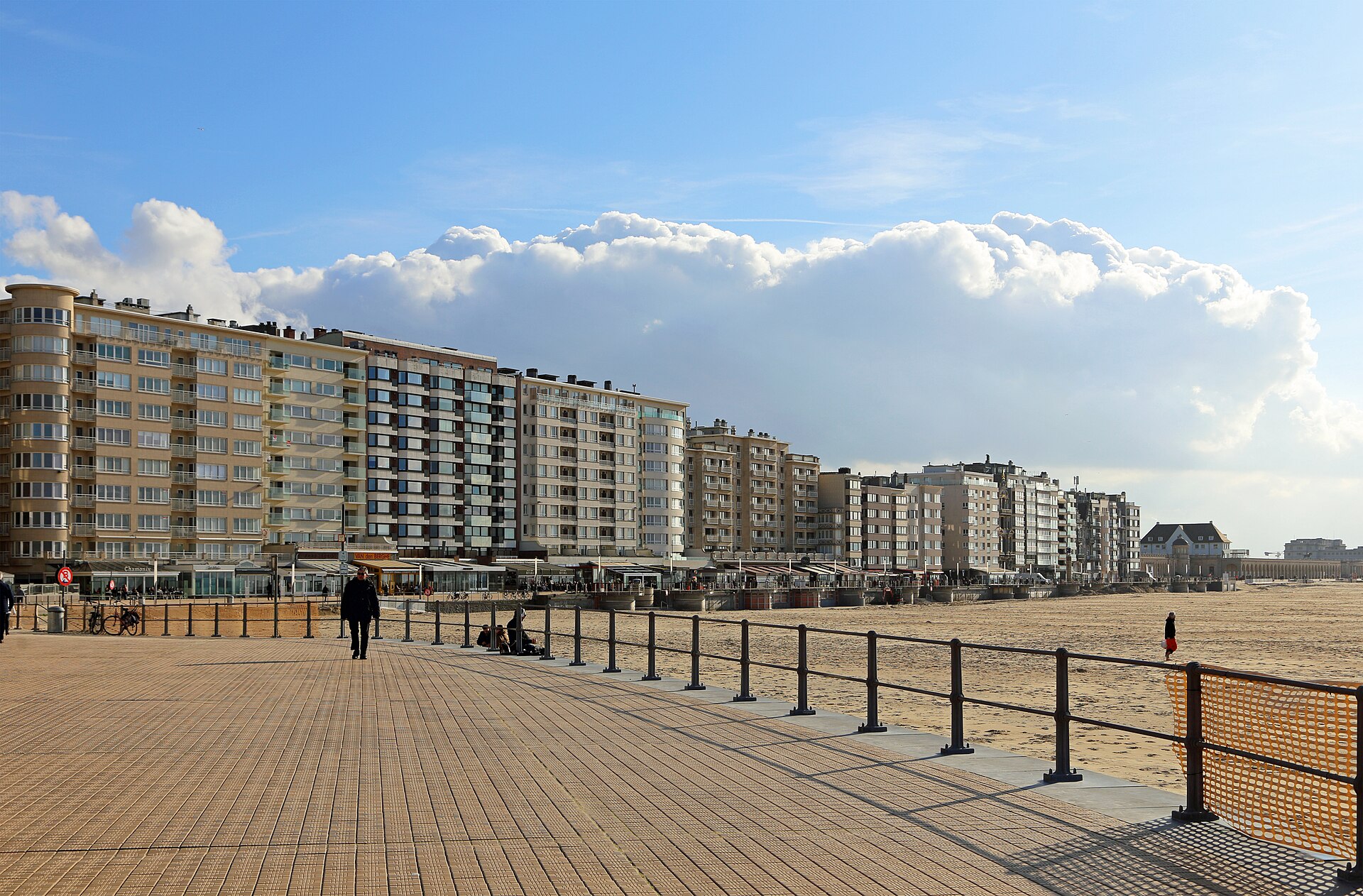
Sixty-five kilometres of sand, one tram line running the entire length of it, and almost no international visitors. The Belgian coast is the part of the country that Belgians themselves go to and foreigners almost entirely miss, and the reason is straightforward: it does not look like a holiday brochure. The seafront is a near-continuous wall of apartment blocks, the sea is grey, the wind blows, and the whole thing has the slightly stubborn air of a place built for people who were going to come anyway.
It is also genuinely worth a couple of days, and the Kusttram — the longest continuously operated tram line in the world — is one of the best-value journeys in Europe. This guide covers what is actually there, which resorts differ from each other, what the tram costs and when to come. Prices were checked in September 2026 and are written for travel into 2027.
The Belgian Coast at a Glance
| Length | ~65 km, De Panne (French border) to Knokke-Heist (Dutch border) |
| From Brussels | ~1½ hours direct to Ostend or Knokke, hourly |
| The tram | Kusttram: 67 stops, 2h25 end to end, since 1885 |
| Tram fares | €1.70 single via the De Lijn app, €2.50 cash, €7.50 for a 24-hour pass |
| Best base | Ostend for a town, De Haan for prettiness, Knokke for money |
| Ideal stay | Two nights. One day is enough to say you went |
| Best months | May–June and September. August is a scrum |
| Honest verdict | Not beautiful. Genuinely interesting, and a good tram ride |
Getting There
Direct trains run from all three main Brussels stations to Ostend and to Knokke, taking about an hour and a half, roughly hourly, with no reservation. Blankenberge is on the Knokke line and De Panne has its own service via Ghent. From Bruges the coast is only fifteen to twenty minutes away, which makes it an easy add-on to a Flanders trip — see our Bruges travel guide.
Once you are on the coast, everything runs on the tram. Do not drive: parking in the resorts in summer is a competitive sport and the coastal road is one long queue in August.
The Kusttram
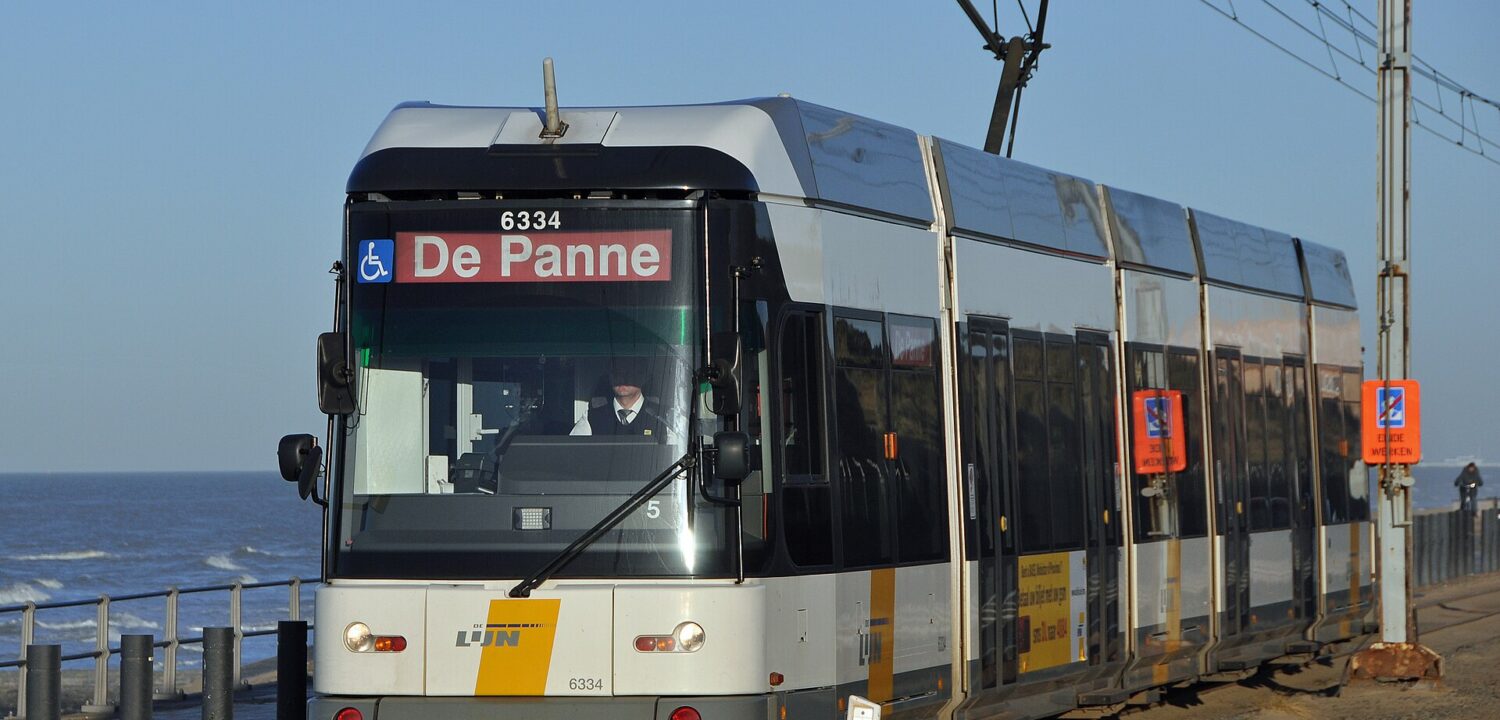
The Kusttram is the spine of the whole region and the single best reason to come. It runs from De Panne to Knokke-Heist, 67 kilometres and 67 stops, and has been operating continuously since 1885 — the longest tram line in the world by that measure. End to end takes two hours and twenty-five minutes.
Frequencies are genuinely good: every ten, fifteen or twenty minutes during the day depending on the season, and every half hour in the evening. Fares as at 2026: €1.70 for a single bought as a QR ticket in the De Lijn app, €2.50 in cash on board, and €7.50 for a 24-hour pass that is valid across the whole Flanders network, not just the coast. Three days is €15 and five days €25.
The day pass is the obvious purchase. Hop off wherever the seafront looks interesting, walk a stretch of beach, get back on. The line runs behind the dunes in places and along the seafront in others, so the view alternates between marram grass and apartment towers, which is a fair summary of the coast as a whole.
The Resorts, West to East
De Panne
The western terminus, on the French border, with the widest beach on the coast — wide enough for sand yachting, which is a genuine local sport here. Behind it lies the Westhoek nature reserve, the largest dune landscape in Belgium, which is the best walking on the coast by a distance. Plopsaland, a large children’s theme park, is also here and is the reason many Belgian families come.
Koksijde and Oostduinkerke
Quieter, duney, and home to the coast’s most extraordinary survival: shrimp fishing on horseback. Fishermen ride Brabant draught horses chest-deep into the surf dragging nets behind them, a technique that has died out everywhere else in the world and has been on the UNESCO intangible cultural heritage list since 2013. Demonstrations run on set dates in summer — check locally before travelling for it, because it depends on tides.
Nieuwpoort
A working fishing port with one of the largest marinas in northern Europe, and the place where the Belgian army opened the sluices in October 1914 to flood the plain and stop the German advance. The Westfront visitor centre at the Ganzepoot sluice complex tells that story and is much less visited than the memorials around Ypres.
Ostend
The only place on the coast that is a town rather than a resort, and therefore the best base. Ostend has a proper year-round population, a fishing harbour, a station five minutes from the beach, and the coast’s real museums: Mu.ZEE for Belgian art, the James Ensor House — Ensor was born here and painted the place obsessively — the Amandine, the last Ostend trawler to fish off Iceland, preserved in a dry dock, and the three-masted Mercator in the marina. Fort Napoleon, a pentagonal Napoleonic fort in the dunes east of town, is the most atmospheric building on the coast.
Ostend also has the best eating on the coast, particularly around the Visserskaai and the fish market, where the North Sea shrimp and sole are the point.
De Haan
The prettiest stop on the line and the one exception to the apartment rule. De Haan was developed as a garden resort under a royal decree that limited building height, so it kept its Belle Époque villas and low-rise streets while everywhere else went vertical. Its tram station is a small timbered building that looks like a Swiss cottage. Einstein lived here briefly in 1933 after leaving Germany. If you want one stop that is simply lovely, this is it.
Blankenberge
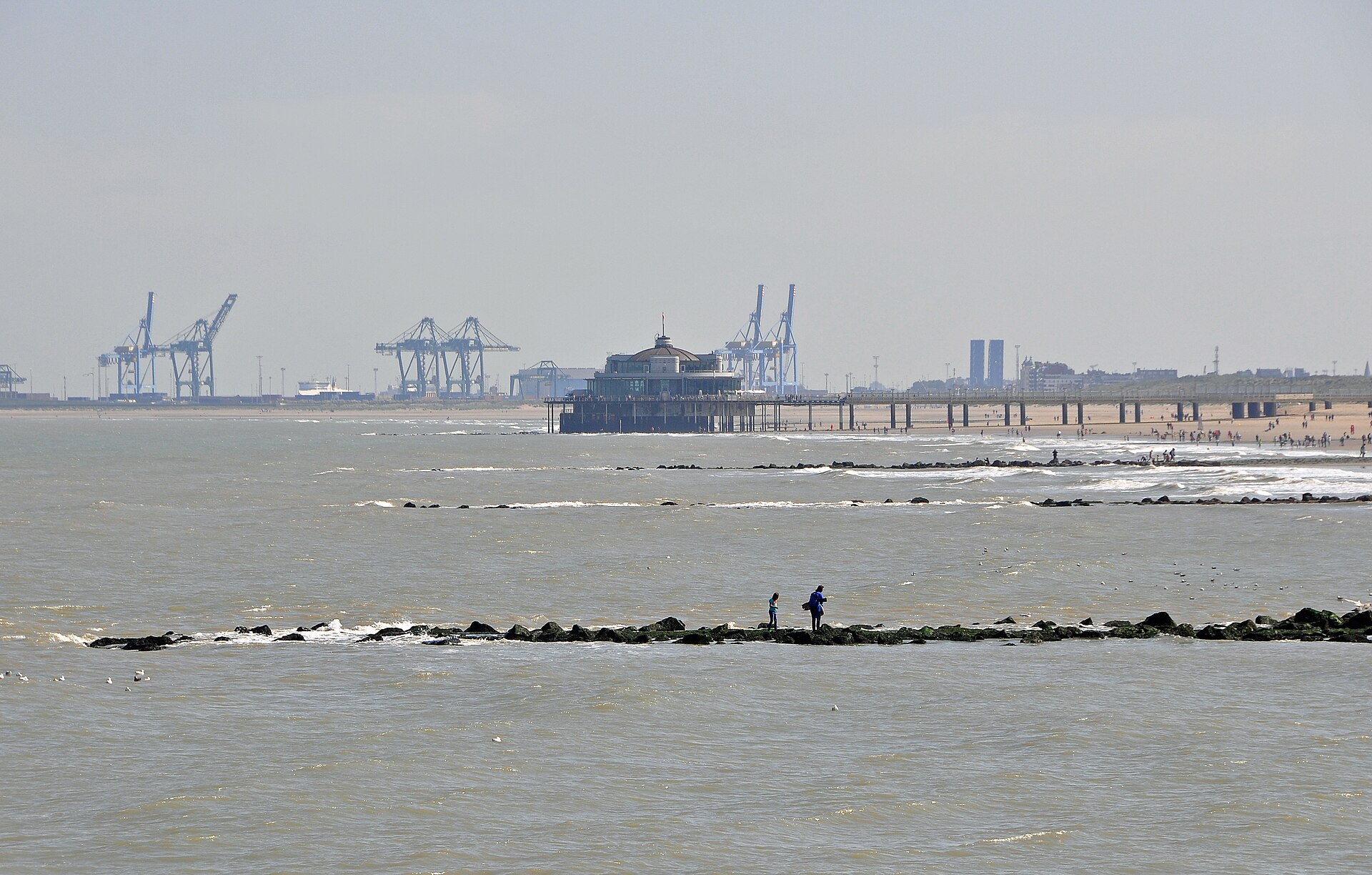
The busiest and most frankly commercial resort: a long pier with a rotunda on the end, an aquarium, amusements, and a seafront that is packed in July. It also gives you the clearest view of what this coast really is — from the beach you can see the container cranes of Zeebrugge working a couple of kilometres away.
Zeebrugge
Not a resort. It is one of Europe’s major container and car-handling ports, the ferry link to Hull, and a cruise terminal. Included here because cruise passengers dock at Zeebrugge and are told they have arrived in Bruges, which is fifteen kilometres inland.
Knokke-Heist
The expensive end. Knokke, and the Zoute district in particular, is where Belgian money spends its summers: designer shops, an unusual density of commercial art galleries, and property prices to match. It is also the gateway to Het Zwin, a cross-border tidal nature reserve of salt marsh and creeks that is one of the best birdwatching sites in the Low Countries and a complete change of register from the promenade a kilometre away.
Two Days on the Coast
Day one. Train to Ostend, drop the bag, walk the Albert I promenade and the Visserskaai, then Mu.ZEE or the Ensor House. Tram east to De Haan in the late afternoon for the villas and a drink. Back to Ostend for a fish dinner.
Day two. Buy a day pass. Tram west to Oostduinkerke and Koksijde for the dunes, on to De Panne for the Westhoek reserve and the wide beach. Ride back east in the evening — the light along this coast at the end of the day is the thing everyone remembers.
With a third day, go east instead: Blankenberge for the pier, Knokke for Het Zwin, and a long walk on the salt marsh.
Eating
The coast’s food is better than the architecture suggests. North Sea shrimp — small, grey, sweet, hand-peeled — are the local delicacy, served as garnaalkroketten (croquettes) or in a tomato. Sole, mussels in season and eel are the other staples. Ostend’s Visserskaai is the obvious place to eat them and is priced accordingly; the streets behind it are cheaper and often better.
Waffles, ice cream and chips are everywhere and are exactly what you expect. Our guide to traditional Belgian dishes covers the national picture.
When to Come
- May–June. The best combination: long days, warm enough, the tram running frequently, nowhere full.
- July–August. Peak. Belgian and Dutch families fill the resorts, accommodation prices double, and parking is impossible. The beaches are genuinely crowded.
- September–October. Excellent. Warm sea, empty sand, cheap rooms, spectacular light.
- Winter. Bracing and largely shut, but the coast has a real winter culture — long walks, hot chocolate, and a surprising number of places open for Sunday lunch.
Whatever the month, bring a windproof layer. This is the North Sea and the wind is the constant.
The Honest Verdict
The Belgian coast is not beautiful in the way the Flemish art cities are beautiful, and anyone selling it that way is selling you something. The seafront development is relentless, the sea is the colour of weak tea, and on a grey Tuesday in November the whole thing can feel like the end of the world.
What it is instead: an intact working shoreline with a nature reserve at each end, the best public transport ride in the country, genuinely good seafood, a Napoleonic fort, a UNESCO-listed fishing tradition performed on horseback, and a resort at De Haan that a building height limit saved from everything that happened to its neighbours. It is also somewhere you will hear almost no English, which after Bruges is its own kind of relief.
Come for two days, buy the day pass, and treat the tram as the attraction rather than the transport. If you are deciding where a spare two days in Belgium should go, our guide to how many days you need in Belgium weighs the coast against the Ardennes and the art cities.
What Is Overrated
- The coast in August. The single worst time to come, and the time most people try to.
- Driving. The tram is faster, cheaper and does not need parking.
- Zeebrugge as a destination. It is a port. If your cruise docks there, get the train to Bruges.
- Doing the coast as a day trip from Brussels. Three hours of return travel for a few hours on sand. Stay a night or skip it.
- Expecting the Mediterranean. The sea is cold in every month. Belgians swim anyway.
Practicalities
- Language. Dutch throughout — the entire coast is in Flanders. English is widely spoken in Ostend and Knokke, less so in the smaller resorts.
- Tickets. The De Lijn app is materially cheaper than paying cash on board. Download it before you arrive.
- Accommodation. Heavily seasonal and dominated by apartment rentals. Book well ahead for July and August; walk in almost any other month.
- Cycling. There is a continuous coastal cycle route, and hire is available in every resort. It is flat and windy in equal measure.
- Beaches. Wide, sandy, well kept, and lifeguarded in season only. Tides are significant — the sea goes a long way out.
Related Brussels Guides
- Belgium Travel Guide — the country as a whole, and where the coast fits.
- How Many Days Do You Need in Belgium? — whether you have room for two nights by the sea.
- Bruges Travel Guide — fifteen minutes inland, and the usual pairing.
- 7 Days in Belgium — including the shoulder-season variation that swaps a night for the coast.
- Ypres and Flanders Fields — the other West Flanders trip, and the flooding of the Yser plain.
- Day Trips from Brussels — the routes that genuinely work in a single day.
Useful Resources
- delijn.be — Kusttram timetables, live running and app ticketing. The authority on fares.
- belgiantrain.be — direct trains from Brussels to Ostend, Knokke, Blankenberge and De Panne.
- visitoostende.be — Ostend’s tourist board: museums, the Amandine, Fort Napoleon and events.
- zwin.be — Het Zwin nature park at Knokke: opening hours and guided walks.
- visitflanders.com — coastal walking and cycling routes.
Frequently Asked Questions
Is the Belgian coast worth visiting?
For two days, yes — with realistic expectations. It is not a scenic coastline: the seafront is dominated by apartment blocks and the sea is grey. What it offers is the world’s longest tram line, sixty-five kilometres of wide sand, excellent North Sea seafood, dune reserves at both ends, and a resort at De Haan that kept its Belle Époque villas. It is also where Belgians actually holiday, which makes it a very different experience from Bruges.
How much does the Kusttram cost?
As at 2026: €1.70 for a single ticket bought as a QR code in the De Lijn app, €2.50 for a cash single on board, and €7.50 for a 24-hour pass valid across the entire Flanders network. Three-day and five-day passes cost €15 and €25. The day pass is the sensible buy if you plan to hop between resorts.
How long does the Kusttram take end to end?
Two hours and twenty-five minutes from De Panne to Knokke-Heist, covering 67 kilometres and 67 stops. Trams run every ten to twenty minutes during the day depending on the season and every half hour in the evening, so you can get off wherever you like and pick up the next one.
Which Belgian coastal town is best?
Ostend if you want a real town with museums, a fishing harbour and year-round restaurants — it is the best base. De Haan if you want somewhere genuinely pretty, thanks to a building height limit that spared it the apartment towers. Knokke-Heist if you want smart shops and Het Zwin nature reserve. De Panne if you want the widest beach and the biggest dunes.
Can you do the Belgian coast as a day trip from Brussels?
You can, but it is a poor use of the day — about three hours of return travel for a few hours on the sand. It works much better from Bruges, which is only fifteen to twenty minutes away, or as a two-night stay in its own right.
What is shrimp fishing on horseback?
A fishing technique surviving only at Oostduinkerke, in which fishermen ride Brabant draught horses chest-deep into the surf towing nets for North Sea shrimp. It has been recognised by UNESCO as intangible cultural heritage since 2013. Demonstrations are held on set dates in summer and depend on the tides, so check locally before planning a trip around one.
When is the best time to visit the Belgian coast?
May, June and September. You get long days, workable weather, frequent trams and none of the August crush, when Belgian and Dutch families fill every resort and accommodation prices double. Winter is bracing and largely shut but has its own following. Bring a windproof layer in any month — this is the North Sea.
Photo Credits
-
The Albert I promenade at Ostend: Oostende Albert I-Promenade R03 by Marc Ryckaert, CC BY-SA 4.0, via Wikimedia Commons.
-
Blankenberge beach and pier: Blankenberge Beach R01 by Marc Ryckaert, CC BY 3.0, via Wikimedia Commons.
-
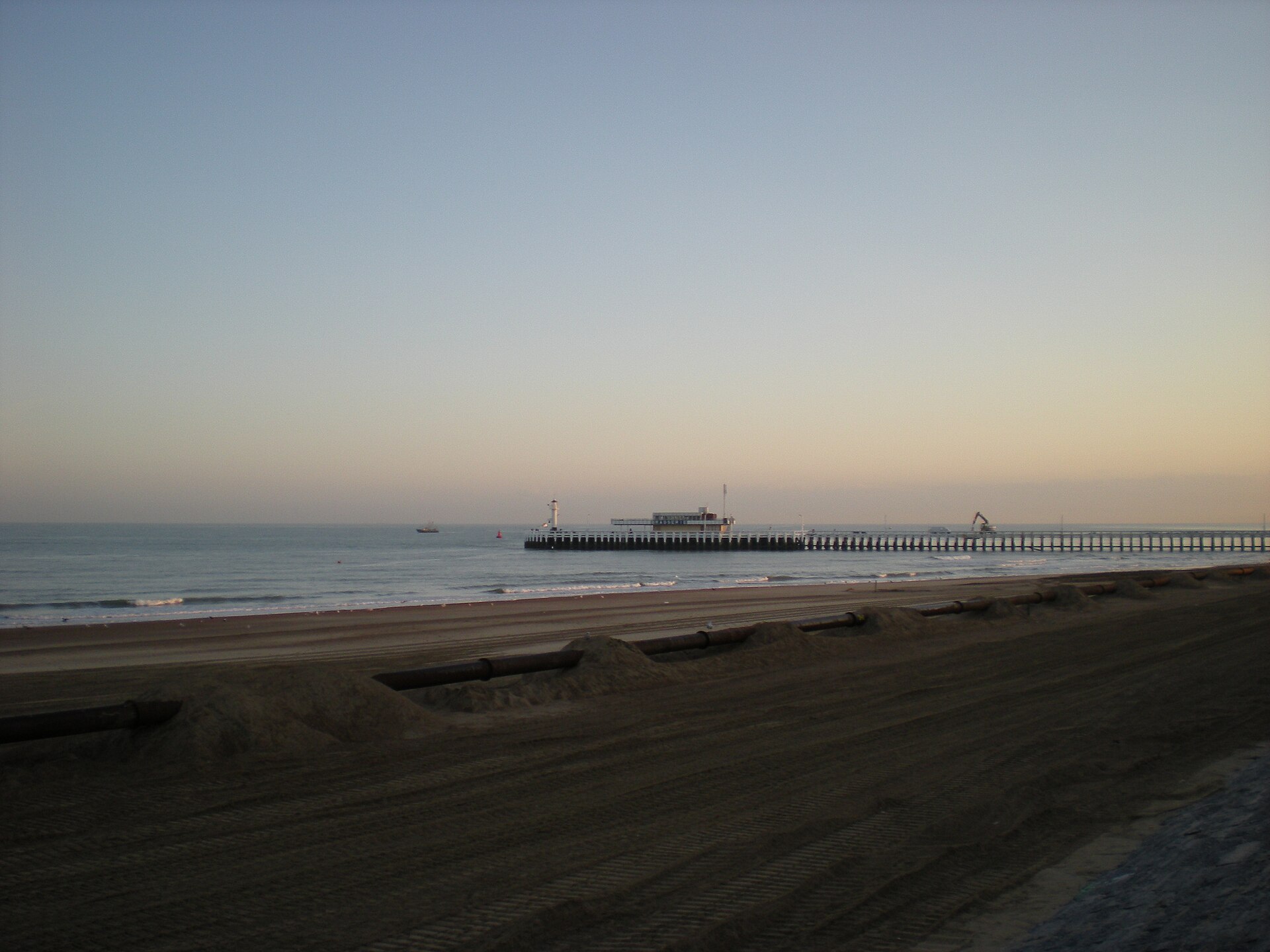
The estacade at Ostend: Estacade d’Ostende by Karel Leermans, CC BY-SA 3.0, via Wikimedia Commons.
Final Thoughts
There is a particular pleasure in going somewhere that has made no effort to seduce you. The Belgian coast was built for Belgians, it is still used by them, and it has never bothered to explain itself to anybody else. That means shrimp croquettes rather than tapas, a tram rather than a coast road, and a wall of flats in front of an enormous beach.
Buy the day pass, ride a long stretch of the line, get off at De Haan and again at Oostduinkerke, and eat fish in Ostend with the boats outside. Do that in late May or September and you will understand why a country of twelve million people keeps coming back to a shoreline nobody else has heard of.