The history of Brussels spans more than 1,400 years — from a 6th-century chapel on a river island to the political capital of the European Union. Brussels has been Burgundian, Spanish, Austrian, French, Dutch, and Belgian; razed by Louis XIV, occupied by Nazis, and reinvented as the seat of NATO and the EU. This 2026 guide covers the full timeline, the city’s major eras, and the historic sites that still tell the story today.
History of Brussels: A 1,400-Year Timeline
| Date | Event |
|---|---|
| ~580 | Saint Gaugericus builds chapel on Senne river island — earliest settlement. |
| 979 | Charles, Duke of Lower Lorraine, transfers Saint Gudula relics — official founding. |
| 1041 | Lambert II builds new castle and city walls. |
| 1383 | Brussels becomes ducal seat of Brabant. |
| 1402 | Construction of the Town Hall begins. |
| 1531 | Brussels becomes capital of the Spanish Netherlands under Charles V. |
| 1695 | Louis XIV’s bombardment destroys Grand Place. |
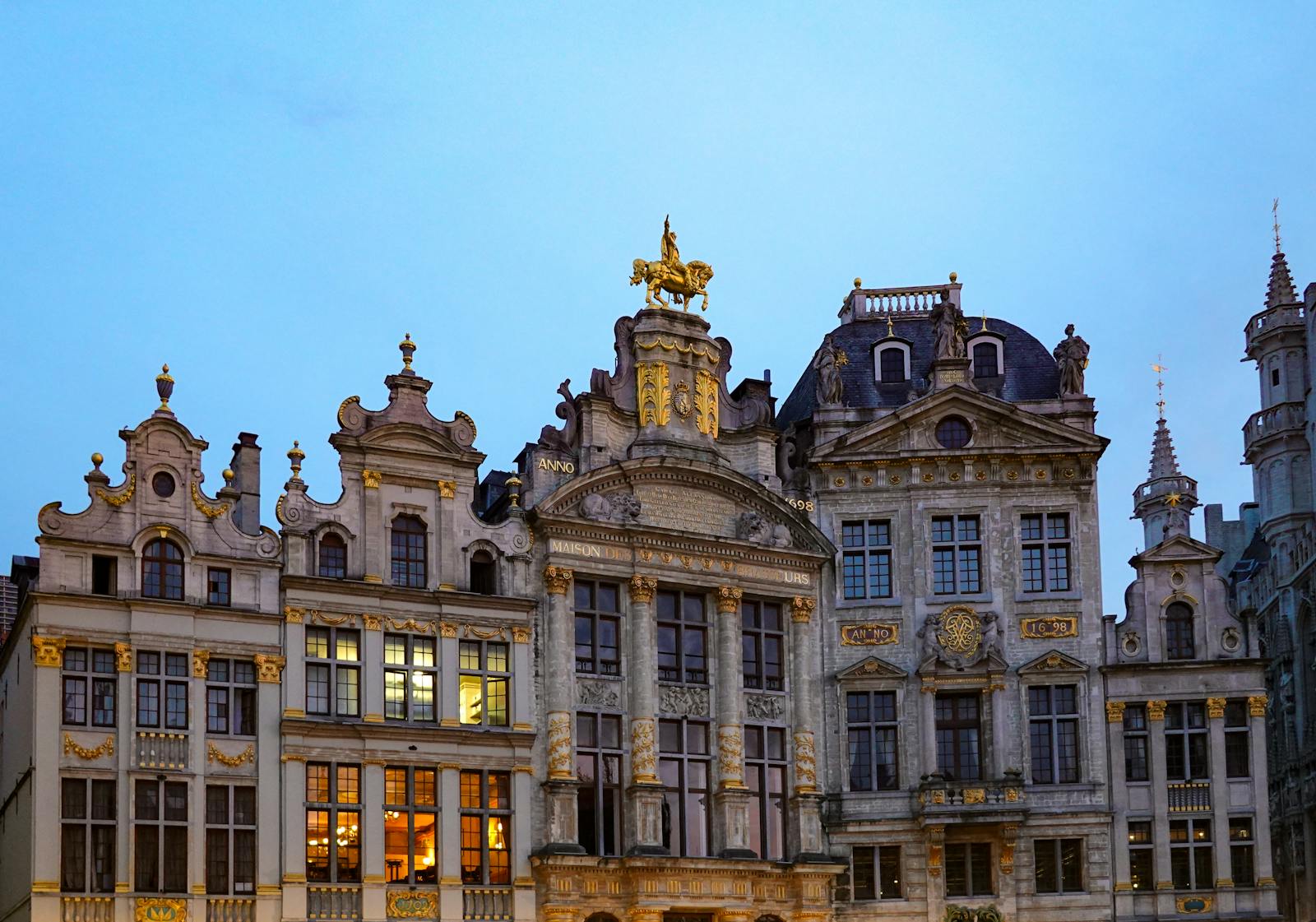
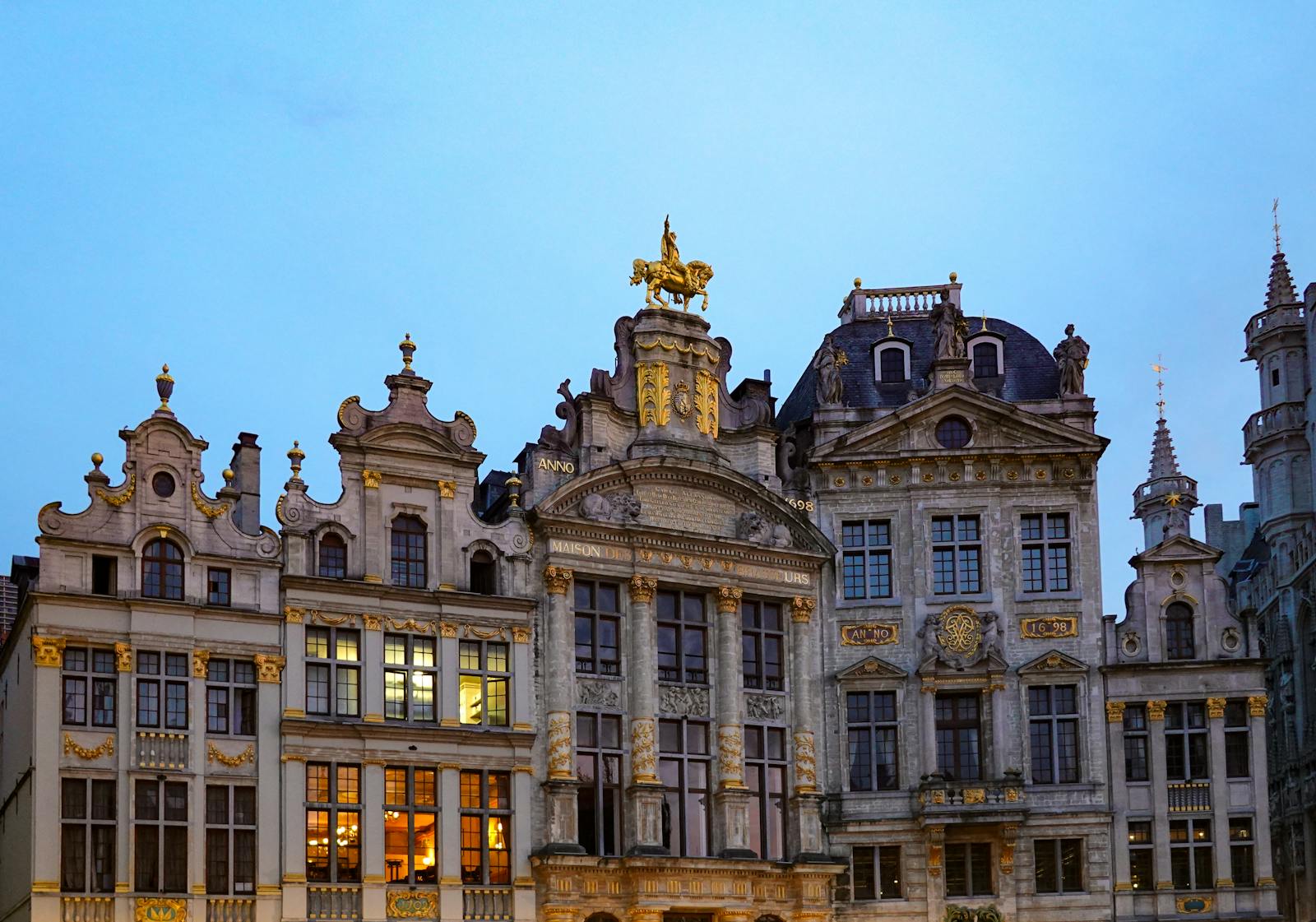
| 1698-1700 | Grand Place rebuilt in 4 years — current Baroque guild houses date from this period. |
| 1830 | Belgian Revolution; independence from the Netherlands. |
| 1831 | Brussels becomes capital of the new Kingdom of Belgium. |
| 1893 | Victor Horta’s Hôtel Tassel — birth of Art Nouveau. |
| 1958 | Expo 58 World Fair; Atomium built. |
| 1967 | NATO headquarters moves to Brussels. |
| 2001 | Brussels officially recognised as the Capital of Europe. |
History of Brussels: Origins (6th-10th Century)
The first traces of human settlement in Brussels date to Roman times. The river Senne (which now flows mostly underground) created a marshy floodplain with several small islands. According to local legend, Saint Gaugericus (Saint Géry) built a chapel on one of these islands around 580 AD — the seed of what would become Brussels.
The official founding date is usually given as 979 AD, when Charles, Duke of Lower Lorraine, transferred the relics of Saint Gudula from Moorsel to Saint Gaugericus’ chapel. Charles, appointed Duke of Lower Lotharingia by Otto II, also built the first permanent fortification on the island — establishing Brussels as a defended outpost.
History of Brussels: Medieval Commercial Centre (11th-14th Century)
Brussels’ location on the trade route between Bruges, Ghent and Cologne transformed it from a fortified village into a textile-trading hub. The local Senne river powered mills; the trade routes brought wealth.
In 1041, Lambert II of Leuven built a new castle and the first ring of city walls. The walls were expanded twice — the second ring (built 1357-1379) is roughly where Brussels’ Pentagon “small ring” boulevard runs today, defining the city’s compact historic core.
The 13th-14th centuries saw the construction of Cathedral of Saint Michael and Saint Gudula, the foundation of the Cinquantenaire trade fair, and the rise of powerful merchant guilds whose halls would later define Grand Place.
History of Brussels: Burgundian and Habsburg Golden Age (15th-16th Century)
When Brussels became the ducal seat of Brabant in 1383, it began a 300-year ascent as one of northern Europe’s most important political and cultural centres.
Under the Dukes of Burgundy (15th century) and then the Habsburg emperor Charles V (1500-1558) — who was born in Ghent and ruled from Brussels — the city became capital of the Spanish Netherlands. Charles V’s grandfather Maximilian I established the Habsburg court; under Charles’s reign Brussels was effectively the capital of one of Europe’s most powerful empires.
The city’s construction during this period included the Town Hall (1402-1455), the Maison du Roi, and the early guild houses around Grand Place.
History of Brussels: The 1695 Bombardment
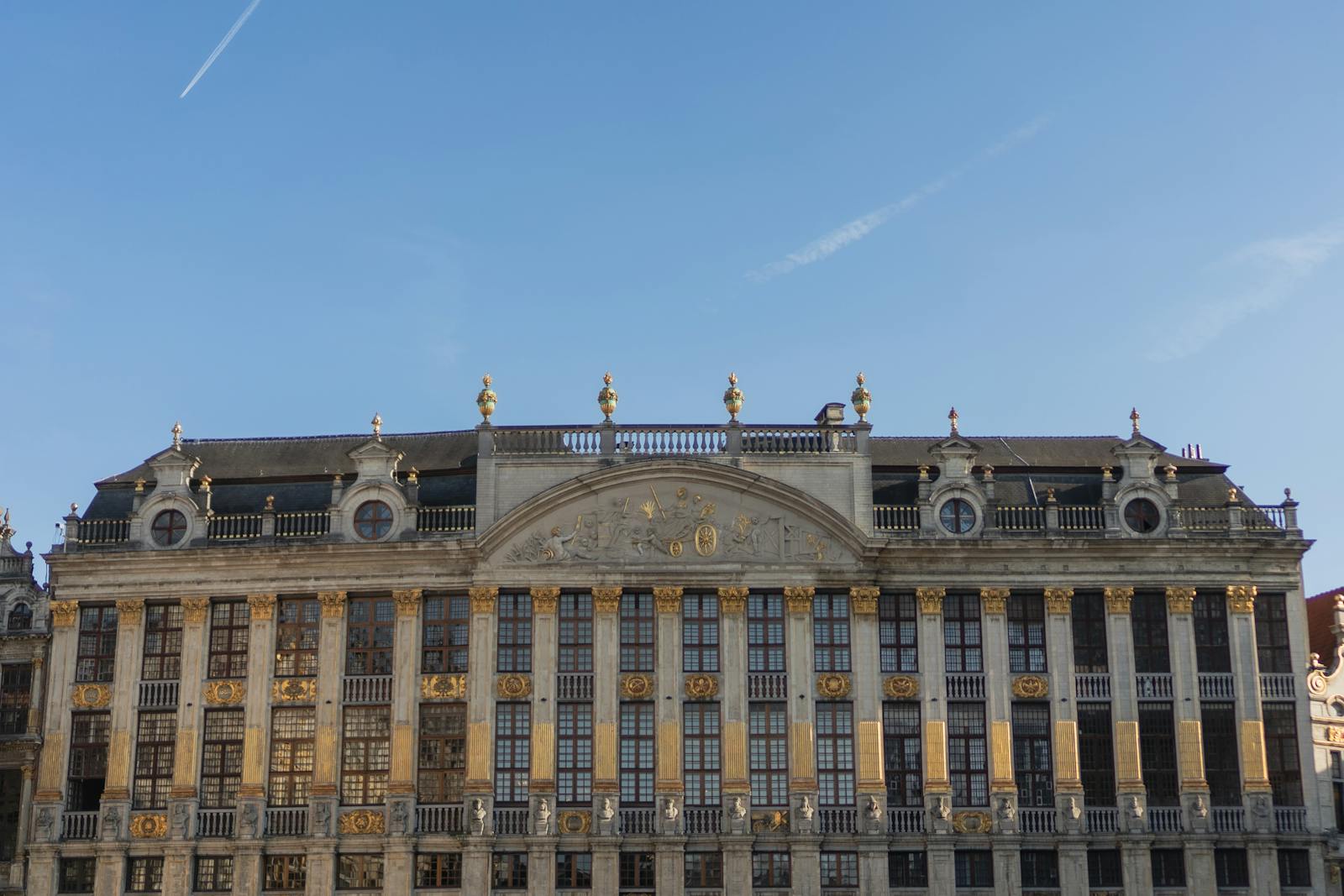
The single most dramatic event in Brussels’ physical history occurred on 13-15 August 1695, when French troops under Maréchal de Villeroi bombarded the city for 36 hours on orders from Louis XIV. The attack destroyed an estimated 4,000 buildings, including most of Grand Place.
The reconstruction (1698-1700) is what tourists see today. The Brussels guilds rebuilt their houses in Baroque style — wealthier, more ornate, and more theatrical than what came before. Each guild competed to make the most spectacular facade. The result is the UNESCO World Heritage-listed Grand Place: visually unified but actually built in just 4 years by competing trade guilds.
History of Brussels: Austrian, French and Dutch Rule (1700-1830)
The 18th century saw Brussels pass from Spanish to Austrian Habsburg rule (1714), then to French revolutionary forces (1794), and finally to the new Kingdom of the Netherlands (1815) after Napoleon’s defeat at Waterloo, just 15 km south of Brussels.
The Dutch period was brief but consequential — Brussels chafed under Protestant Dutch governance imposed on a Catholic Flemish/French population. The 1830 Belgian Revolution began with a riot at the Théâtre Royal de la Monnaie during a performance of “La Muette de Portici” on 25 August 1830. Within weeks Belgium had declared independence.
History of Brussels: Capital of Belgium (1831-1914)
Brussels became capital of the new Kingdom of Belgium on 21 July 1831, when Leopold I was crowned. The young nation’s wealth from industrialisation and Belgian Congo colonial profits fueled a building boom: covered shopping arcades (Galeries Royales Saint-Hubert opened 1847 — Europe’s first), grand boulevards, the Palais de Justice (1883), and the Royal Greenhouses of Laeken.
By the 1890s, Brussels was the birthplace of Art Nouveau — Victor Horta’s Hôtel Tassel (1893-1894) is the world’s first true Art Nouveau building.
History of Brussels: Two World Wars (1914-1945)
Brussels was occupied by German forces in both World Wars (1914-1918 and 1940-1944). The city escaped major bombing in both conflicts but suffered economically and culturally. Belgian resistance was significant in WWII; the city was liberated by British forces on 3 September 1944.
History of Brussels: European Capital (1945-Present)
Post-WWII Brussels reinvented itself as an international city:
- 1957: Treaty of Rome signs Belgium into the European Economic Community.
- 1958: Expo 58 World Fair; Atomium built as the centerpiece.
- 1967: NATO headquarters relocate to Brussels.
- 1992: Maastricht Treaty signed; European Union formally established.
- 1999: European Parliament’s main meeting place opens in Brussels.
- 2001: Brussels officially recognised as the Capital of Europe.
- 2002: Euro currency replaces the Belgian franc.
The European Quarter (around Schuman roundabout and Rond-Point Robert Schuman) is now a fully developed political district housing the European Commission (Berlaymont building), European Council, and European Parliament.
History of Brussels: Historic Sites You Can Visit Today
- Grand Place: 1698-1700 reconstruction after the bombardment.
- Town Hall: 1402-1455 — the only original Grand Place building to survive the bombardment.
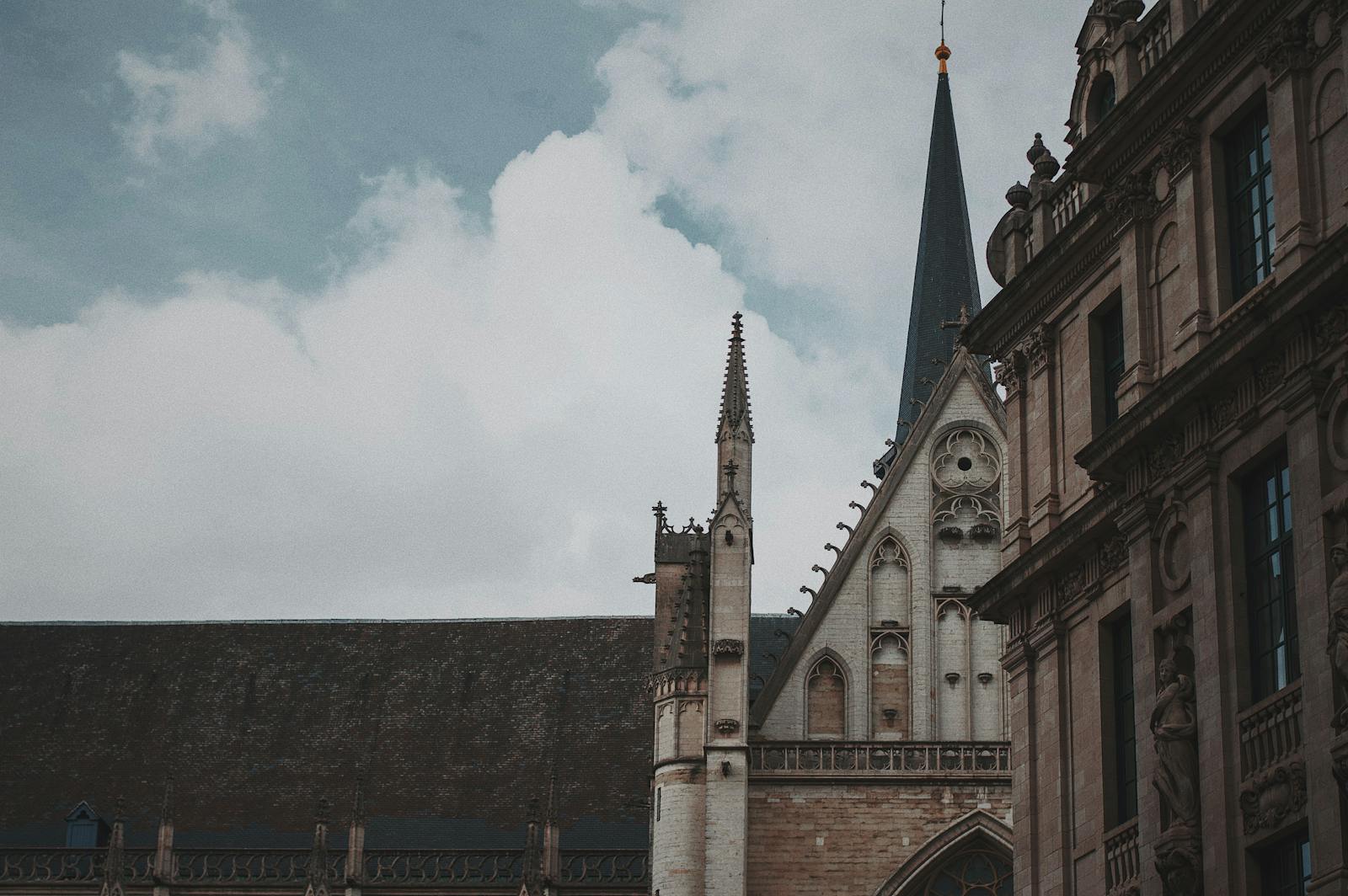
- Cathedral of Saint Michael: 13th-16th century Gothic.
- Royal Palace: Mostly 18th-19th century; some Renaissance elements.
- Atomium: 1958 — symbol of postwar modernity.
- BELvue Museum: Belgian history from 1830 to today.
- Royal Museums of Fine Arts: Belgian art from medieval to contemporary.
- Hôtel Tassel: 1893-1894 Victor Horta — birthplace of Art Nouveau.
- Berlaymont (EU Commission HQ): 1967 — symbol of the European project.
Hidden History Stories of Brussels Most Tourists Miss
The textbook history of Brussels covers Charles V, the 1830 revolution and the EU founding. But the city is layered with smaller stories that escape every guidebook, each tied to a specific stone or street you can still visit.
- The bombardment of 1695 and the rebuilt Grand Place: French Marshal de Villeroi shelled Brussels for three days from the Anderlecht plateau, flattening 4,000 buildings. The merchant guilds rebuilt their gilded baroque houses on Grand Place in just five years; if you stand by the Maison du Roi and look up, you can still spot the cannonball lodged in the facade of Le Cygne (number 9), preserved as a memorial.
- The 16th-century Beguine martyrs of Place Sainte-Catherine: Behind the church, a small plaque marks where Anabaptist women were drowned in the Senne river during the Spanish persecutions. The Senne itself was vaulted over in 1871 to fight cholera, but the original quays survive as ghost-street names: Quai aux Briques, Quai aux Bois a Bruler, Marche aux Poissons.
- The royal mistress staircase at the Coudenberg: Beneath today’s Place Royale lies the ruined Coudenberg Palace, where Charles V abdicated in 1555. Few visitors realise the underground tour ends near a narrow servants’ staircase that Margaret of Parma allegedly used to slip out for nighttime walks in the Warande park.
- The 1830 opera-house revolution: The Belgian state was effectively born at the Theatre de la Monnaie when a performance of Auber’s La Muette de Portici whipped the crowd into a patriotic frenzy on 25 August 1830. The same theatre still operates today; the famous aria “Amour sacre de la patrie” is sung at every season opener as a wink to the moment.
These small footnotes turn an ordinary Grand Place stroll into a tangible walk through the history of Brussels. Knowing them changes how you read each facade.
Self-Guided Walking Tour Through the History of Brussels
This 90-minute, 2.4-km loop strings together a millennium of the history of Brussels in walkable order. Wear flat shoes for the cobbles and start mid-morning when most sites are open.
- Start: Saint-Gery (Place Saint-Gery, 1000 Brussels). The traditional founding spot of Brussels around the 10th-century chapel of Saint Gery on an island in the Senne. The covered market hall here (1881) has the original spring under a glass floor panel.
- Walk 5 minutes east to the Bourse (former stock exchange, 1873). Built atop the demolished Franciscan friary; the new Belgian Beer World museum inside opened in 2023.
- Continue 3 minutes south to Grand Place. Pause at the Maison du Roi (City Museum) for the bombarded-and-rebuilt story above. The original “Manneken-Pis” of 1619 lives inside on the second floor; the outdoor statue is a copy.
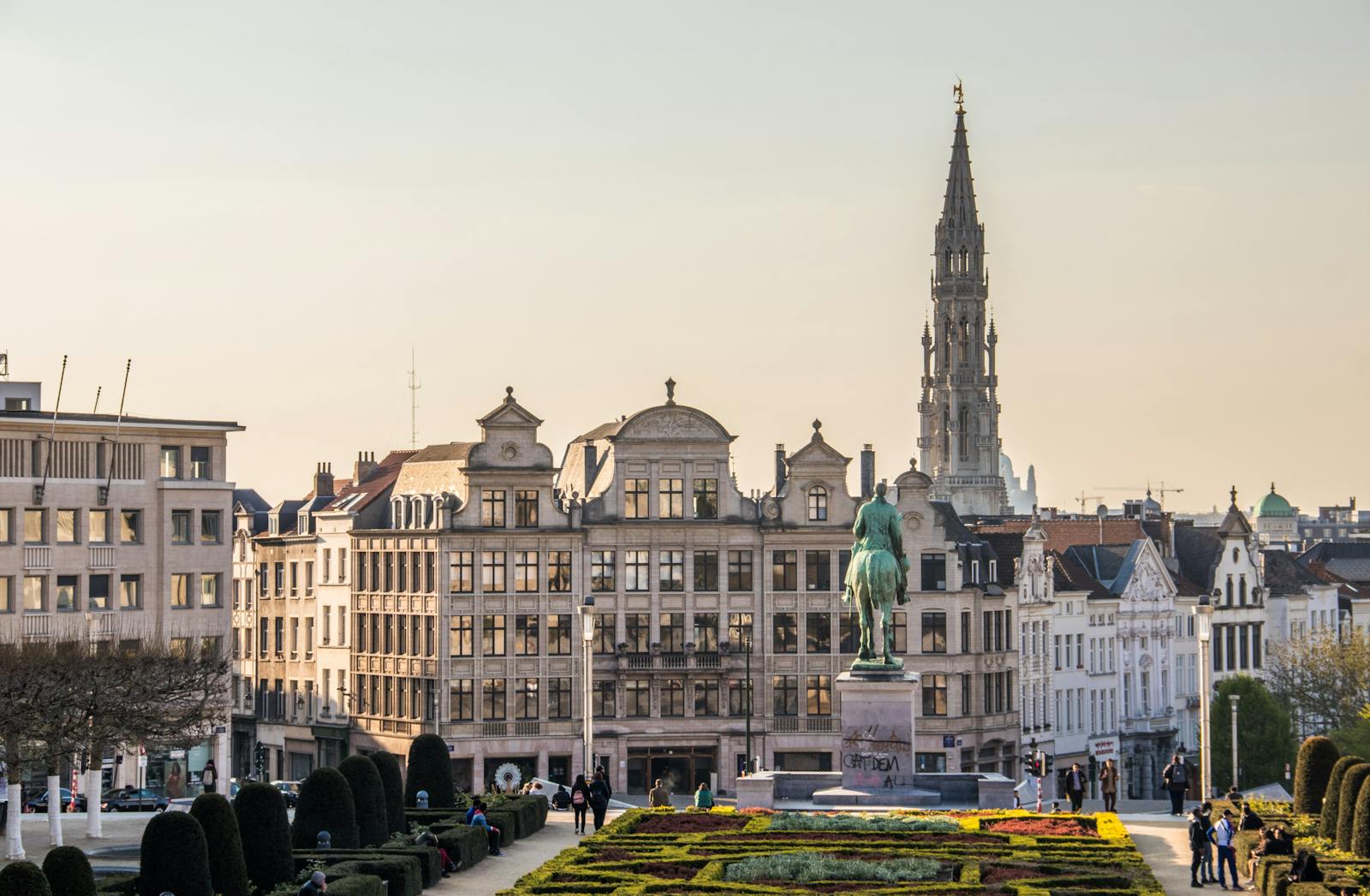
- Walk 7 minutes east up Rue de la Madeleine to Mont des Arts. The terraced garden marks where King Leopold II demolished a working-class neighbourhood in the 1900s. The carillon clock above plays Brussels folk tunes every quarter-hour.
- Continue 4 minutes uphill to Place Royale. Look down at the BELvue Museum entry: the Coudenberg Palace ruins lie below your feet. Pop in (€7) for 30 minutes of underground vaults.
- Walk 6 minutes east through Parc de Bruxelles to the Palais de la Nation. The Belgian Parliament since 1831, originally built in 1783 for the Austrian Habsburg administrative council. The 1830 revolutionaries proclaimed independence on the steps.
- Finish 8 minutes north at Place des Martyrs. Quiet neoclassical square holding the crypt of 467 fighters who died in the September 1830 fighting. Most visitors walk straight past; it is the single most important physical marker of modern Belgian statehood.
For broader context on what each era left behind in the cityscape, our Art Nouveau Brussels guide picks up where this tour ends, in the 1890s.
Best Books and Films for Deeper Context on the History of Brussels
To go beyond a 24-hour visit, these picks open up the longer arc of the history of Brussels. Available at Sterling Books (Rue du Fosse-aux-Loups, English language) or the Royal Library.
- “A Brief History of Belgium” by Patricia Carson – the standard 250-page primer, paperback €18, covers Roman Gaul to the federal reform of 1993.
- “Brussels: A Cultural and Literary History” by Andre De Vries (Cities of the Imagination series) – a literary-meandering tour through Baudelaire’s exile years and the 1958 World Fair.
- “King Leopold’s Ghost” by Adam Hochschild – essential reading for understanding the Congo legacy that haunts modern Brussels, including the recent renaming of Avenue Leopold II to Avenue de la Liberte.
- Film: “Daens” (1992) – Oscar-nominated Flemish drama about the priest-turned-MP fighting for workers’ rights in late 19th-century Aalst, capturing the moral climate that shaped Brussels social reforms.
- Film: “L’Annee de l’eveil” / “The Awakening Year” – lesser-known 1991 Brussels-set drama showing the city in the 1950s post-war boom.
- Documentary series: “Sur les traces des grands hommes” (RTBF Auvio, free streaming) – the Belgian public broadcaster’s 12-episode walking history series, English subtitles available.
Pair any of these with a museum visit, then walk the streets they describe. The history of Brussels rewards a layered approach more than a single guidebook ever can. See also our companion piece on famous Belgians from Brussels.
Frequently Asked Questions About the History of Brussels
These quick-fire questions about the history of Brussels come up most often from first-time visitors.
- When was Brussels founded? Traditionally 979 AD, when Charles of Lower Lorraine built a fortified chapel on Saint-Gery island in the Senne. Earlier Roman traces exist around the Tongres Gate area but no continuous settlement.
- Why is Brussels bilingual? Historic Brussels was Dutch-speaking (Brabantian dialect); 19th-century industrialisation drew francophone elite and the city Frenchified. The 1963 linguistic frontier law fixed Brussels’ bilingual status across all 19 communes.
- What is the oldest building in Brussels? The Romanesque crypt of Saint Gudula Cathedral (1047, Place Sainte-Gudule) predates the Gothic upper church by 200 years; free to visit inside the cathedral.
- Why does Brussels have a Manneken-Pis? The original cult-statue dates to 1619; many legends explain it (a lost boy, a soldier urinating on a fire, a child saving the city by extinguishing an enemy bomb). All apocryphal; the truth is lost.
- When did Brussels become the EU capital? Provisionally 1958, officially 1992 at the Edinburgh Summit. The history of Brussels as EU capital is shorter than most visitors assume.
History of Brussels: Lesser-Known Stories Most Visitors Miss
Brussels’ history hides remarkable detail behind its postcard surface. A few stories worth knowing on the ground:
- The buried river Senne. The river that gave Brussels its name was completely covered over between 1867 and 1871 due to cholera epidemics — it now flows beneath Boulevard Anspach. The old riverbed shaped where the medieval streets curve.
- Charles V’s secret garden. The Habsburg emperor maintained a private herb garden in what is now Place Royale — Brussels’ first botanical experiment, predating the Royal Greenhouses by three centuries.
- The 1830 opera that started a revolution. The Belgian Revolution against Dutch rule literally began with a riot at the Théâtre Royal de la Monnaie during a performance of “La Muette de Portici” on 25 August 1830 — the audience rushed into the streets afterward.
- Brussels’ “Mannequin Pis” sister statues. Few visitors know about Jeanneke Pis (the female counterpart, 1985, near Rue des Bouchers) and Zinneke Pis (the dog, 1998, Rue des Chartreux). Together with Manneken Pis they form Brussels’ “peeing trio.”
- Victor Hugo’s exile years. The French author lived in exile in Brussels (Grand Place no. 27) from 1851 after Napoleon III’s coup, writing “Napoleon le Petit” in just three weeks.
For more on these layers of the history of Brussels, the BELvue Museum (free with Brussels Card) covers the post-1830 thread brilliantly, and the Museum of the City of Brussels (Maison du Roi on Grand Place) handles the medieval-through-Habsburg material.
Related Brussels Guides
Keep planning with these companion guides:
- Brussels History and Culture — From Medieval Origins to Capital of Europe
Useful Resources
- Wikipedia: Timeline of Brussels — comprehensive chronology.
- BELvue Museum — official Belgian history museum.
- Brussels.com history overview.
Frequently Asked Questions
How old is Brussels?
The earliest known settlement dates to around 580 AD when Saint Gaugericus built a chapel on a Senne river island. Official founding date is 979 AD, when Charles of Lower Lorraine fortified the site. So Brussels is roughly 1,045 years old (as of 2026).
When did Brussels become the capital of Belgium?
21 July 1831, when Leopold I was crowned king of the new Kingdom of Belgium after independence in 1830.
When did Brussels become the EU capital?
The European Economic Community began locating institutions in Brussels in the early 1960s. NATO HQ moved in 1967. Brussels was officially recognised as the Capital of Europe in 2001.
Why was Grand Place rebuilt in 1695?
Louis XIV’s French army bombarded Brussels for 36 hours in August 1695, destroying about 4,000 buildings including most of Grand Place. The guilds rebuilt in 4 years (1698-1700) in elaborate Baroque style — what tourists see today.
Who founded Brussels?
Saint Gaugericus is credited with the earliest chapel (~580). Charles, Duke of Lower Lorraine, is credited with the official founding (979) by transferring Saint Gudula’s relics and building the first fortification.
What’s the most historically important Brussels site?
Grand Place — UNESCO World Heritage, the most representative medieval/Baroque square in Western Europe. The Town Hall is the only pre-1695 original building.
Final Thoughts
The history of Brussels is one of perpetual reinvention — from medieval textile town to Habsburg capital, from rebuilt Baroque masterpiece to EU political headquarters. For more, see our Grand Place Brussels guide and things to do in Brussels.