Brussels is officially the capital of the European Union — home to the European Commission, the Council of the EU, and (alongside Strasbourg and Luxembourg) the European Parliament. For visitors, the EU institutions are far more accessible than most realise: free guided tours, exceptional free museums, and a self-guided European Quarter walk that explains how 27 nations actually work together. This Brussels European Union capital guide for 2026 covers everything.
Brussels European Union Capital: Why Brussels?
Brussels became the de facto EU capital because of geography (central in Western Europe), language (officially bilingual French/Dutch, neither dominant), and history (Belgium was a founding EEC member without baggage from former imperial rivalries).
The progression:
- 1957: Treaty of Rome — European Economic Community founded; Belgium a founding member.
- 1958: Berlaymont chosen as Commission HQ site.
- 1967: NATO HQ moves to Brussels.
- 1992: Maastricht Treaty — EU formally established.
- 1999: European Parliament permanent chamber opens in Brussels.
- 2001: Brussels officially recognised as Capital of Europe.
Brussels European Union Capital: The European Quarter
The European Quarter sits east of central Brussels, centred on Rond-Point Schuman. Most institutions are within walking distance of Schuman metro station (Lines 1 & 5).
Key institutions
- Berlaymont building: European Commission HQ (cross-shaped, iconic).
- Justus Lipsius building: Council of the EU.
- Europa building: European Council (newer; glass-and-wood “egg” structure).
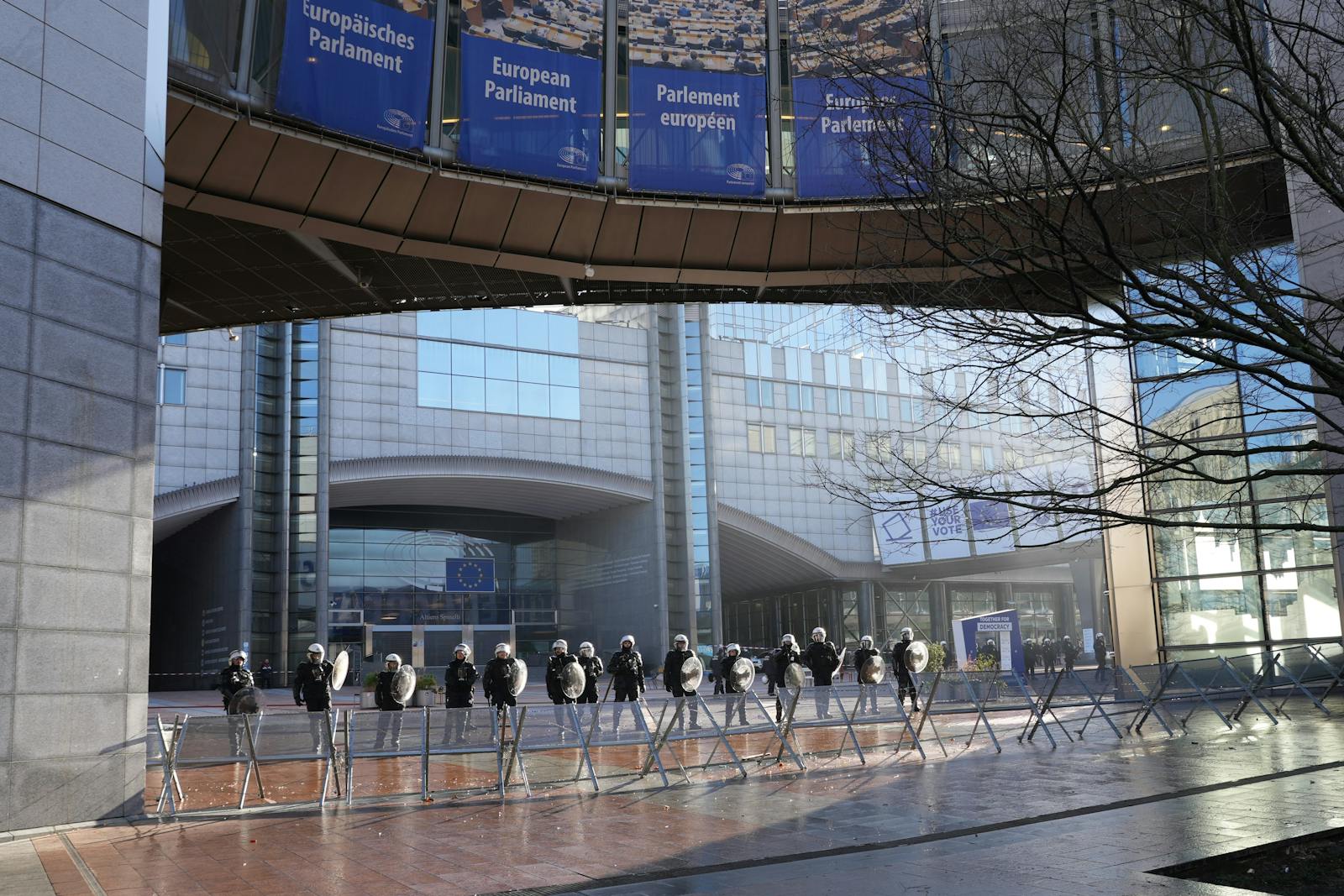
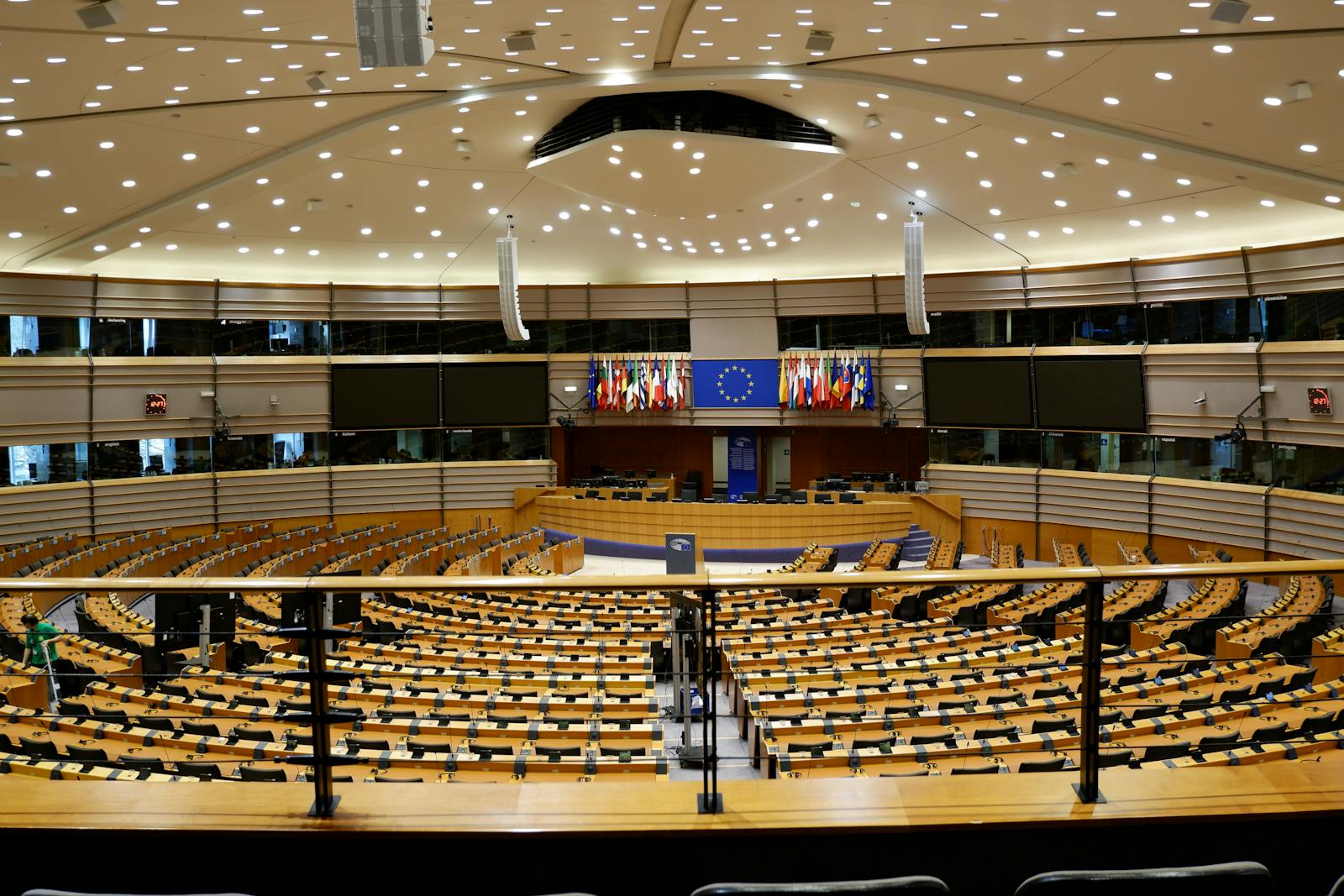
- Paul-Henri Spaak building: European Parliament’s Brussels hemicycle.
- Charlemagne building: European Commission services.
Brussels European Union Capital: How to Visit the EU Institutions
1. European Parliament (free, recommended)
The most accessible. Self-guided tours of the Brussels hemicycle (debate chamber) Monday-Friday. Free. Register at visiting.europarl.europa.eu in advance.
Also worth visiting: Parlamentarium (the Parliament’s interactive visitor centre) — open daily except Mondays, free admission, audio guides in 24 languages.
2. House of European History (free, exceptional)
The EU’s flagship museum, telling the story of post-1945 Europe through artefacts and immersive exhibits. Free admission. Tuesday-Sunday 09:30-18:00. Allow 2-3 hours.
3. European Commission Visitors’ Centre
Group tours (minimum 10 weeks advance booking). Individual access limited. For most visitors, watch the Berlaymont from the outside.
4. European Council / Council of the EU
Not open to general individual visitors. Press and accredited groups only.
5. Europe Day (9 May annually)
Once-per-year open day across all EU institutions — buildings normally closed to the public open their doors. Free tours, special exhibits. The single best day to visit if your dates align.
Brussels European Union Capital: Self-Guided EU Walking Tour (3 km, 2.5 hrs)
- Start: Schuman metro station — exit toward Berlaymont.
- Berlaymont building — view from Rond-Point Schuman; photos from the courtyard.
- Walk south to Justus Lipsius / Europa buildings (Council of EU).
- Place du Luxembourg — popular Thursday-evening after-work spot.
- European Parliament Paul-Henri Spaak building — Parliamentarium and self-guided hemicycle tour.
- House of European History — allow 2 hours.
- Parc Léopold — leafy park next to the institutions.
- End: Maelbeek metro (Lines 1 & 5).
Brussels European Union Capital: Practical Tips
Avoid Mondays. Most EU museums (House of European History) are closed Mondays.
European Parliament closes when in Strasbourg session. The Parliament meets in Strasbourg once per month (typically Mon-Thu). The Brussels hemicycle is closed for tours during these weeks; check the schedule before planning your visit.
Register in advance for Parliament tours. Walk-up availability is limited; the online system is fast.
Bring photo ID. Required for all EU institution entries (passport or national ID).
Security is airport-grade. Allow 15-20 minutes for entry checks.
Combine with Cinquantenaire Park. The neighbouring park has the Royal Museum of Armed Forces and Autoworld — natural combination with EU sights.
Place du Luxembourg on Thursday evenings. “Plux” or “Place Lux” is where EU staff drink after work — packed, lively, unofficial Brussels institution.
Brussels European Union Capital: Best EU-Themed Experiences
Free
- House of European History (museum)
- Parlamentarium (visitor centre)
- European Parliament self-guided hemicycle tour
- Berlaymont and Europa building exteriors
- Place du Luxembourg Thursday evenings
Paid or pre-booked
- Guided European Quarter tours (visit.brussels)
- European Commission Visitors’ Centre (groups only)
- Themed political-economy walking tours via Sandeman’s, Brussels Greeters
Brussels European Union Capital: Other EU-Adjacent Sights
- NATO HQ: 9 km north of central Brussels. Not open to public visits.
- Royal Library of Belgium: European-focused exhibitions occasionally.
- BELvue Museum: Belgian context for EU history.
- Train World: Belgian rail history (relevant to EU mobility narratives).
Brussels European Union Capital: Quick Reference
| Institution | Access | Cost |
|---|---|---|
| European Parliament hemicycle | Self-guided, register online | Free |
| Parlamentarium | Open Tue-Sun | Free |
| House of European History | Open Tue-Sun | Free |
| Berlaymont (EU Commission) | Exterior only | Free |
| Commission Visitors’ Centre | Groups, 10+ weeks ahead | Free |
| European Council (Europa) | Not public | — |
| Europe Day open access | 9 May annually | Free |
Hidden Stories About Brussels European Union Capital Status
The “Brussels European Union capital” tag rests on a handful of unlikely turning points. Most visitors stroll past Berlaymont without realising how close the EU came to being headquartered somewhere else entirely.
- The 1958 provisional choice that became permanent: When the European Economic Community needed a temporary base, Brussels was picked over Strasbourg and Luxembourg in part because the Belgian government offered subsidised office space in the Cinquantenaire complex within six weeks. “Provisional” lasted 34 years until the 1992 Edinburgh Summit made it official.
- The asbestos crisis that shut Berlaymont 1991-2004: The iconic four-winged building was evacuated for 13 years of decontamination. The Commission ran from rented offices on Rue de la Loi during the entire Delors-Santer transition. The bill for asbestos removal hit €600 million, larger than the original 1969 construction cost.
- The lost “EU University” of Heysel: Original 1960s urban plans called for a sprawling European University City near the Atomium, including residences for 8,000 students. Local opposition over Flemish-French linguistic balance killed the scheme; the College of Europe ended up in Bruges instead.
- The “Mickey Mouse” Parliament nickname: Brussels’ Espace Leopold parliament chamber, opened 1993, was mocked by MEPs as “the caprice des dieux” (the gods’ caprice) for its costly oval shape. The travelling-circus arrangement of Brussels-Strasbourg sessions still costs €114 million per year, often debated but never abolished.
These backstories explain why the Brussels European Union capital reality feels both grand and improvised. The architecture, like the institutions, grew by accident as much as design.
Self-Guided Walking Tour of Brussels European Union Capital Sights
This 75-minute, 1.8-km tour shows you the heart of the Brussels European Union capital quarter on foot. Best done Tuesday-Thursday when buildings are most active.
- Start: Schuman metro (lines 1 and 5). The roundabout is named for Robert Schuman, French foreign minister whose 1950 declaration founded the European Coal and Steel Community.
- Berlaymont (200 Rue de la Loi). Headquarters of the European Commission since 1967, redesigned 1991-2004. Cannot enter without a pass but the public square in front is worth a photo; the EU flag flies 24/7.
- Walk 3 minutes south to Justus Lipsius (175 Rue de la Loi). Council of the EU building (1995). The Europa building next door, with its lantern-shaped meeting chamber, opened in 2017.
- Continue 4 minutes south-east along Rue Belliard to Place du Luxembourg. The “Place Lux” courtyard is THE after-work spot for EU staff on Thursday evenings (post-15:00 drinks at Plux, Fat Boys, James Joyce).
- European Parliament hemicycle (60 Rue Wiertz). Free 60-minute self-guided audio tour available Mon-Fri, 09:00-17:00. Bring photo ID for security.
- Parlamentarium visitor centre (Willy Brandt building). Free interactive museum about the Parliament’s work, easily 90 minutes. Best for first-time visitors to the EU quarter.
- House of European History (Parc Leopold). Free, but allow 2 hours. Excellent timeline gallery on EU integration from 1945 onward.
- Finish: Parc Leopold itself. Pond, swans, the natural-history hall and quick lunch at the Library of Sciences cafe (€8-€12 plat du jour).
For onward exploration of the Royal Quarter just west of Schuman, see our Royal Palace Brussels guide.
How Brussels European Union Capital Status Shapes the City Today
The EU’s presence is not just a quarter of office blocks – it permeates every aspect of daily life in the Brussels European Union capital. Here is how it shows up in 2026.
- Population mix: 35% of Brussels residents hold a foreign passport, the second-highest share of any EU capital after Luxembourg. The 50,000-strong EU institutional workforce drives a parallel international school network (BSB, EEB I-IV, ISB).
- Restaurants and bars: The triangle of Place Lux, Place Jourdan and Rue Archimede has 80+ restaurants serving every EU cuisine. Maison Antoine on Place Jourdan claims the title of best frites in Brussels and routinely serves visiting commissioners; queue 10-15 minutes at lunch.
- Housing pressure: EU-related demand pushes rents in Etterbeek and Ixelles 25-40% above other communes. Studios in the EU quarter average €950-€1,200/month vs €650-€800 in Anderlecht.
- Linguistic policy: Although officially bilingual (French/Dutch), the EU quarter operates de facto in English. Many supermarkets in Etterbeek post signs in three or more languages.
- Public transport adjustments: STIB added the line 5 extension to Erasme partly to serve the European School in Uccle, and runs special shuttle buses during NATO summits.
For the linguistic-policy backdrop that shapes how Brussels European Union capital signs and services work, our languages spoken in Brussels guide explains the bilingual rules and how English fits in.
Common Misconceptions About Brussels European Union Capital Status
Many popular assumptions about the Brussels European Union capital are wrong or outdated. These six come up in conversation most often.
- Myth: The European Parliament meets in Brussels. Officially it meets in Strasbourg 12 times a year and Brussels for committee weeks. The Brussels Espace Leopold hemicycle hosts mini-plenaries and committee debates; the full plenary stays in Strasbourg by treaty.
- Myth: All EU staff are political. About 80% are technical: translators, lawyers, statisticians, IT engineers. The political appointees (Commissioners, Cabinet members) number around 200; the broader civil service is 32,000-plus.
- Myth: The EU pays no taxes locally. EU staff pay a community tax to the Union (not to Belgium), but VAT (21%), council tax equivalents and Belgian property taxes still apply to their housing and consumption.
- Myth: The Berlaymont and Justus Lipsius look the same. Berlaymont is the four-winged cross-shape building of the Commission; Justus Lipsius is the boxier Council headquarters with the lantern-shape Europa annex. Look for the EU flag on Berlaymont and the multiple national flags on Justus Lipsius.
- Myth: Brussels European Union capital quarter shuts on weekends. While office activity quiets, the Parlamentarium, House of European History and BOZAR cultural venues stay busy. Weekend brunch at Cafe Leffe on Place du Luxembourg is a favourite local routine.
- Myth: NATO is part of the EU. NATO has its own complex on the airport side of Brussels (Evere) and is a separate military alliance with non-EU members like the US, Canada, UK, Turkey and Norway. The new NATO HQ opened in 2017 and is not open to general visitors.
Combine Brussels European Union Capital Sights With Brussels Highlights
Most visitors do not want a full day on EU architecture alone. These three combination day plans work well for first-timers in the Brussels European Union capital.
- Half-day EU + Royal Quarter loop (4 hours): Start at Parlamentarium (free, 90 min), walk through Parc Leopold to Maelbeek metro, take line 1 to Park, then walk to BELvue Museum and the Royal Palace exterior. Lunch at Cafe Greenwich (Sablon) on the way back.
- Full-day EU + Atomium + Mini-Europe (8 hours): Morning at the EU quarter and House of European History, then metro line 6 to Heysel for Atomium (€17) and the adjacent Mini-Europe (from €21.70 online, €25 on site) where every member state has a miniature monument. Perfect for first-timers; combo ticket €35.
- Evening EU drinks + Sablon dinner (3 hours): After-work drinks at Place du Luxembourg with EU staff (Thursday is the loudest night), then walk 20 min to Sablon for moules-frites at Le Perroquet (€18-€24) or chocolate tasting at Wittamer.
For broader itinerary inspiration that includes the Brussels European Union capital quarter alongside other neighbourhoods, see our 3 days in Brussels itinerary, which dedicates an afternoon to the EU institutions.
Frequently Asked Questions About the Brussels European Union Capital Quarter
The most common visitor questions about the Brussels European Union capital area in 2026.
- Can the public enter the European Commission building (Berlaymont)? Only on Open Day (one Saturday in early May) or with a pre-booked guided tour through Visit Brussels (€15, English available). The exterior plaza is always public.
- How do I attend a European Parliament session? Free attendance Monday-Thursday during committee weeks. Book a public-gallery ticket via europarl.europa.eu/visiting at least one week ahead.
- What languages are signs in? The Brussels European Union capital quarter uses all 24 official EU languages on the institutions themselves, but street signs default to French and Dutch only as per Brussels regional law.
- Is the EU quarter safe at night? Yes, one of Brussels’ safest neighbourhoods. Heavy police presence and embassy security. Place du Luxembourg is busy with EU staff until 23:00, especially Thursdays.
- Best restaurant for an EU-themed lunch? Cafe Leffe (Place du Luxembourg), Maison Antoine for frites (Place Jourdan), or the underrated Brasserie Maxie (Rue Stevin) for proper Belgian classics.
Brussels European Union Capital: Best Insider Tips
Brussels European Union capital experiences reward a little planning. Here are the insider tips that frequent EU-quarter visitors and Brussels-based staffers use:
- Visit the European Parliament during plenary weeks. The plenary sessions move to Strasbourg once a month — but Brussels mini-plenary weeks (typically week 2 of each month) bring the building alive with MEPs, journalists, and staff. Self-guided hemicycle tours still run.
- Plux on Thursday evenings. Place du Luxembourg (“Plux”) is where EU staff drink after work each Thursday from 18:00. It is loud, multilingual, and genuinely lively — the unofficial centre of EU social life. Order Belgian beers on tap at any of the 8+ bars around the square.
- House of European History audio guides. Available in 24 languages — pick the one that sounds least like your home language for a fresh perspective on European unity.
- Free Berlaymont open days. Beyond Europe Day (9 May), the European Commission occasionally hosts open-house events. Subscribe to the Berlaymont newsletter for advance notice.
- Best EU-quarter coffee: MOK Specialty Coffee (Rue de Treves), Le Pain Quotidien (multiple), and OR Coffee on Rue Sainte-Catherine just outside the quarter.
For broader context on Brussels European Union capital sites and the wider European Quarter, see our Brussels museums guide covering the House of European History in detail.
Related Brussels Guides
Keep planning with these companion guides:
- Brussels History and Culture — From Medieval Origins to Capital of Europe
- History of Brussels — 1,400 Years from Medieval Town to EU Capital
- Art Nouveau Architecture Brussels — Complete Horta & UNESCO Guide
- Brussels Comic Strip Culture — Tintin, Smurfs, Murals & Museums
Useful Resources
- European Parliament visits — register for hemicycle tours.
- House of European History — free museum.
- Europe Day — annual 9 May open access.
Frequently Asked Questions
Is Brussels the capital of the European Union?
Yes — Brussels was officially recognised as the Capital of Europe in 2001. It hosts the European Commission, Council of the EU, and the Brussels seat of the European Parliament.
Can I visit the European Parliament in Brussels?
Yes — free self-guided tours of the hemicycle Monday-Friday. Register in advance at visiting.europarl.europa.eu. Also visit the Parlamentarium (free, no booking).
Can I enter the Berlaymont (European Commission)?
Generally no for individual visitors. Group tours via the Commission Visitors’ Centre require 10+ weeks advance booking. The building is visible from Rond-Point Schuman.
What’s the best EU-themed museum in Brussels?
The House of European History — free, exceptional, Tuesday-Sunday 09:30-18:00. Allow 2-3 hours.
When is Europe Day in Brussels?
9 May annually. EU institutions normally closed to the public open their doors — the best single day to visit if your dates align.
How do I get to the European Quarter?
Metro Line 1 or 5 to Schuman station — exits directly to Rond-Point Schuman and the Berlaymont. Maelbeek (Lines 1 & 5) is the alternative end-point.
Final Thoughts
The Brussels European Union capital experience is more open and engaging than most expect — free museums, free Parliament tours, walkable European Quarter, lively Place du Luxembourg. For more, see our things to do in Brussels and Brussels museums guide.