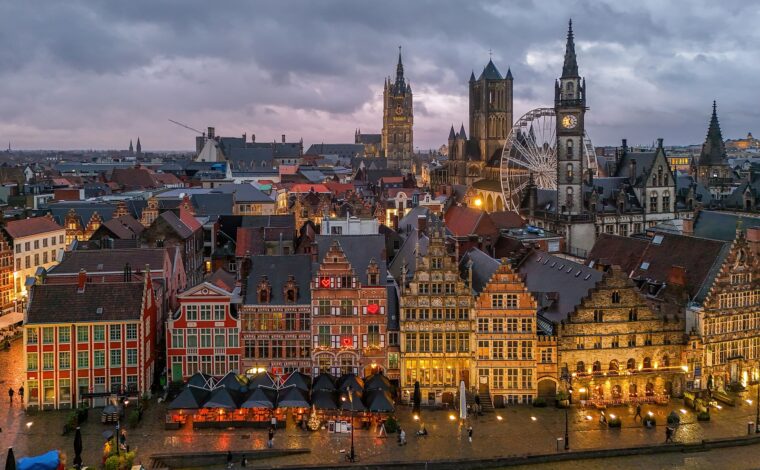
Belgium’s reputation is flat, urban and beer-soaked, and two of those three are accurate. The exception is the southeast quarter, where the country folds into forested hills, deep river valleys and villages of grey stone with castles on the rock above them. The Ardennes Belgium keeps to itself is a genuinely different country from the one visitors see in Bruges: French-speaking, thinly populated, built around game, trout, abbey beer and walking, and almost entirely absent from first-time itineraries.
It is also the one part of Belgium that does not work as a day trip, and this guide takes that seriously. What follows covers the region as a two- or three-night trip with a car: the towns worth basing in, the caves and the battlefields, the walking, and an honest assessment of what you can and cannot do without driving. Prices were checked in September 2026 and are written for travel into 2027. If you want the single-day version of one town, our Durbuy day trip from Brussels guide handles that.
The Ardennes at a Glance
| Where | Southeast Belgium: Luxembourg, Namur and Liège provinces |
| Language | French, with a German-speaking community in the far east |
| From Brussels | 1½–2½ hours by car; 1–2 hours by train to the gateway towns |
| Minimum stay | Two nights. Three is better |
| Car | Strongly advised. The trains reach the towns, not the valleys |
| Best bases | Bouillon, La Roche-en-Ardenne, Durbuy, Rochefort |
| Highest point | Signal de Botrange, 694 m, in the Hautes Fagnes |
| Best months | May–June and September–October. Autumn colour is the draw |
Where the Ardennes Actually Is
The Ardennes is a plateau of ancient rock cut by rivers — the Meuse, the Ourthe, the Semois, the Lesse, the Amblève — that have carved steep, wooded valleys into it over a very long time. It covers most of Luxembourg province, the southern half of Namur province and the south of Liège province, and it continues over the borders into France, Luxembourg and Germany.
Nothing here is dramatic by Alpine standards. The highest point in Belgium, the Signal de Botrange, is 694 metres, and it sits on a peat plateau rather than a summit. What the region has instead is scale of forest and the sense of being genuinely remote, which in a country of 12 million people packed into 30,000 square kilometres is a rarer thing than altitude.
It is also historically loaded. The Battle of the Bulge — the last German offensive of the Second World War, launched through these forests in December 1944 — was fought across the whole region and is memorialised throughout it.
Getting There, and Whether You Need a Car
By car from Brussels it is roughly ninety minutes to Rochefort or Durbuy and about two and a half hours to Bouillon, mostly on motorway before the last stretch on winding valley roads.
By train, the picture is more mixed. The line south through Namur and Libramont reaches useful gateway towns — Marche-en-Famenne, Jemelle for Rochefort and Han-sur-Lesse, Libramont for the deep south — in one to two hours from Brussels. From those stations you are dependent on TEC regional buses, which run but are infrequent and thin out sharply at weekends. Bouillon has no station at all; it is reached by bus from Libramont, and you should check the timetable before assuming anything.
The honest verdict: you can reach the Ardennes without a car and you cannot really see it without one. If driving is out of the question, pick one town, base there for two nights, and walk from it rather than trying to move around. Rochefort and La Roche both work for that. If you can drive, hire from Brussels or from Namur and treat the roads as part of the point — the valley routes along the Semois and the Ourthe are among the best drives in the Low Countries.
The Towns
Bouillon and the Semois valley
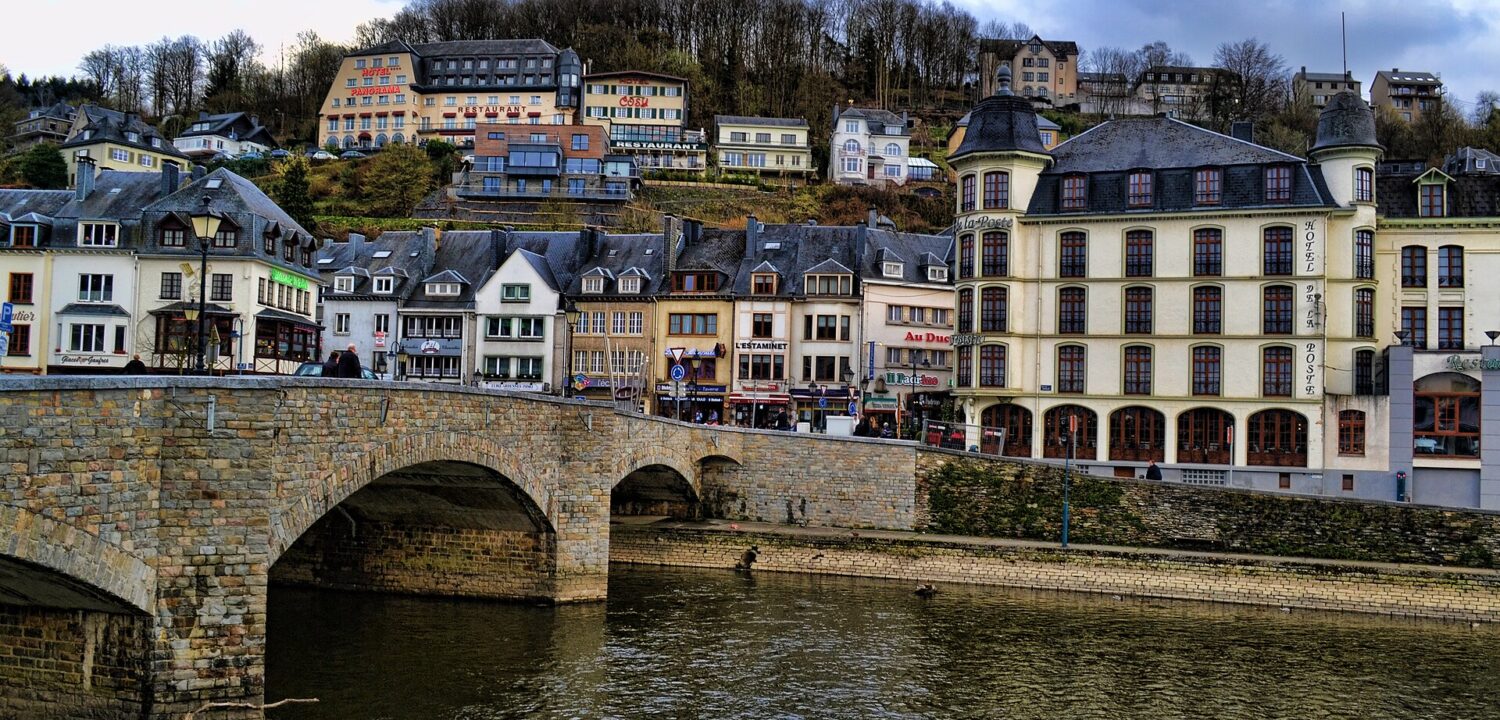
The most spectacular setting in the Ardennes. Bouillon sits in a tight loop of the river Semois with a long stone castle running along the rock spur above it — the seat of Godfrey of Bouillon, who sold the place in 1096 to fund his part in the First Crusade. The castle is a genuine medieval fortress rather than a restored ornament, with tunnels, a torture chamber and a birds-of-prey display, and the view from the ramparts down onto the town and the river bend is the picture everybody takes.
The wider Semois valley is the reason to stay: a series of viewpoints — the Tombeau du Géant, the Rocher du Pendu — over meanders so tight they almost close on themselves. This was tobacco country until recently and a few growers remain. It is also the least accessible corner of the region without a car.
La Roche-en-Ardenne
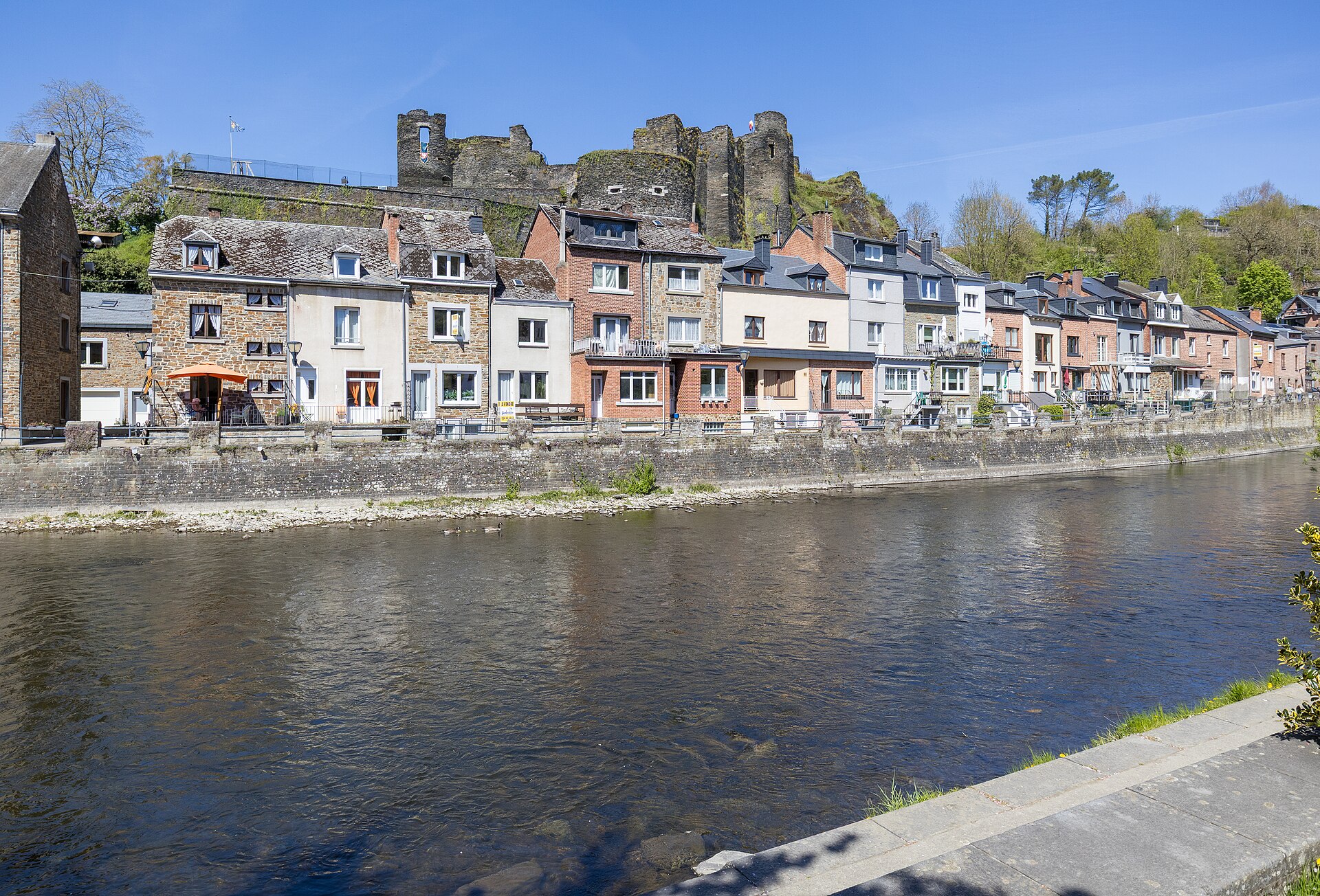
A small town wrapped around a bend of the Ourthe with a ruined feudal castle on the crag above it, and the most practical base in the northern Ardennes. It has a proper high street, a good supply of hotels and restaurants, kayak hire on the river, and walking routes leaving from the town itself. It was heavily damaged in the Battle of the Bulge and has a small museum on it.
Durbuy
Marketed relentlessly as “the smallest city in the world”, which is a technicality dating from a 1331 charter rather than a meaningful claim. It is a very pretty cluster of stone houses in a loop of the Ourthe with a castle, a topiary park and a large number of chocolate and jam shops. It is also the busiest place in the Ardennes at weekends, when coaches arrive and the lanes fill.
Go early or midweek. It is genuinely charming for an hour and it is not a place to base yourself unless prettiness is the priority.
Bastogne
The town at the centre of the Battle of the Bulge, where the American 101st Airborne held out while surrounded in December 1944 and General McAuliffe answered the German surrender demand with a single word. The Bastogne War Museum is the region’s most visited attraction — around €22 for adults, open 09:30 to 18:00 from mid-March to mid-November with last entry at 16:00, and to 19:00 in July and August. It is a well-made museum that tells the story through four individual perspectives rather than hardware.
The Mardasson Memorial beside it, a star-shaped colonnade commemorating the American dead, is free and takes ten minutes. The battlefield sites and foxholes in the Bois Jacques nearby need a car.
Rochefort and Han-sur-Lesse
A pair of small towns a few kilometres apart, and the easiest part of the Ardennes to reach by train — Jemelle station is on the Brussels–Luxembourg line. Rochefort gives its name to one of the six Belgian Trappist breweries, though the abbey itself is closed to visitors.
The draw is the Domaine des Grottes de Han, one of Europe’s great show caves: an enormous system carved by the Lesse, reached by a vintage tram from the village, with a wildlife park and a prehistory museum on the same estate. The full domain ticket runs to around €41.50 for adults and €31.50 for children at the gate, with online and promotional rates from about €30.50 and €23. There is a seasonal closure from mid-November, and hours vary considerably by month — book online and check before travelling.
That price is high for Belgium and worth being clear-eyed about: it is a full-day family attraction rather than a cave visit, and if you only want the cave you should check whether a shorter ticket is available before paying for the whole estate.
Redu
A village of second-hand bookshops, modelled on Hay-on-Wye, in the middle of the forest near Libramont. It has a book festival in August and a slightly eccentric charm the rest of the year. Worth an hour if you are passing.
Spa and the Hautes Fagnes
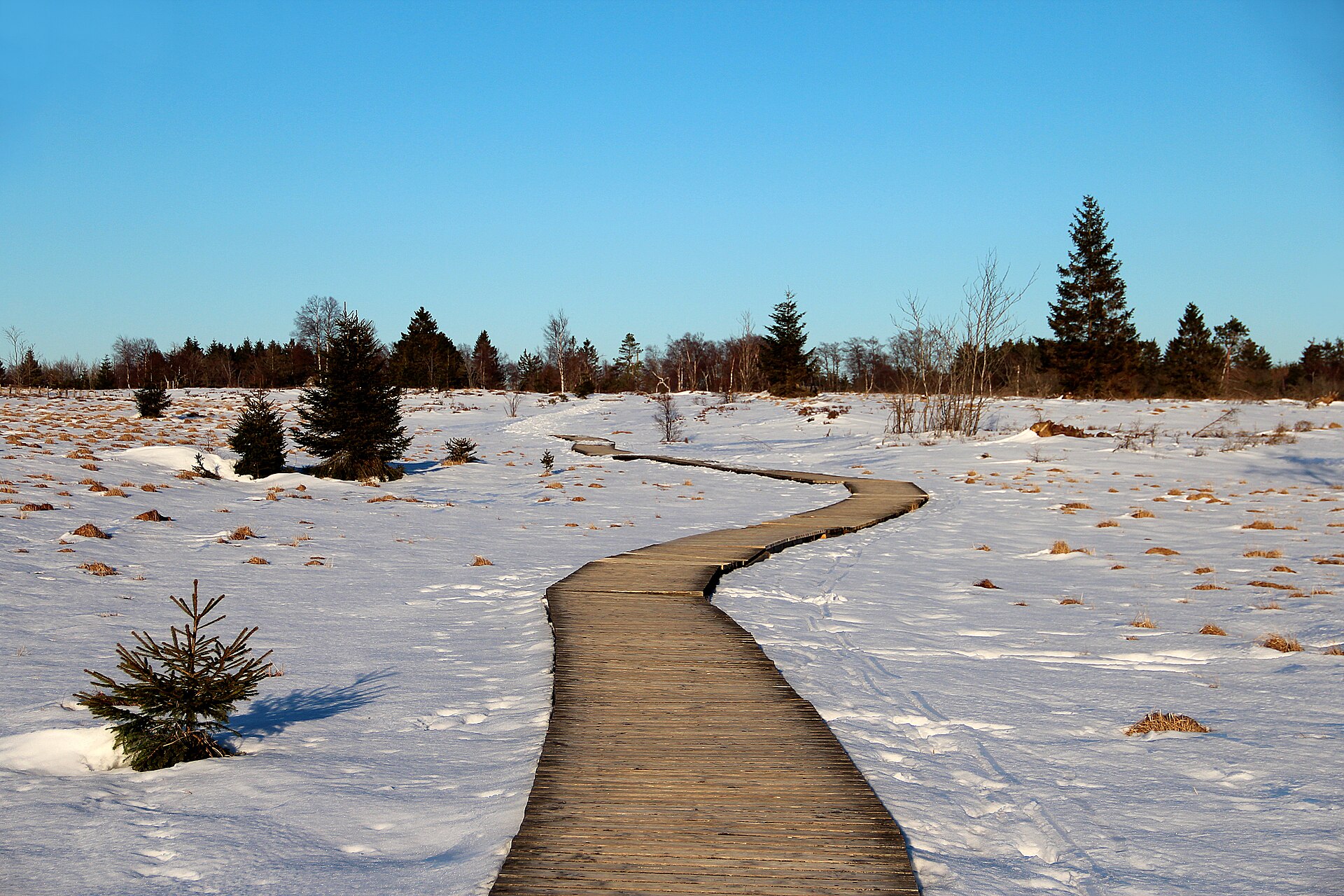
Spa gave the English language the word, and has been a resort since the sixteenth century — thermal baths, a casino, and the Formula One circuit at Spa-Francorchamps a few kilometres away. Above it lies the Hautes Fagnes / Hoge Venen, a high peat bog and Belgium’s largest nature reserve, crossed by wooden boardwalks over ground too wet to walk on. It is a strange, treeless, sub-arctic landscape that looks nothing like the rest of the country, and in a hard winter it holds snow when everywhere else is grey. The Signal de Botrange, at 694 metres, is the highest point in Belgium and is essentially a slight rise on a plateau with a café next to it.
What to Do
Walking
The main event. The Ardennes is threaded with waymarked routes, including sections of the long-distance GR paths, and every tourist office sells or gives away local circuit maps. Routes typically run five to fifteen kilometres, follow rivers or climb to viewpoints, and are well signed. The terrain is steeper than anything else in Belgium but nowhere technical.
Kayaking
Descents of the Ourthe from La Roche and the Lesse from Houyet are a Belgian summer institution: you hire a boat, get bussed upstream, and paddle back down. Both rivers are gentle and both are dependent on water levels, which means the season is roughly spring to early autumn and can be suspended in a dry summer or after heavy rain. Book locally on the day rather than weeks ahead.
Caves
The limestone belt along the Lesse and the Meuse gives Belgium several show caves. Han is the largest and best known; the caves at Hotton and Remouchamps are smaller, cheaper and considerably less busy. All are around 12°C year-round, which makes them a good wet-weather option and a cold one in August.
Trappist beer
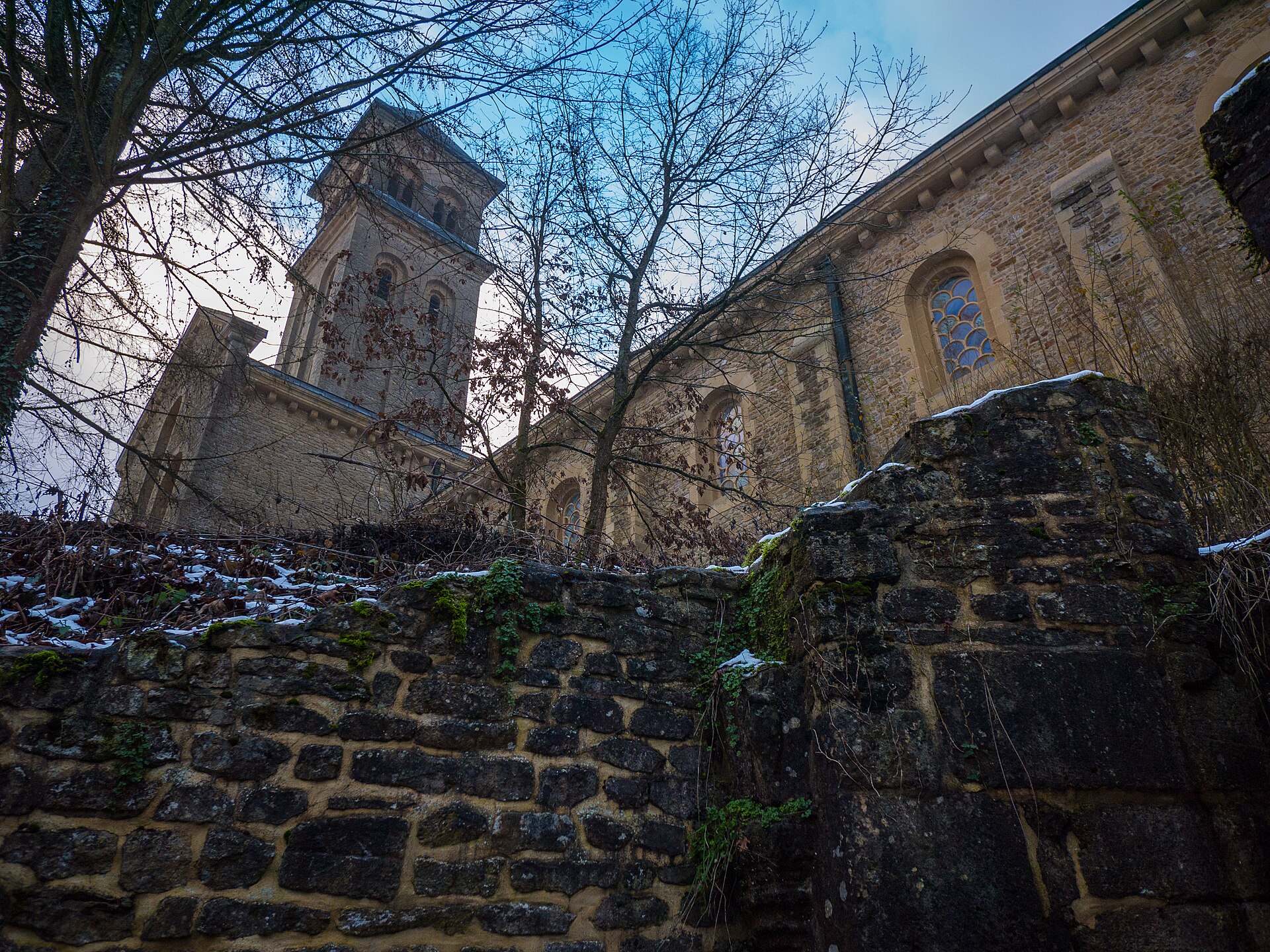
Three of Belgium’s six Trappist breweries are in or near the Ardennes: Rochefort, Orval and Chimay on the western edge. None of them runs brewery tours in the way a commercial brewery would — these are working monasteries. What you can do is visit Orval, where the ruins of the twelfth-century abbey are open to the public alongside a modern monastery, and drink the beer at the inn opposite. Orval is the most distinctive beer in Belgium, dry and brett-driven and unlike anything else, and drinking it a hundred metres from where it is made is a genuine pleasure.
Our Belgian beer guide covers the Trappist system and what the label actually certifies.
Eating in the Ardennes
The food here is the least Flemish thing in Belgium and much closer to rural France. Jambon d’Ardenne is a protected smoked-and-cured ham and is on every menu; game — boar, venison, hare — dominates in autumn; trout comes from the rivers you have been walking beside; and fromage de Herve, a washed-rind cheese from the same region, is pungent enough to be memorable.
Portions are large, prices are lower than in Brussels or Bruges, and restaurants in small villages often stop serving lunch by 14:00 and dinner by 21:00. Plan around that rather than assuming a city timetable.
A Three-Day Route by Car
Day one. Brussels to Rochefort, about ninety minutes. Grottes de Han in the afternoon. Overnight in Rochefort or Han-sur-Lesse.
Day two. Drive southeast to Bouillon along the valley roads. Castle in the afternoon, then the Semois viewpoints — the Tombeau du Géant at the end of the day. Overnight in Bouillon.
Day three. Orval abbey in the morning, about forty minutes east. Then north to Bastogne for the War Museum and the Mardasson, and back to Brussels — or east to Spa and the Hautes Fagnes if you have a fourth day.
Reverse the order if you are coming from Luxembourg or Germany.
Where to Stay
Accommodation in the Ardennes is dominated by small family hotels, gîtes and holiday cottages rather than chains, and the region has a long tradition of self-catering — Belgian and Dutch families rent a house in the woods for a week. Prices are materially lower than anywhere in Flanders.
La Roche-en-Ardenne and Bouillon both have real hotel supply and restaurants within walking distance, which matters when you have been driving all day. Durbuy is the smart option and priced accordingly. Rochefort is the practical one if you are arriving by train.
Book ahead for Belgian and Dutch school holidays and for autumn weekends, when the leaf colour brings a real influx. Midweek outside those periods you can generally walk in.
When to Come
- May–June. Rivers full, forests green, kayaking running, everything open and nothing busy.
- July–August. Peak family season. Kayaking at its busiest, caves crowded, accommodation tight.
- September–October. The best time. Autumn colour across the whole plateau, game on every menu, and the weekends busy but the weekdays empty.
- November–March. Quiet and often lovely, with genuine snow on the Hautes Fagnes. Many attractions close or run reduced hours — Han shuts seasonally from mid-November — so check before you commit.
What Is Overrated
- Durbuy on a Saturday. The “smallest city in the world” line brings the coaches. Midweek it is delightful.
- Treating the Ardennes as a Brussels day trip. Four hours of driving for three hours in a town. Stay the night or go somewhere else.
- The full Han domain ticket if you only want the cave. Check what shorter options exist before paying for the wildlife park too.
- Expecting mountains. The highest point in the country is 694 metres and has a car park on it.
- Assuming buses will fill in for a car. They exist, they are infrequent, and they get worse at weekends.
For the rail legs, most Ardennes trips begin on the line south through Namur, and the ticket question is the same as anywhere else in Belgium. Fares are priced by distance but stop rising at 120 km, so even the long runs down to Jemelle or Libramont cost no more than the capped fare. Our Belgium by train guide covers the fares after the 2025 overhaul, including the 30% weekend fare, and how to read departure boards that switch between French and Dutch names.
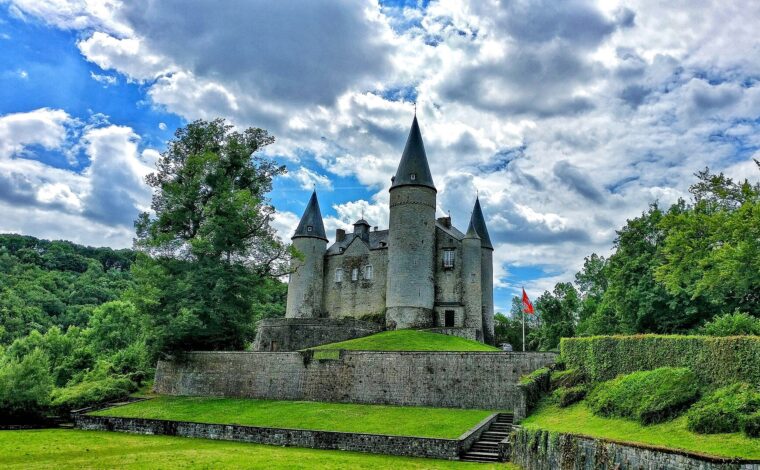
The Ardennes also holds the best of Belgium’s castles, from the feudal fortress at Bouillon above the Semois to the pointed towers of Vêves near Dinant and the ruin that crowns La Roche. Most open seasonally and several of the famous ones are private, so it’s worth knowing which you can actually walk into before you plan a drive around them. Our guide to Belgium’s best castles covers opening seasons and which ones need a car.
Related Brussels Guides
- Durbuy Day Trip from Brussels — the single-town, single-day version.
- Dinant Day Trip from Brussels — the Meuse valley on the Ardennes’ northwest edge.
- Belgium Travel Guide — the country as a whole, and where the Ardennes fits.
- How Many Days Do You Need in Belgium? — the trip length at which the Ardennes becomes possible.
- The Belgian Coast — the other two-night region, at the opposite end of the country.
- Belgian Beer Guide — Trappist, abbey and what the labels mean.
- Car Rental in Brussels — worth reading before you book, since this is the trip that needs one.
Useful Resources
- visitwallonia.be — the Walloon tourist board and the single best starting point for the region.
- grotte-de-han.be — Domaine des Grottes de Han: current prices, seasonal hours and the winter closure.
- bastognewarmuseum.be — tickets, opening hours and the combined War Rooms option.
- orval.be — abbey ruins, visiting hours and the history of the site.
- infotec.be — TEC regional buses, essential if you are travelling without a car.
- belgiantrain.be — trains to Jemelle, Marche-en-Famenne and Libramont.
Frequently Asked Questions
Can you visit the Ardennes as a day trip from Brussels?
You can reach one town in a day — Durbuy, Dinant or Rochefort — but you cannot see the region. Bouillon alone is two and a half hours each way by car. The Ardennes is built around valleys, forest and driving between viewpoints, and none of that survives a five-hour round trip. Give it two nights minimum, three if you can.
Do you need a car in the Ardennes?
Effectively yes. Trains reach the gateway towns — Jemelle for Rochefort and Han, Marche-en-Famenne, Libramont for the deep south — in one to two hours from Brussels, but from there you depend on TEC regional buses, which are infrequent and worse at weekends. Bouillon has no station at all. Without a car, base yourself in one town such as Rochefort or La Roche and walk from it rather than trying to tour.
How much are the Caves of Han?
Around €41.50 for adults and €31.50 for children at the gate for the full domain, which includes the cave, the wildlife park and the prehistory museum. Online and promotional rates start from about €30.50 and €23. Opening hours vary substantially by season and there is a closure from mid-November, so book online and check the calendar before you travel.
What is there to do in the Ardennes?
Walking on waymarked forest and valley routes, kayaking on the Ourthe and the Lesse from spring to early autumn, show caves at Han, Hotton and Remouchamps, castles at Bouillon and La Roche, the Battle of the Bulge sites around Bastogne, the Hautes Fagnes peat plateau, and Trappist beer at Orval. Add game and Ardennes ham on every menu in autumn.
Where is the best place to stay in the Ardennes?
La Roche-en-Ardenne for practicality — hotels, restaurants, kayak hire and walking routes all in one small town. Bouillon for the most spectacular setting, in a loop of the Semois below the castle. Rochefort if you are arriving by train. Durbuy if you want the prettiest and do not mind paying for it or sharing it at weekends.
When is the best time to visit the Belgian Ardennes?
September and October. The autumn colour across the plateau is the region’s best feature, game comes onto the menus, and weekdays are quiet. May and June are the other strong choice, with full rivers and everything open. Winter is atmospheric and often snowy on the Hautes Fagnes, but several attractions close or reduce hours.
Is Bastogne worth visiting?
Yes, if the Second World War interests you at all. The Bastogne War Museum is around €22 and tells the Battle of the Bulge through four individual perspectives rather than displays of equipment, which makes it unusually affecting. The Mardasson Memorial next door is free and takes ten minutes. The battlefield sites in the surrounding forest need a car.
Photo Credits
-
La Roche-en-Ardenne on the Ourthe: La Roche-en-Ardenne — Le château féodal et l’Ourthe by JackyM59, CC BY-SA 4.0, via Wikimedia Commons.
-
Boardwalks in the Hautes Fagnes: Xhoffraix — Grande-Fagne et caillebotis de La Vecquée by Jean-Pol GRANDMONT, CC BY 3.0, via Wikimedia Commons.
-
Orval Abbey: Abbaye Notre-Dame d’Orval by Ludovic Lubeigt, CC BY-SA 2.0, via Wikimedia Commons.
Final Thoughts
The Ardennes is the part of Belgium that most rewards ignoring the usual advice. It is not on the standard four-day circuit, it does not photograph like Bruges, and getting to the good bits requires a hire car and a willingness to drive slowly on valley roads. In exchange you get a genuinely empty forest region an hour and a half from one of the busiest cities in Europe, with castles on rock spurs, a peat plateau that holds snow, monks brewing beer behind walls, and food that has never heard of a tasting menu.
Give it three days in late September. Base in La Roche or Bouillon, walk in the mornings, drive the Semois in the afternoons, and eat game with an Orval in front of you. It is the least Belgian thing in Belgium and one of the best.