Almost everyone sees Bruges wrong, and they see it wrong at exactly the same time of day. The coaches arrive around ten, the Markt fills, the queue for the Belfry reaches the door, and by half past four it drains again and the city goes quiet. If your entire experience of Bruges falls inside that window you will come away thinking it is a beautiful theme park. This Bruges travel guide is written for the other version — the one where you stay the night, walk the canals at eight in the morning and again at nine in the evening, and discover that a real Flemish city has been there the whole time.
This page covers Bruges as a destination: two days, where to sleep, what the museums cost, where to eat and what the city is like after dark. If you only have a day and are coming out and back from the capital, our Bruges day trip from Brussels guide handles that version with the train logistics. Prices were checked in September 2026 and written for travel into 2027; treat them as the right order of magnitude.
Bruges at a Glance
| Where | West Flanders, Dutch-speaking, ~1 hour by train from Brussels |
| Size | Historic centre is about 2 km across — entirely walkable |
| Ideal stay | Two nights. One night is worth more than a day trip; three is generous |
| Museum card | Musea Brugge Card, around €33, 72 hours, 11–12 sites |
| Best hours | Before 10:00 and after 17:00 |
| Museums closed | Mondays, at most Musea Brugge sites |
| Station | About a 20-minute walk south of the Markt, or a short bus ride |
| Overrated | Horse carriages, chocolate shops on the main drags, lunch on the Markt |
The Case for Staying the Night
Bruges receives an enormous number of visitors relative to its size, and almost all of them are there between eleven and four. The consequence is a city with two entirely different personalities depending on the hour.
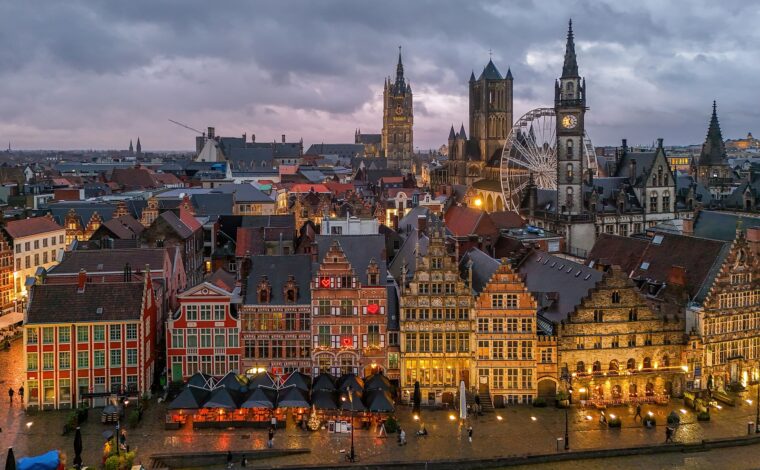
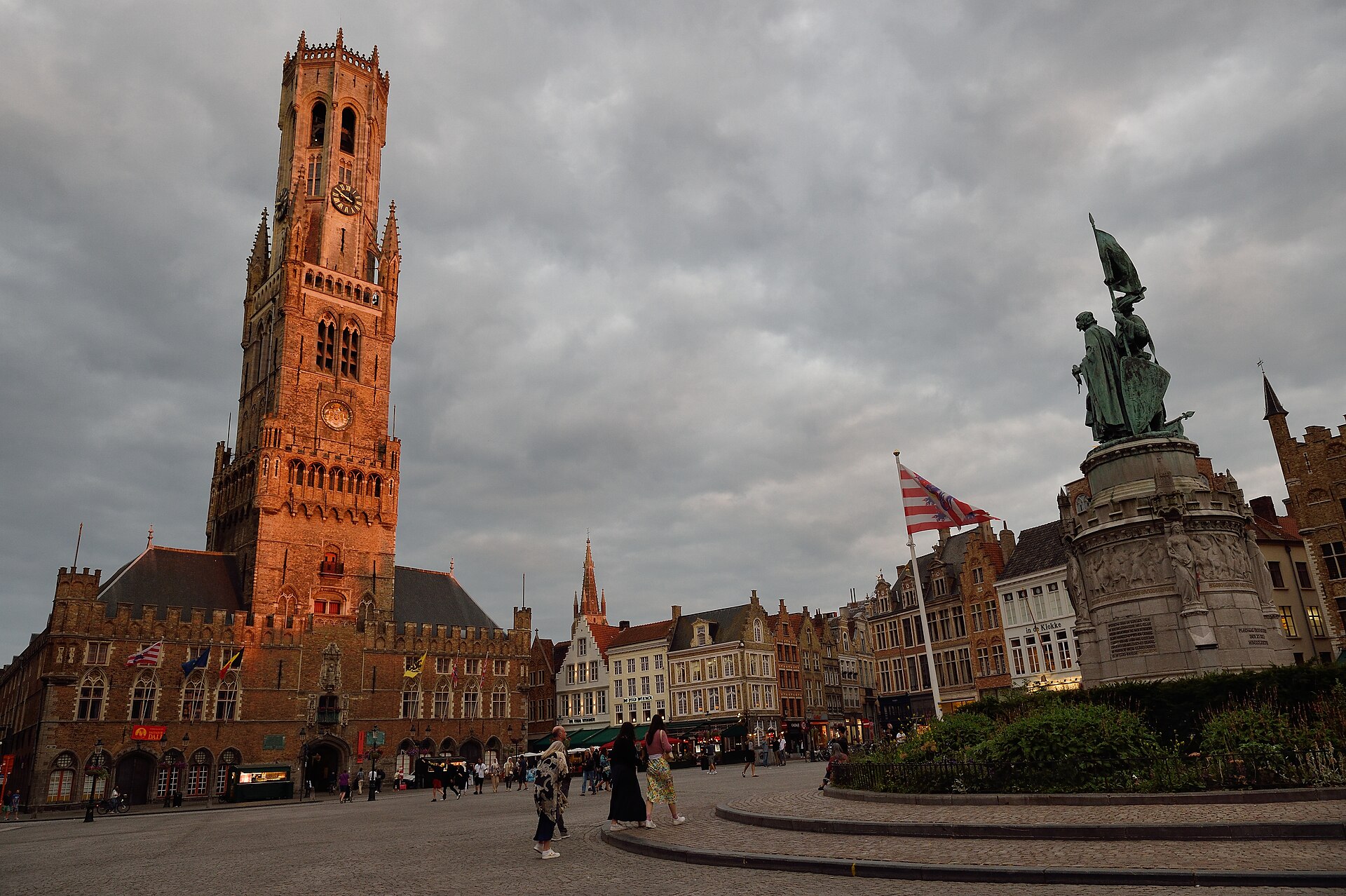
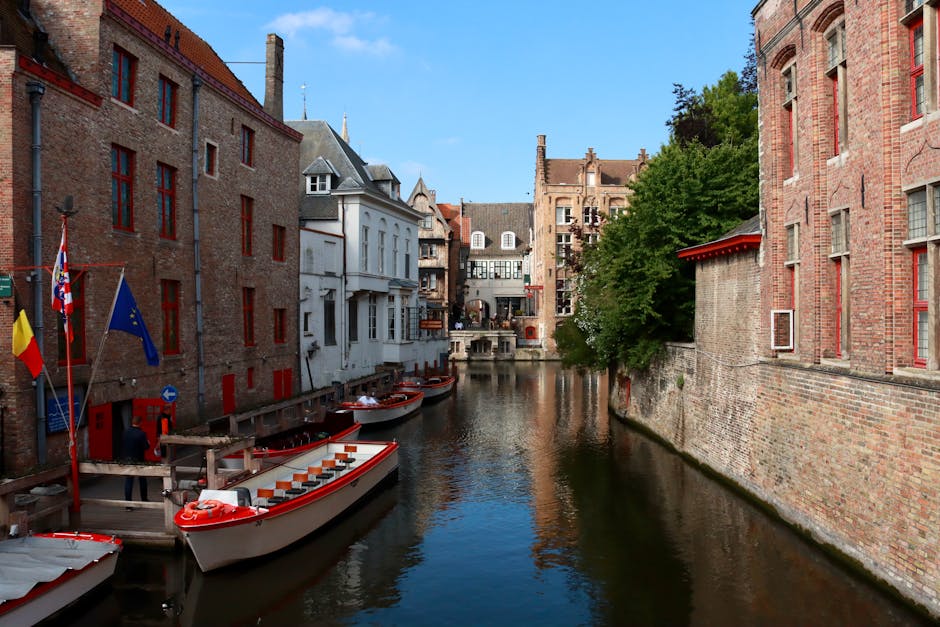
At eight in the morning the Markt is a working square with delivery vans and people going to work. The Rozenhoedkaai — the canal bend that appears on every photograph of Bruges ever taken — has nobody standing on the bridge. You can walk into the Church of Our Lady and stand in front of Michelangelo’s Madonna and Child without anyone’s elbow in your ribs. By ten this has entirely stopped being true.
The evening is the same in reverse. From about five the day-trippers thin out; by seven the centre belongs to people who live there and the handful of visitors who booked a bed. Restaurants stop being pressured. The lit facades on the Markt and the Burg are genuinely theatrical and there is nobody in front of them.
That is the entire argument, and it is worth the price of a hotel. The honest counter-argument is money: Bruges has the most expensive beds in Belgium and the gap is real. If the budget will not stretch, base in Ghent instead and take an early train — half an hour, and it gets you the morning if not the evening.
Getting There and Getting In
Bruges is on the main line west from Brussels: about an hour from any of the three Brussels stations, roughly twice an hour, no reservation, no advance fares. It is also about half an hour from Ghent and an hour from Antwerp, and it is on the line to Ostend and the coast.
Bruges station sits about twenty minutes’ walk south of the Markt, through ‘t Zand and up Steenstraat. It is a pleasant walk with a bag if the weather behaves and a miserable one if it does not; local buses run into the centre from the station forecourt if you would rather not. Taxis are available and briefly expensive.
Do not bring a car. The centre is a maze of one-way cobbled streets with heavy restrictions and expensive parking, and every hotel will tell you the same thing.
Two Days in Bruges
Day one — the centre
Start at the Markt before nine. The Belfry is the obvious first move: 366 steps, narrow, and worth doing early both because the queue builds and because the carillon overhead at close range is memorable. Check museabrugge.be before you plan around it — the tower has had recurring maintenance closures.
Walk through to the Burg, the smaller and older square behind the Markt, for the City Hall’s Gothic Hall and the Basilica of the Holy Blood — a two-storey chapel with a Romanesque lower church that almost nobody visits and an upper chapel that everybody does.
From there the Rozenhoedkaai is thirty seconds away, then the Groeningemuseum for the Flemish Primitives: Van Eyck’s Madonna with Canon van der Paele, Memling, Bosch, Gerard David. It is a small museum by international standards and all the better for it — you can see it properly in ninety minutes.
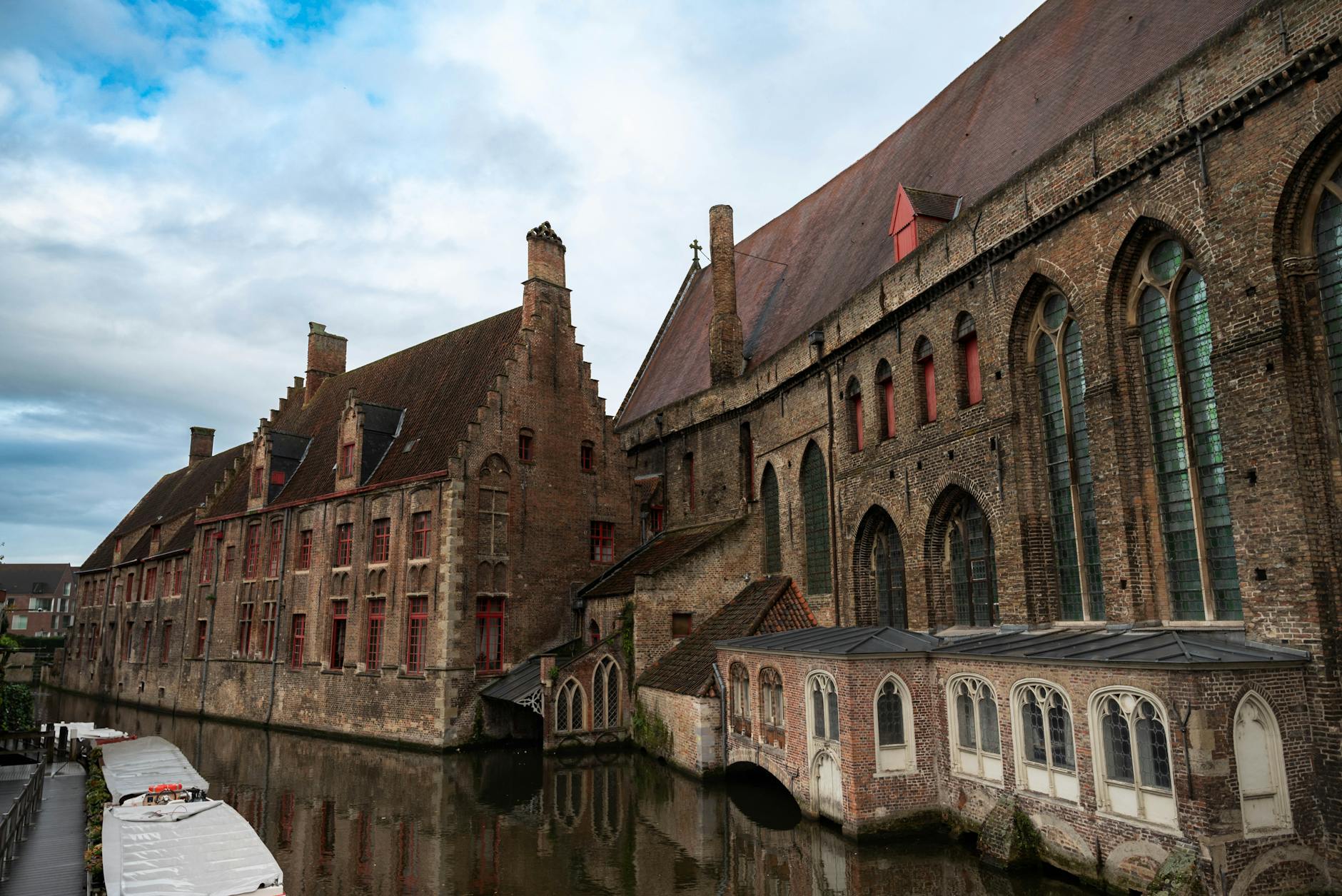
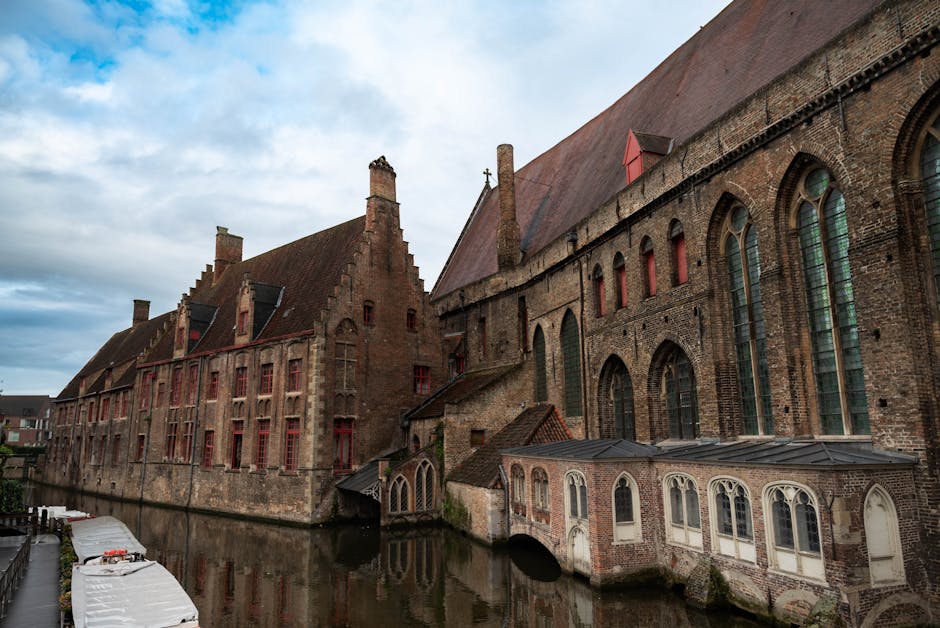
Finish the afternoon at the Church of Our Lady for the Michelangelo, and the Sint-Janshospitaal next door, a medieval hospital that now holds the Memling panels and is, for many people, the best thing in the city.
Day two — the edges
The second day is what a day trip cannot give you, and it is the better of the two. Walk south to the Begijnhof, a walled courtyard of white houses around a lawn that is full of daffodils in spring, and on to the Minnewater, the “lake of love”, which is a park with swans and no gift shops.
Then go east, into the Sint-Anna quarter. This is residential Bruges: the same brick gables and canals, no coaches, and a completely different atmosphere. The Jerusalem Chapel, the Kantcentrum lace centre and the four surviving windmills along the Kruisvest earth ramparts are all here, and you will have most of them to yourself.
Save the afternoon for De Halve Maan, the last working brewery in the historic centre, which makes Bruges Zot and pipes its beer to a bottling plant outside town through three kilometres of underground pipeline — a genuinely absurd and entirely real piece of infrastructure. Tours are bookable online, include a beer, and sell out in summer; check the current price and time when you book.
Museums and What They Cost
Most of the significant museums are run by Musea Brugge, which sells a single card covering eleven or twelve sites for around €33, valid 72 consecutive hours from first use. The card covers the Belfry, the City Hall, the Groeningemuseum, the Museum of the Church of Our Lady, Gruuthuse, the Liberty of Bruges, Sint-Janshuis Mill, Our Lady of the Pottery, the Folklore Museum and BRUSK.
Individually, the Groeningemuseum is about €12 for adults over 26, €10 for 25 and under, and free for 16 and under. Most other Musea Brugge sites sit in a similar band. Opening hours are typically Tuesday to Sunday, 09:30 to 17:00, closed Monday — which is the single most important fact for anyone planning a Monday visit.
The honest verdict on the card: it pays back at about three sites, which two days in Bruges will comfortably exceed if museums interest you at all. If you are here mainly to walk and eat, buy singles for the Groeningemuseum and Sint-Janshospitaal and skip the rest.
Where to Stay
Inside the ring
The historic centre sits inside an oval of canals and parkland where the medieval walls used to be, and everything within it is walkable. Staying inside the ring is the whole point of coming — you are paying for the early mornings and the late evenings, and a hotel twenty minutes out gives you neither.
The quieter, better-value corners are north and east of the Burg — around Sint-Gillis and the Sint-Anna quarter — where you are still ten minutes from the Markt but off the coach routes. The streets immediately around the Markt and Steenstraat are the loudest and most expensive.
Near the station and ‘t Zand
‘t Zand is the big modern square at the western edge of the centre, with the Concertgebouw on it. Hotels here are cheaper than the core, still walkable to everything, and five minutes from the station, which suits an early departure. It is less pretty and perfectly practical.
Budget
Bruges has a small hostel scene and a large supply of B&Bs in ordinary houses, which are often the best value in the city and frequently the nicest rooms. Book early: stock inside the ring is genuinely limited and summer weekends sell out weeks ahead. Expect to pay noticeably more than you would in Brussels for the equivalent.
Eating and Drinking
The rule in Bruges is the same as everywhere else in Belgium and applies with unusual force: do not eat on the Markt. The terraces on the main square charge a substantial premium for the view and the food is aimed at people who will not be back. One street back — Langestraat, the streets around Sint-Jakobs, the Sint-Anna side — is where the price halves and the quality goes up.
What to eat: mussels in season, stoofvlees (beef braised in dark beer), North Sea shrimp croquettes, eel in green sauce if you are feeling brave, and frites from a proper friture rather than a tourist stand. Our guides to traditional Belgian dishes and the Belgian beer guide cover the wider picture.
On chocolate: Bruges has an implausible number of chocolate shops and their quality varies enormously. The ones with a queue of locals are good; the ones on the main tourist axis with a display of chocolate tools and lingerie are not. Buy from a shop that makes on the premises.
Bruges After Dark
Bruges is not a nightlife city and pretending otherwise would be dishonest. What it has instead is one of the best evening walks in Europe. The Markt and the Burg are floodlit, the canals hold the light, and the lanes between them empty out almost completely.
Do the walk in this order: Markt, Burg, Rozenhoedkaai, along the Groenerei and the Dijver, then back up through the quiet streets north of the Burg. It takes about forty minutes and you will pass perhaps a dozen people.
For a drink, look for a bruin café — the Flemish brown bar, small and wood-panelled, with a beer list that runs to several pages. Bruges has a serious specialist beer culture and several bars where the list is genuinely encyclopaedic.
When to Come
| Season | What to expect |
|---|---|
| April–June | Best overall. Long light, daffodils in the Begijnhof, manageable crowds |
| July–August | Busiest by a wide margin. Stay overnight or do not come |
| September–October | Excellent. Warm enough, much quieter, good light |
| November | Grey and wet, but the city is nearly empty and hotels are cheap |
| December | Christmas market on the Markt, ice rink, very busy at weekends |
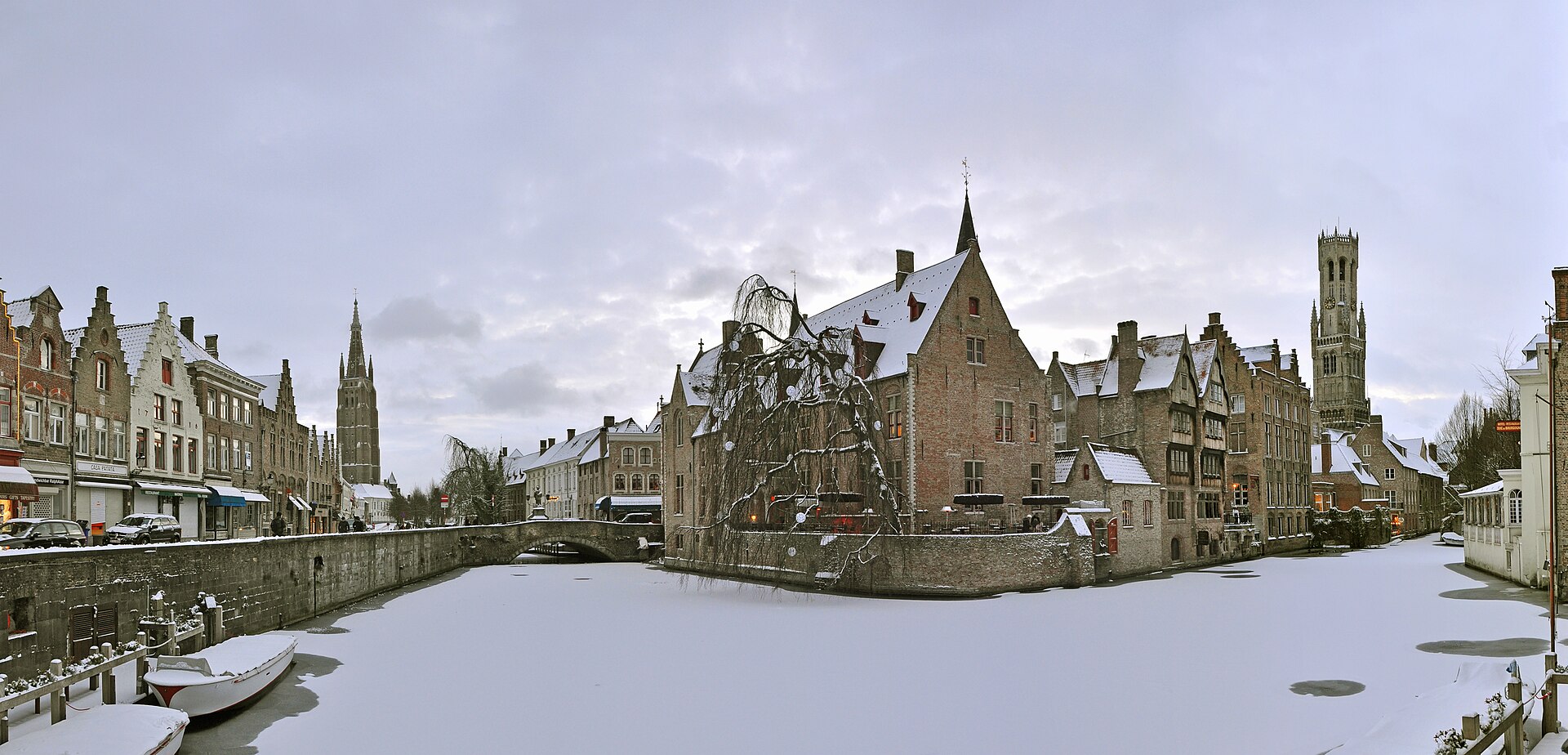
| January–February | Cold, quiet, occasionally spectacular if it snows |
What Is Overrated
- The horse carriages. Expensive, slow, and you will see more on foot in the same time. The welfare question is one people raise for good reason.
- Lunch anywhere on the Markt. Named twice on purpose.
- The chocolate museum. Fine for children, thin for adults, and there is real chocolate being made twenty metres away.
- Coming on a Monday. Most Musea Brugge sites close and you will spend the day looking at exteriors.
- Doing Bruges and Ghent in one day. Technically possible, comprehensively pointless.
- The Belfry climb if you dislike enclosed spaces. It is genuinely tight and there is no way to turn back once the queue is behind you.
Practicalities
- Language. Dutch. Everything is signed as Brugge. English is very widely spoken.
- Cobbles. Everywhere, and uneven. Not a wheeled-suitcase or thin-soled-shoe city.
- Cash. Cards work almost everywhere; a few frituren and market stalls do not.
- Sundays and Mondays. Many shops close Sunday; many museums close Monday. Plan around both.
- Luggage. If you are arriving or leaving mid-day, use the lockers rather than dragging a case over the cobbles. Our guide to luggage storage covers how the Belgian station lockers work.
- Bikes. Widely hired and genuinely useful for the ramparts and the windmills, less so in the packed centre at midday.
The obvious alternative, and the one we would take if the budget were tight: sleep in Ghent instead. It is half an hour from here, materially cheaper for the equivalent room, and a livelier place to spend an evening — which makes an eight o’clock arrival in Bruges realistic without paying Bruges rates. Our Ghent travel guide covers the city and how the two compare.
One easy addition if you have a spare day: the sea is fifteen to twenty minutes away by train. Ostend has museums, a fishing harbour and the best seafood in West Flanders, and the Kusttram will carry you the length of the shoreline for €7.50 a day. Our Belgian coast guide covers which resorts are worth stopping at and which are not.
Related Brussels Guides
- Bruges Day Trip from Brussels — the single-day version, with train times and a tighter route.
- Brussels to Bruges by Train — fares, frequencies and which station to leave from.
- Belgium Travel Guide — the country as a whole, and how Bruges fits into it.
- 7 Days in Belgium — the week that uses Ghent as a base for an early Bruges morning.
- How Many Days Do You Need in Belgium? — how long each region really takes.
- Belgian Beer Guide — what to order in a Bruges brown bar.
- Day Trips from Brussels — the other ten routes worth taking.
Useful Resources
- museabrugge.be — the authority on museum prices, opening hours, the Musea Brugge Card and any closures.
- visitbruges.be — the city’s own tourist board, with events and accommodation listings.
- belgiantrain.be — timetables and fares from Brussels, Ghent, Antwerp and the coast.
- halvemaan.be — brewery tour times and booking.
- delijn.be — local buses, including the station shuttle into the centre.
Frequently Asked Questions
Is Bruges worth staying overnight?
Yes, and it is the single biggest improvement you can make to a Bruges trip. The city is packed between roughly eleven and four and nearly empty outside those hours. Staying the night buys you the early morning at the Rozenhoedkaai and the floodlit Markt and Burg in the evening, both of which are the reason people love the place. The trade-off is cost — Bruges has the most expensive accommodation in Belgium.
How many days do you need in Bruges?
Two days and two nights is the right answer. One full day covers the Markt, the Burg, the Groeningemuseum, the Church of Our Lady and Sint-Janshospitaal. The second day is for the Begijnhof, the Minnewater, the Sint-Anna quarter, the windmills and the brewery — the parts that a day trip never reaches. Three days is generous unless you are using Bruges as a base for the coast.
How much is the Musea Brugge Card and is it worth it?
Around €33, valid for 72 consecutive hours from your first visit, covering eleven or twelve sites including the Belfry, the Groeningemuseum, the City Hall and the Church of Our Lady museum. It pays back at roughly three sites. Over two days with any interest in museums you will clear that easily; if you are mainly here to walk, buy individual tickets instead.
What day should I avoid visiting Bruges?
Monday, when most Musea Brugge sites close, and summer Saturdays, when the coach traffic peaks. If Monday is unavoidable, plan a walking and eating day — the Begijnhof, the ramparts, the windmills and the brewery — rather than a museum day.
Is Bruges better than Ghent?
They are different rather than ranked. Bruges is more intact, more beautiful and much more crowded; Ghent is a living city with a student population, a better bar scene and far fewer visitors. Most people who see both prefer Bruges to look at and Ghent to spend an evening in. If you have two nights, one in each is the ideal split.
Do I need a car in Bruges?
No, and it is actively a liability. The historic centre is about two kilometres across, entirely walkable, and full of one-way cobbled streets with heavy traffic restrictions and expensive parking. Come by train — Bruges is an hour from Brussels, half an hour from Ghent — and walk or hire a bike once you are there.
Where should I eat in Bruges?
Not on the Markt. The terraces on the main square charge a large premium for the view. Walk one street back — towards Langestraat, the Sint-Jakobs area, or across to the Sint-Anna quarter — and prices fall while quality rises. Look for mussels in season, stoofvlees, shrimp croquettes and a proper friture for chips.
Photo Credits
-
The Markt and Belfry at dusk: Belfry at Grand Market Square at rainy day dusk, Bruges by Tim Adams, CC BY 3.0, via Wikimedia Commons.
-
The Rozenhoedkaai in winter: Brugge Rozenhoedkaai Winter R03 by Marc Ryckaert (MJJR), CC BY 3.0, via Wikimedia Commons.
Final Thoughts
Bruges has a reputation problem among people who have only seen it at midday, and it is entirely deserved by that version of the city. The medieval centre survived because Bruges spent four centuries as a commercial backwater after its harbour silted up, and what was preserved by poverty is now under pressure from success. Between eleven and four that pressure is all you can see.
Book two nights inside the ring, set an alarm on the first morning, and walk to the Rozenhoedkaai before the coaches arrive. Then do it again in the evening with a beer. That is the whole trick, it costs one hotel bill, and it turns Bruges from a photograph into a place.