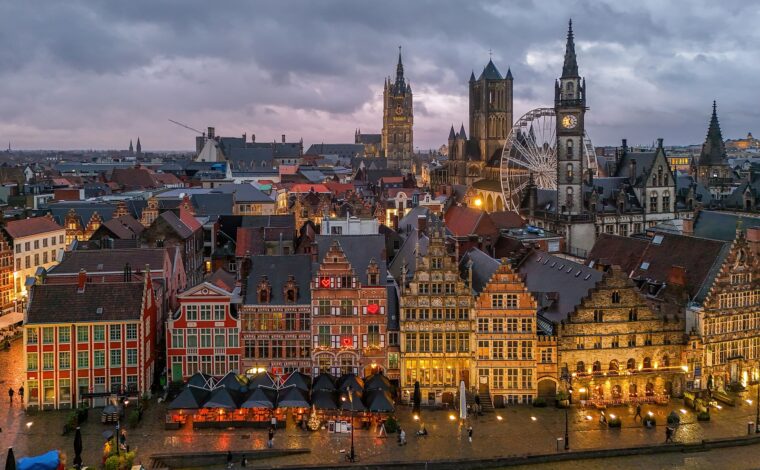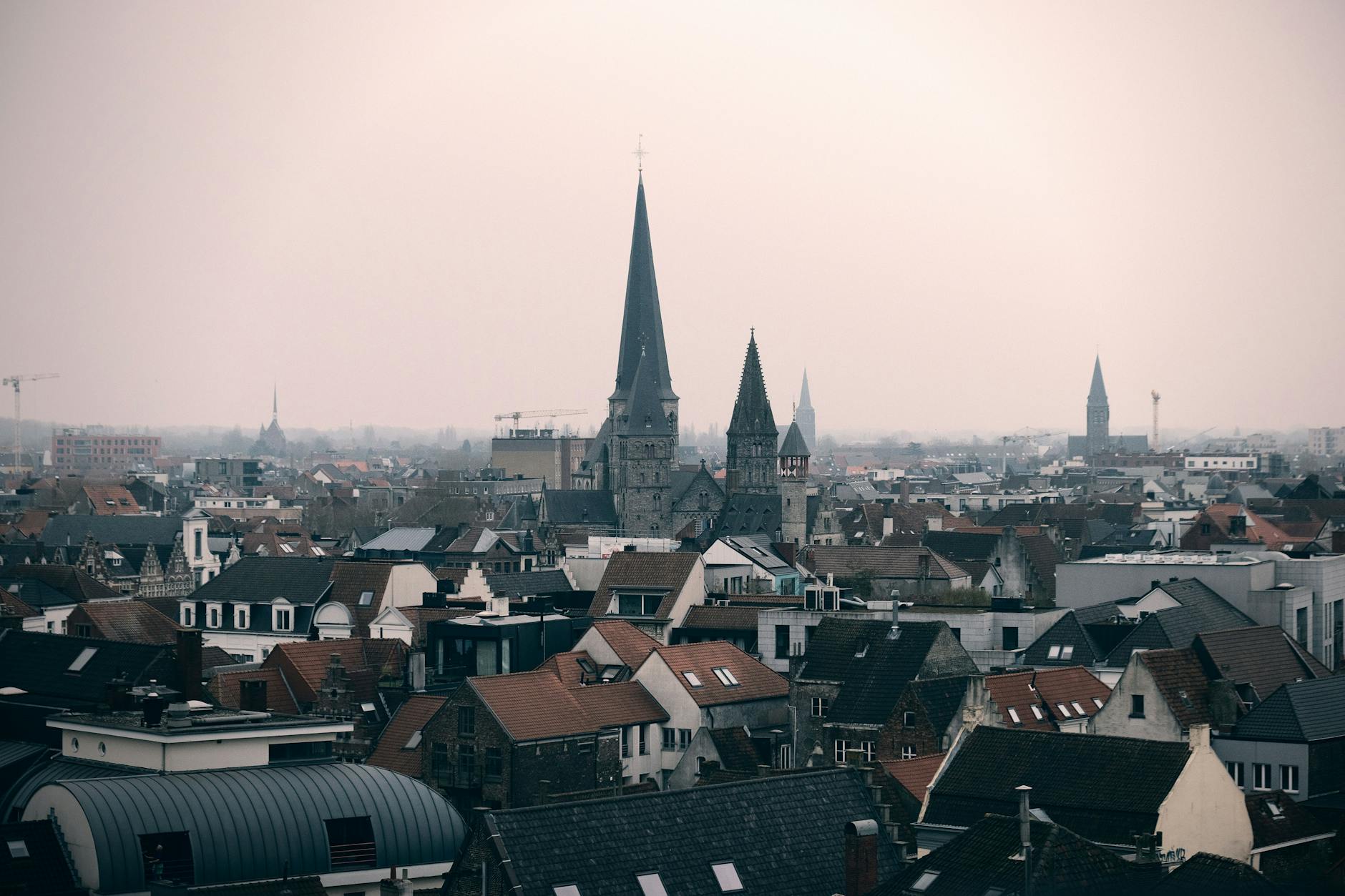
Ghent is the Flemish city that people discover second and then wish they had discovered first. It has the same medieval skyline as Bruges, the same guild houses reflected in the same green water, and a fraction of the visitors — because it also has 70,000 students, a working port, a serious bar scene and the habit of getting on with its own life regardless of who is watching. This Ghent travel guide is written for the version of the trip where you stay the night, which is when the difference between Ghent and its more famous neighbour becomes obvious.
What follows covers Ghent as a destination: what to see, what it costs, where to sleep and what happens on the Graslei after dark. If you only have a day and are coming out and back from the capital, our Ghent day trip from Brussels guide handles the train logistics and a tighter route. Prices were checked in September 2026 and are written for travel into 2027.
Ghent at a Glance
| Where | East Flanders, Dutch-speaking, about 35 minutes by train from Brussels |
| Ideal stay | Two nights. Also the best base in Flanders for Bruges and Antwerp |
| Station | Gent-Sint-Pieters, ~20 minutes’ walk or a short tram from the centre |
| The unmissable thing | The Ghent Altarpiece in Saint Bavo’s, ~€12.50, timed entry |
| Gravensteen | €13 including audio guide, daily 10:00–18:00 |
| Best hour | Dusk on the Graslei, whatever the season |
| Compared with Bruges | Less pretty, more alive, far cheaper, far fewer coaches |
Why Ghent Repays an Overnight
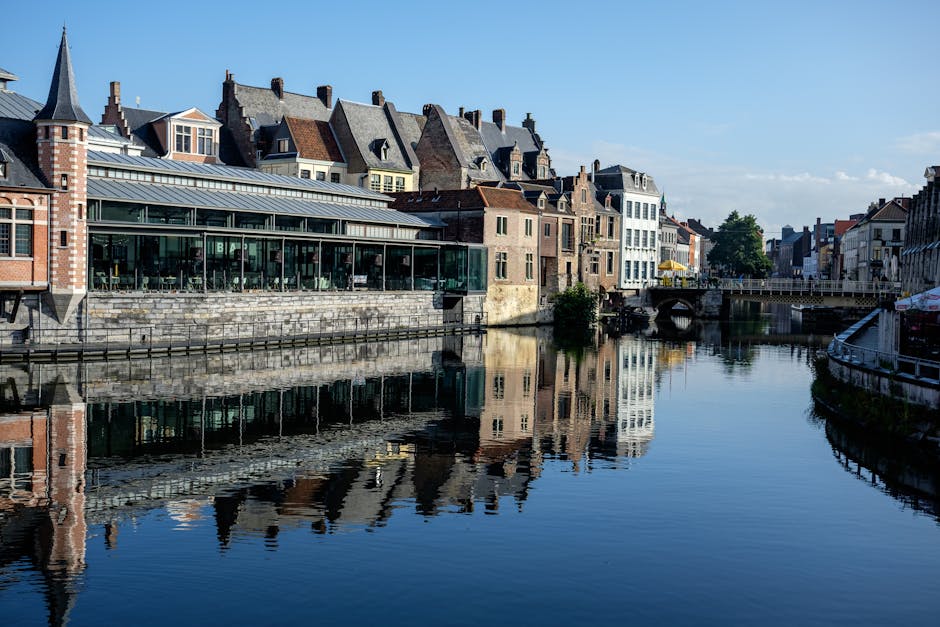
The straightforward reason is the Graslei. The two quays facing each other across the Leie — Graslei and Korenlei — are lined with guild houses from the twelfth century onwards, and at dusk they are floodlit and reflected in the water while several hundred people sit along the stone steps with a beer. It is the best public space in Flanders and it happens after the last comfortable train back to Brussels has gone in summer.
The second reason is dinner. Ghent has the strongest food scene of the Flemish cities outside Antwerp, a large vegetarian culture — the city ran an official weekly veggie day for years and the habit stuck — and restaurants that fill by eight. Eating well here means not watching a clock.
The third is price. Ghent is materially cheaper than Bruges for equivalent accommodation, which is why it makes such a good base: half an hour to Bruges, an hour to Antwerp, half an hour back to Brussels. Our 7-day Belgium itinerary is built around exactly that idea.
Getting There and Getting In
Trains from Brussels to Gent-Sint-Pieters take about thirty minutes and run at least twice an hour all day, with no reservations and no advance fares. Bruges is half an hour away, Antwerp about an hour, and the coast an hour or less.
Sint-Pieters is a handsome 1912 station about two kilometres south of the historic centre — walkable in twenty-five minutes, or a short ride on tram 1, which runs from the station forecourt into the Korenmarkt in the middle of everything. The tram is signed, frequent and the obvious choice with a bag.
Once you are in, walk. The historic core is small, largely pedestrianised and threaded with water, and no sight on this page is more than fifteen minutes from any other.
The Ghent Altarpiece
The single most important object in Belgium is in Saint Bavo’s Cathedral: the Adoration of the Mystic Lamb, painted by Hubert and Jan van Eyck and finished in 1432. Twelve panels, oil paint used with a precision nobody had managed before, and a history of theft, fire, war and forgery that is genuinely absurd — one panel, stolen in 1934, has never been recovered.
It is now displayed in a purpose-built visitor centre inside the cathedral, following a restoration that stripped away centuries of overpaint and produced a picture noticeably stranger than the one everybody knew. Entry is around €12.50 for adults and includes an augmented-reality experience that reconstructs the cathedral as it was; a tablet is available if you would rather not wear the glasses.
Practicalities: the visitor centre is open roughly Monday to Saturday 10:00–17:00 and Sunday 13:00–17:00, the full AR tour plus altarpiece runs about an hour, and last entry is around 16:00. It uses timed entry and it does sell out. Book this one in advance — it is the only thing in Ghent that genuinely requires it.
The Rest of the City
Gravensteen
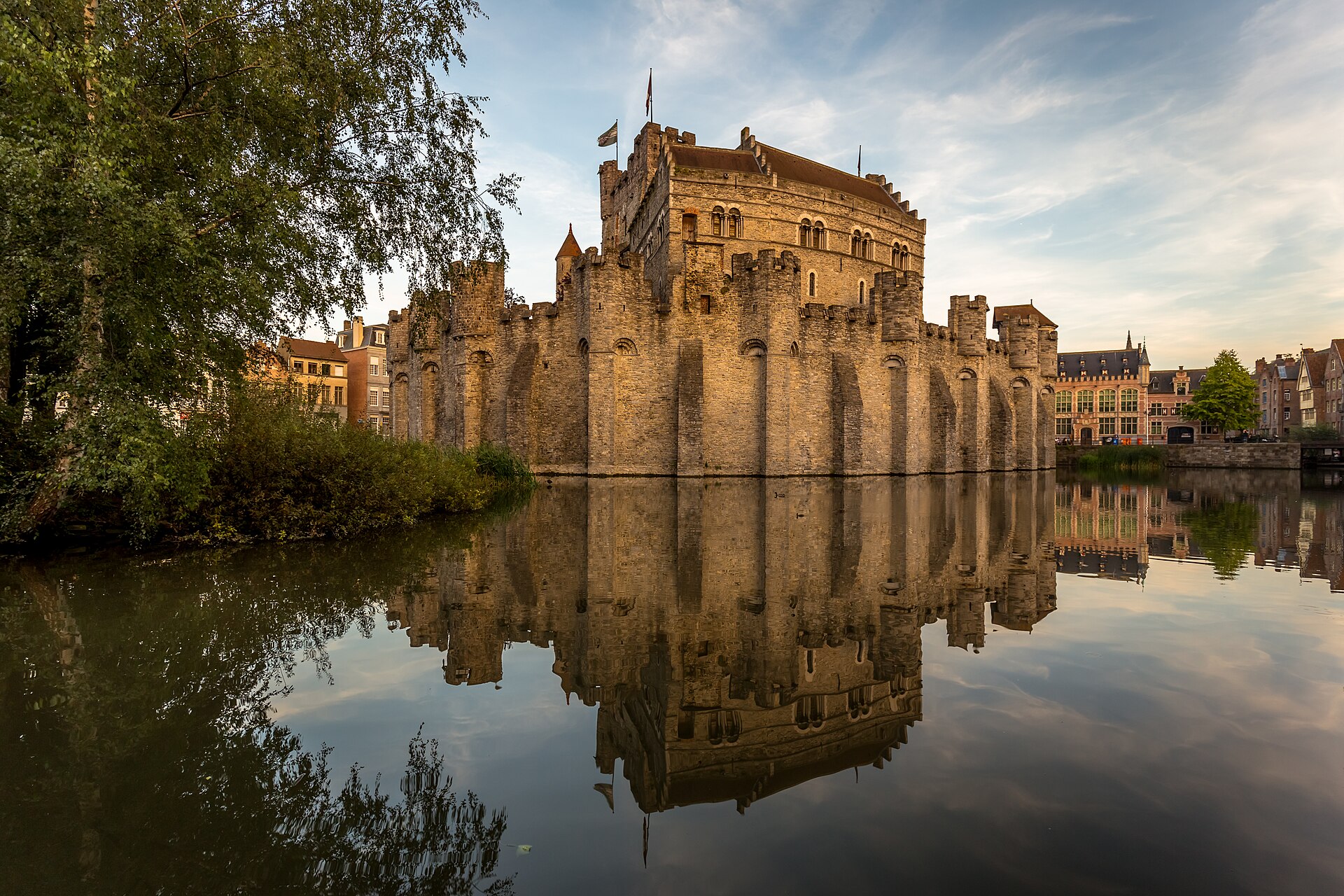
The Castle of the Counts sits in the middle of the city surrounded by a moat, which is not something most European capitals can say. It is a twelfth-century stone fortress that later served as a courthouse, a prison and a cotton mill, and was nearly demolished before the city bought it back. Entry is €13 including the audio guide, open daily 10:00 to 18:00 with last admission at 16:40, closed on 24, 25 and 31 December and 1 January.
The audio guide is the reason to go. It is narrated as a comedy, it is genuinely funny, and it is the only castle audio guide anywhere that people recommend to each other unprompted. The ramparts also give you the best rooftop view in Ghent.
The Graslei and Korenlei
The medieval harbour, and the centre of gravity of any visit. Walk it in daylight for the architecture — the Romanesque grain warehouse on the Graslei is one of the oldest buildings in Belgium — and again at dusk for the thing everybody comes for.
The Patershol
A grid of narrow lanes behind the Gravensteen that used to be the leather-workers’ quarter, was a slum by the twentieth century, and is now the restaurant district. Cobbled, gaslit-looking, and one of the few genuinely atmospheric quarters in Flanders that has not been sanded smooth for visitors.
STAM and the museums
STAM, the city museum, is built into a former abbey and tells Ghent’s story on a giant aerial photograph of the city that you walk across. It is open Monday, Tuesday, Thursday and Friday 09:00–17:00, weekends and holidays 10:00–18:00, and closed Wednesdays, with a late opening to 22:00 on the first Thursday of most months.
Also worth your time: the Design Museum Gent, the MSK fine arts museum, and SMAK for contemporary art, the last two facing each other across the Citadelpark.
The Belfry
Ghent’s belfry has a lift, which after Bruges’ 366 steps feels like cheating and is very welcome. The dragon on top has been there, in one form or another, since the fourteenth century.
Two Days in Ghent
Day one. Saint Bavo’s and the Altarpiece first, on a booked slot, ideally at opening. Then the Belfry, the Korenmarkt and Saint Nicholas Church, lunch somewhere off the main axis, and the Gravensteen in the afternoon. Finish on the Graslei at dusk with a beer and stay there.
Day two. STAM in the morning for the shape of the city, then the Patershol and the Vrijdagmarkt, then walk north along the Leie past the Rabot towers, or south to the Citadelpark for the MSK and SMAK. Dinner in the Patershol.
If you have a third day, use it on Bruges — half an hour away, and going early from Ghent is the single best move in Flemish travel.
Where to Stay
The historic centre between the Korenmarkt and the Vrijdagmarkt puts you inside walking distance of everything and within earshot of the Graslei in the evening. It is the obvious choice and prices are still lower than Bruges for the equivalent room.
The Patershol and around the Gravensteen is quieter, prettier and only five minutes further, with more small hotels and B&Bs in old houses.
Near Gent-Sint-Pieters is cheaper again and sensible if you are using Ghent as a base for day trips to Bruges and Antwerp, since you are on the tram line and next to the platforms. You lose the evening walk home along the water, which is a real loss.
Ghent has a good hostel supply and a large stock of B&Bs. Book ahead for the Gentse Feesten in July, when the entire city becomes a ten-day festival and every bed within reach is taken.
Eating and Drinking
Ghent takes food more seriously than its size suggests. The local dish is waterzooi, a creamy chicken or fish stew that is much better than the description; stoofvlees and mosselen are everywhere; and cuberdons — cone-shaped raspberry sweets with a liquid centre, sold from purple stalls — are a Ghent speciality that people either love or find deeply strange.
The vegetarian scene is unusually strong for Belgium, a legacy of the city’s official weekly veggie day, and you will find proper vegetarian menus rather than one grudging pasta dish.
For drinking, the Graslei terraces are pleasant and priced accordingly; the better bars are a street back, particularly around the Vrijdagmarkt and in the Patershol. Ghent has its own beer, the Gruut range, brewed with herbs instead of hops in a revival of a pre-hop tradition — worth trying once even if it is not to your taste. Our Belgian beer guide covers the wider landscape.
When to Come
- April–June. Best overall: long evenings on the Graslei, everything open, manageable numbers.
- July. The Gentse Feesten take over the city for ten days — enormous, free, chaotic and either the best or worst time to come depending on temperament. Book months ahead.
- September–October. Excellent. Students back, city alive, visitors thinning.
- Winter. The Light Festival returns periodically and transforms the centre; otherwise expect grey, wet and cheap.
Ghent or Bruges?
The question everybody asks, and the honest answer is that they are not competing for the same thing.
Bruges is more intact and more beautiful. Its medieval core survived because the city spent four centuries as a commercial backwater, and nothing in Ghent matches it as a single continuous piece of townscape. It is also visited by an order of magnitude more people, almost all of them between eleven and four.
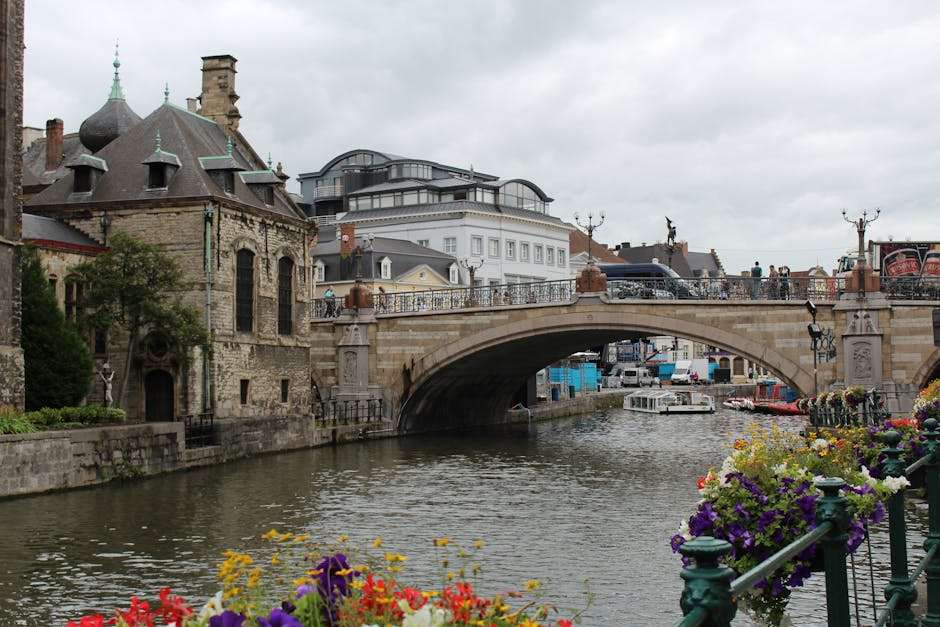
Ghent is a real city with a medieval centre in it rather than a preserved medieval city. There are trams through the middle, students on bikes, a port to the north and a university faculty in half the historic buildings. It is livelier, cheaper, better for eating and drinking, and much less crowded.
If you have one day, Bruges is more spectacular. If you have one night, spend it in Ghent. If you have two nights, do one of each — or sleep in Ghent both nights and take the early train to Bruges, which is what we would do. Our Bruges travel guide covers the other half of that decision.
What Is Overrated
- Eating on the Graslei terraces. Beautiful, and you are paying for the view. Drink there, eat a street back.
- Cycling in the centre at midday. Cobbles, trams, pedestrians and delivery vans. Walk.
- Trying to combine Ghent and Bruges in a single day. You will get four rushed hours in each and remember neither.
- Arriving on a Wednesday expecting STAM. Closed.
- Skipping the Gravensteen audio guide. It is the point of the visit.
Practicalities
- Language. Dutch. The city is signed as Gent. English is very widely spoken, particularly given the student population.
- Trams. Run by De Lijn. Tram 1 links the station to the centre. Tickets are cheaper bought before boarding.
- Cobbles. As everywhere in Flanders. Sensible shoes.
- Booking. Only the Altarpiece genuinely needs advance booking. Everything else you can walk into.
- Luggage. Gent-Sint-Pieters has station lockers if you are arriving before check-in — see our guide to luggage storage for how the Belgian system works.
Antwerp is about an hour from here and is the obvious next move if Flanders is holding your attention. It is a bigger and rougher-edged city than Ghent — a working port with a fashion industry and four Rubens altarpieces in the cathedral they were painted for — and it needs two days rather than one. Our Antwerp travel guide sets out how to use them.
If you’re still deciding between Ghent and the alternatives, our side-by-side guide to choosing a base in Belgium compares Ghent with Brussels, Bruges and Antwerp on train times, hotel prices and what the evenings are like. The short version: Ghent is the easiest to recommend for a first trip to Flanders.
Related Brussels Guides
- Ghent Day Trip from Brussels — the single-day version, with train times and a tighter route.
- Bruges Travel Guide — the other Flemish canal city, and how the two compare.
- Belgium Travel Guide — the country as a whole, region by region.
- 7 Days in Belgium — the week that uses Ghent as its middle base.
- How Many Days Do You Need in Belgium? — how long each city really takes.
- Day Trips from Brussels — the other routes out of the capital.
- Belgian Beer Guide — including where Gruut fits in.
Useful Resources
- visit.gent.be — the city’s tourist board, and where to book the Altarpiece visitor centre.
- sintbaafskathedraal.be — cathedral opening hours and service times, which override visitor hours.
- historischehuizen.stad.gent — Gravensteen and the city’s historic houses: prices, hours and closures.
- stamgent.be — STAM opening hours, including the Wednesday closure and late Thursdays.
- belgiantrain.be — trains from Brussels, Bruges, Antwerp and the coast.
- delijn.be — tram 1 from Gent-Sint-Pieters and the rest of the network.
Frequently Asked Questions
Is Ghent worth visiting?
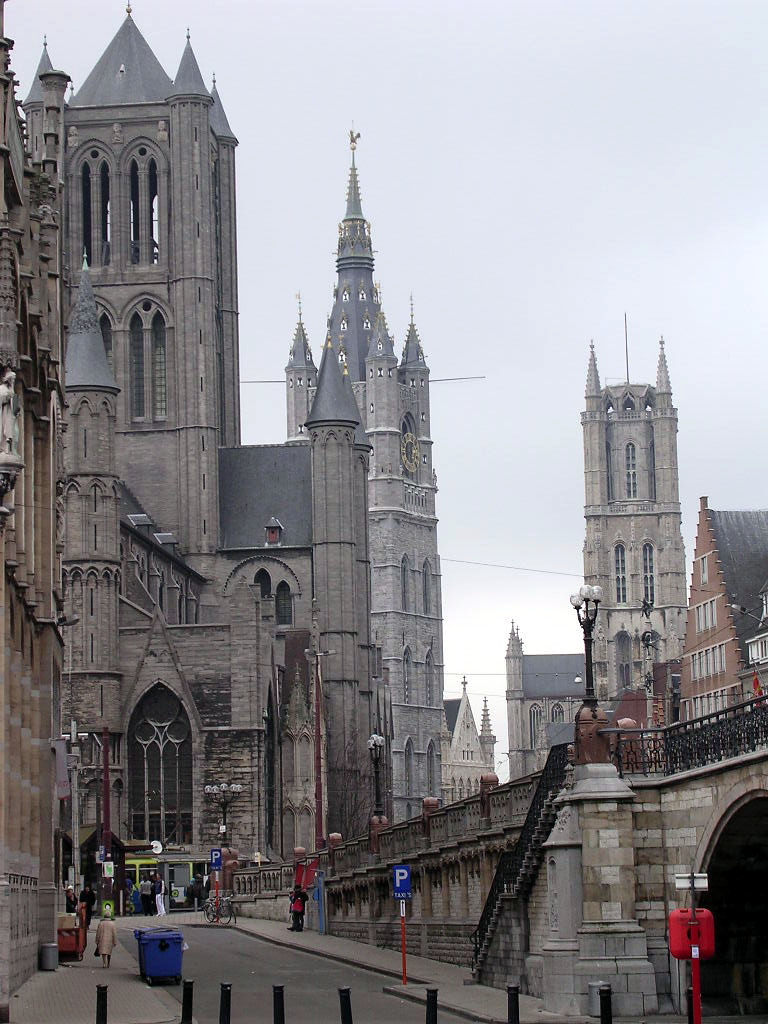
Yes, and it is the Flemish city most often underrated by people planning a first trip. It has a medieval centre on the same scale as Bruges, three famous towers in a row, a moated castle in the middle of town, the Van Eyck altarpiece, a strong food scene and a student population that keeps it alive after dark — with a fraction of the visitor numbers.
How many days do you need in Ghent?
Two days and two nights is the right amount for the city itself: one day for Saint Bavo’s, the Belfry and the Gravensteen, a second for STAM, the Patershol and the museums in the Citadelpark. Ghent also works as a two- or three-night base for Bruges and Antwerp, both of which are under an hour away.
Do I need to book the Ghent Altarpiece in advance?
Yes. The visitor centre in Saint Bavo’s uses timed entry and sells out, particularly at weekends and in summer. It is around €12.50 for adults, includes the augmented-reality experience, runs about an hour and takes its last entry at roughly 16:00. It is the only attraction in Ghent that genuinely requires advance booking.
Is Ghent better than Bruges?
Bruges is more beautiful and more intact; Ghent is more alive, cheaper and far less crowded. Most people who see both prefer Bruges to look at and Ghent to spend an evening in. If you can only sleep in one, sleep in Ghent and take the half-hour early train to Bruges in the morning.
How do you get from Gent-Sint-Pieters station to the centre?
Tram 1 from the station forecourt runs directly to the Korenmarkt in the middle of the historic centre in about ten minutes, and is the sensible option with luggage. Walking takes twenty to twenty-five minutes through a pleasant enough part of the city. Tickets are cheaper bought before you board.
What is the Gentse Feesten and should I plan around it?
A ten-day festival in July that turns the entire city centre into an open-air event, largely free, with music on every square. It is one of the largest street festivals in Europe. If you want it, book accommodation months ahead; if you want a quiet medieval city, come in a different month, because there will be no version of Ghent available that week other than the festival.
Can I visit Ghent and Bruges in the same day?
Technically yes — they are half an hour apart — but it is a poor use of the time. You would get about four hours in each, both in the middle of the day, and miss the two things that make either city special: Bruges early in the morning and Ghent after dark. Give them a day each, or sleep in Ghent and take the early train to Bruges.
Photo Credits
-
The three towers of Ghent: Ghent 3towers by William Helsen, CC BY 2.0, via Wikimedia Commons.
-
The Gravensteen at sunset: Gravensteen bij zonsondergang vanuit de Sint-Widostraat by Davidh820, CC BY-SA 4.0, via Wikimedia Commons.
Final Thoughts
Ghent’s problem, if it has one, is that it is not quite postcard enough to be famous and not quite ordinary enough to be undiscovered. That gap is exactly where the good travelling is. You get the Van Eyck, the castle, the guild houses and the water without the queue, and you get a city that will still be busy at eleven at night because people live in it.
Book the Altarpiece, arrive in the afternoon, and be on the Graslei steps at dusk with something Belgian in a glass. If you only have one night in Flanders, spend it here.