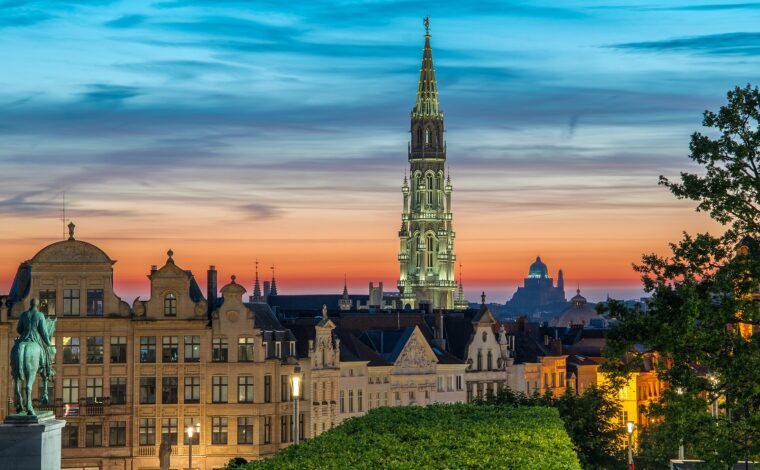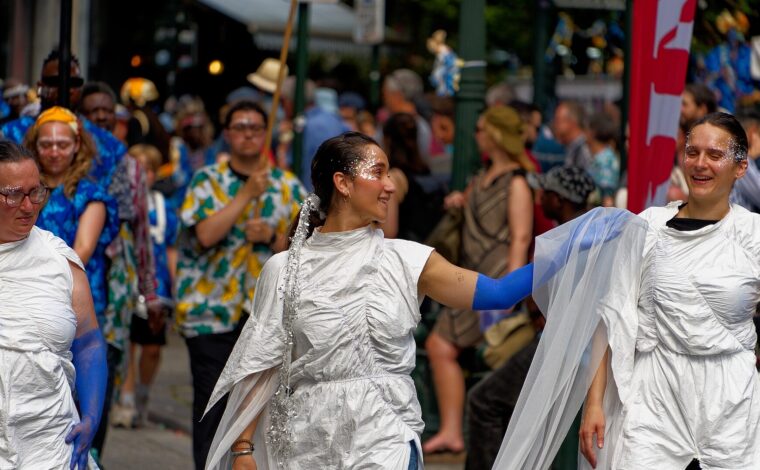
On the evening of 21 July the lawns of the Parc de Bruxelles are packed with families who have been there since the morning, the streets around the Royal Palace are lined three deep for the parade, and by nightfall half the city is walking towards the Cinquantenaire for the fireworks. It’s the loudest, most crowded and most cheerfully patriotic day in the Belgian calendar, and it sits in the middle of a month that is already full. Brussels in July means the warmest weather of the year, light until close to 22:00, the Ommegang on the Grand-Place, the Royal Palace opening its doors, and the start of the school holidays across Belgium.
This guide covers what July is actually like, what’s on (in Brussels and within a train ride of it), the days to plan around, what July does to hotel prices and crowds, and what you can skip. Dates and prices were checked in November 2026 against the organisers’ own pages. Where a 2027 date is published we give it; for the rest we give the 2026 dates so you can see the pattern, and the organiser’s own site is the place to confirm before you book.
Brussels in July at a Glance
| What | When | Cost |
|---|---|---|
| Rock Werchter (near Leuven) | 1–4 July 2027 | Paid; ticket includes the train |
| Ommegang, Grand-Place | Early July (1 and 3 July in 2026) | Grandstands €59–€89 in 2026; free to watch the procession |
| Royal Palace summer opening | 3 July–16 August in 2026 | €10 from age 13 (2026) |
| Brosella, Théâtre de Verdure | 3–5 July in 2026 | Check the festival’s site |
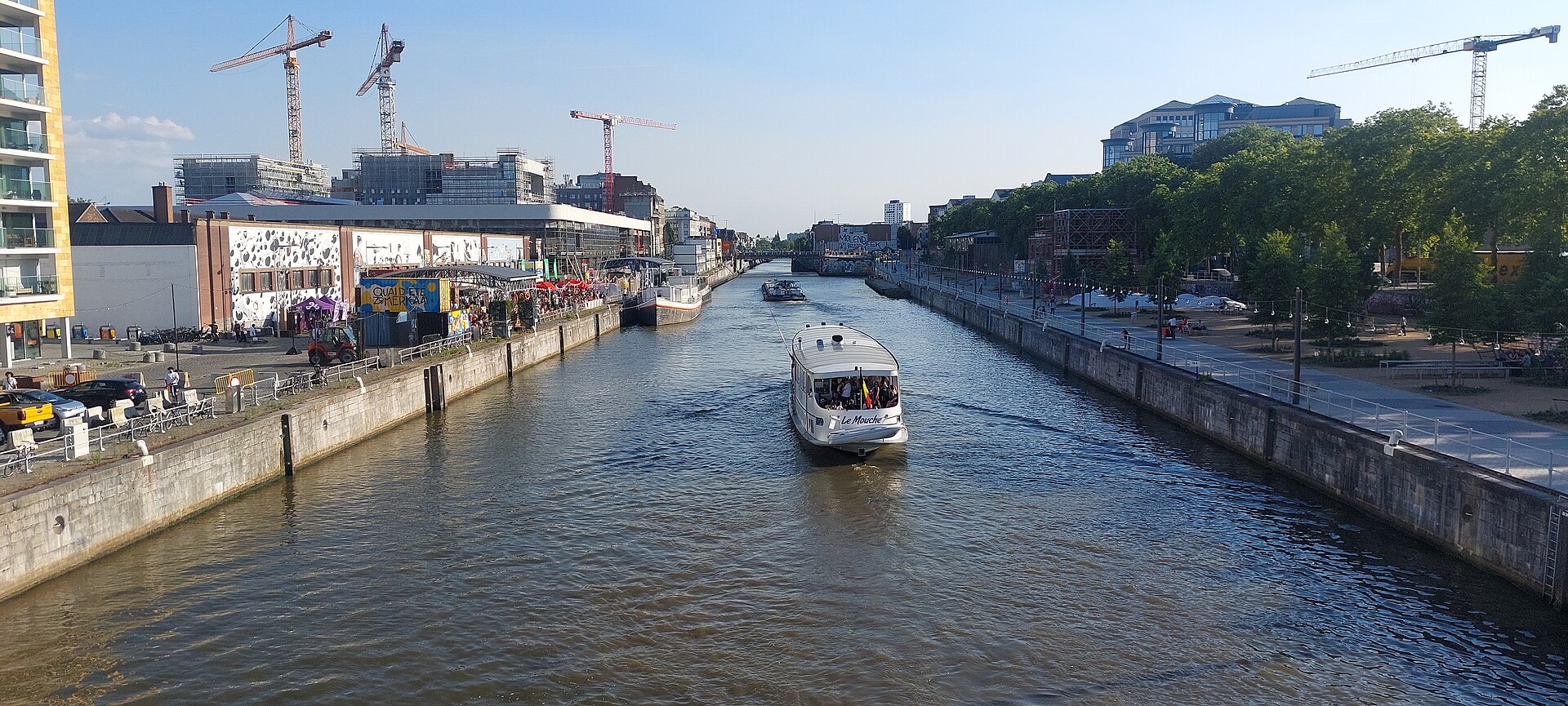
| Quai d’Été, by the canal | 2–19 July in 2026 | Free entry; boat trips paid |
| Dour Festival (Hainaut) | 7–11 July 2027 | Paid |
| Gentse Feesten (Ghent) | 16–25 July 2027 | Mostly free |
| Foire du Midi funfair | 18 July–23 August in 2026 | Free entry; rides paid |
| Bal National, Place du Jeu de Balle | Eve of National Day (20 July in 2026) | Free |
| Belgian National Day | Wednesday 21 July 2027 | Free |
| Summer sales | Through July (1–31 July in 2026) | — |
The Weather: Warmest Month, Not a Dry One
July is the warmest month in Brussels, but it’s warm in a northern European way. The Royal Meteorological Institute’s 1991–2020 averages at Uccle give an average high of about 23°C and a low of about 14°C. Heatwaves do happen, and when they do the city feels it: many older hotels and restaurants have no air conditioning, and the cobbled squares hold the heat into the evening. Just as often you’ll get a run of fresh, breezy days in the low 20s that are ideal for walking.
What July isn’t is dry. The same long-term averages show about 77 mm of rain spread over roughly 14 days with at least some rainfall, though only about 10 of those bring a millimetre or more. Most of it falls as showers or summer thunderstorms rather than grey all-day drizzle, so a wet morning often clears by lunchtime. Pack a light waterproof whatever the forecast says.
The long evenings are the best part. The sun sets at about 21:59 on 1 July 2027 and still at around 21:30 on 31 July, so dinner on a terrace in daylight is normal all month. For the month-by-month numbers, see our Brussels weather guide.
Early July: The Ommegang and the Summer Kick-Off
The Ommegang
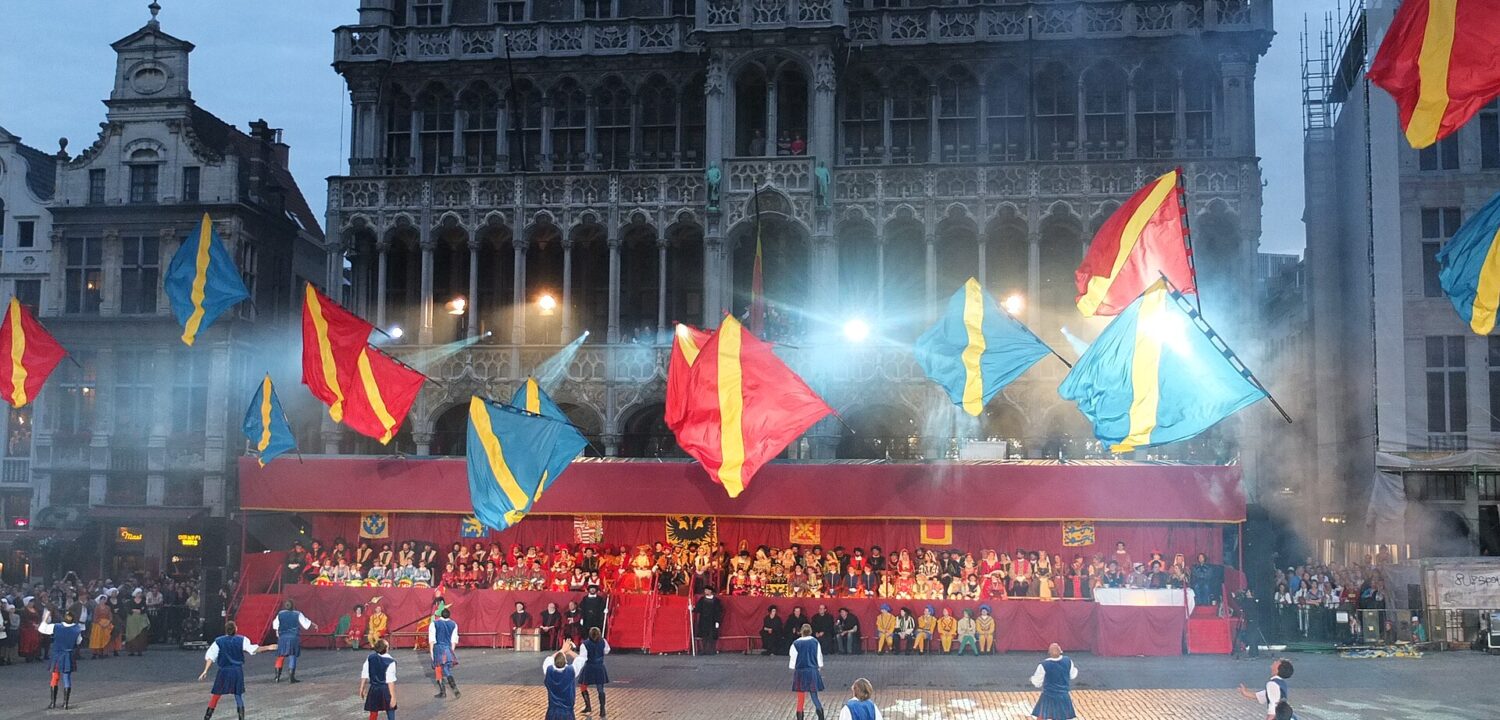
The Ommegang is the city’s great historical pageant: a procession of some 1,200 to 1,400 people in Renaissance costume (the organiser’s own pages give both figures), with horses, giants, flag-throwers and crossbowmen, re-creating the entry of Emperor Charles V into Brussels in 1549. Its roots go back to a fourteenth-century procession for Notre-Dame du Sablon, and UNESCO added it to its intangible heritage list in 2019.
It happens in the first days of July. In 2026 the evening show on the Grand-Place was performed twice, on Wednesday 1 and Friday 3 July, but the dates move from year to year, so check ommegang.be for 2027 before you book. You have two ways to see it:
- The grandstands on the Grand-Place. This is the full show, with the court scene, the flag-throwing and the finale. In 2026 seats cost from €59 in the standard stands to €89 for covered VIP seats, and they sell out, so book as soon as the 2027 tickets go on sale.
- The procession, for free. Before the show, the cortege leaves the Sablon and winds down through the old town to the Grand-Place. Standing on the route costs nothing, and the Sablon itself has free festivities over the Ommegang days, including a crossbow competition.
If you only half care about pageantry, the free procession is enough. If you love this kind of thing, the grandstand is worth the money: the square at dusk, floodlit and full of costume, is the most theatrical the Grand-Place ever looks. Our Ommegang guide has the route, timings and ticket advice.
Brosella and Quai d’Été
The first week of July also brings two smaller events that locals love. Brosella, a long-running jazz and folk festival, fills the open-air Théâtre de Verdure in the Parc d’Osseghem, next to the Atomium; in 2026 it ran from 3 to 5 July. Quai d’Été, the city’s free summer site on the Quai des Péniches beside the canal, ran from 2 to 19 July in 2026, with free entry and paid boat trips. It replaced the old Bruxelles-les-Bains beach, which ended in 2019, so ignore older guides that still send you looking for sand by the canal. Check each event’s site for the 2027 dates.
Rock Werchter and Dour
Two of Belgium’s big July music festivals are both an easy day out from Brussels. Rock Werchter runs from Thursday 1 to Sunday 4 July 2027 in the fields outside Leuven, and the festival ticket includes a second-class return train from any Belgian station to Leuven or Aarschot, plus the shuttle bus to the site. Dour Festival, the alternative and electronic one, follows from Wednesday 7 to Sunday 11 July 2027 near Mons. Neither affects Brussels itself much, but trains towards Leuven on Rock Werchter days are packed with wellies and tents.
The Royal Palace: Open for the Summer
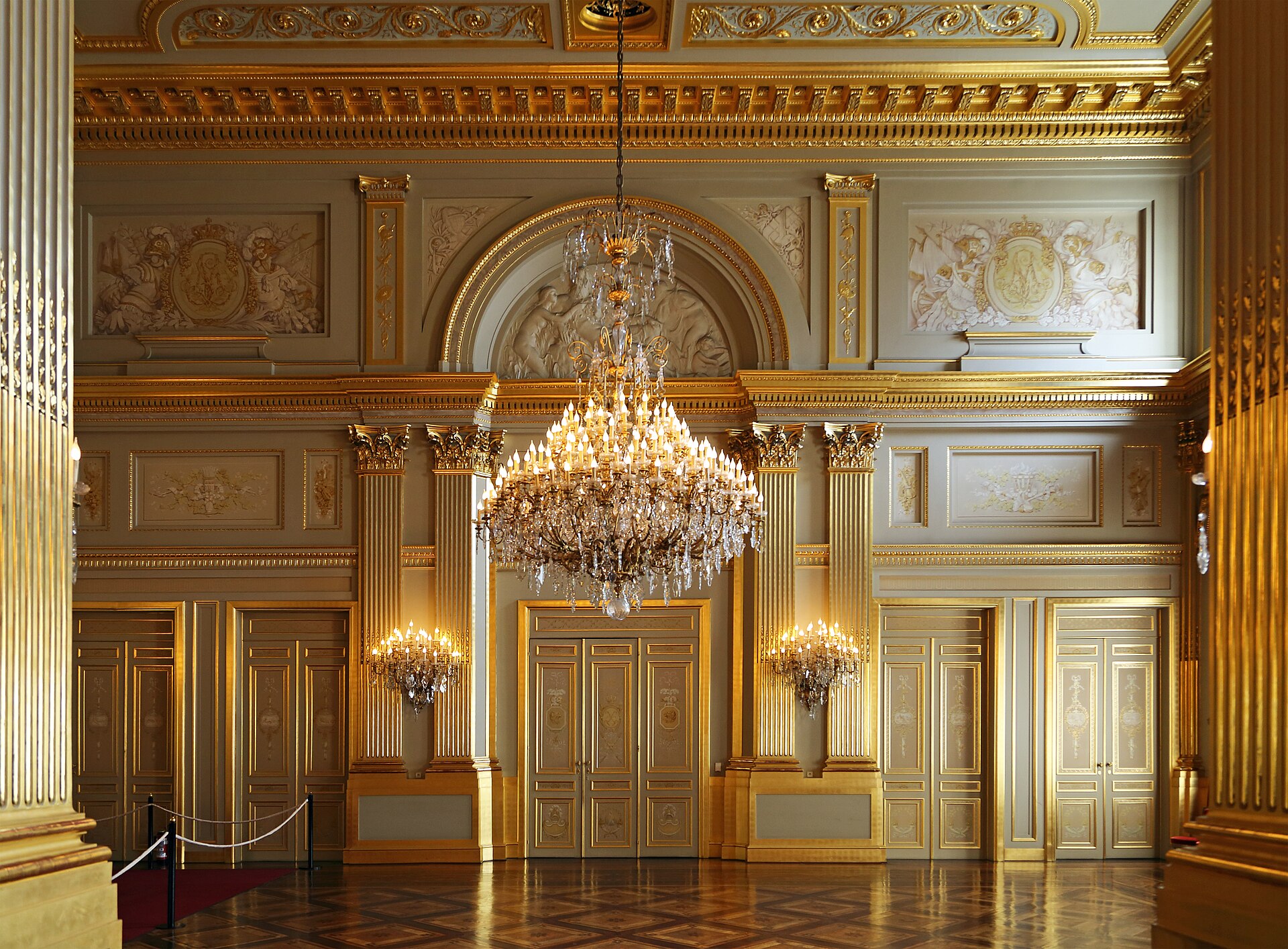
For most of the year the Royal Palace is a working building you look at from the Place des Palais. In summer the state rooms open to the public, and it’s one of the best free-feeling-but-not-free things in the city: grand staircases, mirrored halls, and Jan Fabre’s ceiling of jewel-beetle wing cases in the Hall of Mirrors.
In 2026 the opening ran from 3 July to 16 August. Tickets cost €10 for visitors aged 13 and over, children 12 and under went free, and booking was required. Two catches: the palace was closed every Monday, and also on National Day itself, 21 July, in 2026. So the one day when you’d most expect to see it is a day it shut. Check the palace’s own site for the 2027 dates and closed days, and book a slot early in the month if you can. Our Royal Palace guide covers the visit.
Mid-July: The Funfair, Ghent and the Run-Up to the 21st
Foire du Midi
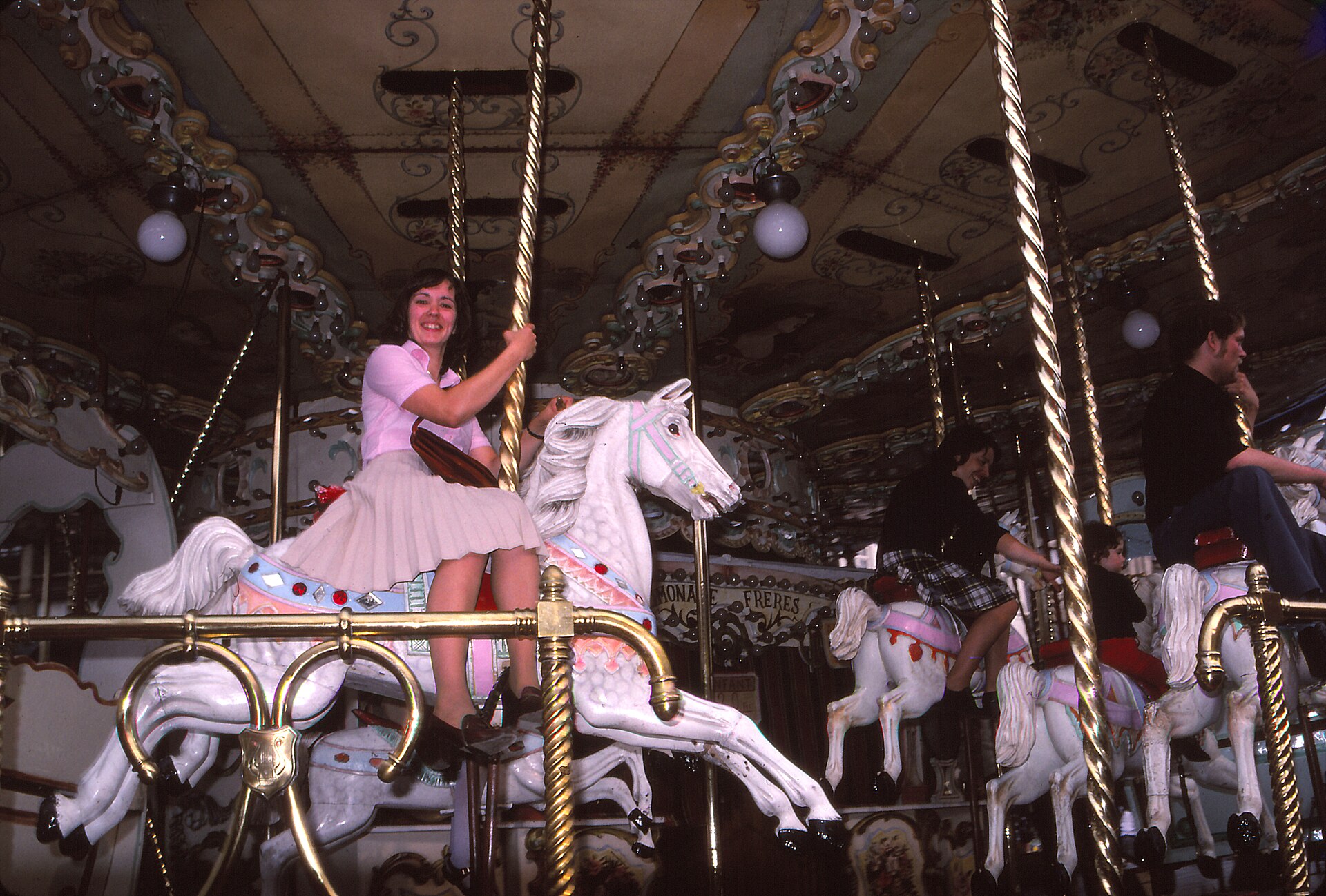
Around the middle of the month the Foire du Midi sets up along the Boulevard du Midi, between the Porte de Hal and the Arts et Métiers area, and stays for the rest of the summer: in 2026 it ran from 18 July to 23 August. It’s a proper old-fashioned travelling funfair, with roller coasters, ghost trains, carousels, shooting galleries, and stalls selling smoutebollen (Belgian doughnut balls) and caricoles (sea snails in broth). Entry is free and you pay per ride. It’s loud, sticky and a lot of fun for an evening with children or a group of friends; it’s not a reason to plan a trip. Note that it doesn’t reach Brussels-Midi station, despite the name.
The Gentse Feesten
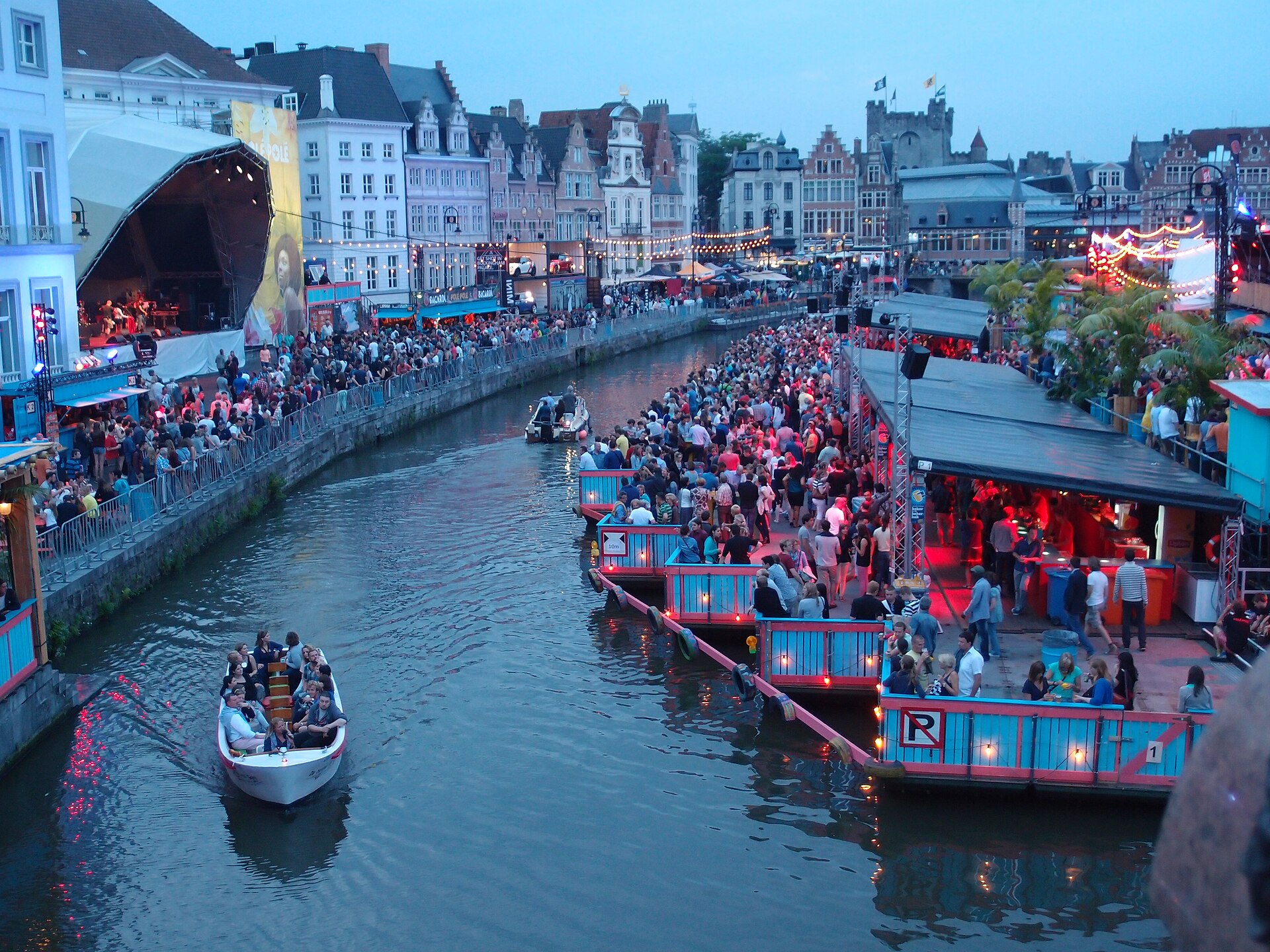
Thirty-odd minutes away by train, Ghent throws a huge street festival, the Gentse Feesten, ten days of music, street theatre and drinking spread across the old centre’s squares and quays, mostly free. The 2027 edition runs from 16 to 25 July, which takes in Belgian National Day. It’s brilliant if you like a crowd and a party; if you were hoping for a quiet, photogenic day among Ghent’s medieval guildhalls, go before the 16th or after the 25th, because during the festival the city is rammed day and night. Our Ghent day trip guide has the trains and the sights.
Tomorrowland
Tomorrowland, the giant electronic music festival, takes place in Boom, between Brussels and Antwerp, over two weekends in the second half of July; in 2026 it ran on 17–19 and 24–26 July. Unless you have a ticket, its only effect on a Brussels trip is on prices. A lot of festival-goers stay in Brussels, so check hotel rates on those weekends before you commit. The 2027 dates appear on tomorrowland.com.
National Day: 20 and 21 July
Belgian National Day falls on Wednesday 21 July 2027. It marks the day in 1831 when Leopold I took the oath as the first King of the Belgians, and in Brussels it’s a full day of free public festivities. The 2027 programme is published on 2107.be closer to the date. In 2026 the day ran like this:
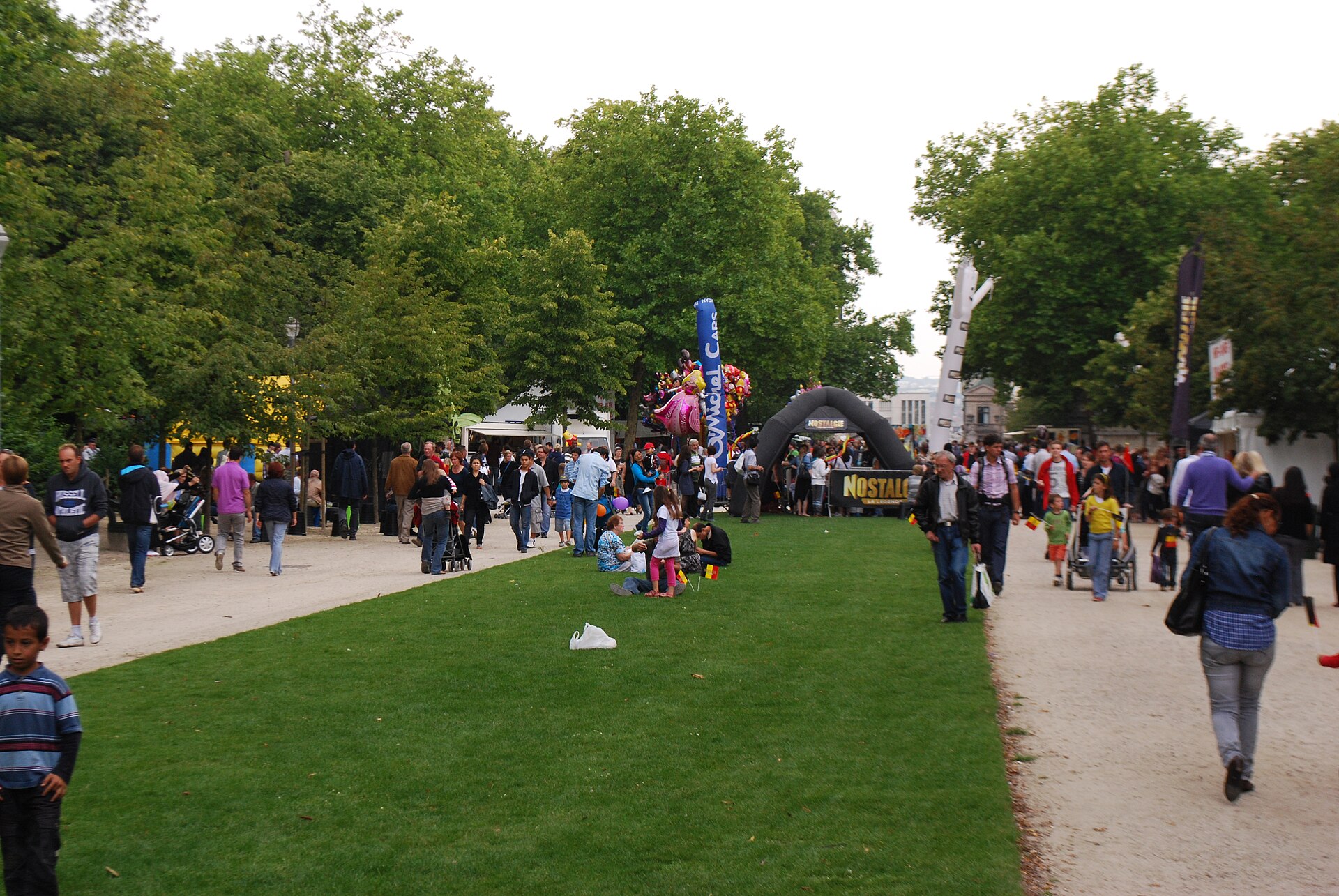
- 10:00–20:00: a festival through the Parc de Bruxelles and the streets around it, from the Place de la Nation to the Place Poelaert, with stands from the army, emergency services and public bodies, food stalls and activities for children.
- 11:00: an official opening on the Place Royale.
- 16:00: the military and civil parade, with the royal family watching from the Place des Palais.
- 21:00: a free concert at the Cinquantenaire, followed by fireworks.
The night before, on the eve of National Day, the Bal National turns the Place du Jeu de Balle in the Marolles into a free open-air dance, a much more local and rowdy affair than the official programme. In 2026 it was on Monday 20 July.
Two practical points. First, 21 July is a public holiday, so offices and banks close, many shops keep Sunday hours or shut, and opening hours at museums and attractions vary; check before you go. Second, the parade route and the area around the park are closed to traffic for much of the day, and the park itself is very crowded by mid-afternoon. Get a spot along the parade route at least an hour before it starts if you want to see anything. For the fireworks, the Cinquantenaire is easiest reached on foot or by metro, and you’ll want to leave a little early or accept a slow, shuffling exit with tens of thousands of other people.
Crowds, Prices and School Holidays
July is high season, and it’s worth knowing who the crowds are. Belgian schools break up at the very start of the month: Flemish schools on Thursday 1 July 2027 and French-speaking schools on Saturday 3 July. From then on the Atomium, Mini-Europe, the coast and the big museums are busy with families on weekdays as well as at weekends. International visitors peak too. The Grand-Place at midday in July is a slow-moving crowd of tour groups, and the queue for Manneken Pis is exactly as absurd as you’d expect.
Some ways around it:
- Do the Grand-Place early or late. Early in the morning it’s far quieter, and after 22:00, with the facades lit, it’s at its most beautiful.
- Book timed tickets. The Royal Palace, the Ommegang grandstands and the Atomium all reward booking ahead in July. Atomium adult tickets cost €17 in 2026.
- Use the longer summer hours. Mini-Europe stayed open until 19:00 in July and August 2026, and the Belgian Comic Strip Center, normally closed on Mondays, opens on Mondays in July and August. Our Comic Strip Centre guide has the details.
- Go out to the neighbourhoods. Saint-Gilles, Ixelles and the Marolles feel far calmer than the old centre, and the terraces there are mostly locals.
Hotels fill up fast, especially around the Ommegang, National Day and the Tomorrowland weekends. Book early, especially if you want to be within walking distance of the Grand-Place. Our guide to where to stay in Brussels compares the areas. If you’re planning several museums, the Brussels Card cost €41, €53 or €59 for 24, 48 or 72 hours in 2026; our Brussels Card guide works out when it pays for itself.
The Summer Sales
July is sales month. Belgium regulates its sales periods, and the summer soldes normally run from 1 to 31 July; in 2026 they ran over exactly those dates. Reductions usually deepen as the sales go on; look on Rue Neuve, Avenue Louise and in the shopping galleries. Our Brussels shopping guide covers where to go.
Day Trips: The Coast and Beyond
With light until half past nine, July is perfect for day trips, but the most obvious one comes with a warning.
- The Belgian coast. The Kusttram runs the length of the coast with 67 stops, and in summer it comes every 10 to 20 minutes during the day. It’s lovely, and in July it’s also where every Belgian family is. Go on a weekday, pick one of the quieter resorts, and don’t expect to have the beach to yourself. Our Belgian coast guide has the details.
- Bruges. Beautiful and very busy in July. Arrive on an early train, leave the centre for the canals on the edge of town by mid-morning, and see our Bruges day trip guide.
- Leuven. A university town that empties in summer once the students leave, which makes it a pleasantly calm alternative. See our Leuven day trip guide.
- The Sonian Forest. When the city is hot, the beech forest on its southern edge is cooler and deeply shaded. Our Sonian Forest guide has the best ways in.
Our full list of day trips from Brussels has more ideas.
What Waits for August
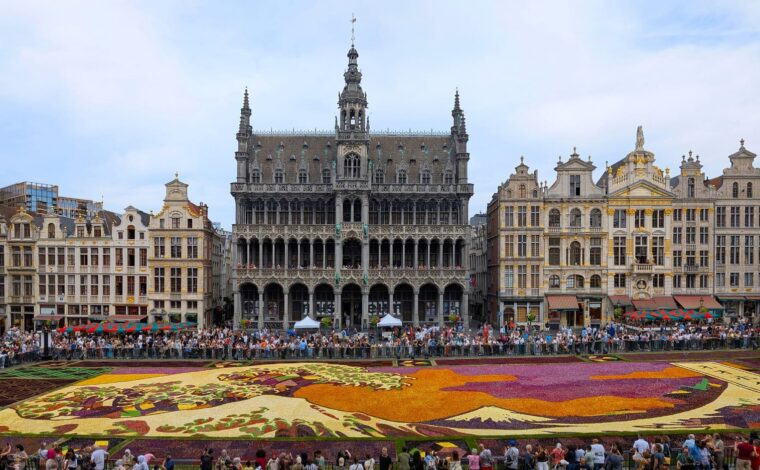
A few things people associate with a Brussels summer don’t happen in July. The Flower Carpet on the Grand-Place is held in mid-August, and only in even-numbered years, so there’s none in 2027 (the next is in August 2028; our Flower Carpet guide explains the cycle). Its odd-year counterpart, Flowertime, fills the Town Hall with flowers in August 2027. The Meyboom tree-planting is always on 9 August, and Classissimo, the classical music festival at the Théâtre Royal du Parc, ran in early August in 2026. If those are what you’re after, push your trip into August.
What to Pack
- A light waterproof or a small umbrella: July sees rain on about half its days, usually as showers.
- Sunscreen, a hat and a refillable water bottle for parade days and festivals.
- A light layer for late evenings, when it can drop to around 14°C.
- Comfortable shoes for the cobbles, and something you don’t mind getting muddy if you’re heading to a festival field.
Is July a Good Time to Visit Brussels?
It depends on what you want from the city. If you want Brussels at its most festive, with the Ommegang, the palace open, National Day and a festival within reach almost every weekend, July is hard to beat, and the long evenings make even an ordinary day feel generous. If you want quiet museums, cheap hotels and a Grand-Place you can photograph without a hundred strangers in it, July is the wrong month; June or September will suit you better. The sensible compromise is the first week of July, when the Ommegang, Brosella and the palace opening overlap and the full holiday crowds are still building. For a comparison with the rest of the year, see our Brussels month-by-month guide and our advice on the best time to visit Brussels.
If your trip runs on into August, the mood changes. The EU institutions take their summer break, plenty of neighbourhood restaurants close for their annual holiday, and the Meyboom tree is planted on 9 August. Our Brussels in August guide explains what closes, what stays open and what’s on.
For the full programme of the 21st, from the Fête au Parc to the parade route and the fireworks, and the Bal National the night before, see our guide to Belgian National Day in Brussels.
Related Brussels Guides
- Brussels summer festivals
- The Ommegang
- The Royal Palace
- Brussels in June
- Brussels events calendar
- School holiday activities in Brussels
- Free things to do in Brussels
- The Marolles
Useful Resources
- 2107.be: the official National Day programme
- Ommegang: dates, tickets and route
- Royal Palace: summer opening and tickets
- Quai d’Été: the canal-side summer programme
- Brosella: festival dates and line-up
- Gentse Feesten: the Ghent festival programme
- Royal Meteorological Institute: forecasts
Frequently Asked Questions
What is the weather like in Brussels in July?
Warm and changeable. Average highs are about 23°C and lows about 14°C, with heatwaves possible. Around 14 days see some rain, usually as showers or thunderstorms, so bring a light waterproof.
What happens in Brussels on 21 July?
It’s Belgian National Day, a public holiday, and in 2027 it falls on a Wednesday. In 2026 the free programme included a festival in and around the Parc de Bruxelles from 10:00, the military and civil parade at 16:00, and a concert and fireworks at the Cinquantenaire from 21:00. The 2027 programme is published on 2107.be.
When is the Ommegang in 2027?
It’s held in the first days of July. In 2026 the Grand-Place show was performed on Wednesday 1 and Friday 3 July. Check ommegang.be for the 2027 dates and grandstand tickets.
Is the Royal Palace open in July?
Yes, for its summer opening. In 2026 it opened from 3 July to 16 August, at €10 from age 13 with booking required, but it was closed on Mondays and on 21 July. Check the palace’s site for the 2027 dates.
Is Brussels crowded in July?
Yes. Belgian school holidays start in the first days of July, international tourism peaks, and the Grand-Place, Manneken Pis and the Atomium are busy all day. Go early in the morning or late in the evening, and book timed tickets where you can.
Are shops open in Brussels on National Day?
21 July is a public holiday, so offices and banks close, and many shops shut or keep Sunday hours. Some attractions open and others don’t, so check individual opening hours before you plan the day.
Is July a good time to visit Brussels?
It’s the best month for events and long evenings, and the worst for crowds and hotel prices. The first week of July, with the Ommegang and the palace opening, is a good compromise.
Photo Credits
A tourist boat on the canal seen from the Pont Suzan Daniel: Canal de Bruxelles depuis le pont Suzan Daniel. by Kabirigi, CC BY-SA 4.0, via Wikimedia Commons.
A carousel at the Foire du Midi in 1979: 0 Carrousel Bruxelles Foire du Midi Aou 1979 by Jean-Pol GRANDMONT, CC BY 4.0, via Wikimedia Commons.
The Gentse Feesten on Ghent’s quays: Gentse Feesten 2014 07 by Gordito1869, CC BY 3.0, via Wikimedia Commons.
Final Thoughts
July is Brussels showing off. The pageant on the Grand-Place, the palace doors open, a national party in the park and fireworks over the Cinquantenaire: it’s the month the city stops being a weekday capital of committees and becomes a place to have fun in. You pay for it with crowds and hotel prices, and the weather can still throw a thunderstorm at your picnic. Book the Ommegang and the palace early, keep the Grand-Place for the early morning, and leave one evening free simply to sit outside until the light finally goes.