Brussels’ churches and cathedrals deliver some of Europe’s finest Gothic, Baroque, and Art Nouveau religious architecture — all within walking distance of Grand Place. The Brussels churches cathedrals circuit covers nearly 1,000 years of building, art, and Belgian history. This 2026 guide profiles the most important churches, what to see inside each, opening hours, free vs paid sections, and how to plan a self-guided “Brussels churches” walking tour.
Brussels Churches Cathedrals: Quick Reference
| Church | Style | Built | Entry |
|---|---|---|---|
| Cathedral of St Michael & St Gudula | Brabantine Gothic | 11th-16th c. | Free (treasury €2) |
| Notre-Dame du Sablon | Brabantine Gothic | 15th-16th c. | Free |
| Notre-Dame de la Chapelle | Romanesque/Gothic | 12th-15th c. | Free |
| St-Nicolas Church | Baroque (post-1695) | 12th c. (rebuilt) | Free |
| Église Sainte-Catherine | Neo-Renaissance | 1854-1874 | Free |
| St-Jean-Baptiste au Béguinage | Flemish Baroque | 1657-1676 | Free |
| Basilica of the Sacred Heart of Koekelberg | Art Deco | 1905-1969 | Free (dome €6) |
| Église Saint-Boniface | Neo-Gothic | 1845-1849 | Free |
Brussels Churches Cathedrals: Cathedral of St Michael and St Gudula
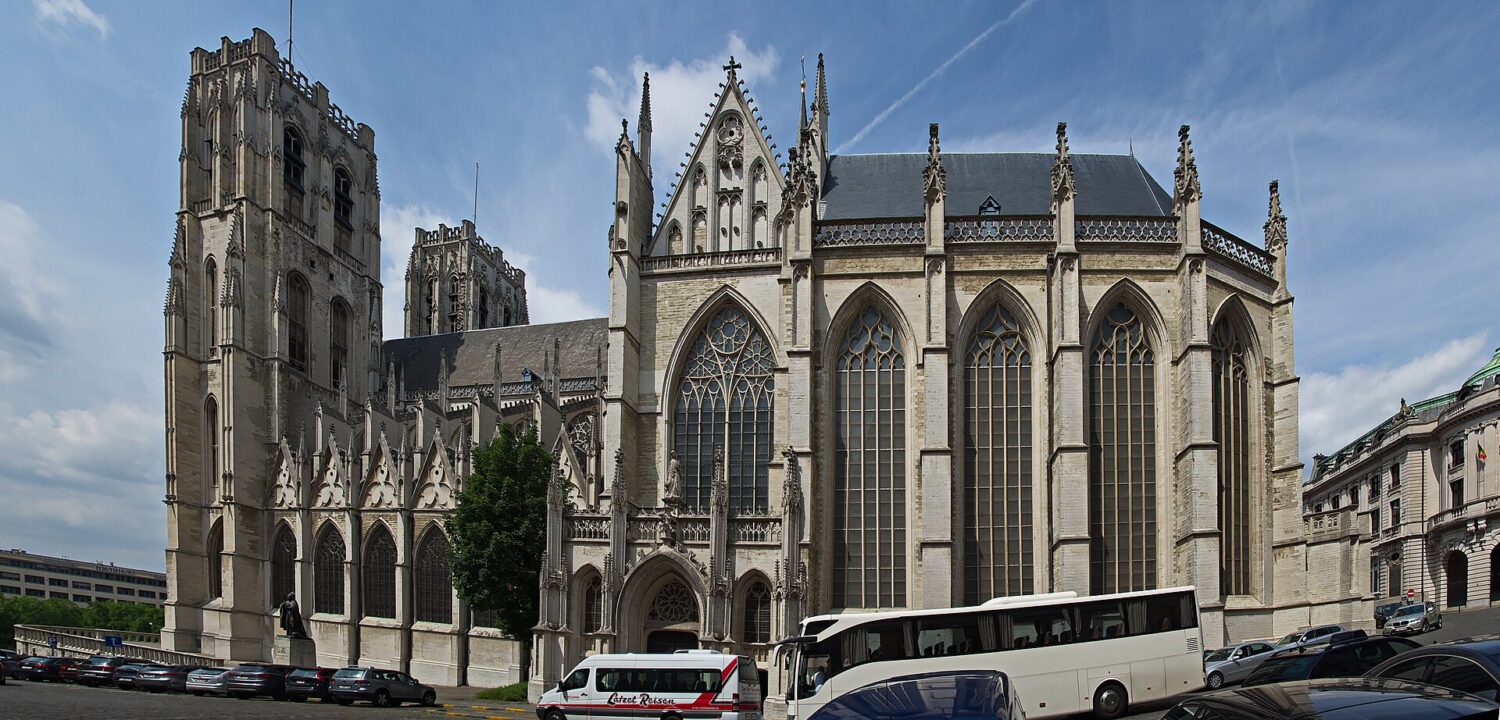
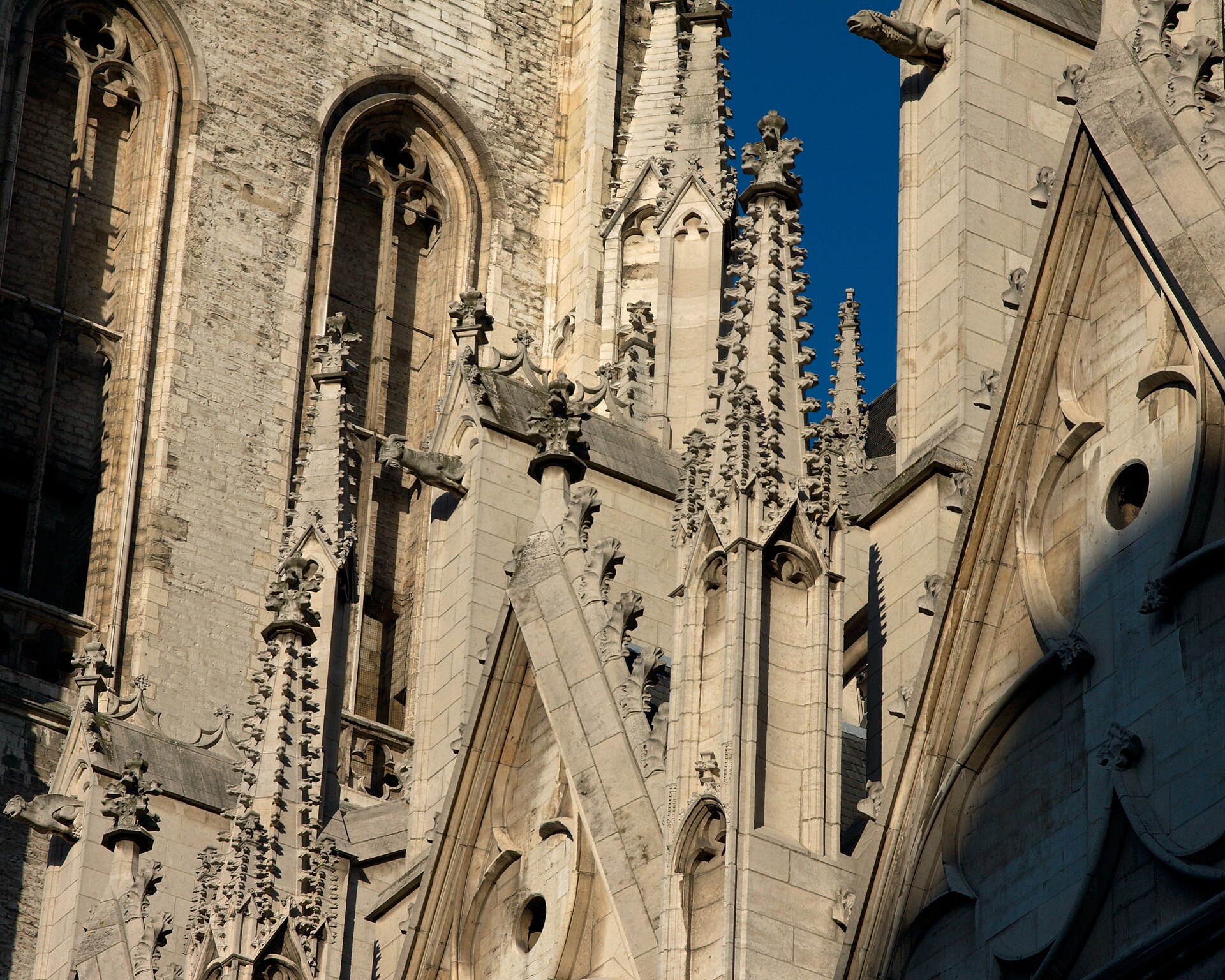
The Cathedral of St Michael and St Gudula (Cathédrale Saints-Michel-et-Gudule) is Brussels’ most important religious building — co-patron of the City of Brussels and one of Belgium’s finest Brabantine Gothic structures.
History
Construction began in the 11th century on the site of an earlier Romanesque chapel; the building was largely complete in its current Gothic form by the 16th century. The two iconic west towers, built between 1470 and 1485, are attributed to Jan Van Ruysbroeck, court architect of Philip the Good. The cathedral measures 110 metres long, 30 metres wide, and 26.5 metres high, with entrance towers reaching 69 metres.
What to see inside
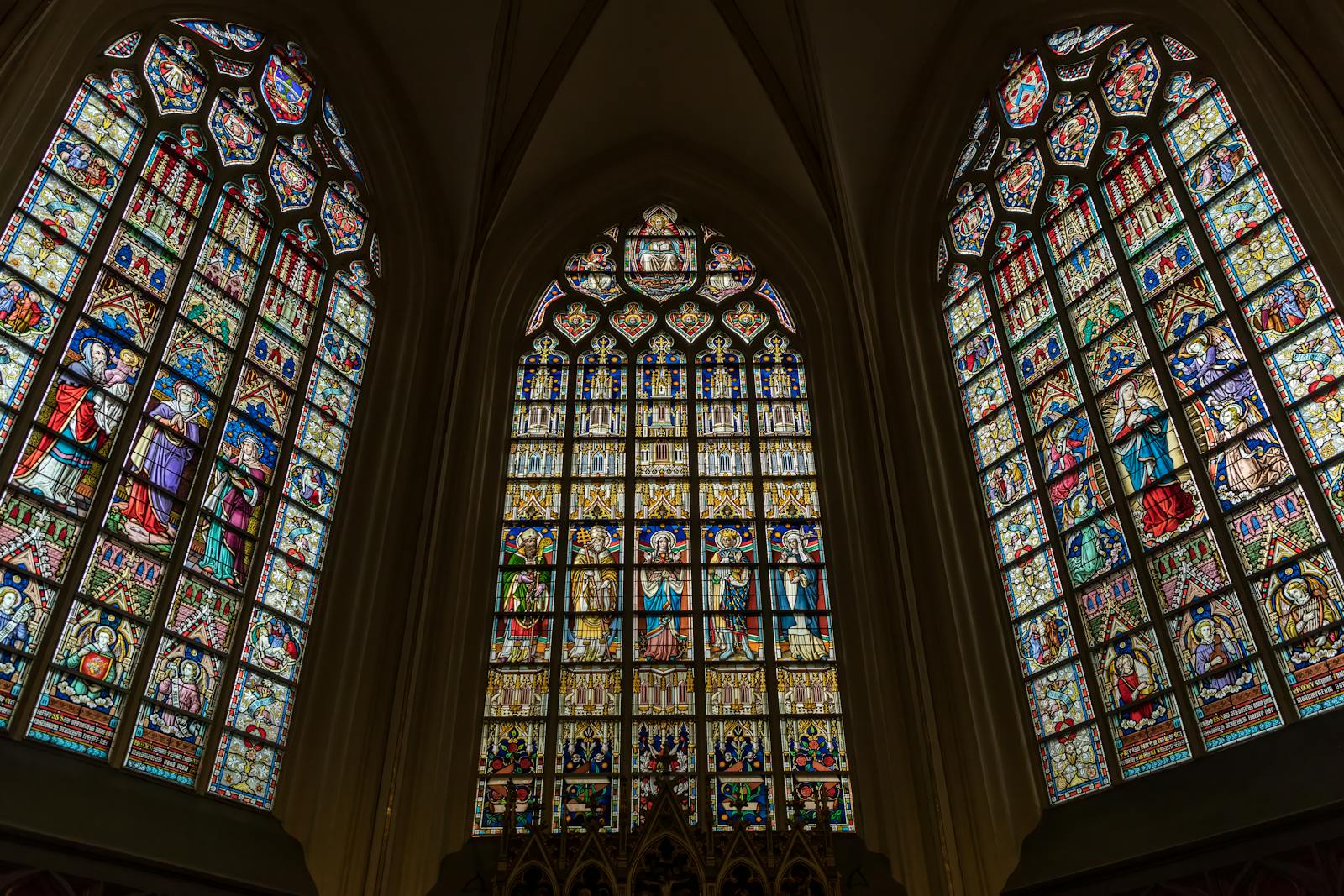
- Stained glass windows: 16th-century medallion glass in the chancel; later 19th-century restorations.
- Baroque pulpit (1699): Hendrik Frans Verbruggen’s masterpiece — Adam and Eve being expelled from Eden, carved in oak.
- Crypt (treasury): €2 entry. 11th-century Romanesque crypt foundations; archaeology of pre-Gothic chapel.
- Royal Chapel of the Holy Sacrament: Mausoleums of medieval dukes of Brabant; the most architecturally rich side chapel.
- Tower climb: Not currently accessible to the public on most days; check official site for seasonal access.
- Organ: 4,300-pipe Grenzing organ (2000); recitals on selected Sundays.
Visiting practicalities
Open Monday-Friday 07:30-18:00, Saturday 07:30-15:30, Sunday 14:00-18:00. Free admission. Allow 45-60 minutes. Photography allowed without flash. Closest metro: Gare Centrale (5 min walk).
Brussels Churches Cathedrals: Notre-Dame du Sablon
Notre-Dame du Sablon (Onze-Lieve-Vrouw-ter-Zavelkerk) — also called the Church of Our Lady of Victories at the Sablon — is Brussels’ second great Gothic church, distinguished by its airy interior and the legend at its foundation.
History
Built in the Brabantine Gothic style between the 14th-16th centuries on the site of an earlier crossbowmen’s guild chapel. The church owes its origin to a legendary event: the 14th-century arrival of a miraculous statue representing the Virgin and Child — said to have been brought by Béatrice Soetkens after divine instruction. This statue’s arrival sparked the original Ommegang procession, still celebrated annually in Brussels.
Architectural highlights
- Stained glass: Particularly impressive late afternoon when sun illuminates the south windows.
- Chapel of Our Lady: The miraculous statue’s shrine.
- Tombs of the Thurn und Taxis family: 17th-century marble — the family that ran the European postal monopoly.
- Open-traceried Gothic: The most architecturally delicate of Brussels’ Gothic churches.
Location and visiting
Located in the heart of the Sablon antique-district neighborhood. Open daily 09:00-18:00. Free entry. Combine with the Petit Sablon garden directly across the street and Sablon antique shop browsing.
Brussels Churches Cathedrals: Other Major Churches
Notre-Dame de la Chapelle (Marolles)
Brussels’ oldest church — a Romanesque-Gothic hybrid dating to the 12th century with major 15th-century Gothic additions. Houses the tomb of painter Pieter Bruegel the Elder (died 1569 in Brussels). One of Brussels’ most atmospheric churches; less touristy than the Sablon.
St-Nicolas Church (next to Bourse)
One of Brussels’ oldest parish churches — 12th century. After the 1695 French bombardment leveled much of Brussels, St-Nicolas was rebuilt in Baroque style. Dedicated to Saint Nicholas, patron saint of merchants. Easy to miss because it sits literally next to the old Stock Exchange (Bourse) building.
Église Sainte-Catherine
Neo-Renaissance church (1854-1874) anchoring the Sainte-Catherine district. Built on the site of an earlier Carmelite convent. The “Tour Noire” (Black Tower) attached to the church is one of Brussels’ few remaining medieval city wall fragments. Excellent acoustics; occasional free classical concerts.
St-Jean-Baptiste au Béguinage
The most beautiful Flemish Baroque church in Brussels (1657-1676). Carved limestone facade with delicate decoration; soaring interior with elaborate side chapels. The former Beguinage has largely been demolished, but the church remains as one of Brussels’ architectural treasures.
Église Saint-Boniface (Ixelles)
Neo-Gothic (1845-1849) — an unusual Brussels example of 19th-century Gothic revival. Located in Ixelles, just south of the Pentagon. Beautiful stained-glass windows.
Basilica of the Sacred Heart of Koekelberg
Brussels’ largest church and one of the largest Art Deco buildings in the world (Started 1905; completed 1969). 89,000 m² of floor space. The fifth-largest church in the world by area. Dome offers panoramic views (€6 to climb); allow 90 minutes for a full visit.
Brussels Churches Cathedrals: Self-Guided Walking Tour
A 3-hour Brussels churches cathedrals walking tour covering 5 major sites — entirely free, doable any day:
- Start: Gare Centrale (Brussels-Central station) — 5 minute walk to the cathedral.
- Cathedral of St Michael and St Gudula (45-60 min) — Brabantine Gothic masterpiece.
- Walk to Galeries Royales Saint-Hubert (10 min) for a coffee or pastry break.
- St-Nicolas Church (20 min) — small but historically rich; rebuild Baroque.
- Walk to the Sablon district (15 min via Mont des Arts).
- Notre-Dame du Sablon (45 min) — the legend, the airy Gothic, the antiques district.
- Walk down to Marolles (10 min downhill).
- Notre-Dame de la Chapelle (30 min) — Brussels’ oldest church + Bruegel’s tomb.
- End: Marolles or back to Pentagon via tram.
For more on Brussels’ historic centre, see our Grand Place Brussels guide and Sablon Brussels guide.
Brussels Churches Cathedrals: Visiting Etiquette
Belgian churches operate as active places of worship — visit considerately:
- Dress respectfully. Shoulders and knees covered. Belgium isn’t strict but excessive informality is noticed.
- Quiet voices. Speak in whispers; mobile phones silent.
- Photography: Generally allowed without flash. Some side chapels and treasuries restrict photography.
- Mass times: Avoid visiting during mass (typically Sunday mornings, daily morning prayers). Check schedules at the entrance.
- Donation: Brussels church entry is free but small donation boxes appreciate €1-€2 contributions.
- Candles: €1-€2 to light a votive candle.
- Accessibility: Most major Brussels churches have step-free entry; smaller chapels may have one step.
Brussels Churches Cathedrals: Music and Concerts
Brussels churches host outstanding classical and sacred music programs throughout the year:
- Cathedral of St Michael and St Gudula: Free organ concerts on selected Sundays after mass; major choral events on church holidays.
- Église Sainte-Catherine: Regular free chamber music concerts in the Sainte-Catherine programme; excellent acoustics.
- Église des Minimes: Annual classical music festival; high-profile international soloists.
- Annual Christmas concerts: Most major Brussels churches host December concerts featuring Belgian and visiting choirs.
- Royal Choir performances: Special events at the Cathedral and Sablon throughout the year.
- Annual MozartFest Brussels: Brussels’ classical music summer festival uses several churches as venues.
Check the official websites of individual churches and visit.brussels for current concert listings.
Brussels Churches Cathedrals: Hidden Gems
Beyond the major churches, several lesser-known Brussels religious sites reward exploration:
- Eglise Saints-Jean-et-Étienne aux Minimes: 18th-century baroque church in Marolles; rarely visited but architecturally significant.
- Eglise Notre-Dame de Bon-Secours: Tucked into the Pentagon between Grand Place and Bourse; 18th-century with elaborate interior.
- Église de la Trinité (Ixelles): Neo-Romanesque church (1900); striking Belgian Art Nouveau influence in the decoration.
- Chapelle Sainte-Anne (Anderlecht): 11th-century Romanesque chapel; one of Brussels’ oldest surviving religious buildings.
- Église Notre-Dame de Laeken: Neo-Gothic (1855); royal mausoleum for Belgian monarchs.
- Synagogue of Brussels (Synagogue de la Régence): 1878 — Brussels’ main historic synagogue.
- Grande Mosquée de Bruxelles: Brussels’ main mosque in the Cinquantenaire Park area.
Brussels Churches Cathedrals: Family-Friendly Tips
Brussels churches can be engaging for kids with the right approach:
- Cathedral scavenger hunts: Look for specific symbols, animals carved into pulpits or capitals, stained-glass figures.
- Crypt visits: Underground sections often more engaging for kids than soaring naves.
- Light a candle ritual: Kids enjoy participating in the candle-lighting tradition.
- Organ demonstrations: Several major churches occasionally demonstrate the massive pipe organs.
- Cathedral towers: Where tower climbs are accessible (Basilica of Koekelberg has accessible dome), kids enjoy the panoramic views.
- Combining with sweets: Pair church visits with chocolate stops to keep kids engaged.
- Storytelling: The Notre-Dame du Sablon legend (Béatrice Soetkens and the magical statue) appeals to children.
Brussels Churches Cathedrals: Quick Reference: More Detail
| Topic | Information |
|---|---|
| Total major churches | 15+ historically significant |
| Most important | St Michael & St Gudula Cathedral |
| Oldest | Notre-Dame de la Chapelle (12th c.) |
| Largest | Basilica of Sacred Heart Koekelberg |
| Most romantic interior | Notre-Dame du Sablon |
| Best Art Deco | Koekelberg Basilica (1969) |
| Pieter Bruegel’s tomb | Notre-Dame de la Chapelle |
| Entry cost | Free at all major churches |
| Best photo time | Late afternoon for stained glass |
Related Brussels Guides
Keep planning with these companion guides:
- Brussels History and Culture — From Medieval Origins to Capital of Europe
- Art Nouveau Architecture Brussels — Complete Horta & UNESCO Guide
- Brussels European Union Capital — Visit the EU Institutions
- Royal Palace Brussels Guide — Summer Opening, Tickets & History
Useful Resources
- Cathedral of St Michael and St Gudula (official)
- visit.brussels church guide
- Basilica of the Sacred Heart of Koekelberg
Frequently Asked Questions
What’s the most important church in Brussels?
The Cathedral of St Michael and St Gudula — Brussels’ Brabantine Gothic cathedral, co-patron of the city. Built 11th-16th centuries. Free entry; the treasury is €2. Allow 45-60 minutes.
How many churches are in Brussels?
15+ historically significant churches across the Pentagon and surrounding communes. The major ones include the Cathedral, Notre-Dame du Sablon, Notre-Dame de la Chapelle, St-Nicolas, Sainte-Catherine, St-Jean-Baptiste au Béguinage, Basilica of the Sacred Heart of Koekelberg, and Saint-Boniface.
Is the Brussels Cathedral free to visit?
Yes — free entry. The cathedral treasury (crypt) is €2. Open Monday-Friday 07:30-18:00; weekend hours reduced.
Where is Pieter Bruegel buried?
In Notre-Dame de la Chapelle, in the Marolles district. The church is one of Brussels’ oldest (12th-15th century) and one of the most atmospheric of Brussels churches cathedrals.
What’s the largest church in Brussels?
The Basilica of the Sacred Heart of Koekelberg — one of the largest Art Deco churches in the world, with 89,000 m² of floor space. Built 1905-1969. Dome climb €6.
Can I attend a service in Brussels?
Yes — services in all major Brussels churches are open to visitors. Sunday masses typically at 10:00-11:00. Cathedral services in French and Latin; some side chapels in Dutch.
Final Thoughts
Brussels churches cathedrals deliver European Christian architecture across nearly a millennium — from 12th-century Romanesque to 20th-century Art Deco. The self-guided walking tour covers five major sites in 3 hours, entirely free. For more on Brussels’ historic centre, see our history of Brussels and things to do in Brussels.
Photo Credits
-
The Cathedral of St Michael and St Gudula: 0783 – Belgientour 2015 – Brüssel (21724952751) by Uwe Brodrecht, CC BY-SA 2.0, via Wikimedia Commons.
-
Gothic stonework at Brussels cathedral: -i—i- (5426064678) by Andrew Basterfield, CC BY-SA 2.0, via Wikimedia Commons.