Most European Christmas markets are a fenced rectangle of chalets in a square, and you can see the whole thing in twenty minutes. The Brussels Christmas market is not built that way. Winter Wonders — Plaisirs d’Hiver in French, Winterpret in Dutch — is laid out as a route that threads through real streets, from the Grand-Place down past the Bourse and through Sainte-Catherine to the Marché aux Poissons, and walking it end to end takes a proper evening. That structural difference is why it consistently ranks among the better markets on the continent.
This guide covers the 2026–27 edition in full: exact dates and hours, what is at each end of the route, what things cost, when to go to avoid the crush, and the honest verdict on which bits are worth your time. Prices were checked in October 2026 and should be treated as the right order of magnitude — chalet pricing drifts upward each season, so confirm a price at the stall.
Winter Wonders 2026–27: The Essentials
| Detail | 2026–27 edition |
|---|---|
| Dates | 27 November 2026 – 3 January 2027 |
| Daily hours | 12:00–22:00, except 18:00 closing on 24 December, 31 December and 3 January |
| Early closing | 18:00 on 24 December, 31 December and 3 January (no Grand-Place show those evenings) |
| Entry | Free |
| Chalets | 238 |
| Route | Grand-Place to Marché aux Poissons, via the Bourse and Sainte-Catherine |
| Big wheel | Ticketed, at the Marché aux Poissons end |
| Ice rink and curling | Ticketed; the rink is on Place De Brouckère |
| Sound and light show | Free, several times nightly on the Grand-Place |
| Glühwein / vin chaud | Roughly €5–7, plus a refundable cup deposit |
| Nearest metro | Bourse/Beurs, De Brouckère, Sainte-Catherine |
The 2026 edition opens on Friday 27 November and runs to 3 January 2027. If you are planning for a later season, check winterpret.be and brussels.be for the new dates once the organiser publishes them.
The Route, End to End
Understanding the geography saves you an hour of aimless wandering. The market is not one place; it is four distinct stretches, and they are not equally good.
The Grand-Place: Lights, Not Shopping
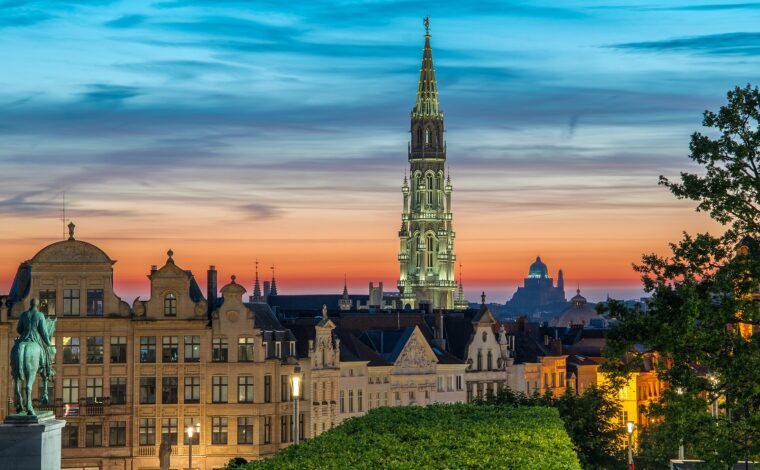
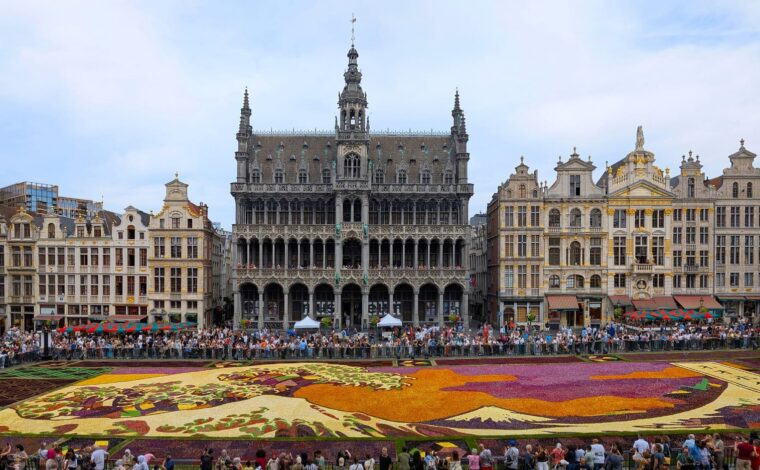
There are almost no chalets on the Grand-Place itself. What is here is the tree and the sound-and-light show, in which the guildhouses and the Hôtel de Ville are used as a projection surface for a piece of music and imagery lasting a few minutes. It runs several times each evening, it is free, and it is the single best thing about the whole event.
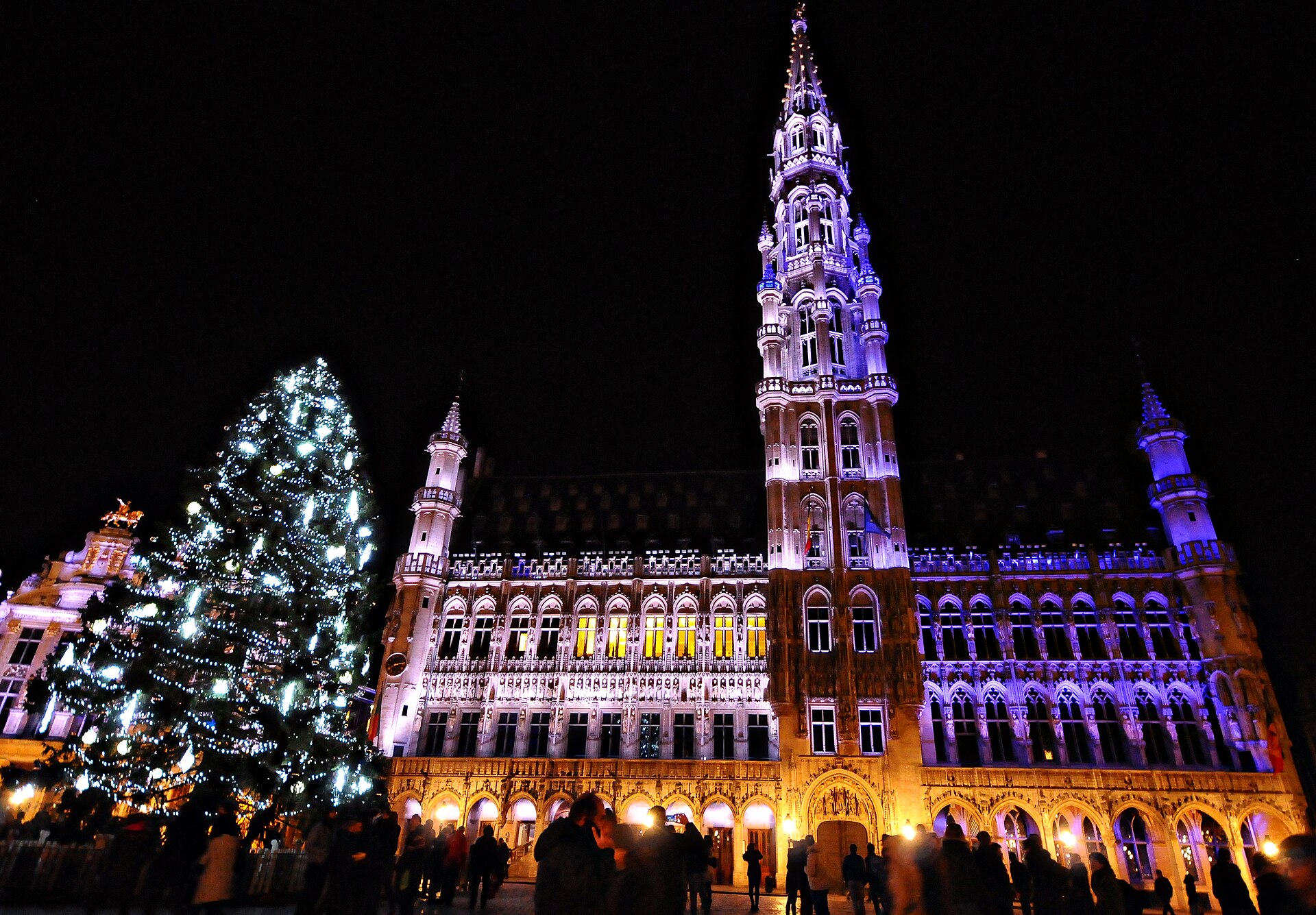
Practical note: the square fills up several minutes before each show and empties immediately afterwards. Stand near the Maison du Roi side or under the arcades if it is raining. The show is projected across the whole square, so there is no bad angle, only a crowded one. Our Grand-Place guide covers the buildings you are looking at.
The Bourse and Rue du Marché aux Herbes: The Crush
The connecting stretch between the Grand-Place and the Bourse is the narrowest part of the route and the busiest. On a weekend evening before Christmas it can become shoulder-to-shoulder, moving at the pace of the slowest person in front of you. There is nothing here you cannot get elsewhere on the route. If it is packed, cut around it via Rue du Midi or the Rue au Beurre and rejoin further along.
Sainte-Catherine: The Best Section
This is where the market actually is. The chalets thicken up around the Place Sainte-Catherine, the food gets better, and the crowd spreads out enough to move. The church of Sainte-Catherine itself is used for projections during the run — a quieter, stranger piece of light work than the Grand-Place show and one many visitors miss entirely.
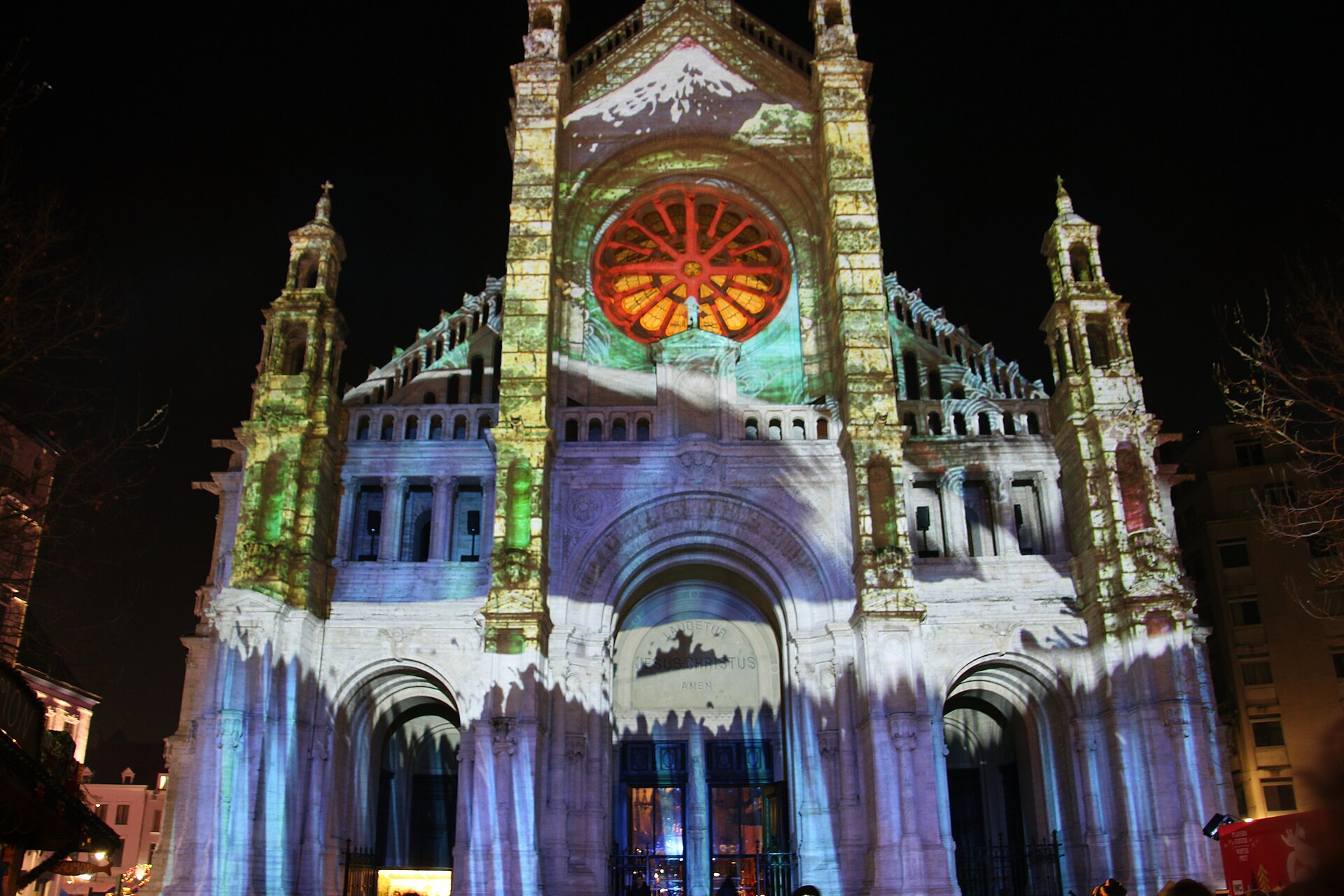
Sainte-Catherine is a good neighbourhood independently of the market — it is the old fish market quarter and still the best area in the centre for seafood. Our Sainte-Catherine guide covers what is there for the other eleven months of the year.
Marché aux Poissons: The Wheel
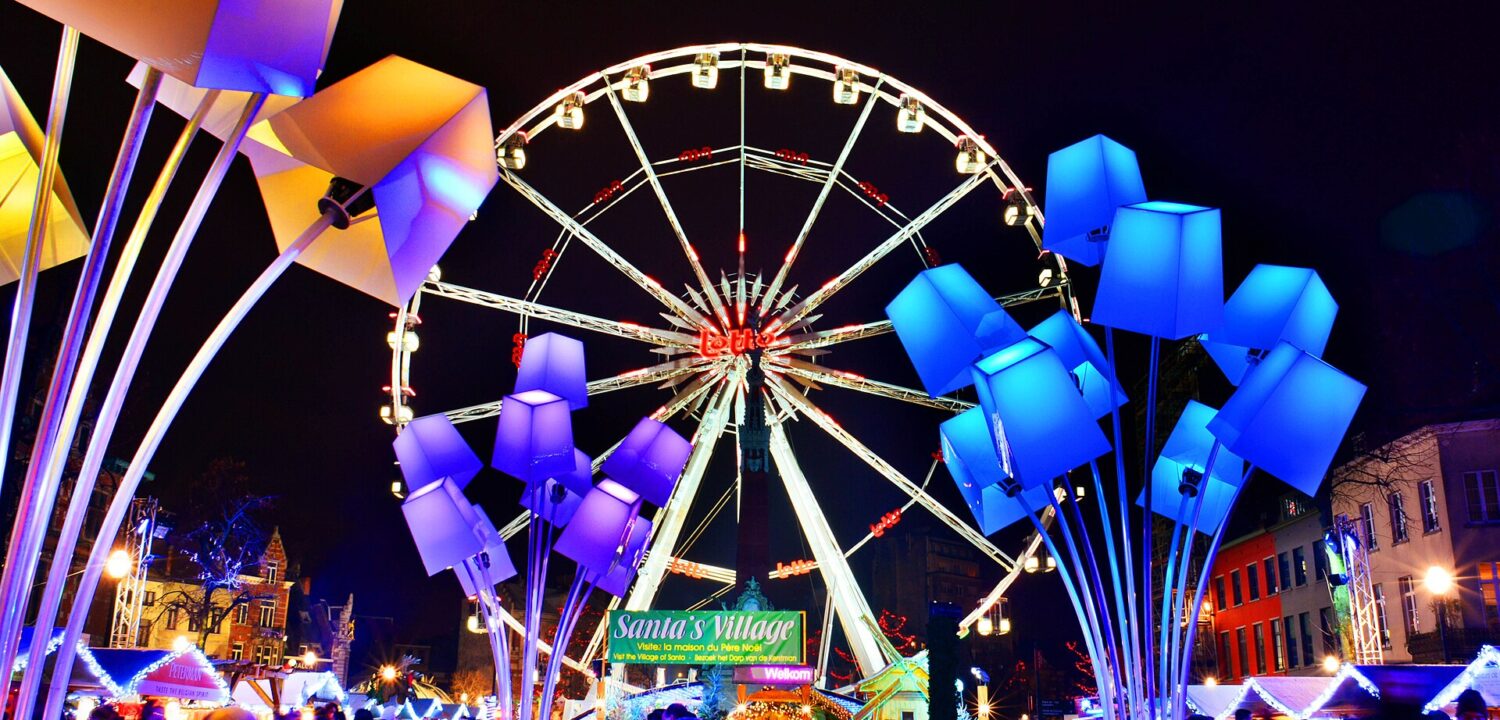
The far end holds the big wheel and the larger fairground attractions. It is the least atmospheric stretch — wider, more open, more obviously commercial — but the wheel gives you a panoramic view over the market and the city centre, and on a clear evening it is worth the ticket.
What Things Cost
Entry to the market is free. Everything inside it is not.
- Glühwein / vin chaud: roughly €5–7 a cup, plus a refundable deposit on the mug of a few euros. Keep the token.
- Hot chocolate, often with a shot: similar money.
- A hot food plate — tartiflette, raclette, sausage, or the Belgian speciality stalls: €10–16.
- Frites: €4–5. Better and cheaper from a proper friterie a street away.
- Waffles: €4–8 depending on toppings.
- Big wheel: around €10–12 a rotation.
- Ice rink: around €10–14 including skate hire.
An evening with two mulled wines, a plate of food and a waffle lands somewhere around €35–40 a head. That is not cheap, and it is not unusual for European markets. The saving is available if you want it: the market is surrounded by the actual city, and the beer bars and friteries two streets off the route are dramatically better value. Our frites guide and the best bars guide point you at them.
When to Go
Timing matters more here than at most markets, because the route has genuine bottlenecks.
- Best: a weekday evening in the first half of December, arriving around 17:30 as the light goes and the stalls warm up.
- Good: any weekday in late November before the schools break up. The market is fully open from day one.
- Also good: between 27 December and 3 January, when the market is still running. It closes at 18:00 on 31 December and 3 January.
- Avoid: Weekend evenings in the run-up to Christmas, when any central market is at its busiest. It is not dangerous, it is not unpleasant exactly, but you will spend the evening queueing and shuffling.
- Note: it closes at 18:00 on 24 December, 31 December and 3 January, which catches out people planning a Christmas Eve evening at the market.
Daylight is short — the sun sets in the late afternoon in December — so the market effectively runs after dark. That is an advantage. Arrive at four and you catch the lights coming on.
Getting There and Around
Do not drive. The centre is closed or congested throughout the run and parking is both expensive and full. The market sits directly on top of the metro network: Bourse/Beurs and De Brouckère put you at the Grand-Place end, Sainte-Catherine puts you in the middle of the best section. A STIB 1-day ticket is €9 (contactless payment stops at €8.50 a day) and the metro guide covers the lines.
From Brussels-Central it is a downhill walk of about eight minutes to the Grand-Place. If you are coming straight from the airport, the train runs to all three main stations in 11 to 23 minutes — see our Brussels Airport guide.
Two practical warnings. First, the market is a pickpocket environment, in the way any dense evening crowd is. The Grand-Place, Brussels-Central and the crush by the Bourse are the named hotspots. Keep your phone out of an open pocket and your bag in front of you. Second, the cobbles get slick when wet, and much of the route is on them — sensible shoes, not fashion boots.
What to Eat and Drink
The market food is decent rather than exceptional, and the best of it is the stuff that could only be here. Look for the Belgian-specific stalls: the croustillons or smoutebollen — deep-fried dough balls under a snowdrift of icing sugar — and the stalls doing proper Belgian charcuterie and cheese rather than generic wurst. The Alsatian tartiflette and raclette stalls are ubiquitous across every European market and are exactly the same here as in Strasbourg.
On the drinking side, the mulled wine is fine and the hot chocolate is better. But you are in Brussels, and there is a case for abandoning the market cup entirely: some of the best beer bars in Europe are within five minutes’ walk of the route, they are warm, they have seats, and a Trappist beer costs less than a plastic cup of hot wine. Our Belgian beer guide and the craft beer bars list have the addresses.
Shopping the Chalets: An Honest Assessment
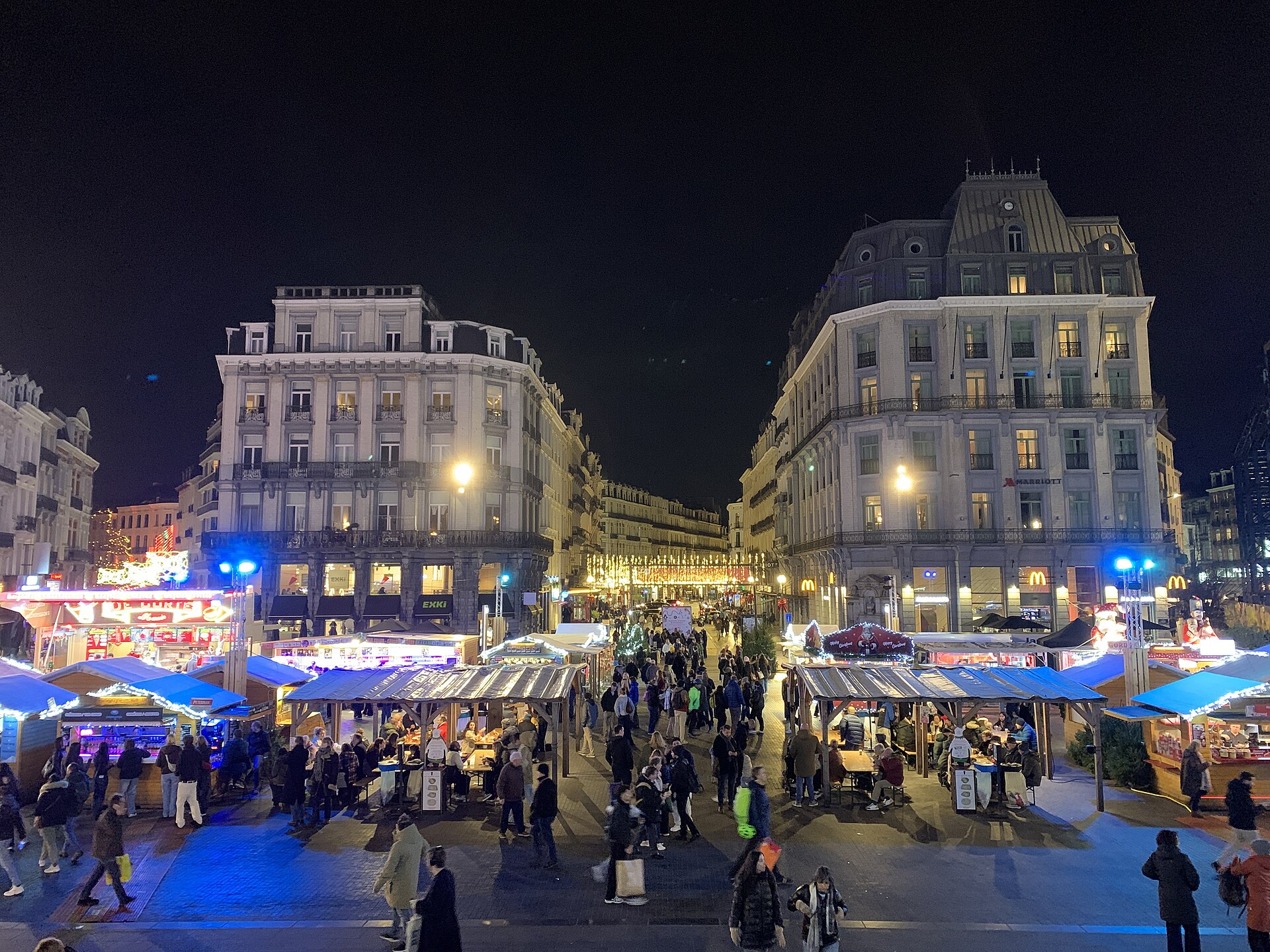
Most of what is sold at Winter Wonders is the same merchandise sold at every Christmas market in Europe — the candles, the wooden ornaments, the felted hats, the soaps. It is pleasant and it is not local. The chalets genuinely worth stopping at are the Belgian ones: small chocolate producers, speculoos bakers, jenever and beer stalls, and the craft chalets from Belgian makers that appear in the Sainte-Catherine stretch.
If your priority is bringing something home rather than the experience of buying it outdoors in the cold, you will do better in the city’s actual shops, where the same chocolate is cheaper and the range is far wider. Our Christmas market shopping guide goes into what to buy and what to skip, and the Belgian souvenirs guide covers the year-round alternatives.
With Children
Winter Wonders works well for children, largely because it has things to do rather than just things to look at. The ice rink on Place De Brouckère, the giant wheel at the Marché aux Poissons and the smaller fairground rides give children plenty to do, and the sound-and-light show on the Grand-Place is short enough to hold attention. Buggies are workable but can be hard going when the market is busy; it opens at noon, so a weekday afternoon is the easier time for a pushchair.
Note that Belgian schools break up around the third week of December, which is when the family crowd arrives. More options in our Brussels with kids guide.
Where to Stay for the Market
December is the most expensive month in Brussels and the market weekends are the peak of it. Book months ahead if you want a central room at a sane price.
Staying directly on the market route sounds appealing and is a mixed blessing — it is loud until well past ten, and the streets are busy. The better plan is a hotel five to ten minutes’ walk away: the Sablon, the upper end of Sainte-Catherine, or around the Bourse. Our hotels near the Grand-Place guide and best areas to stay cover the trade-offs, and the hotel booking tips explain why weekends are the exception to Brussels’ usual pricing.
Is It Worth It?
Yes, with one qualification. Winter Wonders is genuinely one of the better Christmas markets in Europe, and the reason is structural rather than curatorial — it runs through a real city rather than around a fenced compound, and the buildings it passes are extraordinary. The sound-and-light show on the Grand-Place is free and better than anything you will pay for.
The qualification is that the market itself is not the reason to come to Brussels in December. The city is. The museums, the beer, the chocolate, the Art Nouveau and the food are all here regardless, and they are all indoors, which in a Belgian December is the point. Treat the market as a very good evening rather than the itinerary, and you will not be disappointed. Our month by month guide sets out what else December offers.
One more thing worth knowing if your trip falls over the holidays themselves: the market keeps its full 12:00–22:00 hours on 25 December and 1 January, while almost everything else in the city is shut, and it closes early at 18:00 on Christmas Eve and New Year’s Eve. Our guide to what is open and closed in Brussels over Christmas and New Year covers the whole fortnight, day by day.
The market is only part of a December trip, and the rest of the month has its own arithmetic — short daylight, peak hotel rates, and a set of indoor options that Brussels does better than most cities. Our guide to Brussels in December covers the month around the market.
Related Brussels Guides
- Brussels Christmas Market Shopping — what is actually worth buying from the chalets.
- Brussels Events Calendar — the rest of the year, month by month.
- Brussels Month by Month — what December is like beyond the market.
- Grand-Place Guide — the square the light show is projected onto.
- Sainte-Catherine Guide — the best stretch of the route, year-round.
- Rainy Day Things to Do — for the evenings the weather wins.
- Hotels Near the Grand-Place — where to stay for the market.
Useful Resources
- brussels.be — the City of Brussels site, and the authoritative source for each season’s dates and hours.
- visit.brussels — the sound-and-light show timings, which change year to year.
- STIB/MIVB — metro and tram to Bourse, De Brouckère and Sainte-Catherine.
- SNCB/NMBS — trains from the airport and for day trips to the Bruges and Ghent markets.
Frequently Asked Questions
When is the Brussels Christmas market in 2026?
Winter Wonders runs from 27 November 2026 to 3 January 2027, daily from 12:00 to 22:00, closing early at 18:00 on 24 December, 31 December and 3 January. Entry is free.
Is the Brussels Christmas market free?
Yes. There is no admission charge, and the sound-and-light show on the Grand-Place costs nothing. The big wheel, the ice rink and the curling track are ticketed separately, at roughly €10–14 each.
How long does it take to walk the Brussels Christmas market?
The route runs from the Grand-Place to the Marché aux Poissons. Walking it without stopping is a short stroll; doing it properly, with food and the light show, takes an evening.
What is the best day to visit the Brussels Christmas market?
A weekday evening in early December, arriving around 17:30. Weekend evenings in the run-up to Christmas are the busiest, when the stretch by the Bourse can become very slow going. The days between Christmas and 3 January still have the full market, closing at 18:00 on 31 December and 3 January.
How much does mulled wine cost at the Brussels Christmas market?
Roughly €5–7 a cup, plus a refundable deposit on the mug. A full evening with two drinks, a hot plate and a waffle comes to around €35–40 a head.
Where is the Brussels Christmas market located?
It runs from the Grand-Place through the Bourse and Sainte-Catherine to the Marché aux Poissons. The nearest metro stations are Bourse/Beurs, De Brouckère and Sainte-Catherine. Most of the actual chalets are in the Sainte-Catherine stretch, not on the Grand-Place.
Is the Brussels Christmas market good for children?
Yes. The ice rink is on Place De Brouckère, the giant wheel is at the Marché aux Poissons, and the light show on the Grand-Place is short. Go on a weekday afternoon rather than a weekend evening — it opens at noon.
Is the Brussels Christmas market better than Bruges or Cologne?
Different rather than better. Bruges is prettier and much smaller; Cologne is larger and more commercial. Brussels wins on setting, because the route runs through a working city centre and the Grand-Place light show has no equivalent elsewhere.
Do I need to book anything for Winter Wonders?
No. Entry is free, and winterpret.be has the details for each attraction. What you do need to book, and early, is accommodation, because December weekends are popular.
Photo Credits
Grand-Place at Christmas: GrandPlace3 (23343547550) by Ashley Bayles, CC BY 2.0, via Wikimedia Commons.
Projections on Sainte-Catherine: Bruxelles – Plaisir d’hiver 02 by Vanvelthem Cédric, CC BY-SA 4.0, via Wikimedia Commons.
The Winter Wonders Ferris wheel: Plaisirs d’Hiver by Edison McCullen, CC BY-SA 4.0, via Wikimedia Commons.
Food stalls at Winter Wonders near the Bourse: Plaisirs d’Hiver (3) by Bernard Lee, CC0, via Wikimedia Commons.
Final Thoughts
The thing to know about the Brussels Christmas market is that most of it is not where people go looking for it. Visitors arrive at the Grand-Place, find a tree and no stalls, and conclude the market is overrated. The market is fifteen minutes further down the road, around Sainte-Catherine, and it is considerably better than the reputation the Grand-Place gives it.
Walk the whole route, from the light show at one end to the wheel at the other. Do it on a weekday evening. You get the same market, the same lights and the same wheel as everyone else, with more room to move.