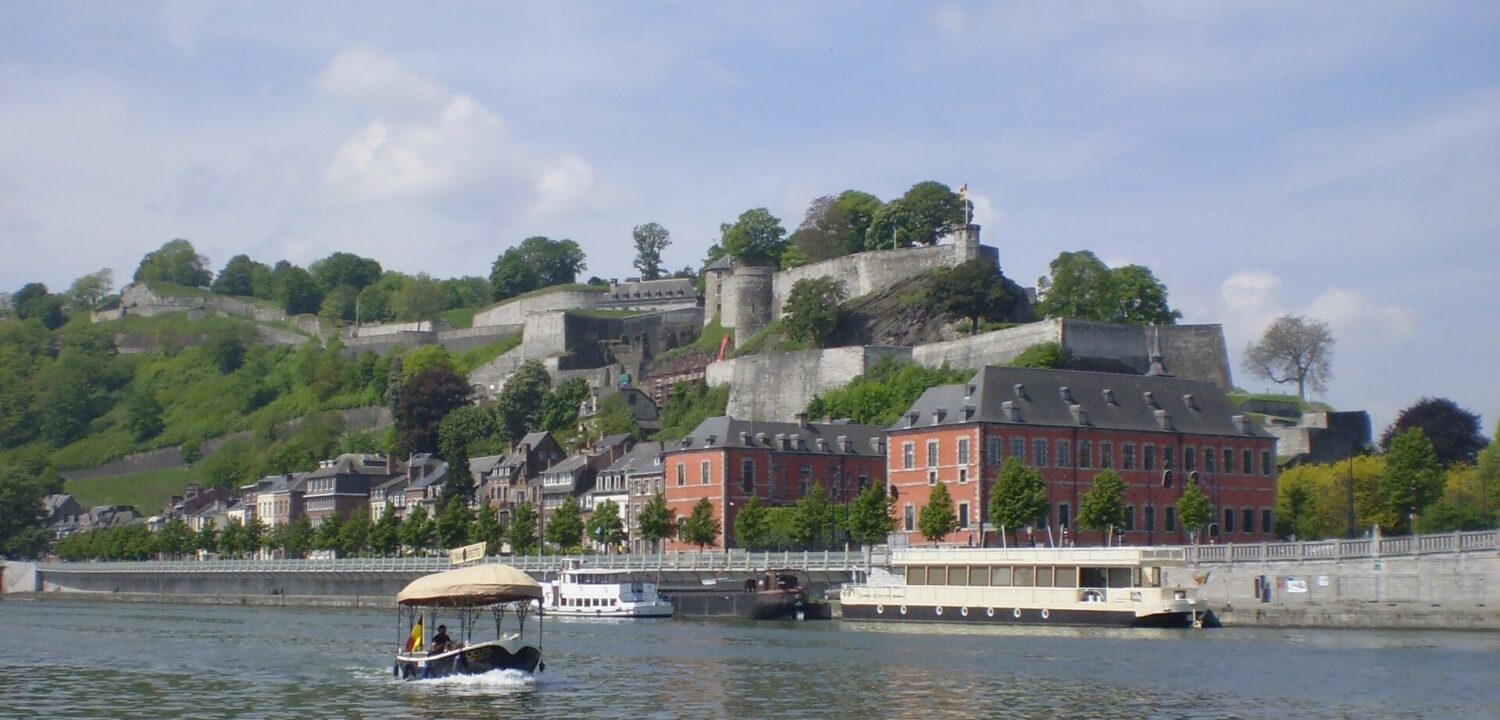
From the ramparts of Namur’s citadel you can see exactly why the town is here. Two rivers meet below you at a stone spit called the Grognon, the Sambre sliding in from the west to join the broader Meuse, and the Meuse then turns south into a valley of limestone cliffs, riverside villages and castles that runs all the way to the French border. Most visitors see Namur as a blur from the Luxembourg train, or as a change of trains on the way to Dinant. The Namur Belgium knows is something else: the capital of Wallonia, a university town with a lively old centre, and the best base in the country for exploring the Meuse valley.
This guide is for staying rather than passing through. It sets out a two-day plan, one day in Namur and one in the valley, with what the citadel’s tours cost, where to sleep, how to get around the valley without a car, and which stops are worth the detour. If you only have one day and your heart is set on Dinant’s citadel and saxophones, our Dinant day trip from Brussels is the better page. Prices were checked in September 2026; treat them as the right order of magnitude.
Namur at a Glance
| Where | Capital of Wallonia, at the confluence of the Sambre and the Meuse, about 60 km south-east of Brussels |
| Language | French |
| From Brussels | About 1 hour by direct train, twice an hour |
| Citadel | Grounds free; underground passages tour €14; Terra Nova visitor centre €6; tourist train €6 |
| Cable car | €8 return for adults, €5 for children aged 6–12, €20 for a family of four |
| Namur to Dinant | About 30 minutes by train, hourly, along the river |
| Ideal stay | Two nights: one day for Namur, one for the valley |
| Best time | May to September; the Fêtes de Wallonie in mid-September if you like a party |
Why Base Yourself in Namur Rather Than Dinant?
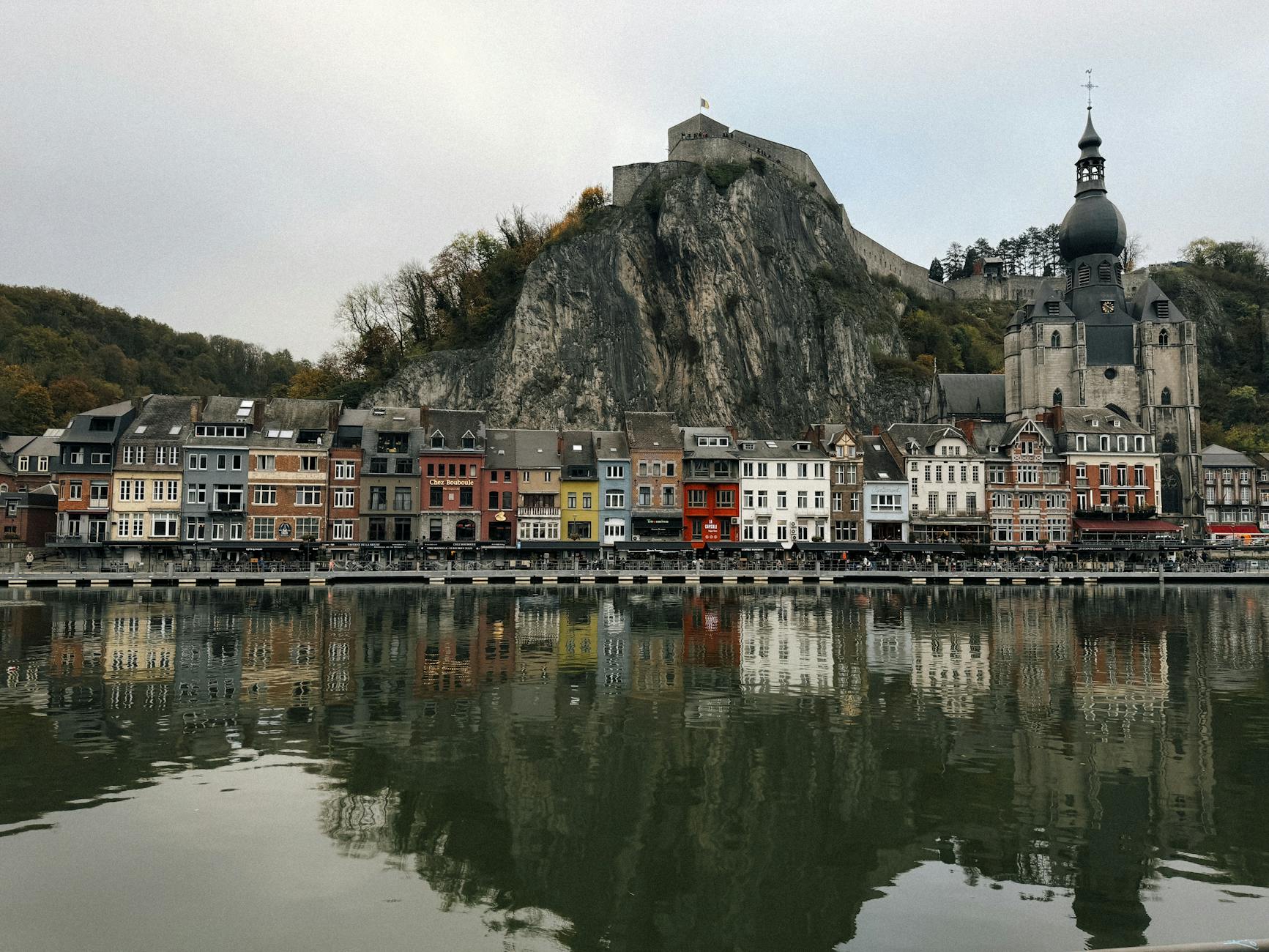
Dinant has the postcard: the onion-domed collegiate church under a cliff, the citadel on top and the coloured houses along the water. Namur has almost everything else. It’s a working regional capital with a university, so it has far more hotels and restaurants, a proper evening life and shops that stay open for the people who live there. It also has much better trains. From Namur you’re an hour from Brussels and Liège, half an hour from Dinant and on the main line south to Luxembourg, which makes it the natural hub for the whole valley.
Dinant is a small town, and it shows. On summer weekends its riverfront is packed with day-trippers and coaches, and on a wet Tuesday evening in March it’s very quiet indeed. The sensible arrangement is to sleep in Namur and visit Dinant, rather than the other way round. You get Dinant at its best in the middle of the day, and you come back to a town that still has its lights on at ten o’clock.
Day One: Namur
The Citadel
Namur’s citadel is one of the largest fortresses in Europe, and it grew over the centuries from the castle of the Counts of Namur. Louis XIV besieged it in 1692 with Vauban directing the attack, the Dutch rebuilt much of it after 1815, and it stayed in military use well into the twentieth century. Today the grounds are a free public park laid out across the whole hilltop, with ramparts, woodland paths and the best view in the province.
There are two ways up. You can walk, which takes about twenty minutes up steep lanes and ramps from the Grognon, or you can take the cable car from the riverside at the foot of the hill. The cable car costs €8 return for adults, €5 for children aged 6–12 and €20 for a family of two adults and two children. It runs from 09:00 to 19:00 in high season and 10:00 to 17:00 the rest of the year. Our advice is to ride up and walk down, because the path down through the fortifications is the best part of the visit and your knees will thank you for not doing it the other way.
Once you’re at the top, the paid attractions are sold separately:
- The underground passages (Souterrains), €14 for adults and €12 for children, students and over-65s. This is a guided walk through part of the largest network of galleries in any European citadel, and it’s the one paid thing here we’d call essential. Tours run at set times and you have to book online.
- The Citadel in the Middle Ages, also €14. This guided tour covers the medieval core of the fortress and suits anyone who wants the full story.
- Terra Nova visitor centre, €6 for adults, is an audio-guided exhibition in a 19th-century barracks. It gives you a good half-hour of context before you go underground.
- The tourist train, €6 for adults, loops the hilltop and is great for small children and tired legs. For everyone else, walking is better.
A Citadelle Pass bundles several of these for less than the individual prices, which is worth it if you plan to do three or more. Under-6s go free on everything. Between April and late September the visitor centre opens daily from 10:00 to 18:00. Outside that season hours shorten and some tours run less often, so check the citadel’s website before a winter visit. While you’re up there, find Jan Fabre’s giant gilded turtle, Searching for Utopia, on the esplanade. It’s the most photographed thing in Namur, and it’s better in person than you’d expect.
The Old Town
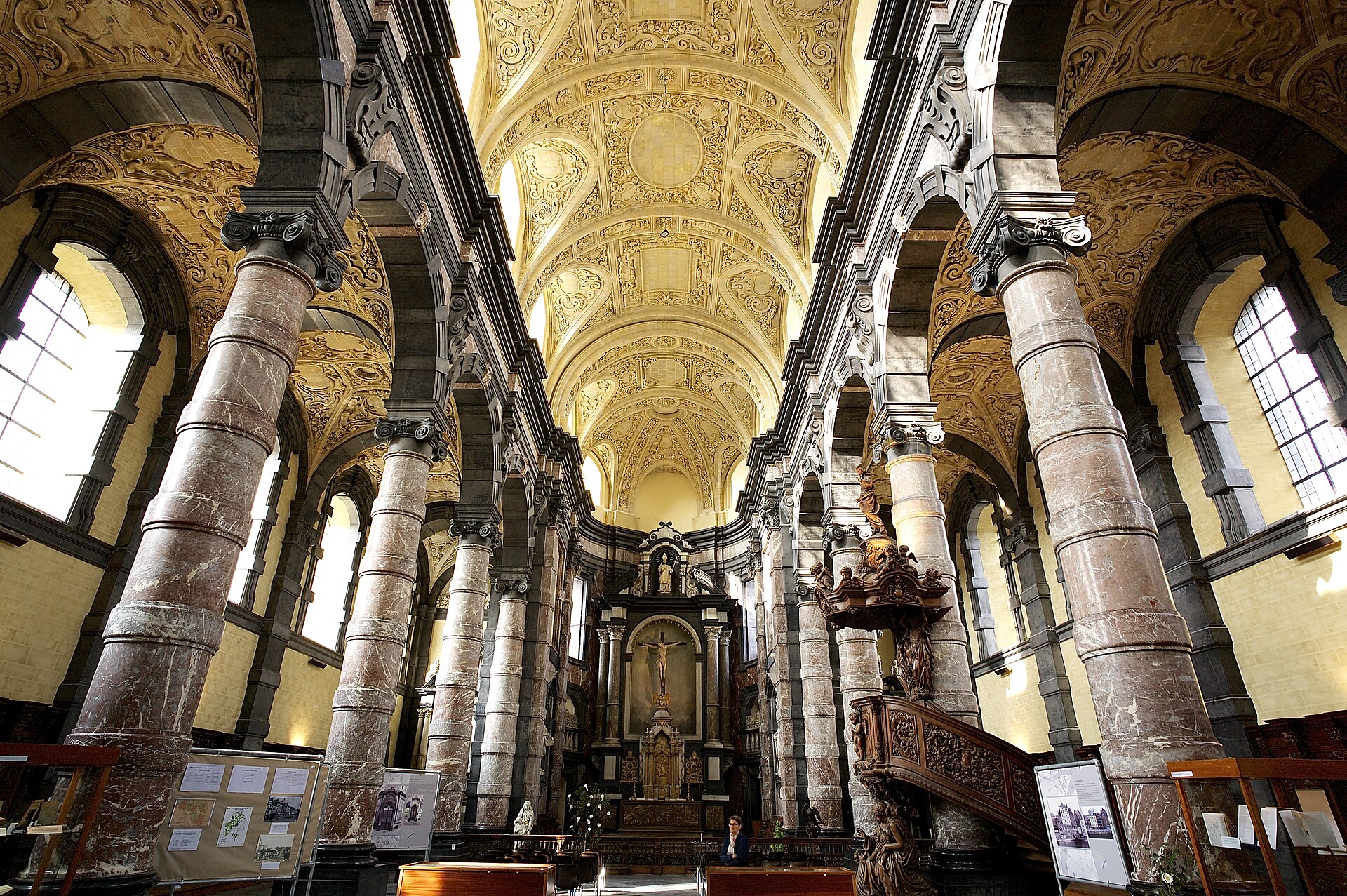
Namur’s old centre is pleasant rather than spectacular. It’s a tight grid of lanes, squares and cafés rather than a set piece like Bruges, and it rewards wandering more than ticking things off. Start at the Place d’Armes and the Belfry, a squat 14th-century tower that is part of the UNESCO listing of Belgian and French belfries. From there, work your way to the Église Saint-Loup. From the street it looks unremarkable. Inside is one of the finest Baroque interiors in Belgium, with red and black marble columns and a sculpted stone vault. The poet Charles Baudelaire collapsed here in 1866 while admiring it, and it’s easy to see why he was looking up.
Two museums are worth an hour each if they match your interests. The Musée Félicien Rops is devoted to the Namur-born 19th-century artist whose erotic, macabre etchings scandalised his contemporaries. It’s fascinating, and not one for small children. TreM.a, the museum of ancient arts, holds the 13th-century goldsmith’s work of Hugo d’Oignies, astonishingly fine silver and gilt that most visitors to Belgium never hear about. The neoclassical Cathédrale Saint-Aubain, at the western end of the old town, is worth a look in passing.
Evening at the Confluence
Finish the day down at the Grognon, the spit of land where the two rivers meet, which has been reworked into a broad public esplanade beneath the citadel. At dusk the lights come on along both rivers and the fortress glows above you. In season, the little Namourette boats shuttle along the water, a cheap and slightly absurd way to see the town from river level. Dinner is best in the lanes around the Place du Marché aux Légumes and the Rue des Brasseurs, where the terraces fill with students and office workers rather than tour groups. On the menu, look for escavèche (fish set in a tangy vinegar jelly, a Walloon speciality), a glass of pèkèt, the Walloon juniper spirit, and Biétrumé caramels, Namur’s own sweet, to take home.
Day Two: The Meuse Valley
The Meuse south of Namur is the classic stretch. The river winds between wooded slopes and grey cliffs, with a village or a ruin at every bend and a railway line running along the bank. You can see the highlights in a day from Namur by train, by bike or by car. Pick three or four of the stops below rather than trying to do them all.
South Towards Dinant
- Wépion, just south of Namur, is Belgium’s strawberry capital. In season, roughly late spring through summer, stalls along the riverside road sell punnets picked that morning, and a small strawberry museum tells the story. It’s a ten-minute stop, and a delicious one.
- Profondeville is a riverside village beneath limestone crags, with a waterside promenade and cafés. It’s a good place for a coffee if you’re cycling.
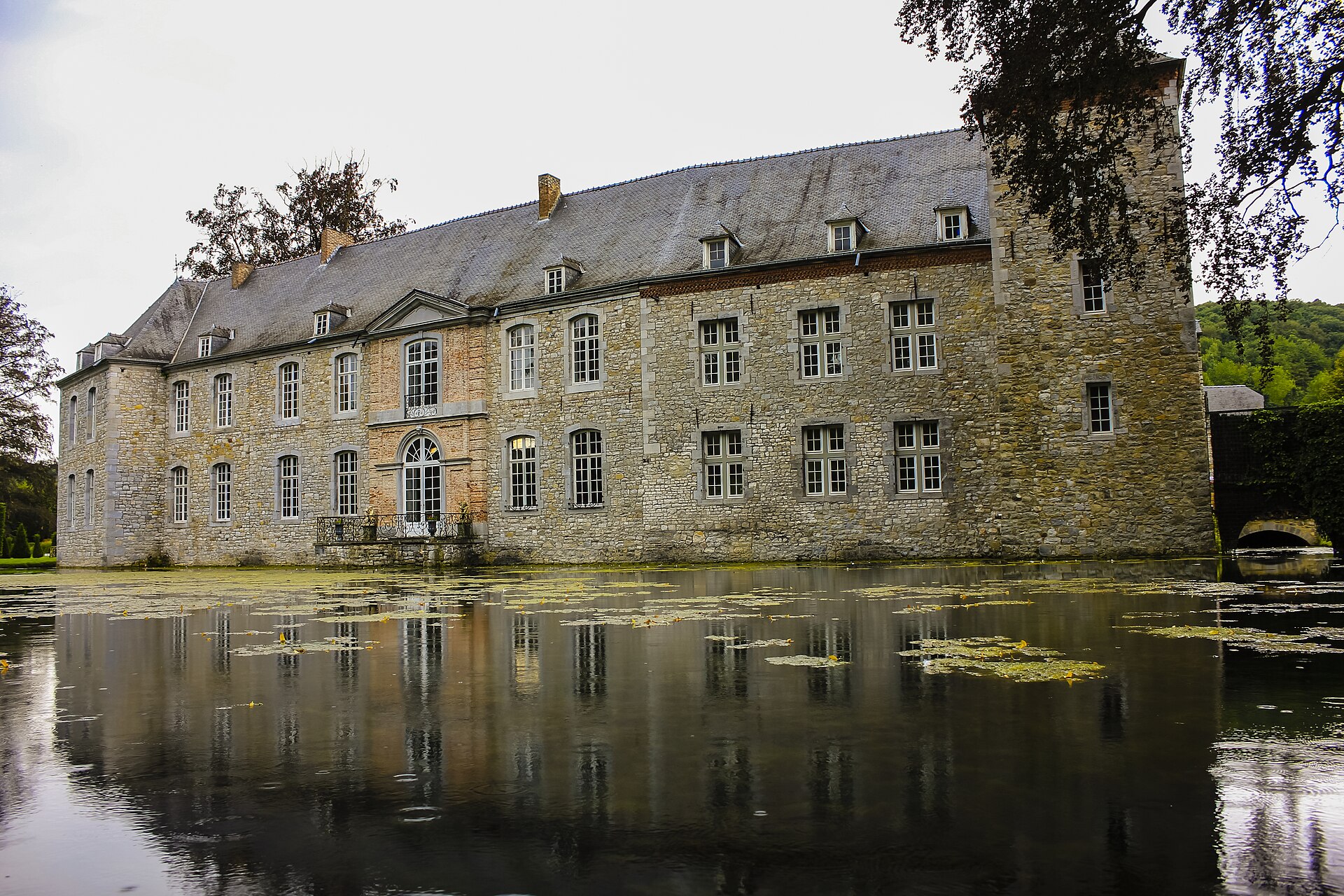
- The Jardins d’Annevoie are 18th-century water gardens whose fountains, cascades and canals are fed by natural springs and run without a single pump. They’re genuinely unusual and the most rewarding paid stop in the valley. They open seasonally, roughly spring to autumn, so check the dates before you plan a day around them.
- Yvoir and Poilvache: the station at Yvoir puts you within reach of the ruins of Poilvache, a medieval fortress on the cliff above the river, and of the Molignée valley that leads towards the abbey of Maredsous.
- Bouvignes sits just north of Dinant. The ruined castle of Crèvecœur above the village has the best view of Dinant anywhere, and far fewer people than the Dinant citadel.
- Dinant has the collegiate church, the citadel, the Maison de Monsieur Sax and the kayaks on the Lesse. Our Dinant guide covers the town in detail. From a Namur base, it’s thirty minutes up the line.
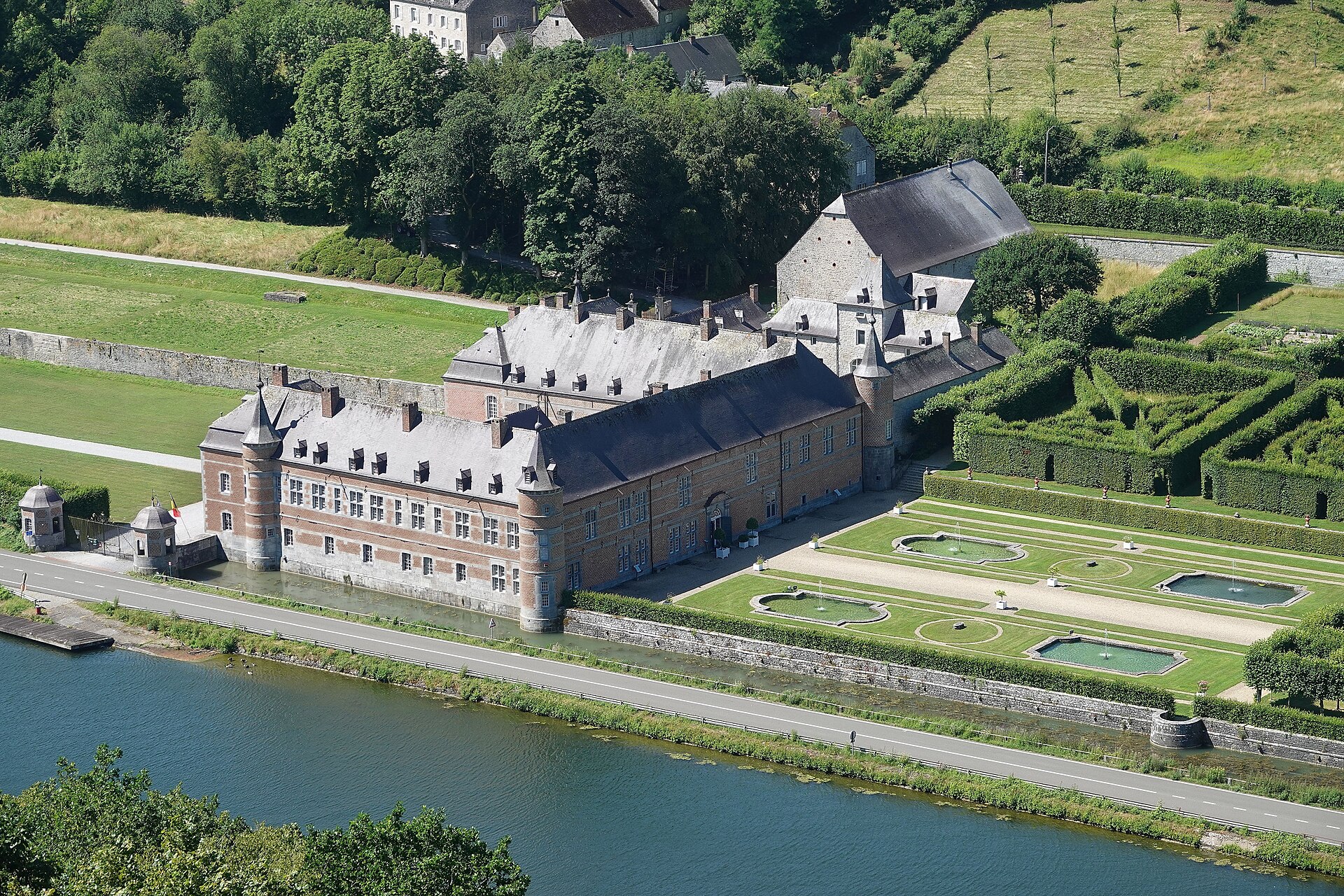
- Freÿr, just south of Dinant, is a château on the riverbank with formal 18th-century gardens and a hedge maze. The limestone cliffs opposite are a favourite with climbers. The château opens on a limited schedule from spring to autumn.
East Towards Huy
Downstream, the valley between Namur and Liège is more industrial, but it has one town worth stopping for. Huy, about 25 minutes from Namur by train, has a fine Gothic collegiate church with a great rose window, a lively little Grand-Place and a 19th-century fort on the cliff above. The Germans used the fort as a prison camp in both world wars, and it’s now a sober memorial museum. If you’re moving on to Liège anyway, Huy makes a good half-day stop on the way.
West Along the Sambre
Ten minutes west of Namur by train, the abbey of Floreffe sits on a ridge above the Sambre. Its old mill has been turned into a brasserie serving the abbey’s beers. It’s a short, easy outing for a slow afternoon, and it pairs well with an evening back in Namur. For more on the abbey beers of the region, see our Belgian beer guide.
Getting Around the Valley Without a Car
By train. The line from Namur to Dinant runs along the Meuse and reaches Dinant in about half an hour, and local services stop at riverside villages such as Lustin, Godinne and Yvoir. The line east to Liège follows the river through Andenne and Huy. Local trains make it easy to hop off, walk a stretch and pick up the next one an hour later. Our Belgium by train guide explains the fares and discounts, including the weekend discount.
By bike. This is the best way to see the valley if the weather cooperates. A flat, traffic-free towpath follows the Meuse most of the way from Namur to Dinant, roughly 30 km, which is an easy half-day on an e-bike. Hire in Namur, ride south with stops, and bring the bike back on the train, remembering that bikes need their own ticket.
By boat. In summer, cruise boats run short trips on the Meuse from both Namur and Dinant, and on some days longer sailings link the two towns. Schedules change from season to season and even from day to day. Treat a boat trip as a pleasant extra rather than your transport, and check the timetable with the tourist office before you build a day around it.
By car. A car is only really useful for the sights away from the river: the abbey of Maredsous with its cheese and beer, the Molignée valley, and anything further into the Ardennes. For the river itself, the train and the towpath are easier than hunting for parking in Dinant on a sunny Saturday.
Where to Stay in Namur
Namur’s hotel stock is small for a regional capital, which cuts both ways. Rates tend to sit below Bruges and central Brussels for the same standard, but the best rooms go early on summer weekends and during the Fêtes de Wallonie in September. Book those dates well ahead.
- Les Tanneurs, in the old town, is built from fifteen interconnected 17th-century houses that were once a tannery, with blue stone, brick vaults and stone arches throughout. Some rooms have their own jacuzzi or sauna. It’s the most characterful address in town and the best choice if you want to walk out of the door into the old centre.
- The Royal Snail sits at the foot of the citadel beside the Meuse. It has thirty contemporary rooms, an outdoor pool and a serious restaurant, L’Agathopède. It’s the pick for a summer stay or a food-led weekend.
- Le Château de Namur is up on the citadel hill, close to the fortress and set in greenery above the town. It’s quiet, green and away from the town’s evening noise, but you’ll need the cable car, a taxi or strong legs to get to dinner.
- Near the station, a handful of practical chain and mid-range hotels suit anyone catching early trains down the valley or on to Luxembourg.
If you’d rather keep Brussels as your base and treat Namur as a day out, our where to stay in Brussels guide covers the capital’s neighbourhoods. The Belgium travel guide sets out which regions reward a night away.
When to Go
May to September is the season for the valley. The gardens and châteaux are open, the towpath is at its best and the strawberry stalls at Wépion are trading. Mid-September brings the Fêtes de Wallonie, when Namur throws the region’s biggest street party over a long weekend. One highlight is the échasseurs, stilt fighters in costume who try to knock each other off their stilts, a tradition going back centuries. Our guide to Belgian traditions and customs has more on the festival calendar. Winter is quiet. The citadel and old town still work well, but many of the valley’s gardens and châteaux close, and short days make the river trip less appealing.
A Few Honest Warnings
- It’s hilly. The citadel is a proper climb, and even parts of the old town slope. Take the cable car up if you have any doubts.
- Mondays and Sundays are patchy. Museums and some restaurants close on Mondays, and many shops close on Sundays. Plan your museum day accordingly.
- Dinant on a summer weekend is busy. If you can only do the valley on a Saturday in July, go early, or aim for the quieter stops such as Annevoie, Bouvignes and Freÿr rather than Dinant’s riverfront.
- Namur is not Bruges. If you want wall-to-wall medieval postcards, this isn’t that. The pleasure here is the setting, the river and the food, and a town that isn’t performing for visitors.
Follow the Meuse downstream past Huy and you reach Liège, less than an hour from Namur by train and a very different city: louder, grittier and far livelier after dark. If you’re heading that way at the end of the week, plan to arrive on a Saturday. Our Liège city guide explains why Sunday morning at La Batte, the city’s riverside market, is the best reason to stay the night.
Related Brussels Guides
- Dinant Day Trip from Brussels
- The Belgian Ardennes
- Belgium by Train
- Belgium Travel Guide
- How Many Days in Belgium?
- A 7-Day Belgium Itinerary
- Day Trips from Brussels
- Luxembourg Day Trip from Brussels
Useful Resources
- citadelle.namur.be: prices, opening hours and online booking for the underground passages and the other citadel tours.
- telepheriquedenamur.be: cable car fares and seasonal hours.
- visitwallonia.be: the regional tourist board, with listings for the valley’s gardens, châteaux and events.
- belgiantrain.be: trains from Brussels and along the Meuse to Dinant and Liège.
Frequently Asked Questions
Is Namur worth visiting?
Yes, especially as a base. The citadel and its underground passages are among the best fortress visits in Belgium, the old town is lively and unpretentious, and Namur is the most convenient place to stay for the Meuse valley, with Dinant half an hour away by train.
How do I get from Brussels to Namur?
Direct trains run from Brussels-Midi, Central and Nord about twice an hour, taking about an hour. Trains towards Luxembourg also call at Brussels-Luxembourg in the European Quarter on the way. There’s no need to book; buy a ticket for the date and take any train.
How many days do you need in Namur?
Two nights is ideal: one full day for the citadel and the old town, and one for the valley. One night gives you Namur and an evening at the confluence, but not much of the river.
Is Namur Citadel free?
The grounds are free to walk around. The underground passages tour costs €14, the Terra Nova visitor centre €6 and the tourist train €6, and the cable car up is €8 return for adults. A Citadelle Pass bundles several of these at a small discount.
Can you do Namur and Dinant in one day?
You can, since they’re thirty minutes apart by train, but it’s a rush, and you’ll see both towns in the middle of the day with everyone else. If you only have one day, choose one. If you have two, stay in Namur and give Dinant the second morning.
Do I need a car for the Meuse valley?
No. The railway follows the river from Namur to Dinant with stops at several villages, and a towpath makes the same trip by bike. A car only helps for places away from the river, such as Maredsous Abbey or the deeper Ardennes.
Photo Credits
-
Namur citadel above the Meuse, with a Namourette boat: Citadelle+namourette16-9 by NEW – Namur, CC BY-SA 3.0, via Wikimedia Commons.
-
The nave of the Église Saint-Loup: Church Saint-Loup Namur interior1 by Mjjmartinlux, CC BY-SA 3.0, via Wikimedia Commons.
-
The château at Annevoie: Annevoie2016 (34) by stephanemat, CC BY-SA 3.0, via Wikimedia Commons.
-
The Château de Freÿr on the Meuse: Castle of Freÿr (Hastière).01 by Nenea hartia, CC BY-SA 4.0, via Wikimedia Commons.
Final Thoughts
Namur is the kind of place that makes you wonder why you’d only ever passed through. The citadel alone is worth the hour on the train, and the underground passages are one of the best fortress visits in the country. But the real reason to stay is what lies upstream: a river valley of cliffs, castles, water gardens and strawberry stalls that you can explore by train or bike in a day and come back from to a proper dinner.
Give it two nights. Ride the cable car up and walk down, eat around the Marché aux Légumes, and spend the second day drifting south along the Meuse to Annevoie, Bouvignes and Dinant. Save Dinant for the middle of the day, and come home to Namur for the evening. It’s the part of Belgium most first-time visitors miss, and it’s barely an hour from Brussels.