Most people see Belgium wrong, and the reason is the railway. The trains are so quick and so frequent that it feels natural to book one hotel and bounce out from it every morning — Bruges on Tuesday, Ghent on Wednesday, Antwerp on Thursday, back to the same room every night. It works, but you end up seeing five towns at the same hour of the same day, always between eleven and five, always with the coach parties. This is a Belgium itinerary 7 days long that does the opposite: three bases, two hotel moves, no hire car, and evenings in the cities that are best after the day-trippers have gone.
Everything below runs on ordinary domestic trains — no reservations, no advance fares, turn up and board. Journey times and prices were checked in September 2026 and are written for travel into 2027. Rail fares in particular should be treated as the right order of magnitude, because Belgian Railways rebuilt its ticket range between October 2025 and early 2026 and older advice is unreliable.
The Shape of the Week
| Day | Base | Where you spend it |
|---|---|---|
| 1 | Brussels | Arrive, the Grand-Place and the lower town |
| 2 | Brussels | Museums, the Mont des Arts, Art Nouveau |
| 3 | Brussels | Leuven or Mechelen, back for the evening |
| 4 | Ghent | Move base after breakfast; Ghent all day and evening |
| 5 | Ghent | Bruges as an early day trip, Ghent again at night |
| 6 | Antwerp | Move base; Antwerp centre, Rubens, Het Zuid |
| 7 | Antwerp | Antwerp morning, then out via Brussels or the airport |
Three hotels for seven nights. Two moves, both under an hour, both with your bag in a locker by ten in the morning if you plan it that way.
Why Three Bases and Not One
The single-base version of this trip is perfectly respectable and we cover its component days individually in day trips from Brussels. But three things change when you sleep in the smaller cities.
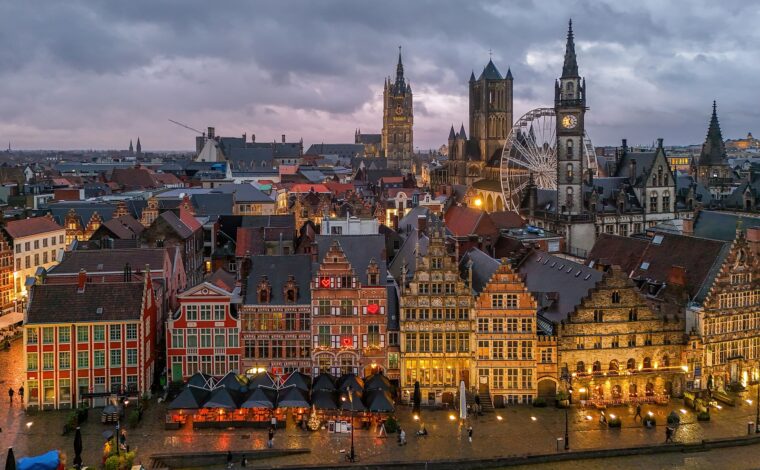
The first is the hours. Bruges between eleven and four in summer is a queue; Bruges at eight in the morning and again at nine at night is one of the most beautiful places in northern Europe, and you only get those hours if you are within walking distance. The same is true of Ghent, where the Graslei at dusk is the whole point and the last comfortable train back to Brussels leaves before it gets properly dark in June.
The second is dinner. Belgian cities eat early and the good places in Ghent and Antwerp fill by eight. If you are watching a clock for the last train you will end up eating somewhere with a photo menu.
The third is simply the arithmetic of transit. Four return day trips from Brussels is roughly eight hours on trains across the week. Two base moves is about ninety minutes. That is six and a half hours back.
The trade-off is honest: you pack and unpack twice, and hotel rates in Bruges and Ghent are higher than in the capital. If your budget is tight, do the single-base version and go out early instead.
Before You Go
- Tickets. This itinerary uses about six single journeys per person, plus airport transfers. The Rail Pass, the old ten-journey card, was withdrawn in October 2025, so price each journey by distance and put the longer runs on a weekend, when adults aged 26–64 get 30% off. Price your actual journeys on belgiantrain.be first; the fare range changed in late 2025 and a lot of published advice is stale.
- Hotels. Book Bruges and Ghent before Brussels. The capital has far more stock and discounts at weekends; the Flemish cities do the opposite.
- Bags. On both move days, check out, put the bag in a station locker at the new city, and start sightseeing immediately rather than waiting for a three o’clock check-in. Our guide to luggage storage in Brussels covers the mechanics and the prices.
- Museums. Saint Bavo’s in Ghent uses timed entry for the Van Eyck altarpiece and does sell out. Book that one in advance; almost nothing else on this itinerary needs it.
- Shoes. Every centre on this list is cobbled. This is not a wheeled-suitcase-friendly week.
Day 1 — Arrive in Brussels
Whether you come by air or by Eurostar, you arrive centrally: the train from Brussels Airport reaches Brussels-Central in about twenty minutes, and Eurostar deposits you at Brussels-Midi/Zuid, five minutes from the same place. See Brussels Airport to the city centre or the Eurostar Brussels guide for the detail.
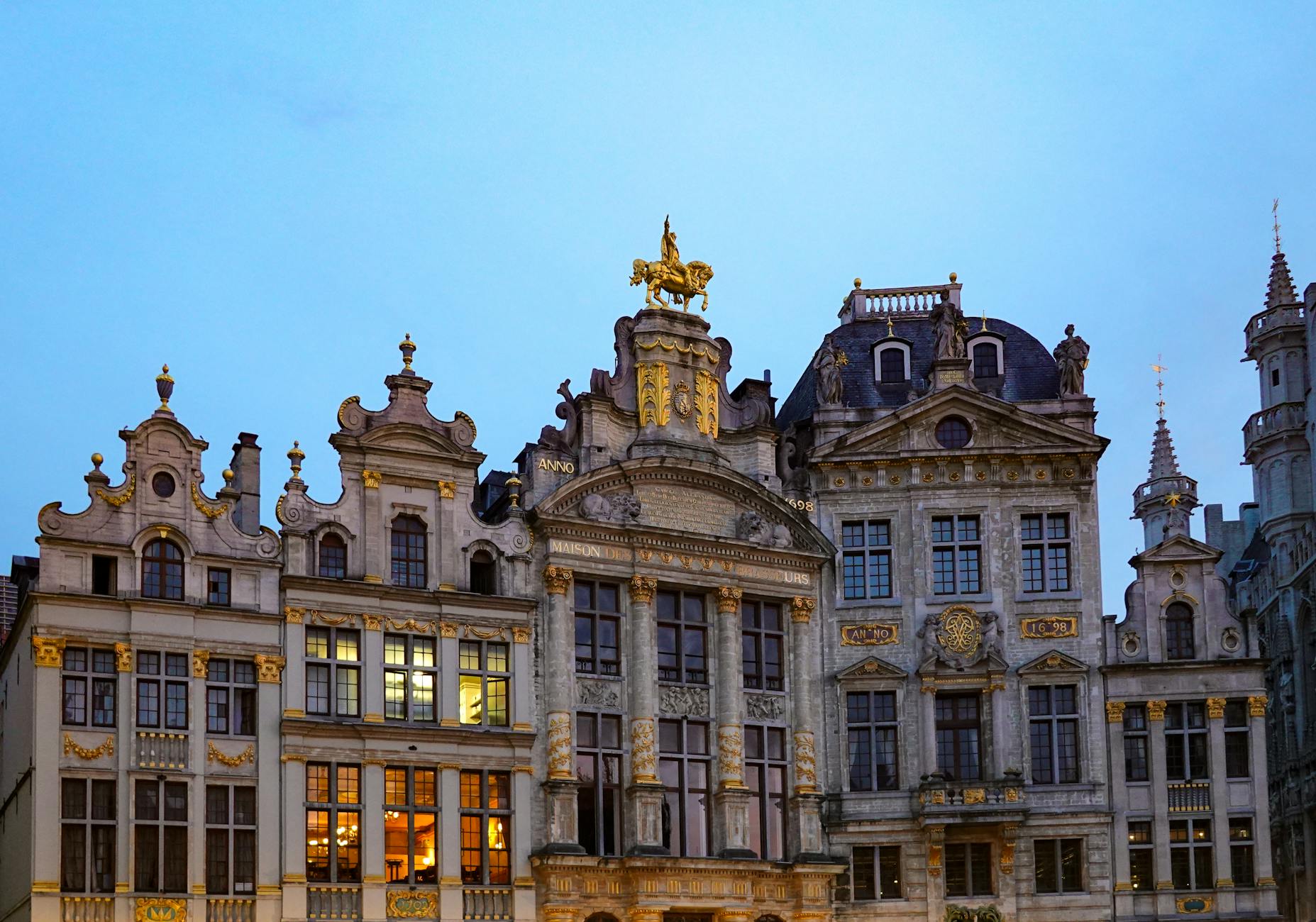
Do not over-programme the first afternoon. Walk to the Grand-Place, which is genuinely one of the great enclosed squares in Europe and much better in the evening when the guildhouses are lit. Loop through the Galeries Royales Saint-Hubert, look at Manneken Pis for the ninety seconds it deserves, and eat in Sainte-Catherine, which is where people who live in Brussels actually go.
One firm rule for the whole week: if a restaurant has a man outside inviting you in and a display of iced seafood, keep walking. Rue des Bouchers is the concentrated version of this and it exists entirely for people who will not be back.
Day 2 — Brussels Properly
A full day in the capital, and there is more than a day’s worth. The efficient shape is museums in the morning, when they are empty, and neighbourhoods in the afternoon.
Start on the Mont des Arts. The Royal Museums of Fine Arts and the Magritte Museum share a building and a combined ticket at around €20; Old Masters alone is €13. Under-18s go free. If you are here on the first Wednesday of the month, the federal museums are free from 13:00, permanent collections only.
In the afternoon, go and look at Art Nouveau. This is the thing Brussels does better than anywhere and it is largely free, because most of it is on the outside of ordinary houses in Ixelles/Elsene and Saint-Gilles/Sint-Gillis. Our Art Nouveau walking route strings the best of it together. If you want an interior, the Horta Museum is €14, closed Mondays, timed entry, and does not allow cameras inside.
On whether to buy a pass: the Brussels Card is €41 for 24 hours and covers 49 museums, and it breaks even at about three museums in a day. Two museums and a walk does not justify it. Our Brussels Card guide does the maths honestly.
Day 3 — Leuven or Mechelen, and Back
Your one classic day trip, deliberately placed while you still have the Brussels base. Both options are twenty-five minutes away and both are half-day towns, which means you get an unhurried morning and an evening back in the capital.
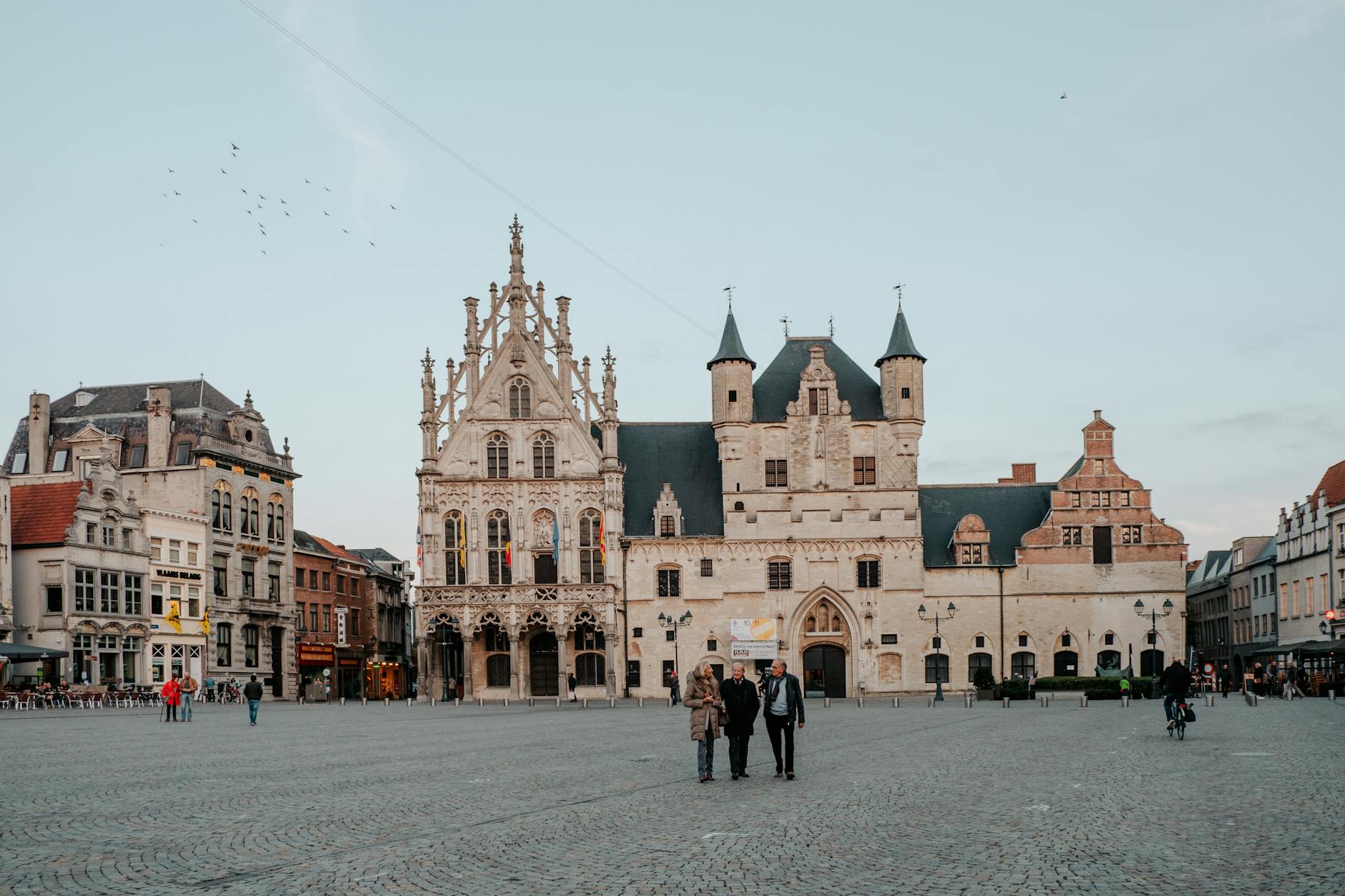
Leuven is the livelier choice: the most extravagant late-Gothic town hall in Belgium, a university that has been there since 1425, and the Oude Markt, a single square lined end to end with bars. Mechelen is the more serious one: Saint Rumbold’s tower, which you can climb, and Kazerne Dossin, the memorial museum in the barracks from which 25,000 Jews and Roma were deported. It is an extraordinary museum and a heavy one. Pick according to the mood you want the day to have.
Day 4 — Move to Ghent
Check out, take a train to Gent-Sint-Pieters — about thirty minutes, two or more an hour — and leave your bag either at the station or at the hotel, which will hold it even if the room is not ready. Sint-Pieters is a twenty-minute walk or a short tram ride from the centre; the tram is signed and simple.
Ghent is a city rather than a museum piece, which is the thing that separates it from Bruges. It has 70,000 students, a genuine bar scene, street food, and a medieval core that people live in. The essentials: Saint Bavo’s Cathedral for the Ghent Altarpiece — Van Eyck’s Adoration of the Mystic Lamb, restored, in a purpose-built visitor centre with timed entry — then the Gravensteen castle, the Patershol lanes, and the Graslei and Korenlei quays.
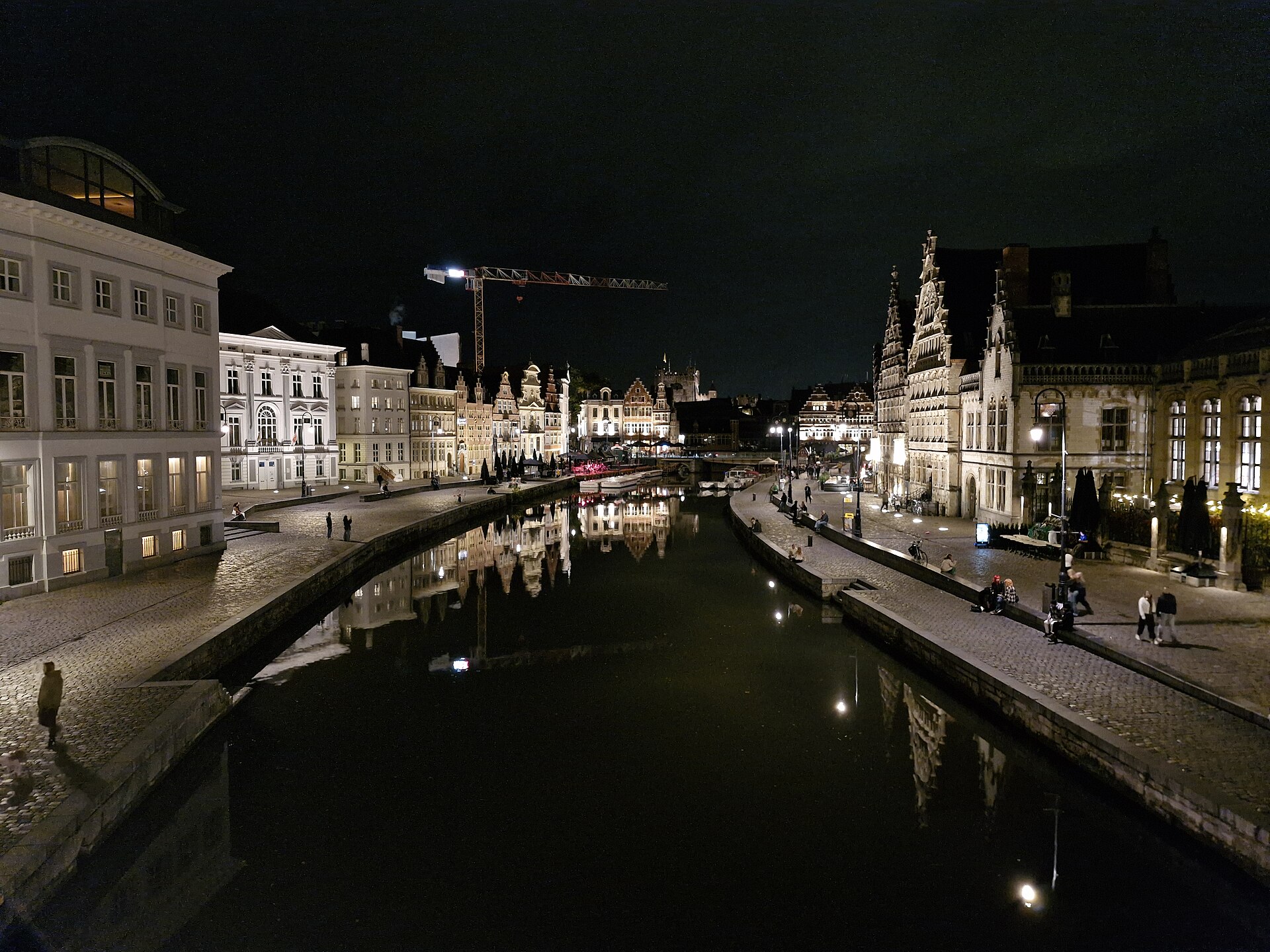
Save the quays for last. At dusk the guild houses are lit and reflected in the Leie and the whole waterfront fills up with people sitting on the stone steps with a beer. This is the single best hour of the week and it is the reason you are sleeping here.
Day 5 — Bruges, Early
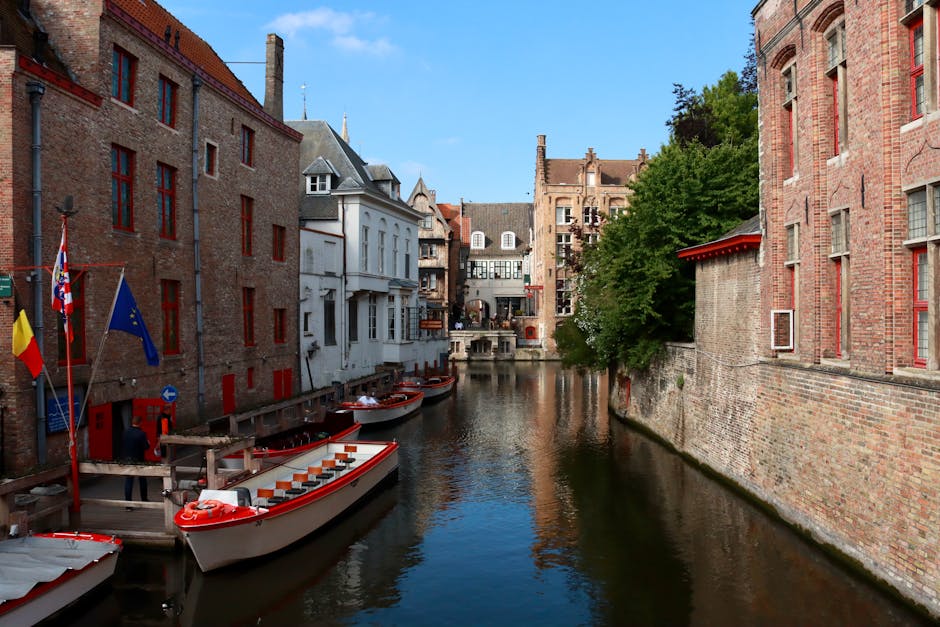
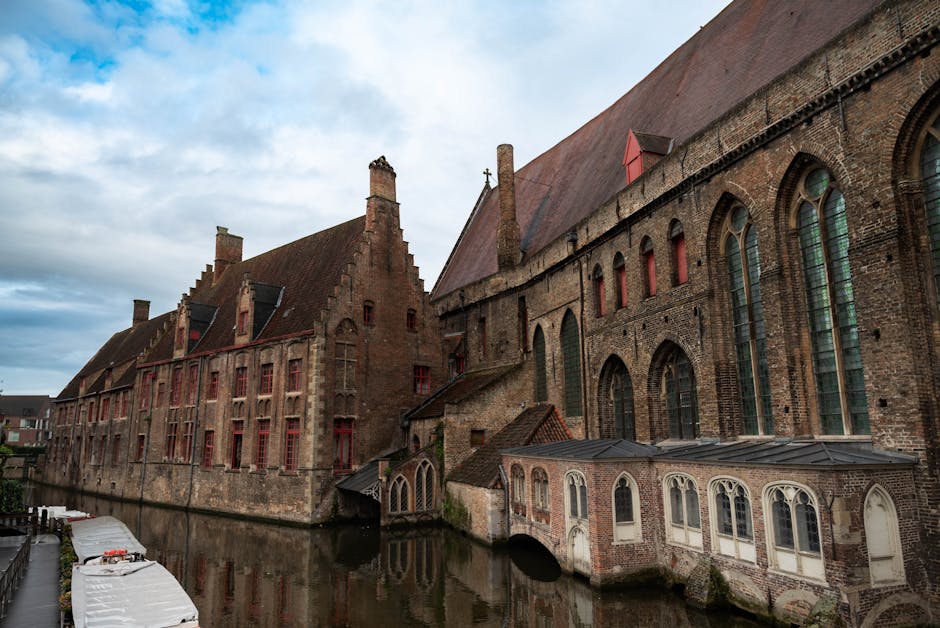
Ghent to Bruges is about half an hour, and being this close is what makes the whole plan work. Take the earliest train you can face — before eight if possible. Bruges before ten in the morning is quiet, cold, and extraordinary; the Markt is empty, the canals are still, and you can walk into the Belfry without a queue.
Do the Belfry climb first (366 steps, and they are not gentle), then the Groeningemuseum for the Flemish Primitives, then the Church of Our Lady for Michelangelo’s Madonna and Child — the only sculpture of his to leave Italy in his lifetime. A canal boat is €12-ish for half an hour and is one of the few obviously touristy things here that is genuinely worth it.
By two in the afternoon the centre is full and the value of staying drops sharply. That is your cue to leave. Our Bruges day trip guide covers the same city from the Brussels end if you are doing the single-base version instead.
Back in Ghent by mid-afternoon, do the thing you skipped yesterday — the Design Museum, the STAM city museum, or simply an hour in a brown café — and have a second evening on the water.
Day 6 — Move to Antwerp
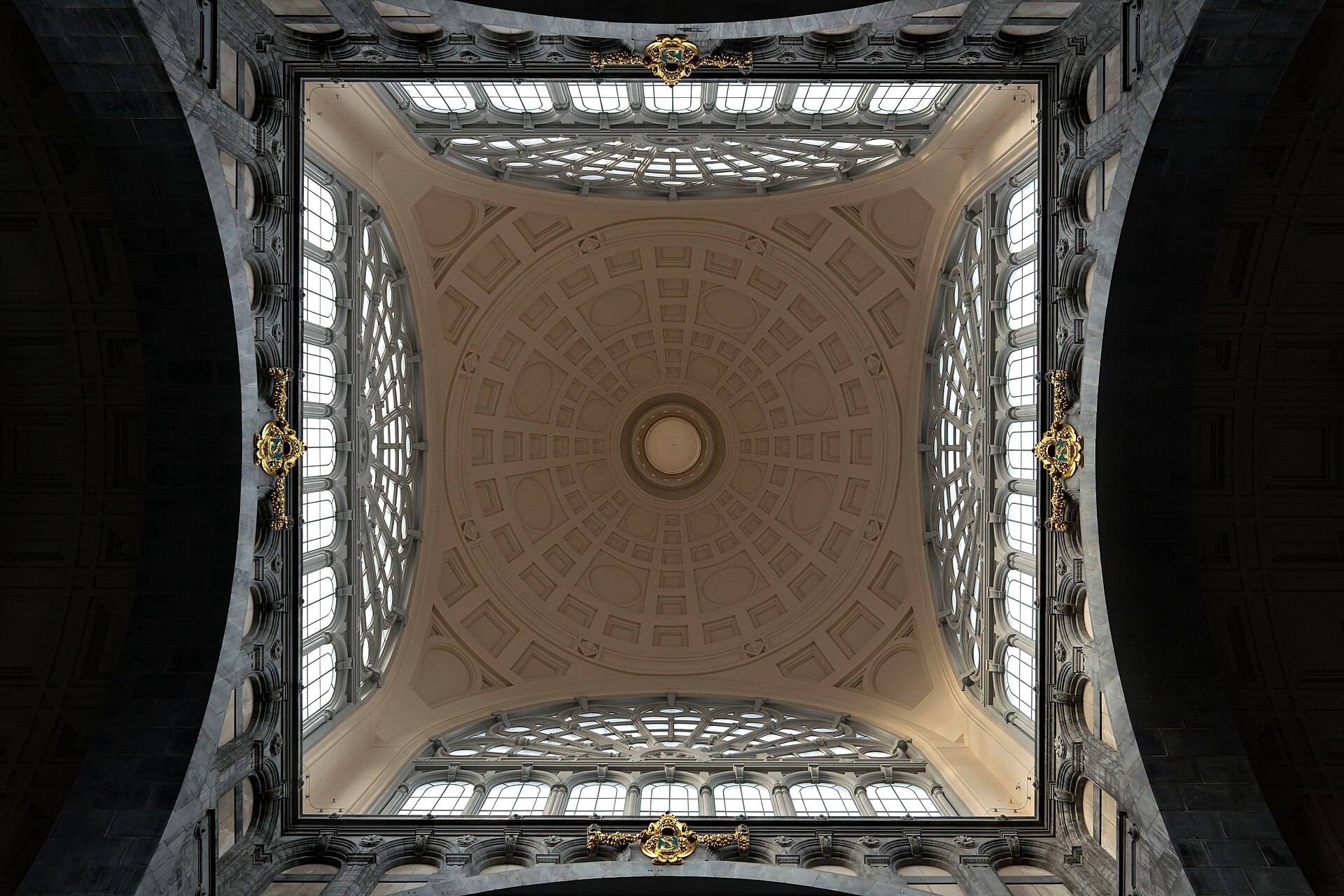
Ghent to Antwerpen-Centraal takes roughly an hour. Arrive and then, before anything else, stand in the main hall and look up. Antwerp Central is one of the great railway stations of the world — a stone-clad dome over the concourse, four levels of platforms stacked below, and an unembarrassed grandeur that the rest of the city lives up to.
Antwerp is the largest and least museum-like city on this itinerary. The Cathedral of Our Lady holds four Rubens altarpieces in the building they were painted for. The Rubenshuis is his own house and studio. MAS, the red sandstone tower by the docks, has a free rooftop with the best view in the city. Het Zuid is the district for galleries, bars and dinner; the fashion quarter around Nationalestraat is where the Antwerp Six came from and is still the best shopping in Belgium.
Do not attempt all of that. Two of the four, plus a long dinner, is the right density for an arrival day.
Day 7 — Antwerp, Then Out
Use the morning for whatever you left. If you want one more thing, make it the MAS rooftop early — it opens before the museum floors and costs nothing.
Departures are easy from here. There are direct trains from Antwerp to Brussels Airport, and Antwerpen-Centraal to Brussels-Midi/Zuid takes under an hour for a Eurostar connection. Allow an hour and a half more than you think for either, check the timetable the night before, and remember that Eurostar check-in closes thirty minutes before departure with no flexibility. If you are flying, our Brussels Airport terminal guide covers how long to allow once you are in the building.
If your flight is late in the day, break the journey in Brussels for a few hours rather than sitting at the airport. The bags go in a locker and you get a last afternoon.
Three Variations
The Wallonia version
Swap day 3 for Namur and the Meuse, and consider an overnight there rather than returning. French-speaking Belgium is quieter, cheaper and greener, and almost no first-time visitor sees any of it. You lose Leuven or Mechelen and gain a river valley, a citadel and a completely different half of the country.
The coast version
From Ghent, Ostend is under an hour. If you are travelling in September or October, swap the second Ghent night for a night on the coast and ride a stretch of the Kusttram, the 67-stop line that runs the entire Belgian seafront. In August the coast is packed and this is a worse idea.
The slower version
Two bases instead of three: four nights in Brussels, three in Ghent, with Bruges and Antwerp both as day trips from Ghent. One move, less packing, and you still get the Ghent evenings. This is the version to pick if you are travelling with children or anyone who finds hotel changes tiring.
What This Week Leaves Out
Being honest about the gaps matters more than pretending a week is comprehensive.
- The Ardennes. Not reachable in this shape. The southeast needs its own two or three days and really needs a car.
- Flanders Fields. Ypres is a long day from anywhere on this route and deserves better than being squeezed in. If the First World War is a priority, restructure the week around it.
- The coast in summer. Included only as a shoulder-season variation, because in July and August it eats a day for a crowded beach.
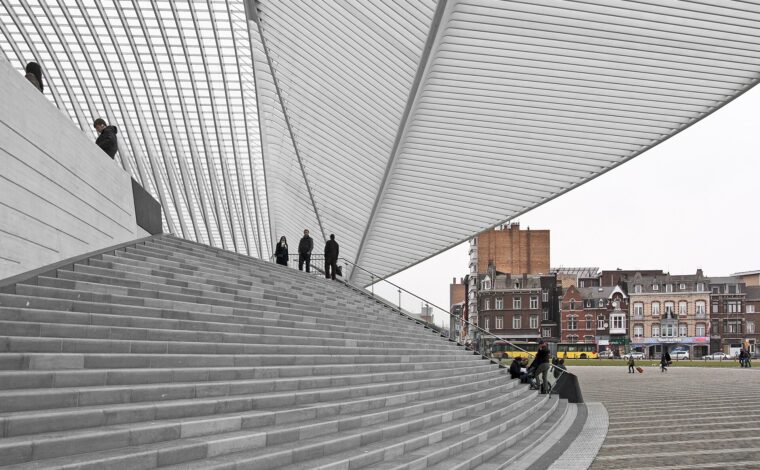
- Liège and the east. Genuinely interesting, genuinely off this axis.
Our Belgium travel guide covers all of these regions and how to fit them into a longer trip.
What the Week Costs
| Item | Per person, 7 days |
|---|---|
| Rail (about 6 singles plus airport transfers) | Priced by distance: under about €21 a single, plus the airport supplement on the transfers, and less at weekends |
| Accommodation, mid-range | €700–1,000 for the week |
| Accommodation, hostel dorms | €140–250 |
| Museums and attractions | €90–130 |
| Food and drink, mid-range | €350–500 |
| Local transport | €25–40 |
| Realistic mid-range total | €1,250–1,750 |
| Realistic budget total | €600–850 |
Common Mistakes
- Booking Bruges as the base. It is the most expensive bed in Belgium and the worst-connected of the four cities. Sleep in Ghent and visit Bruges early.
- Arriving in Bruges at eleven. The single most avoidable mistake of the week.
- Planning around the old Rail Pass. It was withdrawn in October 2025, and guides that still recommend it are out of date.
- Waiting for hotel check-in on move days. Drop the bag, start walking, come back at five.
- Treating Antwerp as a half-day. It is the biggest city on the route and the one most people under-allocate.
- Eating on the main square. Anywhere in Belgium. One street back is cheaper and better.
A week is our recommendation rather than a rule, and if you are still deciding how long to book it is worth seeing what the alternatives cover. Our guide to how many days you need in Belgium compares two, three, five, ten and fourteen days against this seven-day plan, with a region-by-region table of minimum and comfortable stays.
Day five here is deliberately a raid rather than a stay, on the grounds that Ghent is a better and cheaper place to sleep. If you would rather flip that and give Bruges the overnight, our Bruges travel guide covers the two-day version of the city, including which parts of the ring are quietest and what the Musea Brugge Card actually pays back.
Days four and five above lean hard on Ghent without saying much about the city itself. If you want the detail — the Van Eyck altarpiece and its timed-entry booking, the Gravensteen, the Patershol, and which part of the centre to sleep in — our Ghent travel guide covers all of it.
Days six and seven above land you in Antwerp with a deliberately loose plan, on the grounds that it is the city on this route most people under-allocate. For the detail — what the cathedral costs, which museums close on Mondays, where the fashion quarter actually is, and the free walk under the river — see our Antwerp travel guide.
The shoulder-season variation above swaps a Ghent night for a night by the sea, which is a better idea than it sounds in September and a worse one in August. Our Belgian coast guide sets out where to stay, what the Kusttram day pass costs, and which stops on the 67-stop line are actually worth getting off at.
If you do bend the week east instead, Liège is the city to build it around. It’s an hour from Brussels, it’s at its best from Saturday night to Sunday lunchtime, and Maastricht and Aachen are both short hops across the border. Our Liège city guide lays out a weekend there, from the Prince-Bishops’ Palace to the Sunday market at La Batte.
Related Brussels Guides
- Belgium Travel Guide — the country overview: regions, train fares and how long you need.
- Day Trips from Brussels — the single-base version of this week, route by route.
- 3 Days in Brussels — the capital in more detail than days 1–3 allow.
- Bruges Day Trip from Brussels — the same city, from the other end.
- Ghent Day Trip from Brussels — for anyone doing Ghent without the overnight.
- Antwerp Day Trip from Brussels — Antwerp compressed into a single day.
- Luggage Storage in Brussels — essential on both move days.
- Belgian Beer Guide — what to drink in each of these cities.
Useful Resources
- belgiantrain.be — timetables, current fares and discounts. Check here rather than trusting older published fares.
- visit.gent.be — Ghent’s tourist board, including Saint Bavo’s timed-entry booking.
- visitbruges.be — opening hours for the Belfry, Groeningemuseum and Church of Our Lady.
- visitantwerpen.be — Antwerp events, museum hours and the MAS.
- delijn.be — trams in Ghent and Antwerp, and the Kusttram for the coast variation.
Frequently Asked Questions
Is 7 days enough for Belgium?
Seven days is the sweet spot for a first trip. It covers Brussels properly, the three major Flemish cities with time to see them outside peak hours, and one smaller town, without ever spending more than an hour on a train. What it does not cover is the Ardennes, Flanders Fields or the coast — those need either a longer trip or a different structure.
Should I stay in one city or move around Belgium?
Moving twice is better than staying put, and better than moving every night. Three bases over seven nights — Brussels, Ghent, Antwerp — gives you evenings in the cities that are best after dark, cuts about six hours of return train travel out of the week, and still means only two packing days. Staying in Brussels throughout is cheaper and simpler; you just see everything between eleven and five.
Do I need to book Belgian trains in advance?
No. Domestic services have no reservations, no seat allocation and no advance-purchase pricing — you buy a ticket and board the next train. That is what makes an itinerary like this flexible. International services, including Eurostar, are the opposite and must be booked well ahead.
Is the Belgian Rail Pass still sold?
No. SNCB withdrew the Rail Pass and its other ten-journey cards in October 2025. This itinerary uses roughly six single journeys plus airport transfers, each priced by distance, with 30% off at weekends for adults aged 26–64 and 40% off at any time for under-26s and over-65s. Price your specific journeys before buying; Belgian Railways restructured its fares in late 2025 and older comparisons are out of date.
Where should I stay to visit Bruges without paying Bruges prices?
Ghent. It is half an hour from Bruges by direct train, has far more hotel and hostel stock, is cheaper across the board, and is a better city to spend an evening in. Take an early train to Bruges, do the Belfry and the museums before the crowds, and be back in Ghent by mid-afternoon.
What is the best time of year for this itinerary?
April to June or September to October. You get long enough evenings for the Ghent quays, mild weather, and manageable crowds in Bruges. July and August work but Bruges is genuinely difficult in the middle of the day. December adds Christmas markets in every city on this route but the days are dark by half past four, which costs you the best hour in Ghent.
Can I do this itinerary without a car?
Yes — it is designed that way. Every journey on it is a scheduled domestic train, most of them twice an hour, and every city centre involved is walkable from its station or a short tram ride away. A car would be a liability: Belgian city-centre parking is expensive and the historic cores are largely pedestrianised.
Photo Credits
-
The Graslei in Ghent at night: Gent – night view of Graslei 2025 by Daniuu, CC BY-SA 4.0, via Wikimedia Commons.
-
The dome of Antwerpen-Centraal: Antwerpen-Centraal railway station main hall ceiling by Trougnouf, CC BY 4.0, via Wikimedia Commons.
Final Thoughts
The version of this week that most people book is four day trips from one hotel, and it is not a bad holiday. But it produces a strangely uniform set of memories, because you are always arriving in the middle of the day and leaving before dinner. Two hotel changes buys you the early mornings in Bruges and the late evenings in Ghent, which are the two hours that everyone who loves Belgium is actually talking about.
Book the Flemish hotels first, take the earliest train you can bear on the Bruges morning, and leave one afternoon in the week with nothing in it. Belgium is small enough that you can afford the slack, and a wet Tuesday in a brown café with a Westmalle and a plate of stoofvlees will end up being one of the things you remember.