Here’s the thing most comparisons miss: in Belgium, the base you choose barely changes what you can reach. Brussels, Bruges, Ghent and Antwerp all sit on the same railway spine, Ghent and Bruges are half an hour apart, and nothing in Flanders is much more than an hour from anything else. What it changes is the evening, meaning where you walk out after dinner, what the streets feel like at ten o’clock, and what you pay for the room. So the best city to stay in Belgium depends less on geography than on the kind of trip you’re having, and choosing well is mostly a matter of being honest about that.
This guide compares the four obvious bases on transport, hotel prices, atmosphere and who each one suits, then gives quick recommendations for the most common trips. It also covers two smaller cities that make surprisingly good bases. Train times and prices were checked in September 2026; hotel prices move constantly, so the comparisons here are relative rather than exact.
The Four Bases at a Glance
| Brussels | Bruges | Ghent | Antwerp | |
|---|---|---|---|---|
| To Brussels | — | About 1 hour | 30–35 min | 35–55 min |
| To Bruges | About 1 hour | — | About 30 min | 1h–1h15 |
| To Ghent | 30–35 min | About 30 min | — | About 1 hour |
| To Antwerp | 35–55 min | 1h–1h15 | About 1 hour | — |
| Hotel prices | Widest range; often cheaper at weekends | Highest, especially at weekends | Noticeably below Bruges | Mid-range |
| Evenings | Big-city and varied | Quiet and magical | Lively, student city | Stylish bars and food |
| Best for | First trips, Wallonia, flights and Eurostar | Couples, short stays, the coast | The best all-round base for Flanders | Shopping, fashion, art, onward to the Netherlands |
The Short Answer
- First visit, three to five nights, one base: Ghent if your trip is mostly Flanders; Brussels if you also want Namur, Dinant or Liège, or you’re flying or arriving by Eurostar with little time to spare.
- A romantic weekend: Bruges, inside the ring. Accept the price, because the evenings are what you’re paying for.
- A week: split it. Three nights in Brussels and three or four in Ghent covers both halves of the country without long day trips.
- On a budget: Brussels or Ghent, both of which have far more affordable beds than Bruges.
Brussels: The Hub
Brussels is the base people underrate, then find they used most. It has three main stations with trains to everywhere, and Brussels-Midi handles Eurostar and the other international trains. Brussels Airport is about twenty minutes away by train, and the Flibco coach from Charleroi Airport stops right beside Midi. It has by far the largest and most varied stock of hotels in the country, from hostels to palace hotels. Because so many of those rooms are built for EU and business travel, Brussels is the one Belgian city where hotels often get cheaper at weekends.
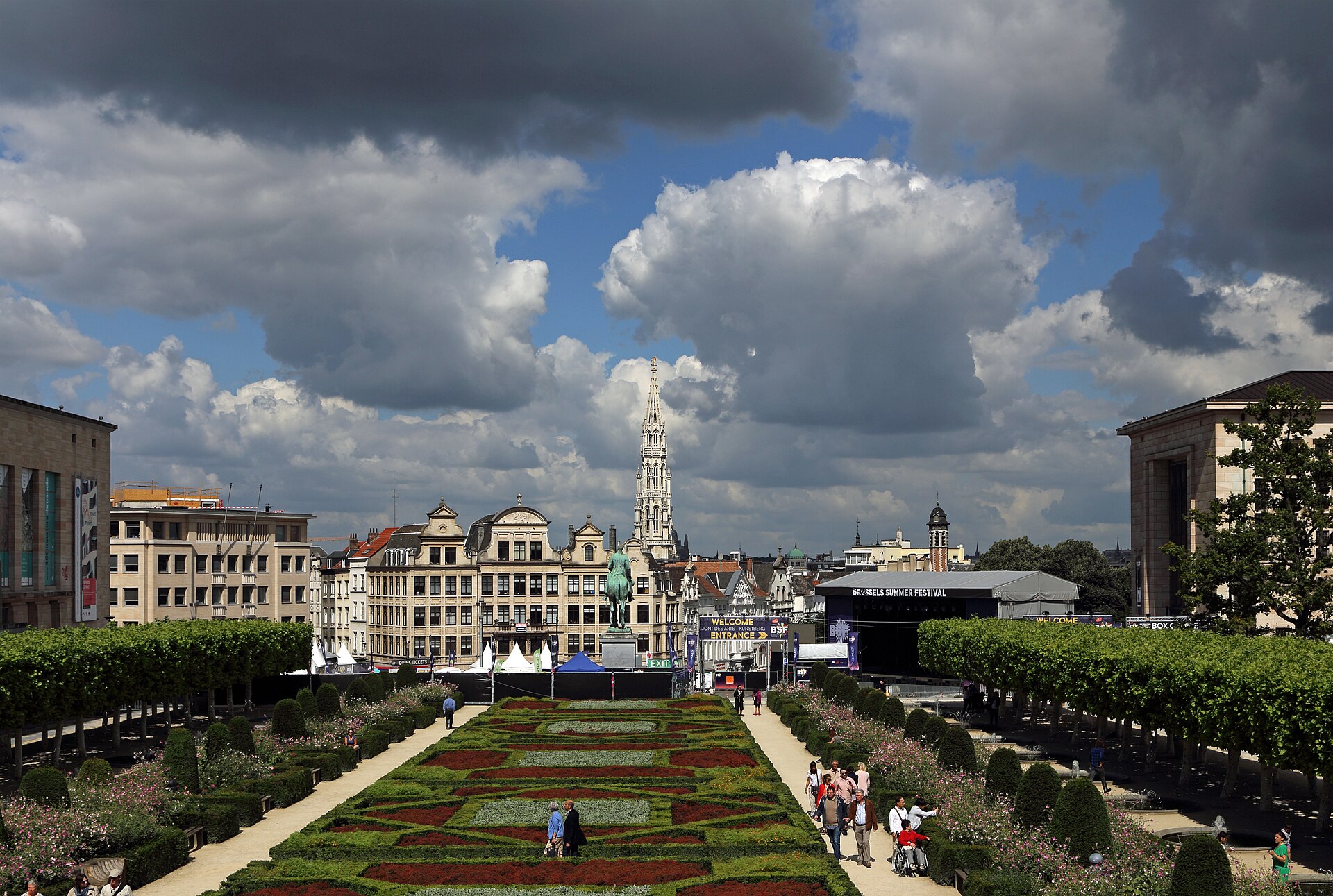
It’s also the only realistic base for combining Flanders with Wallonia. Namur and Liège are an hour south and east, and Dinant is an hour and a half. And the city itself is more than a transport hub. It has the Magritte Museum and the Old Masters, Art Nouveau houses, lambic breweries, and a food and bar scene that more than matches the smaller cities.
The downsides are real but manageable. Brussels is less picturesque than Bruges or Ghent, the areas around Midi and Nord stations are scruffy and not where you want to be after dark, and the traffic is heavy. Choose the neighbourhood carefully. First-timers should look at the streets around the Grand-Place, Sainte-Catherine and the Sablon. For a more local feel, try Ixelles or Saint-Gilles. Our where to stay in Brussels guide and the more detailed best areas to stay compare them. If you want to be steps from the square, see our hotels near the Grand-Place.
Choose Brussels if it’s your first trip and you want the most options, you’re including Wallonia, you have an early flight or a Eurostar to catch, or you’re travelling as a family and need space and apartments.
Bruges: The Beauty
Nothing else in Belgium looks like Bruges, and the reason to sleep there is simple: the city you see from a day trip, between eleven and four, is not the real Bruges. The one you get from a hotel room is the Rozenhoedkaai at eight in the morning with nobody on the bridge, the floodlit Markt after dinner, and the quiet eastern quarters where the canal barely moves. For a romantic weekend, it’s the obvious choice.
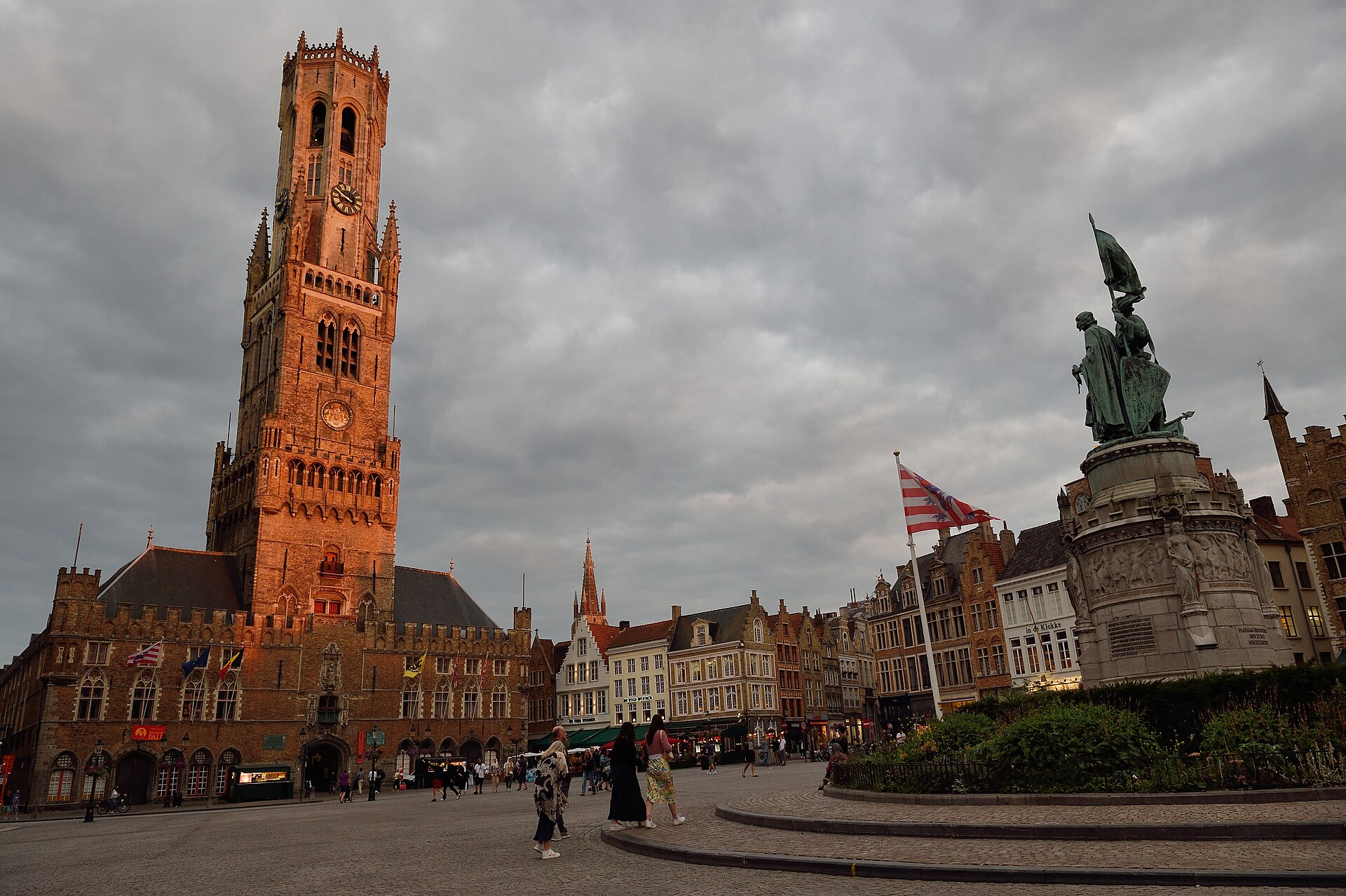
The honest trade-offs: Bruges is the most expensive of the four, especially on Friday and Saturday nights, and the centre is crowded from mid-morning to late afternoon. It’s small, so two days covers it well and a third can feel long. It sits at the western edge of the country, an hour from Brussels and an hour or more from Antwerp. The station is about twenty minutes’ walk from the Markt, and evenings are quieter than in Ghent or Antwerp, which is lovely or limiting depending on what you’re after. On the plus side, the coast is half an hour away. Our Bruges travel guide covers where to stay inside the ring and what the museum card is worth.
Choose Bruges if it’s a short stay, a couple’s trip, or you want to combine a city with the Belgian coast. Don’t choose it as a base for a week of travel around the country.
Ghent: The All-Rounder
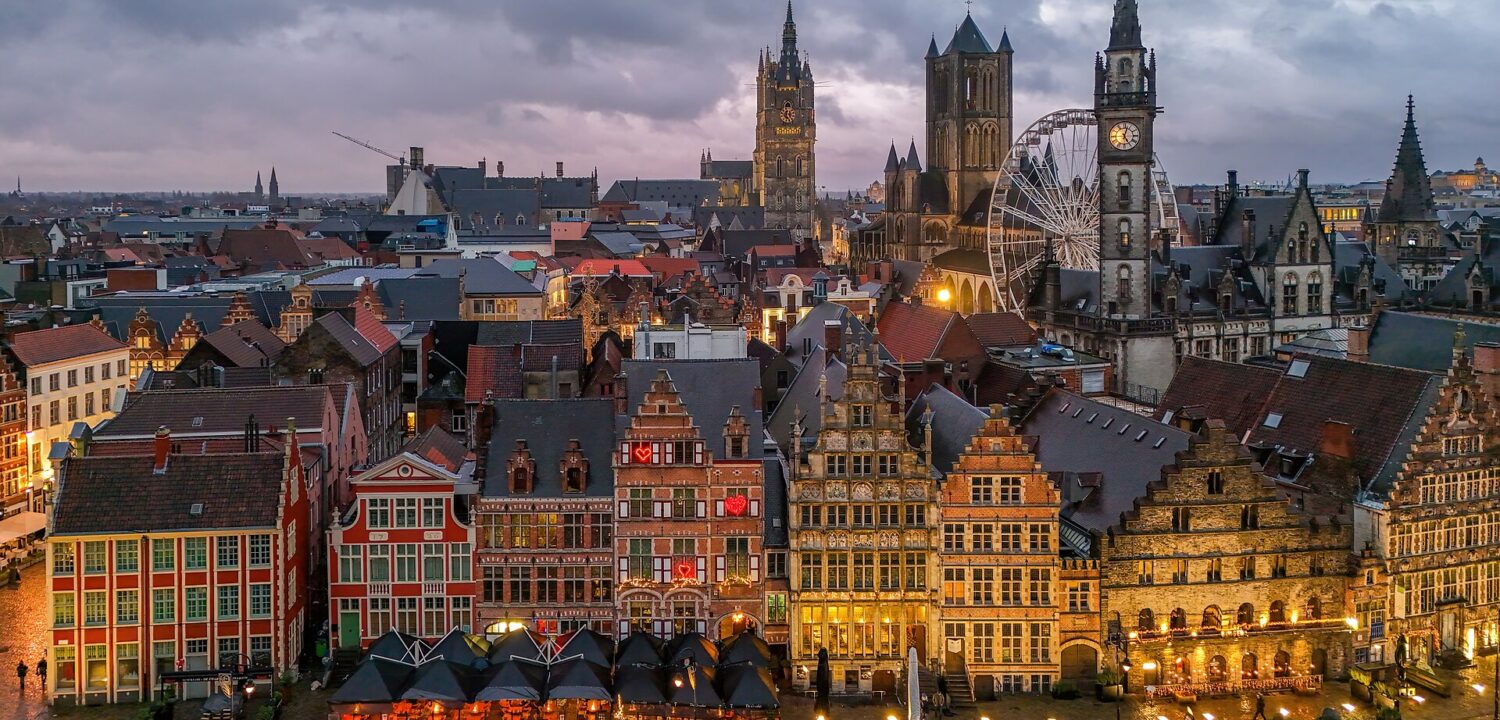
If we had to pick one base for most people, it would be Ghent. Its medieval core, the Graslei and Korenlei, the Gravensteen and the three towers of Saint Bavo’s, Saint Nicholas’ and the Belfry, is as beautiful in places as anything in Bruges. But it’s also a working city with around 70,000 students, which means real bars, cheap and excellent food, a famously strong vegetarian scene and evenings with some life in them. It’s noticeably cheaper than Bruges for the same standard of room.
Geography helps too. Bruges is half an hour away, so you can be on the Markt before the coaches arrive. Brussels is half an hour in the other direction, and Antwerp about an hour. The one irritation is that Gent-Sint-Pieters station is a twenty-minute walk or a short tram ride from the centre. Our Ghent travel guide covers the neighbourhoods and the timed tickets for the Ghent Altarpiece.
Choose Ghent if you want one base for Flanders, you like a city that isn’t performing for visitors, or you want Bruges without paying Bruges prices to sleep there.
Antwerp: The Stylish One
Antwerp is Belgium’s second city and the one that feels most like a metropolis. It has the fashion of the Antwerp Six and the boutiques around the Meir, the diamond quarter, the port and the MAS, the cathedral’s four Rubens altarpieces and a restaurant and bar scene that rivals Brussels. Antwerpen-Centraal, arguably Europe’s most beautiful station, is a ten-minute walk from the centre. Antwerp is also the natural jumping-off point if you’re continuing north to Rotterdam or Amsterdam.
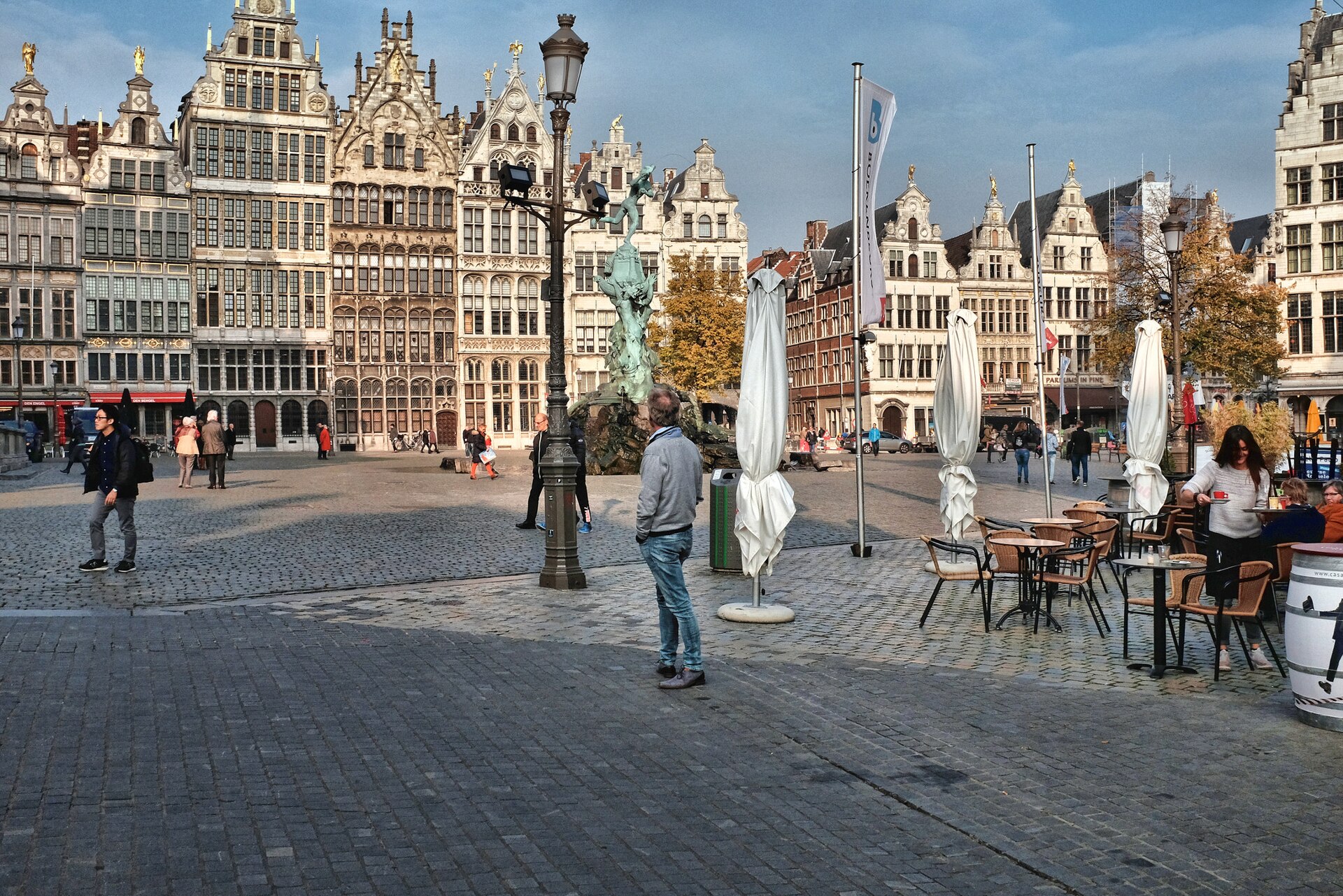
The trade-offs: it’s the least “medieval postcard” of the four, and it’s the furthest from Bruges, at an hour or more. One sight catches people out, too. The Rubens House itself is closed for restoration, though the Rubens Experience and garden are open. Our Antwerp travel guide has the details.
Choose Antwerp if shopping, fashion, food and nightlife matter more to you than cobbled lanes, or if your trip carries on into the Netherlands.
Two Bases You Haven’t Considered
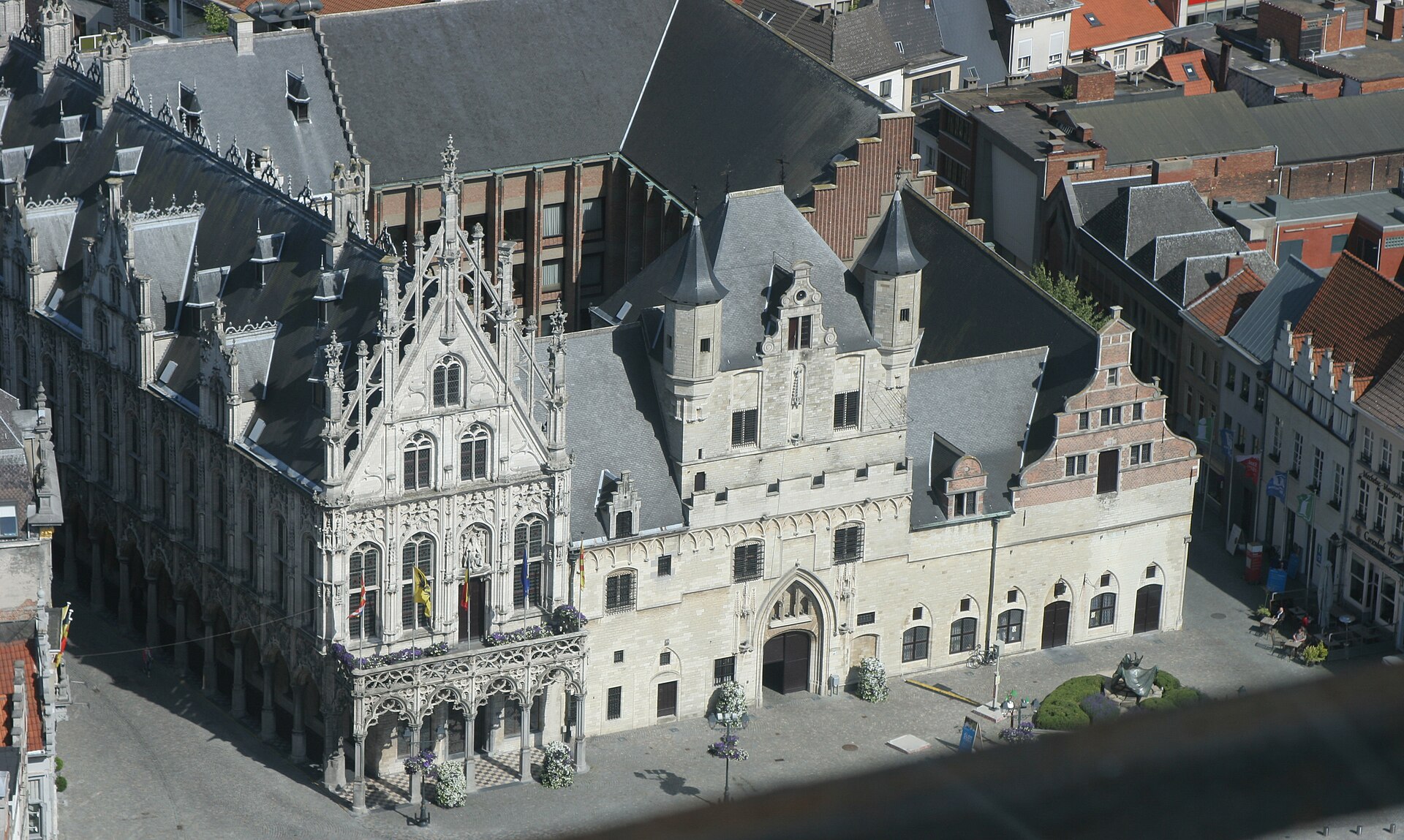
Mechelen sits halfway between Brussels and Antwerp, twenty to twenty-five minutes from Brussels, with an hourly direct train from Brussels Airport. It’s a handsome, compact old town under the tower of St Rumbold’s, with far fewer visitors and lower hotel prices than its big neighbours. For a quiet, central, good-value base it’s a clever pick. Our Mechelen guide shows what’s there.
Leuven is a university town about 25 minutes from Brussels, with direct trains to the airport and one of the liveliest bar squares in the country, the Oude Markt. It’s a good choice for early flights or a younger crowd. See our Leuven guide.
If Wallonia is your focus, look south instead. Namur is the base for the Meuse valley and Dinant, and Liège suits a weekend in the east.
Best Base by Type of Trip
| Your trip | Best base | Why |
|---|---|---|
| First visit, 3–4 days | Brussels or Ghent | Most options, shortest trains, sensible prices |
| One week, two bases | Brussels, then Ghent | Both halves of the country, no long day trips |
| Romantic weekend | Bruges | The evenings and early mornings |
| Family holiday | Brussels | Apartments, space, attractions, easy airport |
| Budget trip | Brussels or Ghent | Hostels and cheaper hotels; weekend deals in Brussels |
| Nightlife | Ghent or Antwerp | Student bars in Ghent, stylish ones in Antwerp |
| Shopping and fashion | Antwerp | The Meir, the fashion district, designer boutiques |
| Art | Brussels | Magritte and the Old Masters, with Ghent and Bruges close by |
| Arriving by Eurostar | Brussels, or straight on | Midi is the terminal; Ghent or Bruges are under an hour further |
| Early flight from Brussels Airport | Brussels, Mechelen or Leuven | All three have direct trains to the airport |
| Beach days | Bruges | Half an hour from the coast |
| The Ardennes and the Meuse | Brussels or Namur | Direct trains south; Namur is closer |
For families, our guides to family hotels and apartments in Brussels go into more detail. Budget travellers should start with our budget hotels guide. If you’re arriving by Eurostar, it has sold an “Any Belgian Station” add-on that takes you on to Bruges, Ghent or Antwerp on the same day. Our Eurostar guide explains how it works.
Should You Switch Bases?
Moving hotels costs you roughly half a day, between checking out, carrying bags and checking in again. With train times this short, one base works well for up to five nights. Beyond that, two bases start to pay off, because they cut out the longest return trips and let you see a second city at night. What doesn’t work is four bases in seven days. It sounds efficient and feels like a week spent packing. If you do move, leave the big bags in a station locker on the travel day; our luggage storage guide covers the options. For how long to give each city, see how many days in Belgium and our 7-day itinerary.
Booking Tips
- Book Bruges early for weekends. The good rooms inside the ring go first, and Saturday nights carry a real premium.
- Look for weekend deals in Brussels. Business hotels in the upper town and the European Quarter often drop their rates on Friday and Saturday nights.
- Watch the event calendar. Big EU summits, trade fairs and major festivals can push Brussels prices up, and Ghent fills up during its summer festival.
- Check what’s included. Most Belgian cities add a nightly tourist tax on top of the room rate, so compare the total rather than the headline price.
- Stay near a station if you’ll travel a lot. In Ghent and Bruges especially, a hotel close to the station saves time on day-trip mornings.
More advice on timing and rates is in our hotel booking tips.
Related Brussels Guides
- Where to Stay in Brussels
- Bruges Travel Guide
- Ghent Travel Guide
- Antwerp Travel Guide
- Belgium Travel Guide
- Belgium by Train
- Best Hotels in Brussels City Centre
Useful Resources
- visit.brussels: the Brussels tourist board, with events that affect hotel prices.
- visitbruges.be: Bruges events and accommodation listings.
- visit.gent.be: Ghent’s tourist office, including the festival dates.
- belgiantrain.be: live train times between the four cities.
Frequently Asked Questions
What is the best city to stay in Belgium?
For most first-time visitors, Ghent or Brussels. Ghent is the best all-round base for Flanders, beautiful, lively and half an hour from both Bruges and Brussels. Brussels is best if you’re also visiting Wallonia or need easy access to the airport or Eurostar. Bruges is the choice for a short romantic stay.
Is it better to stay in Bruges or Ghent?
For a night or two of pure atmosphere, Bruges. For anything longer, or if you want nightlife, better value and easier travel to the rest of the country, Ghent. They’re only half an hour apart, so staying in Ghent doesn’t cost you Bruges.
Should I stay in Brussels or Bruges?
Brussels if you want a practical base for day trips, a wider choice of hotels and access to Wallonia. Bruges if the trip is mainly about Bruges itself and you want its evenings. Many people do both: a few nights in Brussels, then one or two in Bruges.
Can you visit Bruges, Ghent and Antwerp from Brussels?
Yes. Ghent is 30–35 minutes away by train, Antwerp 35–55 minutes and Bruges about an hour, all with frequent direct services. Our Belgium by train guide explains the fares and discounts.
Is Antwerp a good base for exploring Belgium?
It’s good for Antwerp itself, for Brussels and Mechelen, and for continuing to the Netherlands. It’s less convenient for Bruges and the coast, which are an hour or more away, so it’s better suited to a city-focused trip than a grand tour.
Where should I stay in Belgium for one week?
Split the week between two bases. Three nights in Brussels covers the capital and Wallonia, and three or four in Ghent covers Flanders, with Bruges and Antwerp as day trips. It’s the combination with the least time spent on trains.
Photo Credits
-
The Graslei in Ghent at dusk: 1007 Graslei, Clock tower of the Post Office, Church of Saint-Nicolas in Ghent and Belfry of Ghent by Giles Laurent, CC BY-SA 4.0, via Wikimedia Commons.
-
The Mont des Arts in Brussels: Brussels Kunstberg Mont des Arts R01 by Marc Ryckaert, CC BY-SA 4.0, via Wikimedia Commons.
-
The Markt and Belfry in Bruges at dusk: Belfry at Grand Market Square at rainy day dusk, Bruges by Tim Adams, CC BY 3.0, via Wikimedia Commons.
-
The Grote Markt in Antwerp: Grote Markt Antwerpen With Guild Houses by Jules Grandgagnage, CC BY-SA 3.0, via Wikimedia Commons.
-
Mechelen’s town hall and cloth hall: Stadhuis Lakenhalle Mechelen by Robert Piessens, CC BY-SA 3.0, via Wikimedia Commons.
Final Thoughts
There’s no wrong answer among the four, only better and worse fits. Brussels is the practical choice, Bruges the romantic one, Antwerp the stylish one, and Ghent the one that does a bit of everything and is the easiest to recommend without knowing anything else about you. Because the trains are so quick, you’re never trapped by your choice. The day trips all work from any of them, so pick the city you want to come home to each evening.
If you’re still torn, split the difference: start in Brussels, finish in Ghent, and give Bruges a morning before the coaches arrive. You’ll see both halves of the country, spend very little time on trains, and sleep somewhere with life in its streets every night of the trip.