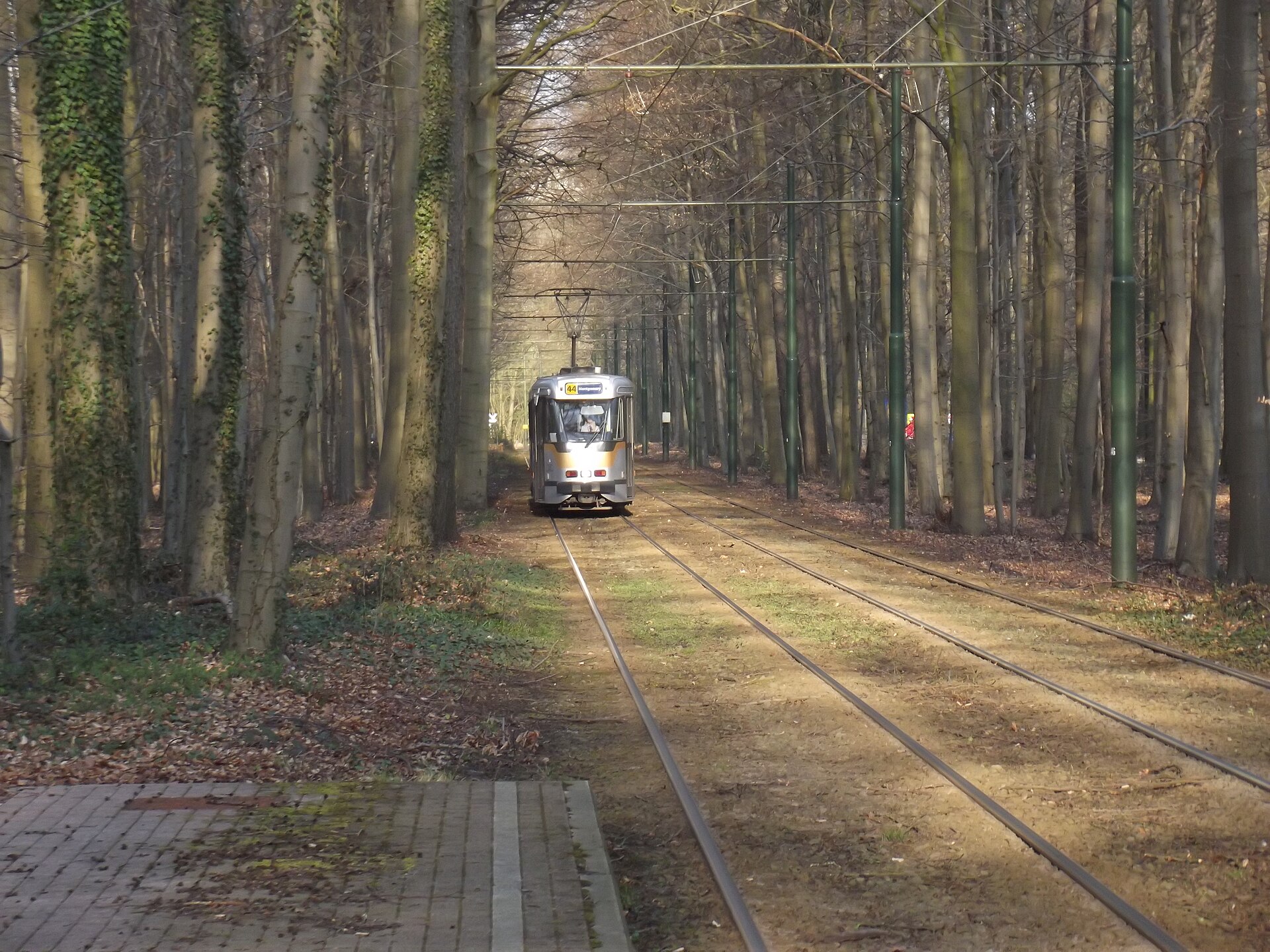
Ride tram 44 out of Montgomery and within a few stops the city starts to thin out. Embassies give way to villas, then the villas give way to trees, and before long the tram is running through a tunnel of beeches so tall and straight they look planted by an architect, which in a sense they were. This is the edge of the Forêt de Soignes, the Sonian Forest Brussels takes for granted: more than 4,000 hectares of beech woodland on the city’s south-eastern doorstep, parts of it UNESCO-listed, and reachable by tram, train or metro for the price of an ordinary ticket.
This guide covers what makes the forest special, the best gateways and how to reach each one by public transport, the walks worth doing, when to go, and how it compares with the Hallerbos, the bluebell forest south of the city. Details were checked in September 2026. The forest itself is free and open all year, but visitor centres and museums at its edges keep their own hours, so check before you plan a day around one.
The Sonian Forest at a Glance
| Where | The south-eastern edge of Brussels, spreading into Flanders and Wallonia |
| Size | More than 4,000 hectares, mostly beech |
| UNESCO | Several forest reserves listed in 2017 as part of Europe’s ancient beech forests |
| By tram | Tram 44 from Montgomery to Tervuren, about 29 minutes, along the forest edge |
| By train | Groenendaal station, 17–19 minutes from Brussels-Schuman, every 30 minutes |
| By metro | Metro 5 to Herrmann-Debroux, then a short walk to Rouge-Cloître |
| Entry | Free, all year |
| Best seasons | Late April and May for fresh green; late October and November for colour |
What Makes the Sonian Forest Special
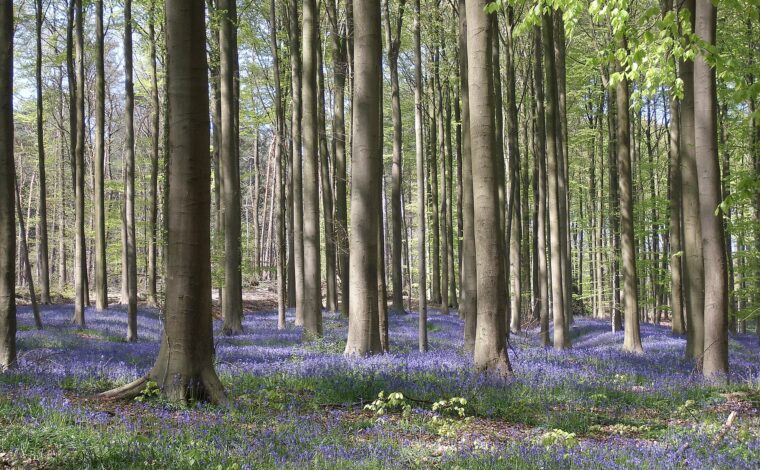
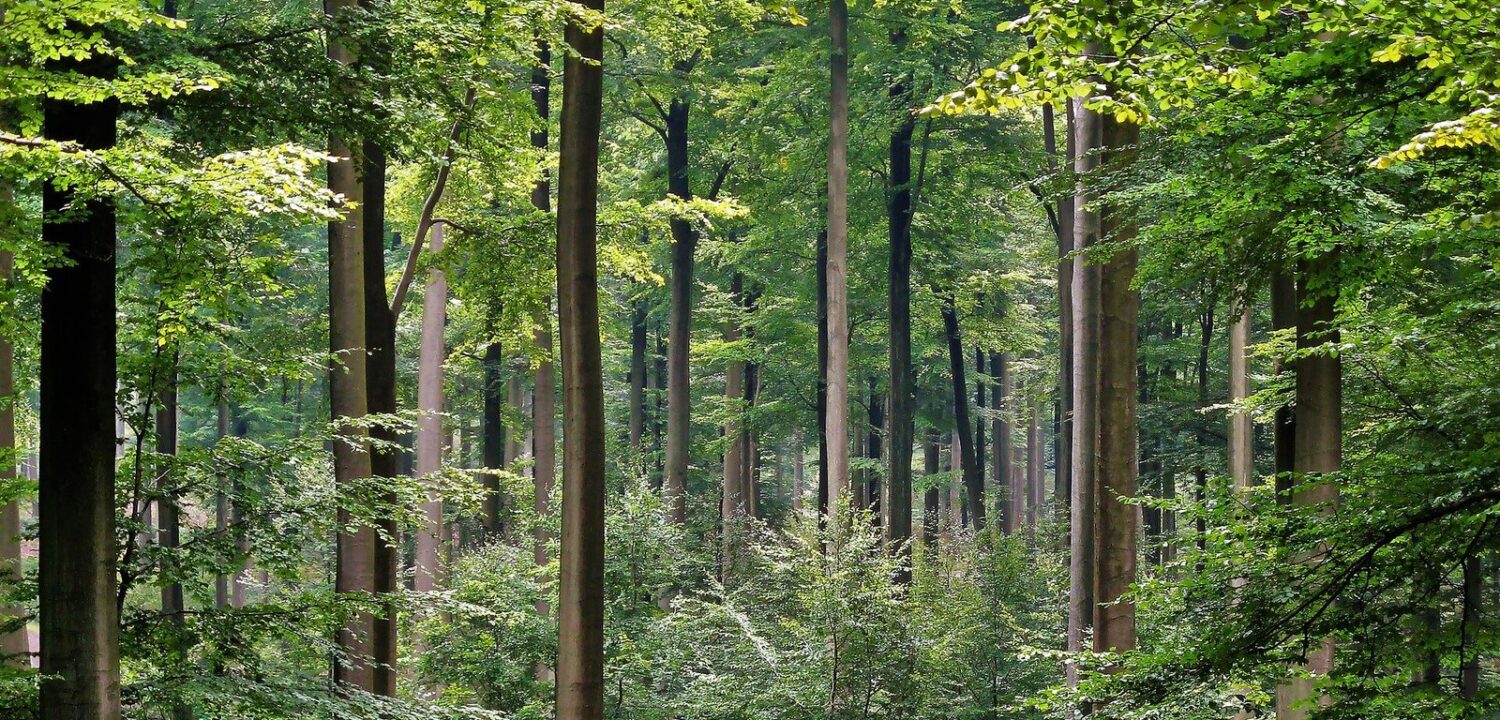
It’s the trees. Much of the forest is a so-called cathedral beech wood: tall, straight, grey-barked beeches standing in even ranks with little undergrowth, their canopy closing high overhead like a vaulted roof. The look is partly deliberate. Under Austrian rule in the late 18th century, the landscape architect Joachim Zinner replanted large areas with beech, and many of the giants you walk under today descend from that planting. On a bright May morning, when the new leaves are lit from above, it’s one of the most beautiful places near any European capital.
In 2017, several of the forest’s strict nature reserves were added to UNESCO’s World Heritage list as part of the Ancient and Primeval Beech Forests of the Carpathians and Other Regions of Europe, a serial listing that runs across more than a dozen countries. Those reserves are left to nature and closed to walkers, but you can walk right up to their edges and see the difference that dead wood and old trees make.
The forest also has a split personality. It’s managed by three regions, Brussels, Flanders and Wallonia, so signage switches between French and Dutch as you walk, and the waymarking changes style at the invisible borders. Beyond the beeches there are ponds dug by medieval monks, the remains of a Neolithic fortified camp near Boitsfort, quiet valleys such as the Vuylbeek, and a nature reserve with the memorable name of the Vallon des Enfants Noyés, the Valley of the Drowned Children, which is valued for its amphibians and dragonflies.
The Best Gateways and How to Reach Them
You can’t really see the Sonian Forest in one visit; it’s too big. Instead, pick a gateway and walk from there. These are the ones that work best without a car.
Tervuren, by Tram 44
This is the classic, and the tram ride is half the pleasure. Take metro 1 or 5 from the centre to Montgomery, then tram 44 to its terminus at Tervuren, about 29 minutes. After Quatre-Bras the tram runs on its own grassy track through the woods, which makes this one of the prettiest tram rides in Europe. At Tervuren you arrive at the edge of the Park van Tervuren, a formal park of canals and lawns laid out around the former royal estate, with the AfricaMuseum at its centre.
From the park, walk south into the forest, or head for the Geographic Arboretum. Founded in 1902, it covers 120 hectares and groups its trees by where they come from, so you can walk from a North American forest into a European one and on into Asia in an afternoon. A standard STIB ticket covers the tram. Our guide to Brussels transport tickets explains the options, and the Brussels museums guide covers the AfricaMuseum if you want to combine the two.
Groenendaal, by Train
Groenendaal is the gateway that puts you deepest into the forest with the least effort. Local trains on the line from Brussels towards Ottignies call at Brussels-Luxembourg and Brussels-Schuman, reach Groenendaal in 17–19 minutes and run every half hour, and the station sits right among the trees. Around it are the remains of Groenendaal priory, founded in the 14th century and home to the mystic Jan van Ruusbroec; the Jan van Ruusbroec Forest Museum; and a systematic arboretum of 13.5 hectares with more than 400 sections of trees from around the world. From the station, paths lead straight into some of the finest beech stands in the forest. Our Belgium by train guide covers tickets.
Rouge-Cloître, by Metro
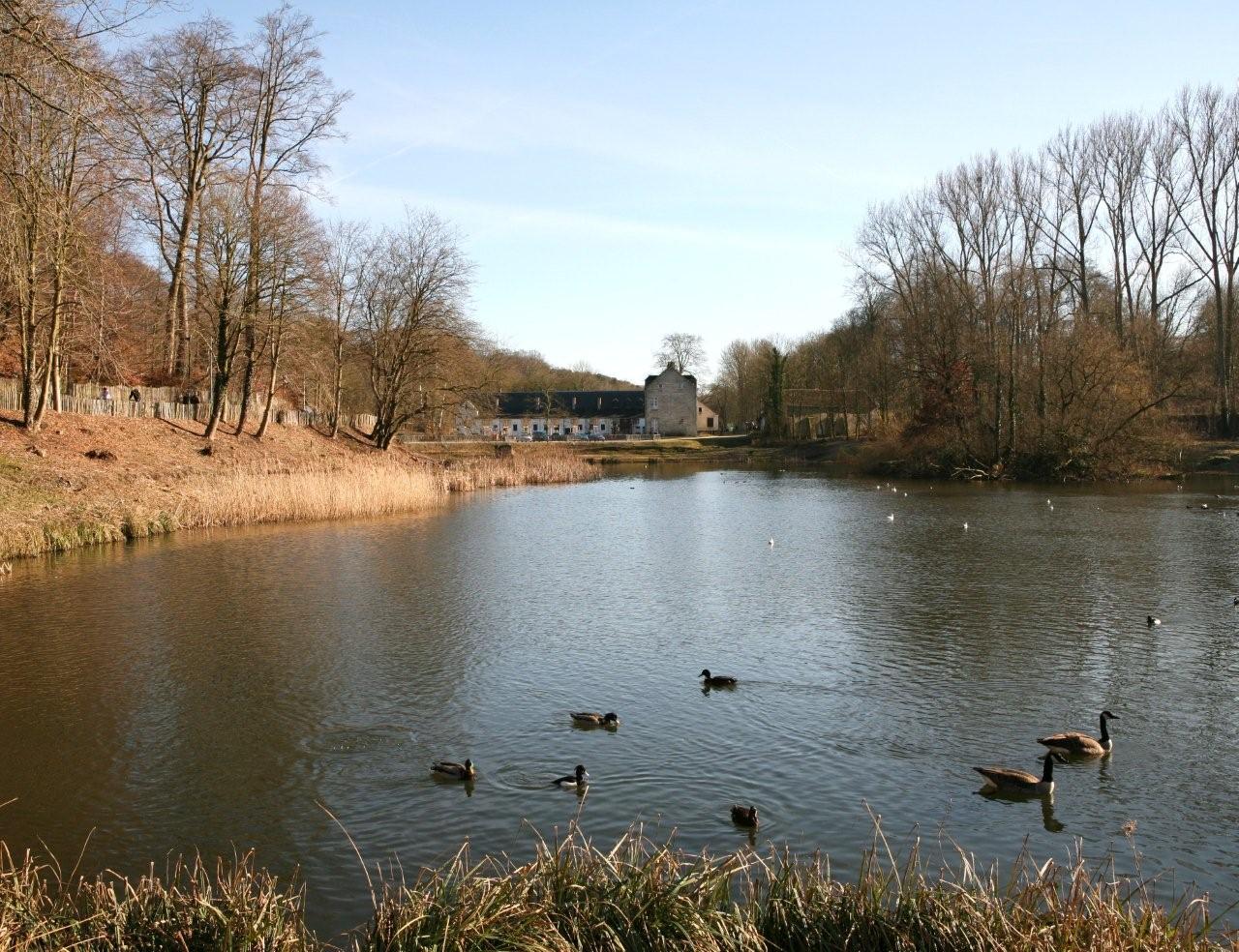
On the Brussels side, the old priory of Rouge-Cloître, the Red Cloister, is the most popular starting point. Take metro 5 to its terminus at Herrmann-Debroux in Auderghem and walk about ten to fifteen minutes. The 14th-century priory buildings stand beside a chain of ponds that the monks dug, and they now house an arts centre with temporary exhibitions. From the ponds, paths climb into the beeches within minutes. It’s the easiest gateway to reach from the city centre, and it gets busy on sunny weekend afternoons.
Bois de la Cambre and the Drohme
The Bois de la Cambre, at the far end of Avenue Louise, was once part of the forest and is now its landscaped city-park extension, with a lake, lawns and cafés. Trams run along Avenue Louise to its entrance. From its southern end, paths continue into the forest proper. Nearby, the old Boitsfort racecourse has been turned into the Drohme, a park with play areas, a golf course and places to eat. It’s the most family-friendly gateway, and a good start for a gentle walk with small children. Our guide to Brussels parks and outdoor activities covers the Bois de la Cambre in more detail.
La Hulpe and the Domaine Solvay
A few stops further down the same railway line as Groenendaal, La Hulpe is the gateway for the Domaine Solvay, a landscaped English-style estate with a château built in 1842 and the Folon Foundation, which holds more than 500 works by the Belgian artist Jean-Michel Folon. It’s a more polished outing than the forest itself, and it combines well with a walk through the woods to Groenendaal and a train home.
Walks Worth Doing
The forest’s paths are well marked, but with three regions and dozens of routes, a map or a walking app is a good idea before you set out. These are four easy ways to structure a visit:
- Tervuren loop, 2–3 hours. Take the tram out, walk through the park, the Geographic Arboretum and the forest edge, then take the tram back. It’s gentle, varied and has good cafés at the start and finish.
- Groenendaal beeches, 1.5–2 hours. Take the train out and loop from the station through the arboretum and into the cathedral beeches, then catch the train back. This is the purest forest experience here.
- Rouge-Cloître ponds and woods, 1–2 hours. Take the metro out, walk around the ponds and climb into the beeches, and return the same way. It’s the easiest from the centre.
- Rouge-Cloître to Groenendaal, half a day. For a proper walk, cross the forest from the metro to the railway and take the train back into town from Groenendaal.
When to Go
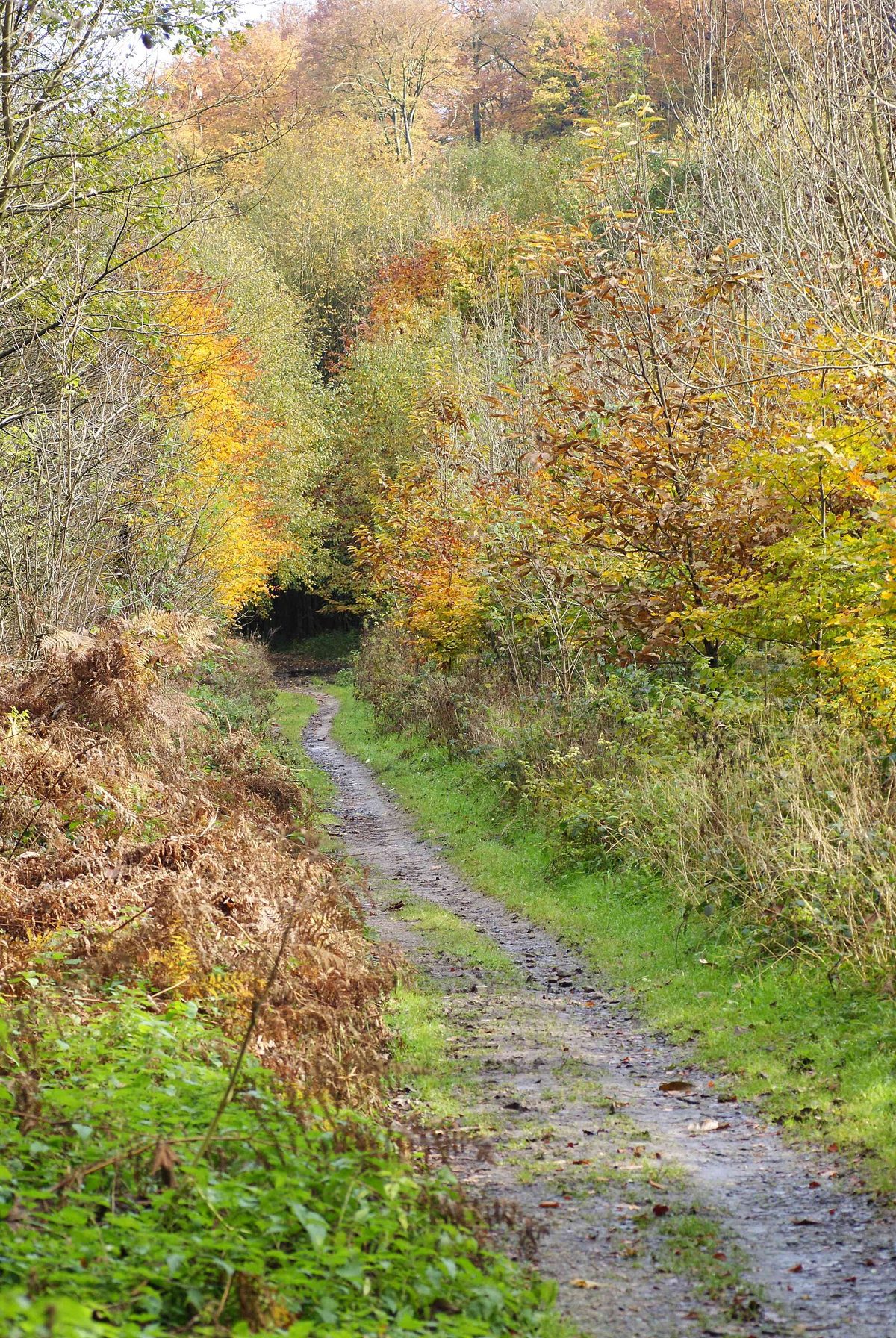
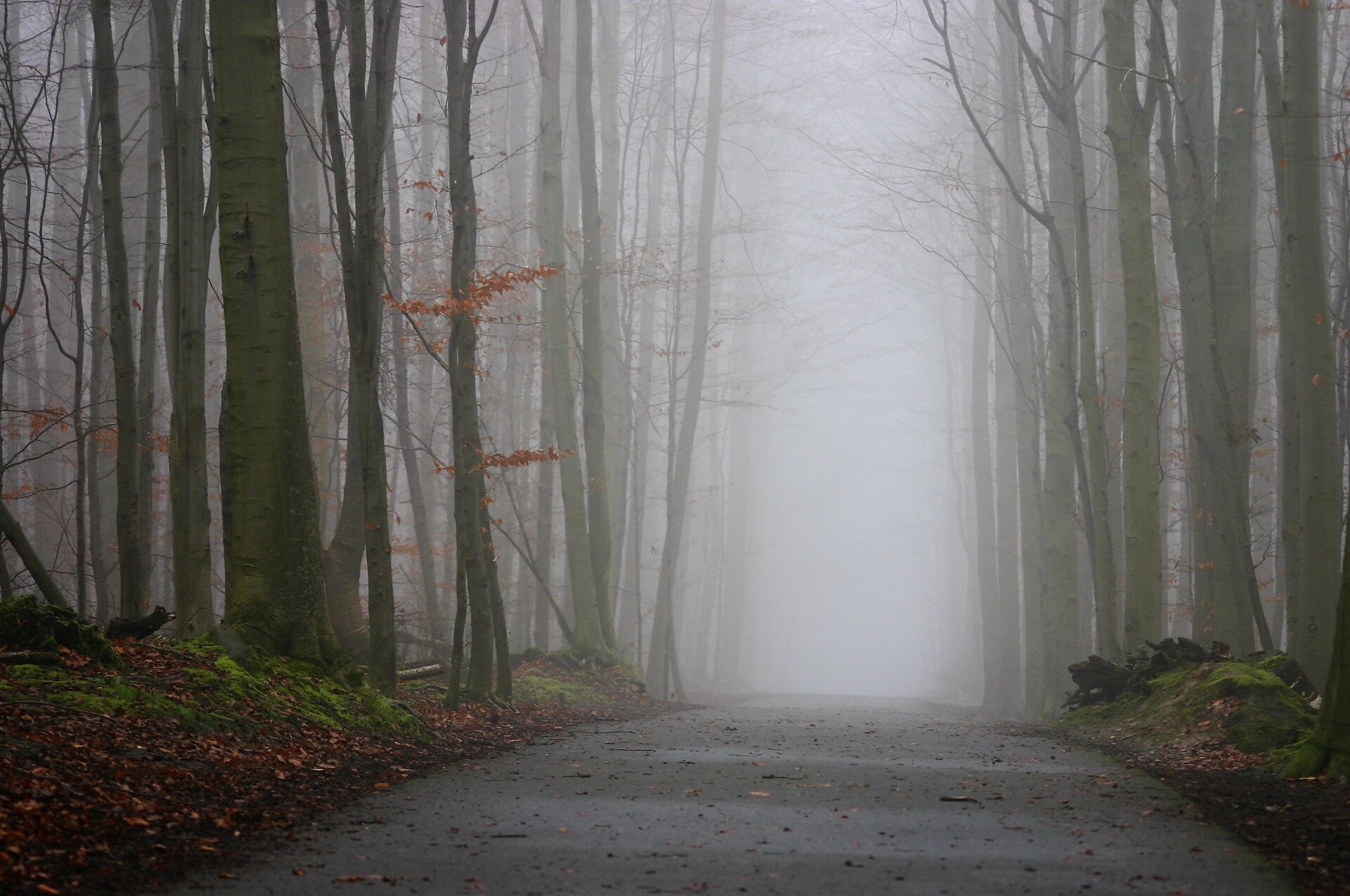
Spring is the loveliest season. From late April through May, the beeches come into leaf in that luminous, almost fluorescent green, and there are patches of bluebells here and there. They’re not on the scale of the Hallerbos, but they’re a welcome surprise under the trees. Summer makes the forest a cool, shady escape on hot city days. Autumn is the other high point, as the beeches turn copper and gold from late October into November, and the forest floor fills with fallen leaves. Winter is bare and quiet, and on misty mornings, when the trunks fade into the fog, strangely beautiful.
For what else is going on in the city in each season, see our Brussels month by month guide. If you’re here in late autumn, our Brussels in November page pairs well with a forest walk.
Practical Tips
- Stay on the paths, and never enter the fenced strict reserves. They’re closed to protect the forest’s most valuable habitats.
- Share the tracks. Some wide forest roads are used by cyclists and horse riders, and mountain bikes have their own designated routes. Keep an ear out on the broad tracks.
- Keep dogs on a lead in the forest, for the sake of the deer and the ground-nesting birds.
- Check for ticks after a summer walk, especially if you’ve brushed through bracken or long grass. They’re common in Belgian forests.
- Bring what you need. There are no cafés deep in the woods. Food and toilets are at the gateways, such as Tervuren, Groenendaal, Rouge-Cloître and the Drohme.
- Wear proper shoes. The paths are firm in summer but muddy for much of the winter.
The Sonian Forest or the Hallerbos?
They’re often confused, and they’re very different outings. The Hallerbos, near Halle south of Brussels, is a smaller forest famous for one thing: its astonishing carpet of bluebells, which peaks for about two weeks in April and draws enormous crowds. The Sonian Forest is the year-round forest on the city’s doorstep. It’s much bigger, much closer and at its best across several seasons rather than one fortnight. If you’re in Brussels in the second half of April, do the Hallerbos. At any other time of year, and for a walk you can do on impulse on a free afternoon, the Sonian Forest is the answer.
The Sonian Forest with Children
The Drohme and the Park van Tervuren are the best starting points with young children. Both have space to run, play areas or lawns, and food close by, with easy paths into the trees. The tram ride to Tervuren is an adventure in itself for small passengers. For more ideas, see our guides to Brussels parks for kids and Brussels with kids.
Related Brussels Guides
- Brussels Outdoor Activities and Parks
- The Hallerbos Bluebells from Brussels
- Brussels UNESCO Sites
- Walking in Brussels
- Free Things to Do in Brussels
- Brussels Hidden Gems
- Getting Around Brussels
Useful Resources
- sonianforest.be: the forest’s own site, covering the gateways, the reserves, walking routes and events.
- stib.be: tram 44 and metro 5 timetables and fares.
- belgiantrain.be: trains to Groenendaal and La Hulpe.
- africamuseum.be: opening hours and tickets for the museum in the Park van Tervuren.
Frequently Asked Questions
How do I get to the Sonian Forest from central Brussels?
Three easy ways: tram 44 from Montgomery to Tervuren, which runs through the forest edge in about 29 minutes; a local train from Brussels-Luxembourg or Schuman to Groenendaal, 17–19 minutes, every half hour; or metro 5 to Herrmann-Debroux and a short walk to Rouge-Cloître.
Is the Sonian Forest free?
Yes. The forest is open to walkers all year at no cost. Only some attractions at its edges, such as the AfricaMuseum in Tervuren, charge admission.
Why is the Sonian Forest a UNESCO site?
Several of its strict nature reserves were inscribed in 2017 as part of the Ancient and Primeval Beech Forests of the Carpathians and Other Regions of Europe, a listing that protects outstanding beech forests across Europe. The reserves themselves are closed to the public.
Are there bluebells in the Sonian Forest?
There are patches in spring, usually from late April, but not the dense carpets of the Hallerbos near Halle. For the full spectacle, take the train to Halle in the second half of April.
How long should I spend in the Sonian Forest?
Two to three hours is enough for a satisfying loop from any gateway. A crossing from Rouge-Cloître to Groenendaal, or a day combining Tervuren’s park, arboretum and museum, fills most of a day.
Can I cycle in the Sonian Forest?
Yes, on the wide forest roads and the designated cycle and mountain bike routes, but not on the narrow walking paths. Watch out for walkers and riders on shared tracks.
Photo Credits
-
Walkers among the tall beeches of the Sonian Forest: Brussels Zonienwoud by Donarreiskoffer, CC BY 3.0, via Wikimedia Commons.
-
Tram 44 in the woods near Tervuren: Brussels tramline 44 Tervuren in wood by Smiley.toerist, CC BY-SA 4.0, via Wikimedia Commons.
-
The pond and priory at Rouge-Cloître: Abbaye du Rouge Cloître – Prieuré – JPG2 by Jean-Pol GRANDMONT, CC BY 3.0, via Wikimedia Commons.
-
Autumn in the Forêt de Soignes: Automne en forêt de Soignes by Glaurent, CC BY 3.0, via Wikimedia Commons.
-
A misty avenue in the forest: Brüssel, Forêt de Soignes 01 by Horst J. Meuter, CC BY-SA 4.0, via Wikimedia Commons.
Final Thoughts
Most capital cities have a big park. Brussels has a UNESCO-listed beech forest the size of a small city, half an hour from the Grand-Place by tram, and most visitors never go near it. That’s their loss. The Sonian Forest is the city’s best antidote to museums and cobbles, and on a fine day, a walk under the cathedral beeches can be the most memorable few hours of a trip.
Take tram 44 to Tervuren for the ride, the train to Groenendaal for the deepest woods, or metro 5 to Rouge-Cloître if you only have an afternoon. Come in May for the green or in November for the gold. Stay on the paths, bring a snack, and let the city fall away behind you for a while.