Drive south from Brussels for an hour and the castles start arriving faster than you can look them up: a turreted château on a bend of the Lesse, a ruined keep above a river town, a grey fortress hunched over the Semois. Belgium spent centuries as the cockpit of Europe, fought over by Spanish, French, Dutch, Austrian and German armies, and it built accordingly. The trouble is that most lists of Belgium castles mix the unmissable with private houses you can’t enter and ruins you’ll see for ten minutes. This guide picks the ones genuinely worth a day, sorted by how far they are from Brussels and what you’ll actually do when you get there.
It covers the medieval fortresses you can explore, the fairytale showpieces, and the stately homes with gardens. For each, we say how to get there without a car where that’s realistic, and give an honest verdict on the few that disappoint. Opening days and prices were checked in September 2026. Most castles here open seasonally, roughly April to early November and often only at weekends outside the summer holidays, so treat the details as the right order of magnitude and check before you travel.
Belgium’s Best Castles at a Glance
| Castle | Where | Type | Without a car? | Best for |
|---|---|---|---|---|
| Gravensteen | Ghent | Medieval fortress | Easy: train and tram | A real castle in a real city |
| Beersel | Just south of Brussels | Moated brick fortress | Yes: train and a walk | The easiest half-day from Brussels |
| Gaasbeek | Pajottenland, south-west of Brussels | Romantic castle-museum | Possible by bus | Interiors, gardens, Bruegel country |
| Bouillon | Semois valley, Ardennes | Feudal fortress | Hard: train and bus | Atmosphere, dungeons, falconry |
| Vêves | Celles, near Dinant | Fairytale château | Not really | Looks, families |
| Freÿr | The Meuse, south of Dinant | Château and formal gardens | Not really | Gardens and the river |
| La Roche-en-Ardenne | Ourthe valley | Ruin above a town | Hard | A short visit on an Ardennes trip |
| Loppem | Near Bruges | Neo-Gothic mansion | By bike from Bruges | Interiors and a maze |
Three Kinds of Belgian Castle
It helps to know what you’re choosing between, because the Dutch kasteel and the French château cover everything from a crusader fortress to a 19th-century country house.
- Fortresses are the real medieval article: thick walls, towers, dungeons and wall walks. Gravensteen, Bouillon and Beersel are the best of them, and they’re the ones to pick if you want to climb and explore.
- Fairytale châteaux are the pointed-roof castles of the postcards, mostly in Wallonia. Vêves is the finest you can visit. Walzin, the other famous one, is private.
- Stately homes are grand residences with furnished rooms and formal gardens. Gaasbeek, Freÿr, Loppem and Beloeil fall here, and they reward an interest in interiors and gardens more than battlements.
One honest warning before you start planning. Many of Belgium’s most photographed castles are private homes, wedding venues or corporate retreats, and a good number of online lists include them without saying so. Everything in the main sections below can actually be visited.
Castles Within Easy Reach of Brussels
Gravensteen, Ghent
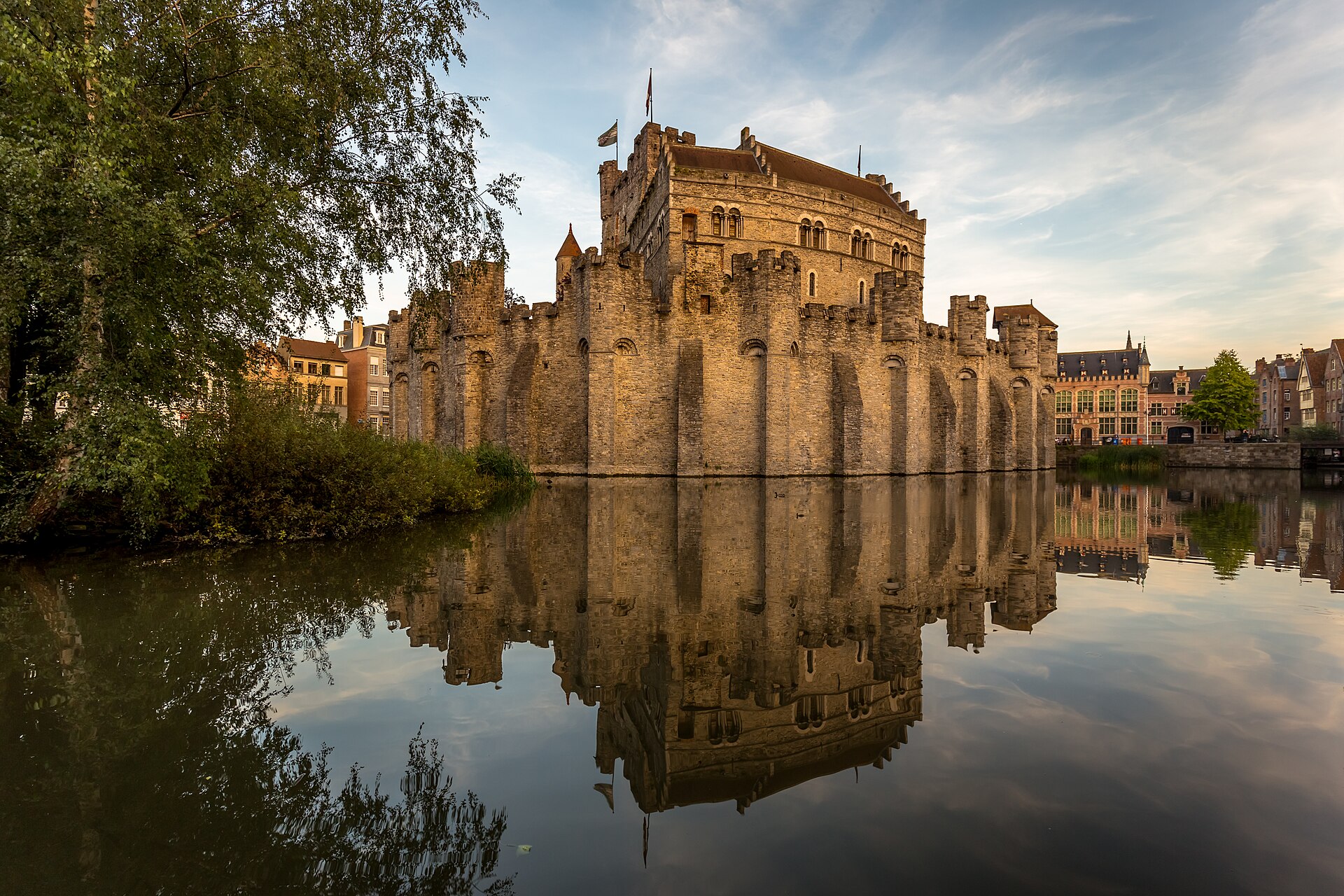
The Castle of the Counts is the rare medieval fortress that sits in the middle of a living city, moat and all. Philip of Alsace, Count of Flanders, built it in 1180 to overawe the Ghent burghers. It later served as a mint, a courthouse, a prison and, in the 19th century, a cotton mill, before being restored in the 1890s. Inside you get armour and weapons, a grim collection of instruments of medieval justice, and the real prize: a walk along the battlements with Ghent’s towers and rooftops spread out below you.
Tickets cost €13 for adults, with an audio guide included. It’s open daily from 10:00 to 18:00, with last admission at 16:40, and closed on 24, 25 and 31 December and 1 January. Allow an hour and a half. From Brussels it’s a 30–35 minute train ride to Gent-Sint-Pieters and a short tram ride into the centre. Our Ghent travel guide covers the rest of the city.
Beersel
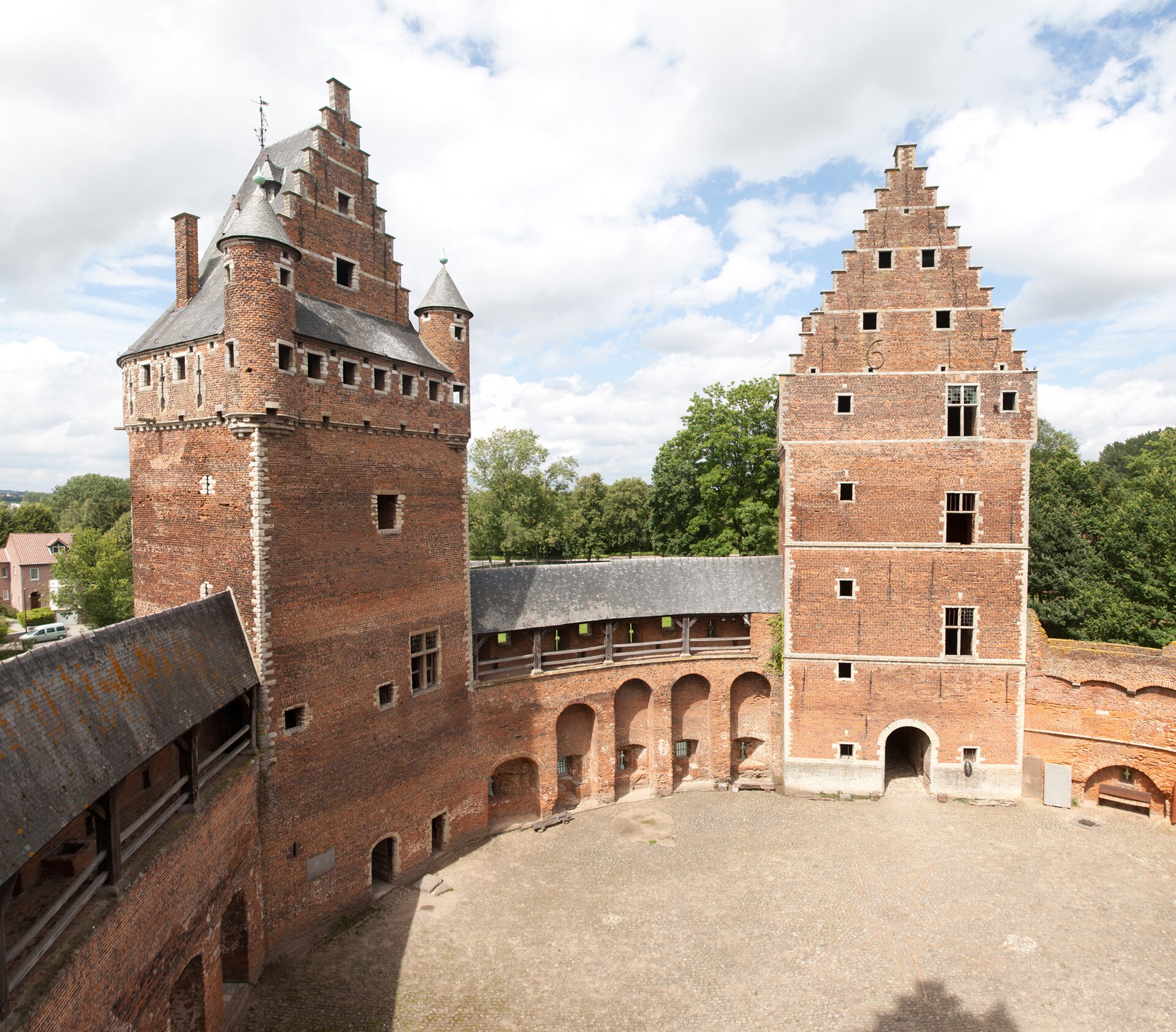
Beersel is the easiest real castle to reach from Brussels, and it looks exactly as a castle should. It’s a moated fortress of red brick built around 1300 and rebuilt after a siege at the end of the fifteenth century, with three great towers topped by stepped gables, a bridge across the moat and a horseshoe-shaped courtyard. Take the train south from Brussels-Midi to Beersel station and walk from there. It makes an easy half-day.
The honest verdict: the interiors are largely bare, so the pleasure is in the architecture, the moat and the climb up the towers rather than in furnished rooms. It opens seasonally, with limited days outside the summer, so check before you go. The perfect pairing is lambic. Beersel is in the heart of the Senne valley’s spontaneous-fermentation country, with the Oud Beersel and 3 Fonteinen breweries both close by, so you can make a proper afternoon of it. Our beer tours and breweries guide covers the lambic trail, and the Cantillon visit is the Brussels end of the same story.
Gaasbeek
Gaasbeek sits in the Pajottenland, the rolling farmland south-west of Brussels that Pieter Bruegel painted. The medieval castle was reworked at the end of the 19th century by the Marquise Arconati Visconti as a romantic setting for her collections, and it’s more a castle-museum than a fortress. You get furnished rooms, tapestries and a strong sense of one wealthy woman’s vision of the Middle Ages. After a long restoration it reopened in July 2023. In 2026 it opens from 1 April to 15 November, Tuesday to Sunday from 10:00 to 18:00 (17:00 from October), and is closed on Mondays except public holidays. Combination tickets add the historic museum garden next door, which is worth doing. The castle is reachable by bus from Brussels with some planning, but it’s easiest by car or bike. Allow time for a walk, because the landscape is as much the point as the castle.
Laeken and Groot-Bijgaarden
Brussels has castles of its own, with caveats. The Royal Castle of Laeken is the King’s residence and closed to the public. The one chance to get inside the grounds is the Royal Greenhouses, which open for about three weeks each spring. Our Laeken guide has the details. On the western edge of the city, the gardens of Groot-Bijgaarden castle host Floralia, a large spring bulb and flower show. It usually runs from early April into May, so check the dates for the year you’re travelling.
The Meuse and the Ardennes
Bouillon
If you only visit one medieval fortress in Belgium, make it Bouillon. The castle sprawls along a rocky ridge above a loop of the Semois, and its oldest parts go back to the 11th century. Its most famous owner, Godfrey of Bouillon, mortgaged it to the Prince-Bishop of Liège to pay for his part in the First Crusade. Inside it’s a warren of dark passages, vaulted halls, dungeons and staircases cut into the rock, with views from the ramparts over the town and the old bridge. In season there are falconry displays, and torchlit evening visits can be booked. You can buy tickets online or at the gate.
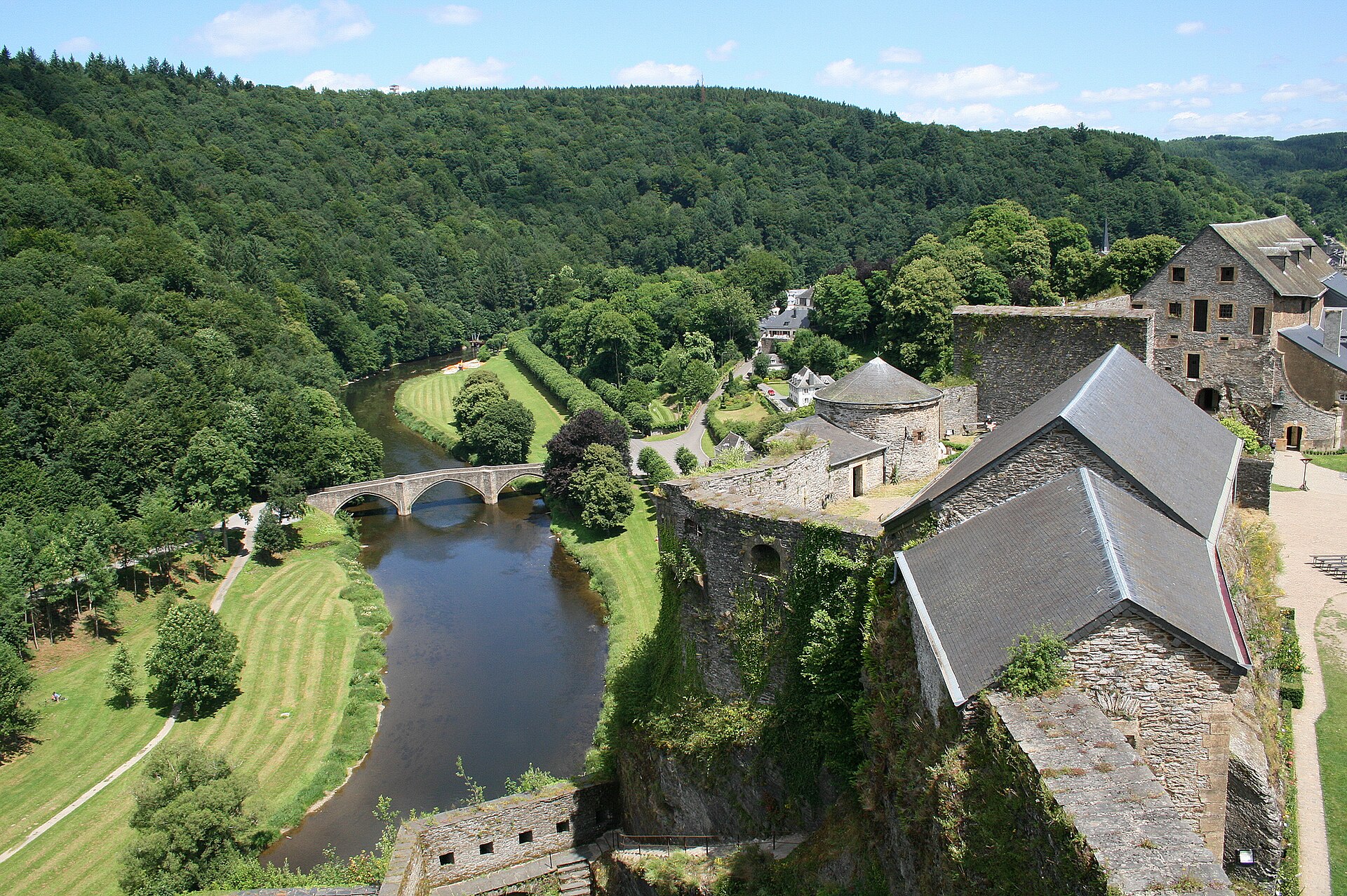
Two honest caveats. First, Bouillon is a long way from Brussels, about two hours by car or longer by train to Libramont and a bus onwards, so it works best as part of an Ardennes stay rather than a day trip. Second, the castle is dark, steep and uneven underfoot. That’s the fun of it, but it’s hard going for anyone with limited mobility and impossible with a pushchair. Our Belgian Ardennes guide covers the Semois valley and where to stay.
Vêves
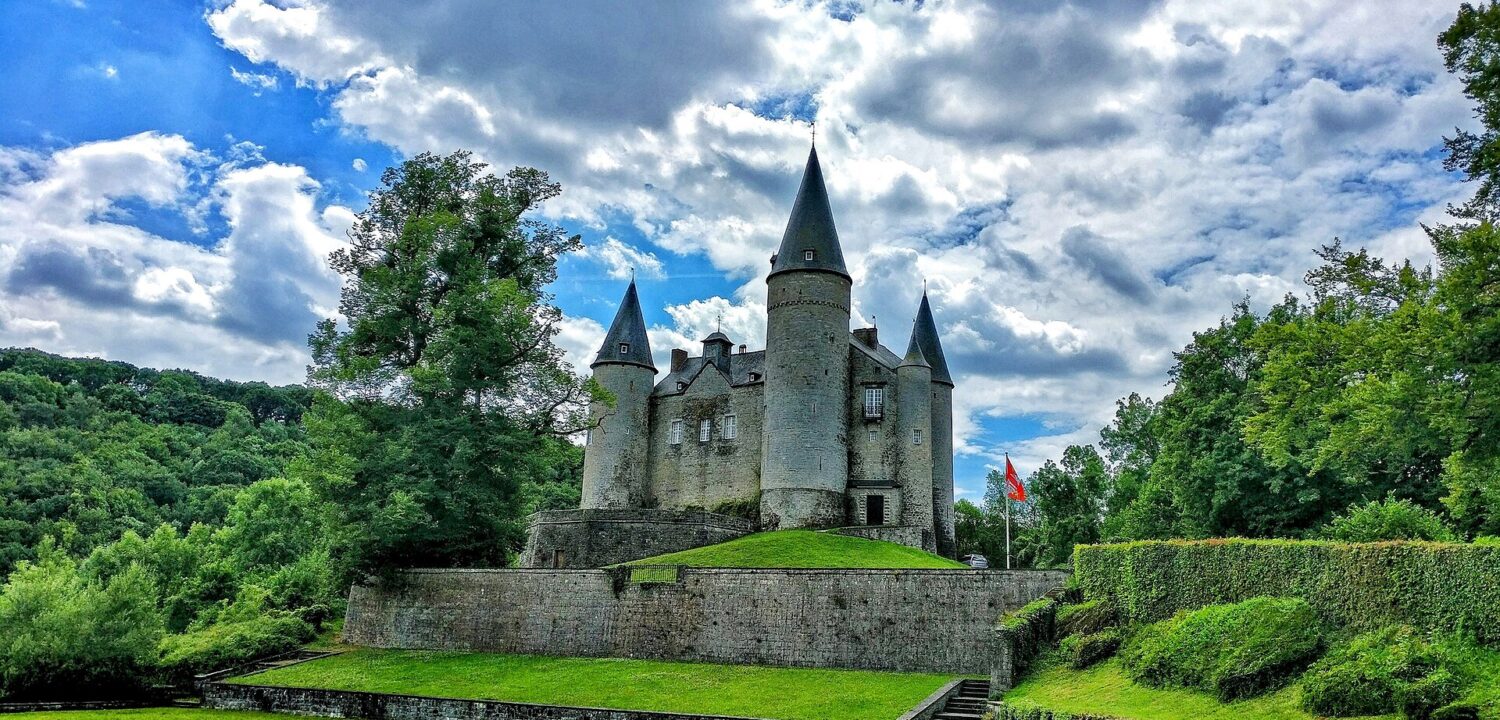
Vêves, at Celles near Houyet, is the castle of every child’s drawing: a cluster of round towers with tall pointed slate roofs, set on a green mound above a wooded valley, about ten kilometres from Dinant. It dates from the 15th century and is furnished inside, which makes the visit more than a photo stop. In 2026 it opens from 30 March to 1 November at weekends and on public holidays, 10:00 to 17:00. It opens every day in the Easter holidays, from 6 July to 23 August and in the autumn school holidays, and there are family-friendly visits for children. Check the château’s own site for current prices. You’ll need a car, or a keen pair of legs on a bike from Dinant.
Freÿr and Walzin
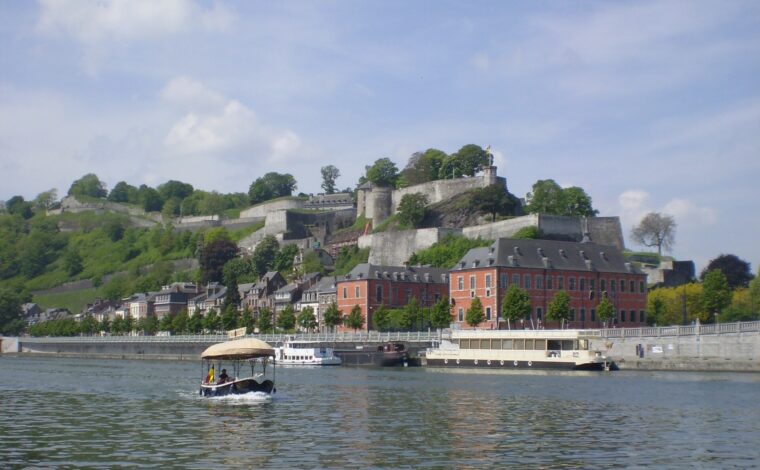
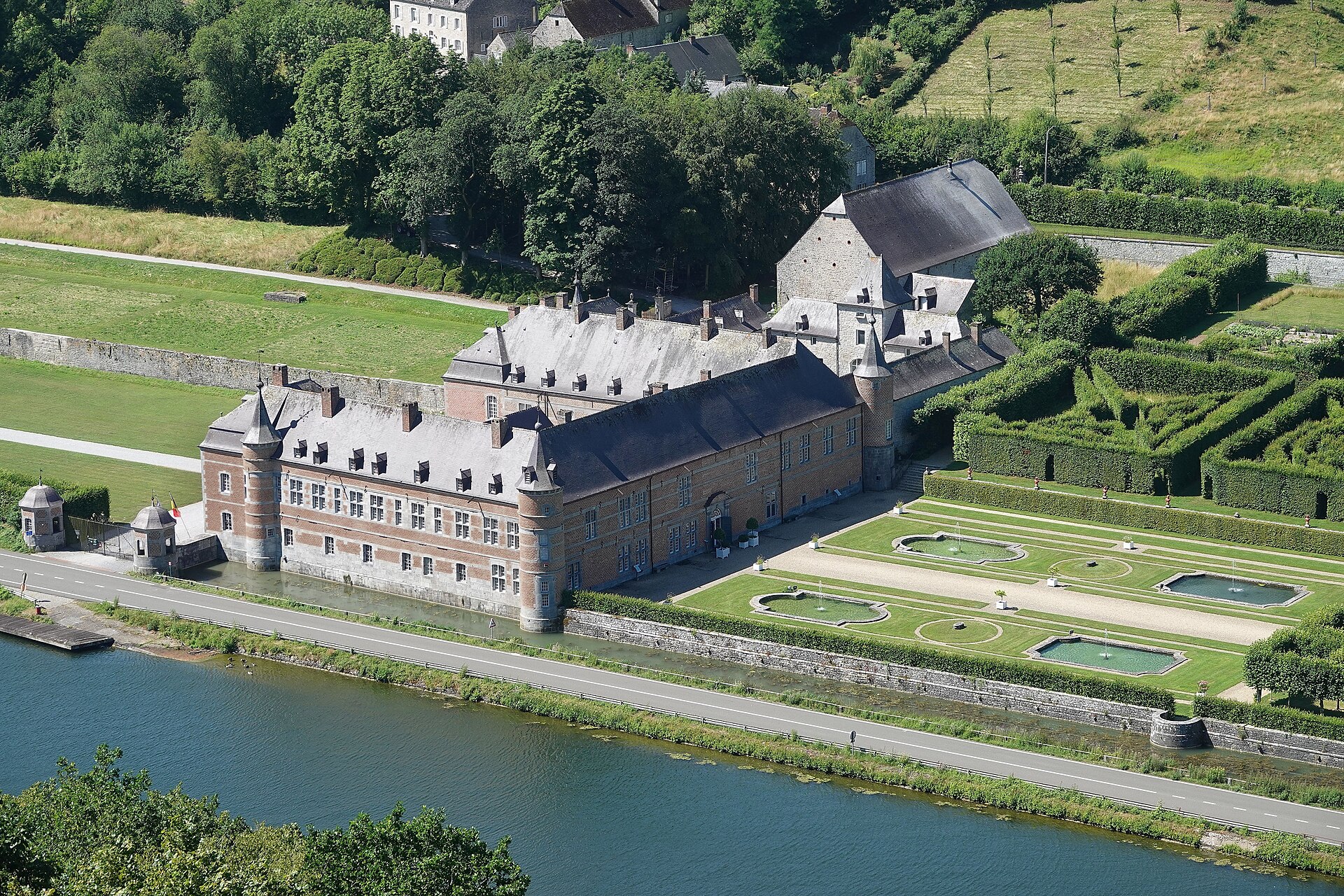
On the Meuse just south of Dinant, Freÿr is a château of brick and stone on the riverbank, with formal 18th-century gardens, orangeries and a hedge maze. The limestone cliffs opposite are a favourite with climbers. It opens on a limited schedule from spring to autumn, and it’s best combined with a day in the valley. Our Namur and Meuse valley guide covers the river from Namur to Dinant.
Walzin, perched on a cliff above the Lesse, is arguably the most dramatic castle in Belgium, and it’s private. The way to see it is from the water: the popular kayak run on the Lesse from Houyet to Anseremme passes right beneath it. Our Dinant guide explains how the kayak trips work.
La Roche-en-Ardenne and Reinhardstein
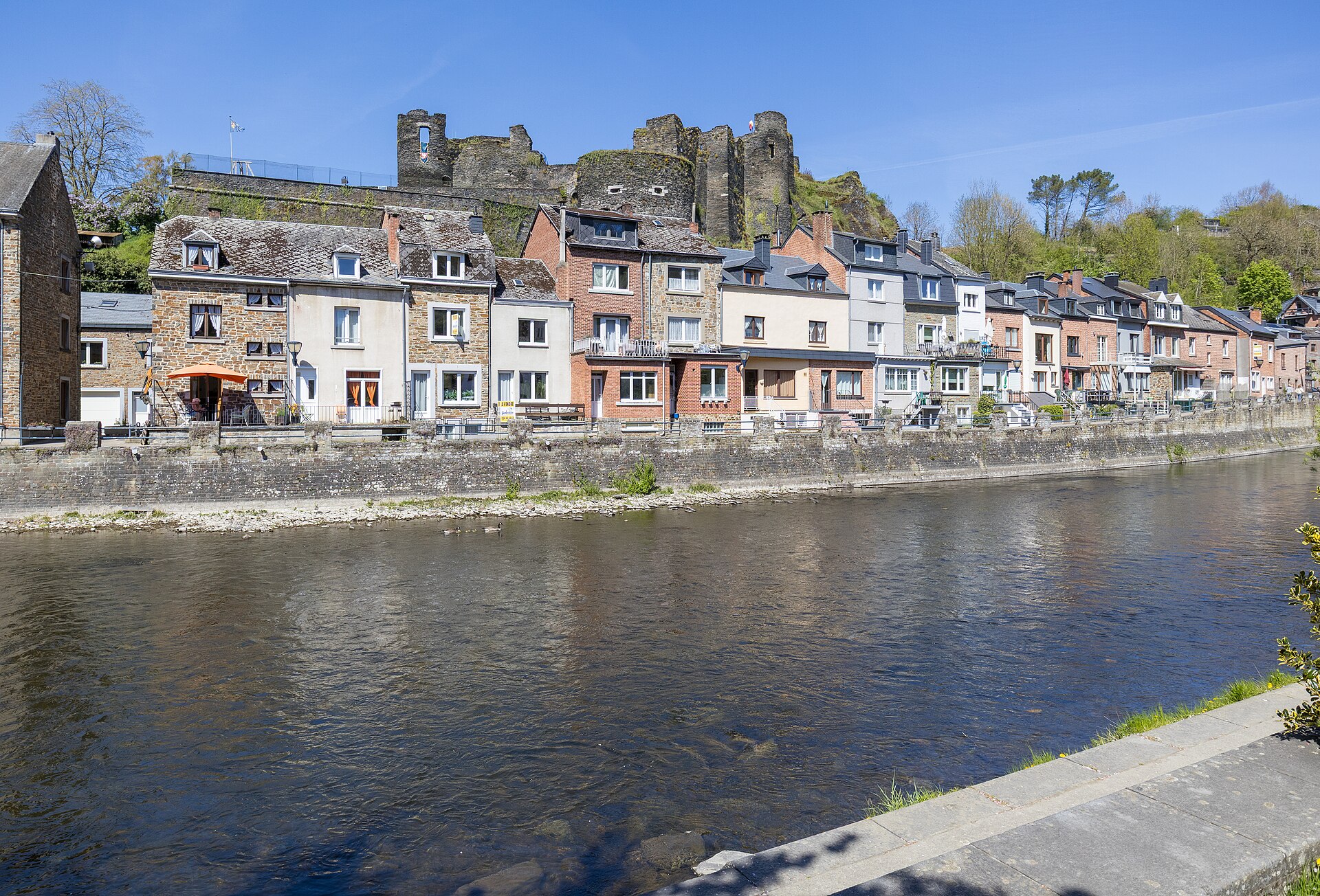
The ruined feudal castle of La Roche-en-Ardenne crowns a rock above a bend of the Ourthe, right over the town. It’s a short, atmospheric visit rather than a day out in itself, and it’s open seasonally. It suits anyone already staying in the Ardennes for the walking and the kayaking.
Far to the east near Malmedy, Reinhardstein stands on a spur above the gorge of the Warche. Be aware that it’s a reconstruction, rebuilt from 1969 on medieval foundations. It’s a very convincing one, though, in a superb setting, and visits are by guided tour on set days. If you’re heading to the Hautes Fagnes, it’s worth the detour. For the other famous little town of the Ardennes, see our Durbuy day trip.
Flanders and Hainaut: Stately Homes and Gardens
Loppem, a few kilometres south of Bruges, is a neo-Gothic mansion from the 1860s designed with the help of the architect Jean-Baptiste Bethune. King Albert I used it as his headquarters in the last weeks of the First World War. Its interiors are a period piece of Gothic Revival taste, and the grounds have a hedge maze. It’s an easy bike ride from Bruges and a pleasant detour if you’re heading on to the Belgian coast. Opening is seasonal. See our Bruges travel guide for the city itself.
Ooidonk, near Deinze on the Leie south-west of Ghent, is a 16th-century water castle in the Spanish-Flemish Renaissance style. It’s still lived in and opens on a limited schedule in the warmer months, and it’s lovely on a summer afternoon. Beloeil, in Hainaut, is the seat of the Princes de Ligne and often called the Belgian Versailles, for its sheer scale and its long formal gardens. It’s one for garden lovers with a car.
Getting There Without a Car
This is the question that should shape your list. Gravensteen is effortless: train, tram, done. Beersel is a short train ride south from Brussels-Midi and a walk. Gaasbeek is doable by bus with some planning, and Loppem is a bike ride from Bruges. Everything in the Ardennes and the upper Meuse, meaning Vêves, Freÿr, Walzin, La Roche and Reinhardstein, is realistically a car trip or an organised tour. Bouillon can be done by train and bus, but it’s a long day.
If you’d rather not drive, our Brussels tours guide covers the organised day trips from the capital. If you’ll hire a car for a couple of days, our car rental tips explain what to watch for. For everything reachable by rail, see our Belgium by train guide.
Honest Verdicts: The Ones That Disappoint
- Het Steen, Antwerp. It’s the city’s oldest building and looks the part from the riverside, but inside it’s now a visitor centre rather than a castle to explore. See it from the riverside and move on. Our Antwerp travel guide has better uses for your afternoon.
- Laeken. You can’t go in. Unless your visit coincides with the three weeks of the Royal Greenhouses, admire the gates and save your time.
- Walzin and many fairytale châteaux are private. You’ll see them from the road or the river and that’s all. Don’t make a long drive for a castle you can’t enter.
- Beersel’s interiors are mostly empty rooms. Go for the architecture and the towers, not for furnishings.
Castles with Children
Bouillon is the winner for older children: dungeons, dark passages, falconry displays and, in summer, torchlit visits. Gravensteen has the armour, the battlements and the gruesome justice exhibits that children love and parents find slightly alarming. Vêves runs visits aimed at families, and Beersel’s moat and towers work for a short attention span. For more ideas, see our guides to day trips from Brussels with kids and Brussels with kids.
When to Go
April to October is castle season. Most of the châteaux in this guide open from spring into early November, often only at weekends and on public holidays outside July and August, when many open daily. Gravensteen opens all year apart from a handful of holiday dates. Gaasbeek runs from April to mid-November. Ardennes castles are at their best in May, June and September, when the valleys are green and the roads are quieter than in high summer.
Related Brussels Guides
- Belgium Travel Guide
- The Belgian Ardennes
- Namur and the Meuse Valley
- Ghent Day Trip from Brussels
- The Belgian Coast
- Day Trips from Brussels
- Unique Experiences in Brussels
Useful Resources
- visit.gent.be: Gravensteen tickets and hours, and the rest of Ghent.
- kasteelvangaasbeek.be: Gaasbeek’s opening days, tickets and the museum garden.
- chateaudebouillon.com: Bouillon castle tickets, falconry and evening visits.
- chateau-veves.be: Vêves opening calendar and prices.
- visitwallonia.be: opening details for Freÿr, La Roche, Reinhardstein and Beloeil.
Frequently Asked Questions
What is the most beautiful castle in Belgium?
For looks, Vêves near Dinant, a cluster of pointed towers on a green mound, is hard to beat. Walzin is as dramatic but private. For atmosphere, Bouillon’s feudal fortress above the Semois is the one most visitors remember.
Which castles can I visit from Brussels without a car?
Gravensteen in Ghent (train and tram), Beersel (a short train ride and a walk) and Gaasbeek (by bus) are all realistic day or half-day trips. Loppem is a bike ride from Bruges. The Ardennes castles really need a car or a tour.
Are Belgian castles open all year?
Most are not. The majority open from spring to early November, often only at weekends outside the summer holidays. Gravensteen in Ghent is the main exception, open daily except around Christmas and New Year.
Is the Gravensteen worth visiting?
Yes. It’s a genuine 12th-century fortress in the middle of Ghent, the battlements have one of the best views of the city, and €13 includes the audio guide. Allow about an hour and a half.
Which Belgian castle is best for children?
Bouillon, with its dungeons, dark passages, falconry displays and summer torchlit visits. Gravensteen is the best option if you’re based in a city and don’t want a long drive.
Can you visit Walzin Castle?
No, Walzin is private. The best view is from a kayak on the Lesse between Houyet and Anseremme, which passes directly beneath it.
Photo Credits
-
The Château de Vêves: Castle of Veves by Ravindra Hegade, CC BY-SA 4.0, via Wikimedia Commons.
-
The Gravensteen at sunset: Gravensteen bij zonsondergang vanuit de Sint-Widostraat by Davidh820, CC BY-SA 4.0, via Wikimedia Commons.
-
The courtyard of Beersel castle: 38873 Beersel Binnenkoer by Johan Bakker, CC BY-SA 3.0, via Wikimedia Commons.
-
The view from Bouillon castle: 0 Bouillon – Château-fort et pont sur la Semois (1) by Jean-Pol GRANDMONT, CC BY-SA 3.0, via Wikimedia Commons.
-
The Château de Freÿr on the Meuse: Castle of Freÿr (Hastière).01 by Nenea hartia, CC BY-SA 4.0, via Wikimedia Commons.
-
La Roche-en-Ardenne on the Ourthe: La Roche-en-Ardenne — Le château féodal et l’Ourthe by JackyM59, CC BY-SA 4.0, via Wikimedia Commons.
Final Thoughts
Belgium’s castles are best treated like its beers: there are far too many to try them all, a handful are genuinely world-class, and the fun is in choosing well. For a first trip, do Gravensteen as part of a day in Ghent and Beersel as an easy half-day with a lambic at the end of it. If you have a car and a weekend in the south, add Vêves and Bouillon.
Check opening days before every trip, because seasonal hours catch out more visitors than anything else. And don’t drive two hours to a castle that turns out to be someone’s home. Pick the fortresses you can climb, the châteaux you can walk through and the gardens you can get lost in, and the country’s long, turbulent history comes alive in a way no museum quite manages.