There is a particular kind of disappointment reserved for travellers who arrive in Brussels in mid-August expecting the Flower Carpet, discover it only happens in even-numbered years, and spend the afternoon looking at an empty cobbled square. A Brussels events calendar is worth reading before you book flights rather than after, because a surprising number of this city’s best events are biennial, movable, or squeezed into a single weekend that you will either hit or miss entirely.
This page runs through the year month by month: what recurs, roughly when, which events are genuinely worth building a trip around, and which are pleasant if you happen to be here but not worth rearranging anything for. Dates and prices were checked in October 2026 and are given as the right order of magnitude — the fixed-date events are reliable, and everything described as “usually” moves by a week or two each year, so confirm with the organiser before you commit to a non-refundable fare.
The Year at a Glance
| When | Event | Type | Worth a special trip? |
|---|---|---|---|
| Late January | BRAFA Art Fair | Art and antiques fair | For collectors, yes |
| February | Bright Brussels, Anima festival | Light trail, animation | No — but excellent if here |
| Late Feb / early Mar | Carnival season across Belgium | Folk carnival | Yes, for Binche |
| April–early May | Hallerbos bluebells | Natural spectacle | Yes, and it is free |
| May | Iris Festival, Jazz Weekend | City festival, music | No, but a good weekend |
| May, even years (biennial) | Zinneke Parade | Street parade | Yes — next in 2028 |
| Early July | Ommegang | Historical pageant | Yes, if you book seats |
| 21 July | Belgian National Day | Parade, free festivities, fireworks | Worth timing for |
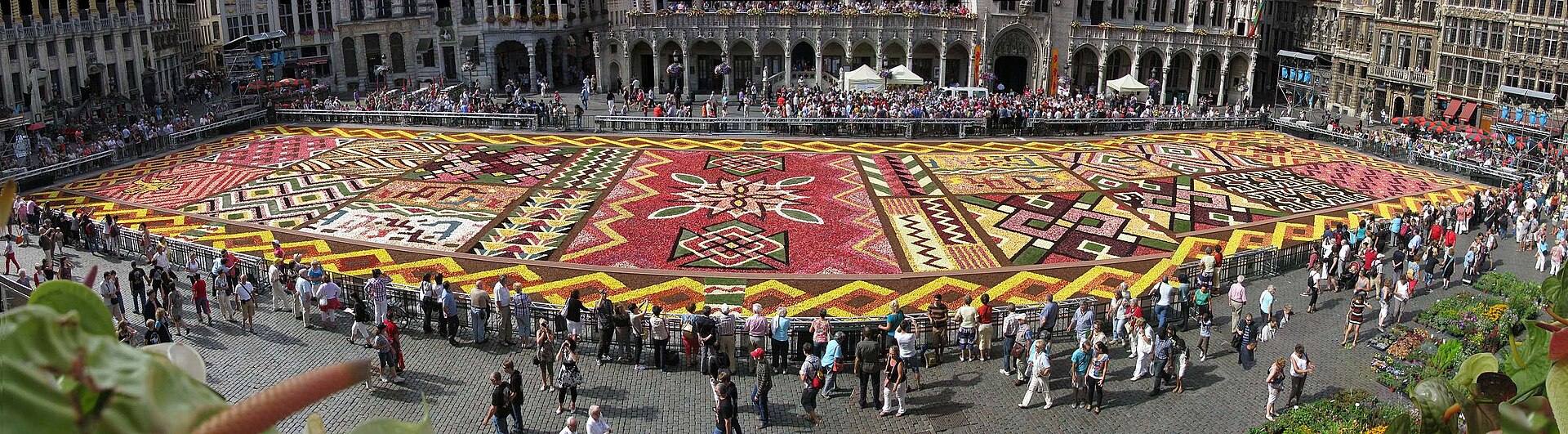
| August (even years) | Flower Carpet | Grand-Place spectacle | Yes — next August 2028 |
| September | Comic Strip Festival, Heritage Days | Comics, open buildings | Heritage Days, yes |
| 27 Nov 2026 – 3 Jan 2027 | Winter Wonders | Christmas market | Yes, for the market |
| 31 December | New Year’s Eve | City fireworks (2025/26 at the Atomium; next plan on brussels.be/newyear) | Only if already here |
Two entries on that table do most of the damage to unwary itineraries. The Flower Carpet is biennial and falls in even-numbered years, so August 2028 rather than 2027. The Zinneke Parade is also biennial and also runs in even-numbered years: the 2026 parade was on 30 May, so the next is due in 2028. Neither runs in the intervening year, and the internet is full of pages that fail to mention this.
How to Use This Calendar
Events in Brussels fall into three categories, and knowing which one you are dealing with is most of the planning problem.
- Fixed-date events — Belgian National Day on 21 July, New Year’s Eve, the Meyboom planting on 9 August. The date stays put, but the programme is set each year, so check the official one for your travel year before you book flights around it.
- Movable annuals — most festivals. Ommegang falls at the beginning of July on dates the organiser announces each year (1 and 3 July in 2026); Heritage Days are a September weekend; the jazz and film festivals shift by a week or two. Reliable to the month, not to the day.
- Biennials and rotations — the Flower Carpet and the Zinneke Parade. Check the year before anything else.
The practical consequence is that you should plan a trip around a fixed-date or biennial event, and treat the movable annuals as a bonus you check for once your dates are set. If you are still choosing when to come rather than what to see, our guide to the best time to visit Brussels weighs weather, crowds and prices, and the Brussels weather guide covers what each month actually feels like.
Winter: January and February
January
The quietest month of the Brussels year, and the cheapest. Hotel rates fall hard after the New Year and museums are close to empty, which is a genuine argument for coming.
The main fixture is BRAFA, the art and antiques fair at Brussels Expo, which in 2027 runs from 24 to 31 January with a collectors’ preview on the 22nd and an exclusive Saturday on the 23rd. Some 150 galleries take part, and the range runs from antiquities to contemporary work. It is a serious fair with serious prices, but it is open to the public and it is one of the better ways to spend a January day in this city.
Winter Wonders runs into the first days of January — the 2026–27 edition closes on 3 January, at 18:00 that day — so the first weekend of the month still has the market, the wheel and the lights.
February
Bright Brussels turns the city into a light trail for a few evenings, with installations threaded through a walkable route across the centre. It is free, it is outdoors, and it is the best reason to be in Brussels in the darkest part of the year. Dates move; it typically lands in February.
Anima, the Brussels animation film festival, runs at Flagey and draws a proper international programme. Carnival season also gets going towards the end of the month, and while Brussels itself does relatively little, Belgium does a great deal — see the Carnival section below.
Spring: March, April and May
March
A transitional month with no headline event, which makes it a reasonable time to visit if you want museums without queues and do not mind grey weather. Carnival often spills into early March depending on where Easter falls. Film and documentary festivals cluster here, and the Brussels cinema and film guide covers the venues that host them.
April
April belongs to the Hallerbos bluebells, and this is a genuine spectacle rather than a marketed one. Twenty kilometres south of Brussels, a beech forest floor turns solid violet-blue for roughly two to three weeks from mid-April into early May. Peak timing varies with the spring, and the forest publishes updates as it approaches.
Getting there: train from Brussels-Midi to Halle. In the 2026 season a free shuttle bus ran from Halle Stationsplein on peak weekends — every thirty minutes on Saturdays and every twenty on Sundays — and the next season’s arrangements appear on hallerbos.be ahead of the bluebells. Bikes can be hired at Halle station for the five-kilometre ride. Roads into the forest close when it is busy, so driving is the worst option. Go on a weekday morning if you possibly can; the weekend crowds are substantial and the photographs everyone has seen were not taken in them.
May
The best month in the Brussels calendar. The weather is usually kind, the terraces are open, and the events stack up.
The Iris Festival marks the Brussels-Capital Region’s own day in early May with free concerts and open institutions. Brussels Jazz Weekend takes over squares across the centre with free stages — an unusually generous festival in a city that does jazz properly year-round, as our jazz clubs guide explains. The Kunstenfestivaldesarts brings contemporary performance to venues across both language communities.
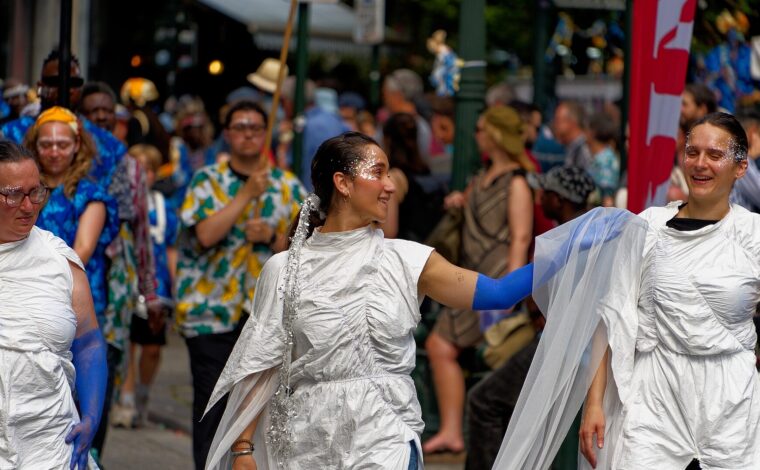
The Zinneke Parade is the one to plan around, in the years it runs. Held every two years, in even-numbered years, it puts around 2,500 participants through the streets in costumes and constructions built by neighbourhood collectives, watched by somewhere between 50,000 and 80,000 people. It is chaotic, genuinely local, and nothing like a tourist-board pageant. The 2026 parade was on 30 May, so there is none in 2027. If you can be in Brussels for the next one, in 2028, be there.
Summer: June, July and August
June
Festival season proper begins. Couleur Café brings world and urban music to a site by the canal over a long weekend. The Brussels Short Film Festival runs its programme, and the city’s summer terrace culture reaches full strength, which matters more than any individual event — our best bars guide and the parks and outdoor guide cover where to sit outside.
July
The month of two major Brussels set pieces: Ommegang and Belgian National Day.
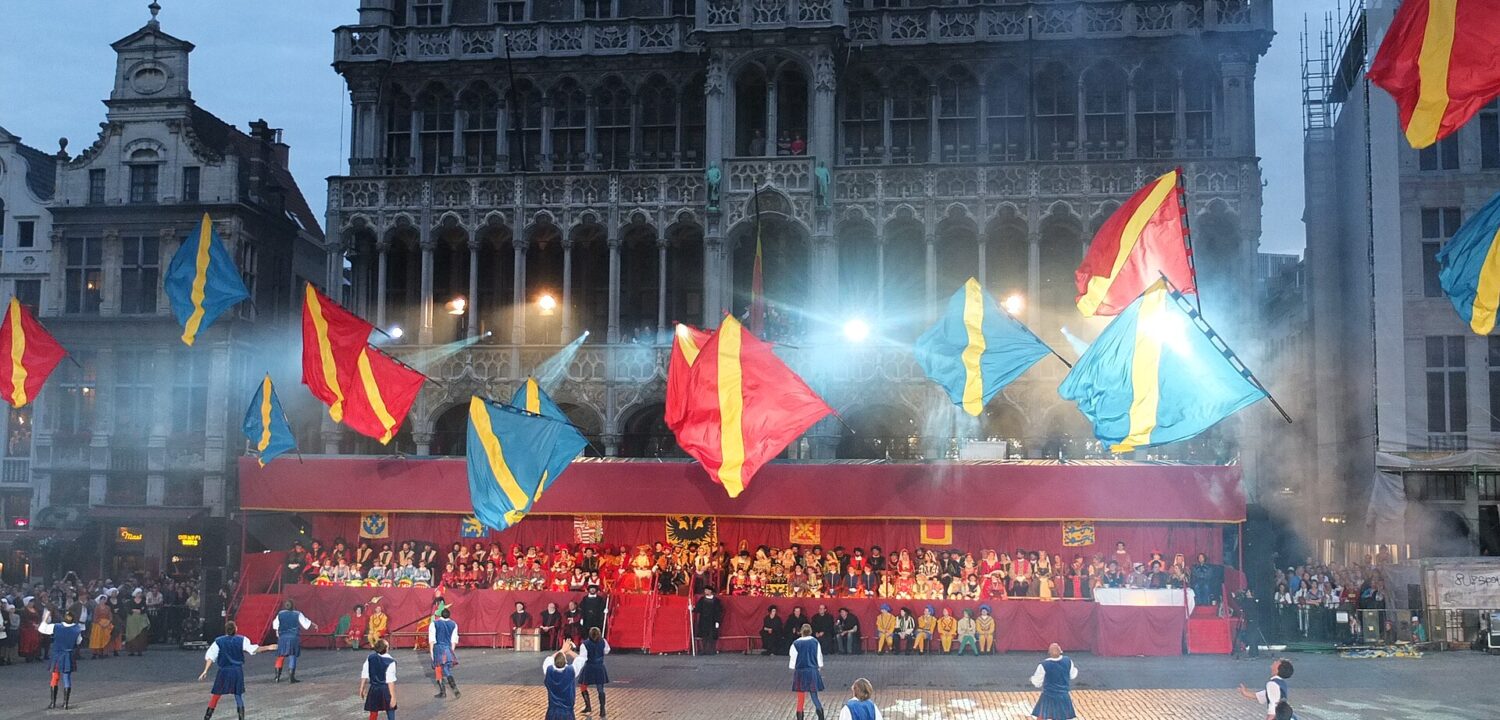
Ommegang re-enacts the 1549 entry of Emperor Charles V into Brussels, with around 1,200 costumed participants processing into the Grand-Place. The organiser announces the dates each year; in 2026 the two performances were on Wednesday 1 and Friday 3 July. Grandstand seats are ticketed and sell out; standing space around the edges is free but the view is poor, because the square is enclosed and everybody has the same idea. If you want to see it properly, buy a seat well in advance. Our Grand-Place guide explains the geography of the square, which is worth understanding before you choose where to stand.
Belgian National Day on 21 July is fixed and free. There is a military and civil parade, concerts run through the day and fireworks close it. It is the one day of the year when a normally understated country visibly enjoys itself, and it is worth timing a trip for. The Royal Palace guide covers the summer opening in detail.
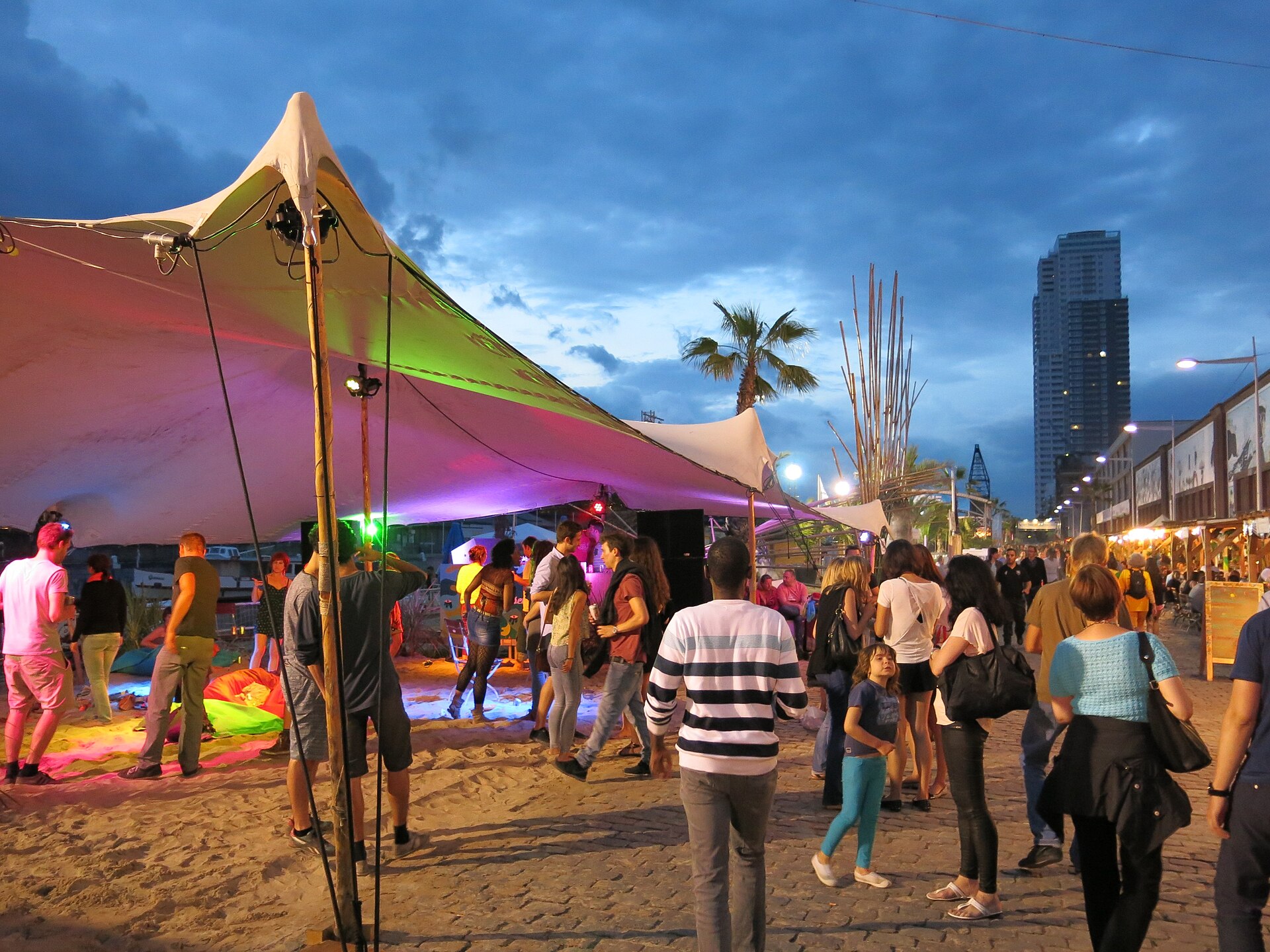
Quai d’Été, the free summer site on the canal’s Quai des Péniches that replaced the old Brussels Beach, ran from 2 to 19 July in 2026, and the Foire du Midi funfair runs from mid-July into late August.
August
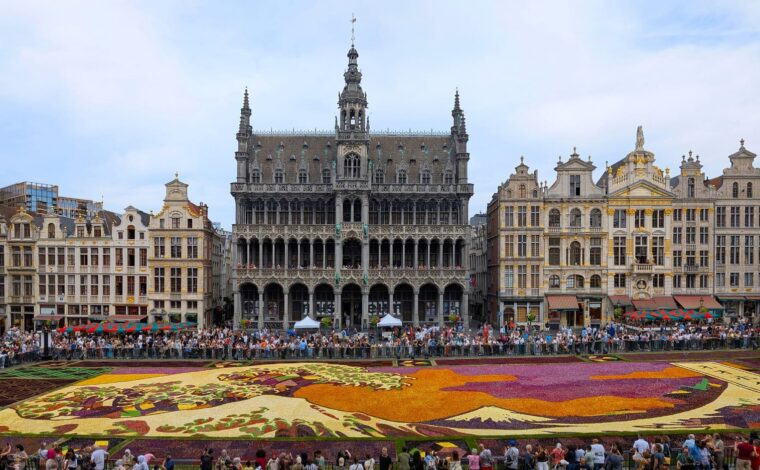
In even-numbered years, the Flower Carpet. Begonias, dahlias, grass and bark are laid into a designed carpet covering 1,680 square metres of the Grand-Place over a few days in mid-August. It runs for four days only. The ground-level view is fine; the view from the Town Hall balcony, which is ticketed, is the one that matches the photographs. The next edition is August 2028. In odd-numbered years the Town Hall hosts Flowertime, a separate indoor floral show, instead.
The Meyboom planting on 9 August is a fixed-date piece of genuine Brussels folklore: a young tree is planted before 5pm in a tradition dating to 1308, accompanied by giant puppets and a great deal of beer. It is small, unpolished and much more interesting than most of what is marketed to visitors. Our Belgian traditions and customs guide explains why the giants matter.
August is also the month when Brussels partly empties. Many independent restaurants close for two or three weeks and the EU institutions go quiet. This makes the city calmer and the terraces easier, but check that the specific restaurant you have set your heart on is open — our restaurants guide is the place to start.
Autumn: September, October and November
September
Underrated, and arguably the best month to visit after May. The weather often holds, the crowds thin after the school holidays, and the events return.
Heritage Days — Journées du Patrimoine / Open Monumentendagen — bring special visits to Brussels heritage sites over a September weekend. If Art Nouveau is your interest, read the year’s programme closely, since the sites change from one edition to the next. Queues form early and some visits must be booked in advance. Our Art Nouveau architecture guide is worth reading first so you know which addresses to prioritise.
The Brussels Comic Strip Festival and its Balloon’s Day Parade fill a September weekend with inflatable comic characters over the boulevards, and it is a great deal more fun than that description suggests. The comic strip culture guide has the background.
October
Nuit Blanche brings a night of contemporary art installations across the city. Museum season restarts in earnest, and our museums guide covers what reopens with new exhibitions.
November
The grimmest month weather-wise and the quietest for events until the very end, when everything changes. Armistice Day on 11 November is a public holiday with ceremonies, and Ypres marks it with the Poppy Parade and the Last Post at 11:00 — see our Ypres and Flanders Fields day trip guide if you want to be part of it.
Then, in the last week, the city switches on. Winter Wonders opens on 27 November 2026, and from that day the centre is a different place.
December: Winter Wonders and the Festive Season
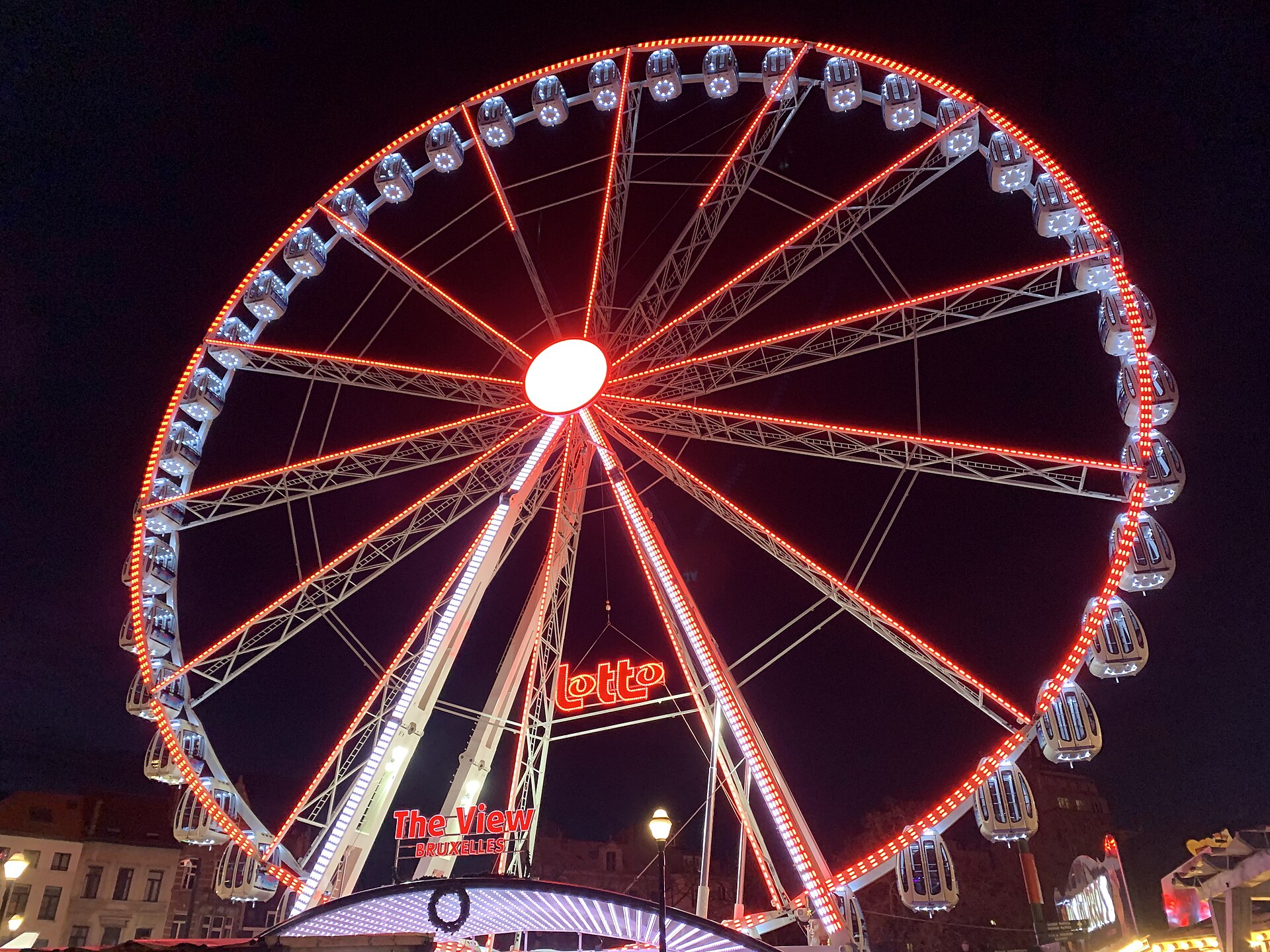
The Winter Wonders market — Plaisirs d’Hiver in French, Winterpret in Dutch — runs from 27 November 2026 to 3 January 2027, daily from 12:00 to 22:00, closing early at 18:00 on 24 December, 31 December and 3 January. Its 238 chalets spread from Place de la Monnaie and the Bourse through Sainte-Catherine to the Marché aux Poissons, with a big wheel at the Marché aux Poissons, an ice rink on Place De Brouckère, a curling track, and a sound-and-light show on the Grand-Place (none on the three early-closing evenings).
Two honest observations about December. First, the market itself is genuinely one of the better ones in Europe, largely because it is a linear route through real streets rather than a fenced compound in a car park. Second, weekend evenings between mid-December and Christmas are extremely crowded, and the stretch between the Bourse and Sainte-Catherine becomes slow-moving. Go on a weekday evening, or early. Our Christmas market shopping guide covers what is actually worth buying from the chalets.
Christmas Day and New Year’s Day are quiet in a way that catches visitors out: most museums, many restaurants and nearly all shops close, and public transport runs a Sunday service. New Year’s Eve brings the City’s fireworks: the last ones were at the Atomium, and each year’s plan is announced on brussels.be/newyear. It is busy, and worth doing once if you are already in town — but it is not a reason to fly here.
Carnival: Belgium’s Best-Kept Calendar Secret
Brussels does very little for Carnival. Belgium does a great deal, and the best of it is within easy reach.
The Carnival of Binche, on Shrove Tuesday, is on the UNESCO intangible cultural heritage list, and its Gilles, in wax masks and ostrich-feather hats, are the reason to go. Binche is a train ride from Brussels; check the timetable on belgiantrain.be. Aalst and Malmedy run their own large carnivals in the same week. If your trip lands in late February or early March, this is where the real event is, and it is a day trip rather than a relocation. Our day trips guide covers the practicalities of getting out of the city.
Events with Children
Not every event on this calendar survives contact with a seven-year-old. The ones that do are the ones with something moving or something to eat.
The Balloon’s Day Parade in September is the outright winner — giant inflatable comic characters floating down the boulevards, free, outdoors and over in an hour, which is the correct length for a parade watched by a small person. Winter Wonders works for the same reason: the ice rink, the carousel and the wheel give children something to do rather than something to look at, and the sound-and-light show on the Grand-Place is short enough to hold attention. Quai d’Été on the canal in July is essentially a free afternoon by the water.
The ones to skip with children are Ommegang, which is long, formal and largely about standing still, and Nuit Blanche, which runs late by design. Our Brussels with kids guide and the family attractions guide cover the year-round alternatives, and the school holiday activities guide maps the Belgian holiday weeks, which is when museums run their children’s programmes.
Music, Sport and the Things That Are Not Festivals
A calendar built only from festivals misses most of what actually happens in Brussels. The city’s concert venues run all year and the programme is far more interesting than the festival listings suggest — Ancienne Belgique and Botanique for touring acts, Flagey and Bozar for classical and jazz, and a network of small clubs that keep going through the dead months. Our live music venues guide and the theatre and performing arts guide cover what is on when nothing is on.
Sport matters too: football at the Anderlecht and national stadium level fills trains and hotels on match days without ever appearing on a tourist calendar — if your hotel search suddenly returns nothing for a random Wednesday in November, this is usually why.
Finally, exhibitions. The major museums run temporary shows on their own schedules, and a blockbuster at Bozar or the Royal Museums can be the best thing happening in the city on a given weekend without being an “event” in any listing sense. Check what is on before you assume a February visit has nothing to offer.
How Events Affect Prices and Availability
Brussels hotel pricing is driven far more by the European institutions than by tourism, which produces a pattern most visitors find counter-intuitive: weekdays are expensive, weekends are cheap, and August is a bargain. Events layer on top of that.
- Book months ahead: the Winter Wonders weekends in December, National Day on 21 July, and the Zinneke Parade weekend when it returns in 2028.
- Book a few weeks ahead: Ommegang week, Heritage Days weekend, BRAFA week.
- No need to rush: anything in January outside BRAFA, February, March, or the second half of August.
- Watch out for: major EU summits, which are not advertised as tourist events but can empty the city of hotel rooms at short notice.
Our hotel booking tips explain how to exploit the weekday-weekend inversion, and where to stay in Brussels covers which areas put you closest to the action.
Public Holidays and What Closes
Belgian public holidays are worth marking on your own calendar, because shops close and transport thins out. The fixed ones are 1 January, 1 May, 21 July, 15 August, 1 November, 11 November and 25 December. The movable ones follow Easter — Easter Monday, Ascension Day and Whit Monday.
Sundays are also quieter than in most European capitals: many shops close, though the markets are at their best. The Sunday market at the Gare du Midi is among the largest in Europe and worth an early start — the food markets guide has the details, and the flea markets guide covers the Place du Jeu de Balle market in the Marolles, held every day of the week.
Winter Wonders, from 27 November 2026 to 3 January 2027, is one of the major events of the Brussels year, and it rewards a bit of planning — the route has real bottlenecks. Our complete Winter Wonders guide has the dates, hours, costs and timing advice.
Of all the dates on this calendar, the bluebells are the one set by nature rather than by an organiser, and the flowering shifts with each spring’s weather. Our guide to seeing the Hallerbos bluebells from Brussels explains how to follow the flowering updates, when the free shuttle runs from Halle station, and why a weekday morning beats a Sunday afternoon.
Summer is a busy stretch of the calendar, and it deserves more room than a list. Our guide to Brussels summer festivals goes through Couleur Café and Brosella by the Atomium, the free city events from the Fête de la Musique to the Meyboom, and which big set-pieces skip odd-numbered years.
Some of the city’s best-loved events skip a year. The Zinneke Parade runs only in even-numbered years, so there is none in 2027; our Zinneke Parade guide covers the 2028 edition and the folklore you can catch in the meantime, from Manneken Pis in costume to Saint-Verhaegen.
Related Brussels Guides
- Best Time to Visit Brussels — choosing a month on weather, crowds and price.
- Brussels Weather Guide — what each season actually feels like.
- Brussels Christmas Market Shopping — what to buy at Winter Wonders.
- Things to Do in Brussels — the year-round list, no festival required.
- Brussels Tours and Experiences — guided options, and which are worth booking.
- Day Trips from Brussels — including Binche for Carnival and Halle for the bluebells.
- Brussels Travel Guide — planning the trip end to end.
Useful Resources
- visit.brussels agenda — the official listings, and the only place worth trusting for this year’s exact dates.
- brussels.be — the City of Brussels site, best for Winter Wonders, Ommegang and National Day logistics.
- brafa.art — dates, tickets and the gallery list for the January fair.
- zinneke.org — route and timing for the biennial parade.
- Hallerbos.be — bluebell progress updates and shuttle timetables in April.
- SNCB/NMBS — for the Binche, Halle and Ypres day trips these events require.
Frequently Asked Questions
What is the biggest event in Brussels?
For sheer scale, Winter Wonders: 38 days, from 27 November 2026 to 3 January 2027, with 238 chalets across the centre. For a single day, our pick is Belgian National Day on 21 July, and for a single spectacle, the biennial Flower Carpet on the Grand-Place.
When is the Brussels Flower Carpet?
Mid-August in even-numbered years only, for four days. The next edition is August 2028. It is not an annual event; in odd years the Town Hall hosts Flowertime, a separate indoor floral show.
When is the Brussels Christmas market in 2026?
Winter Wonders runs from 27 November 2026 to 3 January 2027, daily 12:00–22:00, closing at 18:00 on 24 December, 31 December and 3 January, with no Grand-Place sound-and-light show on those three evenings. The first days of January still have the market.
Is there anything on in Brussels in January?
Yes — BRAFA, the art and antiques fair at Brussels Expo, runs 22 to 31 January 2027, opening with a collector’s preview on the 22nd, and Winter Wonders continues to 3 January. Otherwise January is a quiet month for events.
When is the Zinneke Parade?
Every two years, in even-numbered years. The 2026 parade was on 30 May, so there is none in 2027 and the next is due in 2028. Around 2,500 participants and 50,000 to 80,000 spectators. It is the most genuinely local large event in the city and worth planning a trip around.
What month has the best weather and events in Brussels?
May, comfortably. Reliable weather, open terraces, the Iris Festival, Brussels Jazz Weekend, and in even-numbered years the Zinneke Parade. September is the close second and is quieter.
Are Brussels events free?
A great many are. Bright Brussels, the Winter Wonders sound-and-light show, Brussels Jazz Weekend’s outdoor stages, the National Day programme, Heritage Days and the Meyboom all cost nothing. Ommegang grandstand seats, BRAFA and the Flower Carpet balcony view are the notable ticketed exceptions.
Does Brussels celebrate Carnival?
Barely. Belgium does, and spectacularly — the Carnival of Binche on Shrove Tuesday is UNESCO-listed and a train ride from Brussels. Aalst and Malmedy also run large carnivals in the same week. Treat it as a day trip.
Do I need to book accommodation early for Brussels events?
For December weekends, 21 July and the Zinneke weekend in parade years, yes — months ahead. For most other events a few weeks is enough. Watch for major EU summits, which are not publicised as visitor events but can fill the city’s hotels without warning.
Photo Credits
Flower Carpet on the Grand-Place: Bruxelles, Grand-Place, tapis de fleurs 2012 depuis la maison du Roi by charles lecompte, CC BY-SA 3.0, via Wikimedia Commons.
Winter Wonders big wheel: Plaisirs d’Hiver (7) by Bernard Lee, CC0, via Wikimedia Commons.
Ommegang flag throwers on the Grand-Place: Ommegang by Christophe Degryse, CC BY-SA 4.0, via Wikimedia Commons.
Brussels Beach at dusk: Brussel bad- sfeerbeeld by Filharmoniker, CC BY-SA 4.0, via Wikimedia Commons.
Final Thoughts
If you take one thing from this calendar, make it the biennial rule: check the year before you check the month. The two events most worth crossing a continent for — the Flower Carpet and the Zinneke Parade — each happen in alternate years, and both have caught out travellers who assumed otherwise.
Beyond that, Brussels rewards two windows in particular. May, for the weather and the density of free outdoor events. And the last week of December into the first days of January, when Winter Wonders is still running until the 3rd. Everything else in this calendar is a bonus you happen to catch, which is generally the best way to encounter a city’s festivals anyway.