Watch the departure board at Brussels-Central for a quarter of an hour and it reads like a map of the country: Oostende, Liège-Guillemins, Antwerpen-Centraal, Namur, Gent-Sint-Pieters, one after another, most of them an hour away or less. Belgium has one of the densest railway networks in the world, and almost everything a visitor wants to see outside the capital sits on it. That makes Belgium train travel less a matter of planning than of knowing a handful of rules: which ticket to buy now that the fares have been rebuilt, which Brussels station to leave from, and why the train to Luik is going to Liège.
This guide covers how the network is laid out around Brussels, journey times to the cities worth the trip, what tickets and discounts look like after SNCB’s 2025 fare overhaul, what to buy now that the old Rail Pass has been withdrawn, and the small things that catch visitors out on the platform. Prices were checked in September 2026. SNCB tends to adjust fares every year, so treat the figures as the right order of magnitude and price your actual journeys in the app before you travel.
Belgian Train Tickets at a Glance
| Ticket or discount | Who it’s for | Price or saving | Our verdict |
|---|---|---|---|
| Standard single, second class | Everyone | Priced by distance, capped at about €21 however far you go | The default. Fine for one or two trips |
| Weekend fare | Adults 26–64 | 30% off at weekends, singles included | Use it. Weekend day trips are the cheap ones |
| Youth and senior fares | Under 26 and 65+ | 40% off, any time, either class | One of the most generous discounts in the system |
| Children | Under 12 with an adult | Free | Families only pay for the grown-ups |
| Group discount | Four or more together | 40% off, off-peak and weekends | Easy to overlook, worth checking |
| Rail Pass | No longer sold | Withdrawn with the other ten-journey cards on 15 October 2025 | Ignore older guides that still recommend it |
| Train+ | Regular travellers | €6 a month (26–64), extra 40% off-peak, €14 cap per journey | Worth pricing even for a short stay |
| Brussels Airport supplement | Anyone 12 or over using the airport station | €6.90 on top of the fare | Unavoidable by train from Zaventem |
How the Belgian Rail Network Works
SNCB in French, NMBS in Dutch: one company, one set of trains and one website, belgiantrain.be. Its network is shaped like a spider with Brussels as the body. Most intercity lines in the country run through the capital, and most of them squeeze through the same six-track corridor beneath the city centre, the North–South junction (Jonction Nord-Midi / Noord-Zuidverbinding), which opened in 1952 and strings Brussels-Midi, Brussels-Central and Brussels-Nord together in a line.
The practical upshot is that most trains don’t terminate in Brussels at all. The InterCity from Ostend to Eupen, for instance, calls at Bruges and Ghent, then at Midi, Central and Nord in the space of about ten minutes, and carries on to Leuven and Liège. You rarely need to cross the city to catch a train: board at whichever of the three big stations is nearest to where you’re staying, and the train comes to you. If you want the backstory, Train World, the national railway museum in the old Schaerbeek station, is a short train ride from Central and tells it with real locomotives.
Which Brussels Station?
- Brussels-Midi / Brussel-Zuid is the biggest station in the country and the one where Eurostar and the other high-speed international trains start. Every domestic intercity through the junction stops here too. It is also a known pickpocket hotspot, so keep your phone off the café table. Our Brussels-Midi station guide covers the layout, lockers and the Eurostar terminal.
- Brussels-Central / Brussel-Centraal is five minutes’ walk from the Grand-Place and the best place to start a day trip if you’re staying in the centre. Eurostar and the high-speed trains don’t stop here, but almost every domestic intercity does.
- Brussels-Nord / Brussel-Noord sits in the office district beyond Rogier. It’s handy if your hotel is up there, and it’s the hub for regional buses into Flanders.
- Brussels-Luxembourg / Brussel-Luxemburg and Schuman are the two European Quarter stations. They’re on the line towards Namur and Luxembourg rather than the junction, which suits anyone staying near the EU institutions and heading south.
Train Types, Seats and First Class
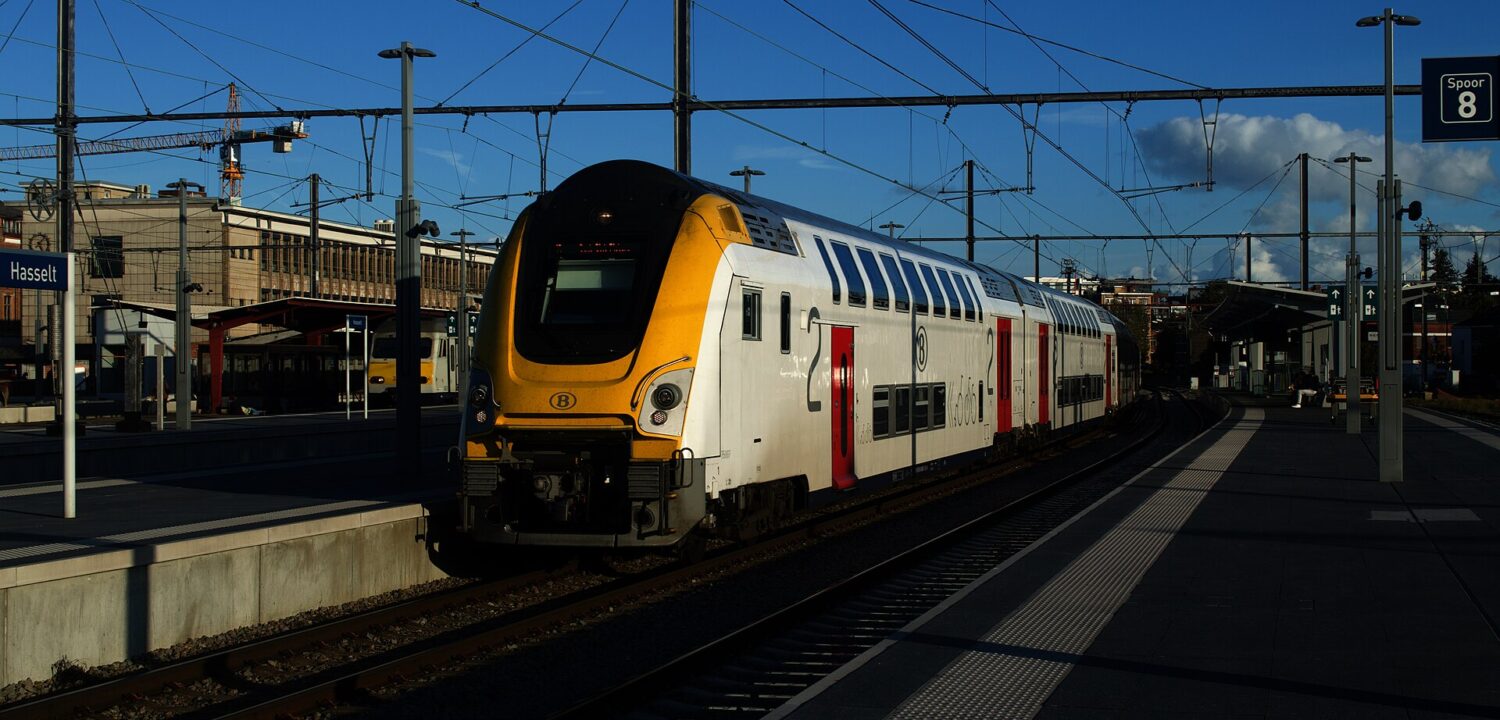
Departure boards label each train by type. IC (InterCity) trains are the fast ones between cities and the ones you’ll use for almost every day trip. L trains are locals that stop everywhere, S trains belong to the suburban networks around Brussels, Antwerp, Ghent, Charleroi and Liège, and P trains are weekday peak-hour extras. None of them take reservations. Seating is unreserved, and a domestic ticket is valid for its route on the date you bought it for, on any train (or any off-peak train, if you paid an off-peak fare), rather than tied to a particular departure. Miss the 10:04 and you simply catch the next one.
Most intercity trains carry some first-class seating, marked with a large 1 on the carriage side. It costs noticeably more, and on a Sunday morning it buys you nothing. On a weekday during the morning rush on the Antwerp or Ghent lines it can be the difference between a seat and standing in the vestibule. Everything else in this guide assumes second class.
Journey Times from Brussels
The times below are for the fastest regular service from the Brussels junction stations. Midi, Central and Nord are only minutes apart, so it makes little difference which one you start from. Frequencies are for weekday daytime; they thin out in the evening and on Sundays.
| Destination | Station to ask for | Journey time | Good to know |
|---|---|---|---|
| Mechelen | Mechelen | 20–25 min | A short hop, and one of the cheapest trips on the network. See our Mechelen day trip |
| Leuven | Leuven | 22–27 min | Several trains an hour, also direct from the airport. See our Leuven day trip |
| Ghent | Gent-Sint-Pieters | 30–35 min | Tram 1 into the centre. See our Ghent travel guide |
| Antwerp | Antwerpen-Centraal | 35–55 min | Don’t get off at Berchem. See our Antwerp travel guide |
| Bruges | Brugge | About 1 hour | Three direct trains an hour. See Brussels to Bruges by train |
| Namur | Namur | About 1 hour | Gateway to the Meuse valley and the Ardennes lines |
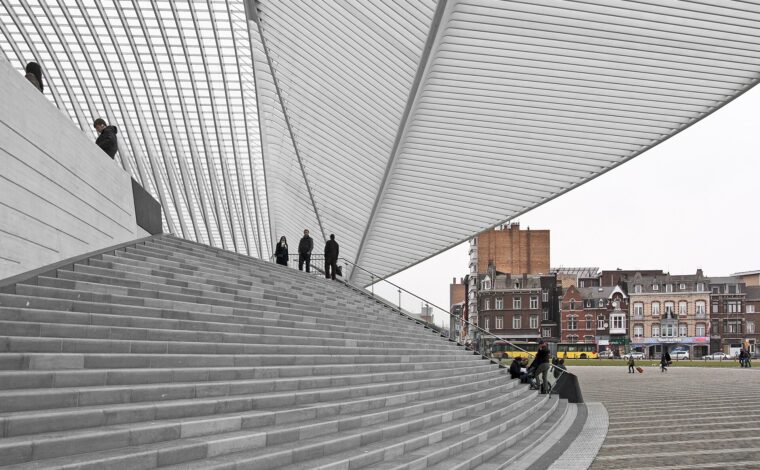
| Liège | Liège-Guillemins | About 1 hour | Calatrava’s station, about 2 km from the old centre |
| Ostend | Oostende | 1h15–1h30 | The coast tram leaves from outside. See the Belgian coast |
| Dinant | Dinant | About 1h30 | Hourly direct trains. See our Dinant day trip |
| Ypres | Ieper | About 2 hours | See our Ypres and Flanders Fields day trip |
| Luxembourg City | Luxembourg | About 3 hours | Cross-border: SNCB sells through tickets, with the weekend and age discounts on the Belgian part. See our Luxembourg day trip |
Three arrival details are worth knowing before you set off. In Antwerp, most trains from Brussels stop at Antwerpen-Berchem a few minutes before Antwerpen-Centraal; Berchem is a perfectly pleasant suburban station and entirely the wrong one for the cathedral, so stay on until Antwerpen-Centraal. In Ghent, the station for the medieval centre is Gent-Sint-Pieters, not Gent-Dampoort, and tram 1 from outside the main entrance takes you to the Korenmarkt. And in Bruges the station sits outside the old ring, about twenty minutes’ walk from the Markt, with buses to the centre leaving from the forecourt every few minutes.
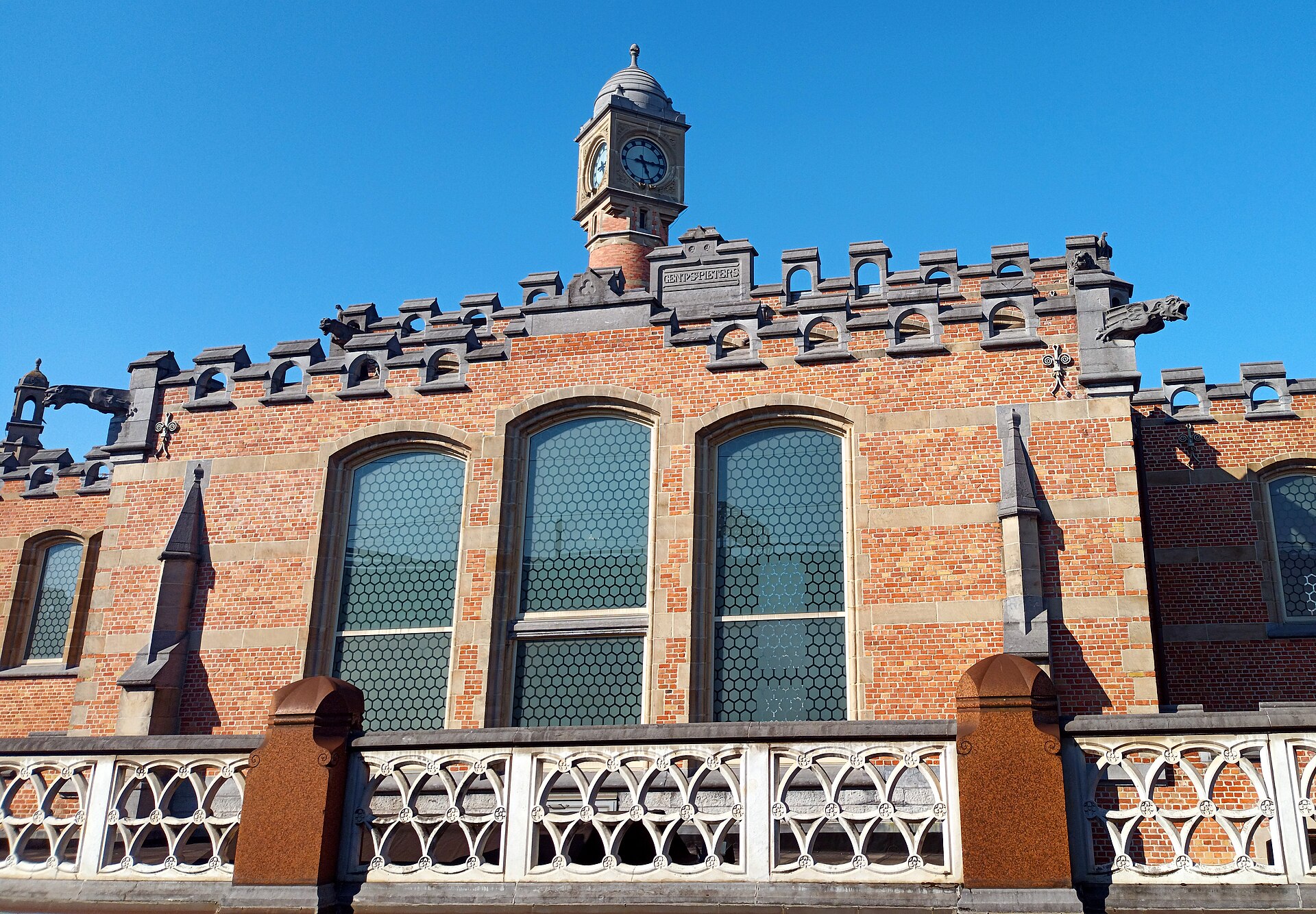
For planning more than one of these, our how many days in Belgium guide helps you decide which cities need a night rather than a return ticket, and the Belgium 7-day itinerary strings them together around the train times.
Tickets and Discounts After the 2025 Fare Overhaul
Much of what’s online about Belgian rail tickets is now out of date. On 15 October 2025 SNCB withdrew the Standard Multi, Youth Multi and Local Multi cards, the ten-journey cards and the old youth and senior tickets, and by January 2026 it had moved the whole range onto one distance-based system with percentage discounts on top. If a guide tells you to buy a Standard Multi or the old flat-rate senior return, it was written before the change.
Standard Fares
Every fare is now calculated on distance, and the ceiling came down by about a fifth in the overhaul. No second-class single inside Belgium costs more than about €21 before any airport supplement, and that cap kicks in at 120 km, so a trip from Brussels to the far end of the coast or the southern edge of the Ardennes costs the same as one a good deal shorter. Short hops cost a few euros, and the popular day trips fall somewhere in between. A ticket covers one journey on the date you choose, so a day trip is two journeys.
Weekend Fares
Adults aged 26 to 64 get 30% off at weekends, and the discount now covers single journeys as well as returns. That makes Saturday and Sunday the cheapest days for a day trip by some distance. The catch is at the other end: Bruges and Ghent are at their busiest at weekends, so you’re trading a cheaper ticket for a fuller Markt. Check the discount has been applied before you pay.
Under-26s and Over-65s
Travellers under 26 and over 65 get 40% off the standard fare at any time, in either class, with no card to buy. It replaces the old youth and senior products, and it’s one of the most generous things in the new system for visitors: a student or a retired couple pays well under the adult price on every journey, rush hour included. Carry ID, because conductors can ask for it.
Children
Children under 12 travel free with an accompanying adult. From 12 they pay the youth rate, which is where the 40% under-26 discount starts to matter for families with teenagers.
Groups
Four or more people travelling together get 40% off off-peak and at weekends. Off-peak means weekdays before 06:00, between 09:00 and 16:00, and after 18:00. Groups of fifteen or more can get 60% off if they book ahead. For a group of friends taking a mid-morning train to the coast, that’s a big saving hiding in plain sight.
Train+
Train+ is the new card for regular travellers. For adults aged 26 to 64 it costs €6 a month and buys an extra 40% off during off-peak hours and at weekends, and it caps any single journey at €14, even at rush hour. Under-26s and over-65s can add it too, and their cap drops to €5.50 a journey. It’s designed for people who live here, but don’t rule it out for a short stay. Run the numbers before you travel, because a couple of off-peak or weekend return trips on the longer runs can cover the monthly fee.
The Rail Pass: Gone, and What to Buy Instead
The Rail Pass didn’t survive the overhaul. SNCB stopped selling its ten-journey cards on 15 October 2025, and the flat price per journey that made them a bargain on the long runs went with them.
SNCB’s own advice for anyone who used a ten-journey card to travel to different places is ordinary tickets, with or without Train+. For a visitor, that means pricing each journey by distance, putting the long runs, such as Bruges, the coast, Namur, Liège, Dinant and Ypres, on a weekend where you can, when adults get 30% off, and not worrying about short hops like Mechelen or Leuven, which are among the cheapest trips on the network. If four or more of you travel together, the mini-group fare takes 40% off outside the weekday rush, which is SNCB’s suggested replacement for a shared pass.
Three things still catch people out:
- The airport supplement is extra. A journey to or from Brussels Airport costs the fare plus the supplement, and no discount reduces the supplement.
- Domestic fares stop at the border. Luxembourg, Lille and anything else across a border needs its own cross-border ticket.
- Under-26s and over-65s should still do the sums. 40% comes off every single automatically, and Train+, at €6 a month, takes another 40% off outside the weekday rush and caps a second-class journey at €14.
What About Interrail and Eurail?
Both are valid on SNCB trains, but at Belgian distances and fares they rarely pay back for travel inside Belgium alone. They make sense when Belgium is one leg of a longer rail trip through the Netherlands, Germany or France.
Which Ticket Should You Buy?
- One day trip on a Saturday, say to Bruges: two singles at the weekend fare. No pass.
- A couple on a five-night stay with day trips to Bruges, Ghent and Antwerp: that’s twelve journeys between you. With no pass to split, buy tickets and put the longest trip, Bruges, on a weekend for the 30% discount.
- A family with two children under 12: the children travel free, so you’re only pricing two adults. Take the weekend fare where you can.
- A student or a retiree: the 40% discount applies to every journey, and Train+, at €6 a month, takes another 40% off outside the weekday rush.
- A month-long stay with trains most days: look at Train+ before anything else.
How to Buy Tickets
The SNCB app, which runs in English, is the easiest way to buy. Pick the journey and pay by card, and the ticket sits on your phone as a QR code for the conductor. You can also buy on belgiantrain.be, at the blue SNCB ticket machines found at almost every station, or at a counter in the larger stations. Counter hours are shorter than the train service, though, and many smaller stations have no staff at all.
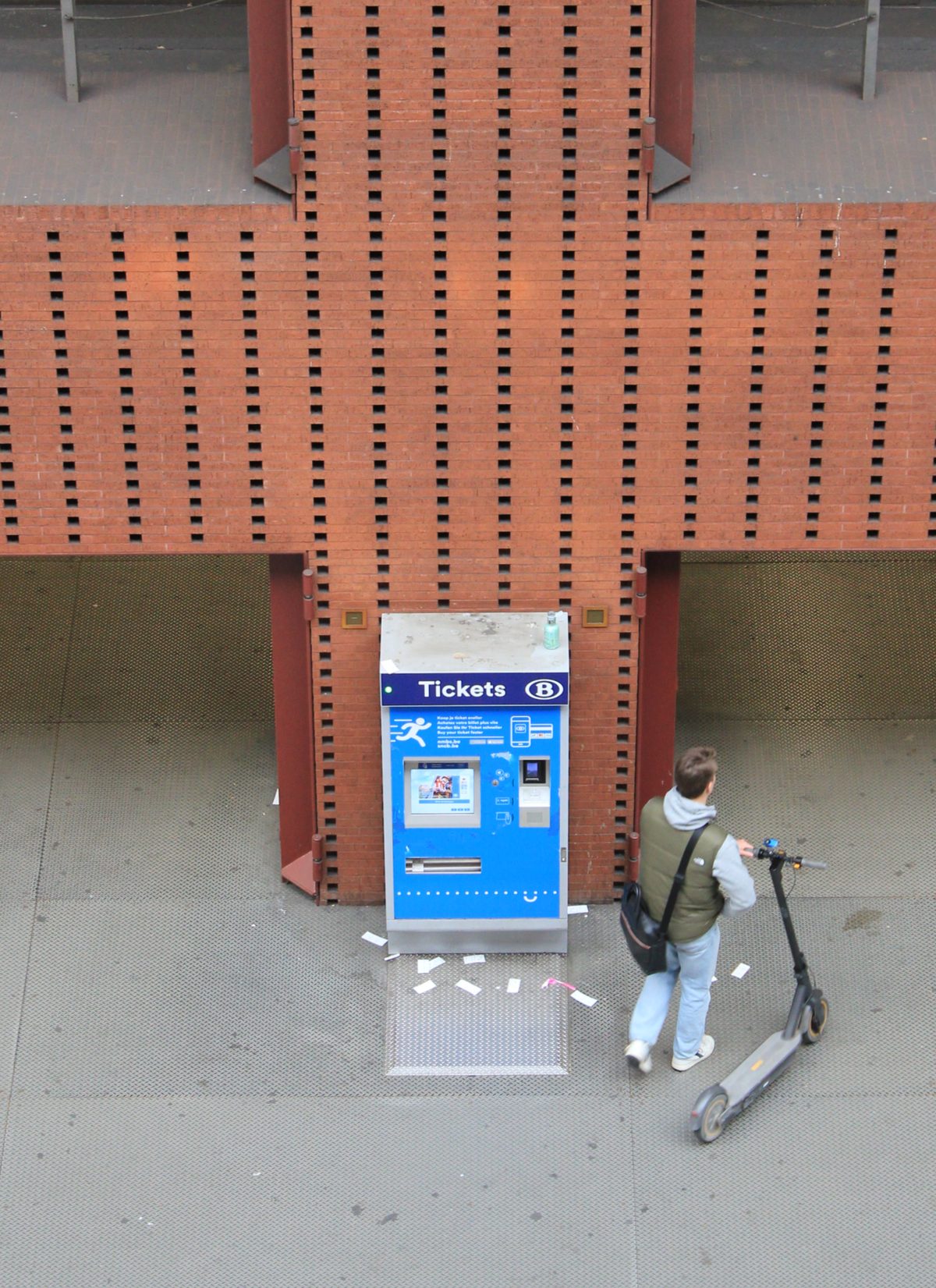
Two things surprise first-timers. First, there’s nothing to validate: no stamping machine, no tap-in, and no barrier at most stations. You just get on, and the conductor checks tickets on board. Second, you can’t buy on board. Since 1 July 2026 SNCB no longer sells tickets on domestic trains, and travelling without one risks a fine of up to €500; only if your station had no working machine or counter do you pay just the normal fare. Buy before you step on, and remember that the ticket is for a date, not a train. If you’ve bought Bruges for Saturday, any train that day will do.
Reading the Departure Board: Why Your Train Is Going to Luik
Belgium’s language border runs straight through its railway. In Flanders, boards and announcements use Dutch names; in Wallonia, French ones; in Brussels, usually both. So the same city can turn up under a name you’ve never seen. The train to Mons may be shown as Bergen and Liège as Luik, and on the way back from Liège, Antwerp may appear as Anvers. It’s the single most common reason visitors watch their train leave without them. Our guide to the languages spoken in Brussels explains the wider picture. On the platform, this is the list that matters.
| English | French | Dutch |
|---|---|---|
| Antwerp | Anvers | Antwerpen |
| Ghent | Gand | Gent |
| Bruges | Bruges | Brugge |
| Leuven | Louvain | Leuven |
| Mechelen | Malines | Mechelen |
| Ostend | Ostende | Oostende |
| Ypres | Ypres | Ieper |
| Kortrijk | Courtrai | Kortrijk |
| Liège | Liège | Luik |
| Namur | Namur | Namen |
| Mons | Mons | Bergen |
| Tournai | Tournai | Doornik |
| Lille (France) | Lille | Rijsel |
| Aachen (Germany) | Aix-la-Chapelle | Aken |
Two more things to watch. Platform changes are shown on the boards and announced over the tannoy, often in English as well at the big Brussels stations. And a few services divide part-way, so on a long train check the destination shown on your carriage as well as the one on the platform.
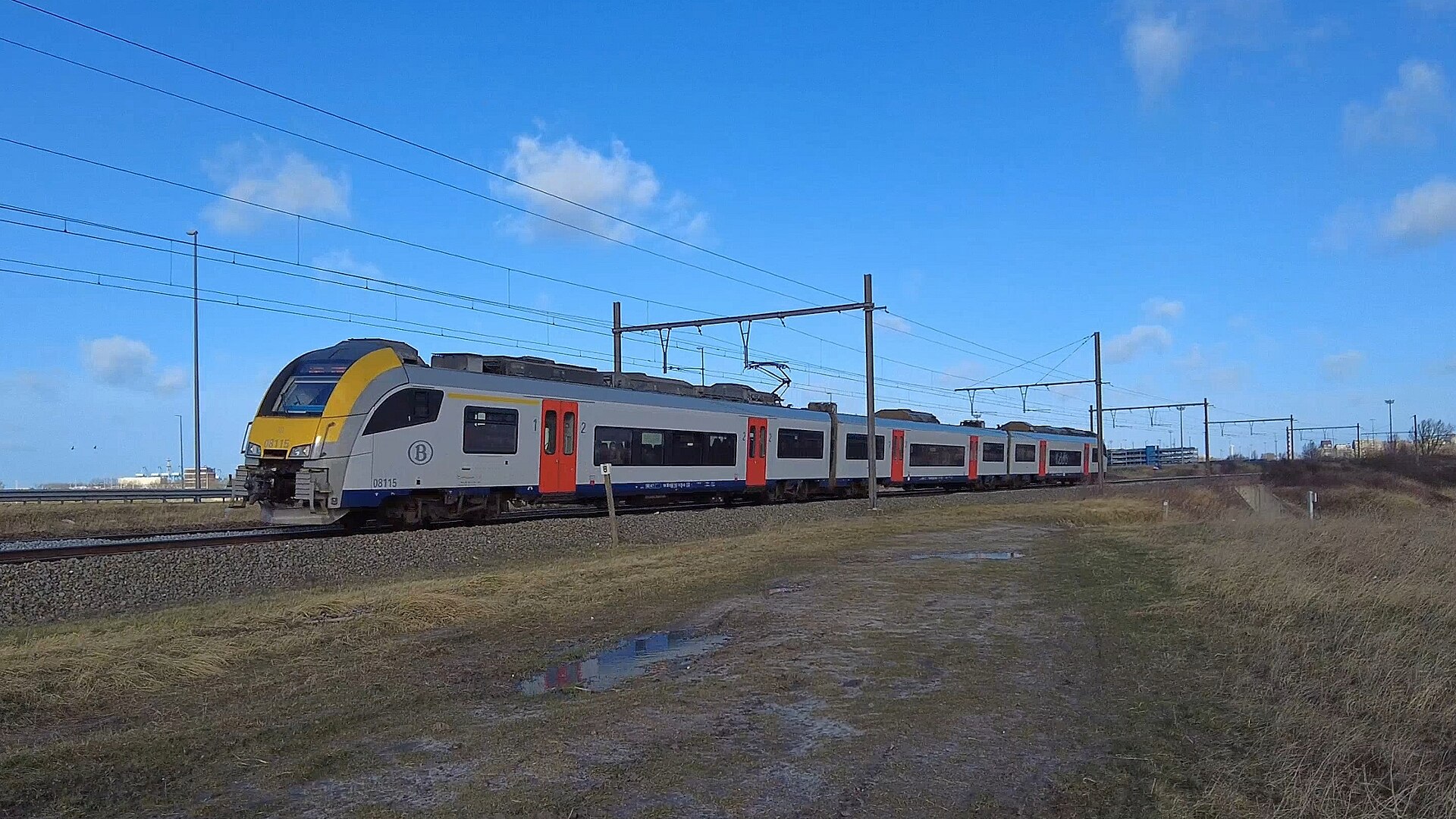
Luggage, Bikes and Accessibility
There’s no luggage allowance to worry about and no fee, so bring what you can lift. Space is tighter than it looks on the double-deck trains, where the overhead racks take a backpack but not a suitcase, so big bags end up in the vestibule or wedged between seat backs. For a day trip, leave the bag behind. The station lockers at Midi, Central and Nord cost from €5 a day for a handbag-sized locker to €14.50 for one that takes a suitcase, and our luggage storage guide compares them with the cheaper bag-drop shops.
Bikes need their own ticket. Space is first come, first served, which in practice makes peak-hour trains a lottery, while a folding bike, folded, travels as luggage. For step-free travel, the major stations have lifts and SNCB runs an assistance service that you book in advance. Older stations and some trains still involve a step up from the platform. Our wheelchair-accessible Brussels guide covers the city end of the journey.
Strikes, Engineering Works and Sunday Timetables
Belgian rail strikes are usually announced several days ahead, and there were enough of them through 2025 that it’s worth checking the news in the week before a trip. On strike days SNCB publishes a reduced alternative service, but the sensible move is to switch your day trip to another day rather than gamble on it.
Engineering works cluster at weekends, when a stretch of line can be closed and replaced by buses. The journey planner in the app includes them, so plan in the app rather than from a timetable you saved last week. Sundays and public holidays run a thinner timetable, and the last direct train back to Brussels leaves some cities earlier than you’d expect. Look it up before you commit to a late dinner in Liège or Ghent, and don’t build a day around the very last departure.
International Trains and the Airports
Brussels-Midi is also the country’s international hub. Eurostar runs to London in about two hours, to Paris in about an hour and a half, and north to Rotterdam and Amsterdam. There’s also a direct service to Amsterdam that takes about two hours, with fares from about €25 if you book early. ICE trains head east through Liège to Cologne and Frankfurt, and InterCity trains run direct to Luxembourg. Eurostar needs its own ticket, booked well ahead for the best fares, and our Eurostar guide covers check-in and the Channel Terminal.
Brussels Airport (Zaventem) has its own station directly beneath the terminal, with trains into the city several times an hour taking around 20 minutes. The fare into Brussels costs much more than an ordinary trip of that length because of the airport supplement. Mechelen and Leuven are both direct from the airport too, which is worth knowing if you’d rather start somewhere quieter. Charleroi Airport has no station: take the Flibco coach to Brussels-Midi, or TEC bus A to Charleroi’s main railway station and a train from there. Our guides to Brussels Airport to the city centre and Charleroi Airport to Brussels have the timings and fares.
Of all the cities in the journey-times table, Namur is the one most often treated as a place to change trains, which undersells it. It’s the hub for the Meuse valley, with trains along the river to Dinant and Huy and a citadel worth the trip on its own. Our Namur and Meuse valley guide explains how to use it as a two-day base.
Liège-Guillemins is the one big station where arriving by train needs a little thought, because Calatrava’s building sits about 2 km from the old centre. Since April 2025 a tram has run from outside the station to Place Saint-Lambert every few minutes, which solves the problem. Our Liège city guide covers the rest: the Prince-Bishops’ Palace, the 374 steps of the Montagne de Bueren and the Sunday market at La Batte.
Related Brussels Guides
- Belgium Travel Guide: Using Brussels as Your Base
- How Many Days in Belgium?
- A 7-Day Belgium Itinerary
- Day Trips from Brussels
- Brussels to Bruges by Train
- Bruges Travel Guide
- The Belgian Ardennes
- Getting Around Brussels
Useful Resources
- belgiantrain.be: SNCB’s own site for fares, the journey planner, Train+ and live disruption notices. The SNCB app has the same planner.
- delijn.be: buses and trams in Flanders, including the coast tram from Ostend station.
- letec.be: buses in Wallonia, including bus A between Charleroi Airport and the city’s railway station.
- eurostar.com: high-speed trains from Brussels-Midi to London, Paris, Rotterdam and Amsterdam.
Frequently Asked Questions
Is the Belgian Rail Pass still sold?
It’s no longer sold. SNCB withdrew its ten-journey cards on 15 October 2025, so ignore older guides that build a trip around one. Today you pay a distance-based fare for each journey, with 30% off at weekends for adults aged 26 to 64 and 40% off at any time for under-26s and over-65s.
Do I need to book Belgian trains in advance?
No. Domestic trains have no reservations and no fixed-train tickets: you buy a ticket for a route on a date and take any train that day (with an off-peak fare, any off-peak train). Buy it before you board, in the app or at a machine. Eurostar is the exception, and its fares rise as the departure fills up.
Can two people still share a Rail Pass?
Not any more, because there’s no Rail Pass to share: SNCB withdrew its ten-journey cards in October 2025. A couple doing three return day trips now pays for twelve journeys, and groups of four or more can use the mini-group fare, with 40% off outside the weekday rush.
Do children travel free on Belgian trains?
Children under 12 travel free with an accompanying adult. From 12 to 25 they pay the youth fare, which is 40% off the standard price.
Which Brussels station should I use for day trips?
Whichever is closest to where you’re staying. Almost every domestic intercity through the city calls at Brussels-Midi, Brussels-Central and Brussels-Nord within a few minutes, and Central is the most convenient for the Grand-Place and the old centre.
Is there a weekend discount on Belgian trains?
Yes. Adults aged 26 to 64 get 30% off at weekends, and it now applies to single journeys as well as returns. Under-26s and over-65s get their 40% discount every day.
What happens if there’s a train strike?
Strikes are normally announced several days ahead and SNCB runs a reduced alternative service. If one lands on your planned day trip, move the trip to another day rather than relying on the reduced timetable.
Photo Credits
-
An SNCB double-deck train at Hasselt: 24.10.23 Hasselt 76007 (53302536719) by Phil Richards from London, UK, CC BY-SA 2.0, via Wikimedia Commons.
-
Gent-Sint-Pieters station: Gent-Sint-Pieters-architecture by acediscovery, CC BY 4.0, via Wikimedia Commons.
-
SNCB ticket machine at Antwerpen-Centraal: Ticketautomaat NMBS Antwerpen Centraal by TheGoodEndedHappily, CC BY-SA 4.0, via Wikimedia Commons.
-
A Desiro train on the coast line: AM08 Desiro (IC-train Knokke – Brugge) by Traveller-chewy93, CC BY-SA 4.0, via Wikimedia Commons.
Final Thoughts
Travelling around Belgium by train is one of the easy pleasures of European travel. The country is small, the trains are frequent, nothing needs booking, and from a base in Brussels you can have breakfast at home and lunch in Ghent, Bruges, Namur or Liège. The 2025 overhaul made the fares simpler as well as cheaper at the top end. Pay by distance, take the weekend discount when it’s offered, and ignore any guide that still tells you to buy a Rail Pass.
The rest is small stuff that makes a big difference on the day. Learn the handful of Dutch and French place names that appear on the boards, stay on the train past Berchem, check the news for strikes in the week you travel, and leave the suitcase in a locker at Central. Do that and the Belgian railway turns the whole country into a set of day trips from your hotel door.