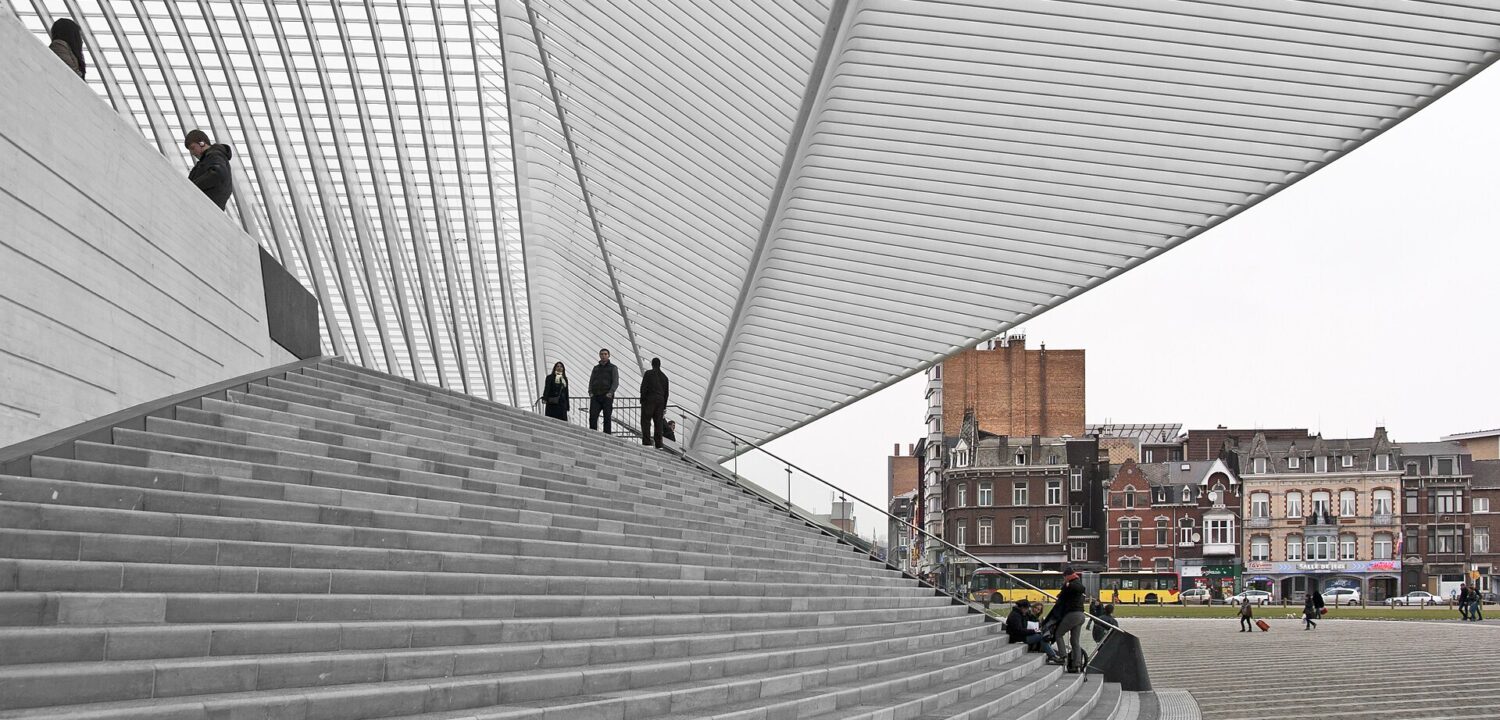
Step off the train at Liège-Guillemins and the first thing you notice is the roof: Santiago Calatrava’s white steel-and-glass canopy arching over the platforms like the ribcage of some enormous animal. It’s a fitting welcome to a city that has never done anything quietly. Plenty of visitors meet Liège exactly this way, change trains for Maastricht or Aachen, and leave. The Liège Belgium talks about — la Cité Ardente, the fiery city — is the one beyond the station. It has a Sunday market that runs for kilometres along the Meuse, a stairway of 374 steps up the hillside, the palace of the prince-bishops who ruled here for eight centuries, and the liveliest nightlife in Wallonia.
This guide treats Liège as a weekend rather than a stopover. It covers how to get from Guillemins into the centre, the sights worth your time, La Batte on a Sunday morning, what to eat, where to stay and when to go. Prices and opening details were checked in September 2026; treat them as the right order of magnitude. And if you’re reading departure boards, the city is written Liege in a lot of English, Luik on Dutch-language screens and Lüttich in German. It’s all the same place.
Liège at a Glance
| Where | Eastern Wallonia, on the Meuse, close to the Dutch and German borders |
| Language | French |
| From Brussels | About 1 hour by direct train, frequent all day |
| Main station | Liège-Guillemins, about 2 km from the old centre |
| Into town | Tram from Guillemins to Place Saint-Lambert, every 5 minutes at peak and 7–15 minutes otherwise, 05:00–01:00 daily |
| La Batte market | Every Sunday, 08:00–14:30, along the Meuse quays |
| Ideal stay | One or two nights, ideally Saturday into Sunday |
| Easy side trips | Maastricht about 30 minutes by train; Aachen under an hour; Huy and Namur up the Meuse |
Getting from Guillemins into the Centre
Liège-Guillemins opened in 2009, and it’s worth ten minutes of your time even if you’re only changing trains. Walk out onto the esplanade at the front and look back at the canopy, which is at its most dramatic from the steps. The catch is that the station is a long way from the old centre, about 2 km of busy boulevards, and plenty of visitors have trudged it with a suitcase and arrived in a bad mood.
The easy answer is the tram. Liège’s new line opened in April 2025 and runs along the Meuse from Sclessin through Guillemins and Place Saint-Lambert to Coronmeuse. Trams come every five minutes at peak times and every seven to fifteen minutes otherwise, from 05:00 until 01:00, seven days a week. Tickets are sold by TEC, the Walloon public transport operator. Buy one before you board; the TEC app is the easiest way.
If you’re travelling light and the weather is kind, there’s a much nicer walk. Head from the station towards the river and cross the Belle Liégeoise footbridge into the Parc de la Boverie, then follow the Meuse north into town. It takes about half an hour and passes La Boverie art museum on the way.
Saturday: The Old Centre
Place Saint-Lambert and the Prince-Bishops’ Palace
For about eight hundred years, until the French Revolution swept them away in the 1790s, Liège was not really part of anything that would become Belgium. It was an independent principality ruled by prince-bishops, and their palace still fills one side of the Place Saint-Lambert. The square itself is the site of their cathedral, which the city’s revolutionaries tore down stone by stone in the 1790s. Its foundations survive underneath in the Archéoforum, an archaeological site you can visit beneath the paving.
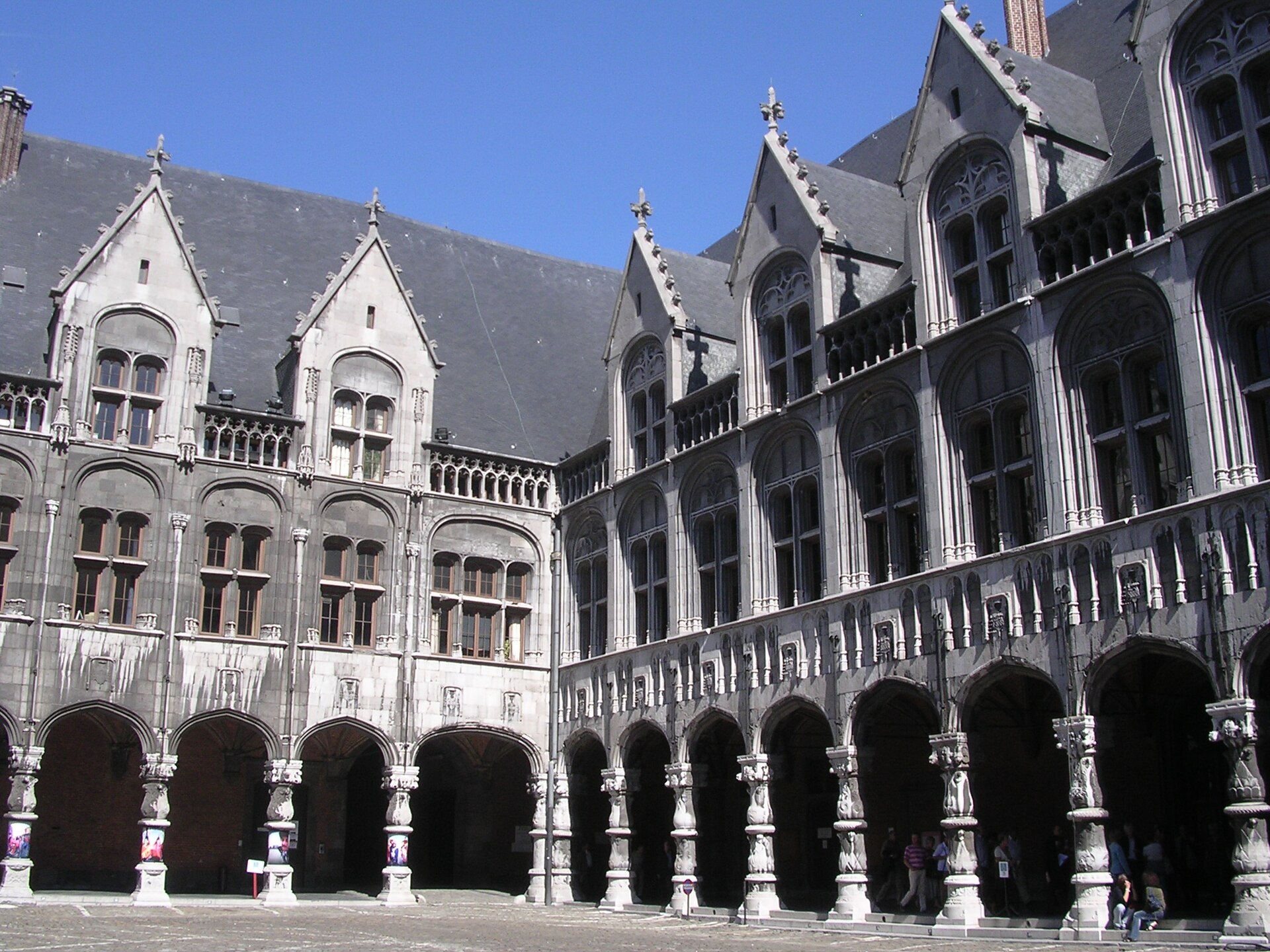
The Palais des Princes-Évêques is now the law courts and the seat of the provincial government, so most of it is off limits. You can usually walk into the main courtyard, though, and it’s one of the great sights of the city. It’s an arcaded square lined with dozens of carved stone columns, no two quite alike, their shafts swelling out like candlesticks. Come early on a quiet morning and you may have it almost to yourself.
A minute’s walk east, the Place du Marché is the old civic heart, with the town hall and the Perron. This column topped with a pine cone and a cross is the symbol of the city’s liberties, and you’ll see it on everything from lamp posts to beer labels. From here, the lanes of the Hors-Château and Féronstrée quarters run north-east parallel to the river, lined with old merchants’ houses, courtyards and small museums.
Museums Worth Your Time
- Musée de la Vie wallonne is in a former Franciscan convent a short walk from the Place du Marché. It’s a lively, well-made museum of everyday life in Wallonia, from mining and crafts to Liège’s much-loved rod puppets, and the best single introduction to the region.
- Grand Curtius is on the quay in a red-brick 17th-century merchant’s mansion and its later extensions. It combines archaeology, weapons, glass and decorative arts. It’s big and uneven, so pick a section rather than trying to do it all.
- La Boverie is the city’s art museum, in the park across the river. It reopened in 2016 in a partnership with the Louvre for its exhibitions. Its permanent collection includes works Liège bought at the notorious 1939 Lucerne auction of art the Nazis had condemned as “degenerate”, among them Picasso’s La Famille Soler and Chagall’s The Blue House.
- Saint-Barthélemy is a Romanesque collegiate church in the Hors-Château quarter. It holds a 12th-century bronze baptismal font by Renier de Huy, one of the masterpieces of medieval Mosan metalwork and well worth a detour.
Opening days vary, and several museums close on Mondays, so check the current hours on the city’s tourism site before you plan around one.
The Montagne de Bueren and the Coteaux
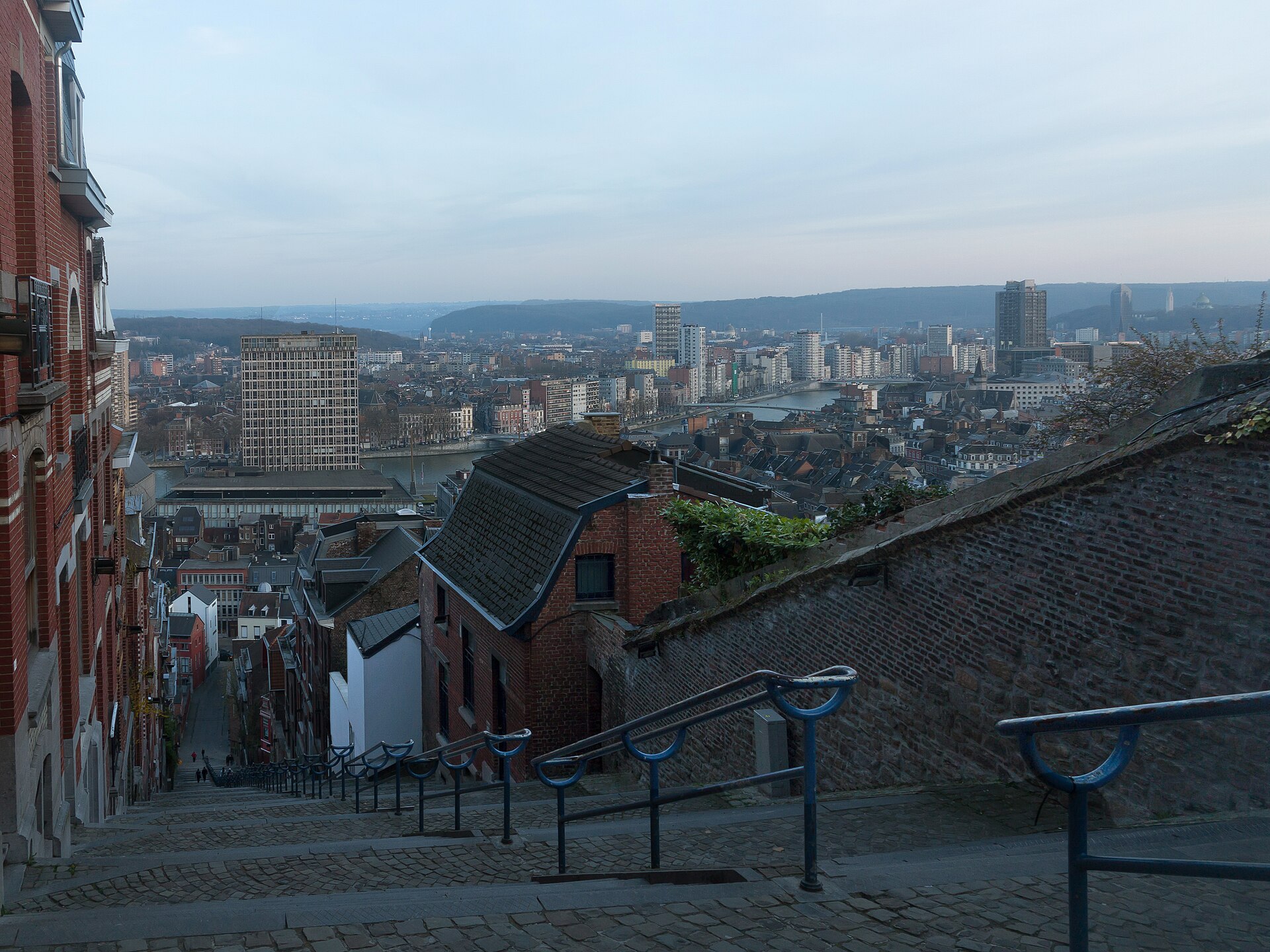
In the afternoon, climb the Montagne de Bueren, 374 steps straight up the hillside from the Hors-Château to the old citadel, built in 1881 to honour the defenders of the city against Charles the Bold. It’s steeper than it looks from the bottom, and there’s no shame in stopping halfway to look back. At the top, the view over the rooftops and the Meuse is the best in Liège.
Don’t just turn round and go back down. The Coteaux de la Citadelle, the green slopes between the old centre and the citadel, are criss-crossed with footpaths, stairways, small orchards and viewpoints, and they make a lovely, unexpectedly rural hour’s walk in the middle of the city. One evening each autumn, the Nocturne des Coteaux lines the stairways with thousands of candles.
Saturday Night in the Carré
Liège has a reputation as the best night out in Wallonia, and most of it happens in the Carré, a tight grid of streets in the centre packed with bars, cheap restaurants and late-night frites stands. It’s student-heavy, loud and cheerful, busiest from Thursday to Saturday, and not remotely refined, which is rather the point. For something calmer, the lanes around En Neuvice and the Place du Marché have quieter bars and bistros. Wherever you end up, try a glass of pèkèt, Liège’s juniper spirit, served in small glasses in a bewildering range of flavours. Go easy; it’s stronger than it tastes.
Sunday: La Batte and Outremeuse
La Batte Market
Every Sunday from 08:00 to 14:30, the quays along the left bank of the Meuse fill with La Batte, the largest and oldest open-air market in Belgium. The stalls run for kilometres along the Quai de la Batte and the neighbouring quays, selling fruit and vegetables, cheese and charcuterie, flowers and plants, clothes, handbags, kitchen gadgets and things it’s hard to put a name to. It isn’t a craft market or a tourist market. This is where Liège does its shopping, and that’s exactly why it’s worth your Sunday morning.
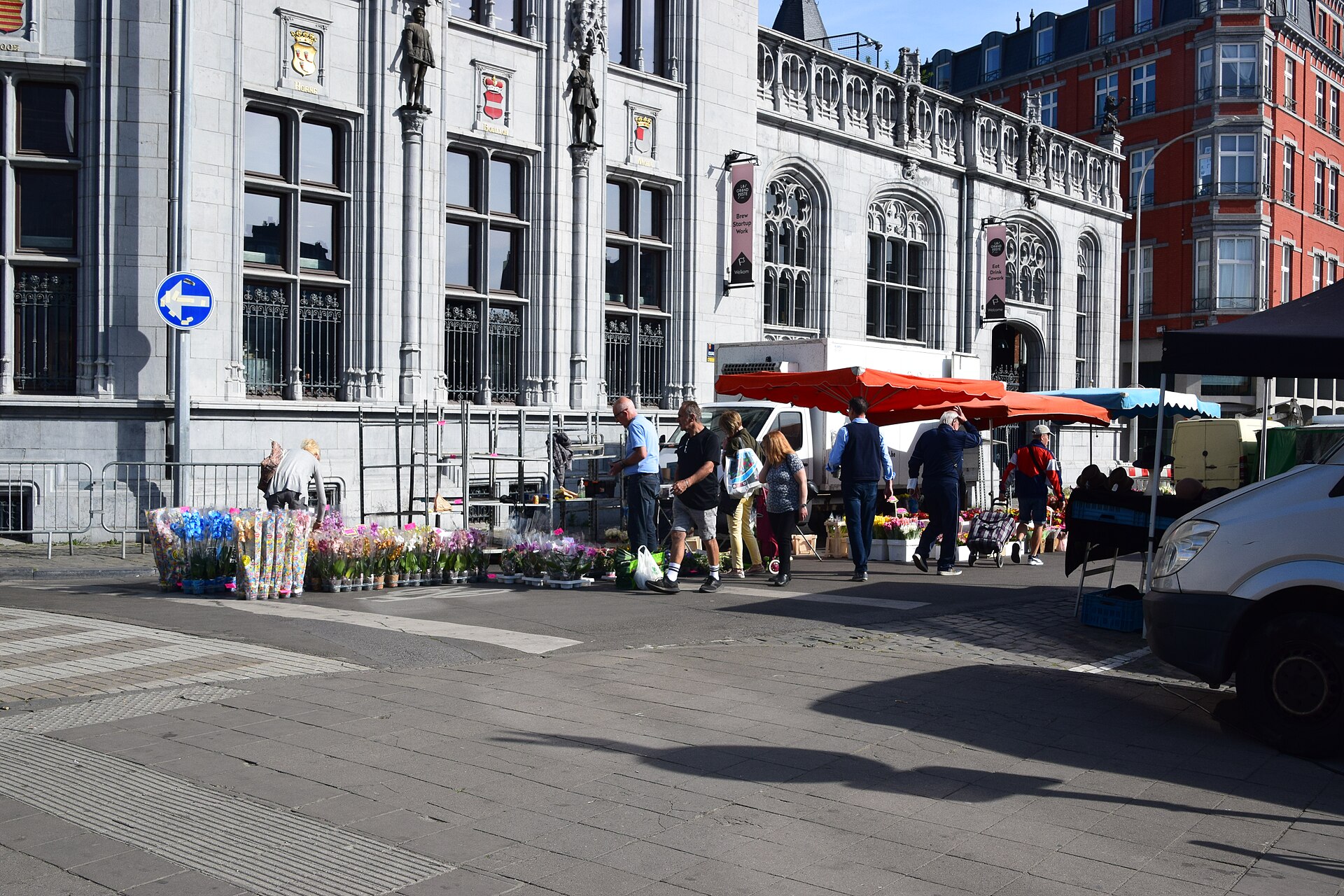
Get there early, ideally before ten. By late morning the busiest stretches are shoulder to shoulder, and that’s also when pickpockets do best, so keep your phone and wallet zipped away. Graze as you go: hot waffles from the iron, a paper cone of fruit, a slab of Herve cheese, and a coffee or even a small glass of something stronger at one of the stands, which in Liège doesn’t count as eccentric at eleven in the morning. At the upstream end, the neo-Gothic former main post office, La Grand Poste, has been turned into a brewery, café and co-working space. It’s a good place to sit down when your feet give out.
Outremeuse
From the market, cross the bridge to Outremeuse, the island quarter on the far side of the river that calls itself a free republic. It’s the working-class heart of Liège, the quarter where Georges Simenon, creator of Maigret, grew up, and the home of Tchantchès. He’s the city’s cheeky, big-nosed folk hero, immortalised in a statue, a puppet theatre and a small museum dedicated to Liège’s rod puppets. Outremeuse is at its wildest around 15 August, when the quarter throws a days-long festival for the Assumption. On a normal Sunday afternoon it’s quiet, local and a good place for a beer.
What to Eat in Liège
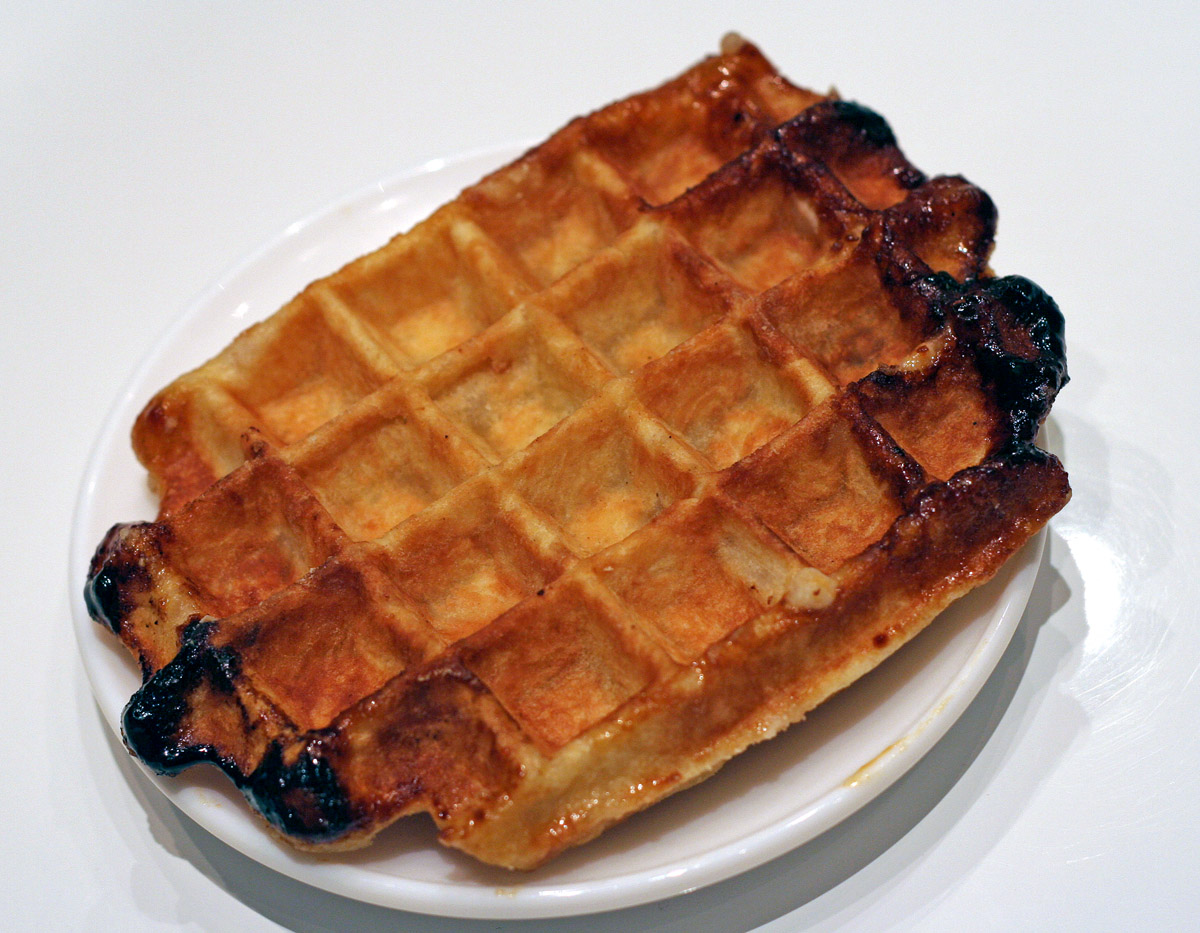
- The Liège waffle (gaufre de Liège) is a dense, chewy brioche-dough waffle studded with pearl sugar that caramelises on the iron. It’s eaten warm and plain from a street stand, and it’s nothing like the light, rectangular Brussels waffle piled with cream. Our guide to the best waffles in Brussels explains the difference.
- Boulets à la liégeoise are big meatballs in a sweet-sour sauce made with sirop de Liège, the city’s dark apple and pear syrup, served with frites. It’s the dish to order in any brasserie.
- Salade liégeoise is a warm salad of green beans, potatoes, bacon and onions dressed with vinegar. It’s simple, filling and very good.
- Café liégeois is the coffee, ice cream and whipped cream dessert. The story goes that Parisian cafés renamed their café viennois in 1914 to honour Liège’s resistance to the German invasion.
- Sirop de Liège and Herve cheese: the syrup goes on bread, often with a slice of pungent Herve from the plateau east of the city.
- Beer: Jupiler, Belgium’s best-selling lager, is brewed in Jupille on the edge of the city. The pèkèt bars are the more local experience. For the wider picture, see our Belgian beer guide.
More of the national dishes are in our guide to traditional Belgian dishes. Liège’s versions are heartier, sweeter and cheaper than you’ll find in Brussels.
Where to Stay in Liège
Liège is one of the better-value city stays in Belgium, and hotel choice is decent for a city of its size. Where you sleep depends mostly on whether you want the nightlife on your doorstep or a quieter night.
- The centre and the Carré put you in the thick of it, walkable to everything, but noisy on Thursday, Friday and Saturday nights. The Amosa Liège City Centre is about five minutes’ walk from the Prince-Bishops’ Palace and the Carré, and the Radisson Hotel Liège City Centre is a reliable, modern option in the middle of town.
- Neuvice and the historic quarter are close to the Place du Marché but calmer. Hotel Neuvice is known for unusually large rooms, and the Van der Valk Sélys Liège Hotel & Spa, close to the main sights, is the choice if you want a spa at the end of the day.
- The Boverie park, across the river, is green and quiet. The Van der Valk Hotel Liège Congrès sits beside the congress centre there, a pleasant walk over the water to the old town.
- Guillemins is practical rather than charming. The ibis Styles Liège Guillemins suits anyone with an early train or a Maastricht day trip planned.
Book ahead for mid-August and the Christmas market season, when the city fills up. If you’re weighing Liège against a stay in Brussels, our where to stay in Brussels guide covers the capital.
Day Trips from Liège
- Maastricht, just over the Dutch border, is about half an hour by train. It’s an elegant, café-lined old town, and it’s easy to do in an afternoon.
- Aachen, in Germany, is under an hour by train, with Charlemagne’s cathedral and a fine old centre.
- Huy and the Meuse valley are upstream: Huy is a short train ride away, and Namur is under an hour. Our Namur and Meuse valley guide covers the river south of Namur.
- Blegny-Mine, north-east of the city, is a former coal mine and UNESCO World Heritage Site, with guided tours that take you down into the galleries. It’s easiest by car.
- The Hautes Fagnes and the Ardennes: Belgium’s high plateau and its wooded valleys start south and east of Liège. See our Belgian Ardennes guide for the region.
When to Go
Go at a weekend, because the whole city is built around Saturday night and Sunday morning, and a Tuesday in Liège misses both. Spring and early autumn are the most comfortable for the stairways and the Coteaux. Around 15 August, Outremeuse holds its enormous festival, which is either a reason to come or a reason to avoid it, depending on how you feel about crowds and pèkèt. In December, Liège’s Christmas village is one of the oldest and largest Christmas markets in Belgium. It’s a good excuse for a winter weekend, and a cheaper one than the Brussels equivalent covered in our Winter Wonders guide.
Honest Verdict: Is Liège Worth It?
Yes, if you like cities with character more than cities with polish. Liège is post-industrial and a little rough around the edges. There’s traffic on the quays, concrete among the Gothic, and none of Bruges’s careful prettiness. What it has instead is energy. You’ll find a real market, a real nightlife, food that fills you up, and people who are fiercely proud of the place. If you have one day and want postcard Belgium, go to Ghent or Bruges. If you have a weekend and want to see how Wallonia actually lives, come here and make sure it includes a Sunday.
Related Brussels Guides
- Belgium Travel Guide
- Belgium by Train
- Namur and the Meuse Valley
- The Belgian Ardennes
- How Many Days in Belgium?
- A 7-Day Belgium Itinerary
- Day Trips from Brussels
- Languages Spoken in Brussels
Useful Resources
- visitezliege.be: the city’s tourism site, with museum hours, La Batte details and the events calendar.
- letec.be: the tram and buses in Liège, including fares and the TEC app.
- belgiantrain.be: trains from Brussels and on to Maastricht, Aachen, Huy and Namur.
- visitwallonia.be: the regional tourist board, for Blegny-Mine, the Hautes Fagnes and the Ardennes.
Frequently Asked Questions
Is Liège worth visiting?
Yes, especially at a weekend. It has the Prince-Bishops’ Palace, the Montagne de Bueren, La Batte on Sunday morning and the best nightlife in Wallonia, and it’s an hour from Brussels. It’s grittier than the Flemish art cities, and that’s part of its appeal.
How do I get from Liège-Guillemins to the city centre?
Take the tram, which has run from Guillemins to Place Saint-Lambert since April 2025, every five to fifteen minutes from 05:00 to 01:00. Alternatively, walk about half an hour via the Belle Liégeoise footbridge and the Boverie park. With luggage, take the tram.
When is La Batte market?
Every Sunday from 08:00 to 14:30, along the quays of the Meuse. Arrive before ten for the best of it and the thinnest crowds.
How long does it take to get from Brussels to Liège?
About an hour by direct train from Brussels-Midi, Central or Nord, with frequent departures all day. There’s no need to book; see our Belgium by train guide for fares and discounts.
What is Liège famous for?
The Liège waffle, pèkèt, the Sunday market at La Batte, the 374-step Montagne de Bueren, Calatrava’s Guillemins station and a long history as an independent prince-bishopric. It’s also known for its nightlife and its 15 August festival in Outremeuse.
Is Liège safe for visitors?
Broadly yes, with normal city caution. Watch your belongings in the La Batte crowds and around the stations, and take the tram or a taxi rather than walking long empty stretches of the quays late at night.
Photo Credits
-
Calatrava’s canopy at Liège-Guillemins: Calatrava in Liège (4845914732) by Bert Kaufmann from Roermond, Netherlands, CC BY 2.0, via Wikimedia Commons.
-
The courtyard of the Prince-Bishops’ Palace: LIEGE Palais des Princes Evêques (2) by Promeneuse7, CC BY-SA 3.0, via Wikimedia Commons.
-
The view from the Montagne de Bueren: Liège, uitzicht vanaf Montagne de Bueren foto11 2017-03-26 19.41 by Michielverbeek, CC BY-SA 4.0, via Wikimedia Commons.
-
Flower stalls at La Batte: 20220515 liege batte03 by Jean Housen, CC BY-SA 4.0, via Wikimedia Commons.
-
A Liège waffle: Gaufre sucre by Jrenier (assumed, based on copyright claims), public domain, via Wikimedia Commons.
Final Thoughts
Liège rewards the people who get off the train. Behind Calatrava’s great white roof is a city with more swagger than any of its Belgian rivals, with a palace courtyard to stop you in your tracks, a hillside stairway that earns you the view, a Saturday night in the Carré and a Sunday morning at La Batte that feels like the whole city is out doing its shopping at once.
Come on a Saturday, stay the night, and spend Sunday morning at the market with a warm waffle in your hand. Cross to Outremeuse in the afternoon, and catch the train back to Brussels in the evening. It’s an hour away, and it’s the most fun you can have in Wallonia.